REVIEW · HOSAPETE
HAMPI FULL DAY TOUR FROM HOSPET
Book on GetYourGuide →Operated by TOP TRAVEL AND TOURS P LTD. · Bookable on GetYourGuide
Hampi reads like a giant temple diary. This full-day trip from Hospet puts the big names in front of you, and I love how the Vijaya Vitthala Temple and Virupaksha Temple each tell a different side of Vijayanagara power. You’re not just looking at stones; you’re getting the logic behind them.
I also like the pacing. You get about an hour at the key stops, so you can actually take in details without feeling chased. One possible drawback: it’s not wheelchair accessible, and the ground can be uneven, so wear solid shoes.
In This Review
- Key Highlights You’ll Care About
- First Stop: The Hop from Hospet to UNESCO Hampi
- Guided Hampi: Getting Your Bearings Fast (Without Rushing)
- Virupaksha Temple: The Oldest Feeling Stop on the Route
- Vijaya Vitthala Temple: Musical Pillars and the Stone Chariot Icon
- Hampi Bazaar (Virupaksha Bazaar): Marketplace Memories in Stone
- Lotus Mahal: Royal Elegance and the Meeting-Place Idea
- Elephant Stables: Where Power Got Housed
- The Guide Makes It Click: Long Experience and Real Stories
- Price and Value: What You Get for Around $82
- Practical Tips So Your Day Feels Easy
- Who This Hampi Tour Is For (and Who Should Skip It)
- Should You Book This Full Day Hampi Tour from Hospet?
- FAQ
- How long is the Hampi full day tour from Hospet?
- What is the price per person?
- What’s included in the tour?
- Are entrance fees included?
- Where does pickup happen?
- Is this a private group tour?
- What language is the guide?
- Is the tour wheelchair accessible?
- Is alcohol or drugs allowed?
- Can the tour be customized?
Key Highlights You’ll Care About
- Musical-pillars magic at Vijaya Vitthala: see the famous architectural feature people travel for
- Virupaksha Temple’s active worship: history that still has people in it
- Stone Chariot + royal scale: landmarks that help you picture the old empire
- Hampi Bazaar and Lotus Mahal: practical market life plus royal-era design in one loop
- Elephant Stables: a strong reminder of how the kingdom moved and powered itself
First Stop: The Hop from Hospet to UNESCO Hampi
The day starts with pickup from your hotel in Hosapete (Hospet) and then straight into Hampi. The transfer is by a private, air-conditioned car, sized to your group (from a small sedan up to a larger nine-seater Traveler). That matters because Hampi isn’t a “pop in for an hour” kind of place. You want a steady start so your brain is ready for old-world ruins.
Once you arrive, Hampi hits you with scale. It’s a UNESCO World Heritage Site with a huge footprint—over 4,100 hectares—and more than 1,600 monuments. On a one-day plan, nobody expects you to see everything. What you’re really doing is catching the landmarks that help you understand how this city worked.
You’ll also feel how Hampi is an open-air museum in practice. There’s no soft boundary between temple, palace area, and everyday stone paths. That’s part of the charm—and part of why your guide’s direction becomes important.
Guided Hampi: Getting Your Bearings Fast (Without Rushing)
Before you get too deep into single monuments, you’ll start with a guided introduction to Hampi. That hour is not “filler.” I like it because it helps you stop treating the ruins like random piles of rock. Your guide can connect the dots between temples, royal complexes, and the city layout that supported the Vijayanagara Empire.
This is where the day’s pace makes sense. You’re not just looking; you’re learning a framework you can carry to every stop. In practical terms, it also helps you spot the details worth time: carving styles, structural shapes, and the way the buildings relate to each other.
One small thing I appreciate: the experience is built around guided time blocks. That means you won’t wander for an hour wondering what you missed. It’s a full day, but it stays organized.
Virupaksha Temple: The Oldest Feeling Stop on the Route
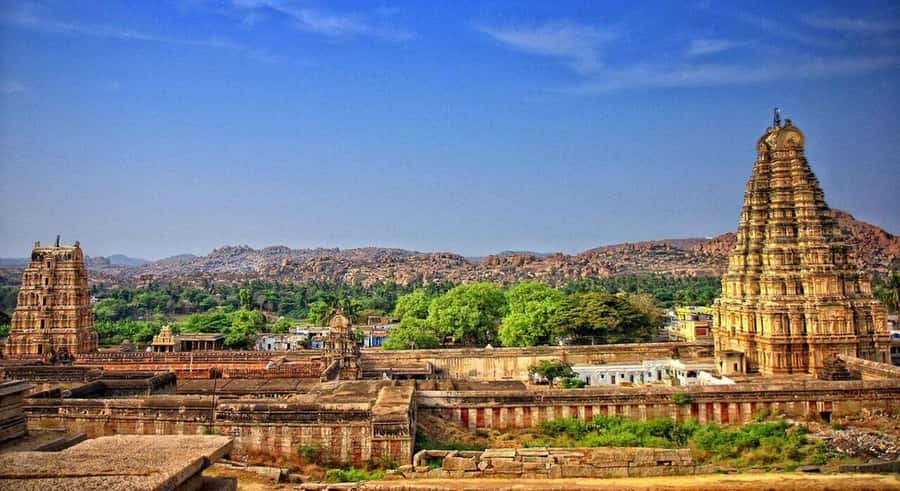
Next up is Virupaksha Temple, dedicated to Lord Shiva and recognized as one of the oldest and most significant temples in Hampi. What makes this stop special is that it’s not only archaeology. It’s a place of worship, which changes the atmosphere instantly.
I like visiting active temples on a structured tour because the guide can explain what you’re seeing while people are still using the space. You tend to notice more: the carvings, the layout, and the devotional focus that older ruins sometimes lose once everything becomes “just sightseeing.”
The possible downside is also straightforward. Temples are working spaces. Depending on the moment, you may need to be respectful about movement and photography. If you’re the type who likes to take long, slow photos, plan to do that at places where the guide tells you you’ll have the best access.
Vijaya Vitthala Temple: Musical Pillars and the Stone Chariot Icon
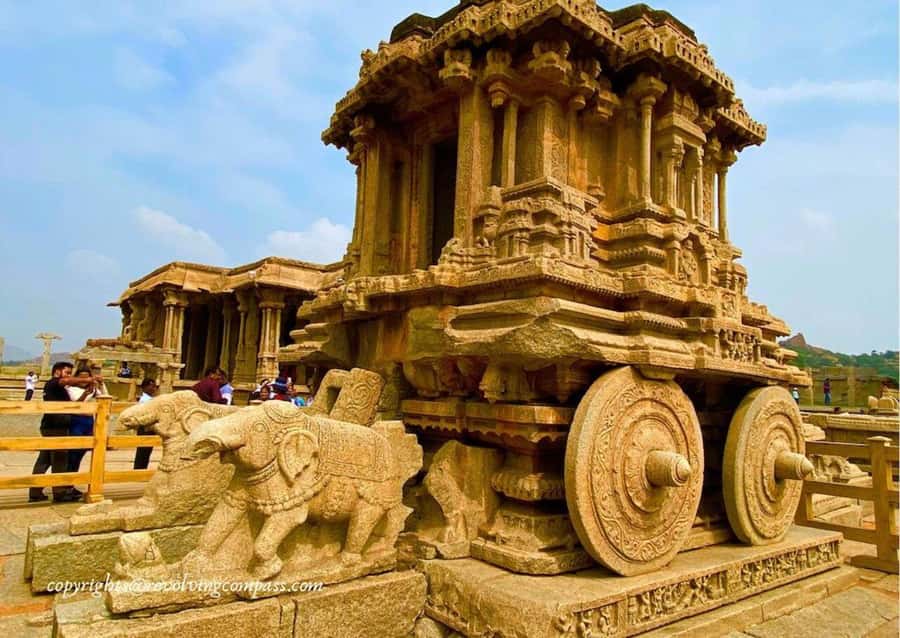
If you’re coming for one headline moment, it’s Vijaya Vitthala Temple. This is the site famous for musical pillars (SAREGAMA)—columns said to produce musical notes when struck correctly—and it’s also where the stone chariot becomes the iconic photo magnet.
Here’s the practical reason this stop works so well: it connects engineering with symbolism. Your guide helps you understand why this architecture is so memorable. It’s not just a cool set of pillars. It’s a signature of Vijayanagara craftsmanship, built to impress visitors and power-holders alike.
The stone chariot deserves real time too. Even if you don’t know the story in advance, you’ll likely feel the intention: it’s a monumental marker designed to be seen and remembered. On a one-day schedule, I’d still treat it like a must-stay moment and not just a quick stop for a picture.
One note: entrance fees aren’t included, so factor that in for your budget. The guide can’t magic that away, but it’s easy to plan for once you know it ahead of time.
Hampi Bazaar (Virupaksha Bazaar): Marketplace Memories in Stone
Then you’ll shift from monumental temples into Hampi Bazaar, also known as Virupaksha Bazaar. During the Vijayanagara Empire, this area functioned as a bustling marketplace, and today it’s a key part of what makes Hampi feel like a living city rather than a frozen ruin.
Your guide ties the story to what you see now: historical pavilions, spaces used for trade, and the kind of cultural events that bring people back to the square during times like the Hampi Utsav. Even if you’re not shopping nonstop, this stop gives your day a human pulse. It’s where the old city shows up as daily life.
In terms of expectations, I’d treat the bazaar like a chance to browse lightly, ask questions, and soak in atmosphere rather than expecting one single grand building. You’re reading the area like a street museum.
Lotus Mahal: Royal Elegance and the Meeting-Place Idea
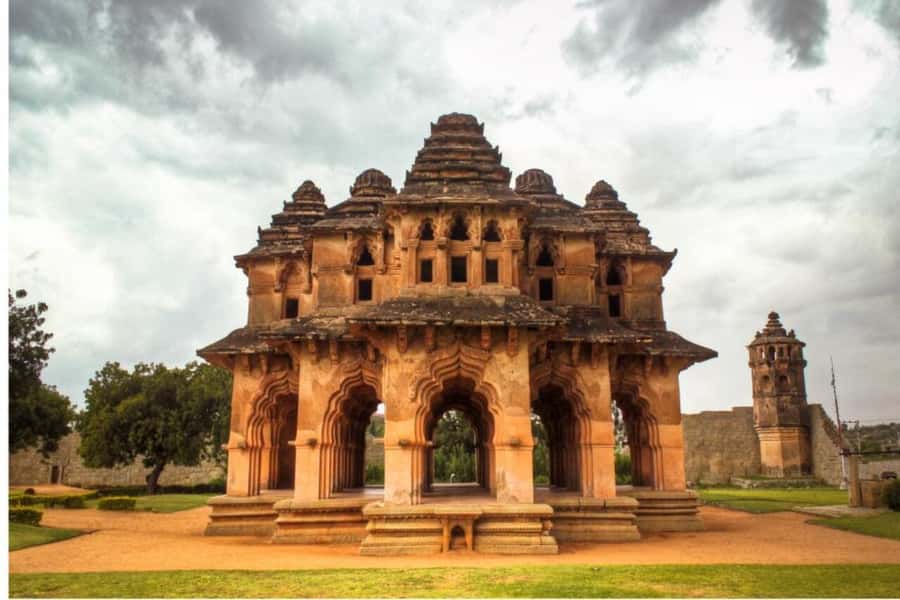
Next is Lotus Mahal, described as lotus-inspired architecture and believed to have been a meeting place for royal women. I love this stop because it’s different from the typical “temple and chariot” rhythm. It adds a softer, more ornamental side to the empire’s building style.
When you stand here with a guide, the structure starts making sense as architecture with purpose, not just an Instagram-ready shape. The lotus theme is readable in the form, and that symbolism helps you imagine how spaces could signal status and role inside the royal complex.
Practical note: since you’re on a time-boxed day with guided hours, try not to treat Lotus Mahal as a quick photo and dash. Even an extra five minutes helps you appreciate the design logic.
Elephant Stables: Where Power Got Housed
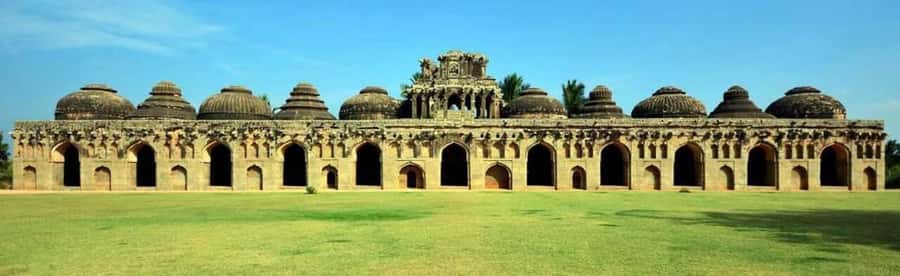
No Hampi day feels complete without the Elephant Stables. These were royal stables used in the 15th century for the elephants of the Vijayanagara Empire, and they’re an architectural marvel in their own right.
This is where you get a reality check about scale. Elephants weren’t just animals. They were part of ceremonies, transport, and the everyday machinery of a big kingdom. When you see a purpose-built structure like this, the ruins start telling a functional story instead of only a decorative one.
If you’re someone who likes travel with meaning (and not only sight-seeing), this stop is a good payoff. It helps you connect the empire’s power to real infrastructure.
The Guide Makes It Click: Long Experience and Real Stories
A strong tour lives or dies by the guide. This one is powered by an English-speaking guide, and I like the way the explanations stay tied to what you’re standing in front of. One of the best parts of this experience is that your guide brings stories that fit the exact spot you’re at—so you don’t feel like you’re getting a generic lecture.
You’ll also likely notice the tone shift during the day. The guide’s experience shows up in pacing and clarity. It’s organized enough that you have time at each site, and you’re not constantly rushing to the next photo angle.
There’s another practical bonus from how this service works: the driver can be flexible if you have reasonable requests during the day. That flexibility can be helpful if you want a bit more time at one stop, or if you’re walking slower than expected.
Price and Value: What You Get for Around $82
For a full day (8 hours) with private AC transfer, hotel pickup and drop in Hospet, an English guide on site, and water provided, this pricing is easier to justify. Entrance fees aren’t included, so your final spend may rise a bit depending on what tickets you choose or what’s required for each monument. Still, the core experience includes the things that are usually the hardest to “DIY”: guided context and an efficient round of key sites.
Where the value really shows: you’re paying for translation of complexity. Hampi can overwhelm you fast—lots of ruins, lots of temples, and plenty of places to get lost. With a guide and a structured loop, you spend your limited time seeing the most meaningful parts rather than guessing.
If you’re a solo traveler, a couple, or a small group, a private car also helps you keep the day comfortable. You’re not squeezing into an unpredictable schedule.
Practical Tips So Your Day Feels Easy
This is a one-day plan, so think like it’s a mission: stay comfortable and protect your time.
- Wear good walking shoes. Even without extreme terrain, temple areas and ruin paths can be uneven.
- Bring a hat and sunscreen if your timing lands in strong daylight.
- Plan for entrance fees not included so you don’t get surprised at the gate.
- If you have specific preferences—more time for carvings, fewer stop-and-go photos—this tour can be customized.
Rules-wise, alcohol and drugs are not allowed. Also, it’s noted that infants must sit on laps. And if you’re pregnant, this tour isn’t suited for that situation.
Who This Hampi Tour Is For (and Who Should Skip It)
You’ll probably enjoy this tour most if you want a guided route that covers the key monuments in a single day. It’s a good fit for first-timers because the guide helps you understand what you’re seeing without needing to be a local historian.
You may want to skip or rethink it if you’re dealing with mobility limitations. It’s not wheelchair accessible, and it’s not described as being designed for that kind of movement. If you’re pregnant, it’s also listed as not suitable.
For everyone else—especially people who want history explained in plain language—this is the kind of day trip that turns “seeing ruins” into a real understanding of how the Vijayanagara world left its mark.
Should You Book This Full Day Hampi Tour from Hospet?
If you have limited time in Karnataka and you want to focus on the most important Hampi stops with an English guide, I’d say yes. The value sits in the structure: pickup included, guided time at major monuments, and a day that doesn’t constantly feel like a sprint.
I’d only hesitate if you need step-free access, or if you strongly prefer unguided wandering with lots of flexibility. This tour is built for a guided route and a set flow, which is a strength for many people—and a mismatch for others.
If your goal is to leave Hampi with a clear mental picture (Virupaksha’s devotional core, Vitthala’s architectural identity, Lotus Mahal’s royal design idea, and Elephant Stables’ practical power), this is a solid way to do it in one day.
FAQ
How long is the Hampi full day tour from Hospet?
It lasts 8 hours.
What is the price per person?
The price is $82 per person.
What’s included in the tour?
You get a private AC vehicle transfer, pickup and drop from Hospet city hotels, an English-speaking guide at Hampi, and 2 mineral water bottles (500 ml) per person. All applicable taxes are also included.
Are entrance fees included?
No. Entrance fees are not included.
Where does pickup happen?
Pickup is from Hospet city hotels. If you’re picked up from outside the city hotels / airport / railway station, an additional charge may apply, payable directly.
Is this a private group tour?
Yes, it’s a private group.
What language is the guide?
The guide speaks English.
Is the tour wheelchair accessible?
No, it is not wheelchair accessible.
Is alcohol or drugs allowed?
No, alcohol and drugs are not allowed.
Can the tour be customized?
Yes, the tour can be customized as per customer requirements.