REVIEW · JAISALMER
Desert Rose Jaisalmer: Overnight Stay Middle of Thar Desert
Book on GetYourGuide →Operated by Desert Rose Jaisalmer · Bookable on GetYourGuide
Sleep under a desert sky is unforgettable. This overnight camel safari from Jaisalmer pairs a sunset camel ride with billion-star stargazing, plus stops like Kuldhara Abandoned Village and a natural oasis. The main consideration: your night is truly in the desert, with sleeping on warm bedding or even the dunes, so comfort expectations need to match the setting.
What makes it feel special is how personal the experience runs. Guides like Mr Asif (and camel caretakers such as Ganesh and Prem, depending on your group) stay close, explain what you’re seeing, and keep the evening moving from tea and snacks to a bonfire dinner and traditional entertainment. The program also includes door-to-door transfers from your Jaisalmer stay, which removes a lot of hassle in Rajasthan—though you’ll still want to dress for the temperature swings of an open night.
In This Review
- Key highlights worth your attention
- A 2-day plan built around light, not just distance
- Leaving Jaisalmer at 2:00 PM and the “getting ready” tea moment
- Kuldhara and the oasis stop: why the first sights matter
- Jeep ride to the dunes: comfortable, but expect a real road
- The camel ride: the best kind of slow
- Sunset on the dunes: snacks, tea, and the horizon shift
- Dinner by wood fire, then bonfire and stargazing
- Sleeping under the stars: warm bedding or the dunes themselves
- Day 2 sunrise: tea, breakfast, and one last camel rhythm
- Price and value around $43: what’s included, and why it adds up
- Who should book this Thar overnight (and who should skip it)
- What to pack so the night doesn’t feel miserable
- Should you book Desert Rose Jaisalmer’s Thar Desert overnight?
Key highlights worth your attention
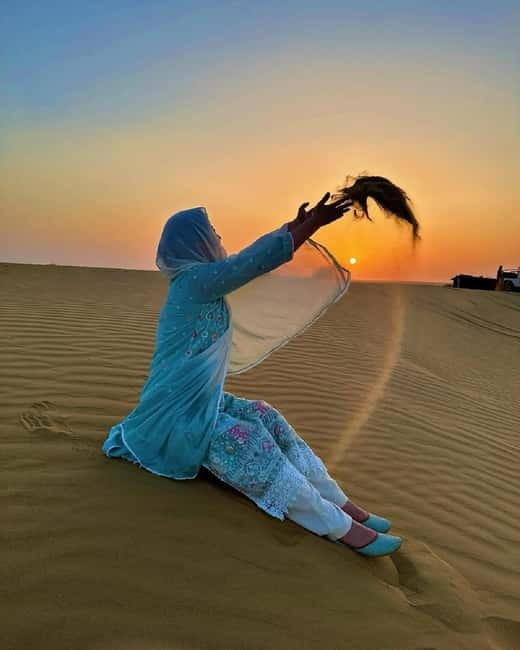
- Camel ride timed for sunset over the dunes, then again briefly after sunrise
- Kuldhara Abandoned Village stop with a guided look at an eerie, historic place
- Wood-fired dinner and campfire time with traditional veg food
- Evening entertainment with dance and a concert-style program
- Guides who handle details with calm, flexible support (including camp-stay adjustments in some situations)
- Tea and snacks on the dunes so the desert feels like a journey, not a transfer
A 2-day plan built around light, not just distance
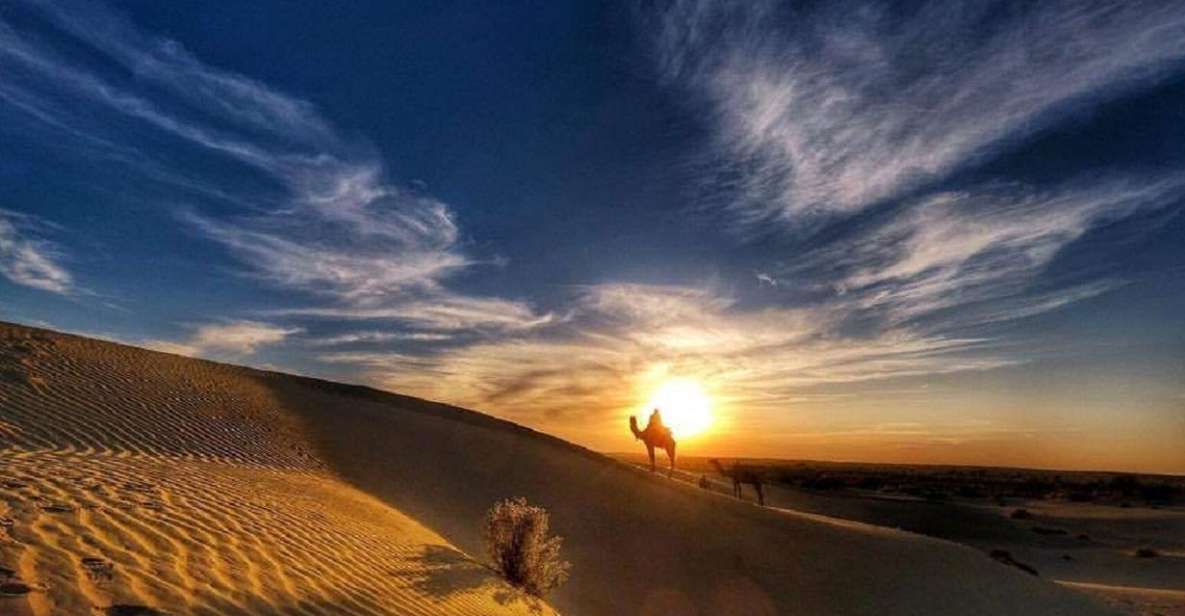
This is a classic desert overnight—short enough to fit a busy Jaisalmer visit, but long enough to feel like you left the city behind. Day 1 is built around the afternoon drive and a gradual shift from dusty roads to open sand. Day 2 is simple and satisfying: sunrise, breakfast, one more camel section, then back to Jaisalmer by morning.
Why that matters: in the Thar, the timing is everything. You’re not just seeing dunes—you’re seeing dunes when the light turns soft, then again when the sky brightens. That’s when the desert stops being scenery and starts feeling like a place.
You can also read our reviews of more tours and experiences in Jaisalmer.
Leaving Jaisalmer at 2:00 PM and the “getting ready” tea moment
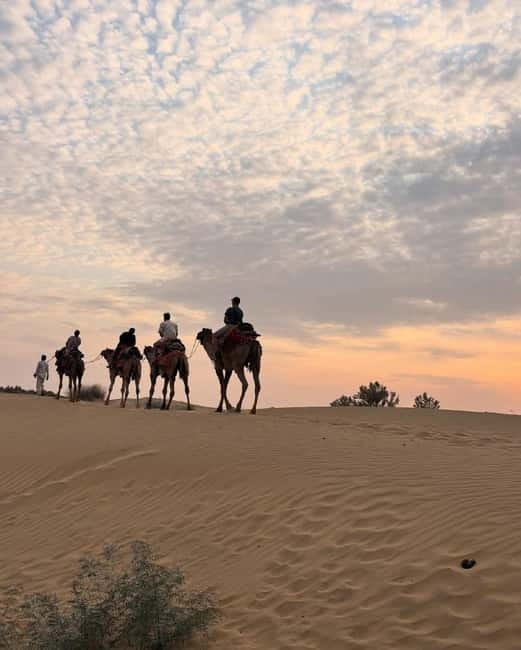
You start from the Desert Rose Jaisalmer office area around 2:00 PM, usually by jeep or car. After pickup, the rhythm tends to be easy: tea/coffee and a relaxed start before you move toward the dunes.
That might sound small, but it’s smart. The afternoon in Rajasthan can still be warm, and the day’s long enough that you’ll want something in your stomach and a chance to settle in before the desert road starts.
Kuldhara and the oasis stop: why the first sights matter
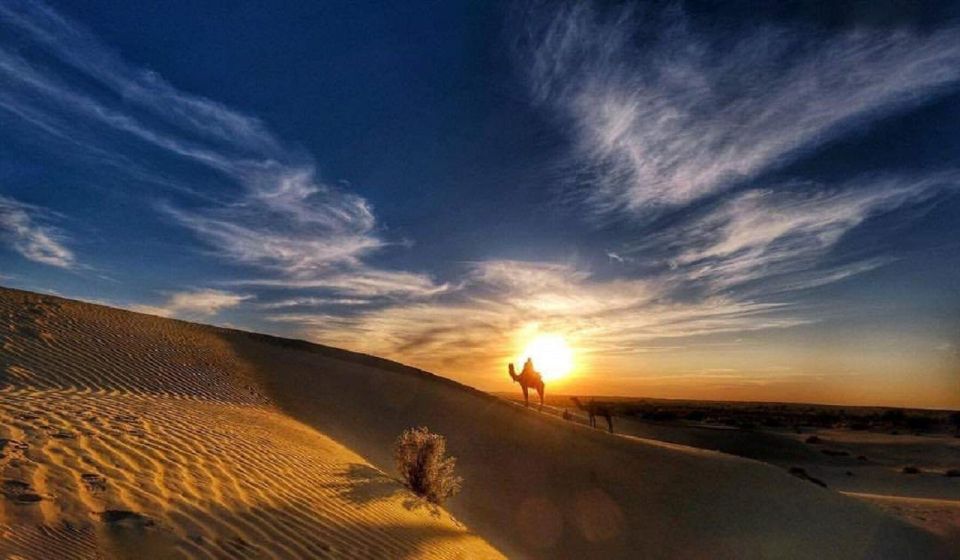
Before you reach the dunes, you get a guided stop at Kuldhara Abandoned Village, with about 30 minutes to see it properly rather than rushing past. Kuldhara is famous for its abandoned feel—quiet buildings, a sense of past lives, and a mood that matches the desert setting. It’s also the kind of stop that helps you understand what makes Rajasthan desert regions more than sand and heat.
On the way, there’s also a natural oasis stop. Again, this isn’t random sightseeing. When you suddenly see a pocket of green in a dry region, it changes how you read the desert. You start noticing how life persists where it can—water matters there, even if it’s limited.
Practical note: keep your water handy and wear sunscreen. Even on a short walk, the sun can feel strong once you’re out in open areas.
Jeep ride to the dunes: comfortable, but expect a real road
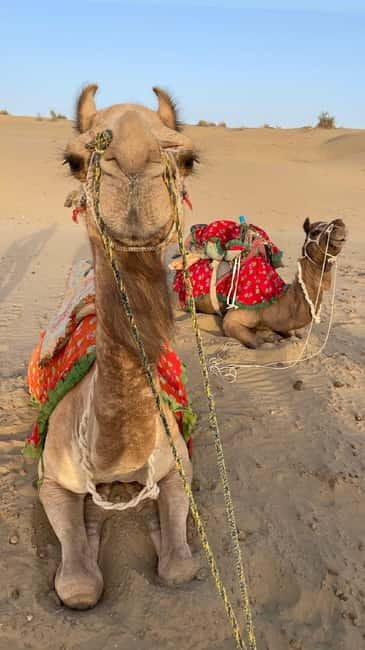
After the Kuldhara stop, you shift into the desert approach by jeep/SUV, with guided time and then the dunes. The total driving portions are not huge, but the point is that you’re moving toward something remote. You’ll feel it in the air and the quiet.
What I like here for your planning: you’re not stuck doing hours of awkward transport with no structure. The schedule keeps your time moving—there are guided segments, short stops, and then a clear build toward the camel ride and sunset.
The camel ride: the best kind of slow
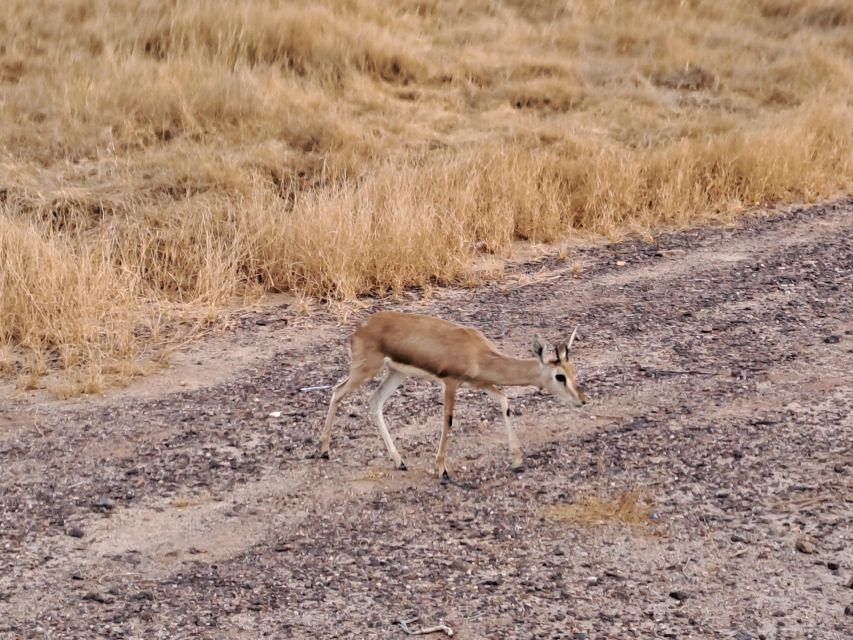
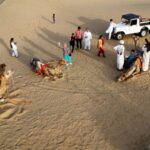
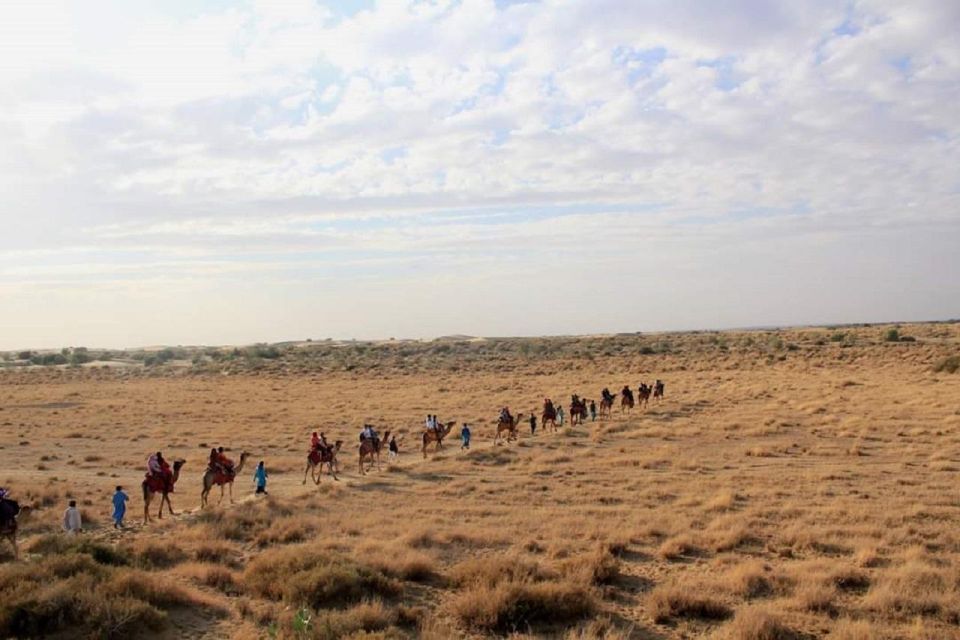
The heart of this safari is the camel time. Day 1 includes a camel ride of roughly 45 minutes into the desert, timed with the approach to the dunes and sunset. Day 2 includes another shorter camel segment of about 30 minutes after sunrise.
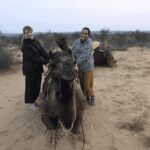
Camel riding has a learning curve—your body needs a bit of adjustment. But that’s also why it works. You’re not strapped into a thrill ride. You’re moving at an animal’s pace through sand and wide sky, with your guide explaining what you’re seeing as you go.
From the experience level described in the program, you’re also likely to spend this time with camel caretakers—people who know the animals and the routine. That matters for comfort and safety, especially when everyone is far from city lights.
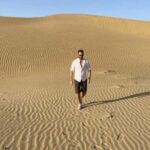
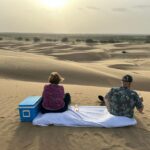
Sunset on the dunes: snacks, tea, and the horizon shift
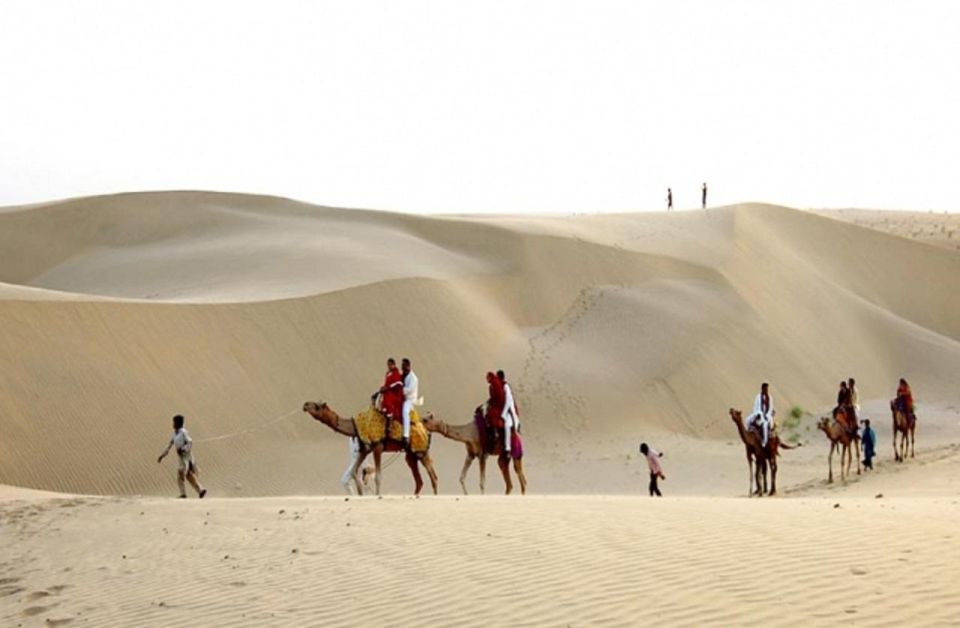
Once you reach the dunes, the plan is to pause—properly. You’ll have tea/coffee and snacks while you take in the views and wait for sunset. This is the part that makes the tour feel romantic in a real way, not staged: you watch the sky change, you take photos when the light goes gold, and then you move into the night plan.
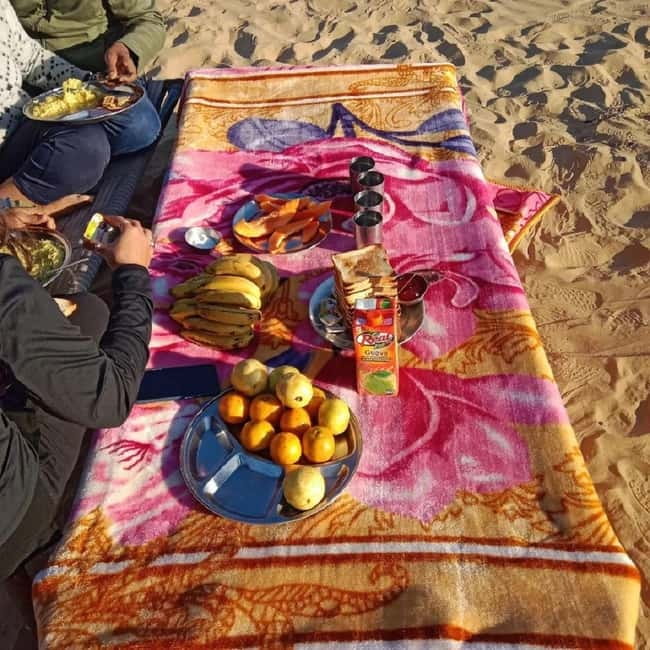
A small detail that helps: having snacks and warm drinks up there means you’re not just cold and hungry while you wait. The tour keeps you comfortable enough to enjoy the view.
Dinner by wood fire, then bonfire and stargazing
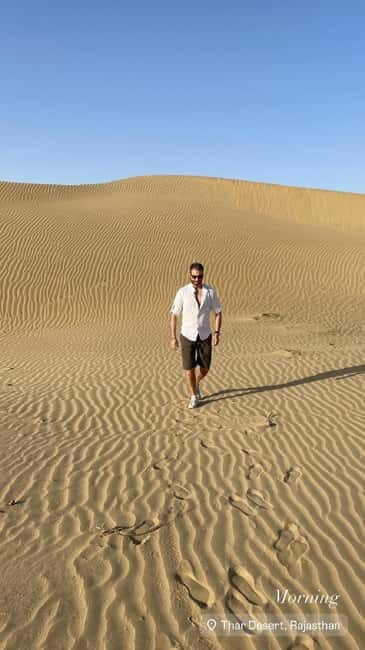
Evening is where this experience earns its reputation. You’ll have a dinner prepared on wood fire by the camel driver/caretaker team. The food is described as delicious traditional authentic veg, and the program includes campfire time and tea/snacks as part of the flow.
After dinner, there’s stargazing time—sleep is scheduled for an open-sky feel, with “billion of stars” as the expectation. If you’ve ever wanted to see how the night sky looks when it’s not washed out by city lights, this is that night.
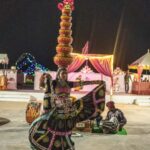
Also, evening entertainment is included. Expect a traditional dance show and additional performance elements like a concert/dance program. It’s not something you have to love for it to be worth it, but it does add warmth and energy after a day that’s mostly sand, silence, and sky.
Sleeping under the stars: warm bedding or the dunes themselves
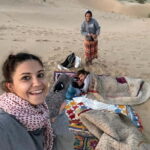
Here’s the big reality check, and it’s important. The sleeping plan is described as warm desert-style bedding or sleeping on the dunes, with the sky overhead. That’s part of the charm—but it’s also why you need to dress smart and manage expectations.
If you’re the type who needs hotel bedding and indoor comfort, this is not that. The upside is scale: you’re in a place where the night actually feels dark. A lot of people go for this exact contrast.
Balance point: the program has shown flexibility in some situations. In at least one experience, a booking intended for open-desert sleeping was swapped to a resort-style stay when luxury tents were needed. That’s a good sign the company listens—but it’s not guaranteed for every booking, so don’t plan like it will happen for you.
Day 2 sunrise: tea, breakfast, and one last camel rhythm
Morning starts with sunrise tea and coffee. Then you eat breakfast after sunrise—keeping the experience easy and not rushed. You’ll head back out on camel for about 30 minutes, then switch to jeep transport back toward Jaisalmer.
You’re scheduled to reach Jaisalmer by around 10:00 AM, which is great if you want to keep your day for exploring forts, havelis, markets, or just a long meal at ease. There’s also a short stop for a Jaisalmer walk/sightseeing before you’re dropped off.
Price and value around $43: what’s included, and why it adds up
At around $43 per person for two days, the value comes from what’s rolled into the price—not just the camel ride. Included items cover:
- Round-trip transfers from your Jaisalmer accommodation area (door-to-door round trip is stated)
- Park fees for the desert national park portion
- Meals: breakfast and dinner, plus snacks and tea
- Accommodation for the overnight
- Entrance/coverage for key stops like Kuldhara and the desert areas in the program
- A tour escort/host and guided pieces
What’s not included is also clear: lunch and alcoholic drinks (available to purchase). That’s normal for a safari-style overnight, and it’s helpful to plan so you don’t assume lunch is covered.
My take on value: the real “cost saver” isn’t the camel ride itself. It’s the fact that transportation, meals, and overnight are handled as one package—meaning you don’t spend your time bargaining, coordinating drivers, or building an itinerary for two full days.
Who should book this Thar overnight (and who should skip it)
This tour fits best if you want a simple, low-fuss adventure that feels local and not like a rushed checklist. You’ll likely enjoy it if you:
- Like animals and are okay with riding at a calm pace
- Want a genuine night under open sky rather than a hotel-style evening
- Appreciate guided stops like Kuldhara and the desert national park segment
- Enjoy a social camp atmosphere with entertainment and warm food
It’s not meant for everyone. The program states it’s not suitable for children under 6, pregnant women, people with back problems, and people over 75. If any of those apply, skip it for safety and comfort.
What to pack so the night doesn’t feel miserable
The tour lists a short but practical packing set, and I agree with it:
- Sunglasses
- Sun hat
- Sunscreen
- ID card or passport
For the overnight itself, you might want to think in layers (the desert can cool off sharply after sunset), even though the tour doesn’t list clothing beyond the sun items. If you’re sensitive to cold, plan accordingly.
Also, bring the mindset that this is a desert night. Dust, wind, and rougher ground are part of the setting when sleeping outdoors.
Should you book Desert Rose Jaisalmer’s Thar Desert overnight?
Yes—if you want the real desert night, not a day trip. The best reasons to book are the combination of sunset camel riding, Kuldhara’s guided stop, and the evening plan that moves from wood-fired dinner to stargazing. You also get support from guides like Mr Asif, with camel caretakers such as Ganesh and Prem helping make the experience feel safe and taken care of.
Hold off if you’re expecting full hotel comforts, guaranteed luxury tents, or you have physical limitations that make outdoor sleeping and camel riding uncomfortable. This tour is priced like an adventure package for a reason. It’s meant to be lived, not just consumed.
If you match the vibe—outdoors, stars, and a calm camel pace—this is one of the more memorable ways to do Jaisalmer beyond forts and restaurants.