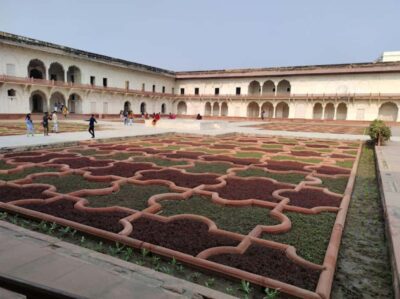
REVIEW · OLD DELHI
Delhi: Old Delhi & Spice Market Tour
Book on GetYourGuide →Operated by Reality Tours and Travel Private Limited · Bookable on GetYourGuide
Old Delhi runs on motion. This Old Delhi walking tour turns that famous crush of people into a route you can follow, and it keeps you moving through the Mughal-era core without feeling lost. I especially like the Khari Baoli spice market stops, plus the way you’ll see multiple faith landmarks close together—mosque to temple to gurudwara—while you ride a rickshaw for perspective.
One watch-out: you’re on your feet, and you’ll need modest dress for the temple visits (shoulders/chest covered, below the knee, nothing too tight or revealing).
In This Review
- Key highlights to look for
- Making sense of Old Delhi with a walking route
- Rajiv Chowk to Chawri Bazar: start smart, not early and confused
- Fatehpuri Masjid: a landmark you can feel in the streets
- Khari Baoli: Asia’s largest wholesale spice market up close
- The Jain temple stop and the city’s layered faith
- Kinari Bazar: the lanes for small, useful buys and street scenes
- Paan Mandi and the flower market vibe: the smells and small rituals
- Gurudwara Sis Ganj: the Sikh kitchen atmosphere (and sometimes more)
- The fort view and outside-only perspective
- Rickshaw and metro: why the transport is part of the experience
- What’s included vs. what you’ll pay separately
- Who this Old Delhi tour suits best
- Quick practical tips before you go
- Should you book this Old Delhi & Spice Market Tour?
- FAQ
- How long is the Old Delhi & Spice Market Tour?
- Where do I meet for the tour?
- What’s included in the price?
- Are monument entrance fees included?
- Is the tour mostly walking?
- What should I wear since the tour includes temples?
- Can I bring luggage or large bags?
- Is this tour suitable for people with mobility impairments?
- Is there free cancellation?
Key highlights to look for
- Khari Baoli’s wholesale spice market: you get the real scale, not a staged stop
- Rickshaw views of busy lanes: a quick ride that helps you see the city’s flow
- Old Delhi’s faith mix: Fatehpuri Masjid, Jain Lal Mandir, and Gurudwara Sis Ganj in one loop
- Photo-friendly moments: a stop around Chawri Bazar plus plenty of street scenes
- Lesser-known corners: time around Paan Mandi and the flower market vibe
- A local, English-speaking guide: route knowledge matters here, and it shows
Making sense of Old Delhi with a walking route
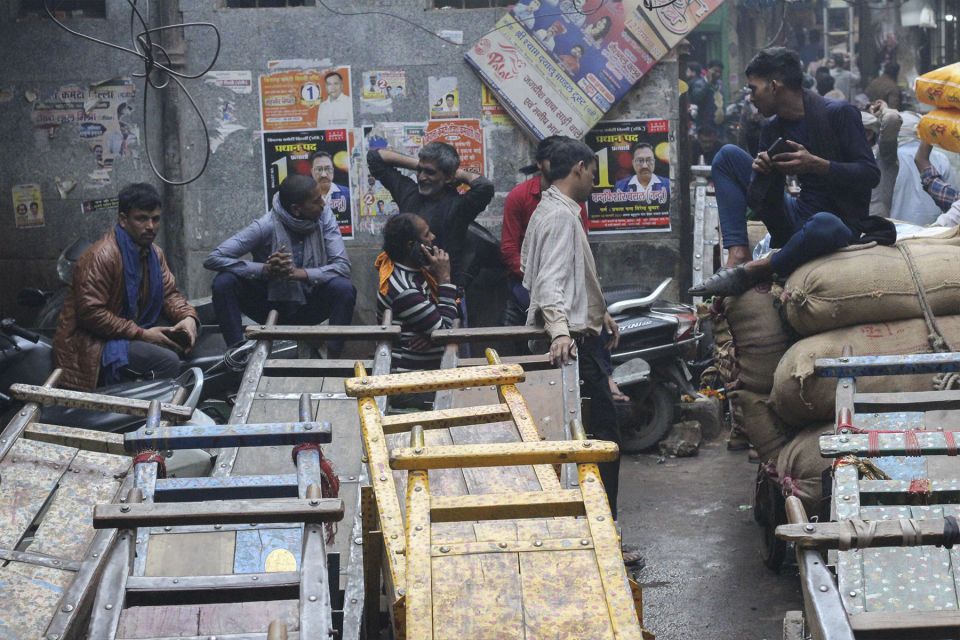
Old Delhi is loud, tight, and full of momentum. If you try to do it alone, you can end up spending more energy dodging scooters and crowds than actually seeing anything. The value of this tour is that it gives you a clear flow through the area: metro in, short guided walks, and rickshaw segments when the street conditions demand it.
You’ll also get a sense of why Old Delhi feels like the city’s beating heart. The tour is set in the historic core originally built as the capital of the Mughal Empire in 1639. That matters, because the streets and landmark placement were built for movement and defense long before today’s traffic problems.
Two things make a big difference here: the pace and the guidance. You’re not expected to wander randomly. The guide keeps the route moving while explaining what you’re seeing—forts and major religious buildings from the outside, plus the smaller market lanes that most people skip.
Rajiv Chowk to Chawri Bazar: start smart, not early and confused
Most tours in Delhi either start too late or rely entirely on taxis. This one mixes in the metro so you’re not burning time on longer cross-city travel. You’ll start at Rajiv Chowk (the tour notes it as the main option), then take the metro for about 10 minutes before you enter the market zone.
Your first market-facing stop is Chawri Bazar. There’s a quick photo stop and a short guided segment. I like this setup because it helps you get bearings fast: you learn what to pay attention to—shop signs, product types, and how lanes connect—before the route goes deeper.
Then comes the first practical shift: the tour uses a rickshaw/pedicab segment to move you through the tighter stretch efficiently. In Old Delhi, that matters. A walking-only approach can turn into constant stopping. A quick ride helps you keep moving and see more of the street rhythm.
Fatehpuri Masjid: a landmark you can feel in the streets
From Chawri Bazar, you move toward Fatehpuri Masjid for a guided visit and a short walk. This is the kind of stop that gives Old Delhi context without turning the experience into museum time.
You’re not just looking at a building. You’re watching how people approach, pause, and continue. A big part of appreciating a city like this is understanding how religious landmarks function as daily anchors for the surrounding neighborhoods.
If you’re photographing, you’ll likely find plenty of angles where the mosque sits at the edge of the lane—so you get both the structure and the street life in the same frame. Just keep your attention on respectful behavior and modest clothing here.
Khari Baoli: Asia’s largest wholesale spice market up close
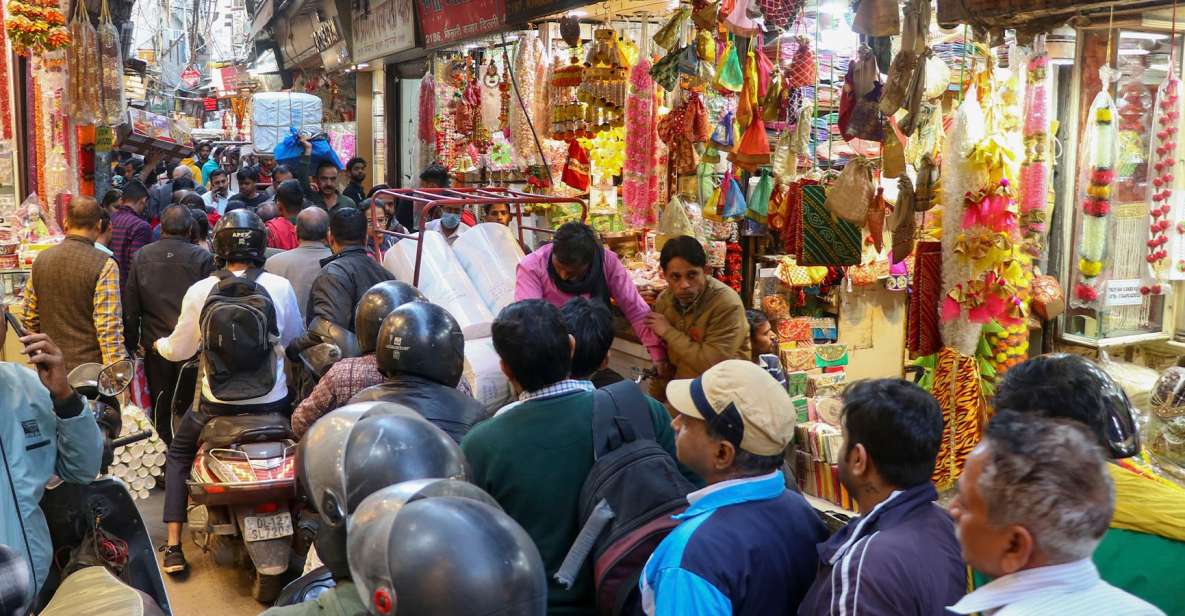
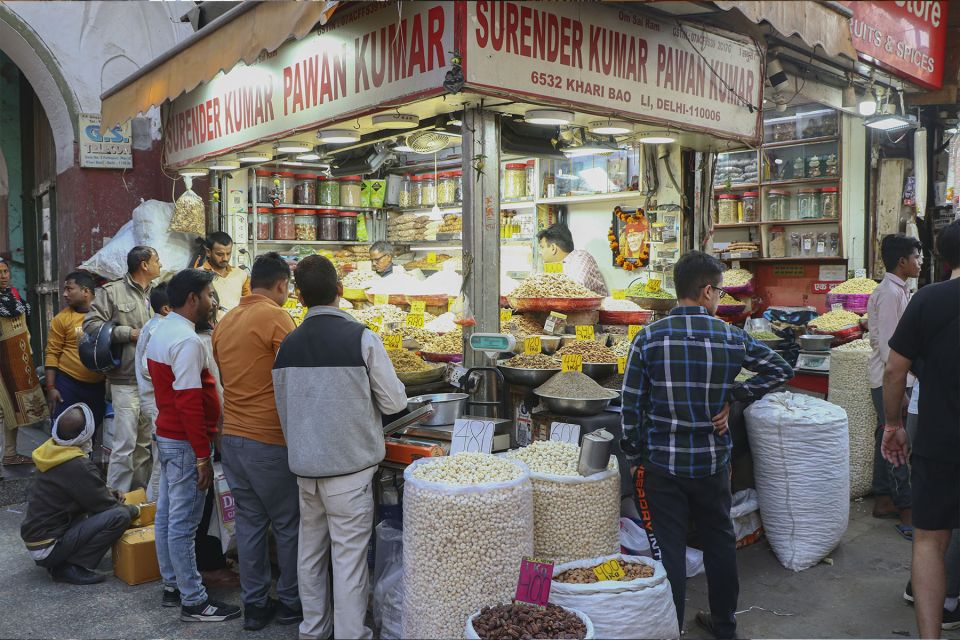
The centerpiece is Khari Baoli, described as Asia’s largest wholesale spice market. This is where the tour earns its name. The market isn’t just spice racks under lights. It’s busy, commercial, and built for trade—so the scale feels immediate.
Here’s what I think you’ll notice quickly:
- People move with purpose because they’re buying in volume
- Shops don’t feel like single storefronts; they feel like parts of a larger system
- Colors and textures are front-and-center: powders, dried botanicals, and stacked goods
Even if you don’t plan to shop much, the market stop gives you a strong sensory anchor for the whole evening. It’s also where a guide becomes extra useful. In a place this active, a guide helps you understand what you’re looking at and how not to get stuck in a slow-moving bottleneck.
The Jain temple stop and the city’s layered faith
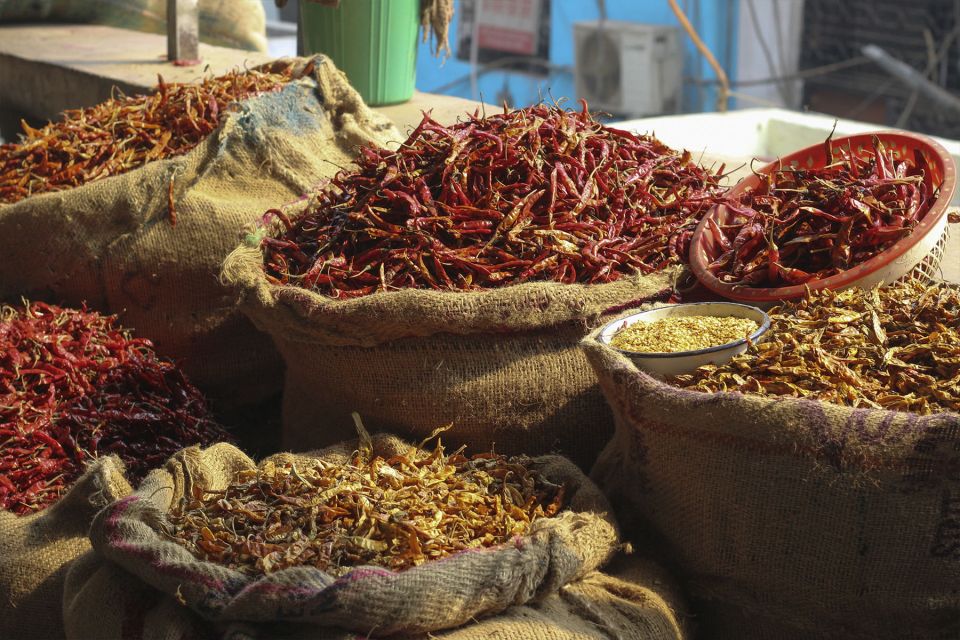
Next you’ll visit Shri Digambar Jain Atishay Kshetra Lal Mandir. You get a guided visit here, plus time to walk. This stop is valuable because it broadens the Old Delhi story beyond one dominant landmark type.
Old Delhi feels like one neighborhood, but it holds many spiritual spaces side by side. Seeing a Jain temple right after a major mosque helps you understand the area as a layered community rather than a single-theme sight.
You’ll also get practice following the guide’s cues: when to move, when to pause, and when to keep space. It’s not complicated, but it does make your experience smoother.
Kinari Bazar: the lanes for small, useful buys and street scenes
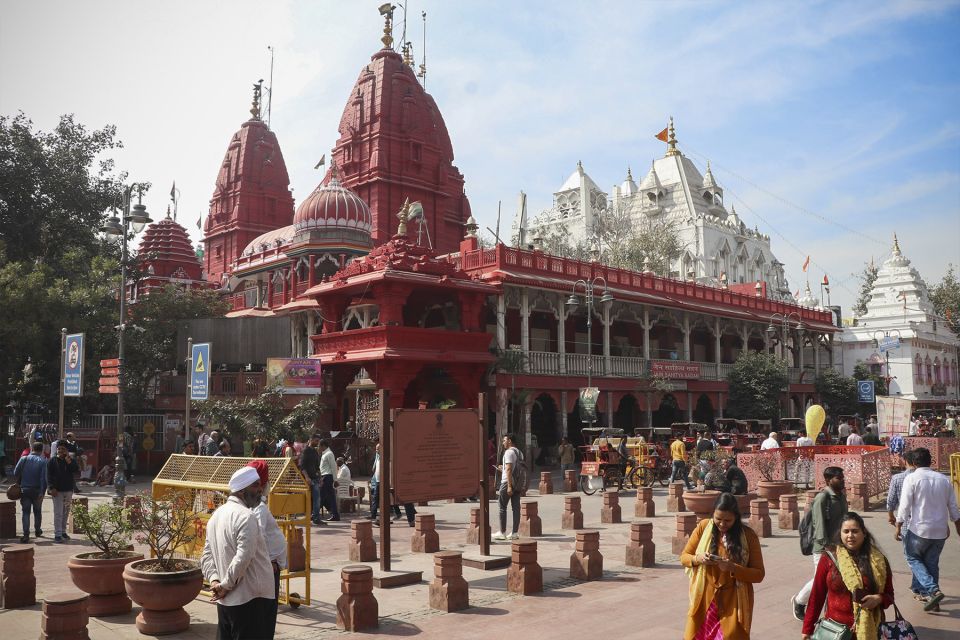
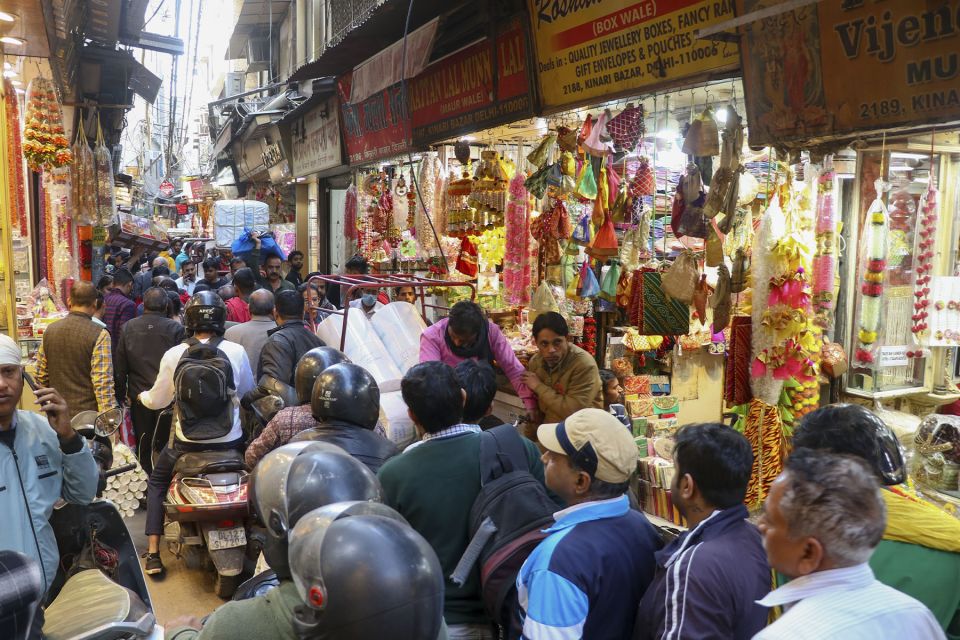
After the temples, the tour continues toward Kinari Bazar. This segment includes guided walking time so you can slow down just enough to notice what’s different from the spice market experience.
Kinari Bazar tends to appeal to people who like practical shopping: things you can actually use or bring home. It’s also great for photography because the narrow lanes create natural framing and depth—especially when you keep your eyes up, not just on shop counters.
The key is to keep your expectations realistic. This is not high-end retail. It’s craft-and-trade neighborhood shopping, and that’s exactly why it’s worth seeing.
Paan Mandi and the flower market vibe: the smells and small rituals

The tour also highlights time around Paan Mandi and the flower market corner. Even without a long lesson, these places hit the senses fast.
Paan areas tend to be about ritual and habit—something locals use as a daily pause point. Flower markets tend to be visual and fragrant, and they often feel like the opposite of spice: lighter, more delicate in color, and more focused on smaller items.
This is the kind of stop that makes Old Delhi feel lived-in rather than staged. If you like street-level details—signs, packaging styles, how vendors arrange items—this is where you’ll feel rewarded.
Gurudwara Sis Ganj: the Sikh kitchen atmosphere (and sometimes more)
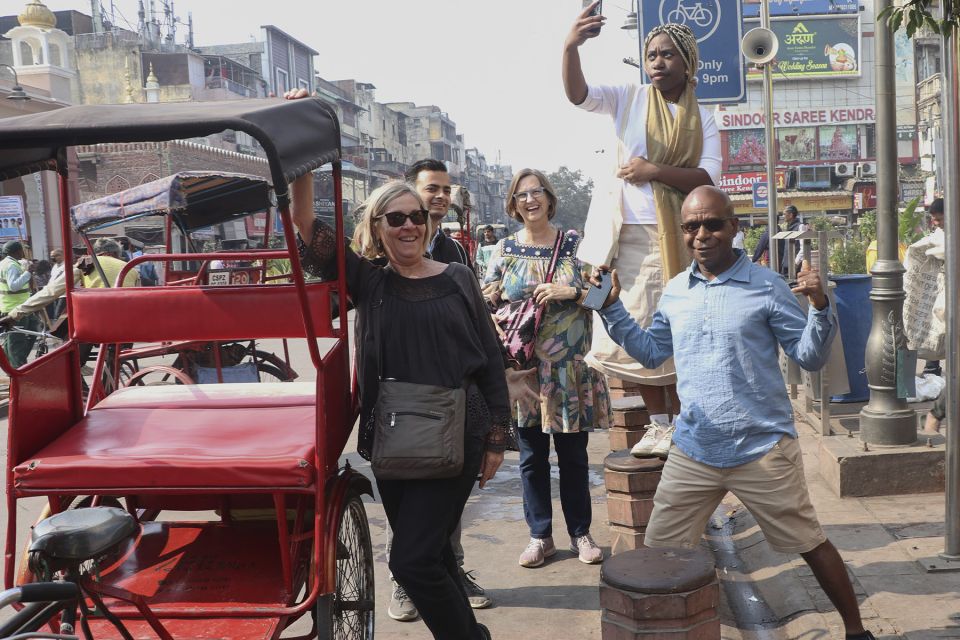
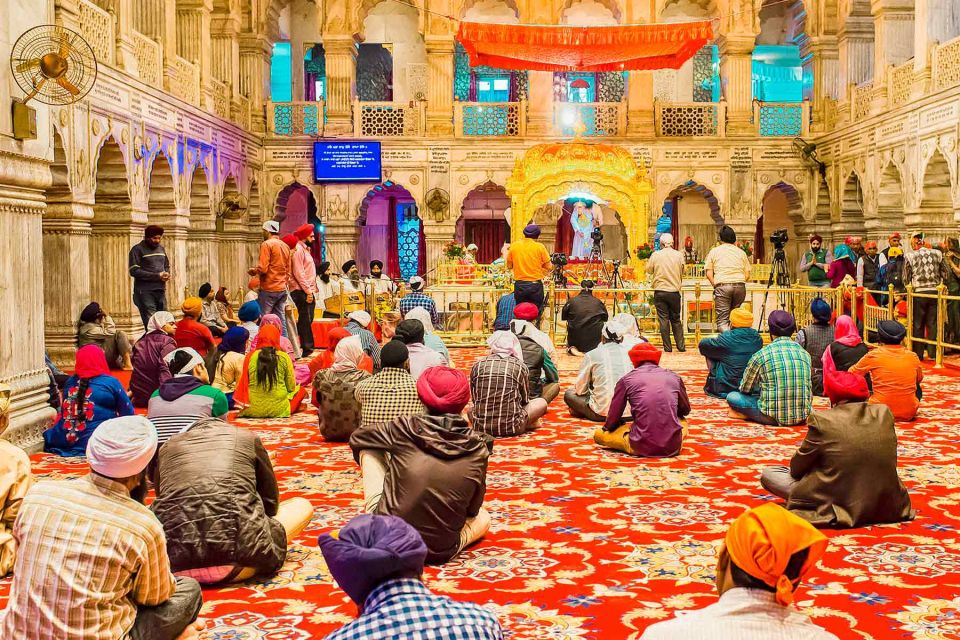
One of the most memorable stops is Gurudwara Sis Ganj, with a longer guided visit time (about 20 minutes). This stop matters because it adds a community side to the sightseeing.
What I love about this segment is the way it can connect you with daily life, not just architecture. In the experience reports I’ve read from this tour format, people have been able to see (and in some cases help with) chapatti making in the Sikh kitchen for the needy, and enjoy the atmosphere around the meal service.
To be clear: your exact involvement can vary by timing and crowd flow. But the core point stays the same—this gurudwara visit isn’t only about a building. It can be about how care and food culture work in the center of the city.
The fort view and outside-only perspective
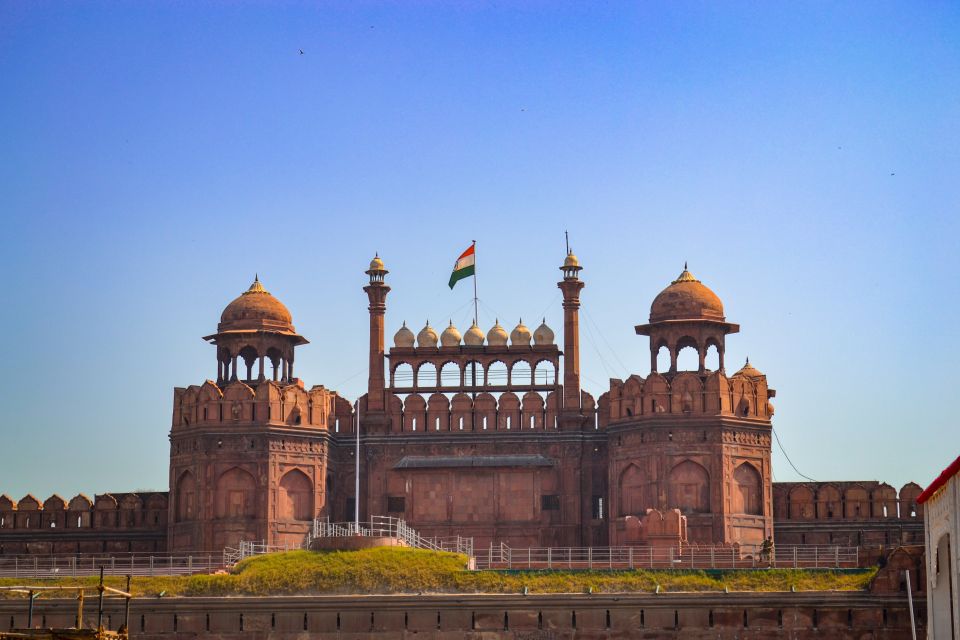
Old Delhi can tempt you into spending hours on entrances. This tour keeps things efficient by focusing on key landmarks while limiting what you pay for. For example, the Red Fort is part of the story, but you’ll view it from the outside rather than doing monument entry.
That works well for most first-timers. You still get the visual recognition and context, but you don’t lose momentum to ticket lines and indoor rules. If you later decide you want a deeper Red Fort visit, you can plan that as a separate day trip.
Rickshaw and metro: why the transport is part of the experience
This tour includes both a metro ticket and a rickshaw ride. That combination is more than convenience—it shapes how you perceive the city.
- Metro gets you into the area fast without fighting traffic for too long.
- Rickshaw gives you a short, comfortable way to see the street grid from above lane level.
- Walk time then lets you slow down where it counts: markets and religious stops.
The tour timing is built around short segments: guided pauses, short walks, and quick transport hops. You still cover plenty of ground, but you’re not stuck walking every single meter.
One practical note: the stated duration is about 3.5 hours, and timing can sometimes run a bit longer depending on crowd flow and group movement. In other words, wear shoes you can handle for real walking.
What’s included vs. what you’ll pay separately
For the price, the big value is what’s already covered:
- Local English-speaking guide
- Metro ticket
- Rickshaw ride
What’s not included is entrance to monuments. Since the tour leans on outside views for major landmarks, this usually keeps extra costs limited. Still, if you plan to add any paid entrances later, budget for that separately.
At $17 per person, this is a strong deal for an evening tour. You’re paying mostly for your route guide and the built-in transport pieces. If you were to hire a private guide and arrange metro and rickshaw separately, the total cost typically rises quickly.
Who this Old Delhi tour suits best
This tour fits best if you:
- Want Old Delhi market energy without getting swallowed by it
- Prefer a structured route rather than self-guided wandering
- Like seeing multiple faith landmarks close together
- Want a mix of street scenes, markets, and a chance at food-kitchen culture
It’s not a great fit if you:
- Have mobility impairments, since the tour isn’t designed around accessibility needs
- Hate walking on uneven sidewalks and in crowded lanes
- Need large luggage storage (the tour notes no luggage or large bags allowed)
Quick practical tips before you go
- Bring comfortable shoes. You’ll be on foot through tight lanes and market steps.
- Use sunscreen, since evening light and street walking can still catch you.
- Pack light. If you have a small bag, keep it manageable; the tour doesn’t want large baggage.
- Dress for temple visits. That means shoulders/chest covered and below-knee clothing, with nothing too tight or revealing.
Also, expect a crowd. Old Delhi isn’t quiet, and the guide’s job is to keep you moving at the right times.
Should you book this Old Delhi & Spice Market Tour?
If you’re in Delhi for a short stay and you want a fast, meaningful introduction to Old Delhi’s street logic, I’d book it. The combo of Khari Baoli, major faith landmarks, and market lanes like Kinari Bazar gives you a well-rounded slice of the city’s everyday life.
Skip it only if you know you struggle with crowded walking or you need a more accessibility-friendly plan. Otherwise, this is a high-value way to get the best parts of Old Delhi in one organized evening, led by local guides who clearly know how to turn chaos into a workable route—whether it’s a guide like Sam, Neresh, Naresh, or Hema steering the group through the lanes.
FAQ
How long is the Old Delhi & Spice Market Tour?
The tour duration is about 3.5 hours.
Where do I meet for the tour?
The meeting point may vary depending on the option booked, but Rajiv Chowk is listed as a starting option.
What’s included in the price?
Included items are a local English-speaking guide, a metro ticket, and a rickshaw ride.
Are monument entrance fees included?
No. Entrance to monuments is not included.
Is the tour mostly walking?
It includes guided walking between stops, plus short metro and rickshaw segments.
What should I wear since the tour includes temples?
You need modest dress: shoulders and chest covered, clothing below the knee, and nothing too tight or revealing.
Can I bring luggage or large bags?
No. Luggage or large bags are not allowed.
Is this tour suitable for people with mobility impairments?
No, it is not suitable for people with mobility impairments.
Is there free cancellation?
Yes. You can cancel up to 24 hours in advance for a full refund.