REVIEW · AGRA
From Delhi: Taj Mahal Sunrise and Elephant Conservation Tour
Book on GetYourGuide →Operated by Green India Voyages · Bookable on GetYourGuide
Early mornings in Agra can be magical. This one-day trip is built around Taj Mahal at sunrise and then keeps the momentum with Agra Fort and a visit to an ethical elephant conservation center, so you’re not wasting time between highlights.
I especially like how the route is structured: you get the Taj Mahal when the light turns soft and dramatic, and you spend your next stop supporting animal care through Wildlife SOS-style conservation work. One thing to consider: it’s a pre-dawn day, with a long drive from Delhi, so you’ll want to be ready to wake up early and keep your energy up.
In This Review
- Key moments you’ll feel right away
- A 2 AM-style start: the day begins before the sun
- Taj Mahal sunrise: why the light changes everything
- Skip-the-line entry and how to use it
- Breakfast in Agra: fuel that actually helps
- Agra Fort: Mughal power with an easy Taj view
- Wildlife SOS elephant conservation: what your visit is and isn’t
- Getting back to Delhi: timing that fits real schedules
- Price and value: what $2.47 buys you in practice
- Who should book this sunrise + elephants day
- Should you book this Delhi-to-Agra Taj sunrise tour?
- FAQ
- What’s the total duration of the tour?
- How long is the drive from Delhi to Agra?
- How long do we spend at the Taj Mahal?
- Is the elephant stop interactive?
- What languages are available for the live tour guide?
- What shouldn’t I bring or do during the tour?
Key moments you’ll feel right away
- Pre-dawn pickup from Delhi/NCR keeps the timing tight for sunrise
- Guided Taj Mahal entry with a separate entrance helps you avoid line chaos
- Agra Fort UNESCO views give you that postcard Taj angle across the Yamuna River
- Wildlife SOS elephant conservation visit focuses on viewing and learning, not riding or performing
- Plenty of break time for breakfast and a lunch stop so you can actually enjoy the day
- Private car and live guide means you’re not trapped in a slow-moving group shuffle
A 2 AM-style start: the day begins before the sun
This tour is designed for one specific reason: to see the Taj Mahal in the first light, before crowds and heat turn the day into a sprint. Pickup happens before dawn from a long list of Delhi/NCR spots—places like New Delhi, Connaught Place, Aerocity, Old Delhi, Noida, Ghaziabad, Faridabad, Gurugram, Greater Noida, and even Agra. If you’re staying somewhere central, it’s usually easier than coordinating multiple transfers.
The drive from Delhi to Agra is typically 3 to 4 hours, in an air-conditioned vehicle with a private, uniformed driver. Along the way, you’ll have bottled water and hand sanitizer, which sounds minor until you’re doing early morning sightseeing when everyone’s running on caffeine.
If you’re traveling with kids, families can manage this kind of schedule—one private-group example in the mix was a family traveling with adults and children, and the comfort of the car clearly mattered. Still, if you’re sensitive to early wake-ups, plan your night like a pro: early dinner, minimal last-minute plans, and a charged phone for photos.
You can also read our reviews of more tours and experiences in Agra


Taj Mahal sunrise: why the light changes everything
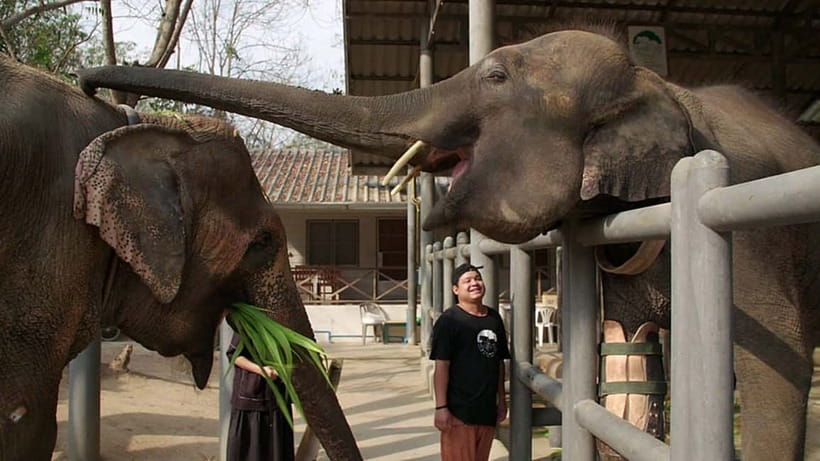
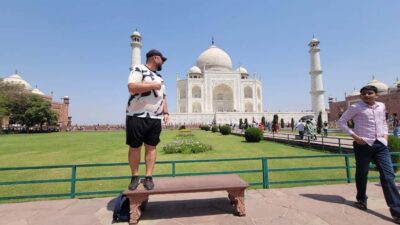
The Taj Mahal is famous in any weather, but at sunrise it hits differently. You’ll arrive as the sky starts to lighten, then enter through the main gates with your local guide. The best part is the way the marble shifts in color as the sun rises—moving through shades of pink, gold, and ivory as daylight grows.
Your guide will set the scene with stories that help you look past the obvious postcard view. You’ll hear how Emperor Shah Jahan built the monument in memory of Mumtaz Mahal, and you’ll get context for the symbolism behind its symmetry and calligraphy. That matters because once you know what you’re looking at, you spend less time scanning and more time truly seeing.
The guided time is about 2.5 hours, which is long enough to walk through key areas, pause for photos, and still avoid the feeling of being herded. You’ll also have time to explore the reflecting pools, gardens, and the marble platform close up.
Photo tip (practical): sunrise is brightening fast, and shadows change quickly. Wear sunglasses and use sunscreen even if it feels cool at dawn. Also, keep your camera settings ready—there’s usually no time for a slow menu hunt once the light hits.
Skip-the-line entry and how to use it
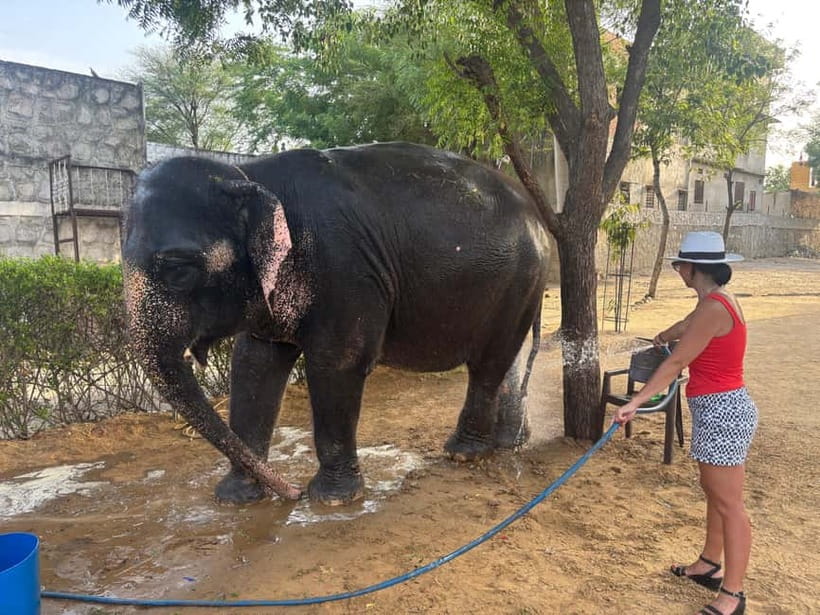
Taj Mahal mornings can be chaotic, and the tour addresses that with skip-the-line entry via a separate entrance. In real-world terms, this means less time waiting outside in cold air or early heat and more time moving through the monument while conditions are best.
Because you’re with a live guide, you’ll also get help choosing where to stand for the classic views and how to time your shots as the light changes. That’s not just convenience—it’s how you avoid spending your one Taj Mahal visit stuck in the wrong spot at the wrong minute.
This is a private group setup, so you’re not fighting for space in a packed bus rhythm. It’s still popular, but the pacing is more controllable when there’s one guide and one group plan.
Breakfast in Agra: fuel that actually helps
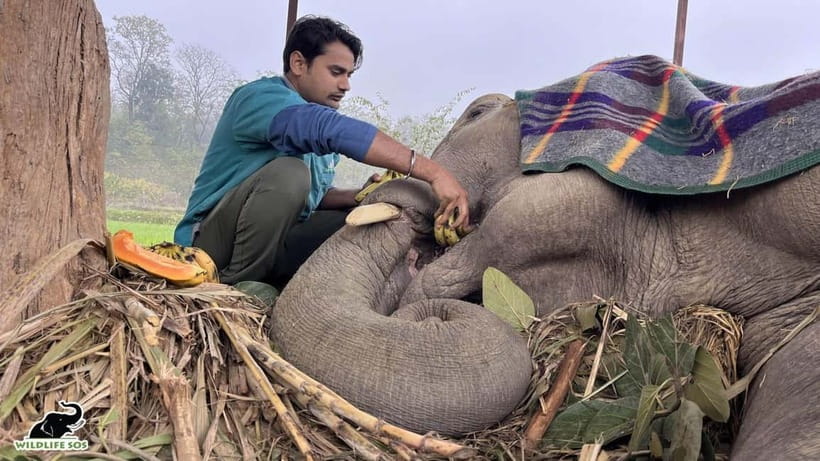
Right after the sunrise visit, you’ll get a break at a hotel buffet or a top local restaurant—scheduled at 45 minutes for breakfast. This is a real part of the experience, not just a checkbox. Sunrise tours can burn you out fast, and food is often the difference between enjoying the rest of the day and counting minutes until you can sit down.
The breakfast options are described as a mix of local and international choices, with coffee and Indian-style tea available. You’ll have enough time to eat without turning breakfast into a second full event.
How I’d approach it if you want to enjoy the day: keep it filling but not heavy. Eggs, fruit, toast, yogurt—anything you can digest comfortably in warm afternoon weather. If you’re the kind of person who needs strong caffeine, plan for coffee early.
Agra Fort: Mughal power with an easy Taj view

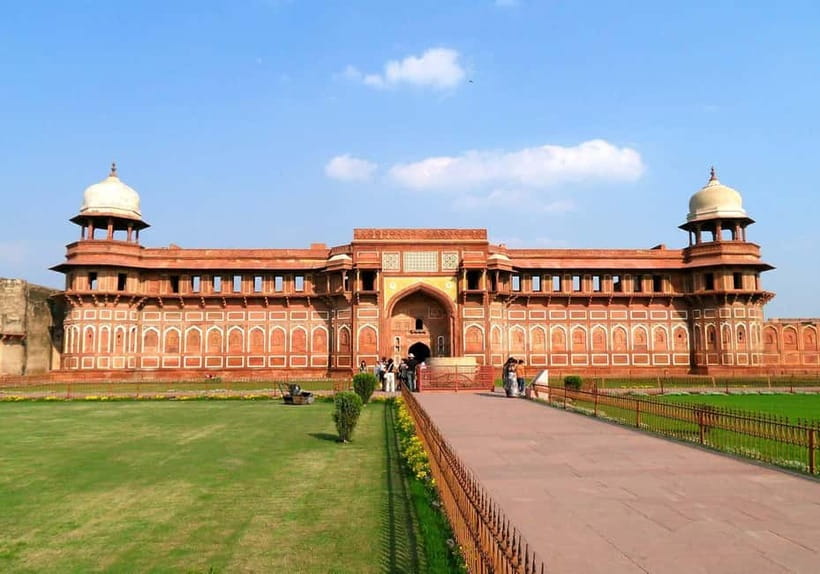
After breakfast, you head to Agra Fort, a UNESCO World Heritage Site and one of the best places in Agra to understand Mughal rule in practical terms: this wasn’t just a pretty palace world; it was power, control, and architecture meant to impress.
Your guided time here is about 1.5 hours, with time to explore major sections like Jahangiri Mahal, Khas Mahal, and Diwan-i-Khas, described as the Hall of Private Audience. The fort’s carvings and palace-like spaces are the focus, and the guide should help you connect what you see with what it meant.
One of the most valuable parts is the view. From certain balconies, you can see the Taj Mahal across the Yamuna River. It becomes a different kind of experience than the sunrise approach: here you get a sense of distance and the emotional story of Shah Jahan’s years of captivity, when he could only gaze at what he built.
Consideration: Agra Fort is a walk-and-climb kind of place. Wear comfortable shoes and keep an eye on sun and hydration. The tour includes water, but you’ll still want to protect yourself in the morning-to-midday shift.






Wildlife SOS elephant conservation: what your visit is and isn’t
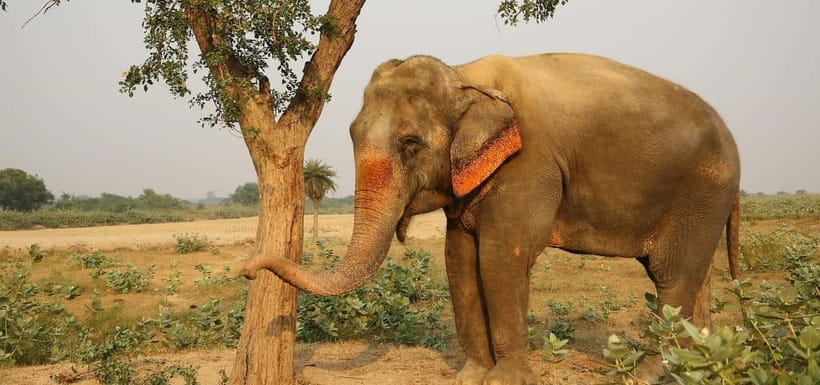
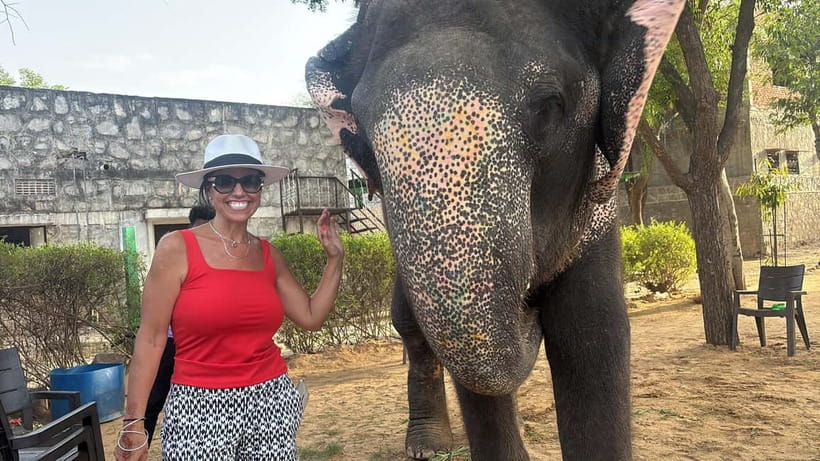
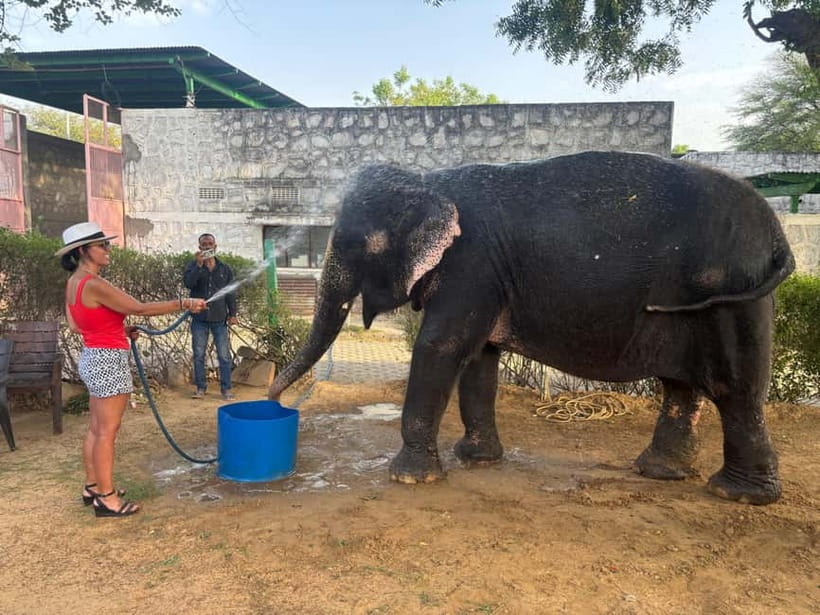
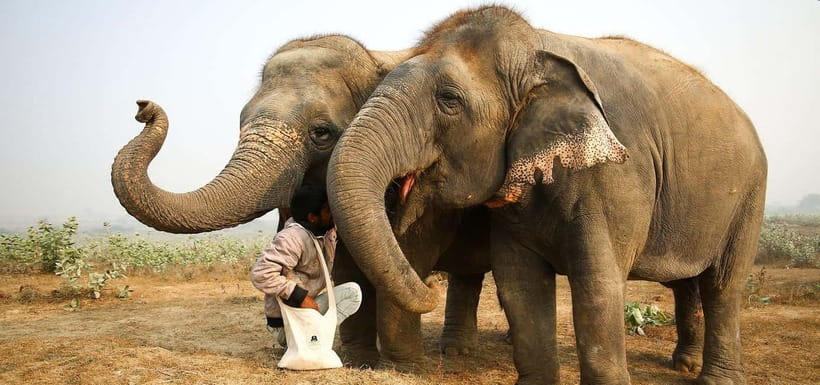
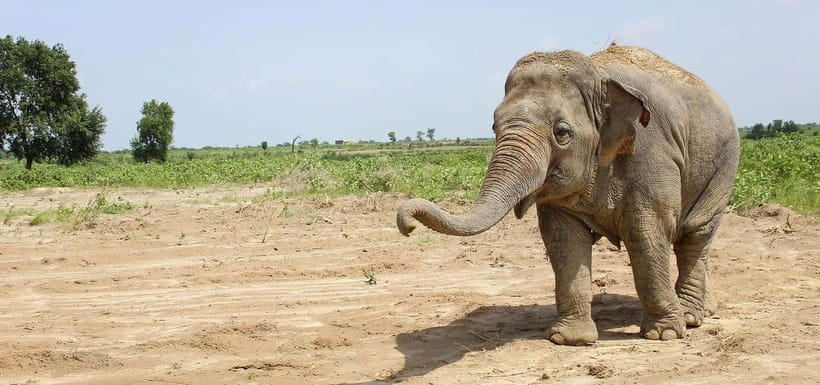
Then comes the stop that adds heart to the day: a visit to Wildlife SOS – Elephant Conservation and Care Center. This is part of an ethical conservation effort focused on rescuing and caring for elephants that were once mistreated in captivity.
Your time on-site is about 45 minutes with a guided visit. The key detail is how the experience is framed. You’re there to see the work and learn, not to do hands-on or performance-style interactions. In at least one example from the private tour context, the elephant portion was described as a viewing and learning experience, not feeding or bathing.
That matters because it helps you evaluate the visit honestly. If you want to be sure you’re supporting animal welfare instead of entertainment, this kind of viewing-first center is the more responsible direction.
What to expect on the day: you’ll get scenic views on the way in, and once at the center you’ll spend your time observing elephants and hearing how the conservation and rehabilitation work operates. The overall feeling should be reflective. It’s a clear contrast to the marble-and-stone grandeur earlier in the morning.
Quick mindset check: if you go in expecting a theme-park experience, you may feel underwhelmed. If you go in expecting a conservation education stop, you’ll likely leave with a different kind of respect.
Getting back to Delhi: timing that fits real schedules
This is a full-day trip, but it’s built to be time-efficient. One booking example listed a start around 2am in Delhi and a return to Delhi by around 2pm, which shows how tightly the schedule can be packed when pickup and sunrise timing line up.
Your day includes several structured blocks:
- Taj Mahal guided time around 2.5 hours
- Breakfast around 45 minutes
- Agra Fort guided time around 1.5 hours
- Elephant conservation time around 45 minutes
- A lunch break of about 1 hour
The comfort factor comes from the private air-conditioned car and driver. That matters because the day isn’t just walking in monuments—it’s also long stretches of sitting while you move between them.
If you’re planning your next day in Delhi, this tour can work well because it returns earlier than many overnight-style Agra trips. If you’re landing in Delhi and want to do Agra quickly, you’ll still need to be realistic about jet lag and the pre-dawn wake-up demand.
Price and value: what $2.47 buys you in practice
The listed price is $2.47 per person, which is startlingly low for a one-day private-car sightseeing plan with a live guide. With that kind of headline number, it’s smart to evaluate value in terms of what’s actually included.
From the tour details, you get:
- sightseeing by a private air-conditioned car
- a private uniformed driver
- a private live tour guide
- monument entrance support described as with an option
- an elephant conservation visit
- bottled water
- parking fees, tolls, taxes, fuel, and allowances are handled
At this price level, the real value is the way the day is packaged: you’re paying for timing (sunrise access), local guidance (context that makes monuments easier to enjoy), and transport (so you don’t piece together trains, taxis, and chaos).
One thing to double-check before you commit: monument entrances are noted as an option. You want to confirm what your selected rate covers so you don’t get surprised later when you’re at the ticket points.
Also, lunch is scheduled as a break time, but the details given focus more on timing than on what you’ll pay for. So if lunch is important to your budget, read the exact inclusions in your booking page.
Who should book this sunrise + elephants day
This is a strong fit if you:
- want the Taj Mahal experience without losing a full day to planning
- like guided context, especially for Mughal sites and symbolism
- care about animal welfare and prefer responsible viewing over entertainment
- are traveling as a small private group and want control of pacing
It may be less suitable if you:
- can’t handle pre-dawn wake-ups and long driving blocks
- are traveling with someone pregnant or over 95 years, since the tour lists these as not suitable
If you’re a first-time Agra visitor with limited time, this route is also a practical way to see two major UNESCO sites plus an ethical conservation stop in a single day.
One extra note from the human side: a guide name that came up in the experience feedback was Shadab, described as humble and helpful. If you’re matched with him, you can reasonably expect clear explanations rather than just walking from one spot to the next.
Should you book this Delhi-to-Agra Taj sunrise tour?
I’d book it if you want a one-day Agra hit that feels purposeful: Taj Mahal at the best light, Agra Fort for the Mughal story and viewpoints, and an elephant conservation visit that shifts your day from sightseeing to learning.
I’d hesitate only if you’re not willing to wake early and ride for several hours. The schedule is efficient, but it’s not gentle. If your idea of a relaxing vacation starts with sleeping in, this probably won’t match your style.
If you’re ready for an early start and you want real value from a private guide day, this is one of the more sensible ways to do Agra—especially because it doesn’t stop at monuments.
FAQ
What’s the total duration of the tour?
The tour is listed as 1 day. It starts with early pickup in Delhi/NCR and includes stops at the Taj Mahal, Agra Fort, and an elephant conservation center, plus time for breakfast and lunch.
How long is the drive from Delhi to Agra?
The travel time is described as about 3 to 4 hours during the morning drive toward Agra.
How long do we spend at the Taj Mahal?
The Taj Mahal visit is guided and scheduled for about 2.5 hours.
Is the elephant stop interactive?
The elephant conservation center visit is described as viewing and guided learning about rescued elephants. It’s not described as a feeding or bathing interaction, so expect observation rather than handling.
What languages are available for the live tour guide?
The live guide is available in English, Spanish, Russian, Chinese, French, Japanese, German, and Italian.
What shouldn’t I bring or do during the tour?
The tour states that alcohol and drugs are not allowed. You should also bring sunglasses and sunscreen for outdoor sightseeing.