REVIEW · NEW DELHI
Delhi: Private Old & New Delhi Tour – Full or Half Day
Book on GetYourGuide →Operated by TRAVELOGAMY · Bookable on GetYourGuide
Delhi moves fast, so plan smart. This private tour strings together Old Delhi icons and New Delhi landmarks in one smooth day, with a live guide and a classic Chandni Chowk rickshaw ride. I love the strong mix of Mughal-era sights and modern political stops, and I especially like that you’ll step into the scale and drama of Jama Masjid without getting lost in logistics. One thing to weigh: the full route is time-sensitive, so if you start late, you may miss several Old Delhi highlights.
The best part for most people is the pacing: you get picked up, driven in comfort, and guided step-by-step through places that can otherwise feel overwhelming. A private group also means you can ask questions when something catches your eye, like why a monument looks the way it does or what you’re looking for when the crowd surges. Still, it’s a lot of walking and standing in between stops, so plan for a good pace and comfortable shoes.
In This Review
- Key Highlights You’ll Actually Feel During the Day
- One Price, Two Worlds: Old Delhi to Parliament
- Old Delhi Day: Red Fort, Rickshaw Lanes, and Jama Masjid
- Making the Most of Red Fort: Timing and Ticket Strategy
- Chandni Chowk by Rickshaw: A Fun Ride With Real Street Energy
- Jama Masjid: The Mosque That Changes the Scale of Your Day
- New Delhi Architecture: Qutub Minar and Humayun’s Tomb
- Qutub Minar: Brick-Minaret Big Deal
- Humayun’s Tomb: An Inspiration for the Taj Mahal
- India Gate to Lotus Temple: Memorials, Meaning, and a Calm Shape
- A Drive Past Parliament and the Presidential House: The Political-Heart Glimpse
- What the Private Guide Adds: Ali, Owais, and Faez
- Timing Rules That Can Change Your Whole Day
- Practicalities That Actually Matter on the Ground
- Price and Value: Why $12 Can Make Sense
- Should You Book This Old & New Delhi Tour?
Key Highlights You’ll Actually Feel During the Day
- Private, guided route that keeps you moving between Old Delhi and New Delhi without guessing
- Rickshaw ride in Old Delhi, a fun way to experience market streets up close
- Red Fort and Jama Masjid as the anchors of the Mughal story
- Qutub Minar and Humayun’s Tomb for world-famous architecture you can understand faster with a guide
- India Gate and Lotus Temple, plus a drive-by look at Parliament and the Presidential House
One Price, Two Worlds: Old Delhi to Parliament
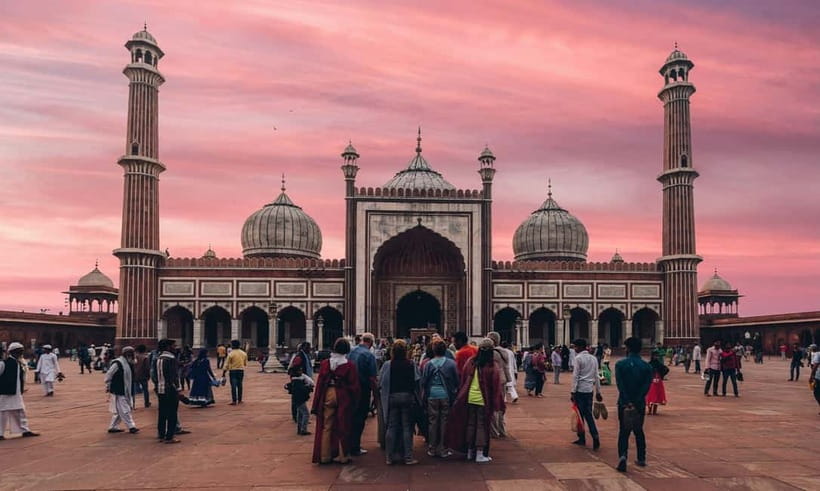
What I like about this tour is that it gives you two different Delhi moods without making you re-plan everything yourself. Old Delhi is all about the big Mughal buildings and the human-scale chaos of market lanes. New Delhi is about symmetry, monuments on wide avenues, and the sense that power is nearby.
For $12 per person, the value mainly comes from the “glue” the tour provides: pickup and drop-off, an air-conditioned car with a driver, a live English-speaking guide (plus French, German, Japanese, Russian, and Spanish), and the Old Delhi rickshaw ride. In practical terms, you’re paying for fewer time-wasting decisions and more time seeing key sights.
Your main trade-off is intensity. It’s designed for a day of major highlights, so you won’t have long, slow afternoons. If you want a very relaxed “wander and snack all day” plan, you might feel rushed. But if you want big Delhi hits with a guide steering the ship, this one fits well.
You can also read our reviews of more private tours in New Delhi



Old Delhi Day: Red Fort, Rickshaw Lanes, and Jama Masjid
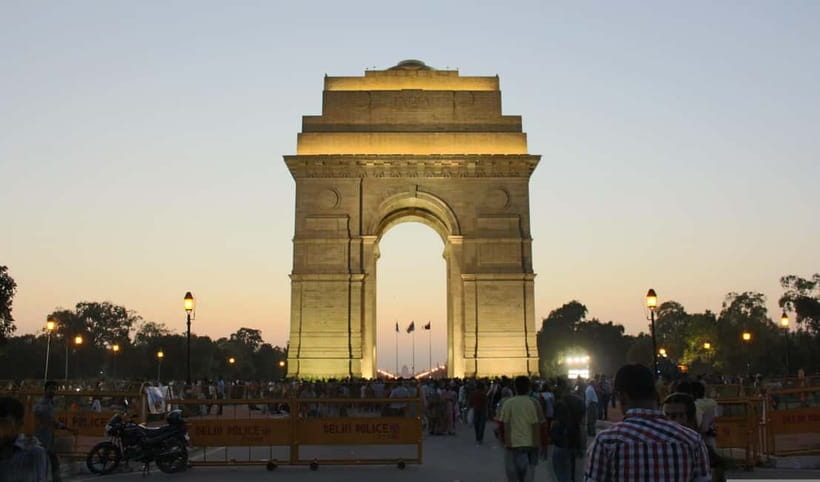
Old Delhi is where you get the famous Delhi feeling: stone monuments facing busy streets, and history packed into walkable distance. The tour builds this section around three anchors.
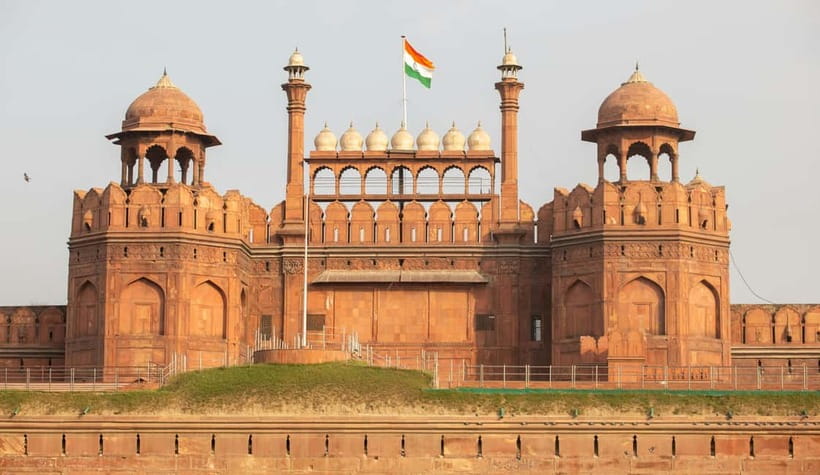
First up is the Red Fort, the Mughal masterpiece built by Emperor Shah Jahan. Even if you’ve seen photos before, the fort’s presence hits differently in person because you’re looking at a massive statement of power, craftsmanship, and design. The experience works best when your guide points out details so you’re not just staring at walls and gates.
Next, you’ll head into the streets with a rickshaw ride through the lanes of Chandni Chowk. This isn’t just a ride; it’s a shortcut into the rhythm of the neighborhood. You get to see the shape of the market streets from inside the action instead of from a sidewalk.
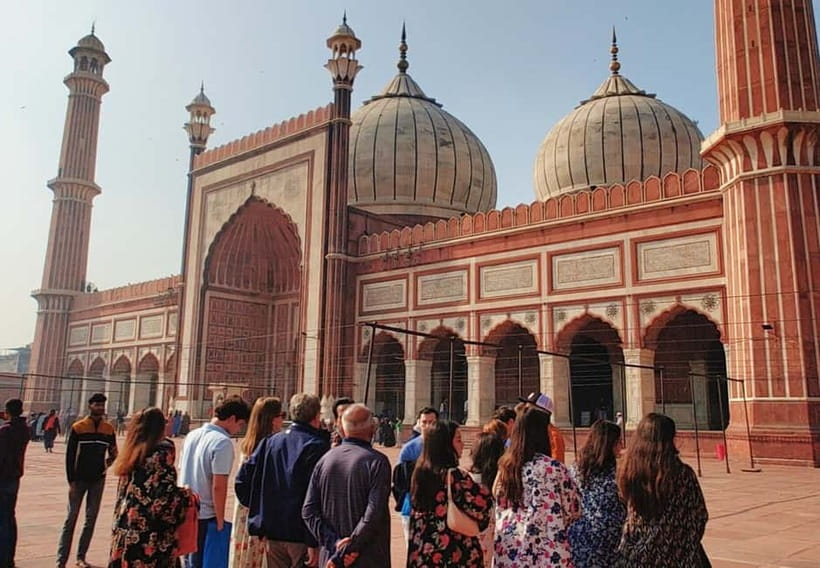
Then comes Jama Masjid, India’s largest mosque from the 17th century. This is the emotional high point for a lot of people because it’s big, active, and unmistakably important. You’ll get inside history mode fast: your guide helps connect what you’re seeing to why it mattered.
A small note to keep in mind: on Mondays, the Red Fort and Lotus Temple are closed. On that day, the route swaps in Gurudwara Bangla Sahib instead, so your Old Delhi anchor shifts while the overall spirit stays respectful and meaningful.
Making the Most of Red Fort: Timing and Ticket Strategy
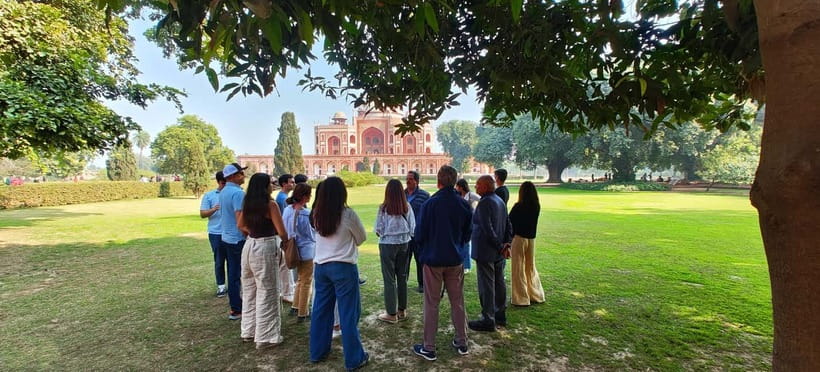
If you’ve ever tried to tackle Delhi’s big sights on your own, you know the day can unravel at the worst moment—ticket lines, entry rules, and timing. This tour includes skip-the-ticket-line convenience when you book the option with entrance tickets. That matters because you’ll lose less time waiting around and more time actually seeing the places.
You’ll likely want to arrive with the right attitude: Red Fort is not a quick stop. It’s a place where the scale pulls you upward and outward, and where you’ll appreciate explanations about Mughal design and the logic of the complex. If you like architecture, this is one of the best “why it looks this way” stops in the whole day.
Comfort tip: wear shoes you can stand in for a while. Even with transport between sites, Old Delhi can mean frequent short walks and steps.
Chandni Chowk by Rickshaw: A Fun Ride With Real Street Energy

The rickshaw ride through Chandni Chowk is one of those experiences that makes the tour feel like more than a checklist. It’s hands-on. You’re moving through a neighborhood that still functions as a market, not a theme park.
Here’s what you’ll likely notice right away:
- The streets feel narrower than you expect from photos.
- Visual noise is part of the atmosphere—signs, vendors, people, and movement.
- You’ll see how buildings and lane layouts shape daily life.
The value is that you’re not just walking through a busy area. You’re seated, guided, and carried through it in a way that helps you keep your bearings while still soaking up the scene. If you don’t love crowded places, you may want to keep your expectations realistic. This is not a quiet museum route, and that’s exactly why it’s memorable.
Jama Masjid: The Mosque That Changes the Scale of Your Day
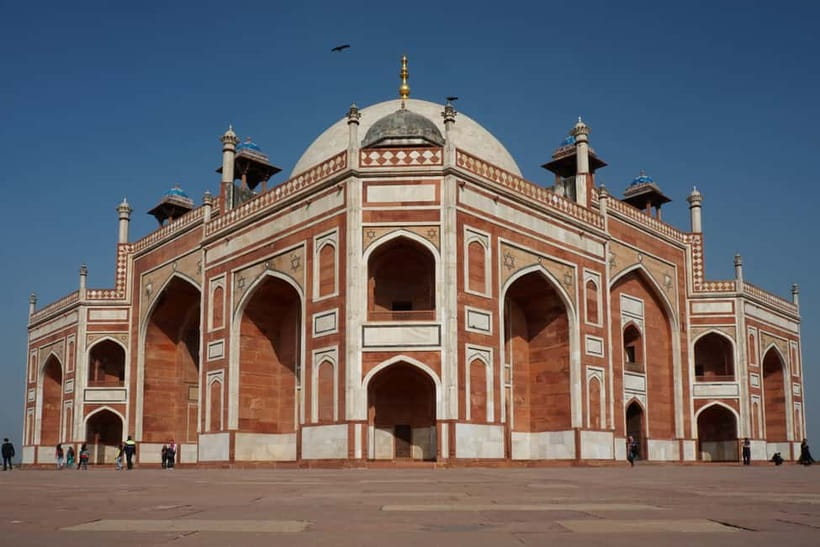
Jama Masjid isn’t just famous. It also recalibrates how you see the rest of the day. After the Red Fort, it adds a different side of Mughal-era power: faith, community space, and the sheer size of a place built for gatherings.
A guide helps a lot here. Without context, you might notice the big surfaces and arches and then move on. With a good guide, you understand what to look for and why the structure feels so commanding.
Photography tip: bring your phone but also keep it practical. Since it’s an active mosque, you’ll want to follow on-the-ground guidance about where you can stand and when you should pause.
And yes, it’s a highlight that earns its reputation. If you want one place in Old Delhi that delivers strong “I get it now” meaning, start here.



New Delhi Architecture: Qutub Minar and Humayun’s Tomb
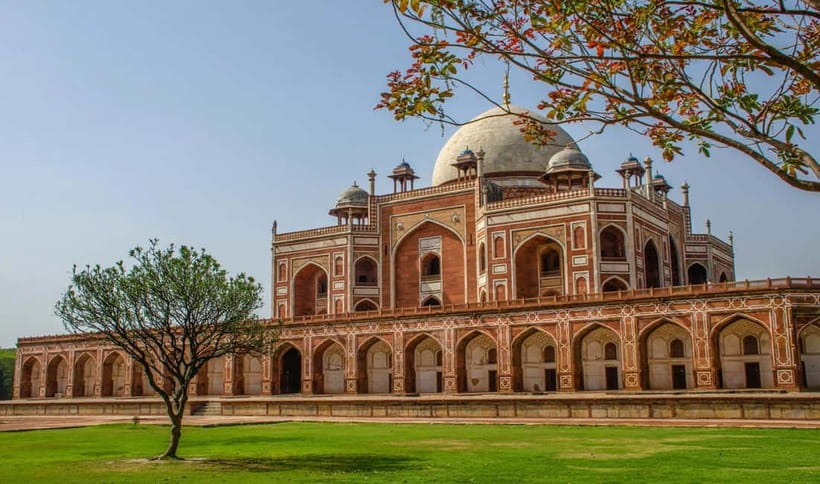
Once the tour shifts into New Delhi, the vibe becomes more spread out and more geometric. This is where the guide really earns their keep, because monuments here can look similar at first glance—until someone points out the real differences.
Qutub Minar: Brick-Minaret Big Deal
Qutub Minar, known as the world’s tallest brick minaret, is the kind of landmark you can’t ignore. The thing about minarets is how they pull your eyes upward. From street level, it’s dramatic, and it’s even better when you get some context about its design and the story it represents.
This stop is a great “reset” after Old Delhi because you can slow down mentally even if your schedule is still moving. It’s also one of those places where you’ll appreciate shade timing—so if you’re sensitive to sun, plan to take breaks when the guide suggests.
Humayun’s Tomb: An Inspiration for the Taj Mahal
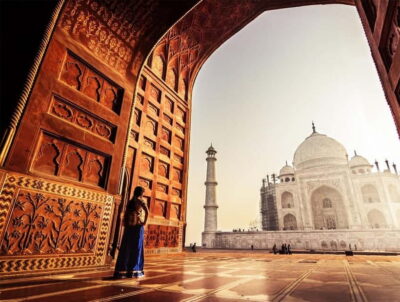
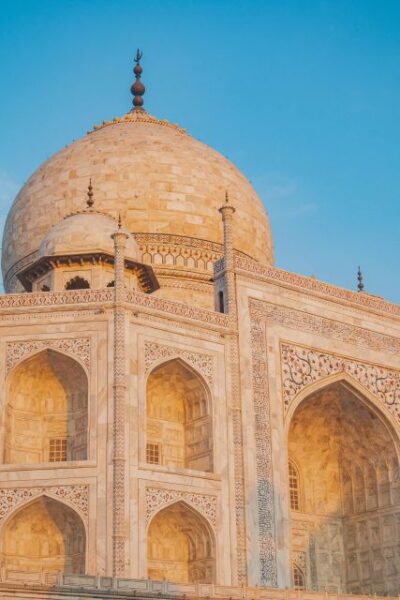
Humayun’s Tomb is another high-payoff stop. It’s often described as an architectural inspiration for the Taj Mahal, and that’s a helpful framing. When you can connect the visual features across different monuments, you start seeing Delhi’s story as a chain of ideas rather than disconnected sights.
If you like gardens, symmetry, and layout planning, Humayun’s Tomb tends to land well. Even if you’re not a hardcore architecture person, the design communicates something instantly: how a ruler wanted to be remembered.
India Gate to Lotus Temple: Memorials, Meaning, and a Calm Shape
New Delhi adds two more major landmarks, each with a different emotional tone.
India Gate is a World War I memorial. It’s solemn in a way that doesn’t need extra explanation once you’re standing there. You’ll see people pausing, taking in the names and the scale. It’s a good stop to regain your sense of place in a city that can feel purely busy.
Then you move to the Lotus Temple, famous for its lotus-flower shape. If India Gate is reflection, Lotus Temple is calm geometry. It’s also a standout visual moment because the architecture reads clearly even if you don’t know every detail.
On Mondays, Lotus Temple is closed, so the route uses the Gurudwara Bangla Sahib swap instead. That doesn’t ruin the day, but it does change the mood of that segment.
A Drive Past Parliament and the Presidential House: The Political-Heart Glimpse

You finish with a drive past the Presidential House and Parliament Buildings. This is not a deep tour in the way museum spaces are; it’s a “from the road” glimpse that still gives you a sense of India’s political center.
Why it’s worth including: after days of mosques and tombs, you get a modern anchor. The contrast helps your brain build a full map of Delhi instead of only one historical chapter.
If you love civic architecture or you’re the kind of traveler who likes to connect places to current life, you’ll appreciate this segment more than you might expect.
What the Private Guide Adds: Ali, Owais, and Faez
The biggest repeatedly praised element here is the guide. You’re not just getting transport between points; you’re getting someone to translate the city for you.
In verified bookings, names like Ali, Owais, and Faez come up for a reason. Ali is described as friendly and very knowledgeable, and one review highlights that he even helped with great photos. Owais is praised for being helpful in explaining details, while Faez is recognized for making sure people understood the history and cultural significance of what they saw.
Even if you don’t know the monuments before you arrive, a strong guide helps you leave with more than impressions. You get answers to the big “why” questions:
- Why this design?
- Why this location?
- Why does it feel so important?
That’s the value of a live tour guide, especially when you’re moving quickly between Old and New Delhi. Without guidance, it’s easy to miss the meaning hiding in plain sight.
Timing Rules That Can Change Your Whole Day
This tour is built for either a full-day or half-day experience, and the start time really matters.
If you choose a start time before 11:00 AM, you can cover the full span of Old Delhi plus New Delhi. After 11:00 AM, the tour shifts to New Delhi sights only—things like India Gate, Parliament House, Humayun’s Tomb, Qutub Minar, and the Lotus Temple.
So make your choice based on how you want to experience Delhi:
- If you want Old Delhi markets and the Red Fort/Jama Masjid arc, aim earlier.
- If you only want the major New Delhi monuments and a lighter feel, a later start can work.
Also remember the Monday closure pattern: Red Fort and Lotus Temple are closed, and the plan replaces Lotus Temple with Gurudwara Bangla Sahib as the alternate stop.
This is not “bad luck.” It’s just Delhi being Delhi. If your dates land on Monday, check your route expectations so you don’t feel surprised on the day.
Practicalities That Actually Matter on the Ground
This is where the tour saves you energy.
You get:
- Hotel pickup and drop-off
- Air-conditioned car with driver
- Bottled mineral water
- Monument entrance tickets when you select the ticketed option
- Rickshaw ride in Old Delhi
- A guide available in English, French, German, Japanese, Russian, Spanish
- Private group format
- Wheelchair accessible design
You should still bring:
- Comfortable shoes
- Water
- Passport or a copy (accepted)
What’s not included is also important: food or drinks are not included. The day may include a lunch stop in the flow, but you’ll need to pay for meals yourself.
One more reality check: Old Delhi is a market zone. Even with a guide, you’ll feel crowds and street life. If you hate noise and prefer empty spaces, consider adjusting expectations.
Price and Value: Why $12 Can Make Sense
Let’s talk about money plainly. At $12 per person for a private tour format, the value isn’t in some magic number. It’s in what you’re not paying for separately in time and effort.
You’re paying for:
- A live guide to make sense of the sights
- Transport with a driver in an air-conditioned car
- The Old Delhi rickshaw ride
- Entrance tickets when the ticketed option is chosen
- Bottled water and taxes
For many visitors, the “hidden cost” of DIY Delhi is stress. You spend time figuring out how to get between places, where to queue, and what you can actually see with your available hours. This tour reduces those friction points, especially if you’re short on time or you’re arriving with jet lag.
The only caution is that you’re getting a highlights-focused route, not a free-roam day. If you hate structured time, you may feel boxed in.
Should You Book This Old & New Delhi Tour?
I’d book it if you want a fast, high-impact introduction to Delhi that includes both Old Delhi’s iconic culture and New Delhi’s monument-style storytelling. It’s especially strong if you’ll benefit from a guide who can explain what you’re seeing and keep your schedule moving.
Skip it or look for a calmer alternative if:
- You want lots of downtime and slow wandering.
- You’re starting late and really want Red Fort and Jama Masjid (since after 11:00 AM the plan becomes New Delhi only).
- You’re traveling on a Monday and Lotus Temple is a must for you, since the route swaps in Gurudwara Bangla Sahib.
If you’re the type who likes landmarks, good explanations, and one day that actually gives you a real sense of Delhi, this is a solid value play.