REVIEW · NEW DELHI
A full-day tour of Old & New Delhi Monument Express Entry
Book on GetYourGuide →Operated by Indo Canadian tours · Bookable on GetYourGuide
Delhi has two faces in one day. This full-day Old & New Delhi Monument Express tour is built for big sights with private air-conditioned car comfort and pickup/drop-off, so you spend less time figuring out logistics.
I especially like the way the day strings together major landmarks from different eras—Old Delhi’s monumental mosque and fort moments, then New Delhi’s memorials and UNESCO-site scale. The English-speaking guide adds clarity, and names like Subhash Chand come up for both smooth driving and solid explanations; one drawback to plan around is that food or drinks aren’t included, so you’ll want snacks.
In This Review
- Key Highlights That Make This Day Tour Work
- Why This Old & New Delhi Day Feels Efficient (Not Rushed)
- The Old Delhi Stops: Red Fort and Jama Masjid
- Red Fort: Mughal-era walls you can feel
- Jama Masjid: One of India’s largest mosques
- India Gate: A War Memorial That Changes the Mood
- Humayun’s Tomb: Mughal-era Detail With an “Early Taj” Feeling
- Qutub Minar: UNESCO Scale and Intricate Carvings
- Lotus Temple: End the Day Quietly
- How the Private Car Changes Your Day (And Your Energy)
- Price and Value: Why $16 for Up to 5 Can Make Sense
- What You Should Bring for a Full-Day Monument Sprint
- Who This Tour Fits Best
- Should You Book This Old & New Delhi Monument Express Tour?
- FAQ
- What does the tour include?
- How much is the tour?
- Is the tour guided, and what language is used?
- Which monuments are visited during the day?
- Are food or drinks included?
- Is bottled water provided?
- Is there private transport?
- Can I reserve and pay later?
- What is the cancellation window for a full refund?
Key Highlights That Make This Day Tour Work
- Private car with driver means fewer stress stops between Old and New Delhi
- Big-name monuments in one run: Red Fort, Jama Masjid, India Gate, Humayun’s Tomb, Qutub Minar, Lotus Temple
- English-language guidance helps you connect what you’re seeing with what it means
- Comfort-first transport shows up in the feedback, including praise for a clean, comfy car
- Strong guide reputation, with Subhash Chand noted for knowledge and careful driving
- Low-group pace (up to 5) keeps the day feeling manageable
Why This Old & New Delhi Day Feels Efficient (Not Rushed)
Delhi is huge, and trying to “do it all” on your own can turn into a day of short walks and long waits. What I like about this tour format is that it’s set up as a full-day circuit using a private, fully air-conditioned vehicle. That matters, because Delhi’s distance between sights can chew up hours if you’re relying on public transport.
You also get pickup and drop-off, which means you’re not starting the day with extra planning or losing time to meeting points and transfers. With a group size capped at up to 5, the experience tends to feel more personal than the big-bus style. You can ask questions, adjust the rhythm a bit, and not feel like you’re trapped inside a conveyor belt.
The tour isn’t trying to be subtle or “off the map.” It’s a highlights-first day, which is exactly why it works: you get the recognizable Delhi landmarks and the visual story they tell, from Mughal-era monuments to later memorials and world-heritage scale.
You can also read our reviews of more tours and experiences in New Delhi


The Old Delhi Stops: Red Fort and Jama Masjid

Old Delhi is where Delhi’s “weight” shows up fast—stone, scale, and a sense of history that’s hard to fake with photos. This tour gives you time to hit two of the area’s biggest draws: Red Fort and Jama Masjid.
Red Fort: Mughal-era walls you can feel
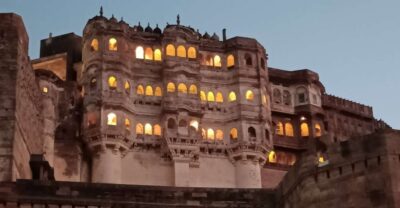
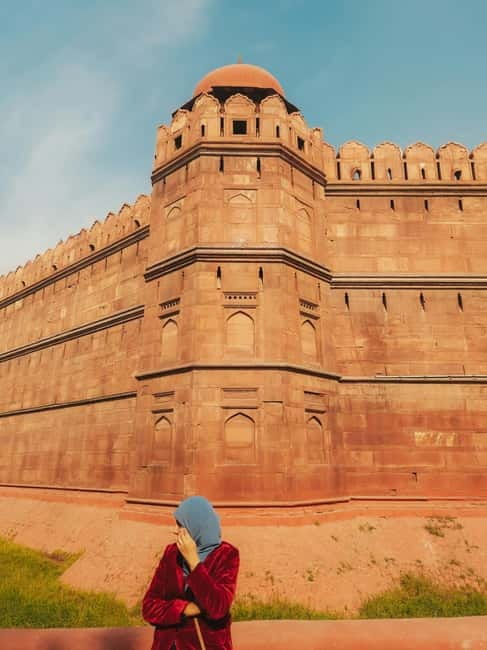
Red Fort is described as a grand Mughal fort known for its massive red sandstone walls and historical significance. That phrase alone is a clue to what you’ll experience: it’s not just a pretty building. The fortress feel comes from the size and the material presence—the kind of monument where your brain keeps zooming out to take in the overall structure.
For your day, Red Fort is a great anchor stop. It sets a tone before you move into religious architecture at Jama Masjid. If you like monuments that feel “real” in scale—something built to hold space for power and movement—this is one of the best places to start.
One practical note: because this is still a major site in an active city, you’ll likely want to stay aware of your pace and your belongings. Nothing special to worry about, just the normal city reality that comes with going to Delhi’s most famous locations.
Jama Masjid: One of India’s largest mosques
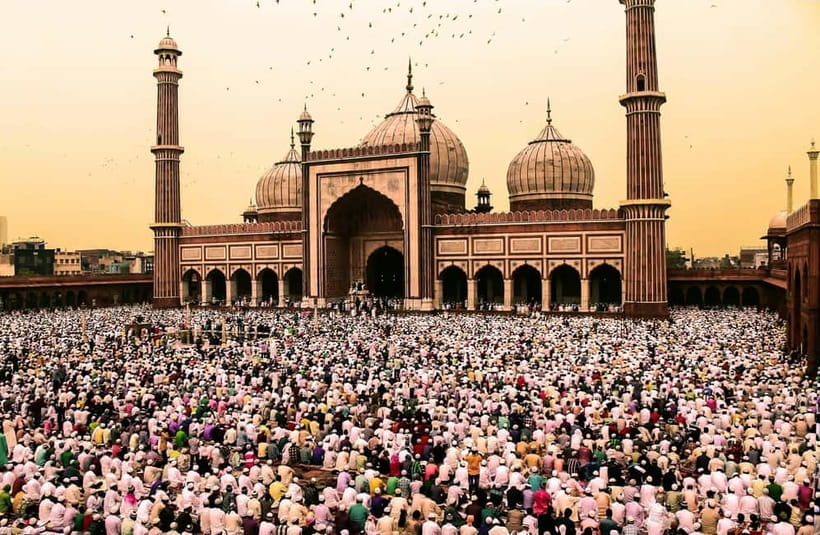
Next comes Jama Masjid, described as one of the largest and most impressive mosques in India, with standout scale and architecture. This is where you’ll notice the difference between fort-like monument space and religious space. The architecture doesn’t just sit there—it frames movement, gathering, and how you look up.
This is also a strong match for having a guide. When you have someone who can connect what you’re seeing to the broader picture—religion, monuments, and day-to-day life—Jama Masjid becomes more than a photo stop. It turns into a place where you understand why it’s so important, not just why it’s big.
India Gate: A War Memorial That Changes the Mood
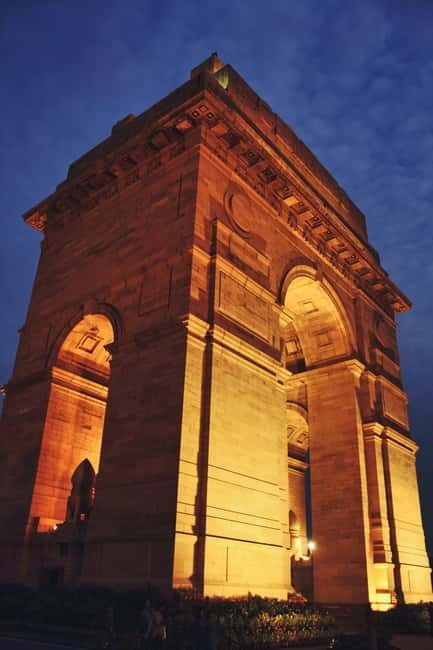
After the intensity of Old Delhi, India Gate brings a different kind of meaning to the day. It’s a war memorial dedicated to Indian soldiers who died in World War, so it’s a shift from architectural grandeur to commemoration.
I like this stop because it acts like a mental reset. You go from Mughal-era monument scale into a memorial that asks for a quieter kind of attention. It also helps balance the day so you don’t end it feeling like you only saw structures—you also pause for context.
If you’re the kind of person who takes a minute at memorials, India Gate is worth slowing down for. Even just a short pause helps your brain file the day’s visuals into something coherent.




Humayun’s Tomb: Mughal-era Detail With an “Early Taj” Feeling
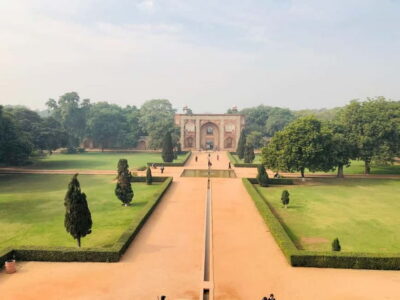
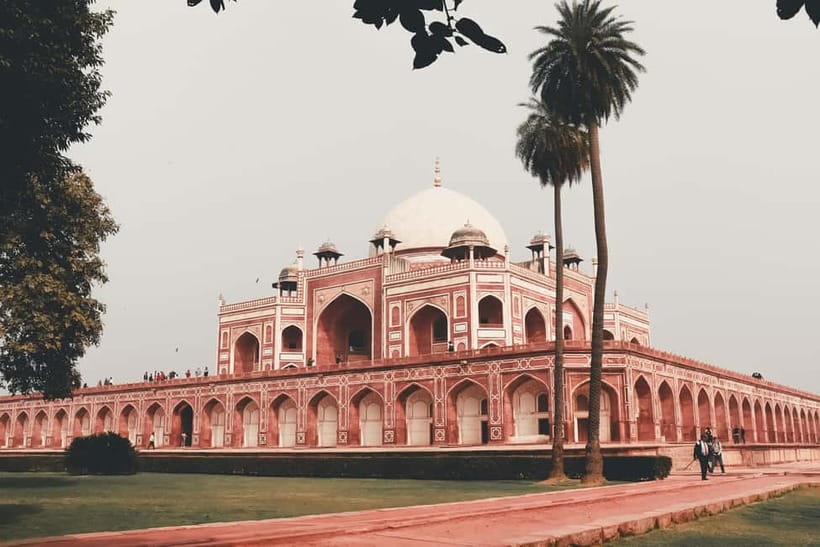
Then you move into Humayun’s Tomb, described as a Mughal-era tomb and a precursor to the Taj Mahal. That’s a helpful way to think about it: you’re not only looking at a standalone site, you’re seeing a stylistic thread that leads toward something even more famous.
What I like about this stop for a full-day tour is that it gives you variety. So far you’ve covered fort walls, mosque scale, and a national memorial. Humayun’s Tomb sits in a different category: it’s a composed tomb experience tied to Mughal architecture. If you enjoy seeing how styles evolve across time, this is a satisfying pivot.
And because the tour includes a knowledgeable guide, you’re more likely to notice the “why” behind the design rather than just admire it at face value. That’s the difference between ticking off a name and actually understanding what makes a monument important.
Qutub Minar: UNESCO Scale and Intricate Carvings
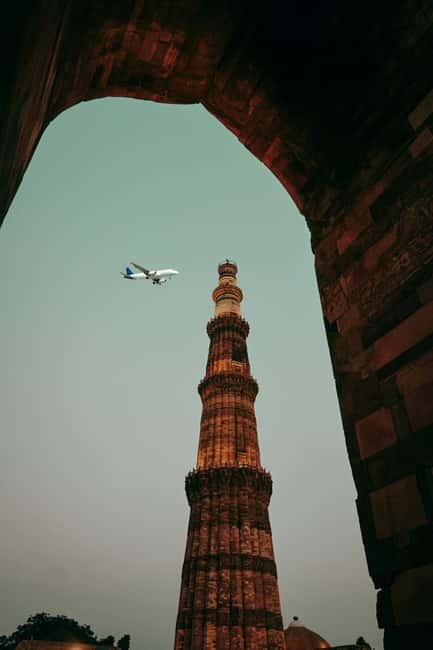
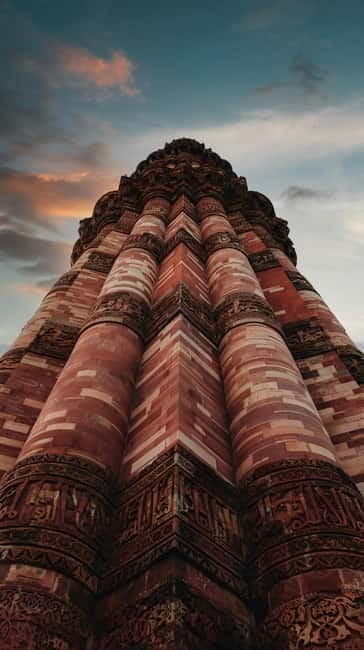
Next up is Qutub Minar, a UNESCO World Heritage Site renowned for its towering height and intricate carvings. This is the stop that tends to make people look up and keep looking up. A tall monument does that to you.
The key value here is the contrast: earlier stops were visually powerful in different ways—fort walls, mosque scale, memorial meaning. Qutub Minar is more about vertical presence and detail. The “intricate carvings” part matters too. If you’re only sprinting, you miss them. But a guided, full-day format gives you the chance to slow down long enough to notice patterns and work your way around the monument’s textures.
For many visitors, this is a highlight because it combines big scale with craft. It’s not just height; it’s the decoration and the attention to detail that turns the tower into something you remember.
Lotus Temple: End the Day Quietly
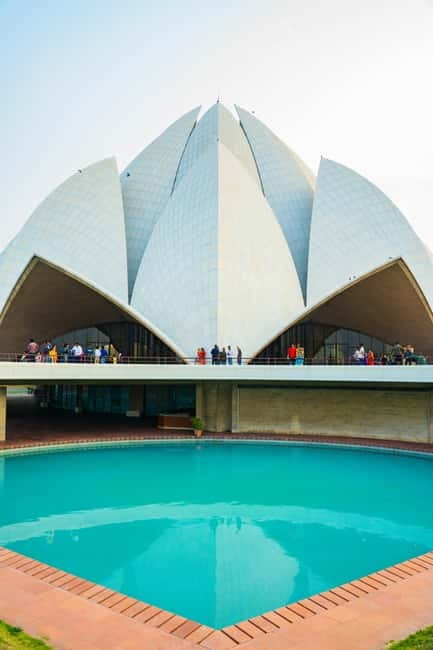
To wrap up the day, the tour ends at the Lotus Temple, described as a serene Bahá’í temple with a lotus-shaped design and peaceful atmosphere. This feels like a smart landing spot. After a day of landmark intensity, you want somewhere you can exhale.
I like ending here because the design cues you to slow your body down, not just your schedule. A peaceful atmosphere doesn’t mean it’s “boring.” It means the place gives you a different kind of experience—one that’s about presence and calm rather than speed and spectacle.
If you’re walking a lot during the day, this final stop is a good way to finish without feeling wiped out. It’s also a different religious architectural style than what you saw earlier, so it rounds out the day’s theme.
How the Private Car Changes Your Day (And Your Energy)
Let’s talk practical value, because this tour is built around comfort and time use. You get transport via an air-conditioned car with a driver, plus bottled mineral water. That combination matters in Delhi, where heat and congestion can drain you even when your feet are fine.
In feedback, the car comfort and cleanliness come through clearly. The best part, though, is the “driver + guide” teamwork: the smoother the driving, the less you feel tense when you’re not moving at your own pace. You’ll often notice the difference in how a day feels, even if the route looks the same on paper.
Also, since the tour is in English, you’re not stuck trying to guess what you’re looking at. That makes the time in the car feel less like lost time and more like travel with context.
Price and Value: Why $16 for Up to 5 Can Make Sense
The price is listed as $16 per group up to 5. On the surface, that’s low for a full-day monuments circuit. The reason it can be good value is that the tour includes essentials that usually cost you time or money: pickup and drop-off, a driver, air-conditioned transport, bottled water, and all taxes.
Now, the value equation depends on your situation. If you’re traveling solo and can’t fill the group, the “per group” pricing can work against you because you’re effectively paying a larger share by yourself. But if you’re two or more people, the economics start to look more attractive fast.
The other value point is the “guide factor.” When a guide is skilled—especially when they can explain monuments, religion, and daily life—and when the vehicle stays comfortable, you’re paying for fewer headaches and faster understanding of what you’re seeing.
Just remember the one clear gap: food or drinks aren’t included, so budget for your own meals and water beyond what’s provided.
What You Should Bring for a Full-Day Monument Sprint

Even with air-conditioned transport and bottled water, you’ll still be outside at major sights. For me, a day like this needs the basics ready so you can focus on the monuments instead of managing discomfort.
Consider bringing:
- Comfortable walking shoes
- A light layer (mornings and evenings can feel different)
- Sunscreen and a hat
- Your own snacks or planned meal timing since food isn’t included
If you’re sensitive to crowds, pick a calm mindset. Delhi’s famous monuments are famous for a reason, and you’ll share space.
Who This Tour Fits Best
This is a strong fit if you:
- Want Old and New Delhi landmarks in one day without doing route planning
- Prefer English guidance to connect the “what” with the “why”
- Like seeing major sites in a structured sequence, not piecemeal
- Are traveling with a small group (up to 5) and want a private car feel
It’s also a good choice if you care about transport quality. Feedback highlights that the car is comfy and clean, and that the guide-driver team makes the day easier to handle.
If you’re the kind of traveler who hates time limits and wants to linger for hours in one spot, this “express highlights” style might feel a little tight. But if you want a full-day overview that hits the big emotional beats—mosque scale, tomb design, memorial meaning, UNESCO height, and a calm temple ending—this tour is built for you.
Should You Book This Old & New Delhi Monument Express Tour?
I’d book it if your goal is a high-coverage Delhi day with comfortable transport and English guidance, and if you’re traveling with at least one other person to make that per-group price work better. The standout positives—guide quality and smooth driving plus an easy, organized flow—are exactly what you want when you’re trying to fit a lot into one day.
I’d think twice if you’re very picky about meals and prefer guided lunch stops. Since food and drinks aren’t included, you’ll need to manage your own timing.
If you want flexibility, you can also choose a reserve-and-pay-later approach, which is handy when your schedule might shift. And if you prefer clarity and control, the guide-led structure across Red Fort, Jama Masjid, India Gate, Humayun’s Tomb, Qutub Minar, and Lotus Temple gives you a clean story from start to finish.
FAQ
What does the tour include?
It includes pickup and drop-off, transport in an air-conditioned car with a driver, bottled mineral water, and all taxes.
How much is the tour?
The price is $16 per group up to 5.
Is the tour guided, and what language is used?
Yes, the tour is offered in English.
Which monuments are visited during the day?
The tour covers Red Fort, Jama Masjid, India Gate, Humayun’s Tomb, Qutub Minar, and Lotus Temple.
Are food or drinks included?
No. Food or drinks are not included.
Is bottled water provided?
Yes, bottled mineral water is included.
Is there private transport?
Yes. You travel by a private fully air-conditioned car with a driver.
Can I reserve and pay later?
Yes. You can reserve and pay later, keeping travel plans flexible.
What is the cancellation window for a full refund?
You can cancel up to 24 hours in advance for a full refund.