REVIEW · LUCKNOW
Exploring Lucknow in Nightlights: Guided Tour by Foot
Book on GetYourGuide →Operated by Lets Go Far · Bookable on GetYourGuide
Night in Lucknow feels like a storybook. This guided foot tour strings together illuminated sights, from Bada Imambada to the textile details of Zari and Chikan, while a live guide keeps the walk smart and fun.
My favorite part is how the evening light turns architecture into something you can actually read with your eyes, not just snap on your phone. I also love that you get more than monuments: you get street-level guidance on where to look, what to notice, and how to move so you’re not stuck staring at the crowd.
One possible drawback: you may not be able to go fully inside every building area at night, so treat this as a night-sights and photography-focused walk first, not an indoor museum tour. Even with that, you’ll still have plenty to see from the street.
In This Review
- Key highlights to watch for on this Lucknow nightlights walk
- Why Lucknow’s nightlights work so well on foot
- Meeting at Bada Imambada: start strong and stay unhurried
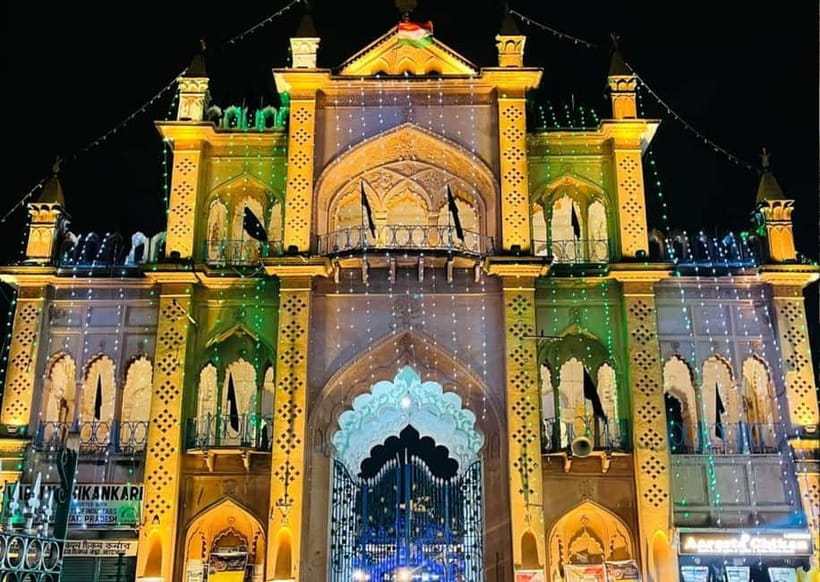
- Bada Imambada at night: illuminated architecture you can actually read
- Chota Imambada: the quieter stop that makes the route feel balanced
- Clock Tower with lights: your best chance for night street energy
- Satkhanda against the night sky: silhouette shots that don’t need perfection
- Pakka Pul and Unani Hospital: light, arches, and a softer urban feel
- Zari and Chikan details: why the craftsmanship stop makes the tour worth it
- Insider street moves: what you gain beyond the photo stops
- Price and value: is $13 per person really fair?
- Pace, safety, and what to expect from a night walk
- Who this Lucknow nightlights tour suits best
- Should you book this guided nightlights walk?
- FAQ
- How long is the Lucknow nightlights guided walking tour?
- What does the tour cost?
- Where do we meet for the tour?
- What languages will the tour guide speak?
- Is the group small?
- What’s included in the tour price?
- What should I bring, and is food included?
Key highlights to watch for on this Lucknow nightlights walk
- Illuminated Bada Imambada: photo-friendly views of the facade with night lighting doing the heavy lifting
- Chota Imambada under the night sky: quieter atmosphere and softer twinkle effects
- Clock Tower glow: lights up the area, and you’ll feel the city’s evening rhythm nearby
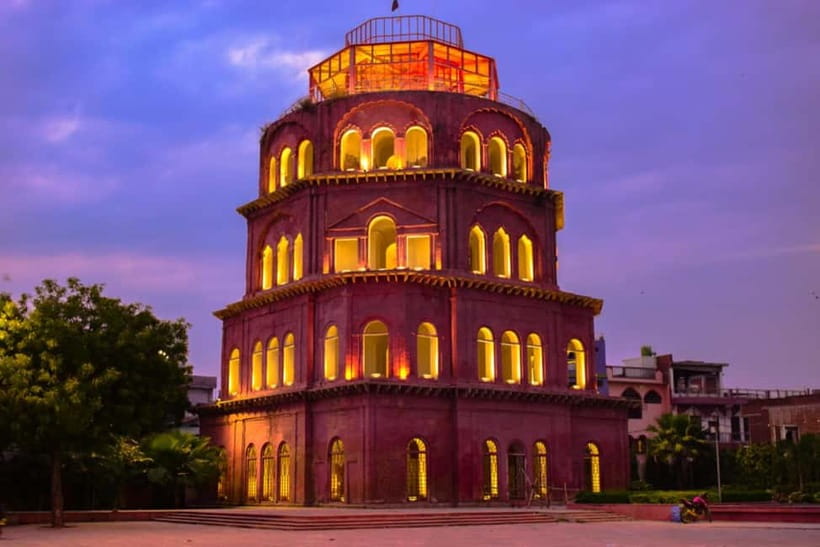
- Satkhanda silhouette: that tall, dark outline against the night sky makes a strong contrast shot
- Pakka Pul reflections: illuminated arches with views toward the water
- Zari and Chikan details at night: the craftsmanship story is part of the walk, not just a quick stop
Why Lucknow’s nightlights work so well on foot
Lucknow after dark has a specific charm. The city’s best-looking angles tend to show up when buildings and arches are lit, and when streets are awake but not overwhelming.
This tour fits that reality. It’s only 2 hours, it’s a small group (max 10), and it’s paced for evening viewing rather than fast sightseeing. You’ll also get a live guide in English and Hindi, which matters because the difference between a decent photo and a great one is often knowing where to stand and what to look at.
For a first-time visit, I like that you don’t waste the evening hopping across town. For repeat visitors, the value is in the details: lighting effects, architectural shapes, and the craftsmanship angle tied to Chikan and Zari.
You can also read our reviews of more guided tours in Lucknow
Meeting at Bada Imambada: start strong and stay unhurried
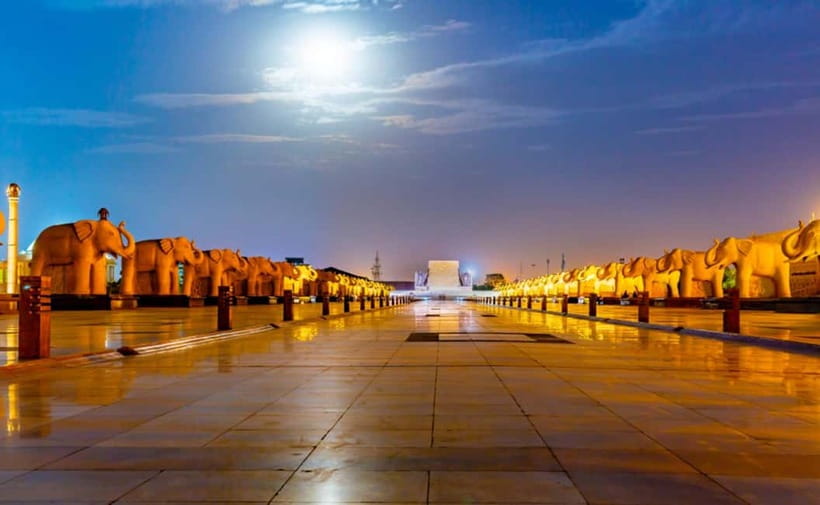
You meet at the entrance of Bada Imambada and get moving from there. This is a good starting point because you begin with one of the most recognizable illuminated landmarks in the area, so you’re already in the mood before the group spreads out for photos.
Bring comfortable shoes. Even if the walk feels relaxed, you’ll be on your feet for an extended stretch, and night tours have one downside: you can’t fix foot pain once you’re mid-route. Also bring a camera, water, and cash for personal expenses. That cash line is practical—night tours are short, and if you end up wanting a snack or a drink later, you’ll have to handle it yourself.
The small-group size also helps. You’re less likely to get shoved into the back of a crowd every time someone points a phone upward.
Bada Imambada at night: illuminated architecture you can actually read
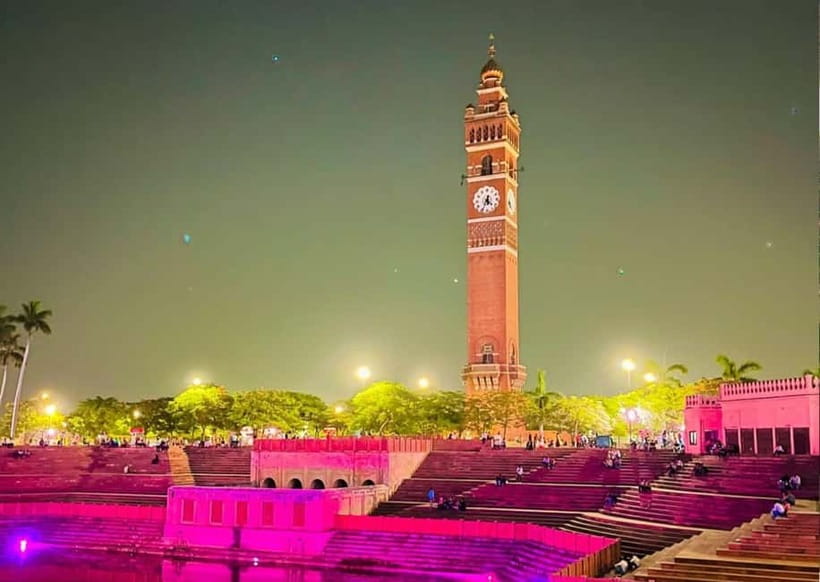
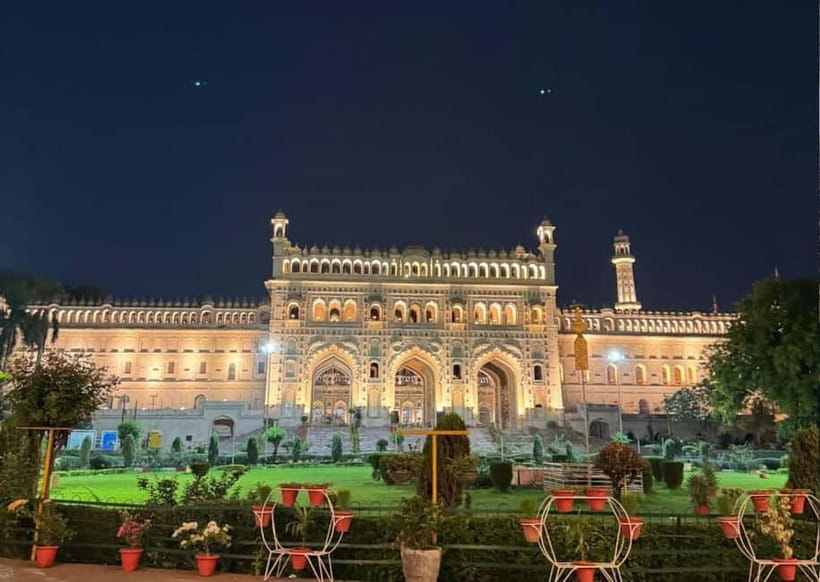
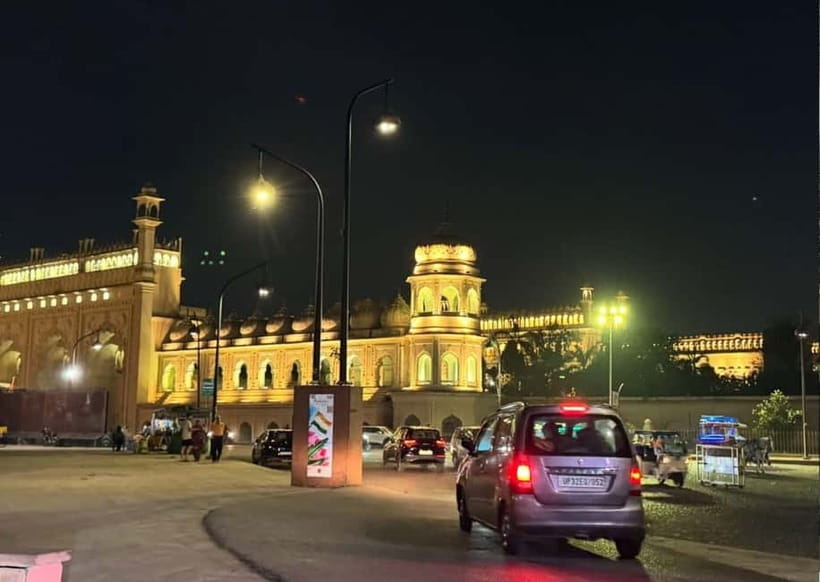
The tour’s first big moment is Bada Imambada, illuminated in a way that makes the building feel ceremonial. The effect isn’t just pretty lighting. It helps you see the structure: broad facade lines, layered architectural rhythm, and the contrast between lit stone and darker surroundings.
If you care about photography, this is your warm-up stop. Take a couple of wide shots first, then circle your position for a second angle. Night lighting often creates stronger contrast around edges and corners, so you’ll get better results by looking for outline shapes rather than trying to capture everything at once.
Timing matters too. Starting here means you’re more alert early, and you’ll still have energy for the next stops after the excitement wears off a bit.
Chota Imambada: the quieter stop that makes the route feel balanced
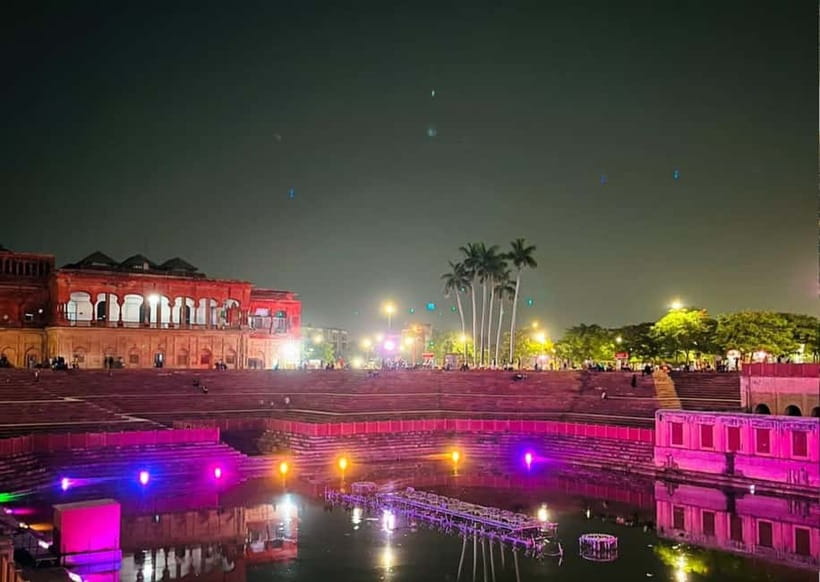
After the main highlight, you head toward Chota Imambada. This is where the tour pacing starts to make sense. The lighting is still there, but the vibe is calmer—twinkling accents and a more serene feeling under the night sky.
This stop works for two types of travelers:
- You want a break from the busier crowds near bigger landmarks.
- You want to slow down and notice how lighting changes the mood of a courtyard or historic space.
The best move here is to stand still for a minute. At night, when everything is glowing, the details can blur if you keep moving. Let your eyes adjust. Look for how the light reflects off surfaces and how shadows settle around key shapes.
Clock Tower with lights: your best chance for night street energy
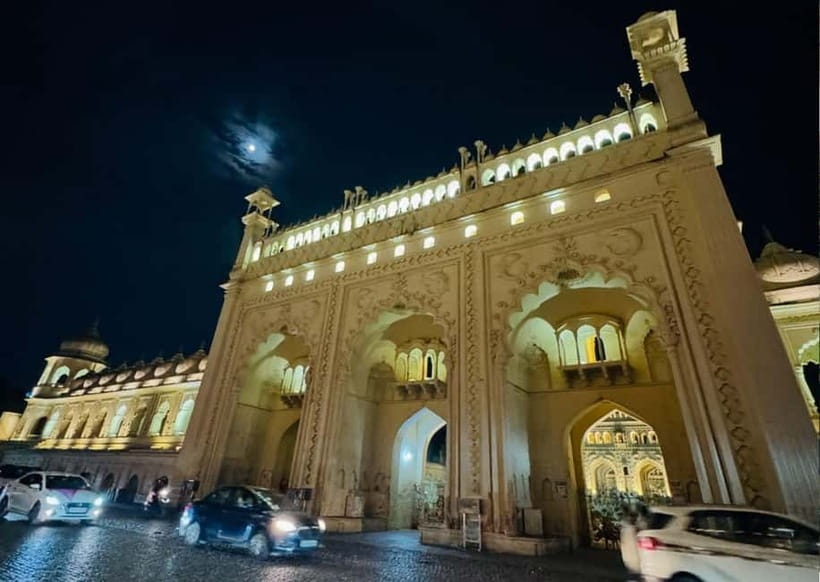
Next up is the Clock Tower, decorated with shimmering lights. The reason this part of the route matters is simple: the tower isn’t just a picture. It’s surrounded by the living pulse of evening Lucknow.
As you reach it, you’ll get a sense of how the city moves after dark—people out, streets active, and the area lit enough to feel safe and walkable. The tour even includes time on the way back toward this stop, so you’re not locked into one single photo moment.
If you’re traveling with friends, split the responsibilities. One person can focus on getting the best tower angle, while the other scouts for a clearer foreground. Night photos often fail because of crowds and background clutter, not because the landmark isn’t photogenic.

Satkhanda against the night sky: silhouette shots that don’t need perfection
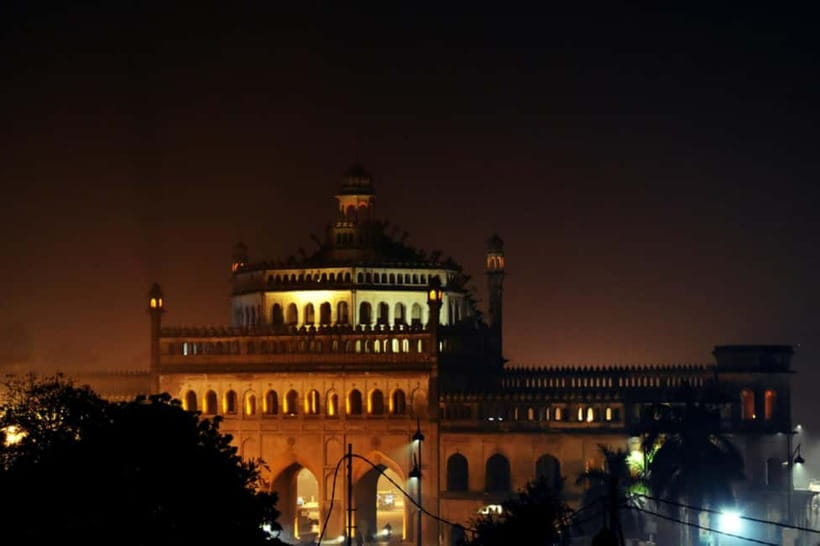
Then comes Satkhanda, with its tall silhouette lit so it reads clearly against the dark. This is one of those scenes where you don’t need complicated settings or perfect planning. The shape does the work.
What I like about this stop is that it gives your eyes a rest from intricate detail. You go from illuminated architecture and glowing street corners to a single strong vertical element. That contrast can be a relief after a couple of stops.
For photos, prioritize clean lines:
- Step back slightly to avoid cutting off the top.
- Look for a darker background so the outline stands out.
- Don’t fight the night. Let the silhouette be the main character.
Pakka Pul and Unani Hospital: light, arches, and a softer urban feel
The tour heads to Pakka Pul, where illuminated arches cast reflections toward the water below. This is a classic night-tour win: the structure is beautiful, and the surface reflections give you extra depth.
You’ll also stop at the Unani Hospital, where the facade is softly lit. This shifts the vibe again. Instead of focusing on one giant architectural statement, you get a more subtle street-corner atmosphere—light enough to see details, soft enough to feel calm.
If you’re trying to decide what to photograph, I’d think in pairs:
- For the arches and reflections, look for a shot that includes both the lit structure and the watery return of light.
- For the hospital facade, look for symmetry or clear facade lines rather than trying to include the whole street.
Zari and Chikan details: why the craftsmanship stop makes the tour worth it
Not every night tour includes a true cultural payoff. This one does, through Zari and Chikan artwork.
Here’s what makes this stop valuable for you: it changes the way you’ll look at Lucknow during the rest of your trip. Instead of treating textiles as shopping items, you start noticing craftsmanship as part of the city’s identity.
At night, that detail matters even more. Under softer lighting, small patterns and surface textures can look more intentional. It’s the difference between seeing fabric in a store and seeing it explained where it’s part of local life.
This is also a good moment to slow down and ask questions. Your guide is English/Hindi speaking, and the tour format includes lively conversations. That’s often when you get the practical context: what the terms mean, what patterns to look for, and how to spot quality details rather than just pretty colors.
Insider street moves: what you gain beyond the photo stops
The tour isn’t only about standing in front of buildings. You also get insider hacks to experience the city like a local, including the chance to walk through hidden alleys and tucked-away gems only locals know.
In practice, that means fewer dead ends and fewer moments where you realize you walked the wrong way because you didn’t know a shortcut. Night matters here. In daylight you can recover. After dark, you want smoother routing.
You’ll likely hear light, human moments too—humor, culture, and real connection built into the tour style. And you get one hot cup of tea or coffee, which is a small inclusion that can make the experience feel less like a chore and more like a shared walk.
I like tours that respect attention spans. This one keeps you engaged without trying to cram everything into a single frantic hour.
Price and value: is $13 per person really fair?
At $13 per person for 2 hours, this tour is priced like a good deal if you want a guided night experience without spending a fortune on transport or tickets.
Here’s why it feels like value:
- You’re paying for a live guide (English/Hindi).
- You get a small group experience rather than a big crowd shuffle.
- You get included beverages (tea/coffee) and a chance to learn what to notice.
- Most importantly, you’re covering multiple illuminated landmarks in one evening walk.
What you should factor in:
- Food isn’t included, so if you’re hungry, plan for it separately.
- Transportation to the starting point isn’t included, so getting to Bada Imambada on time is on you.
- There may be times when interior access is limited, meaning your value is mostly in exterior night views, street atmosphere, and craftsmanship explanation.
So: if you want a guided evening that mixes architecture with culture and practical street guidance, this is a strong price point.
Pace, safety, and what to expect from a night walk
This tour is conducted in the evening for the nightlights effect. That sounds obvious, but it changes how you should prepare.
Wear comfortable shoes. Pack a camera and water. Bring cash in case you want to handle personal expenses during or after the walk. And keep the group rules in mind: weapons or sharp objects aren’t allowed, and intoxication, alcohol, and drugs aren’t part of the experience.
Because it’s a walking tour, your best results come from simple patience:
- Walk with the group.
- Stop when the guide stops.
- Don’t expect every building to provide full access.
Also, keep in mind the size. With a maximum of 10 participants, the group is small enough for discussion, but large enough that you should still be ready to wait a few seconds while others get their photos.
Who this Lucknow nightlights tour suits best
This tour is ideal if you:
- Want a first evening plan in Lucknow with major illuminated sights
- Enjoy night photography, especially silhouettes, arches, and reflections
- Care about local craft themes like Chikan and Zari
- Prefer small-group guidance instead of navigating alone in the dark
- Like a guide who talks, jokes, and adjusts to what the group needs
It might not be the best fit if you’re expecting a deep indoor walkthrough of every stop. Even with the guide’s friendliness, you may find some entrances closed, so your expectations should be night views and guided interpretation rather than guaranteed interior access.
Should you book this guided nightlights walk?
Yes, if you want a compact, well-paced evening plan that mixes illuminated landmarks with a cultural stop you can explain later. For the money, it offers a lot: multiple major sights, local street guidance, and a textile detail component that’s more than just sightseeing.
Hold off or adjust your expectations if your top priority is entering buildings and getting inside views. This is set up as a night-walk experience, so the best results come from focusing on exteriors, architecture under lights, and the guide’s explanations.
If you’re the type who likes to learn while you walk, this is one of those Lucknow evenings that turns into stories you’ll actually remember.
FAQ
How long is the Lucknow nightlights guided walking tour?
The tour duration is 2 hours.
What does the tour cost?
It costs $13 per person.
Where do we meet for the tour?
You meet at the entrance of Bada Imambada.
What languages will the tour guide speak?
The guide speaks English and Hindi.
Is the group small?
Yes. It’s limited to 10 participants.
What’s included in the tour price?
A live English/Hindi speaking guide, insider hacks to experience the city like a local, exploration of hidden alleys and tucked-away gems, and one hot cup of tea or coffee. You’ll also have lively conversations with the guide.
What should I bring, and is food included?
Bring comfortable shoes, a camera, water, and cash. Food and transportation to the starting point are not included.