REVIEW · MUMBAI
Essence of Mumbai: Half-Day Private Tour
Book on GetYourGuide →Operated by Taxi Bazaar · Bookable on GetYourGuide
Mumbai’s traffic tests everyone. This private tour turns it into a workable plan, with a guide who adapts as you go. I love the private, flexible format: if you want more history or more street-life, the route can shift. You also get a driver-guide who handles the heavy lifting while you focus on seeing the real Mumbai.
I also like the “best-of” mix without the full-day grind. You’ll hit iconic sights like the Gateway of India and the Taj Mahal Palace Hotel, then move through places that feel more local, like Crawford Market and Girgaon Chowpatty. One consideration: there’s a moderate amount of walking, and this tour isn’t suitable for people with mobility impairments.
If you’re wondering whether it’s worth it, I’d say yes for first-time orientation and short layovers—especially because your guide can help you pace the stops around your time. The main thing to plan for is that you’ll be in a car dealing with Mumbai’s road chaos, plus you’ll want comfortable shoes and a valid ID.
In This Review
- Key takeaways before you book
- Why a private half-day in Mumbai saves your energy
- The 10:00 AM pickup and flexible route feel like having a local co-pilot
- Gateway of India and the Taj Mahal Palace Hotel: your first “wow” stop
- Crawford Market for wholesale energy (and what to watch for)
- Marine Drive: the view you’ll remember even after the traffic
- Victoria Terminus (CST) for architecture that feels like a time machine
- Mani Bhavan and the Gandhi connection that makes politics personal
- Dhobi Ghat for the world’s largest open-air laundry scene
- Kala Ghoda Art District and Flora Fountain for the lighter side of old Bombay
- Girgaon Chowpatty and Malabar Hill for coast views and neighborhood feel
- Photo stops and how to get better shots fast
- Price and value: why $21 can make sense
- What to bring and how to make the day smoother
- Should you book this private Mumbai highlights tour?
- FAQ
- What time does the tour start?
- How long is the tour?
- Is this tour private?
- What languages is the guide available in?
- How much walking should I expect?
- What should I bring?
Key takeaways before you book
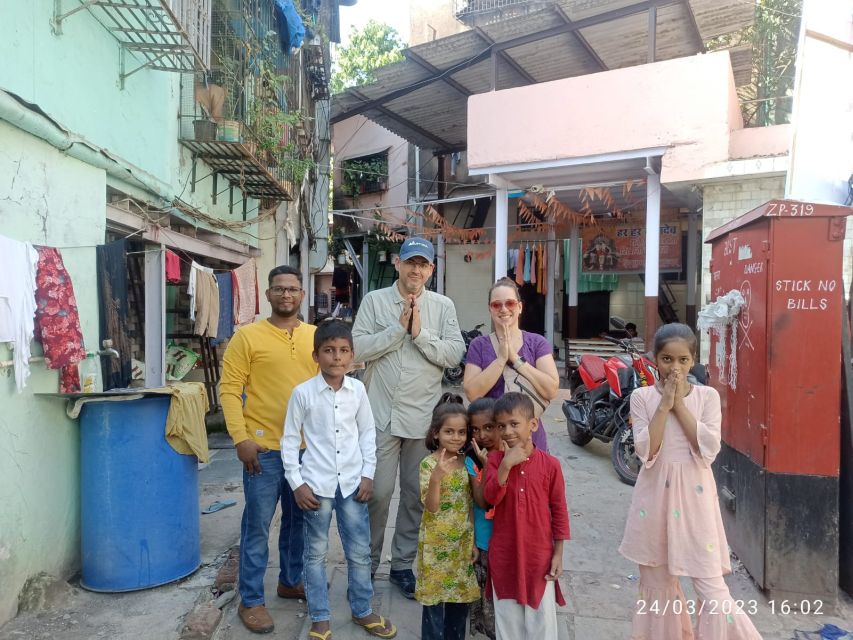
- Private guide, adjustable pace: tell your interests and your day shifts accordingly
- Big-name landmarks plus local texture: Gateway, Gandhi sites, markets, and waterfront views
- Market stop that adds contrast: Crawford Market as a key wholesale-style experience
- Marine Drive time: views that make the city feel cinematic
- Photos included as part of the day: your guide helps capture you at key stops
Why a private half-day in Mumbai saves your energy

Mumbai is a city where “just hop in a taxi” can turn into an unpredictable day. For a short visit, the smart move is buying time with a private driver-guide who already knows how to stitch sights together while traffic does what it does best.
This tour is built for getting bearings fast. You start with a 10:00 AM pickup greeting and then you’re in an air-conditioned car for the ride between stops. That matters. The heat, the noise, and the stop-and-go driving can wear you out. Here, you keep moving without wasting hours trying to figure out routes.
Another thing I like: this is not a one-size-fits-all checklist. Your guide can slow down, add a market or café stop, or focus more on architecture and political history. It’s the difference between seeing Mumbai and getting Mumbai.
You can also read our reviews of more private tours in Mumbai


The 10:00 AM pickup and flexible route feel like having a local co-pilot
Your day usually starts around 10:00 AM when your driver-guide meets you at your hotel or accommodation. From there, you settle into the car and start moving through South Mumbai’s main corridors. The tour is set up for about 4 to 6 hours, with the end dropping you back by roughly 4:00 PM.
Because it’s private, the order and emphasis can bend toward what you care about:
- If you’re the history type, you can spend more time around Gandhi’s sites and the Victorian-era architecture.
- If you want everyday life, you can lean heavier into markets and working-city details.
- If you’re short on time (like a layover), you can compress the day and still cover the essentials.
Guides on this route are known for being patient and adjusting on the fly. Names that show up often in customer experiences include Nisar, Salim, Kadir, Arshad, Alam, and Zaid Khan. The consistent theme is a calm, practical style—useful when your day depends on traffic, not perfect schedules.
Gateway of India and the Taj Mahal Palace Hotel: your first “wow” stop
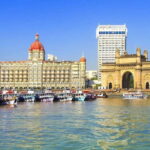
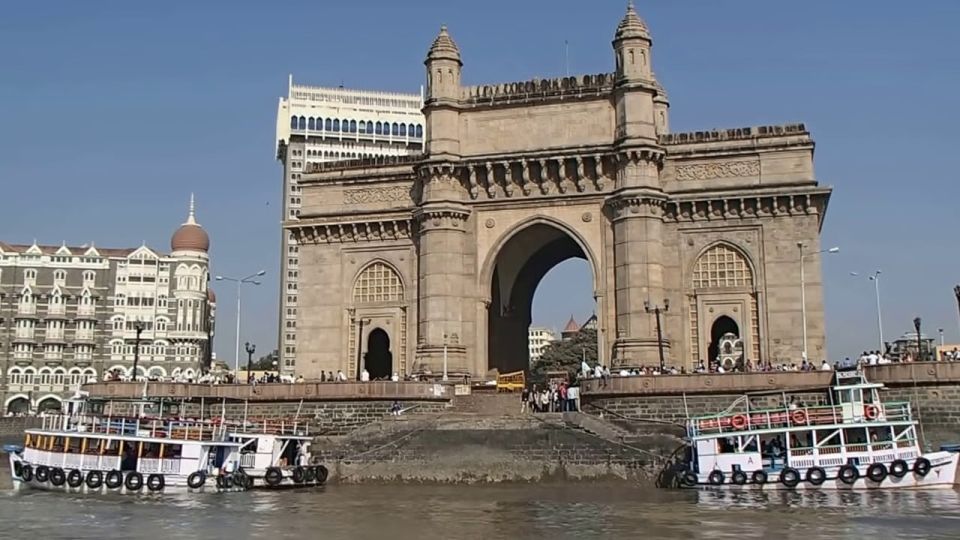
The tour commonly starts setting the tone at the harborfront with the Gateway of India. This is the moment most first-timers recognize instantly. It’s iconic for a reason: the scale, the waterfront setting, and the colonial-era aura make it an ideal anchor point for your orientation.
Right nearby, you’ll also see the Taj Mahal Palace Hotel. It’s not just a pretty façade. It’s a symbol of Mumbai’s ability to blend global glamour with local complexity. For many visitors, it’s the first contrast you notice: monumental heritage within a city that still runs on everyday hustle.
Practical note: the harbor area can be active, so your guide’s timing and photo planning matters. If professional-style photos are part of your goal, this is one of the best places to start asking for your shots early—before the light shifts and before crowds build.
Crawford Market for wholesale energy (and what to watch for)
After the big landmarks, the tour typically swings toward Crawford Market, one of the city’s major market areas. The highlight pitch for this experience points to the biggest wholesale market feel in the city, and this stop delivers that contrast: less “photo monument,” more working-city energy.
Here’s what makes the market time worthwhile, even if you’re not a “shopper”:
- You get a real sensory snapshot of what moves through Mumbai daily.
- You can spot how neighborhoods support commerce, transport, and daily needs.
- You’ll learn what the market means in plain terms, not museum labels.
What to watch for: markets are crowded and active. Keep your eyes on your footing and hold your belongings close. If you’re interested in snacks or quick local bites, your guide can often suggest nearby options based on what’s convenient during your route.
Marine Drive: the view you’ll remember even after the traffic
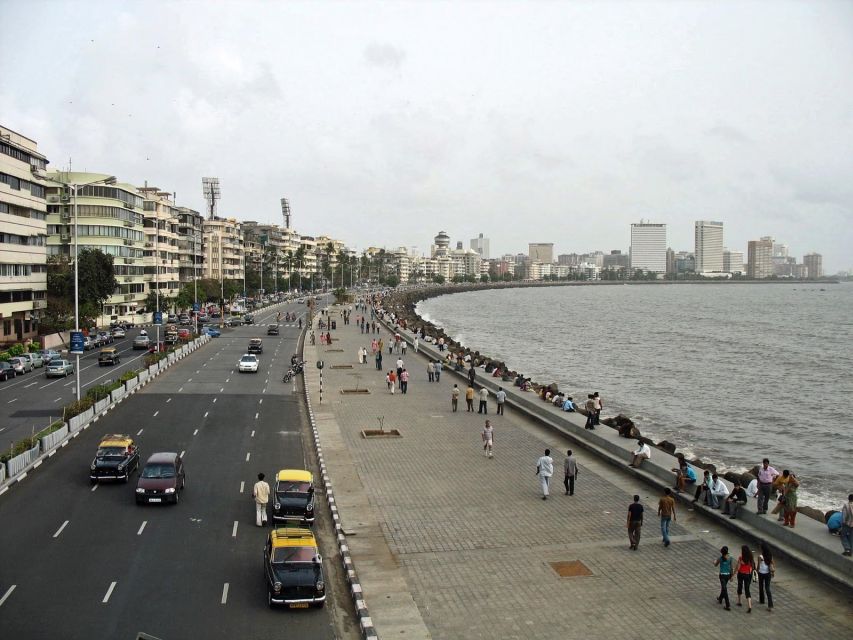
Next comes one of Mumbai’s most photographed stretches: Marine Drive. The road hugs the coastline, and the curve of the promenade gives you that postcard shape even in daylight. This is where the city can look almost calm for a moment, even though you’re still in Mumbai.
Why it’s such a strong stop on a short tour:
- It gives you a breather after market intensity.
- It shows Mumbai’s geography—water, roads, skyline—at human scale.
- It’s a great place to pause and let your guide explain how the city grew around the sea.
If you can, take a few minutes just standing and watching. Mumbai moves fast, but views like this make you notice patterns. And yes, it’s also a solid place for guided photos.
You can also read our reviews of more tours and experiences in Mumbai
Victoria Terminus (CST) for architecture that feels like a time machine
History lovers often get a highlight here: Victoria Terminus (CST). This stop is about Gothic architecture and the feeling of arriving in another era. Even if you’re not a formal architecture fan, the building’s presence tends to land.
What to look for:
- The strong, detailed façade and how it contrasts with modern streets.
- The way it turns a busy transport area into a landmark moment.
- The “why it mattered” context your guide can explain in a simple way.
This is the kind of stop that makes a half-day feel larger than it is. One good architectural explanation can glue together the other sights you’ve seen earlier.
Mani Bhavan and the Gandhi connection that makes politics personal
Mumbai isn’t only colonial buildings and waterfront views. It also has real political weight, and Mani Bhavan is often included for that reason. This is Gandhi’s former residence, and visiting it gives context to the speeches, movements, and everyday decisions that shaped India’s independence story.
The value here is not just the site itself. It’s how the tour connects people to place. When your guide explains the significance in plain language, it changes how you see the city. Suddenly, street scenes aren’t random—they’re part of the story.
If your schedule is tight, you can still make this stop work. Your guide can often adjust time at each stop so you get the meaning, not just the photo.
Dhobi Ghat for the world’s largest open-air laundry scene
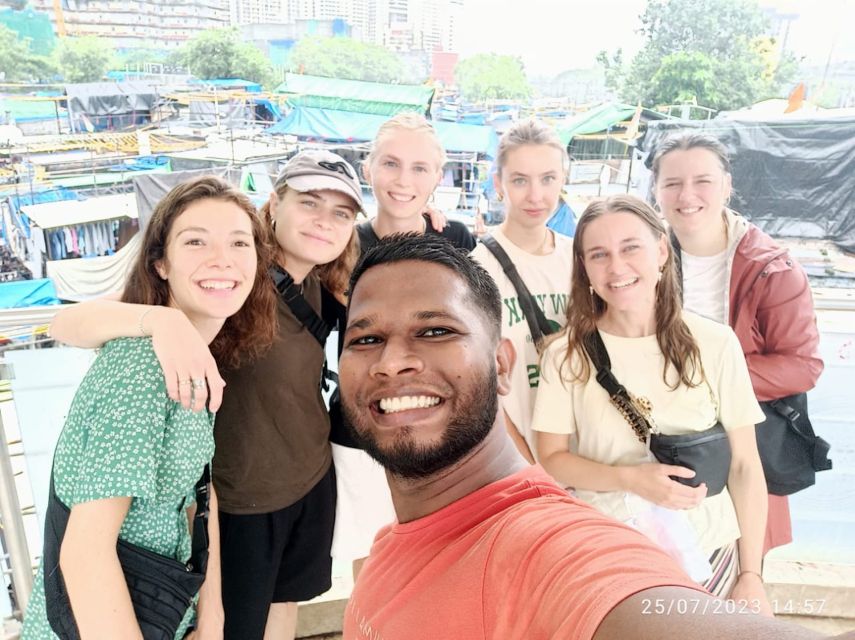
One of the most striking stops on this route is Dhobi Ghat, described as the world’s largest open-air laundromat. It’s eye-opening in a way that photos can’t fully explain. Rows of clothes hanging to dry against the backdrop of constant activity creates a living pattern you can’t help but notice.
Why it fits a half-day tour:
- It shows daily labor and community rhythm.
- It adds “Mumbai working life” beyond monuments.
- It gives you something visually unusual, which is often what you want from a short stay.
Be respectful of the space and the people working there. Keep your time focused and don’t try to turn it into a long, intrusive wander. Your guide can help you see what matters without making the experience stressful.
Kala Ghoda Art District and Flora Fountain for the lighter side of old Bombay
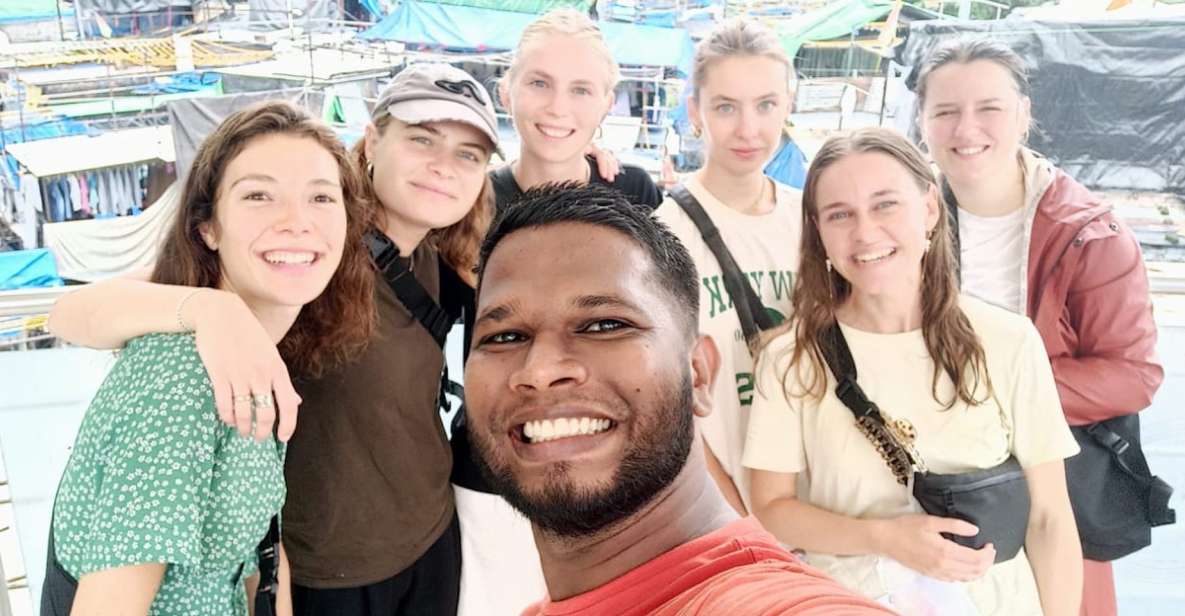
After heavy visual impact, this tour often shifts to a more arts-and-architecture mood with Kala Ghoda Art District. It’s known for galleries and street art, and it gives you a chance to walk and look at the city as a creative place, not only a power center.
Nearby, you might also pass or stop around Flora Fountain and the University of Mumbai area. The appeal is the colonial-era structure and the way these buildings frame public life. It’s easier to feel the city’s layers when you’re not bouncing nonstop from one monument to another.
Even if you only spend a short time here, it helps. Markets and heritage sites can feel heavy. Art districts and fountains add breathing room to your mental map.
Girgaon Chowpatty and Malabar Hill for coast views and neighborhood feel
Depending on timing and what you ask for, the tour may include Girgaon Chowpatty Beach. This is where you see families and everyday groups gathering, making it a good counterpoint to the harbor views and the market rush.
Then the day can move toward Malabar Hill, which is another classic South Mumbai area. This part of the route helps you understand that the city has multiple moods within a small geographic radius.
What you’ll get out of these stops is not only scenery. It’s perspective. You’ll start seeing why Mumbai is so different street-to-street—and why a single day can still teach you a lot if your guide organizes the sequence well.
Photo stops and how to get better shots fast
You’re told you’ll have professional photos with your guide, and that’s more valuable than it sounds. When a local guide handles timing, angles, and positioning, your photos turn out better with less effort from you.
Here’s how to use it to your advantage:
- Ask your guide where the light looks best at each stop.
- Tell them what you prefer—solo shots, couple shots, or a clean “standing-by-the-landmark” style.
- If you want action-style photos (like market scenes), ask where you can step for a quick capture without slowing others down.
This is especially helpful in Mumbai, where crowds and traffic can make it hard to pull off good photos on your own.
Price and value: why $21 can make sense
At $21 per person, this feels like a bargain for what’s included. You’re getting private transportation, an air-conditioned car, a private guide, bottled water, and fuel surcharges. For many cities, a private guide alone can cost far more than this.
The value comes from what you avoid:
- wasted time planning routes,
- missteps like long detours,
- stress from trying to manage road conditions solo,
- and the “we only saw two places” problem that happens with unplanned half-days.
The one thing that can affect value is your expectations. If you want a long sit-down day with deep museum time, this isn’t that. But if you want a smart “get the highlights and learn how the city works” day, the price is in the sweet spot.
What to bring and how to make the day smoother
Bring:
- comfortable shoes (there’s moderate walking),
- an ID card (a copy is accepted).
Also plan mentally for a half-day that mixes sitting in the car with short stop-and-look moments. Mumbai days are elastic. If the roads slow down, your guide can often reshuffle time so you still hit the key sights.
If you have mobility limitations, note that this experience isn’t suitable. That’s one of the biggest practical constraints listed.
Should you book this private Mumbai highlights tour?
I’d book it if:
- you’re visiting Mumbai for the first time,
- you have a half-day window and want a logical route,
- you like the idea of combining famous landmarks with real street-life stops,
- you want guided context and help capturing photos without wrestling crowds alone.
I might skip it if:
- you need a low-walking schedule,
- you’re expecting lots of indoor time or slow, museum-style pacing,
- or you prefer to plan every stop without a guide’s sequencing.
If your goal is to understand Mumbai quickly—heritage, everyday commerce, Gandhi history, and sea views—this private half-day tour is one of the most practical ways to do it.
FAQ
What time does the tour start?
Pickup begins when your driver-guide meets you at your hotel or accommodation at 10:00 AM.
How long is the tour?
The duration is listed as 4 to 6 hours, with the tour typically ending around 4:00 PM for hotel drop-off.
Is this tour private?
Yes. It’s a private group with your own driver-guide and car.
What languages is the guide available in?
The live guide is available in English, Hindi, and Marathi.
How much walking should I expect?
Expect a moderate amount of walking during the tour, so comfortable shoes are important.
What should I bring?
Bring an ID card (a copy is accepted) and wear comfortable shoes.