REVIEW · AHMEDABAD
Ahmedabad: Full Day City tour with Heritage Walk & transfers
Book on GetYourGuide →Operated by Go City Adventures · Bookable on GetYourGuide
Ahmedabad history hits different on foot. This full-day tour links Gandhi-era sites with standout places of worship and architecture. You also get a smooth mix of walking and driving so you’re not stuck hopping around alone.
I love the way the day highlights the Islamic-Hindu design blend, especially at the 15th-century mosque and its detailed pillars and walls. I also like the balance of big ideas and calm stops: Gandhi at Sabarmati Ashram, then a slower moment at Adalaj Stepwell’s garden setting.
One consideration: you should be ready to walk a lot, and you’ll want comfortable shoes plus water and snacks to keep the pace comfortable.
In This Review
- Key points to know
- How the Ahmedabad day is paced (8:00 AM to about 3:00 PM)
- Step into the Ahmad Shah I mosque: Islamic and Hindu design up close
- Ahmad Shah’s Tomb adds depth on the route
- Sabarmati Ashram and Gandhi’s freedom struggle moments
- Adalaj Stepwell and the garden: calm, scenic, and photogenic
- Hutheesing Jain Temple and Dharmanatha devotion
- Sidi Saiyyed Mosque latticework (Tree of Life) moments
- Vallabhbhai Patel National Museum: the states-unifying story
- Price and value: is $125 per person fair?
- What to bring and how much walking to expect
- Guide quality in practice: what you can expect from the English commentary
- Who this tour fits best (and who might want a different plan)
- Should you book this full-day heritage tour?
- FAQ
- How long is the Ahmedabad full-day heritage tour?
- What time does the walking portion begin?
- Is hotel pickup and drop-off included?
- Is this a private group tour?
- Which attractions are included in the itinerary?
- Is the guide available in English?
- Can the guide also speak Hindi?
- Is there a lot of walking?
- What should I bring for the day?
- How much does it cost?
- Is free cancellation available?
Key points to know
- 15th-century mosque with Islamic-Hindu architectural details you can actually see up close
- Sabarmati Ashram tied directly to Gandhi and the freedom struggle, including the Salt March link
- Adalaj Stepwell + garden for scenic breaks and great photo angles
- Hutheesing Jain Temple devoted to Dharmanatha, with structure that rewards close attention
- Sidi Saiyyed Mosque latticework (Tree of Life) for a striking change of pace
- Vallabhbhai Patel National Museum focused on uniting princely states, with films and artifacts
How the Ahmedabad day is paced (8:00 AM to about 3:00 PM)
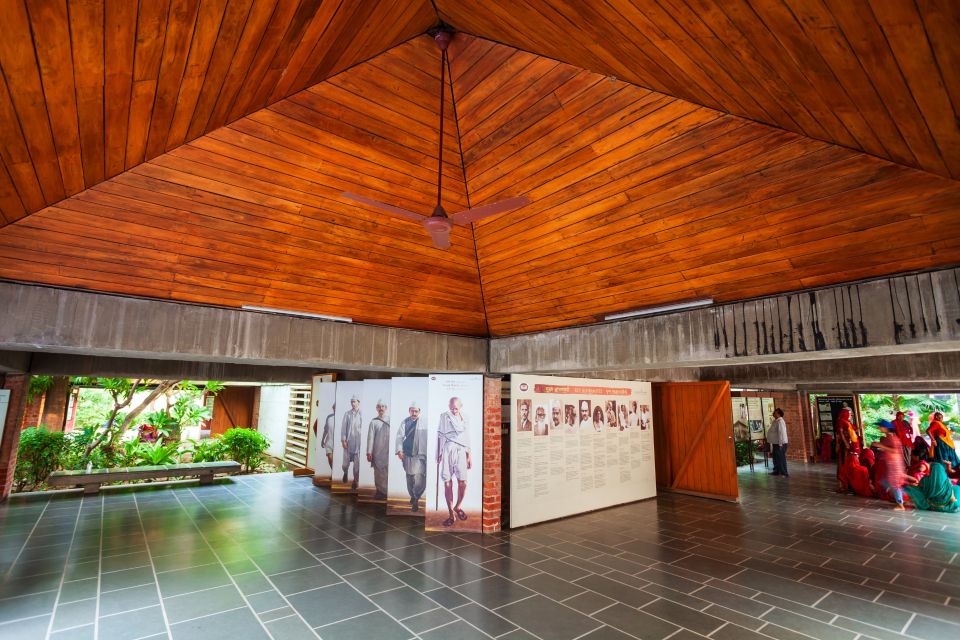
This is an 8-hour full-day tour designed to cover major sites without feeling like a sprint. The day starts with hotel pickup and then gets you into the walking part at 8:00 AM, which is ideal for cooler temperatures and calmer streets.
You’ll move between areas by car/ride (so you can cover more ground), but the core experience includes a true walking heritage route. After you finish the walking portion, the itinerary shifts to a ride-to-each-stop flow. The tour wraps up by 3:00 PM, then you’re transferred back to your hotel.
Because it’s a private group with a live guide in English, this setup works well if you want explanations, not just photos. The guide can point out details you might miss when you’re on your own—like why certain architecture looks the way it does.
You can also read our reviews of more walking tours in Ahmedabad
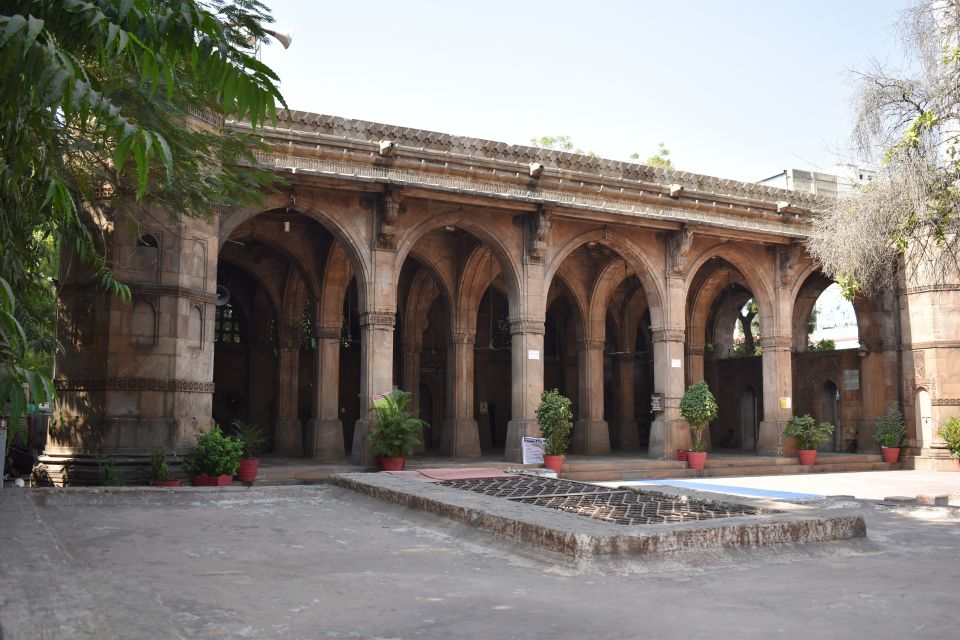
Step into the Ahmad Shah I mosque: Islamic and Hindu design up close
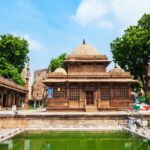
The morning’s anchor is a 15th-century mosque built by Ahmad Shah I. You’ll start there at 8:00 AM, and you’ll get inside, not just a quick stop from outside. This matters because the design details—especially on the pillars and walls—are where the story lives.
What I like about this stop is the clear visual theme: you’re looking at a mix of Islamic and Hindu architectural elements. The tour doesn’t treat it like a random “pretty building.” Instead, you’re guided to notice the workmanship and how the structure reads in two different cultural languages.
It’s also the kind of place where timing helps. Early in the day, you can take your time without feeling rushed through the interior. If you’re the type who enjoys “spot the detail” sightseeing, this is the stop that rewards you the most.
Practical tip: because this is an indoor site plus walking before and after, wear shoes you can trust. You’ll likely be standing, moving, and looking around more than you’d expect from a single stop.
Ahmad Shah’s Tomb adds depth on the route
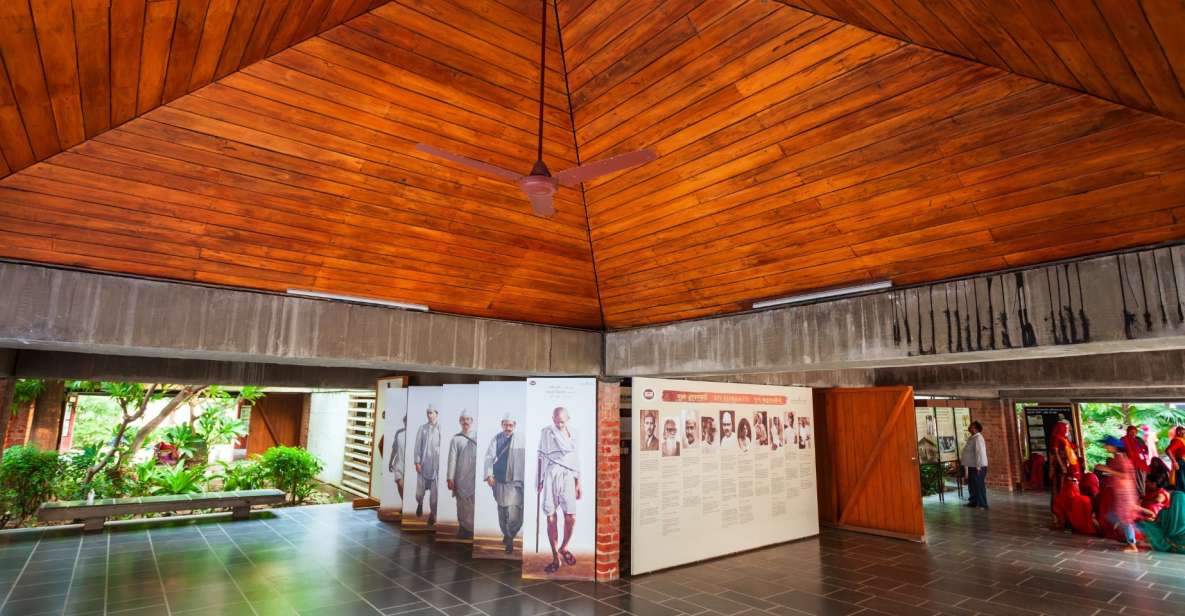
On the way during the walking portion, you pass Ahmad Shah’s Tomb. It’s not framed as the full destination, but it adds historical weight to the route.
Think of it as a connective tissue moment: you’re already in the world of Ahmad Shah I’s era through the mosque, and the tomb reminder ties the landmarks together. That makes the morning feel like a guided story instead of a checklist.
Even if you only get a glimpse while moving, it helps you understand why the morning stops exist in the first place: this area isn’t just about one building. It’s about the larger historical setting.
Sabarmati Ashram and Gandhi’s freedom struggle moments
After the walking portion, you ride to Sabarmati Ashram, where Mahatma Gandhi lived for a remarkable period of his life. This stop is the tour’s political and emotional center, because it connects the physical place to major events in India’s freedom struggle.
The itinerary specifically notes Gandhi’s link to the Salt March, tied to the freedom movement from this area. So rather than treating Sabarmati as a museum-like experience, you get a “how it mattered” framework while you’re there.
I like that the day doesn’t keep things abstract. When a tour connects a place to a named movement, you get a clearer mental map. You can walk away remembering not only that Gandhi was connected to the site, but what the site represents in the broader story.
If you prefer context that turns into real understanding, this is one of the best parts of the day. You’re not just ticking off an attraction—you’re learning how places can shape movements.
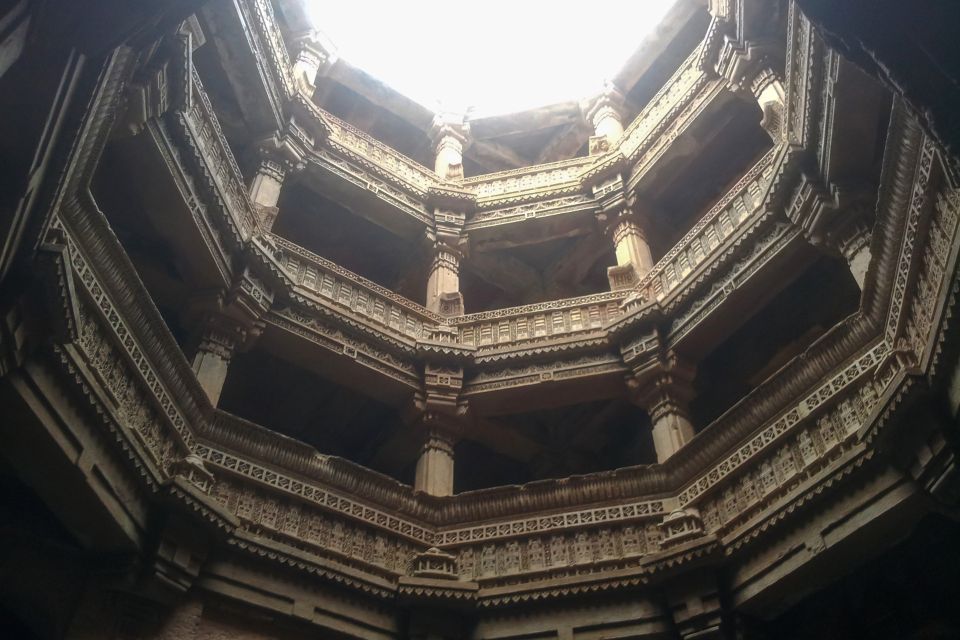
Adalaj Stepwell and the garden: calm, scenic, and photogenic
Next comes Adalaj Stepwell, along with its surrounding garden area. This is a change of pace from the heavier history stops earlier in the day.
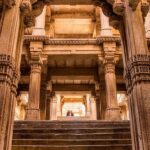
Stepwells are fascinating because they’re practical architecture that also becomes an atmospheric public space. Here, you’re guided to enjoy not only the structure itself, but also the garden setting around it. That combination is what makes the stop feel like a break rather than another rushed viewing.
I also like that this stop gives you a “slow down” moment. Even with a timed tour day, Adalaj Stepwell tends to invite lingering—looking up at details, stepping back to understand the shape, and taking in the garden surroundings.
If you like great visuals and quiet time within a structured tour, Adalaj is a high-value stop.
You can also read our reviews of more city tours in Ahmedabad

Hutheesing Jain Temple and Dharmanatha devotion
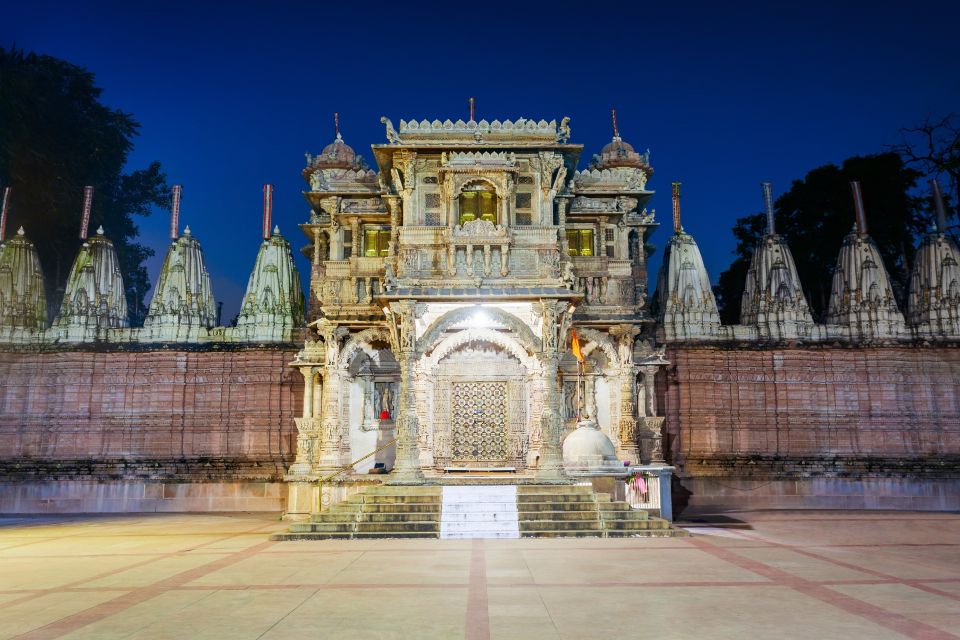
Then it’s on to Hutheesing Jain Temple, described as a 19th-century Jain temple devoted to Dharmanatha. This is another place where the tour’s guided approach helps. Jain temples often reward close attention, and the itinerary is framed around what you can see in the structure itself as you move through.
The wording around this stop focuses on the temple’s structure, which usually means the guide is pointing out architectural or design features rather than rushing you through like a conveyor belt.
Why this matters for you: Ahmedabad isn’t only about mosques and Gandhi-era landmarks. This temple adds a different thread—religion, devotion, and craft—so the day doesn’t feel one-note.
If you’re curious about how faith shapes architecture, Hutheesing is an excellent mid-day anchor before the day shifts again to the mosque’s latticework later.
Sidi Saiyyed Mosque latticework (Tree of Life) moments
After Hutheesing, the tour moves to Sidi Saiyyed Mosque. This stop is famous for its latticework, often called the Tree of Life in descriptions of the design.
The itinerary highlights seeing that latticework and the exquisite designs, which tells you what to focus on while you’re there. This is one of those sightseeing moments where your brain wants to stop and stare, because the patterning is the point.
I like that the day doesn’t keep you in the same visual language. You go from stepwell calm to temple structure to a mosque interior/exterior design that’s all about detail and repetition. That variety keeps the day interesting even if you’ve been walking since the morning.
If you want at least one stop that feels like pure visual impact, Sidi Saiyyed is your candidate.
Vallabhbhai Patel National Museum: the states-unifying story
The final major attraction is the Sardar Vallabhbhai Patel National Museum. This museum focuses on Patel’s role as independent India’s first home minister and his work uniting more than 500 princely states.
What’s useful here is how the tour describes the museum experience: you’ll witness Patel’s life journey through short films and displayed artifacts. That format matters because museum fatigue is real. Films and curated artifacts can keep you engaged without making you read everything on stone tablets.
I also like that this museum gives you a different kind of historical payoff than Gandhi-focused stops. Gandhi is about mass movement and moral political pressure. Patel is about consolidation and administration. Together, they add a fuller picture of how independence became a functioning country.
By the time you reach this museum, the day has already covered a lot of sacred architecture. So the museum works as a practical counterweight: it’s still history, but in a different mode, and it closes the loop on modern nation-building.
Price and value: is $125 per person fair?
At $125 per person for an 8-hour private-group tour with hotel pickup and transfers, the value comes from three big things:
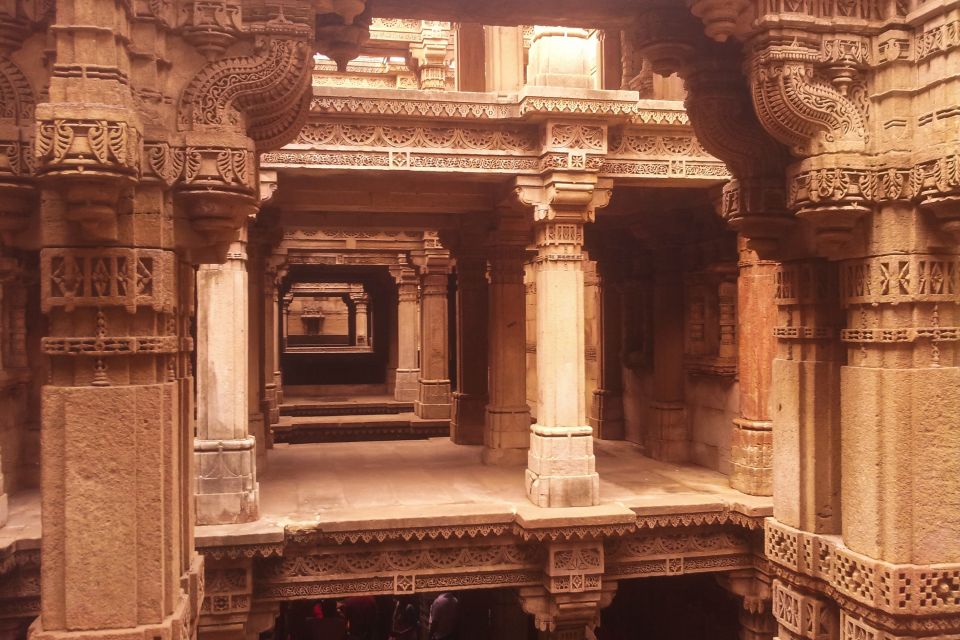
First, you’re getting a full set of high-demand stops in one day: Sabarmati Ashram, Adalaj Stepwell, Hutheesing Jain Temple, Sidi Saiyyed Mosque, plus the Patel museum. That’s a lot of ground to cover efficiently.
Second, you’re paying for a live English guide who can connect the dots between sites. One verified review noted a guide named Mr. Murtaza, praised for being knowledgeable, patient, and well spoken, with detailed explanations. Even without using that exact guide every time, the tour’s format is clearly built around interpretation, not just transport.
Third, you’re paying for the structure: walking early at 8:00 AM, then riding between attractions, and ending by 3:00 PM with return transfer. When you’re in a city for limited time, that kind of pacing is worth real money.
The only real “value risk” is the walking factor. If you’re not comfortable with a lot of walking, you may feel like you’re working harder than the day’s price implies. But if you can handle it, the schedule is packed in a smart way.
What to bring and how much walking to expect
This tour is built around a walking heritage portion in the morning, followed by seated rides. Based on a recent verified review, you should expect to walk a lot, so plan for it.
Bring:
- comfortable shoes (this is non-negotiable)
- water and snacks for the day
- a light layer for morning-to-afternoon temperature swings
Also, since several stops involve interiors or detailed exteriors, you’ll likely do lots of standing and looking up/down. Comfortable shoes keep you from turning a “guided culture day” into a sore-feet day.
If you’re the type who likes to pause for photos, the good news is that the itinerary includes visual rewards like Adalaj Stepwell and Sidi Saiyyed Mosque latticework. The better news is that you’ll still have enough time structure to keep moving.
Guide quality in practice: what you can expect from the English commentary
The tour includes a live English guide, and you may also find Hindi support depending on the group. One verified review specifically mentioned an English and Hindi speaking tour with Mr. Murtaza and praised his patience and respectful approach.
That detail matters because Ahmedabad can feel layered and complicated if you’re doing it on your own. A strong guide helps you:
- understand why architecture combines styles
- connect historical periods to what you’re seeing
- follow the sequence without getting lost in facts
This tour is designed so the explanations travel with you. You’re guided through the mosque walk, then the narrative continues to Gandhi’s life at Sabarmati Ashram, followed by Jain and Islamic architecture, and finally Patel’s nation-building story at the museum.
If you want a day where someone helps you decode what you’re looking at, this is one of the more satisfying formats.
Who this tour fits best (and who might want a different plan)
This tour is a great fit if you want:
- a single full-day sampler of Ahmedabad’s most significant heritage sites
- a mix of faith and political history in one route
- structured time with hotel transfers and a guide who explains details
It may feel less ideal if:
- you struggle with walking for several hours even with breaks and rides
- you prefer a slower pace with fewer stops (this day is packed)
- you want only one theme (for example, only architecture or only independence history)
If you’re short on time and want a guided route that covers the key anchors—mosque/temple, Gandhi, stepwell, and Patel—this schedule is built for exactly that.
Should you book this full-day heritage tour?
I’d book it if you’re spending limited time in Ahmedabad and you want a smart blend of places that are both visually strong and historically connected. The route makes sense: you start with Islamic-Hindu architectural details, add tomb context, move into Gandhi’s freedom struggle at Sabarmati Ashram, take a quieter scenic break at Adalaj Stepwell, then shift to Jain devotion and the Tree of Life latticework at Sidi Saiyyed Mosque, ending with Patel’s uniting of princely states through films and artifacts.
The main reason to hesitate is the walking. If you know you can’t handle a lot of walking, look for a less walking-heavy option. If you can handle it, the day offers solid value for a guided private group at $125 per person with transfers and a full itinerary that ends on time.
FAQ
How long is the Ahmedabad full-day heritage tour?
It lasts 8 hours, from the morning start through to around 3:00 PM when you’re transferred back to your hotel.
What time does the walking portion begin?
The tour starts its walking part at 8:00 AM.
Is hotel pickup and drop-off included?
Yes. The day begins with pickup from your hotel, and after the tour ends you’ll be transferred back.
Is this a private group tour?
Yes, it’s listed as a private group experience.
Which attractions are included in the itinerary?
The tour includes Sabarmati Ashram, Hutheesing Jain Temple, Adalaj Stepwell, Sidi Saiyyed Mosque, and the Vallabhbhai Patel National Museum. You also pass Ahmad Shah’s Tomb during the walking route.
Is the guide available in English?
Yes, the tour includes a live tour guide in English.
Can the guide also speak Hindi?
One verified review mentions an English and Hindi speaking tour with the guide Mr. Murtaza, so Hindi may be available depending on the group and scheduling.
Is there a lot of walking?
Yes. One review specifically advises being prepared to walk a lot, so comfortable shoes matter.
What should I bring for the day?
Bring comfortable shoes and plan for the walking portion by packing snacks and water.
How much does it cost?
The price is $125 per person for this 8-hour tour.
Is free cancellation available?
Yes. You can cancel up to 24 hours in advance for a full refund.