REVIEW · AHMEDABAD
Ahmedabad: Private Temples and Religion Tour with Stepwell
Book on GetYourGuide →Operated by INDIATOR · Bookable on GetYourGuide
Ahmedabad’s sacred sites feel close up and personal. I love the Akshardham Temple details—carved stone, manicured gardens, and the five-hall layout—and I love that you also get the down-to-earth cool of Adalaj Step Well. One thing to watch: Akshardham is closed every Monday, so your timing (or the stop) will change.
What makes this tour work is the way it connects art, faith, and local stories without rushing. I also like that it’s a private group with an English guide, so you can ask questions and take your time at the carvings and latticework. The only likely drawback is traffic time in a full city day, so you’ll want to keep expectations realistic about how long the road sections take.
In This Review
- Key Highlights You’ll Actually Remember
- How the 7 Hours Work in Real Life
- Akshardham Temple: Five Halls, 200+ Idols, and Garden Time
- Sidi Saiyyed Mosque: Lattice Window, Tree of Life, and Arc-Shape Style
- Hutheesing Jain Temple by the Sabarmati: Dharmanantha and Gandhi’s Shadow
- Adalaj Step Well: Seven Stories Down to a Cooler Kind of Awe
- Guides Make It Work: Rajneetkant, Anant, and Mr. Shah’s Style
- Price and Value: What $150 per Person Buys You
- Best Fit: Who This Tour Suits (and Who Might Want More Flexibility)
- Should You Book This Ahmedabad Temples and Step Well Tour?
- FAQ
- How long is the tour?
- What’s included for pickup and return?
- Is the tour guide available in English?
- Is this a private tour?
- Which major sites will you visit?
- Is Akshardham Temple open every day?
- How deep is Adalaj Step Well and who built it?
- Is there a lunch stop?
- Can I cancel and get a refund?
- Can I reserve now and pay later?
Key Highlights You’ll Actually Remember
- Akshardham Temple’s five halls and 200+ idols, plus an exhibition hall focused on Hindu ideas
- Sidi Saiyyed Mosque lattice stone window and arc-shaped architecture, including the Tree of Life artwork
- Hutheesing Jain Temple on the Sabarmati River, tied to Gandhi’s years in Ahmedabad
- Adalaj Step Well built by Rana Veer Singh, seven stories deep with a cool descent
- English-speaking private guide who can explain details without turning it into a lecture
- Hotel pickup and drop-off in Ahmedabad, so you’re not fighting local directions all day
How the 7 Hours Work in Real Life
You’ll start with an English live guide and hotel pickup in Ahmedabad after 9:00 AM. The tour is designed as a full-day hit list of four major religious landmarks, with time for lunch and a proper visit to the stepwell underground.
Because it’s a private group (not a packed bus with strangers), you can move at a pace that fits you. If you like photos, close-up details, or just sitting for a minute and absorbing the place, this format gives you that freedom without breaking the schedule.
Plan for driving time. Ahmedabad can be busy, and the route includes areas where crowds and road slowdowns happen. The good news: in real use, guides on this tour have handled it with flexibility—one guide even made extra stops and worked the traffic to keep the day full.
You can also read our reviews of more private tours in Ahmedabad


Akshardham Temple: Five Halls, 200+ Idols, and Garden Time
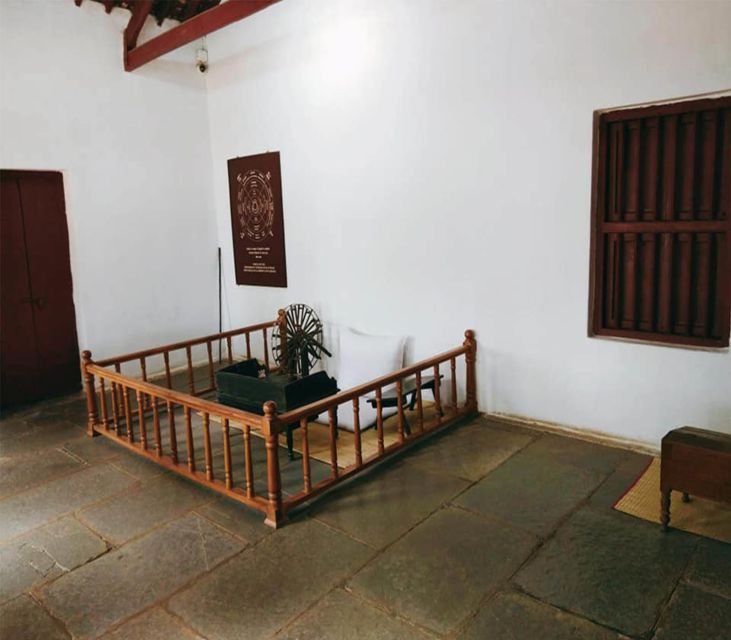
Akshardham Temple is the headliner, and it shows. You’ll visit after pickup (and in many cases, that timing helps you see the complex in a calmer rhythm than late-afternoon rush). Expect intricately carved stone work, manicured gardens, and a layout that feels like it was made for slow looking.
What I’d tell you to focus on is the internal structure: the visit includes five separate halls with over 200 idols of Hindu gods, plus an exhibition hall that explains central Hindu culture and values through displays. That mix matters. It’s not only sightseeing; it gives you a framework for what you’re seeing, so the carvings don’t feel random.
Two practical notes:
- Akshardham Temple is closed on every Monday. If you’re traveling on a Monday, check how your operator handles that day.
- Give yourself time between halls. This isn’t the kind of place where you can sprint and get the value; it’s the details—faces, patterns, stonework—that make it special.
Sidi Saiyyed Mosque: Lattice Window, Tree of Life, and Arc-Shape Style
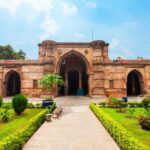
Next comes the Sidi Saiyyed Mosque, where the vibe shifts from Hindu temple carvings to Islamic architecture and stone design. The mosque is known for its arc-shaped architecture, and inside you’ll spot artwork that includes the Tree of Life.
The standout feature is the finely-carved lattice stone window. It’s not only pretty—it’s also described as being adopted by a reputed institute in Ahmedabad. That’s a clue that you’re looking at a design idea worth studying, not just decoration.
When you’re there, slow down at eye level. The window’s pattern creates different visual effects depending on where you stand and the angle of light. If you have a phone camera, take a minute to test a couple angles—you’ll get sharper lattice detail with minimal effort.
This stop is also a good palate cleanser between major religious sites. It helps your brain switch from temple halls into geometric design and calligraphic-style thinking, which makes the next Jain visit land differently.
Hutheesing Jain Temple by the Sabarmati: Dharmanantha and Gandhi’s Shadow
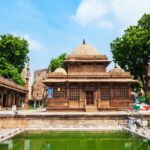
Hutheesing Jain Temple is dedicated to Dharmanantha, and it sits on the banks of the Sabarmati River. Jain temples can feel both strict and intricate—less about big showy drama, more about craftsmanship and devotion in the way details repeat and build.
Here’s the context that makes this stop more than a quick photo stop. The area’s story connects to Mahatma Gandhi: an ashram here was home to Gandhi for 12 years and served as headquarters during the struggle for Indian independence. That’s a big statement for one temple stop, and it’s exactly why guided time helps. Your guide can place what you’re seeing inside the broader Ahmedabad timeline.
A tip for you: when someone mentions the Gandhi link, don’t treat it like trivia. Ask how it connects to this part of the river area and why that location mattered. Even a short answer usually makes the temple’s setting feel less isolated and more part of the city’s living history.
Adalaj Step Well: Seven Stories Down to a Cooler Kind of Awe
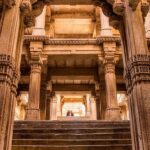
Then you head to Adalaj Step Well, also spelled out as a surprising phenomenon when you’re actually in the space. This structure is seven stories deep and was built by Rana Veer Singh.
The best part isn’t just that it’s deep. It’s the moment you start going down and feel the temperature shift. Underground architecture can do that trick—stone holds cool air, and the stepped corridors create a sheltered environment. Your guide will point you toward the right viewpoints as you descend.
What to do once you’re inside:
- Take a slow walk down and notice how the space changes at each level.
- Pause long enough to read the structure visually. Stepwells have rhythm: edges, columns, and openings that frame sky glimpses.
- If you’re traveling in warm months, this stop is a break for your body, not just your eyes.
This is also one of those places where private pacing pays off. If you rush, you miss what makes stepwells special: the gradual reveal.


Guides Make It Work: Rajneetkant, Anant, and Mr. Shah’s Style
The temple and stepwell highlights sound impressive on paper. What makes the experience feel like a real day with local insight is the guide.
One guide, Rajneetkant, stood out for friendliness and for steering a group toward a good local Gujarati lunch spot. Another, Anant, was praised for mixing deep knowledge with entertaining explanations, so the visit didn’t feel like a lecture. Mr. Shah was noted for explaining each temple thoroughly and for covering Islamic history clearly too, which matters because the route includes both Hindu and Islamic architecture.
There’s also a pattern in the feedback: you’re not rushed, and you can request small adjustments. One guide even added impromptu stops to “color” the day, and another guide dealt confidently with crowd and traffic to keep things moving.
If you get a guide who’s enthusiastic about their hometown, you’ll likely get more than facts. You’ll get context that makes carvings, symbols, and architecture feel connected instead of separate.
Price and Value: What $150 per Person Buys You
At $150 per person for a 7-hour private tour, the price makes sense when you look at what’s included. You’re paying for:
- Hotel pickup and drop-off
- An English live guide
- A private group setup
- Visits to four major sites (Akshardham, Sidi Saiyyed Mosque, Hutheesing Jain Temple, Adalaj Step Well)
- A lunch break at a local restaurant
For many visitors, that’s the value equation: one day, multiple destinations, and someone else handles routing and explanation. If you tried to do these stops alone, the cost usually shifts into taxis/vehicle time plus guide time plus the hassle of figuring out routes and entry flow.
Is it a budget tour? Not really. But for a first serious day in Ahmedabad—especially if you care about religion, architecture, and the city’s independence-era links—it’s a fair price for the amount of ground you cover and the interpretation you get along the way.
One practical caution on value: always confirm what’s covered for lunch in your specific booking. In one documented case, a customer had an issue until it was cleared up that lunch was included as part of the package. That doesn’t mean it’s typical, but it does mean you shouldn’t assume—ask once and move on.
Best Fit: Who This Tour Suits (and Who Might Want More Flexibility)
This tour is ideal if you:
- Want a structured day that strings together Hindu, Islamic, and Jain sites
- Like architecture that rewards close attention (Akshardham carvings, Sidi Saiyyed lattice window, stepwell geometry)
- Prefer a private, English guide so you can ask questions and take breaks
- Care about the Ahmedabad independence-era story tied to Gandhi and the ashram connection near the Sabarmati area
It may be less ideal if you:
- Are traveling specifically on a Monday and want Akshardham as your main “must-see,” because Akshardham is closed that day
- Hate any driving time and want a strictly walkable route (this tour includes city travel between sites)
Should You Book This Ahmedabad Temples and Step Well Tour?
If you’re planning one solid day in Ahmedabad and you want more than a checklist of monuments, I’d say yes, book it. The combination of Akshardham’s carved halls, Sidi Saiyyed Mosque’s lattice and symbolism, Hutheesing Jain Temple’s Jain devotion by the Sabarmati, and the seven-story descent at Adalaj Step Well gives you variety that doesn’t feel random.
Before you click confirm, do two quick checks:
- Make sure your day isn’t a Monday unless you’re okay with Akshardham being unavailable.
- When you message the operator, confirm the lunch arrangement for your specific booking so there are no surprises.
If that’s squared away, you’ll get a guided, private day where the city’s religious architecture and independence-era connections actually make sense.
FAQ
How long is the tour?
The tour lasts 7 hours.
What’s included for pickup and return?
The tour includes hotel pickup in Ahmedabad and drop-off back at your hotel after the tour.
Is the tour guide available in English?
Yes. The tour includes a live guide in English.
Is this a private tour?
Yes. The group type is listed as private.
Which major sites will you visit?
You’ll visit Akshardham Temple, Sidi Saiyyed Mosque, Hutheesing Jain Temple, and Adalaj Step Well.
Is Akshardham Temple open every day?
No. Akshardham Temple is closed on every Monday.
How deep is Adalaj Step Well and who built it?
Adalaj Step Well is seven stories deep, and it was built by Rana Veer Singh.
Is there a lunch stop?
The tour plan includes a lunch break at a local restaurant. One customer reported a lunch-related confusion that was later resolved as included, so it’s smart to confirm in your booking details.
Can I cancel and get a refund?
Yes. It offers free cancellation up to 24 hours in advance for a full refund.
Can I reserve now and pay later?
Yes. It’s listed as reserve now & pay later, meaning you can book without paying immediately.