REVIEW · AHMEDABAD
Ahmedabad: Private tour of city for cultural immersion
Book on GetYourGuide →Operated by 5 Senses Tours · Bookable on GetYourGuide
Ahmadabad’s old streets teach you fast. This private 7-hour tour threads through the 600-year-old walled city while connecting big ideas—freedom, water engineering, and faith—through places you can actually stand inside. I especially like the mix of Sabarmati Ashram and Adalaj Step Well: one shows a turning point in India’s independence story, the other shows how seriously this region took water and design.
You’ll also get a very hands-on spiritual stop at Hutheesing Jain Temple, and you’ll finish at Siddhi Sayeed Mosque to see the famous Tree of Life latticework motif. One consideration: you need to dress for it—no shorts and no sleeveless shirts, and you’ll be covering knees and shoulders—so plan clothes that are comfortable in Gujarat’s heat.
In This Review
- Key highlights to look forward to
- A 7-hour route that makes Ahmedabad feel coherent
- Sabarmati Ashram and Gandhi’s freedom corridors
- Adalaj Step Well: water engineering with a human story
- Hutheesing Jain Temple and its 52-shrine devotional focus
- Siddi Sayid Mosque and the Tree of Life latticework
- The small-group sedan setup that keeps the day comfortable
- Price and value: what $134 buys you in real terms
- Who this tour suits best
- Should you book this Ahmedabad cultural immersion tour?
- FAQ
- How long is the Ahmedabad private cultural tour?
- What’s the group size?
- Is hotel pickup included?
- What’s included in the price?
- Is lunch vegetarian, and are other meals included?
- What language is the tour guide?
- What clothing is required?
- Is there free cancellation, and can I pay later?
Key highlights to look forward to

- Sabarmati Ashram’s Salt March setting: corridors and rooms linked to Gandhi’s 1930 campaign for salt
- Adalaj Step Well engineering: a five-storey structure that’s still impressive at a glance
- Hutheesing Jain Temple’s 52 shrines: lots of devotional spaces, not just one main hall
- Siddi Sayid Mosque’s Tree of Life: latticework on semicircular arches, an unofficial Ahmedabad symbol
- Small-group pace: limited to 10 people, with time to ask questions in English
A 7-hour route that makes Ahmedabad feel coherent

Ahmedabad can feel like a lot—religion, royalty, trade, and politics all layered together. What I like about this tour is that it doesn’t treat monuments like photo stops. You move through the walled city, then outward to places that explain how the city worked: how people collected water, how communities organized work during hard times, and how beliefs shaped public architecture.
Because it’s private tour-style but still small (up to 10), the day has a steadier rhythm. You’re in a sedan with pickup included, so you’re not bouncing around in a crowded transport setup. And since entrance charges are included, you can focus on seeing, not budgeting every ticket while you’re on the clock.
The best way to enjoy this day is to keep your questions ready. The guide’s English is live, and this is the kind of itinerary where good explanations matter. When something like a stepped well or a lattice-arch pattern is explained, it stops being just pretty and starts making sense.
You can also read our reviews of more city tours in Ahmedabad

Sabarmati Ashram and Gandhi’s freedom corridors
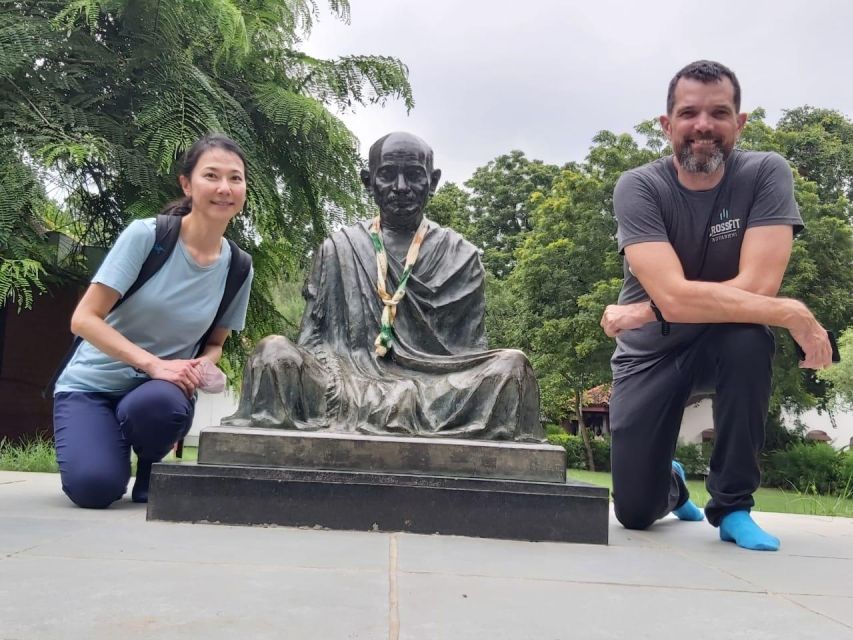
Your first major stop is the home of Mahatma Gandhi at Sabarmati Ashram. Gandhi lived there for 12 years, and the site is tied to the legendary Salt March of 1930—a campaign that helped spark India’s freedom movement. The ashram was built in 1917 along the banks of the Sabarmati River, so the setting supports the story.
What to watch for isn’t just the buildings—it’s the flow of the place. I love how walking through corridors and rooms turns history into something physical. You can see living quarters and household artifacts that help you understand the routine behind the speeches and slogans. It’s not a museum vibe where everything is behind glass; it’s a lived-in kind of atmosphere, with a focus on the non-violence philosophy behind Gandhi’s actions.
Practical note: this is a quieter, reflective stop compared to the louder architectural sites later. If you’re the type who likes to take photos, do it, but also give yourself a few minutes to look slowly. The explanations land better when you’re not rushing to the next wall or doorway.
Adalaj Step Well: water engineering with a human story
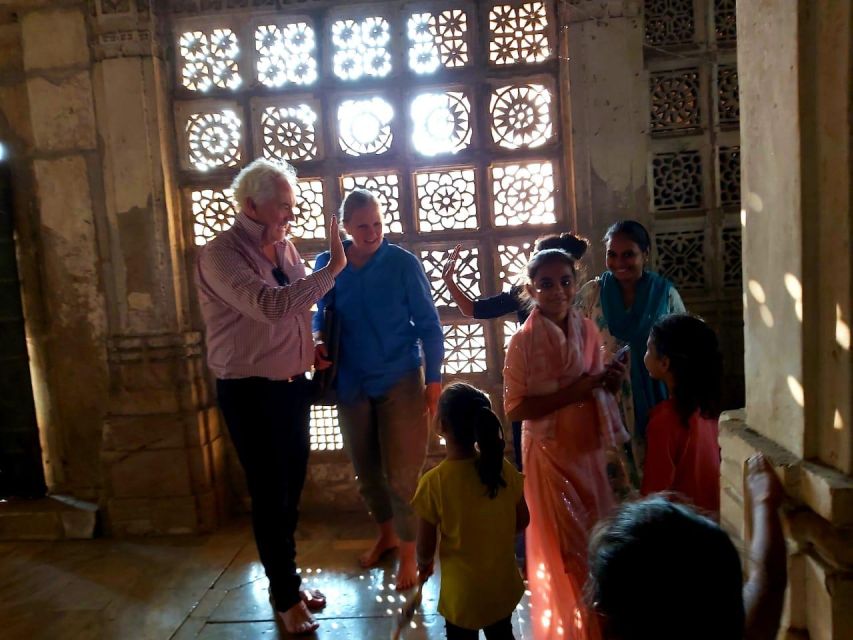
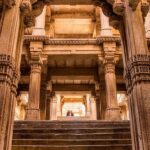
Next comes one of the most dramatic structures in the region: the five-storey step well at Adalaj, built in 1555. This is one of those places where you look up and immediately feel how much planning went into using water every day. The well was built by the Queen of Rana Veer Singh, and the story around it adds an emotional layer to the engineering.
A tragic backstory is part of the well’s meaning. Her husband was defeated in battle by the Sultan of Gujarat, Mohammad Begda. Even with that loss, the well still stands as a statement—about power, resilience, and the necessity of water infrastructure. I think that’s why this stop hits harder than many “cool architecture” stops. You’re looking at a structure that served daily life, not just court display.
When you visit, don’t just scan for the shape. Look for how the stepped design creates access to water at different levels. Step wells are more than wells: they’re social spaces, practical systems, and climate solutions. A good guide will help you see how the design had to work.
Hutheesing Jain Temple and its 52-shrine devotional focus
Hutheesing Jain Temple is one of Ahmedabad’s key religious sites, and it’s especially interesting because of how it was created. The temple was built during a severe famine to provide employment to hundreds of skilled artisans. That detail matters. It’s a reminder that faith in this city wasn’t only about worship—it was also about supporting livelihoods when times were tough.
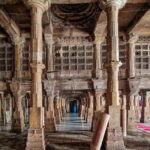
Inside, you’ll encounter as many as 52 shrines dedicated to the Tirthankaras. If you’re used to seeing one main shrine and a few side spaces, this temple changes the game. The sheer number of shrines creates a sense of devotional repetition, like the architecture is guiding you deeper through repeated forms and focused attention.
For me, the best way to enjoy this stop is to slow down between shrines. Don’t try to “cover everything.” Instead, pick a couple areas to linger in, let the guide explain what you’re looking at, and then move on. You’ll remember the patterns more than you’ll remember the list.
Dress code also becomes extra important here. You’re already covering shoulders and knees, which fits the temple environment well. Keep that in mind so you don’t end up worried about what you’re wearing while you’re trying to look and learn.
Siddi Sayid Mosque and the Tree of Life latticework
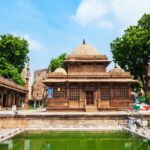
Then you head to Siddhi Sayed Mosque, also spelled Siddi Sayid Mosque on many materials, where one feature gets most of the attention: the Tree of Life. It’s displayed through latticework done on semicircular arch-windows, and the motif has become the unofficial symbol of Ahmedabad.
This mosque was built in 1572 by the Gujarat Sultanate in their final years of rule before losing to the Mughals. That timeline is useful because it helps you interpret the design as part of a shifting political and cultural moment. You’re seeing a late-era statement of style and identity, not just an old religious building.
What I like here is that the Tree of Life isn’t treated as a random decoration. It’s described as symbolizing the world heritage city—so it ties design to the idea of belonging and recognition. When you stand there, it’s easy to see why people remember it. The patterning looks delicate, but it also feels structured and confident.
This is also a good moment in the day to take stock. You’ve gone from Gandhi’s corridors to water engineering to Jain devotional spaces. Now you end up in an architectural symbol that’s about identity, not only worship. That shift makes the full day feel connected.
You can also read our reviews of more private tours in Ahmedabad


The small-group sedan setup that keeps the day comfortable
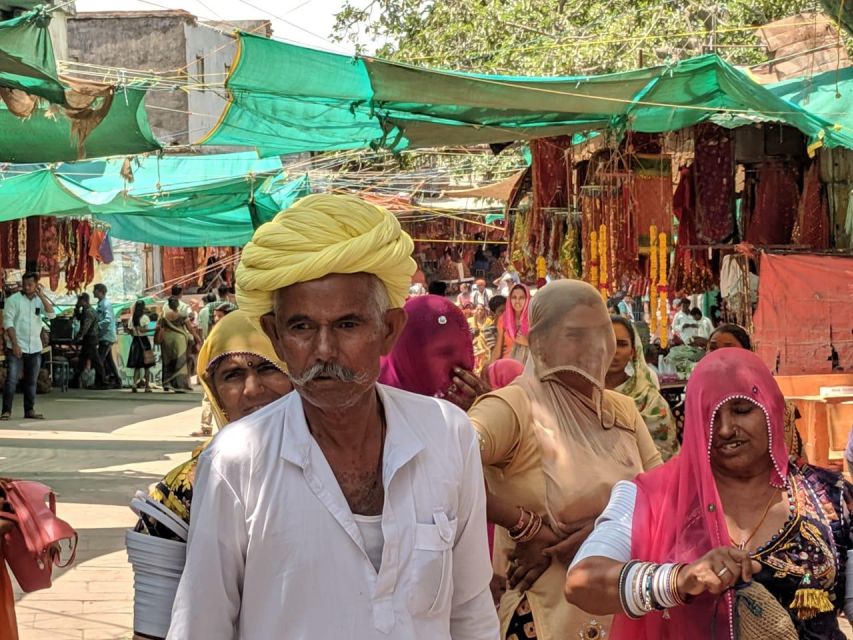
Logistics may not sound romantic, but they make or break a city tour like this. With pickup included and transport by sedan, you waste less time wrangling public transit and more time on-site. And because the group is limited to 10 participants, you’re less likely to get stuck waiting for the next person to finish a question.
The tour is guided in English, and that matters for this specific itinerary. Many of the explanations here depend on context: why the ashram matters, what step wells were built to solve, why a famine could lead to a temple project, and how the Tree of Life motif became associated with Ahmedabad.
One more practical thing: the lunch is included and vegetarian, described as local. You don’t have to hunt for a place right in the middle of the day. Still, beverages are not included, so plan for water breaks—especially if you’re visiting during hotter months.
Price and value: what $134 buys you in real terms
At $134 per person for a 7-hour private city immersion, the value comes down to what’s included. You get a live English guide, a sedan with pickup, entrance charges, and a vegetarian local lunch. For four major sites that involve entry fees and timing, that package can be fair—especially when you factor in the guided context.
Where the price feels most justified is at Sabarmati Ashram and the Jain and mosque stops. Those aren’t just “see it and move on” places. You’ll likely want the explanations to get the most from them. The step well is the kind of site where a guide helps you notice the engineering logic instead of only the surface look.
If you’re trying to replicate the day on your own, the cost can creep up fast once you add entry tickets, transportation, and the time you’d spend figuring out what order makes sense. This tour is built to keep you moving with a coherent story rather than a random route.
Who this tour suits best
This is a great fit if you like cultural travel that connects stories to places you can see and walk through. It’s ideal for:
- First-time visitors to Ahmedabad who want the core sights in one day
- People who enjoy guided context, not just a checklist of landmarks
- Travelers who prefer a smaller group with room for questions
- Anyone interested in Gandhi’s freedom movement, Jain heritage, and Gujarat’s architectural design
It may be less perfect if you want a high-energy, shopping-heavy day. This itinerary is more thoughtful and site-based. Also, if you’re sensitive to dress constraints, plan ahead so you’re not uncomfortable during temple and mosque visits.
Should you book this Ahmedabad cultural immersion tour?
If you want a day that feels structured but not rushed, this tour is an easy yes. The strongest reason to book is the pairing of places: Gandhi at Sabarmati Ashram, a major step well built for water needs, a Jain temple with 52 shrines, and the Tree of Life at Siddhi Sayed Mosque. That’s a rare combination that makes Ahmedabad feel like a single story instead of separate stops.
Book it if you’ll enjoy guided explanations and you’re comfortable with a modest dress code. I’d recommend it to couples, solo travelers, and small groups who want a calmer pace and a guide who can answer questions in English.
FAQ
How long is the Ahmedabad private cultural tour?
The tour lasts 7 hours.
What’s the group size?
The tour is limited to a small group of up to 10 participants.
Is hotel pickup included?
Yes. The guide meets you in the lobby at the pickup time.
What’s included in the price?
A guide, travel by sedan, entrance charges, and a vegetarian local lunch are included.
Is lunch vegetarian, and are other meals included?
Lunch is vegetarian and local. Only the vegetarian local lunch is included; no other food is included.
What language is the tour guide?
The live tour guide is available in English.
What clothing is required?
Sleeveless shirts and shorts are not allowed. You need to cover your knees and shoulders.
Is there free cancellation, and can I pay later?
You can cancel up to 24 hours in advance for a full refund. You can also reserve now and pay later.