REVIEW · BANGALORE
Bangalore: Palace, Temples, Fort & Markets Walking Tour
Book on GetYourGuide →Operated by Bangalore and Beyond · Bookable on GetYourGuide
A walk through old Bengaluru beats the time gap. In just 3 hours, you’ll see Tipu Sultan’s palace, major temples, Bangalore Fort, and the big-city market life around KR Market. It’s the kind of tour that turns a few central streets into a real sense of place.
I especially love how the guides steer the story—bringing together Kempegowda, Tipu Sultan, and the British city-building era so it all clicks fast. I also like the hands-on market time, where you’re not just looking; you’re smelling fruit, watching flower work, and hearing the street as it moves.
One thing to plan for: this is a walking experience in crowded, narrow lanes, and you’ll need to dress for temple visits (legs and shoulders covered for the Jain stop).
In This Review
- 5 key things you’ll get from this tour
- Why old Bengaluru feels so different from the city you know
- Tipu Sultan’s Summer Palace: teak, age, and quick orientation
- Bangalore Fort: a 16th-century spine you can feel
- KR Market: the fruit-and-flower market that hits your senses
- Vishnu temple visit: devotion you can watch respectfully
- Bangalore Fort to Jain Shwetambar Mandir: quiet carvings after the noise
- Dress code reality: plan your clothing before you go
- How the 3-hour route feels on your feet
- Price and value: $32 for temples, fort, palace, and market time
- Who this tour suits best (and who should skip it)
- My take: book this if you want the city’s real rhythm
- FAQ
- What is the duration of the Bangalore walking tour?
- Where does the tour start and where does it end?
- Is the tour in English?
- What’s included in the ticket price?
- What is not included?
- Do I need to pay for temple entry separately?
- What should I wear?
- What group size should I expect?
5 key things you’ll get from this tour
- Tipu Sultan’s Summer Palace with its teak details and old-world scale
- Bangalore Fort and the sense of how power shaped this city
- KR Market fruit-and-flower sensory overload (in the best way)
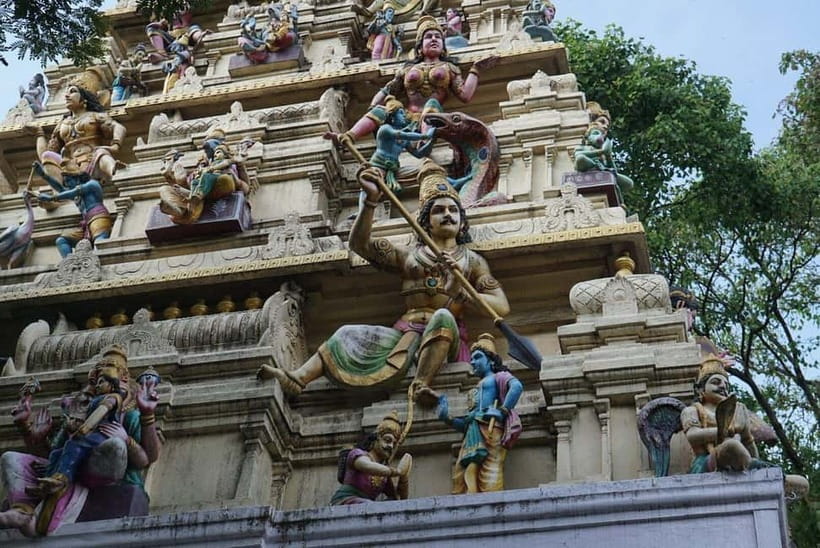
- Multiple faiths in one route: Vishnu temple prayers plus a quieter Jain mandir visit
- A small group (up to 10) that keeps things moving without feeling rushed
Why old Bengaluru feels so different from the city you know
Bangalore has a modern reputation, but the older core still runs on older rhythms. This tour focuses on that part of town where the city’s layers show up in buildings, street names, and daily routines.
The payoff for you is speed plus context. In a short afternoon, you get the origin story of the Garden City—then watch how different rulers shaped it, from Kempegowda onward, and how later British influence helped set up the next chapters. It’s not just dates on a wall; the guide connects the dots so the streets start making sense.
And yes, you’ll get the practical chaos: cows in the lane, carts and bikes, people working and shopping side by side. If you like order inside the mess, this walk delivers.
You can also read our reviews of more walking tours in Bangalore

Tipu Sultan’s Summer Palace: teak, age, and quick orientation
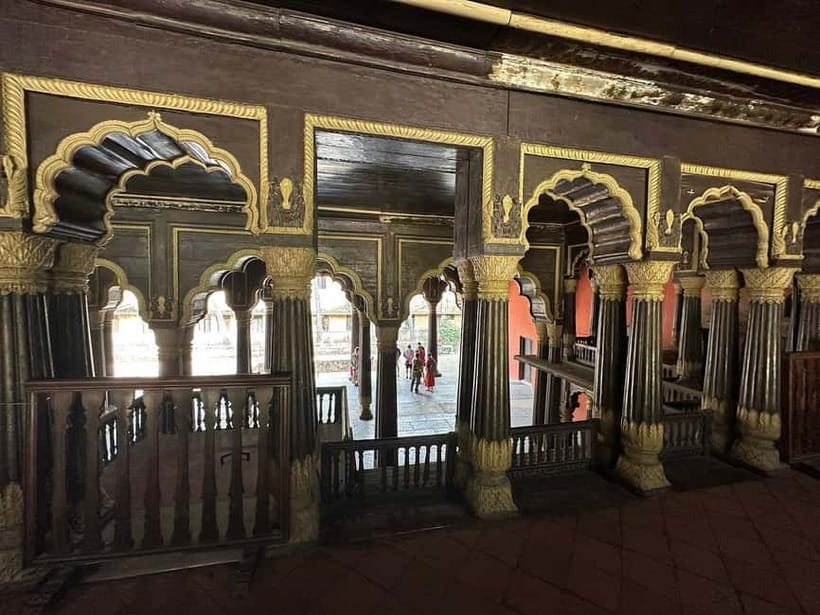
You meet at Tipu Sultan’s Summer Palace. This is your warm-up stop, and it matters because it gives you a mental map for what comes next.
The palace is described as 230 years old, built out of teak wood. That detail helps you understand why it still feels distinct—this wasn’t built as a quick monument. It was built to impress, to endure, and to function as power and taste in wood and geometry.
What I like about starting here is the way it anchors everything you’ll hear later. The guide can point out how rulers weren’t just fighting; they were also shaping the environment and the city’s direction. Tipu Sultan’s presence sets the tone for the route, including the later stop at Bangalore Fort.
Practical note: even before the walking ramps up, you’ll want your head in listening mode. Take a minute here to look at the structure before you move on—your photos will feel more grounded once you know what to look for.
Bangalore Fort: a 16th-century spine you can feel

Next comes Bangalore Fort, a 16th-century site that was later renovated. You don’t need a history degree for this part, because the fort gives you that physical “spine” effect. Even from outside and around the area, you can sense how a fortified boundary organizes movement.
For you, the value is perspective. Old forts aren’t isolated. They become reference points for markets, neighborhoods, and routes—so when the guide talks about shifting power and city growth, the fort becomes a real-world clue instead of a story you forget.
The time here is short—about 30 minutes—so it’s not a slow museum visit. Still, it’s enough to get the main ideas and frame what you’ll see later at KR Market. This is where the tour starts blending “big story” with “street reality.”
KR Market: the fruit-and-flower market that hits your senses
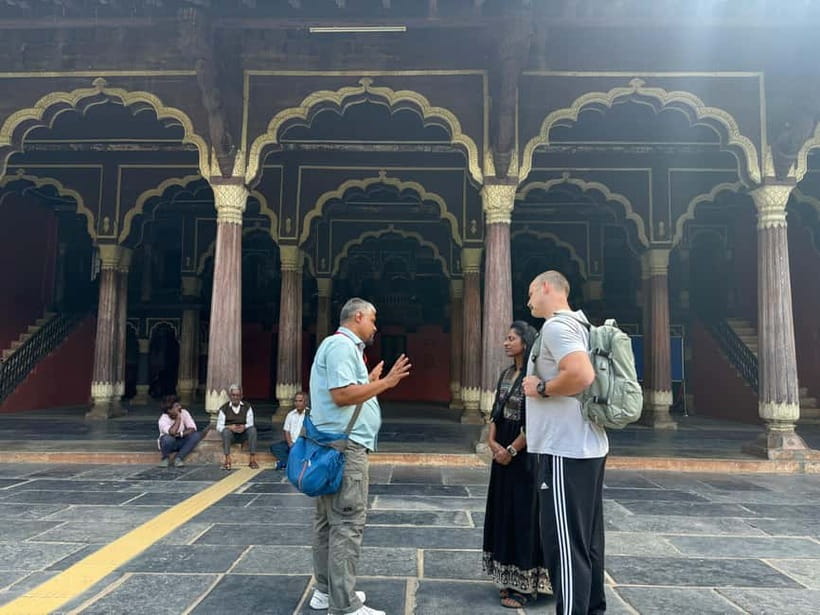
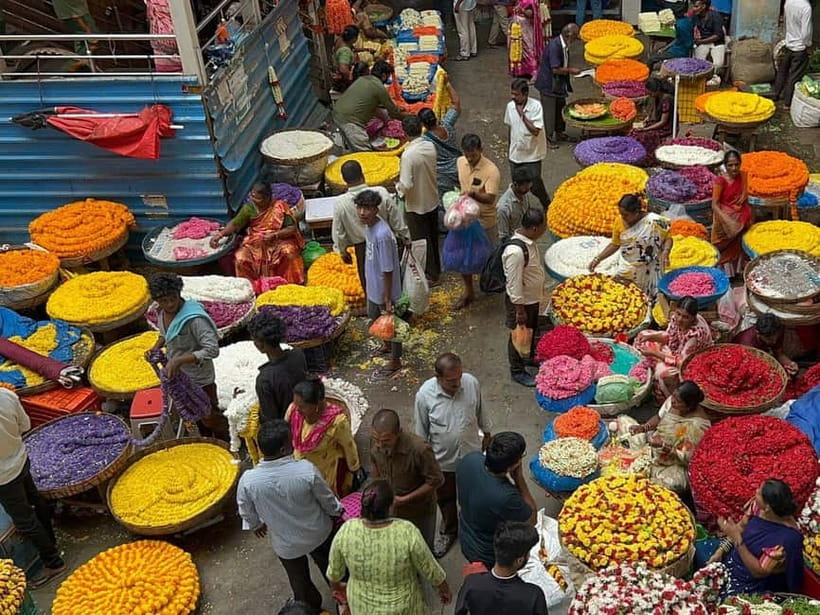
Then the tour turns up a notch with KR Market (KR Bengaluru). Expect the sights, smells, and sounds of the market: fruit, flowers, and vegetables all in one moving scene.
This stop is a big reason the tour works for first-timers. You get the daily economy in front of you—what people buy, what people trade, and how the market supports festivals, homes, and rituals. Flower sellers aren’t just selling; they’re building arrangements that become offerings and decorations.
You’ll walk through narrow lanes where everything happens at once: sellers calling out, buyers negotiating, vehicles inching by, and workers carrying loads. Your guide helps you keep your bearings so you’re not just stuck watching from the side.
One useful takeaway for you: if you want to shop for spices or small gifts, KR Market is the kind of place where you’ll do better with a local escort. Your guide can help you ask questions and keep the group together when things get crowded.
And if you care about photos, this is where the camera work pays off. The street scenes have strong colors and textures—just be ready to pause and step aside when traffic comes through.
Vishnu temple visit: devotion you can watch respectfully
A key spiritual stop on this route is the Vishnu temple, described as about 320 years old. You’ll see prayers offered by devout Hindus, and this part of the tour changes the mood.
I like this stop because it’s not a performance. You’re walking into an active place of worship. The guide gives context, then you watch the routine: people entering, devotees focusing on prayer, and the rhythm of temple time.
For you, the main consideration is respect and focus. In these spaces, the best attitude is calm attention. Keep your movements controlled, follow your guide’s directions, and be mindful of where people are walking.
Also remember that temple visiting depends on conditions on the day. Temple and monument access and working hours can vary with seasons, so the “perfect timing” fantasy shouldn’t be your plan.



Bangalore Fort to Jain Shwetambar Mandir: quiet carvings after the noise
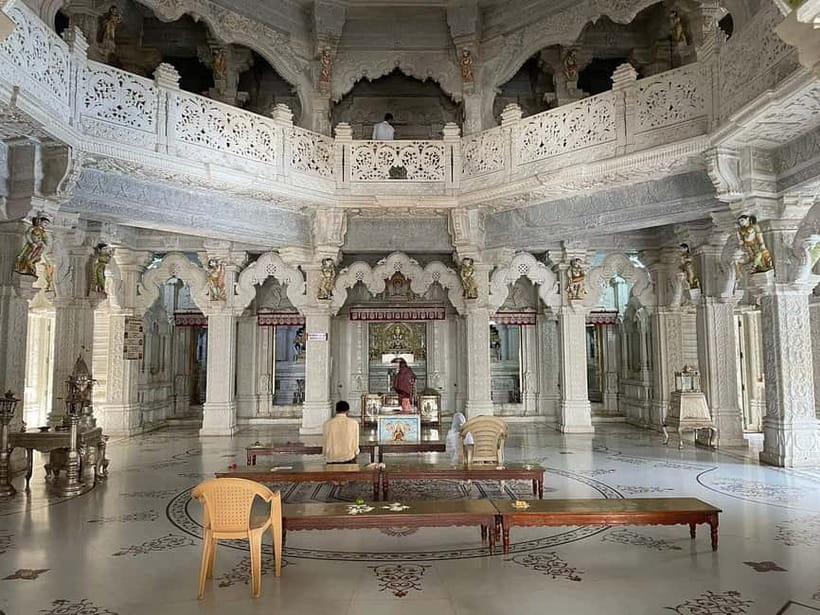
After the market energy, the tour finishes at Shri Adinath Jain Shwetamber Mandir. This is where the atmosphere shifts. Jain spaces often feel quieter, more inward-looking, and you’ll notice the difference right away in the way people behave and speak.
The tour highlights the quietude, plus carvings and inlay work. Those details reward you if you slow down for a moment. Don’t try to rush through—this is a stop where small features matter.
Dress code reality: plan your clothing before you go
This tour has a clear dress code for the Jain temple. You should wear clothing that covers legs and shoulders. The tour also notes restrictions like no short skirts, no sleeveless shirts, no skirts, and no see-through clothing.
Bring a headscarf. The tour also suggests carrying spare socks, which is smart if you end up needing a quick swap after temple areas or long walking.
If you forget, you can end up worrying instead of enjoying. For this specific route, dressing correctly is part of the experience.
How the 3-hour route feels on your feet
The whole tour lasts about 3 hours, and the group size is limited to 10 people. That matters because you get enough time with each location without the “herd line” feeling.
Most of the walking is light in the sense that it’s broken into segments between stops, but you still need to expect:
- crowded, narrow streets
- uneven ground
- vehicles and pedestrians moving in close quarters
If you’re used to big-city walking, you’ll be fine. If you’re not, pack water if you can, wear supportive shoes, and let your guide know if you need extra pacing.
One more reason I think this works: the guides take care with safety and group control. Across the named guides—Vasuki, Vijay Kumar, Vanaja, Ramesh, Raghu, Varun, and Govinda—you’ll see the same pattern of keeping people together calmly, even when the Sunday-market-level crowds show up.
Price and value: $32 for temples, fort, palace, and market time
At $32 per person, the value comes from the mix:
- Guided walk in old Bengaluru
- Entry included for Tipu Palace, Vishnu Temple, Bangalore Fort, and the Jain temple
- Time built into the route for local markets
Food and beverages are not included, and transport to and from the walk venue is optional for an extra fee. So you’re paying mainly for guide time, access, and the structure that keeps you moving through a dense neighborhood.
For your money, the best part is that you’re not spending your time figuring out routes, entry logistics, or what you’re actually looking at. With a local guide steering the story, you turn a few famous stops plus one major market into a coherent old-city experience.
If you only have a half-day in Bangalore and want context without a full-day commitment, this price-to-time ratio tends to make sense.
Who this tour suits best (and who should skip it)
This is a strong fit if you:
- want a fast introduction to old Bengaluru
- like guided context for palaces, forts, and temples
- enjoy market walking where you can see daily life up close
- appreciate small groups and an English-speaking guide
It may not be your best choice if you:
- hate crowds and narrow streets
- need minimal walking or barrier-free routes (the route includes uneven, busy areas)
- aren’t comfortable with temple dress rules
Also, if you’re someone who wants to go super deep into one monument for hours, this is not built for that. It’s a “cover the essentials and connect the dots” format.
My take: book this if you want the city’s real rhythm
If you want Bangalore’s old core—power, faith, and street life in one short stretch—this tour is a smart buy. The market stop is often the most memorable part because it’s sensory and interactive in a way that photographs alone can’t match. And the temples add the calm, human side that keeps the whole route from becoming just sightseeing.
Just go in with two expectations: you’ll walk through busy lanes, and you’ll dress for temple visits. Do that, and you’ll come away with a much clearer sense of how this city became what it is now.
FAQ
What is the duration of the Bangalore walking tour?
The tour lasts about 3 hours.
Where does the tour start and where does it end?
You start at the gates of Tipu Sultan’s Summer Palace and finish at Shri Adinath Jain Shwetamber Mandir.
Is the tour in English?
Yes. The tour guide provides English commentary.
What’s included in the ticket price?
The tour includes a guided tour of old Bangalore, entry to Tipu Palace, Vishnu Temple, Bangalore Fort, and the Jain Temple, plus market experience.
What is not included?
Foods and beverages are not included, and transport is also not included (it’s optional for an additional fee).
Do I need to pay for temple entry separately?
No. Entry to the temples and monuments listed is included, but access hours can vary by season.
What should I wear?
For the Jain temple, cover your legs and shoulders. The tour also advises bringing a headscarf and avoiding short skirts, sleeveless shirts, skirts, and see-through clothing.
What group size should I expect?
It’s a small group, limited to 10 participants.