REVIEW · NEW DELHI
Delhi: Old and New Delhi One Day Tour
Book on GetYourGuide →Operated by Chaman Duggal Private Tours · Bookable on GetYourGuide
Old Delhi can feel like a whole other planet. This one-day tour strings together UNESCO World Heritage sights with real market time, so you get both Delhi’s grand monuments and its day-to-day city life, plus a proper history guide (English and Hindi). I especially like that the day is built around smart pacing: you see major icons like the Red Fort from the outside, then step into Old Delhi’s lanes for hands-on context.
Two things I like a lot: the option for a cycle rickshaw through Chandni Chowk (perfect for photo angles and quick orientation), and the guided focus on religious and political history, from Jama Masjid through Raj Ghat. One consideration: the route packs in a lot, and Delhi traffic can stretch the schedule well past the stated 8 hours.
In This Review
- Key highlights worth your attention
- How this one day covers Old Delhi and New Delhi without feeling random
- Old Delhi start: Red Fort outside view, then Jama Masjid and Chandni Chowk
- The market circuit: Kinnari Bazaar, textiles, Nai Sarak books, and Khari Baoli spices
- UNESCO World Heritage stops: Humayun’s Tomb and Qutub Minar
- New Delhi monuments: India Gate, Parliament area, and Lotus Temple timing
- Raj Ghat: Mahatma Gandhi memorial, where the day turns reflective
- Transportation and pacing: what the 8 hours really means in Delhi
- What’s included (and what you’ll need to plan for)
- Who this tour fits best
- Price and value: how $8 per person makes sense for this day
- Should you book this Delhi Old and New Delhi one-day tour?
- FAQ
- How long is the Delhi Old and New Delhi one-day tour?
- How much does it cost?
- What is the meeting point?
- What’s included in the tour price?
- Is food included?
- Do I get a rickshaw ride?
- Which languages will the guide speak?
- Are there any days when key attractions close?
- What should I bring and wear?
- Is it a private group and wheelchair accessible?
Key highlights worth your attention
- Old Delhi rickshaw ride through Chandni Chowk (if selected), a fast way to understand the maze
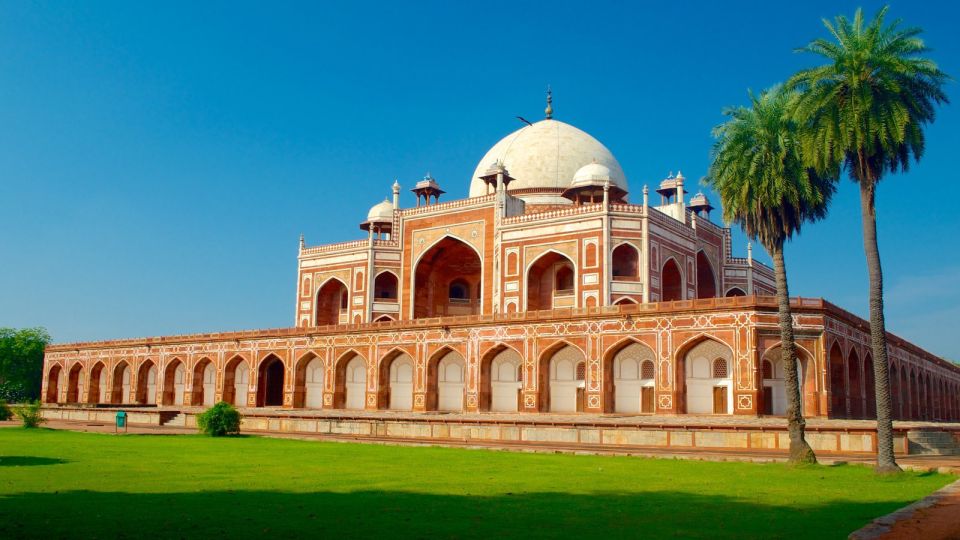
- UNESCO stops like Humayun’s Tomb, Qutub Minar, and the Red Fort area
- Major monuments on the New Delhi side, including India Gate, the Houses of Parliament area, and Lotus Temple
- Market time with a purpose, from Kinnari Bazaar to Nai Sarak book streets and Khari Baoli spice trading
- Private, door-to-meet pickup options across Delhi, plus a clear meeting point at Karol Bagh Metro Station if you choose that route
How this one day covers Old Delhi and New Delhi without feeling random
Delhi is two cities that share one skyline. The Old Delhi half is about power, faith, and trade routes that shaped modern India. New Delhi is newer, more planned, and full of the symbolism of a capital city. This tour works because it doesn’t treat them like separate tourist bubbles. You start with the grand stuff, then slide into the bazaars where the grand stuff becomes human scale.
The day’s structure is also practical for first-timers. You begin with a hotel pickup (or a meeting point at Karol Bagh Metro Station, Gate 1 with your name sign). Then you move between areas by private car with an air-conditioned ride when you select the vehicle option. That matters in Delhi, where heat and traffic can erase patience fast.
You also get a live guide with English and Hindi. In real life, that’s what turns “I saw a fort” into “I understand why that fort matters.” People on these trips often call out the guide’s ability to explain history in a way that makes you look longer, not just walk faster.
You can also read our reviews of more tours and experiences in New Delhi



Old Delhi start: Red Fort outside view, then Jama Masjid and Chandni Chowk
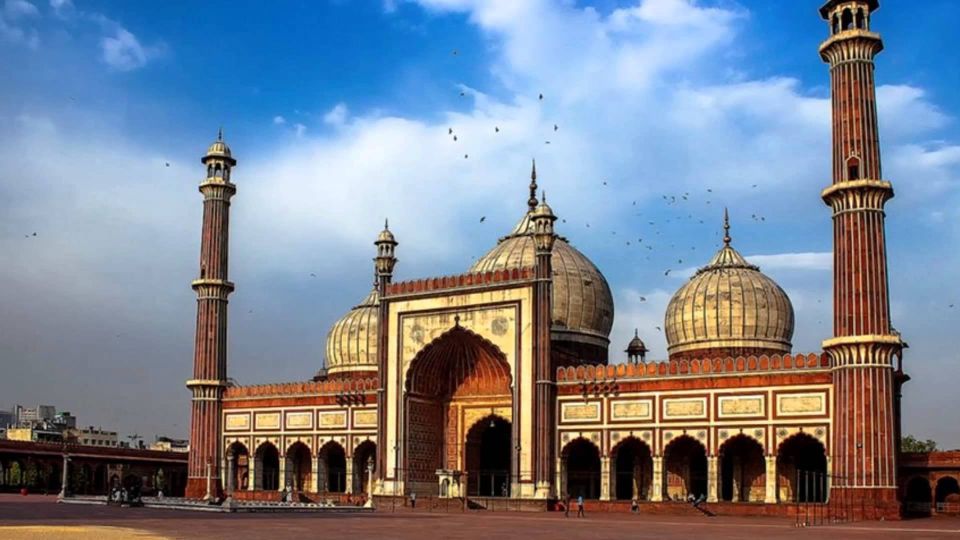
The day kicks off with an outside look at the Red Fort. Even if you don’t go inside (and on some days it’s closed), the exterior view gives you the right anchor for Old Delhi. It’s the kind of landmark you can spot in your head later when you’re walking around the older parts of town.
From there, the tour heads to Jama Masjid, Old Delhi’s main mosque. This is one of those sites where context matters. Your guide can connect the dots between religious practice, architecture, and how communities used the city’s major spaces over time.
Then comes the best “get your bearings fast” moment: the cycle rickshaw ride through Chandni Chowk (if you select the rickshaw option). On foot, Chandni Chowk can be a sensory overload. By rickshaw, you get a tour-style sweep of the market streets while still experiencing the crowds and colors up close. It’s also easier for photos because you’re moving through key sightlines instead of trying to fight through everyone standing still.
The market circuit: Kinnari Bazaar, textiles, Nai Sarak books, and Khari Baoli spices
After the monument moments, the tour turns into a shopping street education. The idea isn’t just to browse. It’s to see what each market is known for and how that shapes daily life.
Here’s what you can expect in the market run:
- Kinnari Bazaar, described as a wedding market. This is where you start noticing how Delhi’s craft and supply chains work for big life events.
- Textile market time, so you can watch cloth and fabric culture make sense in a practical way.
- Nai Sarak, the book market area. Even if you don’t buy anything, it’s a great place to understand how knowledge gets packaged locally.
- Khari Baoli, the spice market. This is where the city smells like its own ingredients. It’s a strong contrast to the stone and symmetry of New Delhi.
A big reason I like this segment: it’s guided. In places like these, you’ll see far more than you would wandering alone, especially when you’re trying to decide what’s worth a slow look and what’s just noise.
One scheduling note you’ll want to respect: Chandni Chowk closes on Sundays. If your trip lands on a Sunday, the tour may adjust your Old Delhi market time accordingly.
UNESCO World Heritage stops: Humayun’s Tomb and Qutub Minar
Once you shift toward the UNESCO-heavy part of the day, Delhi gets quieter in a good way. The scale of these sites helps you understand that the city’s influence spread beyond its borders.
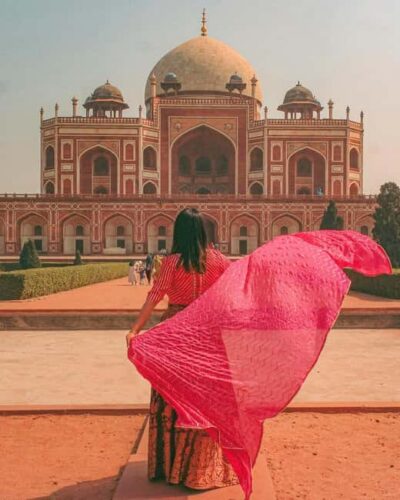
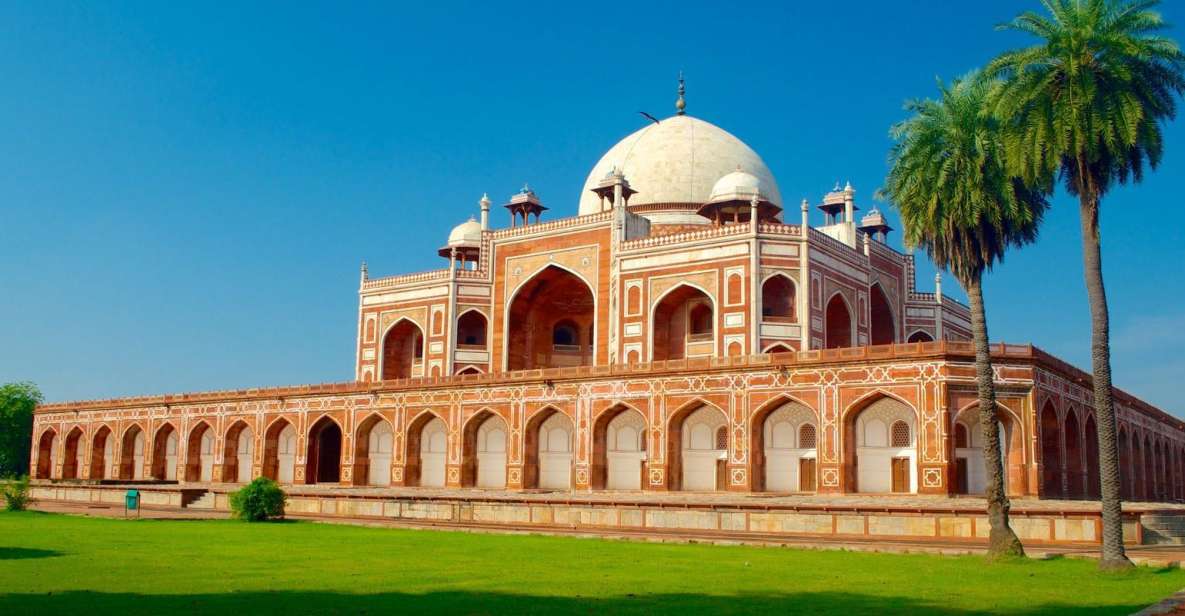
Humayun’s Tomb is a standout for first-timers because it bridges the story between earlier Mughal aesthetics and later monumental design. Even from standard viewpoints, you get that sense of geometry and planning that you don’t get from street-level walking.
Then you’ll reach Qutub Minar, another UNESCO site. This is where architecture becomes the lesson. The tower’s presence helps you grasp how Delhi became a center for major building projects over centuries, and why the city kept reworking its own style as rulers changed.
These stops also work well because your guide can pace you. You get enough time to see key features without getting stuck in the “standing still while nothing changes” trap.
New Delhi monuments: India Gate, Parliament area, and Lotus Temple timing
New Delhi is where the tour balances out Old Delhi’s intense density. The highlights here lean toward national symbolism and planned-city landmarks.
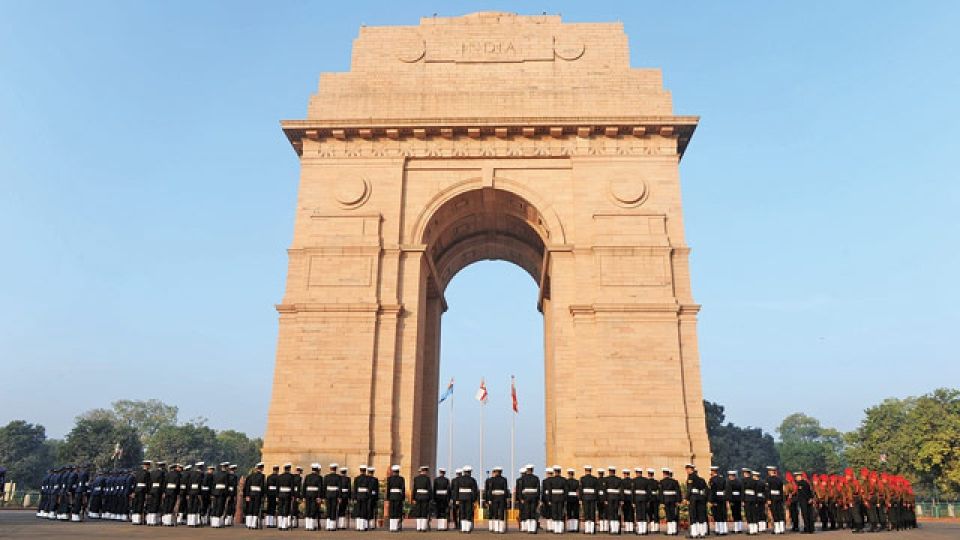
You’ll see India Gate and the Houses of Parliament area as photo and sightseeing stops. You don’t need to be a political history expert to appreciate these spots. Your guide’s explanations help you connect the monuments to how modern India presents itself.
Then there’s Lotus Temple. It’s a visually distinct place for a reason: it gives you a nontraditional temple silhouette that’s easy to recognize even if you’re walking in traffic to the next stop.
But do check the calendar. Lotus Temple closes on Mondays, along with Akshardham and the Red Fort. If you’re traveling on a Monday, expect the tour to route around closures and shift your time toward what’s open.



Raj Ghat: Mahatma Gandhi memorial, where the day turns reflective
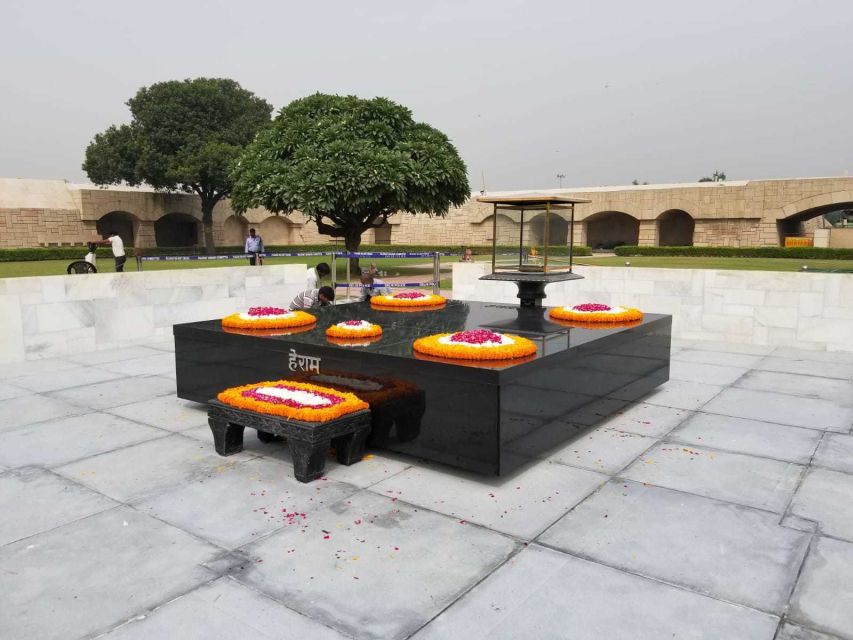
A good day of sightseeing can still feel like a photo sprint. Raj Ghat slows things down in a respectful way. As a memorial to Mahatma Gandhi, it’s not just another stop on a list. It reframes the whole tour by giving you a human anchor for India’s story of independence and civic change.
In my view, this is one of the best “mid-to-late day” placements because it gives your brain a break after forts and tombs. You look at it differently once you’ve already seen how rulers shaped the stone, then come here to see how people shaped the country.
Transportation and pacing: what the 8 hours really means in Delhi
The tour is listed as an 8-hour day, but Delhi has its own rules. Many people describe it as taking longer due to traffic, sometimes around 10 hours or even about 12. That doesn’t mean the tour is poorly managed. It usually means the day is built around real driving time between Old and New Delhi.
What helps:
- You’re in a private car with an air-conditioned comfort level when you select it.
- You have a driver who handles the flow of traffic.
- You don’t spend hours figuring out directions or haggling for transport.
One more practical note: there’s often a “short walking, more riding” feel. That’s useful if you want to see a lot without burning out before Qutub Minar or the markets.
What’s included (and what you’ll need to plan for)
This tour is built around included logistics, which is why it often feels like good value.
Included items you should expect when you book the right options:
- Hotel pickup and drop-off
- Live guide (English and Hindi)
- Air-conditioned private car with driver if you choose that option
- Mineral water
- Fuel, tolls, parking, permits, and state taxes
- Rickshaw ride if you select it
- Entrance tickets if you select that option
- Skip the ticket line (where applicable)
Food is not included. That means you’ll want to budget for lunch and snacks. Some guides do take people to a sit-down restaurant during the New Delhi portion. One example that’s come up is Lazeez Affaire, but it’s best to treat restaurant choice as flexible rather than guaranteed.
Also note the clothing constraint: shorts are not allowed. If you’re traveling hot, plan for breathable long pants or a light long skirt.
Who this tour fits best
This is a strong fit if you’re:
- In Delhi for a single day and want Old + New Delhi in one structured route
- Interested in how religion, politics, and architecture shaped the city
- A first-timer who prefers markets with guidance rather than solo wandering
- Someone who wants a private group experience and a driver handling transit
It’s also a good choice if you like options during the day. Several past bookings mention the guide adjusting the plan based on stamina and preferences, which is exactly what you want when your priorities are monuments plus markets.
If you’re the type who wants every site’s interior at a slow pace, you might feel rushed. This tour is designed for breadth and context, not for spending half a day in one place.
Price and value: how $8 per person makes sense for this day
At around $8 per person for an 8-hour guided private day, the value comes less from the price itself and more from what’s wrapped in:
- You’re not paying separately for a guide, car, permits, parking, or water.
- You’re getting guided market time, which can be hard to replicate on your own without wasting time.
- You’re also getting optional add-ons like the cycle rickshaw and entrance tickets depending on what you select.
The “real cost” you should plan for is food plus any personal shopping. If you stick to the included route and only add what you truly want, this can be one of the most efficient ways to see Delhi.
Should you book this Delhi Old and New Delhi one-day tour?
I’d book it if you want a first-day style experience: see the big icons, understand the meaning behind them, and then walk through Delhi’s trading streets with an informed guide and a private driver.
Skip it or be cautious if:
- You’re traveling on a Monday and your must-see list includes places that close (like Red Fort, Lotus Temple, and Akshardham).
- You need a slow, unhurried day with lots of interior time at fewer sites.
- You’re sensitive to long driving days in traffic and want more local walking only.
If you match the “see a lot with guidance” profile, this is a smart way to get oriented fast and still leave room for market surprises.
FAQ
How long is the Delhi Old and New Delhi one-day tour?
The duration is listed as 8 hours.
How much does it cost?
The price is listed as $8 per person.
What is the meeting point?
Your guide will wait at Karol Bagh Metro Station at Gate 1 with a sign with your name on it.
What’s included in the tour price?
It includes an air-conditioned private car with driver (if that option is chosen), a live tour guide, hotel pickup and drop-off, fuel, tolls, parking fees, state taxes, mineral water, and rickshaw ride and/or entrance tickets if you select those options.
Is food included?
No, food is not included.
Do I get a rickshaw ride?
A cycle rickshaw ride is included if you select the option for it.
Which languages will the guide speak?
The live tour guide speaks English and Hindi.
Are there any days when key attractions close?
Yes. Akshardham, Lotus Temple, and Red Fort close on Mondays. Also, Old Delhi’s Chandni Chowk market closes on Sundays.
What should I bring and wear?
Bring a passport or ID card. Shorts are not allowed.
Is it a private group and wheelchair accessible?
Yes, it’s a private group, and it is listed as wheelchair accessible.