REVIEW · NEW DELHI
Delhi’s Temples and Spiritual Sites Day Tour
Book on GetYourGuide →Operated by Prime India Travel · Bookable on GetYourGuide
Religious Delhi in one solid day. I like how the route links Akshardham with major faith landmarks, and I especially like the chance to experience langar at Bangla Sahib. One drawback: the schedule is packed, so if your guide keeps moving at a brisk pace, you can feel time pressure at the larger sites.
This is the kind of day that makes the city feel logical. You get a live guide in multiple languages, plus a private AC car for the full tour, so you’re not bouncing between taxis or playing catch-up with traffic.
In This Review
- Key Stops That Make This Tour Work
- Akshardham Temple Morning: Carvings, the Kund, and the Water Show
- Lotus Temple: A Pause That Actually Feels Like a Pause
- Lunch Break in North Indian Style: Fuel for the Afternoon Climb
- Jama Masjid and the Minaret Views Over Old Delhi
- Raj Ghat: Gandhi’s Memorial in Quiet, Plain Form
- Gurudwara Bangla Sahib: Architecture, Community, and the Meaning of Langar
- Iskcon Temple Evening Devotion: Calm After the Long Day
- Optional Red Fort Sound and Light Show: A History-Wrap If You Still Have Energy
- Price and Logistics: Is $32 Good Value for a 12-Hour Route?
- A Quick Note on Guides, Languages, and Real-World Pacing
- What to Wear, What to Bring, and What You Can’t Bring
- Who This Tour Is Best For (and Who Should Skip It)
- Should You Book This Delhi Temples and Spiritual Sites Day Tour?
- FAQ
- How long is the Delhi Temples and Spiritual Sites Day Tour?
- What does this tour cost?
- What is included in the tour price?
- What is not included?
- Does the tour include lunch?
- Which sites are visited during the day?
- Is the tour guide available in languages other than English?
- Is this a private group tour?
- Is luggage or a large bag allowed?
- Is the tour suitable for people with mobility impairments?
- Are there any cancellation or pay-later options?
Key Stops That Make This Tour Work
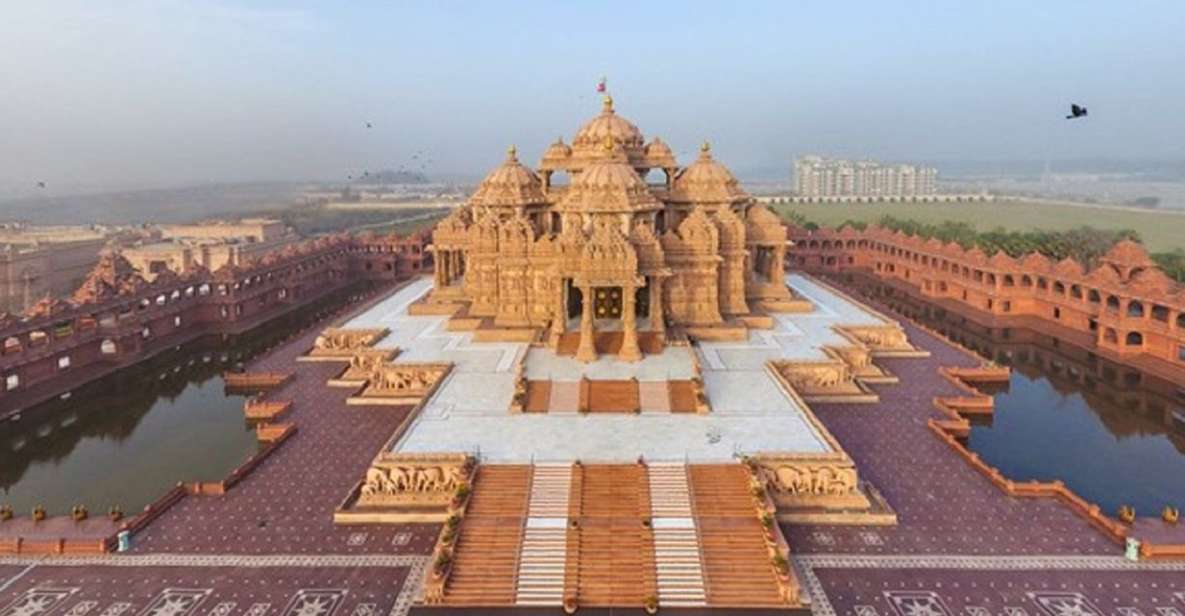
- Akhshardham’s carved temple setting and the Sahaj Anand Water Show
- Lotus Temple calm, designed for reflection in the middle of a busy city
- Jama Masjid architecture plus a minaret climb for Old Delhi views
- Raj Ghat’s simple, quiet memorial mood for Gandhi
- Gurudwara Bangla Sahib’s free langar and the service culture around it
- Iskcon Temple devotion, plus an optional Red Fort sound-and-light add-on
Akshardham Temple Morning: Carvings, the Kund, and the Water Show
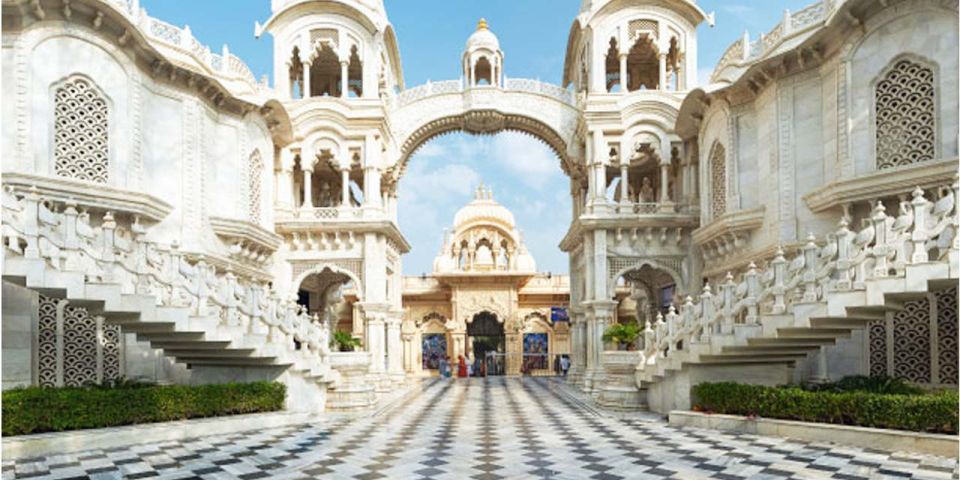
Your day starts with Akshardham Mandir, and it’s easy to see why this stop anchors the morning. The temple complex is built for awe, with detailed stonework and a sense that everything has been arranged on purpose. If you care about design and symbolism, you’ll notice how each section supports a spiritual flow rather than feeling like random sightseeing.
Inside the Akshardham experience, plan to slow down for the Yagnapurush Kund area. Even if you’re not a scholar of the tradition, the way the site is staged encourages quiet observation. Then there’s the Sahaj Anand Water Show, which adds a different style of storytelling. It’s one of the more accessible parts of the day because it doesn’t require religious background to enjoy the mood and message.
Practical tip: wear comfortable shoes. You’ll be on your feet for a while, and you don’t want day-tour discomfort hijacking the experience.
You can also read our reviews of more tours and experiences in New Delhi.

Lotus Temple: A Pause That Actually Feels Like a Pause
After Akshardham, you head to the Lotus Temple, also known as the Bahá’í House of Worship. This stop works because it changes the pace. Akshardham can feel grand and busy; Lotus Temple gives you space to breathe and think.
What you’re looking for here is atmosphere: clean lines, quiet surroundings, and a place where meditation or reflection is part of the point. It’s also a useful mental reset before you move into the older, louder parts of Delhi later.
If your guide is strong with explanations, you’ll likely appreciate the symbolism behind the lotus shape and the idea of unity. Even without deep religious context, the setting makes it easy to keep your thoughts calm.
Lunch Break in North Indian Style: Fuel for the Afternoon Climb
Lunch is built into the day, and it matters. By the time you reach the Old Delhi area, you’ll want steady energy. This tour includes a traditional North Indian lunch at a local restaurant, which is a good fit for the broad audience this route targets.
I like lunch on a day like this because it removes decision fatigue. You don’t have to guess where to eat, deal with menu uncertainty, or worry about getting back in time. Still, food isn’t included in the tour’s listed price coverage, so you should budget for it separately if that detail applies to your specific booking.
If you’re picky about spicy food, you’ll do better by asking what’s mild before ordering. Delhi food can be fantastic, but your stomach will thank you for smart choices when you still have several temples ahead.
Jama Masjid and the Minaret Views Over Old Delhi
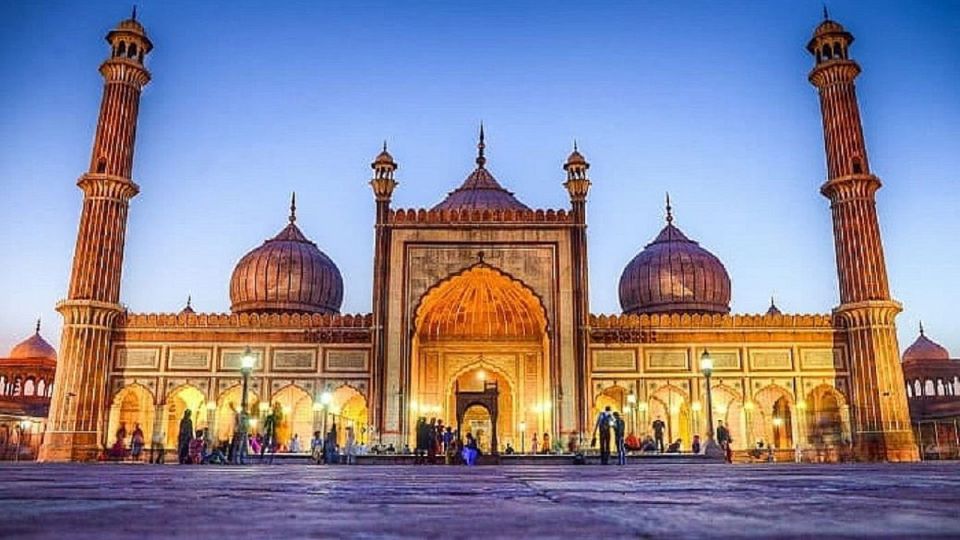
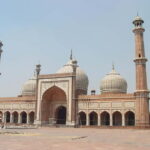
Next up is Jama Masjid, one of India’s largest mosques—and it’s a big stop in every sense. The architecture is the headline, with scale that hits you before any explanation starts. But the real value of this visit is perspective.
You can explore the complex and then climb the minaret for panoramic views. That climb is the kind of short physical challenge that makes the sight feel earned. From above, Old Delhi becomes a map: rooftops, lanes, and the geometry of a city that never truly sits still.
Two things to keep in mind. First, crowds are part of the experience here, so plan for a slower walk inside once you get going. Second, dress modestly and expect rules about head-to-toe coverage. Remove shoes in the areas that require it.
If you want the visit to feel more than just photos, a good guide helps you connect what you’re seeing to how the space functions day to day. Strong guiding can also help you avoid spending too much time waiting in the wrong spot.
Raj Ghat: Gandhi’s Memorial in Quiet, Plain Form
After the mosque, the mood softens at Raj Ghat, the memorial to Mahatma Gandhi. This is the moment in the day when you get to slow down without needing to sit through a museum-style explanation.
Raj Ghat’s power comes from simplicity. There’s less spectacle and more space for reflection. It’s a good emotional reset after the visual intensity of the morning and the energy of Old Delhi.
If you’re the kind of traveler who likes thinking time, you’ll appreciate this stop. If you’re trying to maximize “things seen,” it’s still worth it because the contrast is the point.


Gurudwara Bangla Sahib: Architecture, Community, and the Meaning of Langar
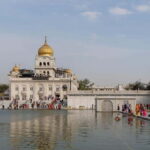
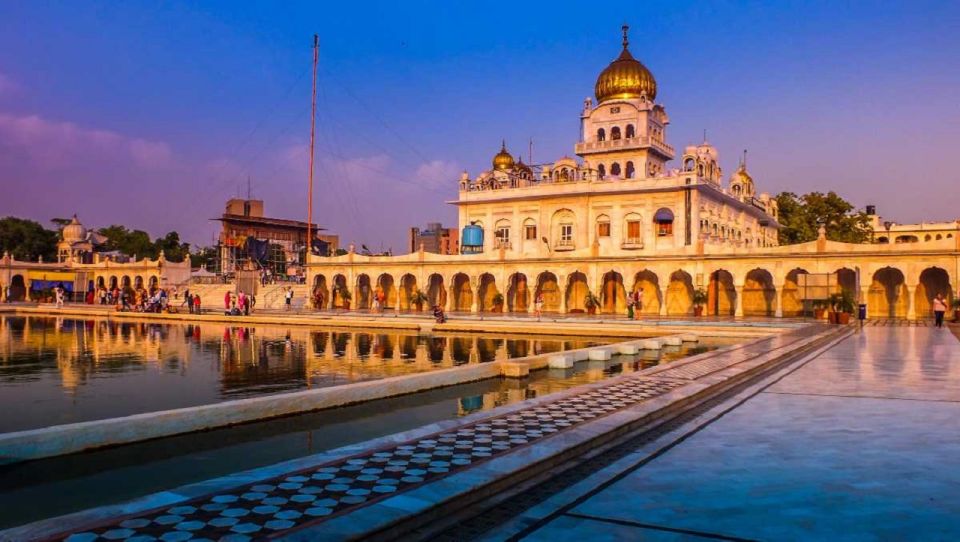
Then you reach Gurudwara Bangla Sahib, a prominent Sikh temple known for its beautiful architecture and the free langar (community kitchen). This is one of the tour’s best ideas because it takes you beyond looking at places and into understanding how people practice values in daily life.
Langar is the highlight here. You’re encouraged to participate in the meal, and the experience gives you a hands-on way to grasp Sikhism’s principles of service and equality. Even if you don’t have a religious background, you’ll understand the message through simple actions—waiting, sharing, eating together, and treating everyone the same.
I like that this stop isn’t only visual. It adds a human layer to the day, and it’s one of the rare “tour moments” where you do something, not just watch something.
Practical detail: you’ll want to follow the temple’s instructions closely. Dress modestly, be patient, and treat the process as part of the respect, not a hurdle to get through quickly.
Iskcon Temple Evening Devotion: Calm After the Long Day
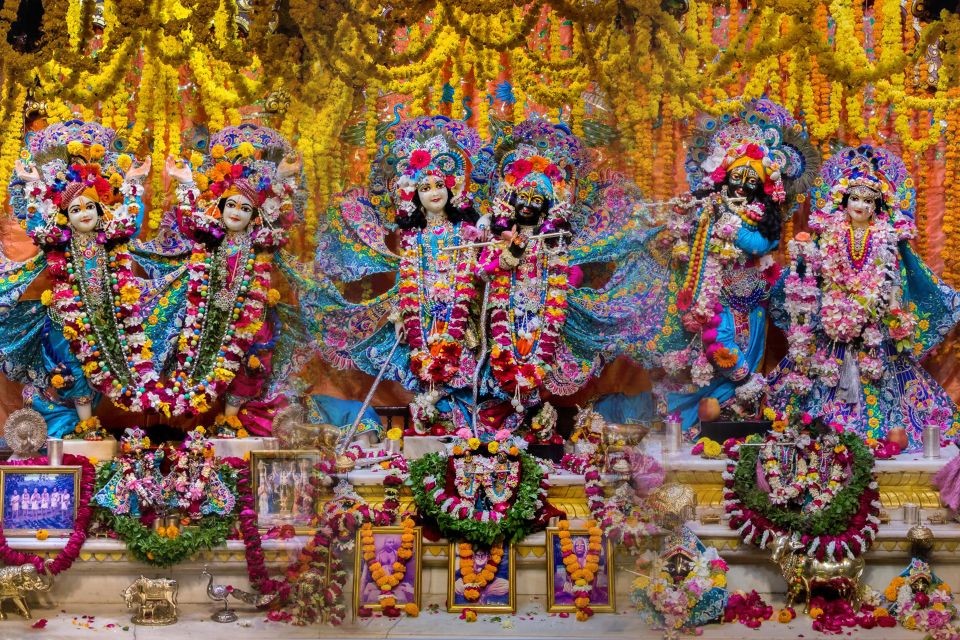
To close the spiritual arc, the tour includes the Iskcon (International Society for Krishna Consciousness) Temple. This stop shifts the focus toward devotion and meditation.
Evenings tend to be a better time for this kind of visit because the energy in many religious sites can feel less frantic. If you’ve been walking since morning, Iskcon gives you a more inward experience where you can sit, observe, and let the day’s information settle.
If you get a guide who communicates with calm clarity, you’re more likely to connect the dots between the different faith spaces you saw earlier. With the right explanation, you’ll notice how each site expresses belief through its own style—architecture, music, ritual behavior, or shared meals.
Optional Red Fort Sound and Light Show: A History-Wrap If You Still Have Energy
If you have extra time, consider the sound and light show at Red Fort. It’s an add-on, not a fixed requirement, which is nice because this day can run long.
This show can help you turn what you saw into a timeline. Even if you’re not memorizing dates, the format is built to make history feel understandable. And it’s a useful option for travelers who want a change of pace from temple-to-temple wandering.
Practical tip: if you’re running low on stamina, skip this. One smart rest beats one tired hour.
Price and Logistics: Is $32 Good Value for a 12-Hour Route?
At $32 per person for a 12-hour day, the price looks low on paper. The catch is what’s included versus what’s not.
What you get: pickup and drop-off, a private AC car for the whole activity, a live guide, mineral water, plus all tolls and parking. That combo matters in Delhi. It reduces hassle, protects your schedule, and keeps you from losing time to logistics.
What you should budget extra for: monuments entry tickets and food aren’t included in the price. Also, personal expenses are on you.
For value, this tour makes sense if you want a guided, structured day across multiple major faith sites and you don’t want to navigate between them yourself. It’s also a good option if you’re visiting Delhi for a limited number of days and want big landmarks handled in one shot.
One more thing: the tour is described as private group. In a perfect world, that means you can go at a good pace. In practice, pacing depends on the guide and how you manage time at each stop.
A Quick Note on Guides, Languages, and Real-World Pacing
The live guide can speak English, French, German, Spanish, Russian, and Japanese, which is a big win if your language comfort matters. In the guide lineup you might encounter, I’ve seen examples of strong communication: Bhanwar Singh has been noted for very good Spanish, and also for French-speaking guidance. Hardeep has been praised for calm, informative narration.
For drivers, Rajeev has been described as polite and easy to talk to, and Imran has been mentioned in terms of creating a feeling of safety.
That said, here’s the caution I’d give you: the day is long and the list of stops is heavy. If your guide pushes speed, some areas can feel rushed. You’ll have the best experience if you’re clear with yourself about what you want most—views, photos, quiet reflection, or participation in langar.
What to Wear, What to Bring, and What You Can’t Bring
This is a religious-sites day, so simple rules help you avoid awkward moments. Dress modestly, covering shoulders and legs, and plan for rules about removing shoes in certain areas.
Bring comfortable shoes because you’ll do a lot of walking. You also should plan around baggage rules: no luggage or large bags are allowed. So keep your load light—think small daypack.
Who This Tour Is Best For (and Who Should Skip It)
This tour is a solid fit if you want one guided day that covers multiple major spiritual landmarks without the stress of arranging transport and routes yourself. It’s also a good fit if you like variety: a grand temple morning, quiet reflection, a major mosque, a memorial, then a community meal and devotional spaces.
It’s not a great choice if you need accessibility support for mobility impairments. The tour information says it isn’t suitable for people with mobility impairments.
If you’re the type who hates crowds, Jama Masjid and langar can still be busy moments. You’ll still be able to enjoy them, but you should go in expecting people and activity.
Should You Book This Delhi Temples and Spiritual Sites Day Tour?
Yes—if you want a guided, efficient way to see Delhi’s big spiritual landmarks in one day. The private AC car, live multilingual guide, and the structured flow from Akshardham to Jama Masjid to Bangla Sahib give you a lot of value for the money.
I’d say book it if you’re realistic about the pacing. This is not a slow meditation retreat. You’re trading time for coverage. If you want a deeply relaxed, hour-by-hour experience at just one or two sites, you might prefer a smaller, more flexible day plan.
If you do book, wear the right clothes, keep your bag small, and decide ahead of time what you want to feel most: awe at Akshardham, quiet at Lotus Temple, Old Delhi views from the minaret, or the shared humanity of langar.
FAQ
How long is the Delhi Temples and Spiritual Sites Day Tour?
The tour duration is 12 hours.
What does this tour cost?
The price is $32 per person.
What is included in the tour price?
It includes pickup and drop-off, a private AC car for the entire activity, a live tour guide, mineral water, and all toll taxes and parking.
What is not included?
Monuments entry tickets and food are not included, along with any personal expenses.
Does the tour include lunch?
A lunch break is part of the day with a traditional North Indian lunch at a local restaurant, but food is listed as not included in the tour pricing.
Which sites are visited during the day?
Key stops include Akshardham Mandir, Lotus Temple, Jama Masjid, Raj Ghat, Gurudwara Bangla Sahib, and the Iskcon Temple. A Red Fort sound and light show may be added if you have extra time.
Is the tour guide available in languages other than English?
Yes. The live guide can speak English, French, German, Spanish, Russian, and Japanese.
Is this a private group tour?
Yes, it’s offered as a private group.
Is luggage or a large bag allowed?
No. Luggage or large bags are not allowed.
Is the tour suitable for people with mobility impairments?
No. The tour is not suitable for people with mobility impairments.
Are there any cancellation or pay-later options?
There is free cancellation up to 24 hours in advance for a full refund, and you can reserve now and pay later.