REVIEW · AMER INDIA
Jaipur: Explore City Sights, Amber Fort & Monkey Temple
Book on GetYourGuide →Operated by Reliable India Tours · Bookable on GetYourGuide
Pink streets feel personal on this guided day.
I like the way Shoyab (Sam)—and the steady driver team behind the wheel—turns each stop into something you can actually understand, not just photograph. I also love the hands-on rhythm: chai and snacks in the morning, major sights like Amber Fort, then a traditional block-printing workshop where you make your own souvenir. One thing to plan for: monument entry fees and food aren’t included, and there’s a moderate amount of walking in heat.
This is set up as a private group day with an English-speaking driver and an English guide who can also work in Hindi, French, or German. You get hotel pickup about 30 minutes before departure, plus bottled water, a comfortable car, and guided time built into the day (with market shopping and photo stops). Still, it’s not for wheelchair users or people with mobility impairments, so check your comfort level before you book.
In This Review
- Key points to know before you go
- Why this 7-hour Jaipur route fits real sightseeing days
- Flower Market and chai breakfast: more than just a photo stop
- Hawa Mahal: the façade you recognize, plus the view you don’t
- Amber Fort and Sheesh Mahal: where time feels worth it
- Panna Meena ka Kund, Jal Mahal, and Royal Gaitor: the calmer stops that teach you Jaipur
- Panna Meena ka Kund (stepwell)
- Jal Mahal (pass by)
- Royal Gaitor (Gaitor Ki Chhatriyan)
- Block printing workshop: hands-on craft, real souvenir value
- Monkey Temple: temple tanks and friendly monkeys (with boundaries)
- Pink City heritage stroll: shopping with enough structure
- Price and value: what $5 buys you, and what it doesn’t
- Practical tips so the day stays comfortable
- Should you book this Jaipur day trip?
- FAQ
- What’s included in the tour?
- Are monument entry fees included?
- Do I get food during the day?
- How does pickup work?
- What should I bring?
- Is it suitable for wheelchair users or mobility impairments?
Key points to know before you go
- Shoyab (Sam) guiding style: clear explanations and time to answer questions, with a smooth, safe drive
- Morning Flower Market + breakfast fuel: color, fragrance, and a simple start with masala chai plus poha or kachori
- Hawa Mahal viewpoint planning: lattice façade details and a climb to get street views from above
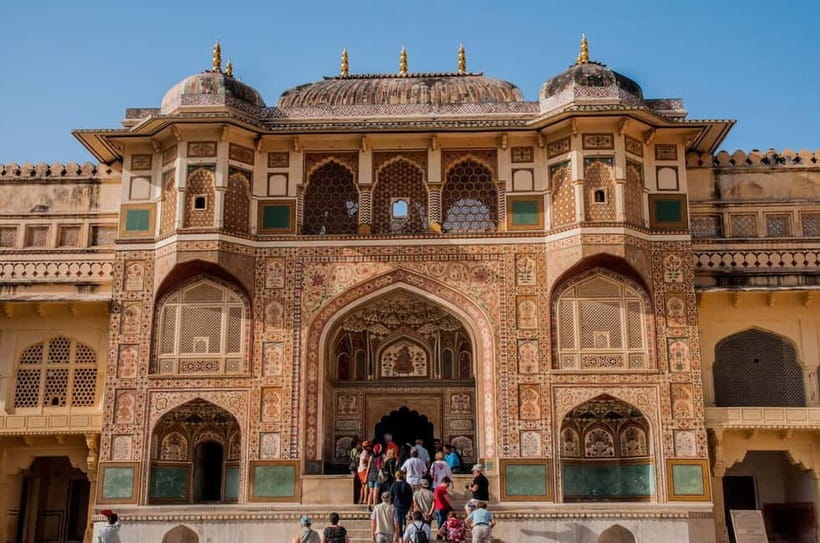
- Amber Fort highlights: you’ll focus on the big architecture plus Sheesh Mahal (Mirror Palace) and mention of a tunnel connection to Jaigarh
- Hands-on block printing: wooden blocks, carved by artisans, then you print your own pattern
- Monkey Temple + Pink City time: temple tanks and friendly monkeys, then shopping and street-food breaks in the old neighborhoods
Why this 7-hour Jaipur route fits real sightseeing days
Jaipur can feel like a lot, fast. This tour works because it mixes high-demand landmarks with in-between moments, instead of cramming everything into one long fort-and-fort march. You start early enough to get the market atmosphere while the day is still manageable, then you shift into major photo stops and architecture.
I also like the pacing: short guided walks where it matters, plus breaks for chai/snacks and later lunch. The big win is that you’re not stuck figuring out logistics—your driver picks you up from your hotel or preferred location (and there are two pickup/drop-off zones: Jaipur and Kukas).
One more practical detail: it’s a private group with a private, air-conditioned vehicle. That matters in Jaipur, where sun and traffic can drain you faster than the sightseeing itself.
You can also read our reviews of more city tours in Amer India

Flower Market and chai breakfast: more than just a photo stop
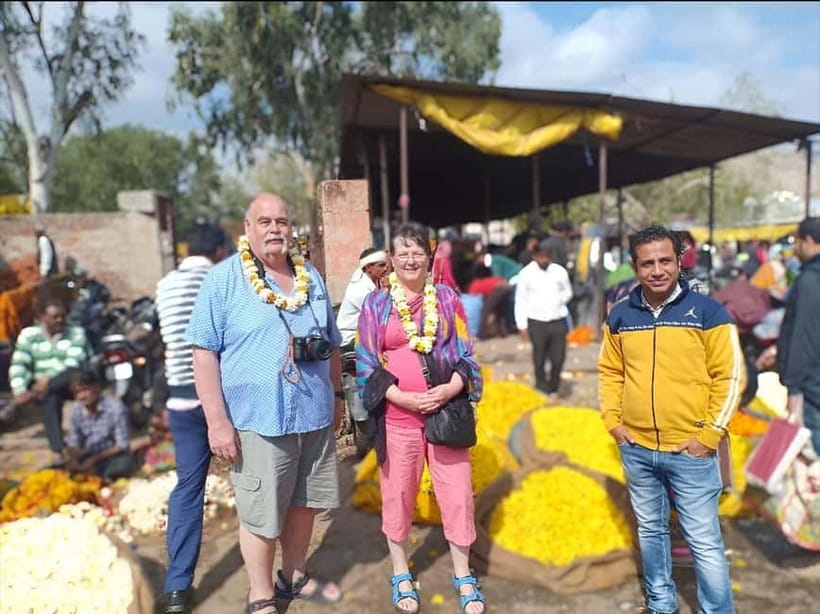
You’ll begin at the Jaipur Flower Market, where vendors sell fresh marigolds, roses, and jasmine. This is one of those places where your camera gets fun, but your senses get the point first: you’ll smell the flowers before you even get your bearings. The guide’s walking style here is practical—enough time to look closely, take photos, and understand what you’re seeing.
Then it’s breakfast time with masala chai and something simple to eat, like poha or kachori. I like this choice because it’s light enough for a full morning of sightseeing, yet filling enough that you won’t fade during the next stops.
What to watch for
- Go for shade when you can and keep your water handy; it’s outdoors, and you’ll want to feel fresh for later steps.
- If you’re sensitive to spices, you can still enjoy the meal—just take smaller bites and sip chai slowly.
Hawa Mahal: the façade you recognize, plus the view you don’t
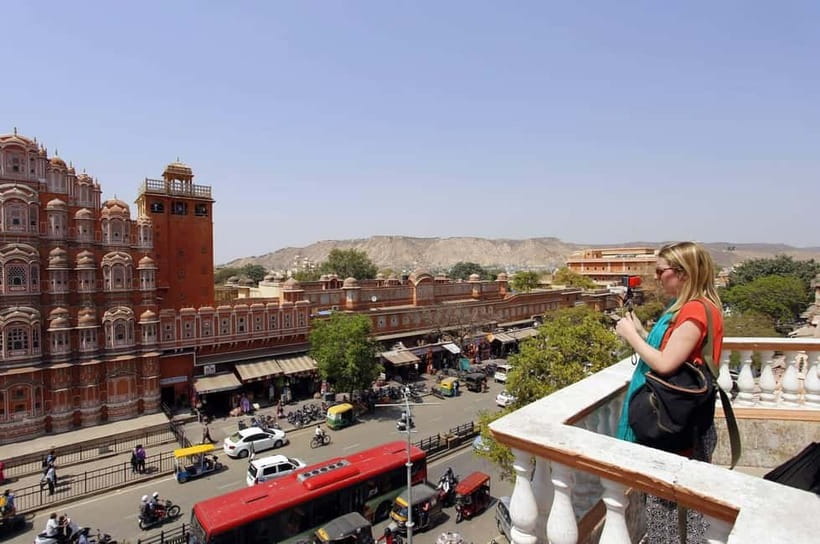
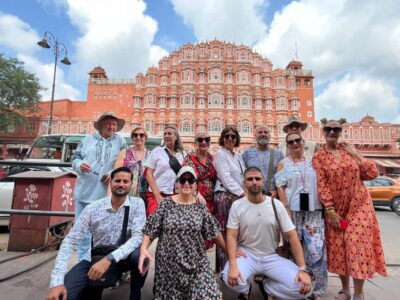
Hawa Mahal, the Palace of Winds, is famous for a reason: the pink sandstone façade is basically a wall of windows and latticework. The guide focuses on how it functioned, not just what it looks like, so you understand why royal women could watch street life without being easily seen.
You’ll also get a break and a photo stop, and you’ll have time to climb up to the top for panoramic views of the streets below. This is the part that turns a landmark into a moment—suddenly you can place the maze of old Jaipur in your mind, and your photos look more intentional.
Quick reality check
- The best photos come from being patient with angles. If you rush the climb, you miss the best sightlines.
- There can be crowds at popular photo spots, so starting early helps.
Amber Fort and Sheesh Mahal: where time feels worth it

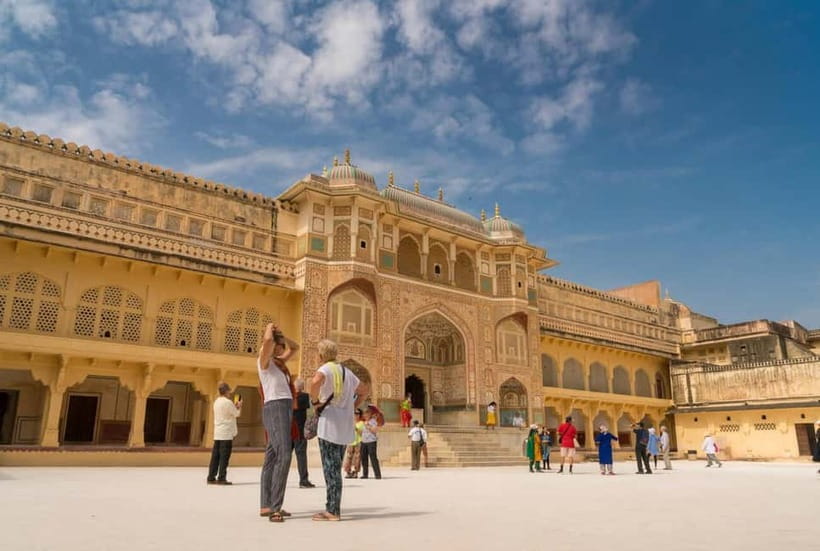
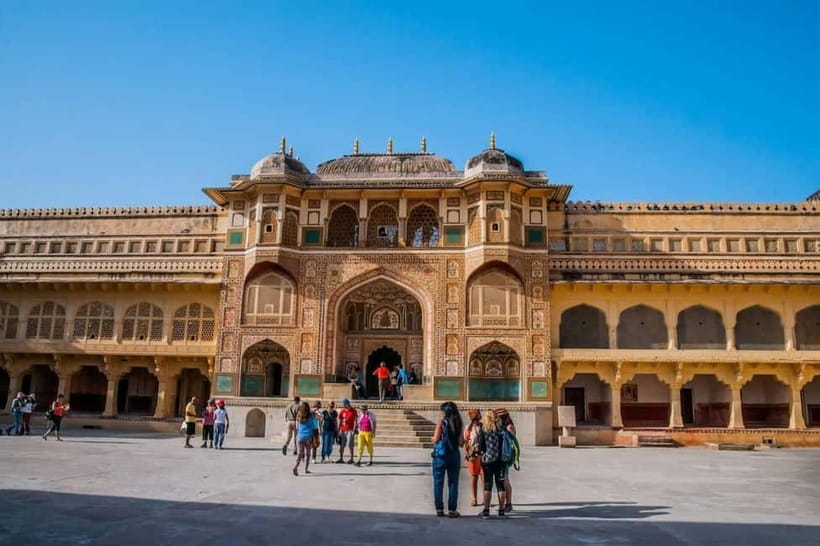
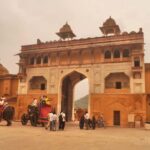
Amber Fort is the headline. It’s also the stop where Jaipur’s architecture starts to click as more than decoration: think fortifications, royal power, and design details that reward slow looking.
You’ll spend around 1.5 hours here with guided time and photo opportunities. Don’t skip the internal highlights the guide points out, especially Sheesh Mahal (Mirror Palace). The mirror work is visually dramatic, but what makes it satisfying is that you learn how the space was built for light and viewing—so it reads as a designed experience, not just a room full of shiny bits.
There’s also mention of a secret tunnel connection to Jaigarh Fort. Even if you can’t fully explore every aspect, the guide’s explanation gives context for why Amber Fort and nearby forts functioned like a network.
How to make the most of your time at Amber
- Wear comfortable shoes and keep your pace steady. You don’t want to sprint through details and then stand tired for photos.
- If you’re shopping-minded, this is a good place to set your expectations early—what you like in materials and colors at the fort will often guide what you choose later at markets and in block printing.
Panna Meena ka Kund, Jal Mahal, and Royal Gaitor: the calmer stops that teach you Jaipur
After Amber Fort, the tour shifts into “slow travel” mode—shorter moments that add depth.
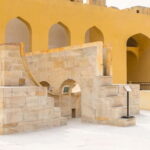
Panna Meena ka Kund (stepwell)
You’ll stop at Panna Meena ka Kund, a historic stepwell with symmetrical stairways and a striking architectural layout. This is one of those places where the photos look good, but the real value is understanding how water storage and design shaped daily life. If you like architecture, this stop is a relief from the bigger crowds and loud sights.
Jal Mahal (pass by)
You’ll see Jal Mahal, the water palace sitting in Man Sagar Lake. It’s a pass-by photo moment rather than a long visit, but it’s useful because it gives you a mental picture of Jaipur as more than fort-and-market streets. You also get a break from walking while still getting a meaningful view.
Royal Gaitor (Gaitor Ki Chhatriyan)
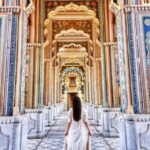
Then comes Gaitor Ki Chhatriyan (Royal Gaitor), a quieter memorial complex with intricate marble cenotaphs honoring Jaipur’s former rulers. It’s not as famous as Amber Fort, so it often feels less stressful. I like it because it adds emotional scale to the day: your photos shift from everyday street life to royal remembrance.
Tip
- Bring a hat and sunscreen for these open-air stops. The light can be harsh, and shade is limited.
Block printing workshop: hands-on craft, real souvenir value
This is one of the most worthwhile parts of the day because it’s not only watching. You’ll visit a traditional block-printing workshop and see artisans hand-carving blocks, then you’ll get a chance to try the process and create a souvenir with your own printed pattern.
Why I think this works so well on a Jaipur day:
- It gives your brain a break from architecture.
- It slows your thinking down in a good way—pattern, repetition, and careful steps.
- You end up with something you made, not just something you bought.
And because the workshop uses wooden blocks carved by artisans, you see the skill behind the look of Jaipur textiles. Even if you only do the basic printing steps, it makes the later market shopping more meaningful.
Small practical advice
- If you have sensitive skin, be mindful of how inks feel on your hands. Wear what you’re comfortable with.
- Plan to keep your souvenir safe after printing—no rushed stuffing it into a bag.
Monkey Temple: temple tanks and friendly monkeys (with boundaries)
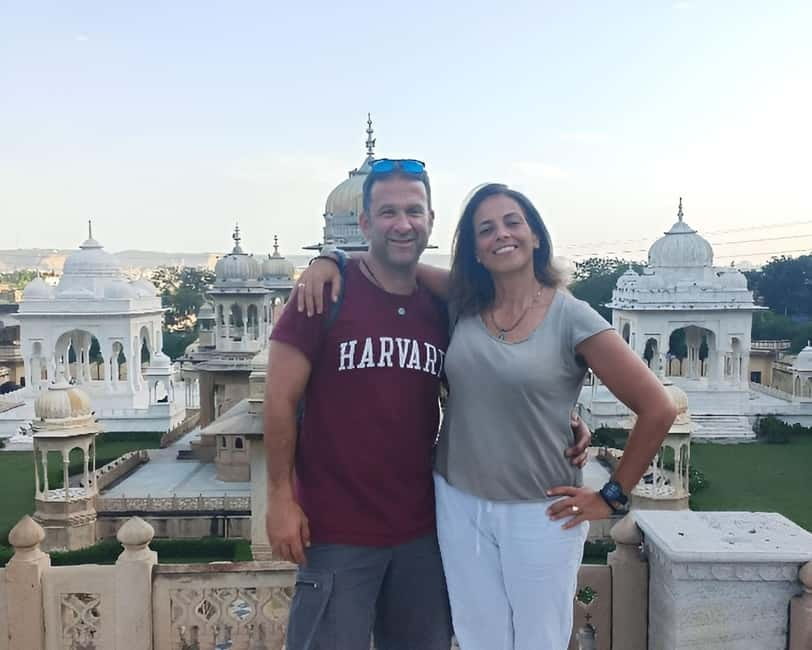
The Monkey Temple visit takes you to the ancient temple complex in the Aravalli Hills area. You’ll explore natural water tanks and see monkeys in their home setting.
A temple visit like this is always about respect. You’ll get guided time, so you’ll know where to stand and how to behave. I’d treat it as a photo-and-walk stop, not a playtime event.
What you should expect
- You’ll walk within the complex and keep an eye on your surroundings.
- The water tanks and temple setting make the photos feel different from the forts and city streets.
Pink City heritage stroll: shopping with enough structure
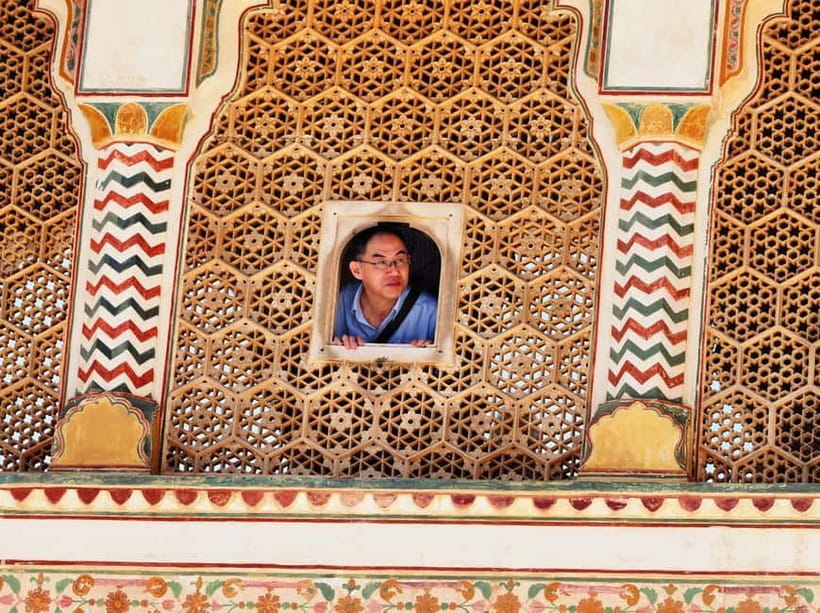
Towards the end, you’ll spend time in the Pink City on foot. This is where your day shifts from guided sightseeing into wandering: old buildings, lively market streets, and chances to browse jewelry, textiles, and handcrafted souvenirs.
You’ll also have time for street food. I like that this isn’t an afterthought; it’s planned in so you can try something local without the stress of figuring out where to go.
Shopping tip that saves money
Markets are a negotiation game. Start by browsing without buying, then decide when you’ve found a style you really want. If you’re unsure of pricing, it helps to check a couple of shops so you have a reference point.
Price and value: what $5 buys you, and what it doesn’t
The price is strikingly low on paper—about $5 per person—especially because the tour includes:
- hotel pickup and drop-off
- a private air-conditioned vehicle with an English-speaking driver
- a guided tour of major sights
- block printing workshop experience
- shopping time
- bottled water
What’s not included is equally important: monument entry fees and your food expenses. In practice, that means your total cost depends on how many paid entries you make (and what you choose to eat). Still, for a full day with a private vehicle and hands-on workshop, the value is strong—especially if you’re trying to cover a lot without hiring separate guides or dealing with transport between distant spots.
Practical tips so the day stays comfortable
- Wear comfortable shoes. There’s a moderate amount of walking, and you’ll do it in sun at points.
- Bring a hat and sunscreen. Especially for outdoor market and stair/street viewing.
- Carry water. Bottled water is included, but it’s smart to sip regularly and not wait until you feel thirsty.
- Dress modestly for temples. Covering appropriately keeps your experience smooth.
- Plan for haggling. It’s part of Pink City shopping, and you’ll do better if you go in with patience.
Should you book this Jaipur day trip?
Book it if you want a focused Jaipur day that covers the big icons (Hawa Mahal, Amber Fort) and still leaves room for texture: flower market mornings, stepwell architecture, a block-printing workshop, and a Pink City stroll for food and shopping.
Skip or reconsider if you have limited mobility. The tour involves walking and isn’t suitable for wheelchair users, and temples/forts can add extra stairs and uneven surfaces.
Also think about your priorities. If you hate market bargaining and prefer strictly indoor museums, you may find the shopping time and street food breaks more hands-on than you want. If you do like mixing culture, craft, and city wandering, this one is a very practical way to get a lot done in 7 hours.
FAQ
What’s included in the tour?
You get hotel pickup and drop-off, a private air-conditioned vehicle with an English-speaking driver, guided tours of top attractions, a block printing workshop experience, shopping time in local markets, and bottled water.
Are monument entry fees included?
No. Monument entry fees are not included.
Do I get food during the day?
Breakfast and lunch are not listed as included as a guaranteed meal option. Chai and snacks are part of the morning break, and lunch time is provided, but food expenses aren’t included.
How does pickup work?
Pickup happens about 30 minutes before the tour start time from your hotel or a preferred location in Jaipur. Pickup and drop-off also operate between Jaipur and Kukas.
What should I bring?
Bring comfortable walking shoes, a hat, a camera, sunscreen, and a water bottle. Water is provided, but you should still plan to stay hydrated.
Is it suitable for wheelchair users or mobility impairments?
No. It’s not suitable for people with mobility impairments or wheelchair users.