REVIEW · MAHABALIPURAM
Mahabalipuram walking tour with local guide and lunch
Book on GetYourGuide →Operated by Wish Tours · Bookable on GetYourGuide
Shore Temple feels like it hums. This tour is a focused way to see the Group of Monuments, including Arjuna’s Penance and the famous Butter Ball, then go further into caves and carved mandapas instead of just watching from outside. I especially like that your walking route ties together several 7th-century stone works in one stretch, and that lunch is built into the plan with real local food. One possible drawback: the day can feel a bit loosely coordinated, so it’s smart to confirm who your guide is and how entry handling works.
With a private group setup and hotel pickup and drop-off, you can keep the pace comfortable and ask questions without fighting crowds. In the experience I’m describing here, the driver-guide duo can matter—names like Ganesh show up as the local driver, while Anthony is the chef at Eagle’s Nest Cafe—so you’ll want to communicate clearly at the start. If you’re sensitive to walking or the heat, plan for comfortable clothes and solid shoes.
In This Review
- Key things I think you’ll notice
- The value of a tight 4-hour route in Mahabalipuram
- Group of Monuments: Arjuna’s Penance and Butter Ball in context
- Arjuna’s Penance (Descend of the Ganges)
- Butter Ball and the “how did they do that?” factor
- Walking a 7th-century maze: caves, mandapas, and carved leftovers
- What’s special about entering the caves
- Small carved features that make the place feel real
- Pancha Ratha’s (Five Ratha’s): monolithic rock-cut architecture you can compare
- Why monolithic matters in plain terms
- Great Shore Temple and the Seven Pagodas story
- A quick practical mindset for the Shore Temple
- Lunch at Eagle’s Nest Cafe: local food, not just a break
- What to bring to lunch (comfort cues)
- Price, inclusions, and what you should confirm before you start
- What’s included
- The one thing to clarify: driver vs tour guide
- How long is enough, and how fast will the pace feel?
- Who this tour fits best (and who should think twice)
- Should you book? My practical verdict
- FAQ
- What is the duration of the Mahabalipuram walking tour?
- Do I get pickup and drop-off from my hotel?
- What’s included in the price of $54 per person?
- Will lunch be provided during the tour?
- Are entrance tickets included?
- What languages are the guides available in?
- Is this a private group or shared tour?
- Is the tour suitable for everyone in terms of age?
Key things I think you’ll notice
- Arjuna’s Penance + Descend of Ganges: an open-air rock relief that’s easier to appreciate when someone explains what you’re looking at
- Butter Ball: a rock-carved, slanted “hanging” boulder detail that draws instant questions—and answers
- Caves and mandapas you can enter: fewer photo stops, more time reading the carvings up close
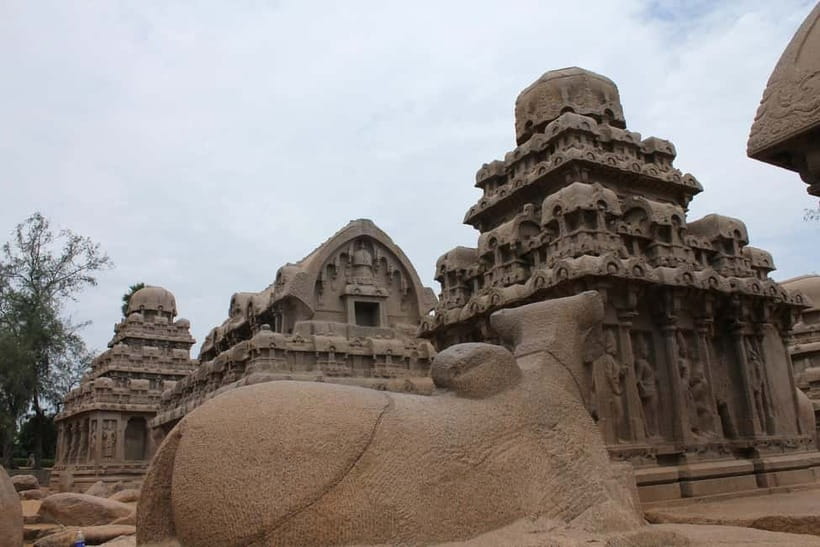
- Pancha Ratha’s (Five Ratha’s): monolithic rock-cut architecture from the reign of Narasimha Varman II (630–668 CE)
- Great Shore Temple: a structural stone temple tied to the Seven Pagodas story
The value of a tight 4-hour route in Mahabalipuram
Mahabalipuram can feel spread out, especially if you rely on self-guided wandering. A 4-hour walk with a local guide helps you focus on what’s most worth your limited time: the big named carvings, plus the smaller carved structures people often miss.
Price is $54 per person, and what matters is what’s included. You get transportation, entry tickets, bottled water, and lunch, plus a guide speaking English, French, and Hindi. For many visitors, that bundles together the “annoying parts” (fees, getting around, and figuring out what to see) so you can spend your energy on the stone details.
One more practical note: this is a walking-and-hiking style tour with breaks and photo stops. That doesn’t mean it’s an all-day grind, but you should still dress for walking and warm weather.
You can also read our reviews of more tours and experiences in Mahabalipuram.

Group of Monuments: Arjuna’s Penance and Butter Ball in context
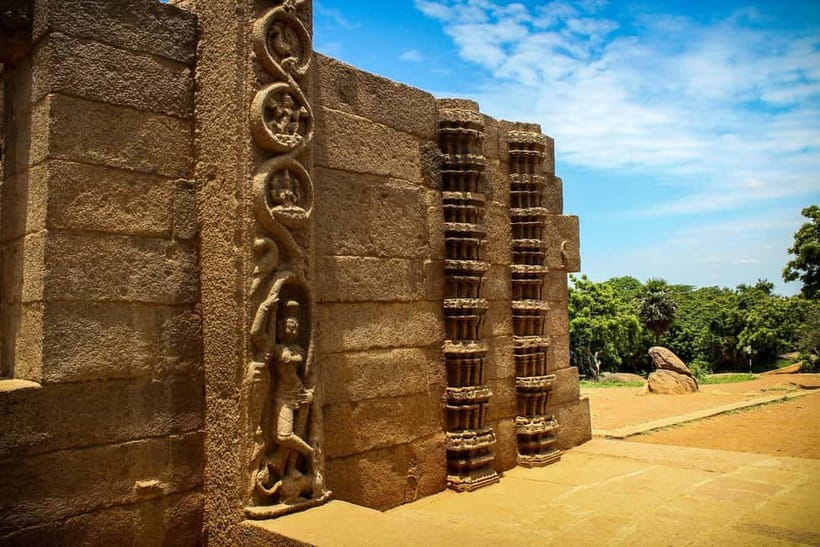
Your day typically starts with pickup in Mahabalipuram, then you move straight into the Group of Monuments, a cluster of 7th–8th-century carvings that set the tone for everything that follows. This is the right opening because it teaches your eye how to “read” rock reliefs: the scale, the figures, and the way the carvings sit in open daylight.
Arjuna’s Penance (Descend of the Ganges)
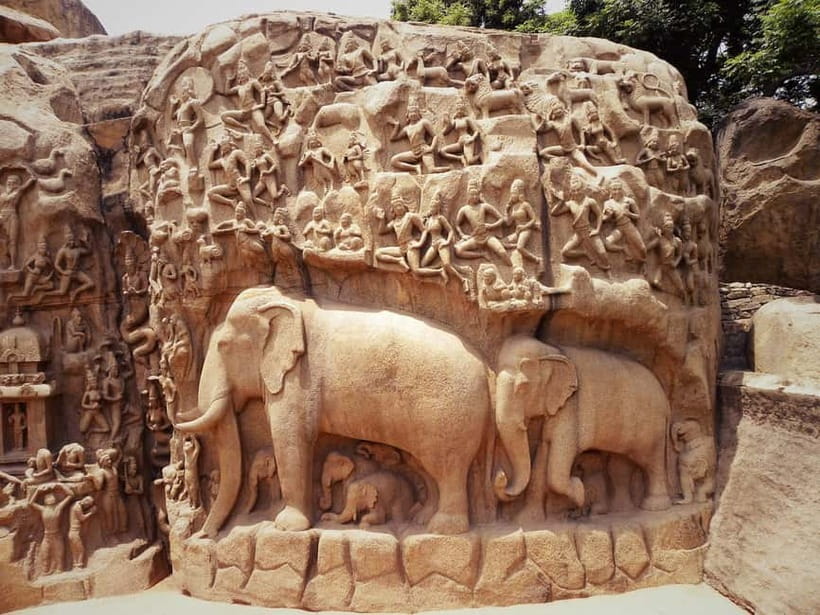
Arjuna’s Penance—also known as the Descend of Ganges—stands out because it’s not a temple interior. It’s an open-air rock relief, and that changes everything about how you see it. Outside, you notice weathering, surface texture, and how sunlight moves across the scene. With a guide, you also get the story connections that make the carving feel less like random stonework and more like a purposeful scene.
If you’re the kind of person who needs a reason for a stop, this is one of those places. The visuals are striking, but the real payoff is understanding what you’re looking at before you move on.
Butter Ball and the “how did they do that?” factor
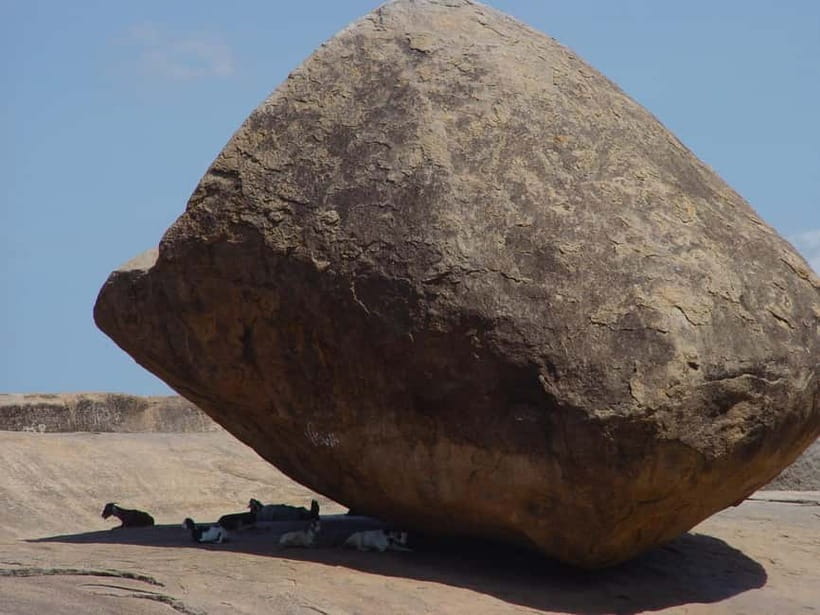
Next comes Krishna’s Butter Ball, often described as a hanging ball on a slanting rock. Even if you’ve seen photos, the surprise is the physical logic of it—how the shape reads as gravity-defying. It’s the kind of detail that makes you stop, then look again, then ask how this was carved and positioned.
From a value standpoint, this stop is smart because it’s short but memorable. You get a quick win early, and you build confidence that the rest of the walk won’t just be a checklist.
Walking a 7th-century maze: caves, mandapas, and carved leftovers
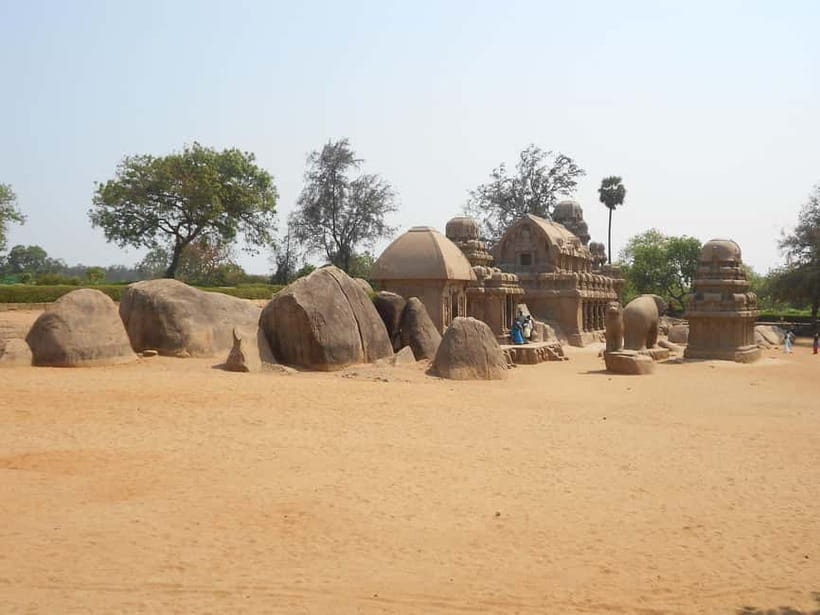
After the main reliefs, the route becomes more about getting close to the stone than ticking off names. The tour includes time where you can go inside caves and explore mandapas and carved structures that are easy to overlook when you don’t know they’re there.
What’s special about entering the caves
Going inside matters for two reasons. First, the lighting changes how the carvings look—shadow and dim interiors reveal edges and depth differently than bright outdoor viewing. Second, you get a sense of scale and planning that you simply can’t feel from a distance.
If you tend to rush, slow down here. You’ll get more from the tour if you pause at the spots your guide points out, especially around carved panels and the way openings frame the space.
Small carved features that make the place feel real
This portion of the walk is packed with the kinds of remnants that make Mahabalipuram feel inhabited, not museum-like. The route includes things like an ancient lighthouse (used when the area was a busy port city), plus rock-made structures such as a cart for a bed and a “queen’s little swimming pool.”
Will you catch every one of these as a dramatic monument? Not every feature is equally famous. But that’s the point: you get a more complete picture of how the site functioned and what locals may have used or built around. It’s the difference between seeing one famous carving and understanding a whole working landscape.
Pancha Ratha’s (Five Ratha’s): monolithic rock-cut architecture you can compare

Then you move to the Five Ratha’s, also called Pancha Ratha’s. This complex is an example of monolithic Indian rock-cut architecture, and it’s carved over the reign of King Narasimha Varman II (630–668 CE). That date range is useful because it helps you see the carvings not as isolated art objects, but as part of a deliberate architectural era.
Why monolithic matters in plain terms
Monolithic means the structures are carved from one mass of stone rather than built from assembled blocks. If you look carefully, you can often spot the logic of proportions and the way surfaces were shaped to read as distinct buildings.
With a guide, you’ll also get help noticing the differences across the ratha shrines. Some visitors focus on one structure and miss the comparative value. This stop rewards you if you mentally compare: scale, repetition, and how each “mini-temple” style sits within the same stone field.
Great Shore Temple and the Seven Pagodas story
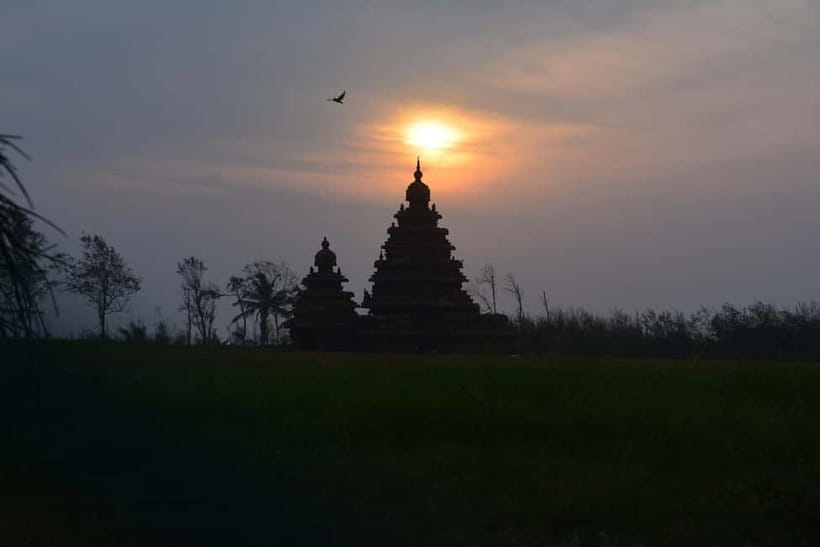
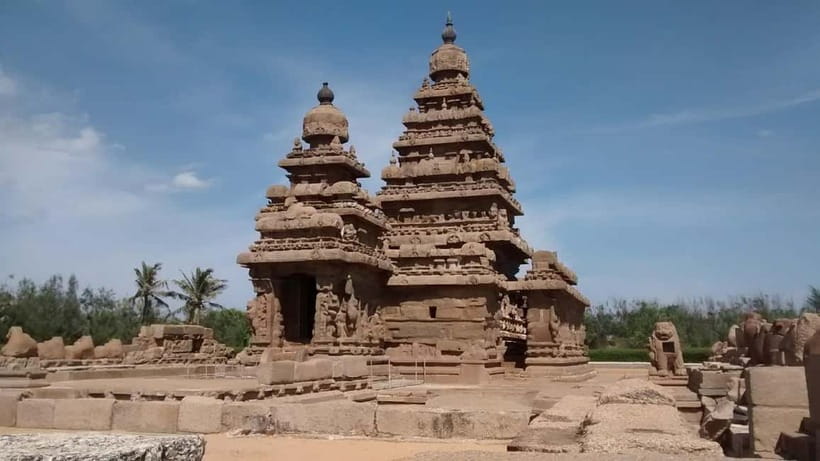
The final major landmark is the Great Shore Temple—one of the oldest structural (not rock-cut) stone temples of South India. It’s also believed to be the last of the Seven Pagodas, with the rest said to have been submerged in the sea, according to ancient memoirs.
Even if you don’t care about legends, the Shore Temple is worth it because its location and style change how you read the architecture. Structural stone temples feel different from rock-cut ones, and the coastal setting makes the carvings and stonework feel exposed to time rather than sheltered by a cliff.
A quick practical mindset for the Shore Temple
Give yourself a little breathing room here. This is the type of stop where you’ll get more out of watching how the temple sits in its environment than by trying to photograph everything at once. If you’re the kind of person who likes to understand atmosphere as part of the experience, this end-of-walk sequence is a strong finish.
Lunch at Eagle’s Nest Cafe: local food, not just a break
In the middle of the tour, you get lunch at a restaurant called Eagle’s Nest Cafe. In the experience being described here, the chef is Anthony, and the kitchen is described as cooking from scratch—so this isn’t just a quick plate handed over with no thought.
The “value” of lunch inclusion isn’t only convenience. It reduces decision fatigue. In a place where you might otherwise bounce between stalls and sit-down spots, having lunch planned means you can focus on the temples and caves without turning the afternoon into a food hunt.
What to bring to lunch (comfort cues)
You won’t need anything fancy. Just remember you’ll have walked already. Wear comfortable clothes you can keep on through lunch, and consider water for after. The tour includes bottled water, but your own habits still matter—if you drink more in heat, plan accordingly.
Price, inclusions, and what you should confirm before you start
At $54 per person, this tour is priced like a “bundle”: guide time + transportation + entry fees + lunch. For many visitors, that’s a fair deal because the entry tickets and local logistics add up quickly if you try to piece it together yourself.
What’s included
You should expect:
- Lunch
- Transportation
- Water bottles
- Entry tickets
Also included are skip-the-ticket-line benefits and a live guide (English, French, Hindi) with a private group arrangement.
The one thing to clarify: driver vs tour guide
One practical caution: the experience may involve a local driver who also handles some walking time, while your on-site guide can vary. In the example shared with this experience, Ganesh is named as the local driver, and there’s mention of an official guide stopping by and asking for payment (2000 rupees) for more stories. The suggestion from that situation is simple: if someone approaches and asks for extra payment for guidance, you can decline and keep following your assigned guide’s plan.
Before you begin, ask your guide or driver a quick question like: Who is your official point of contact for the full walk? That one sentence can prevent confusion later.
How long is enough, and how fast will the pace feel?
The activity is listed as 4 hours. That’s a sweet spot for Mahabalipuram because you can see multiple major monuments without ending up with a sore back and no time left to enjoy the town.
There are breaks built in (including a break/photo stop), and you’ll have a mix of walking, guided explanations, and some short hiking inside the carved spaces. If you’re used to sightseeing by car, the walking will feel like the biggest adjustment—so wear shoes you trust.
Who this tour fits best (and who should think twice)
This tour is a good fit if you like stone carvings and want help understanding what you’re seeing. It also suits you if you enjoy a structured route with a local guide, rather than wandering around and hoping you stumble into the caves.
It’s not suitable for babies under 1 year, and it isn’t aimed at people over 95 years. Beyond age, consider comfort with uneven stone paths and stairs if your body is sensitive to those.
If you’re visiting with kids, you might find the cave interiors and carving explanations take a bit of patience. On the other hand, if your kids love “wow” shapes and can handle a few walking segments, this could work well.
Should you book? My practical verdict
I’d book this tour if:
- You have limited time in Mahabalipuram and want a route that hits Arjuna’s Penance, Butter Ball, caves, Pancha Ratha’s, and the Shore Temple in one go
- You value a guided explanation that helps you interpret stone carvings
- You want lunch handled for you at a known spot (Eagle’s Nest Cafe, chef Anthony)
I’d hesitate if:
- You’re extremely sensitive to small logistics hiccups and want everything perfectly timed from minute one
- You dislike walking/hiking segments, even short ones
- You prefer fully independent touring and don’t want any chance of on-site guide conversations that could require a firm no
Overall, this is a strong way to turn a compact time window into a real sense of how Mahabalipuram’s carvings connect—especially when the guide is actively pointing out what you’d otherwise miss.
FAQ
What is the duration of the Mahabalipuram walking tour?
The tour lasts about 4 hours, with a mix of walking, guided sightseeing, and breaks.
Do I get pickup and drop-off from my hotel?
Yes. You’re picked up from your hotel in Mahabalipuram and dropped back after the tour.
What’s included in the price of $54 per person?
Lunch, transportation, water bottles, and entry tickets are included.
Will lunch be provided during the tour?
Yes. Lunch is included in the middle of the experience at Eagle’s Nest Cafe.
Are entrance tickets included?
Yes, entry tickets are included, and you can skip the ticket line.
What languages are the guides available in?
The live tour guide is available in English, French, and Hindi.
Is this a private group or shared tour?
It’s listed as a private group.
Is the tour suitable for everyone in terms of age?
It’s not suitable for babies under 1 year, and it’s not suitable for people over 95 years.