REVIEW · NEW DELHI
Delhi: Customizable Old and New Delhi Half or Full Day Tour
Book on GetYourGuide →Operated by Wawi Tours · Bookable on GetYourGuide
Delhi compresses a lot into one day.
This tour is built for that reality: you choose Old Delhi, New Delhi, or a full-day route, and you move by private air-conditioned car with a live guide doing the explaining while you focus on the sights.
I especially like two parts: the open-rickshaw ride through Chandni Chowk (watch your surroundings change block by block) and the way your guide handles big landmarks with clear context, from Jama Masjid to Qutb Minar. The pacing works well when your time is tight.
One thing to plan around: Akshardham and Lotus Temple close on Tuesday, so if you’re traveling then, your route may shift away from those stops. Also, meals aren’t included.
In This Review
- Key things to know before you go
- Picking Old Delhi vs New Delhi vs One Big Full-Day Loop
- Chandni Chowk by open rickshaw: the market you can actually feel
- Jama Masjid’s scale: guided access makes it make sense
- Red Fort area and Khari Baoli: quick passes, good texture
- Gurudwara Bangla Sahib: the calm break you’ll feel
- Qutb Minar and Humayun’s Tomb gardens: monuments with breathing room
- India Gate, Parliament area, and the idea of modern Delhi
- Laxmi Narayan Temple and Lotus Temple: ornate detail plus quiet
- Agrasen ki Baoli: the stepwell stop that rewards patience
- Akshardham: a possible add-on, but watch the day
- The guide and driver team: what makes this run smoothly
- Skip-the-line tickets and entrance-fee choices: value beyond the headline price
- Who this tour suits best (and who should choose a different plan)
- Should you book this tour?
- FAQ
- How long is the Delhi Old and New Delhi tour?
- What’s included in the tour price?
- Are meals included?
- Do you pick me up from my hotel?
- What language is the live guide available in?
- Is this tour private?
- What should I bring?
- Are Akshardham and Lotus Temple open every day?
Key things to know before you go
- Open-rickshaw time in Chandni Chowk gives you a close-up feel for markets without walking the whole maze.
- Private, live guide (English, French, German, Spanish, Russian) keeps the day coherent across many stops.
- Monument variety: mosques, tombs, memorials, temples, and a stepwell in one logic-driven loop.
- You can choose your route length (4-hour half days or an 8-hour full day), which helps you match your stamina.
- Skip the ticket line and get through sights faster—use that time for photos and a slower look inside.
Picking Old Delhi vs New Delhi vs One Big Full-Day Loop
This is the kind of tour where choosing the right duration matters more than you’d expect. Delhi’s sights are close on a map, but traffic and walking make them feel farther apart. So the “half day” vs “full day” choice is really about how much you want to rush versus how much you want to absorb.
For Old Delhi (about 4 hours), you concentrate on the spiritual and market core: Chandni Chowk, Jama Masjid, Red Fort area views, Khari Baoli’s spice stalls, and Gurudwara Bangla Sahib. It’s a strong sampler if it’s your first time and you like energy.
For New Delhi (about 4 hours), you focus on monuments and planned-city landmarks: Qutb Minar, India Gate and the Parliament area from outside, Humayun’s Tomb gardens, Laxmi Narayan Temple, and Lotus Temple—then the loop closes at Rashtrapati Bhavan and Agrasen ki Baoli.
For Full Day (about 8 hours), you’re basically stitching both halves together, with extra time at major sites. It’s ideal if you want the “Delhi all at once” effect and you’re okay with a long day in a car.
You can also read our reviews of more tours and experiences in New Delhi



Chandni Chowk by open rickshaw: the market you can actually feel
The star moment in Old Delhi is the ride through Chandni Chowk’s lanes on an open rickshaw. This matters because you get the atmosphere without doing a full-on street trek. You’ll see how fast the scene changes: spices, fabrics, snack stands, metalwork, and crowd flow—all moving at human speed.
I like that the route doesn’t treat the market like a photo backdrop. Your guide uses the ride to help you understand what you’re seeing and why it’s there—especially around trade goods like spices.
A practical note: open rickshaws mean you’ll be exposed to sun, dust, and exhaust. Wear sunglasses and sunscreen, and keep water handy (you’re provided bottled water). If you’re sensitive to smoke, this is still doable, just plan for it.
Jama Masjid’s scale: guided access makes it make sense
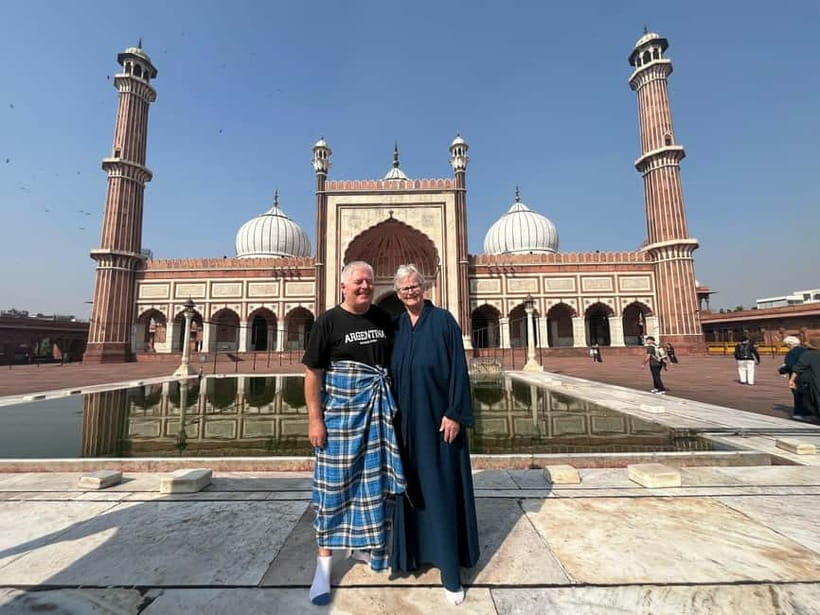
After Chandni Chowk, you hit Jama Masjid, where your time is guided in the main courtyard. This is one of those places where a quick stop often feels flat, because the scale is hard to grasp without context.
What you get here is a structured visit—enough time (about 30 minutes) to walk, look up, and understand the space instead of just taking pictures and leaving. If your guide has a good command of English (many do), you’ll appreciate the stories tied to the mosque and the era around it.
The benefit of having a guide is simple: you’ll know what you’re looking at—courtyard layout, the reasons the complex is arranged the way it is, and how people use the space today.
Red Fort area and Khari Baoli: quick passes, good texture

In Old Delhi, you’ll also pass by the Red Fort area—mainly as a viewing stop rather than a long inside visit here. Think of it as a framing device: red walls, fortress shape, and a reminder that this area grew around power and trade.
Then comes Khari Baoli, the spice market area where you’ll be close enough to smell the goods even during short time. The itinerary keeps this portion short (about 15 minutes), so don’t expect deep shopping with that time alone. But it’s perfect for a taste: watch the hustle, look at packaging, and grab a small souvenir if something catches your eye.
If shopping is high on your list, I’d use this moment to decide what you want before you enter the rest of the day. The car-and-guide setup makes it easier to build small breaks without losing the whole schedule.
Gurudwara Bangla Sahib: the calm break you’ll feel

One of the best “reset moments” on the Old Delhi route is Gurudwara Bangla Sahib. Your guided visit is longer here (about 1.5 hours in the full-day route, and a shorter guided stop on the half-day), and that extra time shows you what Delhi’s religious spaces feel like in real life.
This is where the day slows down. You’re not just looking at buildings; you’re seeing how worship and community activity shape the atmosphere. I like having this on the itinerary because it balances the market intensity before you shift into more monument-heavy areas.
If you care about respectful visiting (and you should), a guide helps you get the rules right—where to go, what behavior fits the space, and how to avoid turning a sacred site into a free-for-all photo moment.




Qutb Minar and Humayun’s Tomb gardens: monuments with breathing room
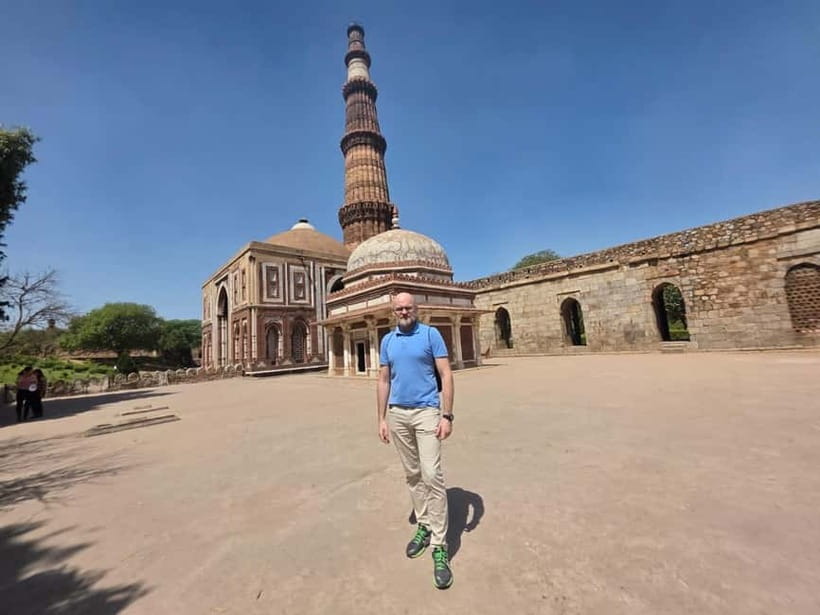
When the route turns toward New Delhi, the big anchor is Qutb Minar. You’ll have about an hour here with guided time. The minaret is the kind of monument where height hits differently when you’re actually standing near it. Your guide’s explanations help you connect the ruins to the broader story of Delhi’s changing eras.
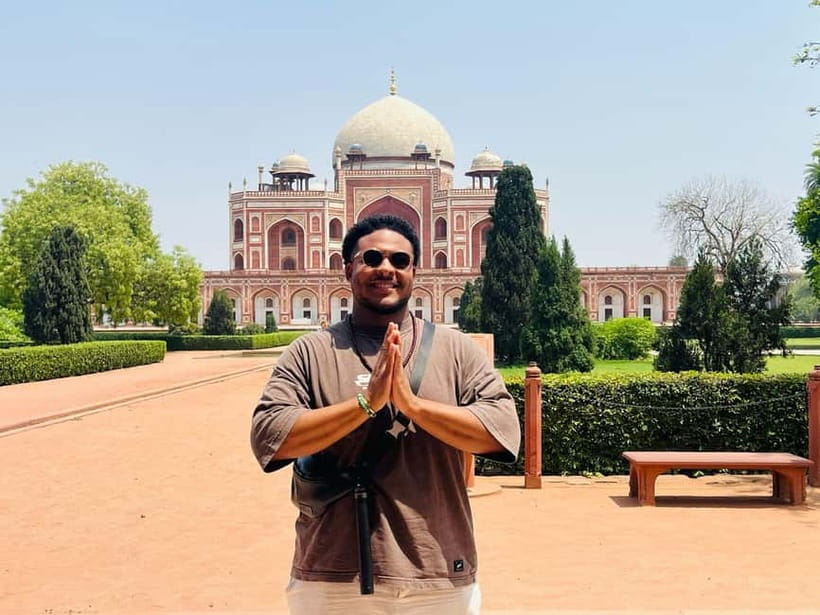
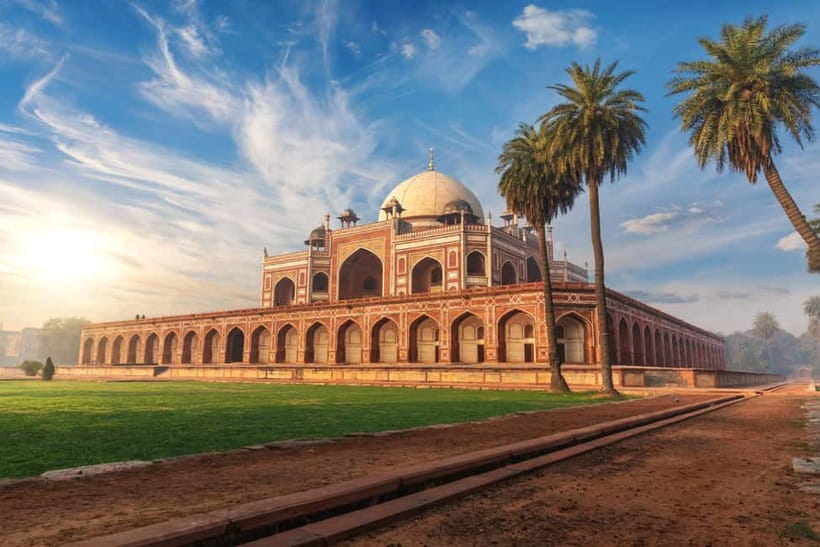
Then comes Humayun’s Tomb, where you spend guided time (about 2 hours in the full-day route). This stop feels different from the markets and courtyards: the gardens give you space to slow down. I like how this pairing works—Qutb Minar for vertical drama, Humayun’s Tomb for paced walking and more open views.
One realistic consideration: these are outdoor-heavy sites. If it’s a hot day, build in a slower pace for photos and let your guide steer you toward the best shade and angles.
India Gate, Parliament area, and the idea of modern Delhi
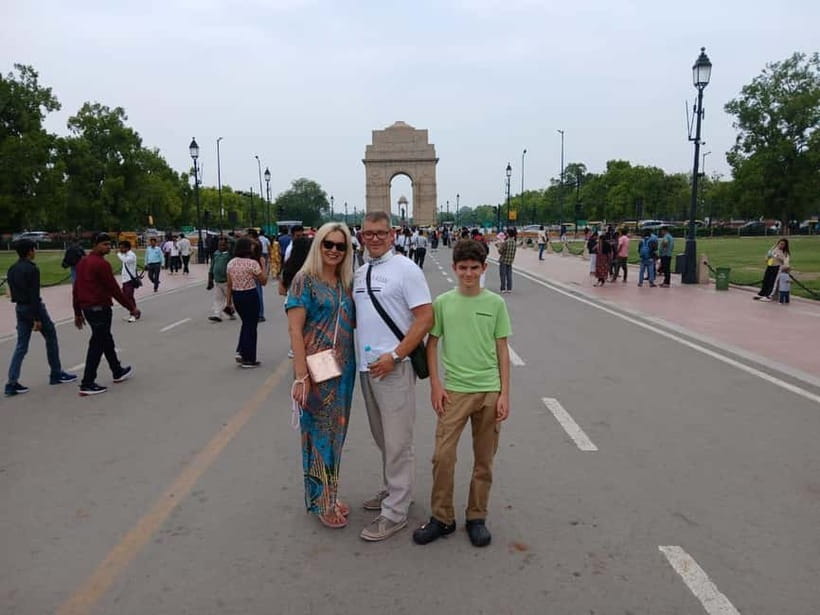
You’ll pass India Gate and the Parliament Building area mostly from the road, with time for photos at India Gate. This is less about long exploration and more about getting the mental map of the capital: memorial geometry, wide spaces, and the government district vibe.
If you like noticing how a city is organized, this section pays off. Delhi has layers, and this part shows the planned grandeur of the capital’s modern identity—especially when your guide ties it to how the city functions.
For some visitors, the drive-by viewing feels short. For me, it’s the right use of time when you have limited hours and want to spend the real attention on the sites where you can enter, walk, and linger.
Laxmi Narayan Temple and Lotus Temple: ornate detail plus quiet
New Delhi’s temple sequence is a nice contrast. You’ll visit Laxmi Narayan Temple (ornate halls and interior time) and then Lotus Temple for a calmer pause.
Lotus Temple is famous for its shape, but the real value is the atmosphere you feel inside. Your visit time is about 30 minutes. That’s enough to enter, look around, and take a breath—without feeling like you’re stuck there too long.
Important Tuesday note: Lotus Temple and Akshardham close on Tuesdays, so if that’s your travel day, expect the guide to adjust the route and timing.
Agrasen ki Baoli: the stepwell stop that rewards patience
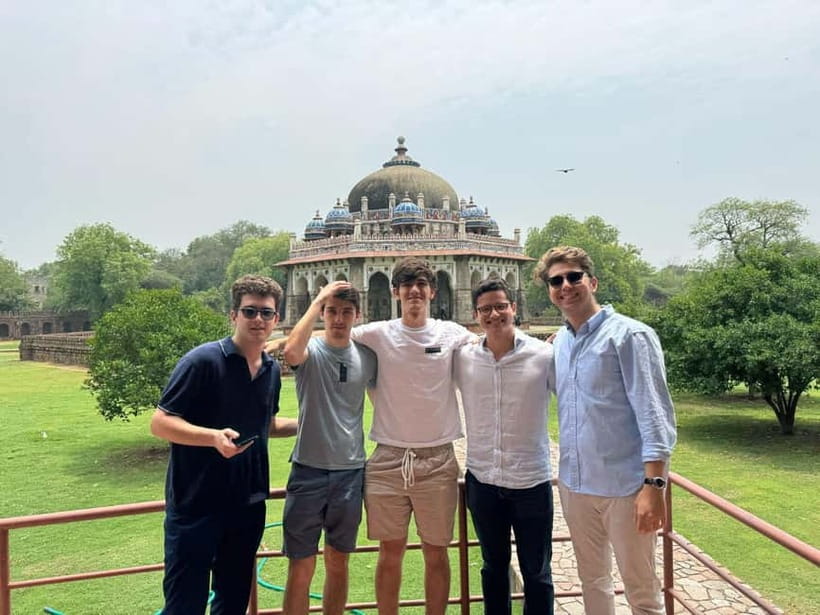
The itinerary includes Agrasen ki Baoli, a stone stepwell area that people often miss when they only chase the famous monuments. You’ll spend time to uncover the steps and see this “downward” design idea in person.
This works best when you slow down for a few minutes and treat it like a short walk-through rather than a quick photo. The steps and stone textures make the place feel like Delhi’s past left physical clues under the city’s everyday movement.
Akshardham: a possible add-on, but watch the day
The full-day itinerary includes Akshardham (about 30 minutes). It’s placed as a late-day component, so it tends to work best after you’ve already anchored the trip with Qutb Minar, Humayun’s Tomb, and Lotus Temple.
Since Akshardham closes on Tuesday, make sure you check your travel date. If your day is Tuesday, you may lose this stop and your timing might be rebalanced around the other sites.
The guide and driver team: what makes this run smoothly
Transport is a big deal on a tour like this, and this one is set up for comfort and speed: a private air-conditioned car with chauffeur, plus complimentary umbrellas and bottled water. That matters because Delhi’s weather can change quickly, and you’ll be in the vehicle a lot.
Where the tour really wins is the human piece. The guide is private to your group and operates in the language you select from English, French, German, Spanish, and Russian. In the guide examples shared (names like Mayank, Anchal, Akash, Satyam Chandel, Rahul, Rohan, Dashrath, Rajesh, Pankaj Kumar, and Mohammad Arsh), you can see the theme: adaptability and clear explanations.
If you’re the kind of person who cares about photos, ask your guide early for timing and angles. One review-style detail that’s practical in real life: guides who work with photographers tend to be patient and will help you not waste precious minutes hunting for viewpoints.
Skip-the-line tickets and entrance-fee choices: value beyond the headline price
The listed price is about $18 per person, and that’s only part of the equation. The value comes from what you’re bundling together: private transport, a live guide, and (if you choose it) tickets to the monuments.
Two things to check for your own planning:
- If the option includes entrance fees, your day is more predictable because you’re not scrambling for payment or managing multiple lines.
- Even without entrance costs, the “skip the ticket line” benefit can save real time at busy monuments, which is what lets you hit more stops within your chosen window.
Also, meals aren’t included. In Delhi, you can spend more than you think if you wait too long. I’d plan to eat before the tour starts or right after, so you’re not stuck deciding on the fly.
Who this tour suits best (and who should choose a different plan)
This tour fits best if:
- You want maximum coverage without doing research all day.
- You like having a guide to explain what you’re seeing and help you move efficiently.
- You’re okay spending a fair amount of time in the car to connect distant neighborhoods.
It’s less ideal if:
- You hate time pressure and want long, unstructured wandering at just one site.
- You’re traveling on a Tuesday and have your heart set on Akshardham and Lotus Temple. You may lose one or both stops.
If you’re traveling with kids, the private setup and focused route can work well, because you’re not stuck waiting with random groups.
Should you book this tour?
Yes, if your priority is seeing a lot of Delhi in a short window with a guide steering the day. The open-rickshaw moment in Chandni Chowk, the guided stop at Jama Masjid, and the mix of New Delhi monuments plus a calmer Lotus Temple pause make this a solid way to get the big feel of the city without getting lost in logistics.
I’d book it especially if you’re someone who likes structure: pick your half-day (Old or New) based on your interests, or go full day if you want the best cross-section. Just plan around Tuesday closures for Akshardham and Lotus Temple, and remember that meals are on you.
FAQ
How long is the Delhi Old and New Delhi tour?
The duration ranges from 4 to 8 hours depending on the option you choose (Old Delhi half day, New Delhi half day, or the full-day route).
What’s included in the tour price?
You get sightseeing by private air-conditioned car with chauffeur, a private live tour guide following the itinerary, complimentary water bottles and umbrellas, and all parking fees, tolls, fuel, and taxes. Tickets are included only if you select the option that covers entrance fees.
Are meals included?
No. Meals are not included, so plan your lunch or snacks around the visit times.
Do you pick me up from my hotel?
Yes. Pickup is available from any location or airport in Delhi, Noida, Gurgaon, Faridabad, or Ghaziabad, with multiple pickup options listed.
What language is the live guide available in?
The guide can be arranged in English, French, German, Spanish, or Russian.
Is this tour private?
Yes. It’s a private group, meaning only your group participates.
What should I bring?
Bring a passport or ID card, plus sunglasses and sunscreen.
Are Akshardham and Lotus Temple open every day?
No. Akshardham and Lotus Temple are close on Tuesday.