REVIEW · NEW DELHI
From Delhi: 4-Day Private Luxury Golden Triangle Tour India
Book on GetYourGuide →Operated by Golden Triangle Tour Packages · Bookable on GetYourGuide
Golden Triangle in four days, with a private guide. This tour is built around Taj Mahal sunrise and skip-the-line access, so you’re spending prime moments in the right place, at the right time, with local context that actually helps. I especially like how it mixes big-name Mughal landmarks with grounded Old Delhi stops, and I also like the option for 4-star or 5-star hotels so the trip feels smooth rather than rough. The only real drawback is the pace: you’re covering three cities in four days, so expect a lot of driving and early starts.
The private setup is the point here. You get a driver, expert guide support, and flexible pickup from Delhi Airport or major nearby areas, which matters when Delhi traffic can turn timing into a guessing game. Plus, the guide is available in several languages (English, French, Spanish, Russian, German, Italian, Portuguese, Hindi), so you’re not stuck with a basic, rushed explanation.
At around $38 per person for four days, it can feel like strong value—especially if you’re prioritizing a comfortable car and guided site visits. Still, double-check room setup (single vs. double/twin sharing) and any seasonal surcharges so you’re not surprised later.
In This Review
- Quick hits that make this tour worth your attention
- Why the Golden Triangle works so well in 4 days
- Private luxury flow: driver, guides, and hotel choices that reduce stress
- Day 1: Delhi pickup to Agra with Taj Mahal sunrise and Agra Fort
- Day 2: Fatehpur Sikri and Abhaneri stepwell before Jaipur
- Day 3: Amber Fort, City Palace, Hawa Mahal, Jantar Mantar—and back to Delhi
- Day 4: Old Delhi icons plus New Delhi monuments (and smart closure swaps)
- Guide and driver impact: why Saif (and Ajay) matter
- Price and value: what about $38 per person actually means
- Timing tips and practical details that you’ll feel on the ground
- Who this tour suits best (and who might prefer a slower plan)
- Should you book this 4-Day private Golden Triangle tour from Delhi?
- FAQ
- What cities does the tour include?
- Is hotel pickup available from Delhi Airport?
- Will I be able to skip the lines at major attractions?
- Does the itinerary change if my tour is on a Friday?
- What happens if my tour includes a Monday?
- What are the main sights in Agra?
- What are the key stops in Jaipur?
- How does the vehicle work for different group sizes?
- Do I need cash for tickets?
Quick hits that make this tour worth your attention

- Taj Mahal at sunrise for softer light and a more emotional visit
- Separate entrance / skip-the-line so you lose less time standing around
- Private guide (multilingual) to connect buildings to the people who built them
- Agra + Fatehpur Sikri + Abhaneri in one smooth, guided arc
- Amber Fort to Hawa Mahal gives you royal visuals plus a real day of sightseeing
- Old Delhi and New Delhi mix: Jama Masjid, Chandni Chowk, then India Gate and Qutub Minar
Why the Golden Triangle works so well in 4 days

The Golden Triangle (Delhi–Agra–Jaipur) is famous for a reason: you get a compressed education in North Indian power, art, and city life. In four days, you won’t see everything—but you will hit the most important anchors and still have a logical route instead of backtracking.
The private format also changes the feel. You’re not lining up with a giant group and losing time to whoever’s always “just one minute.” With your own driver and guides, the schedule is tighter, and that helps when monuments are crowded and daylight matters (especially for the Taj Mahal).
You can also read our reviews of more private tours in New Delhi



Private luxury flow: driver, guides, and hotel choices that reduce stress
This is set up as a private group tour, which means you travel in a dedicated vehicle with a driver. Vehicle type depends on group size: a Toyota Etios or similar for 1–2 guests, a Toyota Innova or similar for 3–5 guests, and a Tempo Traveler for 6–10 guests. That sounds like logistics, but it directly affects comfort—especially during longer road stretches.
Hotel choices are flexible with 4-star or 5-star hotels, and that matters more than you’d think on a multi-city tour. After a big sightseeing day, you want a place that feels like a reset button, not a noisy, inconvenient stop.
Guiding is the other major piece. You’ll have a live English-language guide (plus several other languages), and you’ll get real explanations tied to what you’re seeing—not just a checklist of names.
Day 1: Delhi pickup to Agra with Taj Mahal sunrise and Agra Fort
Day one starts with pickup from your Delhi-area location (or Delhi Airport). For airport arrivals, the driver meets you at Terminal 3, Exit Gate 4 with a placard showing your name. That level of clarity helps a lot in a city where first-day navigation can be stressful.
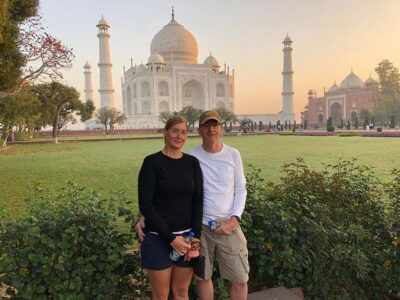
From Delhi to Agra, the big moment is the Taj Mahal sunrise visit. This is the classic move for a reason: the marble shifts with the early light, and the timing gives the site a calmer tone than a midday rush. The tour also includes skip-the-line entry via a separate entrance, which cuts down wasted time right when you can least afford it.
After the Taj Mahal, you move to two power-heavy follow-ups:
- Agra Fort (UNESCO): Mughal-era military and royal presence in stone and layout.
- Baby Taj (Itimad-ud-Daulah): a smaller monument that feels like a “jewel box,” known for its intricate inlay work.
The best part of this trio is how it shows different sides of the Mughal story: romantic monument, political stronghold, then a quieter, detailed masterpiece.
Day 2: Fatehpur Sikri and Abhaneri stepwell before Jaipur
Agra day ends, and you head toward Jaipur with two well-chosen detours.
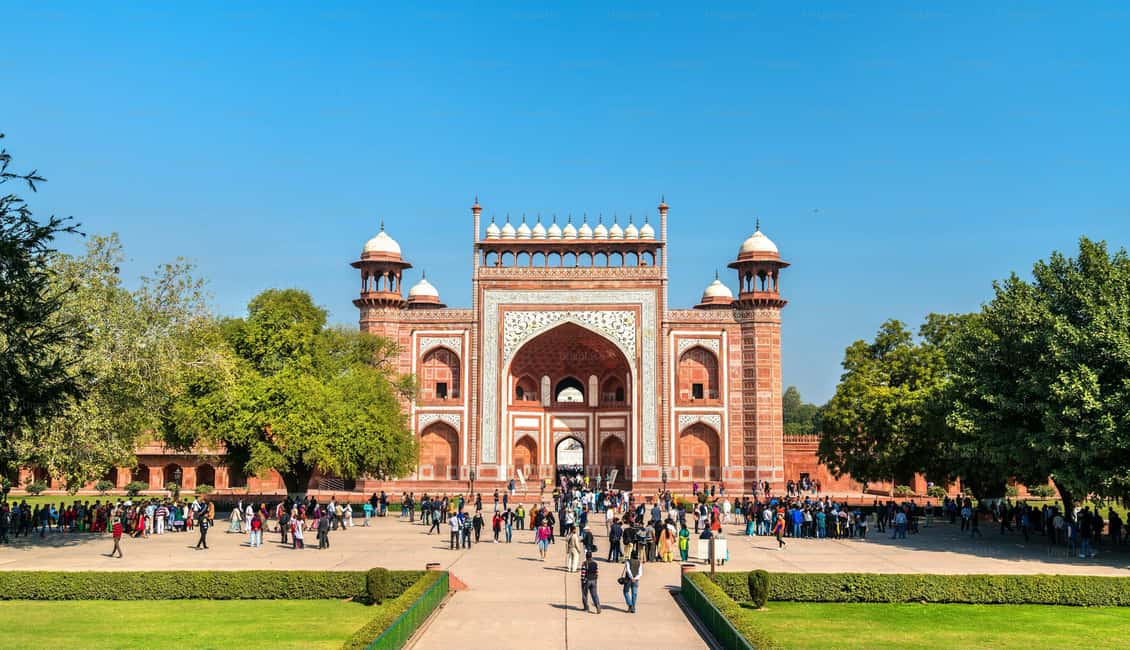
First is Fatehpur Sikri, a former Mughal capital now partly abandoned. The red sandstone structures help you understand ambition and withdrawal in the same place—why rulers built grandly, and why cities don’t always survive the plans that create them. You’re not just taking photos here; you’re reading the city through the guide’s context.
Next comes Abhaneri Stepwell (Chand Baori). It’s one of the most symmetrical stepwells in the region and also one of the deepest, built to manage water and cool living conditions. It’s one of those stops that feels surprising because it’s not on everyone’s “must-see” list—until you’re standing inside the geometry and realizing how practical the design is.
By evening, you arrive in Jaipur for your overnight stay. This is a good rhythm: the day includes large, dramatic sights, but it ends with time to actually settle into the Pink City instead of rushing straight through.
Day 3: Amber Fort, City Palace, Hawa Mahal, Jantar Mantar—and back to Delhi
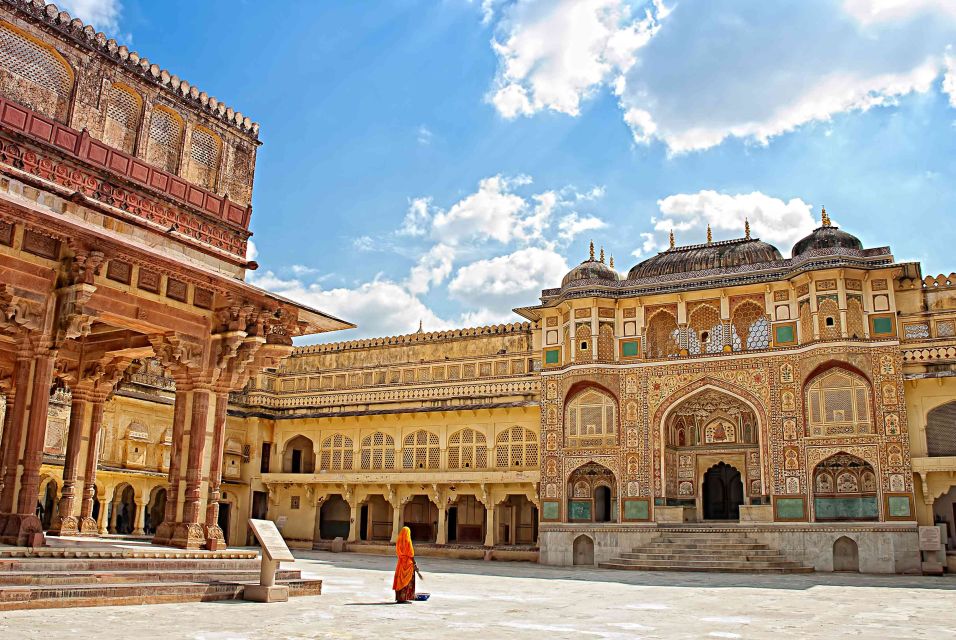
Jaipur sightseeing is the main event on day three. You’ll tour with your guide through the city’s most iconic royal and cultural sites.
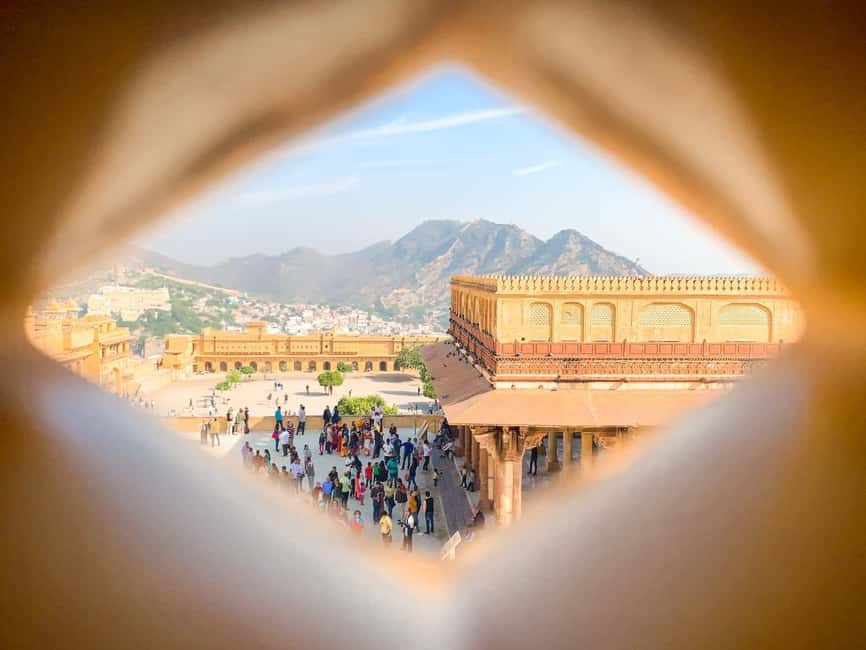
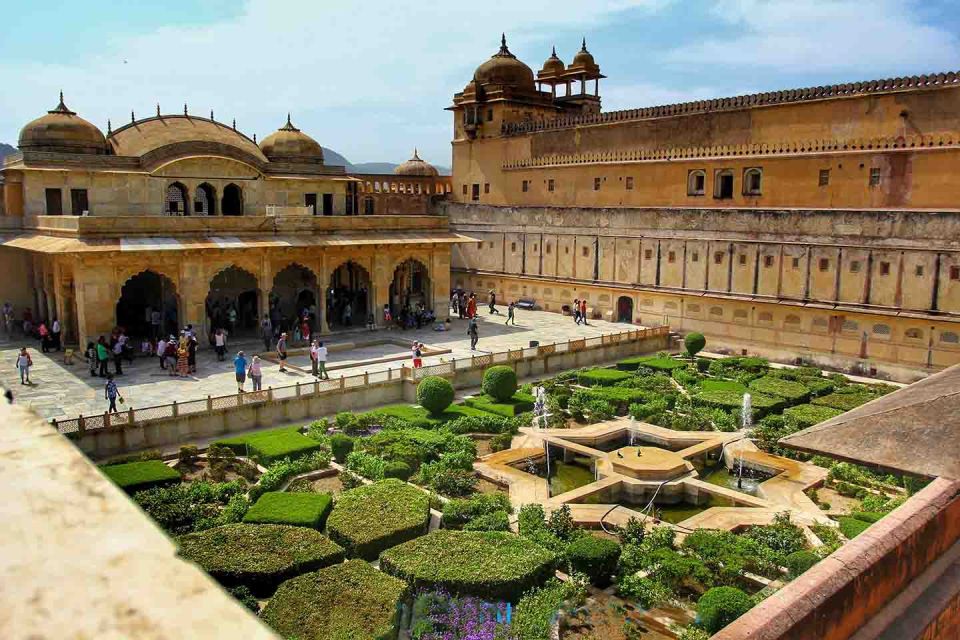
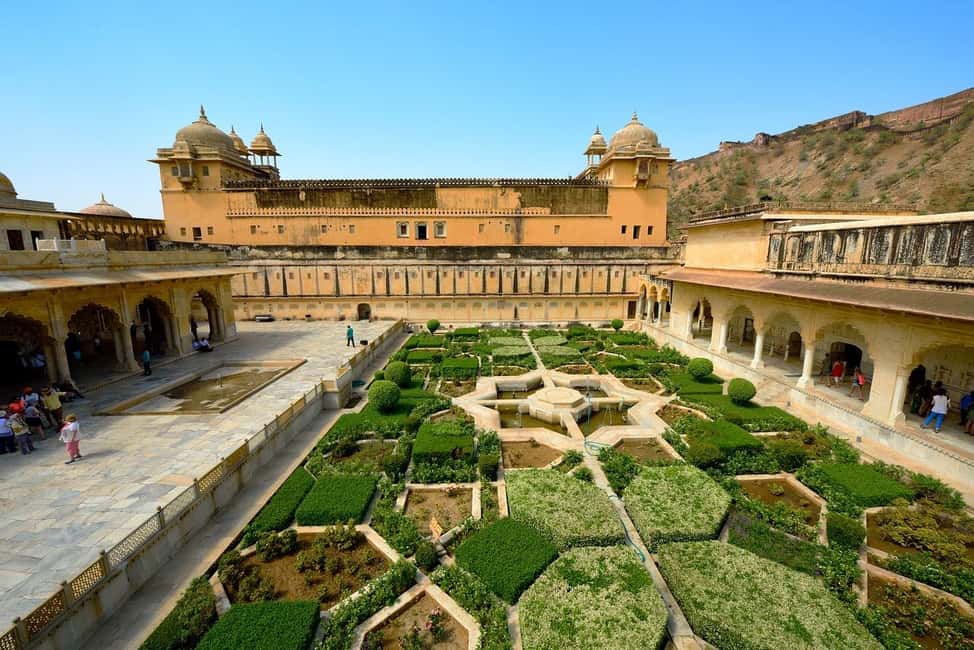
Start with Amber Fort, where the royal halls and sweeping views make the fort feel like it’s watching over the city. Amber is also a great place to understand how power and architecture connect—why forts weren’t only for defense, but also for display and ceremony.
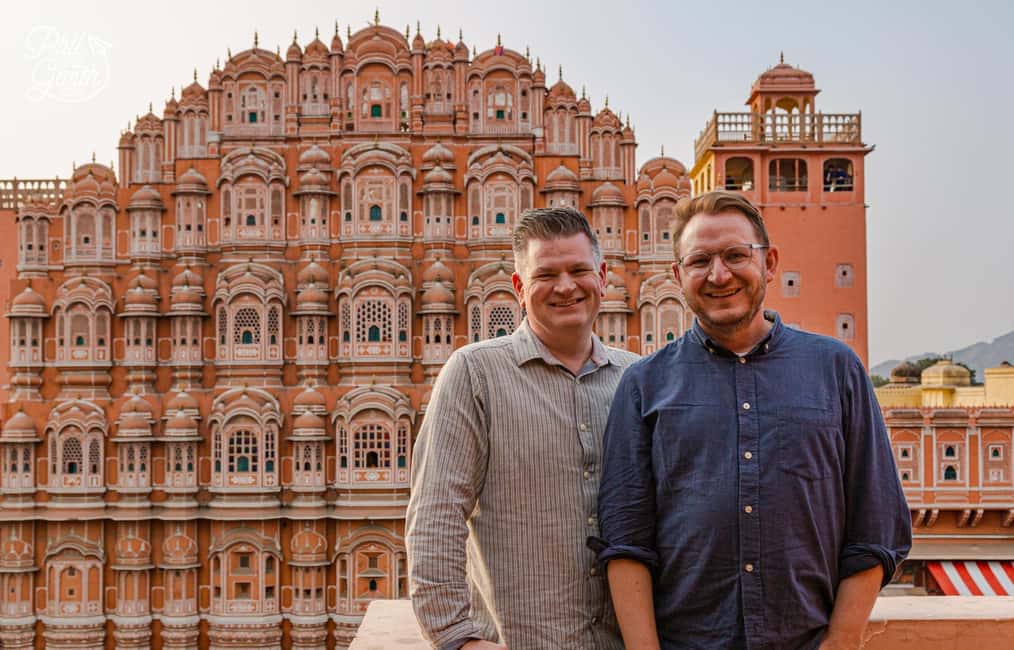
Then head to City Palace, a working seat of heritage that helps connect the royal story to present-day Jaipur identity. From there, you visit Hawa Mahal (Palace of Winds), the famous façade designed with many windows. It’s visually striking, and your guide can help you understand how such design served daily life and ventilation.
A slightly different flavor comes next: Jantar Mantar. It’s often described as a scientific wonder, and the point here is to see how observation and engineering shaped the way royals organized time and the sky.
Later, you drive back to Delhi for an overnight stay. This can feel like a lot, but it’s practical: it sets you up for a calmer, focused day four covering Old and New Delhi highlights.
You can also read our reviews of more tours and experiences in New Delhi






Day 4: Old Delhi icons plus New Delhi monuments (and smart closure swaps)
Day four is split between Old Delhi’s historic core and New Delhi’s major landmarks.
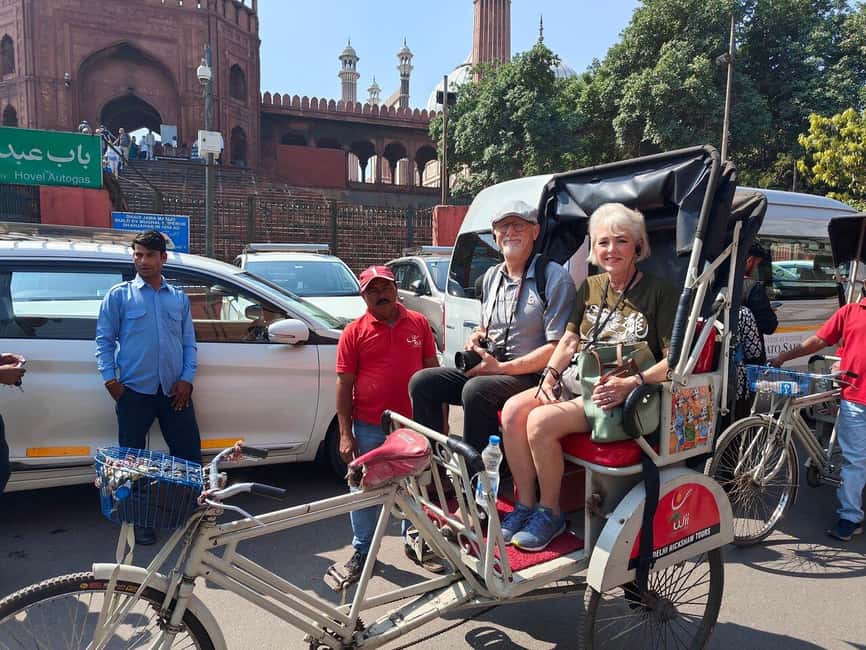
In Old Delhi, you’ll visit Jama Masjid and explore Chandni Chowk. There’s also an optional rickshaw ride through Chandni Chowk, which can be a fun way to experience the street scale and energy at street level. If you prefer a slower pace, you can choose not to do the ride and just walk with your guide.
You’ll also pass by the mighty Red Fort in the general route. In New Delhi, the tour includes India Gate and Rashtrapati Bhavan, plus Lotus Temple and then finishing with Qutub Minar or Humayun’s Tomb.
Two important timing notes:
- The Taj Mahal is closed on Fridays. If your tour lands on a Friday, the route is adjusted to Delhi → Jaipur → Agra → Delhi.
- On Mondays, Red Fort and Lotus Temple are closed, and the itinerary swaps to Gurudwara Bangla Sahib instead.
Those changes are the kind of details that keep the day from feeling broken, even when you hit a closed-door schedule.
Guide and driver impact: why Saif (and Ajay) matter
The difference between a good tour and a great one is often the guide. In the reviews tied to this experience, Saif is singled out for being polite, supportive, and deeply engaged, especially on Agra’s big monuments. One review highlights that Saif explained details about the Taj Mahal’s history and construction and also brought the Agra Fort story into focus in a way that felt engaging rather than dry.
The driver experience also gets praise. Ajay is mentioned as ready and available during the tour—exactly what you want in a private setup when your timing depends on both traffic and the flow of tickets, entry, and meeting points.
Even if your guide isn’t the exact same person, the takeaway is clear: this tour is designed around guided storytelling, not just transportation. A strong guide turns “I saw it” into “I get it.”
Price and value: what about $38 per person actually means
At about $38 per person for four days, this tour can be a standout value—if what’s included matches what you expect. You’re paying for a private car, live guided visits across three major cities, and hotel stays in 4-star or 5-star categories.
The value also depends on how you travel:
- If you’re going as a couple or small group, private transport plus guided entry can be cheaper than piecing together three separate days with separate ticket planning.
- If you’re traveling solo, the room arrangement matters a lot. Rooms are provided on single, double, or twin-sharing basis by default, and extra charges may apply if 2 or 3 guests want separate rooms. That’s one place where the advertised per-person price can diverge from your final cost.
Also, some monuments may not accept cards. Bring cash in INR for ticket purchases (your guide can help with ATMs, but having cash saves time).
Timing tips and practical details that you’ll feel on the ground
This tour works best if you’re prepared for a serious sightseeing rhythm. Here’s what will matter most for your comfort.
- Bring comfortable shoes. Forts and old streets mean lots of walking, uneven surfaces, and stairs.
- Carry your passport. It’s listed as required.
- Plan for cash. Cards won’t work everywhere.
- Pets aren’t allowed. If you’re traveling with animals, you’ll need another plan.
Seasonal and weekly closures affect the route, so your planning should be flexible:
- Friday Taj Mahal closure triggers the itinerary swap.
- Monday closure swaps Red Fort and Lotus Temple for Gurudwara Bangla Sahib.
There’s also a holiday note: a gala dinner surcharge applies on Christmas Eve, New Year’s Eve, and from Dec 24 to Jan 4. If you’re traveling in that window, it’s worth budgeting for it rather than assuming it’s included.
Who this tour suits best (and who might prefer a slower plan)
This tour is ideal for first-time visitors who want the Golden Triangle highlights without the stress of coordinating guides and transport. If you like structure—pickup, planned entry, guided explanations—this private setup is built for you.
It also fits travelers who want comfort. With private driver transport, hotel flexibility, and the option for multi-language guiding, it’s a good choice if you’d rather spend your energy on the sights than on logistics.
Where it may not fit perfectly: if you hate early starts, or if you want lots of free time in each city. Four days for three cities means you’ll be on the move. You’ll get depth at major stops, but you won’t have the slow “live in the neighborhood” feel.
Should you book this 4-Day private Golden Triangle tour from Delhi?
I’d book it if you want a clean, guided Golden Triangle with comfortable transport and a sunrise Taj Mahal moment. The best reason is simple: private guidance plus skip-the-line entry is the combo that saves you energy and helps the monuments land emotionally and historically.
I’d pause and check details first if you’re sensitive to schedule pressure or if your trip dates fall on a closure day (Friday Taj Mahal, Monday Red Fort/Lotus Temple). The itinerary swaps are planned, but it still helps to know your days might shift a bit.
If you’re the type of traveler who loves big landmarks but also wants explanations that make them click, this is a strong match. And if you value dependable, engaged guides like Saif and a responsive driver like Ajay, you’re booking a format that tends to deliver.
FAQ
What cities does the tour include?
This 4-day tour covers Delhi, Agra, and Jaipur.
Is hotel pickup available from Delhi Airport?
Yes. For airport arrivals, your driver meets you at Delhi Airport Terminal 3, Exit Gate 4, with a placard showing your name. You can also be picked up from hotels in Delhi, Gurugram, Noida, Greater Noida, and nearby areas.
Will I be able to skip the lines at major attractions?
Yes. The tour includes skip-the-line access through a separate entrance.
Does the itinerary change if my tour is on a Friday?
Yes. The Taj Mahal is closed on Fridays. If your tour falls on a Friday, the itinerary changes to Delhi → Jaipur → Agra → Delhi.
What happens if my tour includes a Monday?
On Mondays, the Red Fort and Lotus Temple are closed. The tour swaps to Gurudwara Bangla Sahib instead.
What are the main sights in Agra?
You visit the Taj Mahal (sunrise), Agra Fort (UNESCO), and Baby Taj (Itimad-ud-Daulah).
What are the key stops in Jaipur?
You’ll explore Amber Fort, City Palace, Hawa Mahal, and Jantar Mantar.
How does the vehicle work for different group sizes?
For 1–2 guests, it’s a 3-seater sedan (Toyota Etios or similar). For 3–5 guests, it’s a 6-seater wagon (Toyota Innova or similar). For 6–10 guests, it’s a 10-seater van (Tempo Traveler).
Do I need cash for tickets?
Some monuments may not accept cards, so it’s a good idea to carry cash in INR for ticket purchases.