REVIEW · NEW DELHI
From Delhi: 6-Day Golden Triangle Tour with Udaipur-4 Cities
Book on GetYourGuide →Operated by Remarkable Tour · Bookable on GetYourGuide
Sunrise at the Taj changes everything, and this route strings it together with private transfers and city-by-city live guides. I like how the plan moves smartly through the big sights: Qutub Minar and India Gate in Delhi, the Agra Fort after the Taj, then Amber Fort and Jaipur palaces before you settle in Udaipur. One possible drawback: guide languages can be inconsistent, and at least one German booking found out only one day before that German-speaking guidance was unavailable.
You also get real breathing room in the middle, especially on Day 4 in Udaipur where the rest of the day is free. And I appreciate the practical extras like skip-the-ticket-line timing and hotel stays built into the package.
In This Review
- Key things to plan around
- Why this Delhi to Udaipur route works
- Day 1 in Delhi: Qutub Minar, Lotus Temple, India Gate, and Parliament-area landmarks
- Agra arrival and hotel time: how Day 1 sets up a smoother sunrise
- Day 2 sunrise Taj Mahal plus Agra Fort: two hours of wonder, then history in a tighter frame
- Day 3 Jaipur highlights: Amber Fort, Jal Mahal quick glimpse, and City Palace
- Jaipur’s Jantar Mantar and Hawa Mahal: why these aren’t filler stops
- Day 4: the Udaipur transfer and your free day to reset
- Day 5 in Udaipur: City Palace, Jagdish Temple, Sahelion ki Bari, and time on the water
- Day 6: private return to Delhi (or a drop anywhere inside Udaipur)
- Price and value: what $318 buys you, and where you might spend extra
- Guide language and guide quality: what to check before you go
- Who should book this tour, and who should pass
- Should you book this 6-Day Golden Triangle with Udaipur?
- FAQ
- What cities are included on this 6-day tour?
- Is the Taj Mahal visit included at sunrise?
- What major sights are included in Delhi on Day 1?
- What are the main stops in Jaipur on Day 3?
- What Udaipur sights are included on Day 5?
- What’s included in the package besides the guides?
- Are there any day-of-week closures you should know about?
- Is the tour suitable for wheelchair users?
Key things to plan around
- Sunrise Taj Mahal timing means an early start, and Taj Mahal is closed on Fridays
- Private pickup and drop across Delhi, Noida, Gurugram, Faridabad, and Ghaziabad reduces stress
- Amber Fort + palaces in one Jaipur day is packed, with quick stops like Jal Mahal
- Udaipur is the slower beat with a free day plus a guide-led Day 5
- Language matching isn’t guaranteed even if multiple languages are listed
- Expect some standing time at forts and palaces, so comfortable shoes matter
Why this Delhi to Udaipur route works

This tour is built for people who want the headline sights of the Golden Triangle, but without doing the logistics puzzle themselves. You start in Delhi, hit Agra and Jaipur, then finish in Udaipur—so the story moves from empire power to love-and-legacy symbolism, and finally into calmer lake-city life.
What I like most is the rhythm. You’re not stuck repeating the same kind of sightseeing every day. Delhi feels like a mix of old monument scale and modern government formality. Agra is pure iconic monument intensity. Jaipur gives you forts, court life, and royal planning. Udaipur brings in temples, gardens, and lakes—plus time where you can just wander.
The other practical win: the whole thing is handled as a private group with a live guide and private transfers. That matters in India, where traffic and navigation can turn a “simple plan” into a lost day. Here, you’re moving with a driver, then meeting guides where it counts.
You can also read our reviews of more tours and experiences in New Delhi



Day 1 in Delhi: Qutub Minar, Lotus Temple, India Gate, and Parliament-area landmarks

Day 1 starts with pickup from your hotel, airport, railway station, or accommodation in Delhi, Noida, or Gurugram (and you can also arrange from Noida/Faridabad/Ghaziabad). Then the tour turns into a guided city circuit through both the old and new parts of Delhi.
You’ll visit Qutub Minar, a UNESCO World Heritage Site, which is one of those places you can’t really fake with photos. It helps set the tone early: stone, scale, and time.
Next is the Lotus Temple (Baha’i Lotus Temple). Small heads-up: the Lotus Temple is closed on Mondays, so if your trip lands on a Monday, your schedule will need to account for that.
From there you shift to the big government-and-memory landmarks: India Gate and Parliament House, plus the President’s Palace area. Even if you don’t care about politics, seeing these spots in person helps you understand how modern Delhi’s identity sits beside the older sites.
Then comes the part that makes this tour efficient: a roughly 4-hour drive to Agra. By the time you arrive, you check in, relax, and keep the evening simple.
What to watch for: this is an active day. You’ll do multiple stops plus a long transfer. If you arrive in India already tired, try to keep your Day 1 energy low-key—save serious shopping and extra detours for later.
Agra arrival and hotel time: how Day 1 sets up a smoother sunrise
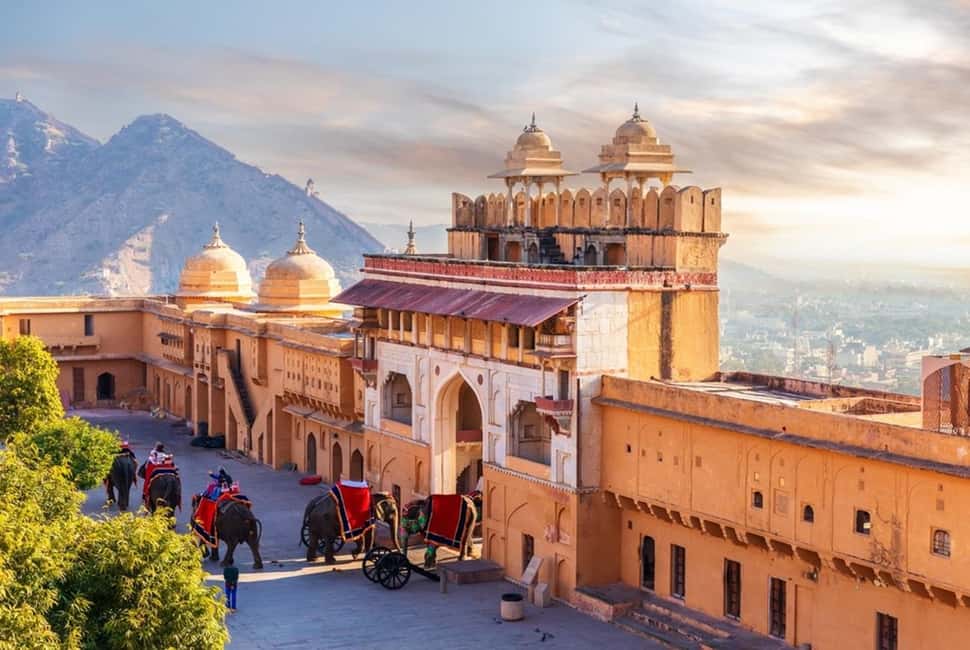
Agra after a day in Delhi can feel like “just sleep and wake up,” and that’s honestly the right mindset. You’ll get hotel check-in, then the evening is yours. This matters because tomorrow is the sunrise Taj schedule.
From a value perspective, the package includes your hotel accommodations, so you’re not piecing together stays across cities. That removes one of the biggest sources of stress on multi-day tours.
Also, the overnight in Agra is what makes sunrise possible. If you were doing this as a DIY day trip, you’d likely lose sleep or pay for a complicated early hotel situation. Here, the tour is structured so you can rest and still be on time.
Day 2 sunrise Taj Mahal plus Agra Fort: two hours of wonder, then history in a tighter frame
Day 2 is early for a reason. You head out before sunrise to see the Taj Mahal at sunrise, then you spend about two hours there. That time block is a smart compromise: long enough to enjoy the monument in changing light, and long enough to take photos without feeling like you’re being herded through.
After the Taj, you return for breakfast at the hotel, then checkout and visit Agra Fort for around one hour.
Agra Fort is different from the Taj in mood. The Taj is cinematic. The fort is more grounded—ramparts, architecture, and a strong sense of how power operated day to day. With only an hour, don’t expect to read every stone like a textbook. Instead, use that hour to get oriented and notice how the fort and the river setting work together.
Then you drive to Jaipur—about 5 hours—and check into your hotel for the evening.
Possible drawback to keep in mind: sunrise days are tiring, and the tour then stacks another city transfer right after. If you dislike early mornings, this might not be the easiest way to see the Taj.
Day 3 Jaipur highlights: Amber Fort, Jal Mahal quick glimpse, and City Palace
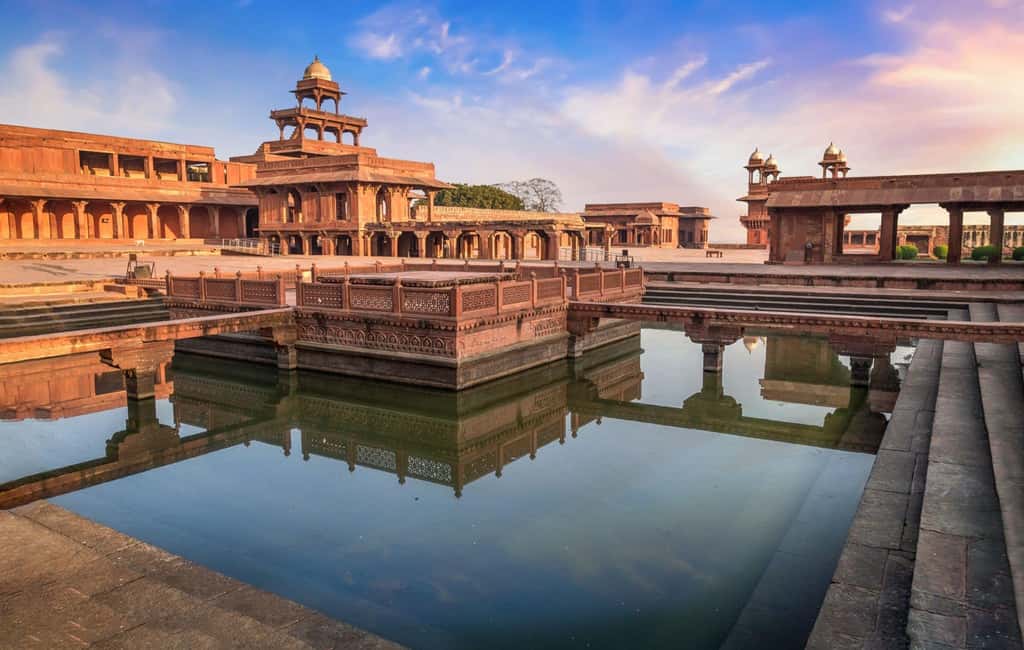
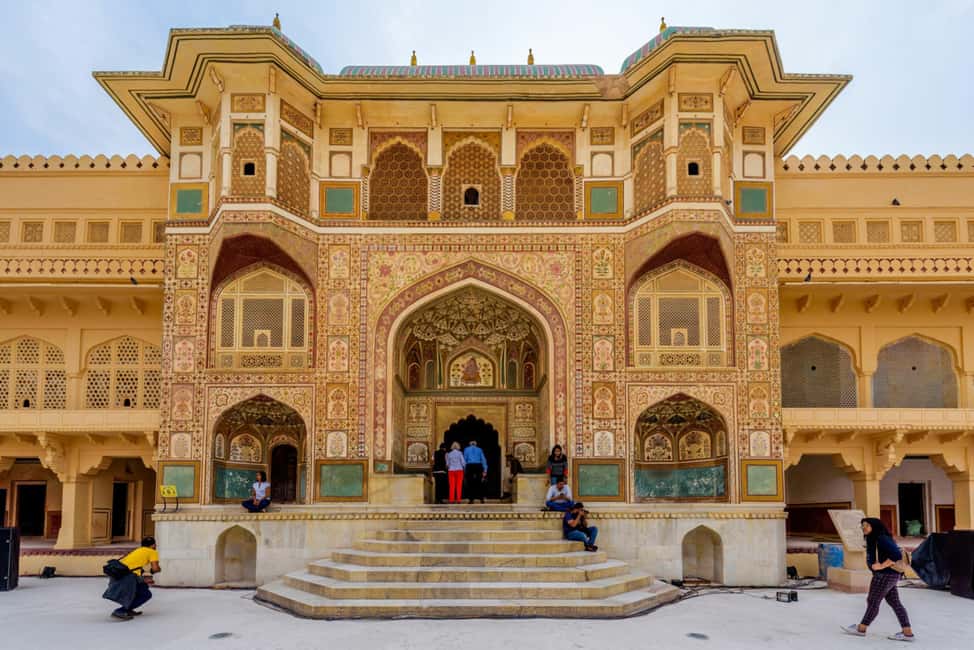
Jaipur is the day that feels like three mini-trips inside one. After breakfast, you start with an Amber Fort guided visit lasting about two hours. This is the heart of Jaipur fort sightseeing. You’ll walk, you’ll look up, and you’ll see why Amber has that “every angle matters” feel.
Then there’s Jal Mahal, the palace sitting in the Man Sagar Lake. Your time here is short—about 15 minutes—so think of it as a photo-and-sight stop more than a deep exploration.
In the afternoon, you go to Maharaja’s City Palace, which is where Jaipur switches from military architecture to court life. City Palace is also the bridge toward the rest of Jaipur’s planned, instrument-minded royal culture.
After that comes Jantar Mantar, a collection of 19 architectural astronomical instruments. This is one of those stops that surprises people because it’s not just pretty—it’s functional. You get to see how science and royal pride could live together in stone.
Then you’ll be driven past Hawa Mahal, the famous façade built so royal women could watch the street while staying hidden. Because it’s a drive-past, treat it like a visual setup for later curiosity, not a slow inside visit.
Finally, you’re dropped back at your hotel.
What you’ll appreciate: the Jaipur plan is organized to cover a lot of “why Jaipur looks like Jaipur.” Fort, palace, and science are all represented, and you’re not left searching for the next stop on your own.





Jaipur’s Jantar Mantar and Hawa Mahal: why these aren’t filler stops
Some tours rush past the “less famous” sites. This one doesn’t. Jantar Mantar gets the attention it deserves, and it changes how you interpret the rest of the day. If you’ve ever wondered why royal places in India often feel both theatrical and practical, Jantar Mantar gives you a real clue.
And Hawa Mahal, even if you just see it from the road, still does its job. It’s built to be seen—long façade lines, repetition, and a look that makes sense only when you remember the purpose: privacy with a view.
Practical tip: you’ll do a lot of walking in places like Amber Fort and City Palace, so keep water close. The tour notes recommend a hat and sunscreen for a reason: Jaipur can feel intense under the sun.
Day 4: the Udaipur transfer and your free day to reset

Day 4 is a breather. After breakfast, you transfer to Udaipur and check in. Then the rest of the day is leisure time.
That free day is not a small detail. It’s what helps Udaipur feel like more than just another stamp in your passport. You can adjust to travel fatigue. You can explore lakeside lanes. You can simply sit and watch life move around the water.
If you’re the type who likes to plan lightly—good. If you like a packed schedule, you can still use the time for optional add-ons, but the point here is choice.
What to keep in mind: you’ll have a guide-led day next (Day 5), so try to save “guided musts” for tomorrow and use today for wandering.
Day 5 in Udaipur: City Palace, Jagdish Temple, Sahelion ki Bari, and time on the water
Day 5 is your main Udaipur day with a guide after breakfast. You’ll start with City Palace, a palace complex that includes Chandra Mahal and Mubarak Mahal. Then you’ll visit Amar Vilas, the highest point in the palace complex, known for hanging gardens, fountains, towers, and terraces.
This is the kind of place where a guide helps a lot. Even if you don’t want a lecture, you’ll understand what you’re looking at—because the palace isn’t one single building. It’s a collection of spaces shaped by royal needs.
After City Palace, you go to Jagdish Temple, then Sahelion ki Bari garden—plus Fatehsagar Lake and Bhagore ki Haveli.
And this tour also includes time for a boat ride on Lake Pichola. That part is a good match for Udaipur’s mood: after forts and palaces, the water gives you a different pace and a different angle for photos.
What I like about this mix: it’s not only monuments. It includes garden calm and lake views. That means you end the day with more than architecture in your head—you end with atmosphere.
Day 6: private return to Delhi (or a drop anywhere inside Udaipur)

Day 6 starts with pickup and transfer from Udaipur back to Delhi. You’ll be dropped at any desired location in Delhi, Noida, or Gurugram.
There’s also a useful flexibility note: if you decide not to return to Delhi, you can be dropped anywhere within Udaipur. That’s handy if you’re continuing on to Rajasthan beyond this route or just want extra time in the lake city.
From a planning standpoint, that optional drop can save hassle at the end of a trip, when everyone’s energy is running low.
Price and value: what $318 buys you, and where you might spend extra
At $318 per person for a 6-day private, guided route, the value mostly comes from three things you’d otherwise pay for separately:
- Private transfers between cities (Delhi → Agra → Jaipur → Udaipur → Delhi)
- Hotel accommodations across multiple nights
- Guides plus skip-the-ticket-line style access
On top of that, you get a private group setup, which usually means fewer compromises than a shared group itinerary. In a country where timing can get messy, having your own driver and guide can be the difference between seeing the key sites and spending your day stuck in uncertainty.
Where you might spend extra is not listed in the details you provided, so I won’t pretend it’s all-inclusive for meals or personal shopping. Also note a practical reality: one booking described pressure around visiting branded stores and being pushed to buy. If you dislike that kind of stop, you’ll want to communicate your preferences early and politely hold your line.
Guide language and guide quality: what to check before you go
The tour lists live guides in English, Spanish, German, French, and Russian. That’s great—on paper.
But there’s also a caution from real experience: one German booking said there were no German-speaking guides available, and they only learned one day before the start. So if your comfort depends on a specific language, confirm directly after booking, not at the last minute.
The good news is that many guides and drivers in the experiences shared had strong reputations. Names that came up include drivers like Tinku Singh, Vikram, Arun, and Babban, and guides like Ashish (Delhi), Mischa (Jaipur), Ruhul (Delhi), Anshu (Agra), Irfan (Jaipur), and Hemendra (Udaipur). Seeing a consistent pattern of capable on-the-ground people is one of the best reasons to pick a structured tour like this.
Who should book this tour, and who should pass
This is a good fit if you want:
- the Golden Triangle big hitters without juggling buses and timers
- a private-group pace with a driver who handles traffic
- sunrise Taj Mahal as a priority
- Udaipur added for gardens, temples, and lake views, not just more forts
This may be a poor fit if:
- you hate early mornings (sunrise Taj is the centerpiece)
- you rely on a specific guide language and can’t risk variation
- you want a slow travel style with lots of unplanned downtime all week
One more caution: the accessibility info is contradictory. It lists wheelchair accessibility, but also says the tour is not suitable for people with mobility impairments and wheelchair users. If that applies to you, confirm with the operator before booking and ask exactly how navigation and visits will be handled.
Should you book this 6-Day Golden Triangle with Udaipur?
I’d book it if you’re set on the key sights—sunrise Taj Mahal, Amber Fort, Jaipur palaces and science sites, and a guided Udaipur day—and you want the convenience of private transfers and hotel stays.
I’d hesitate if language comfort is essential and you don’t want any risk at all, or if you’re very sensitive to early starts and long drives. In that case, you’d be better off checking date availability around closures and confirming language support in advance.
If you book, go in with the right expectations: this is a full circuit. You’ll see a lot. Wear shoes you can trust. Carry water. And treat the Udaipur free day as your chance to slow down and absorb a different side of India—because that’s when this route starts to feel like more than a list of monuments.
FAQ
What cities are included on this 6-day tour?
The tour covers Delhi, Agra, Jaipur, and Udaipur. You start in Delhi and finish with a transfer back to Delhi, with the option to be dropped anywhere within Udaipur instead.
Is the Taj Mahal visit included at sunrise?
Yes. Day 2 includes a sunrise visit to the Taj Mahal, with about two hours to enjoy it.
What major sights are included in Delhi on Day 1?
Delhi highlights include Qutub Minar, the Baha’i Lotus Temple, India Gate, and the Parliament House, plus the President’s Palace area.
What are the main stops in Jaipur on Day 3?
Day 3 focuses on Amber Fort (guided), Jal Mahal (about 15 minutes), Maharaja’s City Palace, Jantar Mantar, and a drive past Hawa Mahal.
What Udaipur sights are included on Day 5?
Udaipur Day 5 includes City Palace (with Chandra Mahal and Mubarak Mahal), Amar Vilas, Jagdish Temple, Sahelion ki Bari, Fatehsagar Lake, Bhagore ki Haveli, and a boat ride on Lake Pichola.
What’s included in the package besides the guides?
Hotel accommodations and private transfers are included, and the tour also notes skip-the-ticket-line.
Are there any day-of-week closures you should know about?
Taj Mahal is closed on Fridays, and the Lotus Temple in Delhi is closed on Mondays.
Is the tour suitable for wheelchair users?
The information provided lists wheelchair accessibility, but it also states the tour is not suitable for people with mobility impairments and wheelchair users. You should confirm details with the operator before booking.