REVIEW · NEW DELHI
From Delhi: Day-Trip to Jaipur with Hotel Pickup
Book on GetYourGuide →Operated by ITS Holidays · Bookable on GetYourGuide
You can see Jaipur before most people wake up. This day trip is built around a fast start with early hotel pickup and a guided route that keeps you moving, not wandering. Expect a full 8–14 hours with stops that hit the big sights and a few smart photo moments along the way.
I especially like the private local guide focus, since the information is tied to what you’re seeing, not generic facts. And you’ll love the logistics: hotel pickup and drop-off (including an airport option) plus an air-conditioned vehicle means you avoid the hassle of hiring a driver for the whole day.
One thing to consider: some versions of this setup can include short stops that feel shopping-driven, and lunch is not included. If you hate being nudged toward purchases or extra payments, go in with a plan to politely say no.
In This Review
- Key points that make this day trip worth it
- A 5:00 am Jaipur day trip that saves your energy
- Amber Fort and Jaigarh: the morning stop that anchors everything
- Jal Mahal photo stop and City Palace: the afternoon flow
- Jal Mahal: quick photos from the right angle
- City Palace: where the Mughal and Rajput stories overlap
- Albert Hall Museum and Ram Niwas Gardens: easy add-ons
- Jantar Mantar and Hawa Mahal: two different kinds of wonder
- Jantar Mantar: the astronomical instruments you can actually see
- Hawa Mahal: the Palace of Winds
- Driving through Jaipur: the pink city effect (without the stress)
- Price and value: is $30 actually a good deal?
- The shopping and extra-cost reality check
- What to bring (and what can derail your day)
- Who this day trip is for (and who should skip it)
- Should you book this Delhi-to-Jaipur tour?
- FAQ
- What time is the pickup in Delhi?
- How long is the Delhi to Jaipur day trip?
- Where can I be picked up and dropped off?
- Which sights are included in the itinerary?
- Is lunch included?
- Are entry fees included?
- Do I get a guide, and what languages are available?
- Is the group size small?
- Is this tour wheelchair accessible?
- What do I need to bring, and what should I avoid?
Key points that make this day trip worth it
- 5:00 am start from Delhi keeps the day efficient and sightseeing-focused
- Small group (max 10) helps you move through sites without feeling lost
- Skip the ticket line where listed, which saves time at busy moments
- Top Jaipur landmarks in one run: Amber Fort, City Palace, Jantar Mantar, Hawa Mahal
- Languages available: English, German, Spanish, French, Russian
A 5:00 am Jaipur day trip that saves your energy
This tour is a classic “early start, big payoff” setup. Pickup is set for 5:00 am from Delhi, and you’ll transfer by air-conditioned vehicle to Jaipur. The duration is listed as 8–14 hours, so factor in long-distance driving and the fact that each stop has its own pace.
Where it feels practical is in the door-to-door nature. You can be picked up from your Delhi-area accommodation (or Delhi airport), and the day ends with drop-off in Delhi, Jaipur, or at Jaipur International Airport depending on your option. That means you’re not stuck solving transport at both ends of the trip.
One more thing: you’ll have a midway break for refreshments (washroom, etc.). It’s not “free time” in the wander-around sense, but it helps you manage a long day without getting cranky.
You can also read our reviews of more tours and experiences in New Delhi.


Amber Fort and Jaigarh: the morning stop that anchors everything

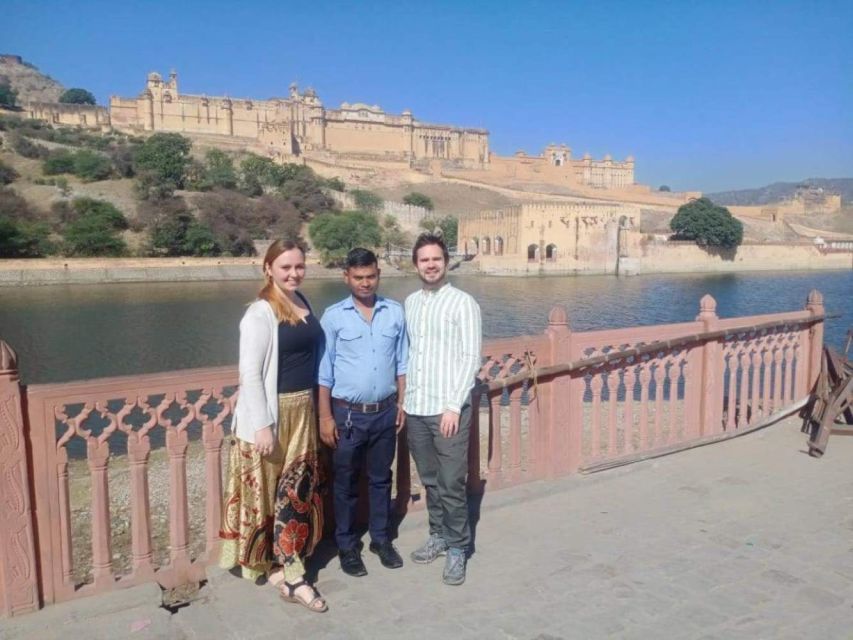
Amber Fort is the reason most people want Jaipur in the first place. You’ll start with a guided visit to Amber Fort, positioned on a hill about 11 km from Jaipur among the Aravalli Hills. On a good morning light, it’s easy to see why rulers picked this kind of location—strong views, strong defensibility.
The guided context matters here. Amber Fort was built in 1600 by Raja Man Singh, who served as commander-in-chief of the Mughal army during Akbar’s reign. That connection helps you understand the fort not only as a monument, but as part of the Mughal-era power story.
You’ll also hear the Independence-era twist: the fort was long speculated to be a likely hiding place of the Kuchwahas’ famous lost treasure. It’s the kind of detail that turns a stone-and-stair visit into a conversation with the place.
Practical note: you’ll want comfortable shoes. Even when the tour is “guided,” the fort is still a fort—there’s walking, steps, and lots of angles for photos.
Jal Mahal photo stop and City Palace: the afternoon flow
After Amber Fort, the schedule shifts into a rhythm: quick photography moments, then more structured sightseeing.
Jal Mahal: quick photos from the right angle
You’ll stop at Jal Mahal for a few minutes of photography. This is one of those places where even a short stop can be worth it, because the fort-palace look sits out in the water. Don’t plan on a long visit here—this is a “grab the views and keep moving” stop.
City Palace: where the Mughal and Rajput stories overlap
Next comes City Palace of Jaipur, a complex that blends Rajasthani and Mughal architecture. It’s not one single building; it’s a palace system with courtyards, gateways, and temples.
The big names to look for during your guided walk:
- Sawai Jai Singh’s Chandra Mahal (the Moon Palace), described as a seven-story facade
- Mubarak Mahal made of solid marble
- Diwan-e-Aam and Diwan-e-Khas (halls associated with public and private audiences)
- Chandra Mahal is still tied to the present royal family’s residence
This stop is a good example of why a local guide helps. Without the context, you might admire doors and courtyards and then move on. With the context, you start noticing how the spaces were designed for power, access, and ceremony.
Also, the tour drives past Hawa Mahal areas and through Jaipur’s pink residential/business zones, which gives you a sense of what you’ll see later. It’s like a warm-up act for the architecture section of the day.



Albert Hall Museum and Ram Niwas Gardens: easy add-ons
The route also includes time for Albert Hall Museum and Ram Niwas Gardens in the afternoon flow. Even if you’re not the “I must read every plaque” type, these stops help break up the intensity of forts and palaces and give you a breather.
Jantar Mantar and Hawa Mahal: two different kinds of wonder
After lunch is not included, so you’ll likely be timing your energy around what the day schedule gives you. The good part is that the middle-to-late section of the tour has two standout monuments with very different personalities.
Jantar Mantar: the astronomical instruments you can actually see
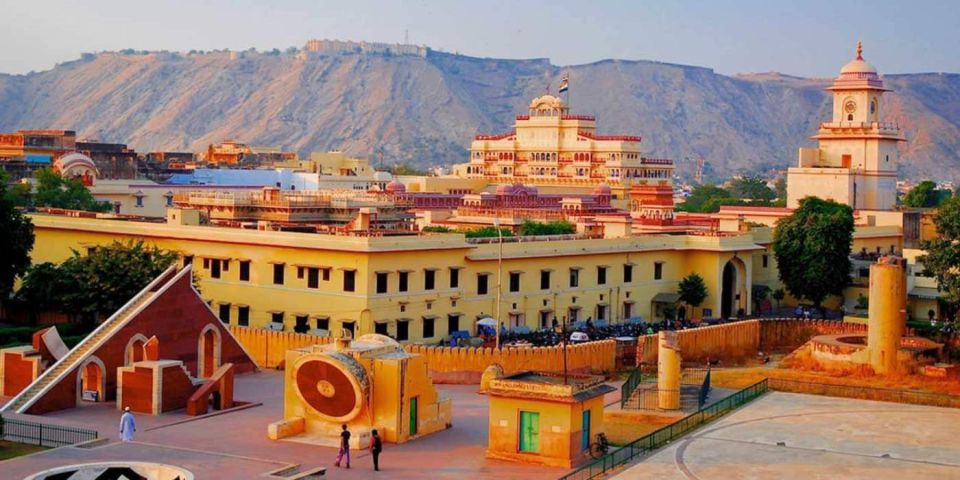
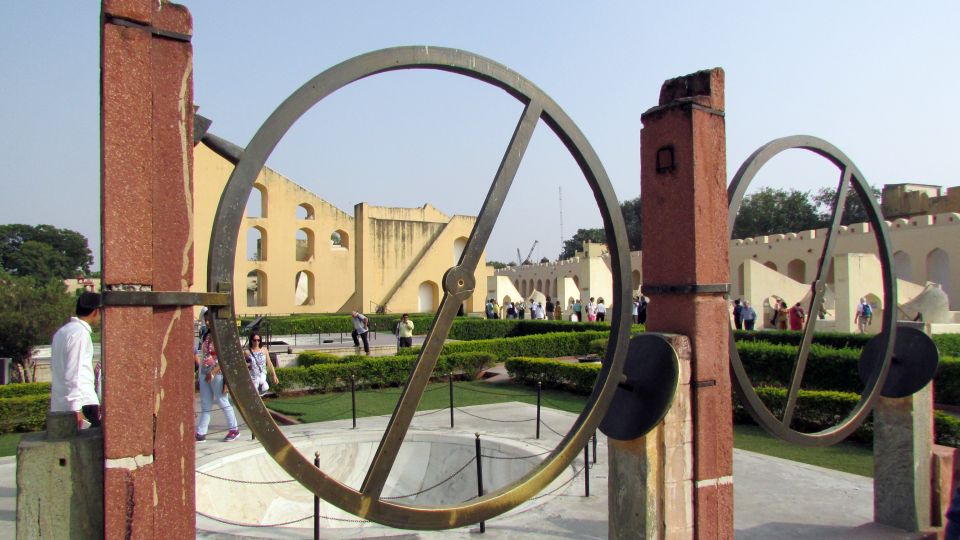
Jantar Mantar is a collection of nineteen architectural astronomical instruments, built by Rajput king Sawai Jai Singh II and completed in 1734. It’s a UNESCO World Heritage site.
The highlight is the world’s largest stone sundial, which gives you a visual way to understand how people measured time and the sky long before modern equipment. The big win here is that it feels less like “museum time” and more like “science you can walk around.”
It’s located near City Palace and Hawa Mahal, so it works well inside a day-trip structure.
Hawa Mahal: the Palace of Winds
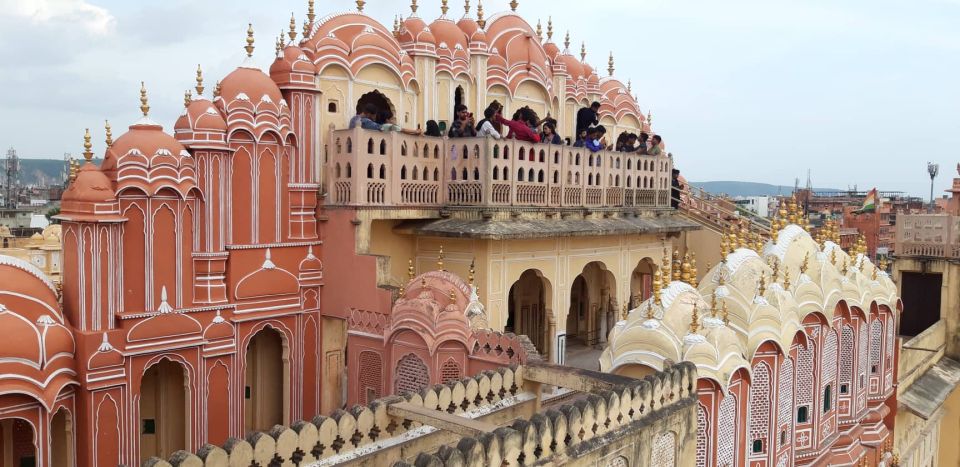
Then comes Hawa Mahal, built in 1799 by Maharaja Sawai Pratap Singh. It’s made of red and pink sandstone and sits along the edge of City Palace. The structure extends toward the zenana, the women’s chambers.
This is one of those buildings where photos can look impressive, but what hits differently in person is the sheer patterning—the grid-like windows that define its look. Even if you’re not a photography person, you’ll feel how deliberate the design is.
You’ll have a photo stop and guided time, so you get both the quick visuals and the story behind them.
Driving through Jaipur: the pink city effect (without the stress)
One of the benefits of this tour is that you get to experience Jaipur’s “outside” as well as its monuments. The route includes driving past Hawa Mahal and through Jaipur’s pink rose residential/business areas. That’s useful because it helps you connect the grand architecture to the neighborhood reality of the city.
And because everything is arranged, you’re not stuck deciding which order to do things in. In a place like this, order can make or break your day—especially when you’re doing it from another city with a long drive.
If you’re sensitive to time pressure, the tour’s structured pacing is a real plus. Just keep expectations realistic: it’s a day trip, so you won’t get slow, lingering “all-day” freedom at every stop.
Price and value: is $30 actually a good deal?
The listed price is $30 per person, and that’s where you should pay attention to what your specific option includes.
Included items in the package:
- Air-conditioned vehicle
- Private transportation
- Hotel pickup and drop-off
- Local guide
- Bottled water
- Entry fees (if the all-inclusive private tour option is selected)
Not included:
- Lunch
For value, I’d frame it like this: you’re paying for transport out of Delhi, guided time through major sites, and the “don’t figure it out yourself” convenience. If you’re traveling with limited time, that’s often worth it.
The one financial variable is entry fees. Since entry fees are only included in an all-inclusive private tour option, you should check what version you’re buying. If entry fees are not included, your final spend may be higher than the headline price.
Also, remember lunch isn’t included. Plan for it rather than assuming there will be a simple, included meal.
The shopping and extra-cost reality check
Here’s the part you should consider before you book: the day can include stops that feel tied to selling things. In some cases, that can mean extra time in shops or pressure to buy items like scarves, stones, or souvenirs, and it can come with reminders about gratuities.
And yes—there’s also the simple cost factor. Lunch is not included, and you should expect that any refreshments you buy on your own may cost more than usual. Even if bottled water is provided, you may still be tempted to purchase more later in the day.
My practical advice:
- If shopping stops happen, treat them as optional. Walk through fast, don’t engage in long bargaining, and move back to your group.
- Keep small cash for genuine needs, but don’t feel obligated to buy anything just because someone is talking at you.
- If gratuity expectations aren’t clearly baked into the plan, ask your guide how things work at the start—then you decide what feels fair.
A good guide can still be friendly and helpful while working inside a system that has sales moments. You just want to control how much of your day those moments take.
What to bring (and what can derail your day)
For a smooth day, pack for walking and sun. You’re told to bring:
- Passport or ID card
- Comfortable shoes
- Towel
- Comfortable clothes
That ID detail is not optional. The tour says to carry a valid ID proof during the tour.
Also, note what isn’t allowed:
- Drones
- Alcohol and drugs
- Chewing gum
I’d also plan for the early start. If you’re traveling with jet lag or poor sleep, consider eating a real breakfast before pickup.
Who this day trip is for (and who should skip it)
This experience fits best if you:
- want the major Jaipur sights in one day from Delhi
- prefer a live local guide instead of self-planning
- like small-group pacing (max 10 participants)
It’s listed as not suitable for:
- pregnant women
- people under 3 ft 9 in (120 cm)
- people with altitude sickness
And it’s wheelchair accessible, which is useful for many travelers with mobility needs—though you’ll still be dealing with walking inside historic sites and may want to ask in advance about specific paths.
Should you book this Delhi-to-Jaipur tour?
If your priority is a structured, low-stress day—Amber Fort, City Palace, Jantar Mantar, and Hawa Mahal, all handled for you—this is a strong option. The best value comes from the convenience: hotel pickup/drop-off, air-conditioned private transport, and a guide to connect the stories to the sites.
I’d book it if you’re okay with:
- a very early start
- a packed itinerary
- the possibility of short sales-oriented moments
I’d think twice if you’re the type who hates shopping pressure or you want long, unstructured time at fewer places. In that case, consider building your own plan with more freedom (or choose a version that clearly limits sales stops, if you have that option).
FAQ
What time is the pickup in Delhi?
Pickup is scheduled to start at 5:00 am from Delhi.
How long is the Delhi to Jaipur day trip?
The duration is listed as 8 to 14 hours.
Where can I be picked up and dropped off?
Pickup options include Jaipur, New Delhi, or Jaipur International Airport, and drop-off options include New Delhi, Jaipur International Airport, or Jaipur. Hotel pickup is also mentioned for Delhi-area accommodations.
Which sights are included in the itinerary?
The tour includes Amber Fort, City Palace, a Jal Mahal photo stop, Hawa Mahal, Jantar Mantar, and it also mentions Albert Hall Museum and Ram Niwas Gardens in the afternoon.
Is lunch included?
No. Lunch is not included.
Are entry fees included?
Entry fees are included only if you select the all-inclusive private tour option. Otherwise, you may need to pay separately.
Do I get a guide, and what languages are available?
Yes, there is a live tour guide. Available languages are English, German, Spanish, French, and Russian.
Is the group size small?
Yes. The group is limited to 10 participants.
Is this tour wheelchair accessible?
Yes, it’s listed as wheelchair accessible.
What do I need to bring, and what should I avoid?
Bring passport or ID card, comfortable shoes, a towel, and comfortable clothes. Avoid drones, alcohol/drugs, and chewing gum.