REVIEW · NEW DELHI
From Delhi: Sunrise Taj Mahal & Agra Private Day Trip By Car
Book on GetYourGuide →Operated by Fame India Tours · Bookable on GetYourGuide
Waking up at 2 a.m. pays off fast. This private sunrise Taj Mahal trip is built around first light in Agra, so you get the monument when it’s most photogenic and most calm. I also like that you’re not stuck figuring anything out because you ride in a private AC car with an English-speaking chauffeur and a guide who explains what you’re actually seeing.
Two things I especially like: you get real time for Taj Mahal photography during the first-light window, and your guide shares context about the Mughal Empire and what the city meant to Shah Jahan and his legacy. The main drawback is the early start and long day (about 12 hours), so if you hate waking up before dawn, you’ll feel it.
In This Review
- Key highlights worth getting excited about
- The 2 to 3 a.m. pickup that starts the day right
- Crossing the express-security setup and meeting your guide
- Seeing the Taj Mahal in first light: photos and meaning
- Breakfast after Taj: a real reset before the forts
- Agra Fort’s palace power: what you’ll see and why it matters
- A meeting with Taj Mahal workers’ descendants
- Etimad Ud Daulah (Baby Taj): smaller scale, strong impact
- Mehtab Bagh: seeing the Taj from across the river
- Getting back to Delhi: long day, smooth finish
- Price and value for a 12-hour private day trip
- Who this trip is best for (and who should rethink it)
- Should you book this sunrise Taj Mahal trip?
- FAQ
- FAQ
- What time do you get picked up from Delhi NCR?
- How long is the full tour?
- When do you visit the Taj Mahal?
- What’s included in the price?
- What isn’t included?
- Which places are visited in Agra?
- What languages are available for the tour guide?
- Is the tour wheelchair accessible, and can I bring pets?
- What should I bring or wear?
Key highlights worth getting excited about

- First-light Taj Mahal viewing with a dedicated time window for photos
- English-speaking guide (plus other languages) to connect monuments to Mughal stories
- Agra Fort stop with strong views and palace-style grandeur in red sandstone and white marble
- Etimad Ud Daulah (Baby Taj) for a more delicate, white-marble mausoleum experience
- Mehtab Bagh river-side views to see the Taj Mahal from across the water
The 2 to 3 a.m. pickup that starts the day right
You’ll get picked up from your Delhi NCR hotel or airport with an arranged chauffeur, typically around 2:00 to 3:00 a.m. That timing is not an accident. It’s what makes sunrise possible without racing through Agra in the dark.
Then it’s about a 200 km ride to Agra (around 3 hours) using the Yamuna Expressway. This is the part where a private car pays off. You can keep your clothes and schedule simple, use the time to get your bearings, and not waste energy on public transport with a very early deadline.
One more practical detail: the plan includes mineral water bottles and wipes, which is a small thing that helps on a long early day, especially when you’re bouncing between sites.
You can also read our reviews of more private tours in New Delhi


Crossing the express-security setup and meeting your guide
When you arrive in Agra, you meet your tour guide in a hotel first. The tour plan is thoughtful here: you get a clean washroom break and a chance to freshen up before heading out.
It also includes skip the line through express security check. That’s important because Taj Mahal days can get busy fast. The smoother start helps you arrive in time for the best viewing window instead of losing it to queues.
Your guide is also the glue between the stops. You’re not just collecting pictures; you’re learning how the Mughal Empire shaped the monuments, and how the Taj Mahal connects to Shah Jahan’s love story with Mumtaz Mahal. That context changes how you look at stonework, proportions, and placement.
Seeing the Taj Mahal in first light: photos and meaning
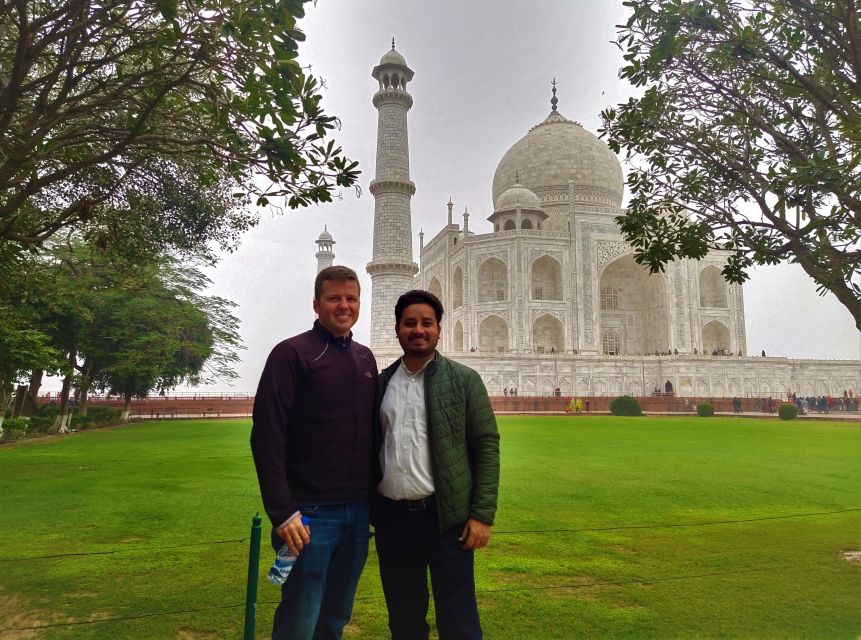
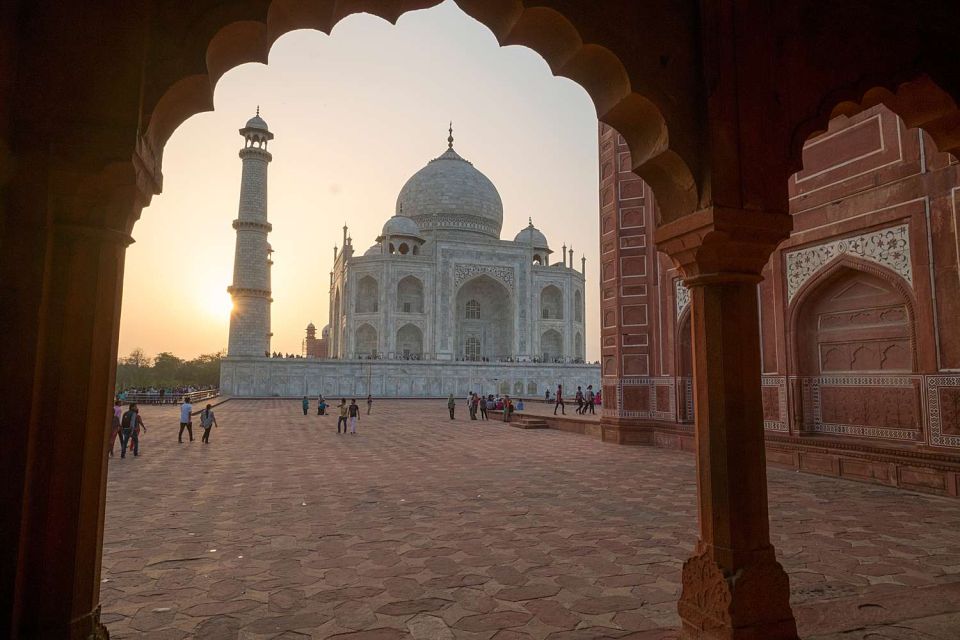
The headline is the Taj Mahal at first light. The itinerary gives you about 1.5 to 2 hours during this sunrise viewing window, which is the sweet spot if you want photos and still have time to absorb the story.
What makes sunrise here special is how the building’s details behave in the early hours. The light is softer, the crowds tend to be more manageable than later in the morning, and the mood feels less like a checklist and more like a scene.
Your guide will explain the Taj Mahal as a monument built by the 5th Mughal Emperor Shah Jahan for his wife Mumtaz Mahal. You’ll also hear about why Agra mattered, and how the city’s identity grew alongside Mughal power. When you understand that it’s not just a pretty building but a designed expression of love and status, you start noticing the craftsmanship instead of rushing past it.
Also keep an eye on timing for photos. Sunrise doesn’t wait for your camera settings, so if you’re serious about shots, come ready: comfortable shoes, camera charged, and a plan for where you want to stand.
Breakfast after Taj: a real reset before the forts
After the Taj Mahal visit, you head to a restaurant or hotel for breakfast. The tour blocks this into a proper break so you’re not touring on empty energy.
One limitation to know: drinks served at breakfast are not included. You’ll likely want to budget a little extra if you rely on coffee, juice, or bottled drinks.
This breakfast pause also helps you adjust after the emotional and visual intensity of the Taj Mahal. The Taj can hit hard. A good meal makes the next stops feel more enjoyable and less like “next, next, next.”
Agra Fort’s palace power: what you’ll see and why it matters
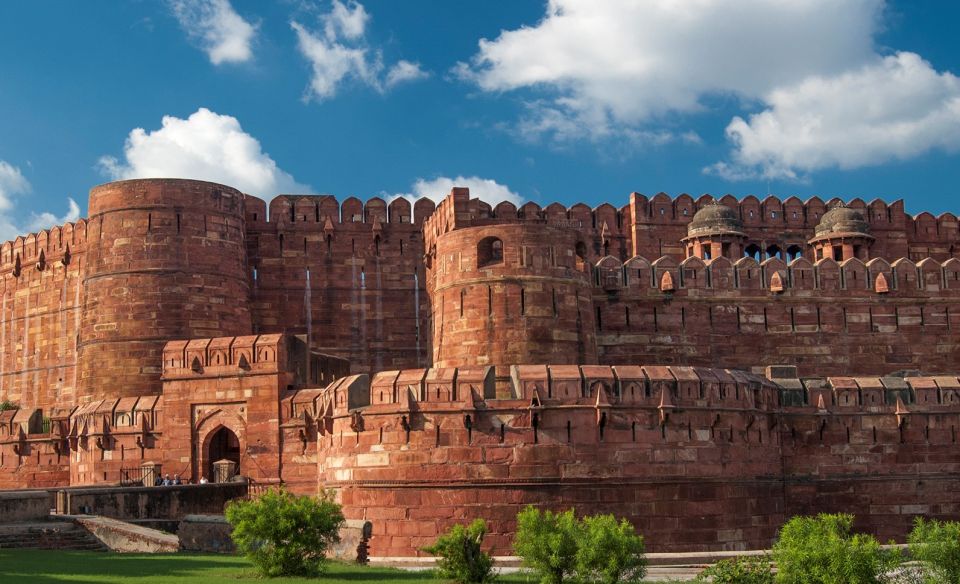
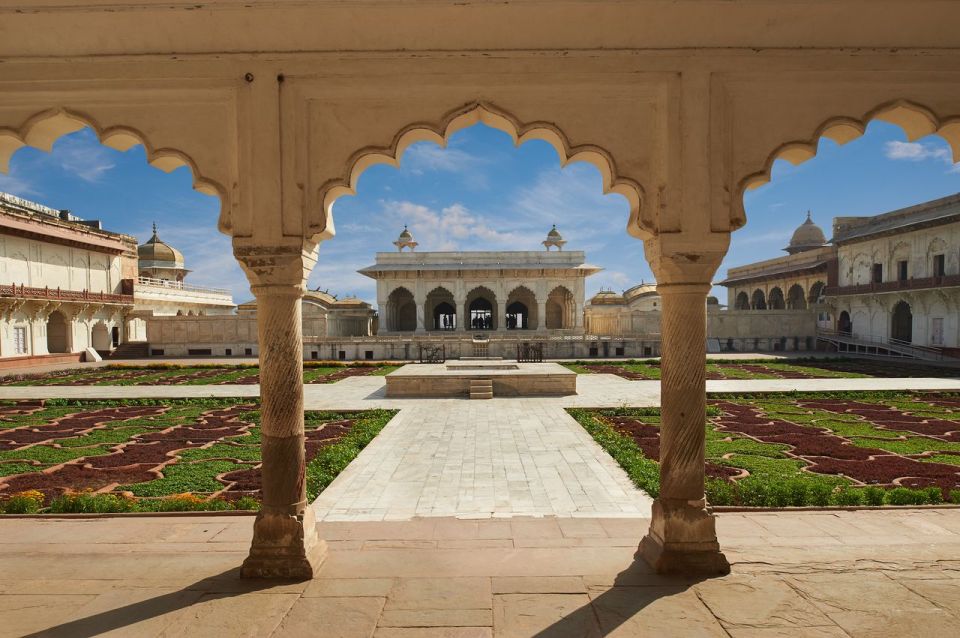
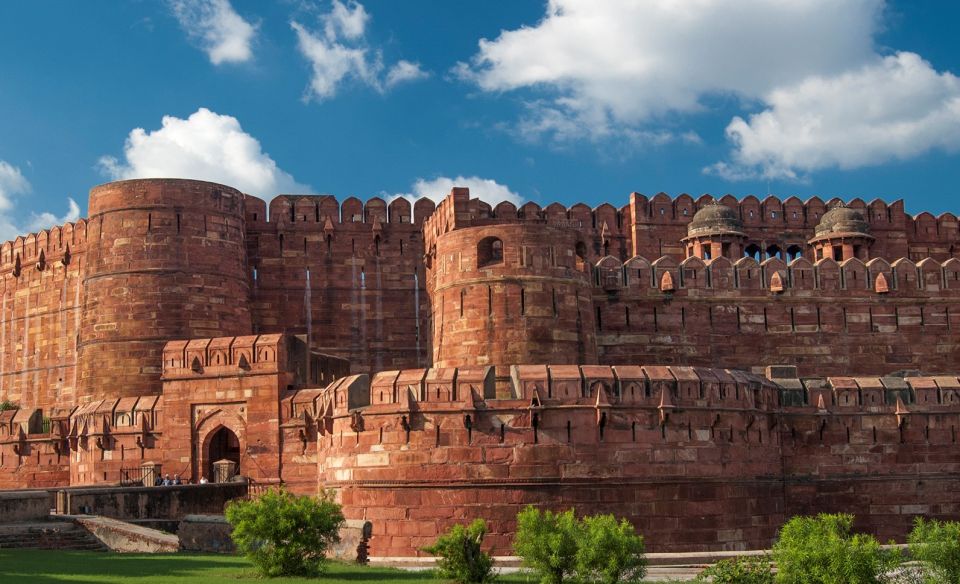
Next up is Agra Fort, with about 1 to 2 hours. This isn’t just a wall-and-gates type of stop. Agra Fort is described as one of India’s best-preserved forts, built across the 16th and 17th centuries.
Here’s why it’s worth your attention: the itinerary frames it as connected to multiple rulers. You’ll hear about Shah Jahan as well as his grandfather Akbar the Great, which helps you understand the fort as part of a bigger Mughal timeline instead of a standalone landmark.
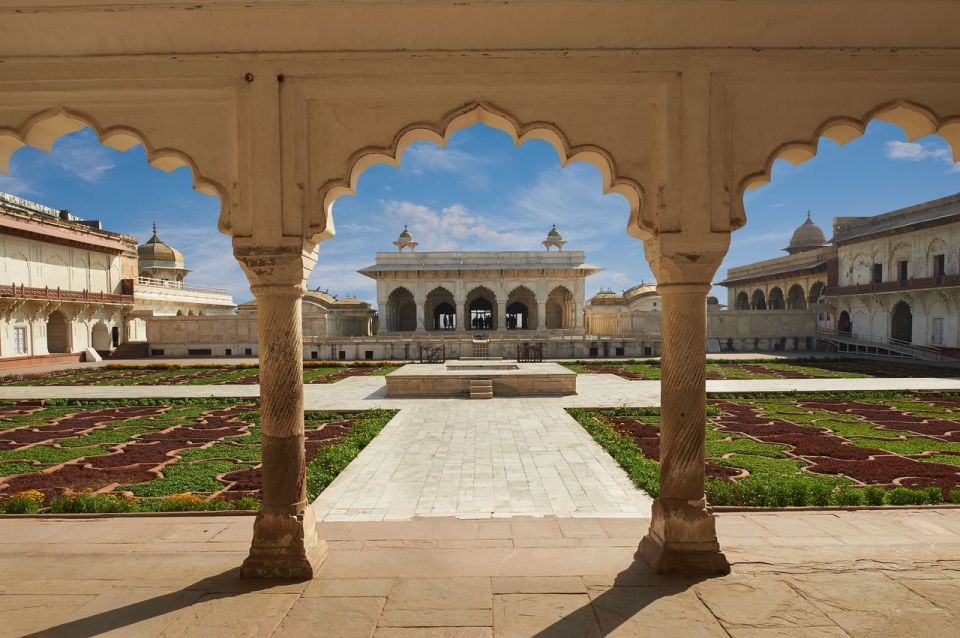
You’ll also see the mix of red sandstone and white marble that gives the fort its palace-like feel. And there’s a human note in the story: it’s said that Shah Jahan took his last breath in this fort. Even if you don’t get emotional about royal history, that detail pulls you toward the idea that these buildings weren’t made for tourists. They were lived in, ruled from, and remembered.
You can also read our reviews of more tours and experiences in New Delhi






A meeting with Taj Mahal workers’ descendants
One of the more meaningful parts of this tour is the time to meet direct descendants of workers who built the Taj Mahal.
This is the kind of stop that doesn’t fit neatly into a photo-spread. Instead, it adds something practical and personal: you hear about the monument through the lives connected to its making. It’s one of the best ways to turn the Taj Mahal from “a famous monument” into a living craft story.
You’ll see this in the itinerary after the Agra Fort portion, which keeps the day balanced: big monuments, then a human connection, then a shift into more mausoleum-style sights.
If you’re the type who likes understanding how things were made, this will likely be a highlight.
Etimad Ud Daulah (Baby Taj): smaller scale, strong impact
After the human story, you move to Etimad Ud Daulah, often called Baby Taj. The visit time is about 30 to 60 minutes, so you’ll want to stay alert and not get stuck daydreaming for too long.
This mausoleum is described as being built in the 17th century by Empress Nurjahan as a tribute to her father, Mirza Ghyas Beg, who was the Chief Minister in Jahangir’s court. It’s also described as a very important early Mughal mausoleum and notably made entirely out of white marble.
Why I like putting this after Agra Fort and the worker-descendant connection: it’s like shifting from the big political stage to the personal, family-scale stage. The Taj Mahal is grand, but Etimad Ud Daulah gives you a chance to study how marble, symmetry, and ornament work at a more intimate level.
Mehtab Bagh: seeing the Taj from across the river
Then you head to Mehtab Bagh (Moon Light Garden) for river-side views of the Taj Mahal. The plan positions this after the Baby Taj stop, so you get a “Taj view progression” rather than seeing it only once.
Mehtab Bagh is about perspectives. Instead of photographing the Taj up close, you see it from the river side framing. That changes the mood and gives you another way to understand the architecture’s placement.
If you like your photos with variety, this is a smart addition. If you only care about one iconic view, you’ll still appreciate the calmer feel and the chance to compare what you saw earlier at first light.
Getting back to Delhi: long day, smooth finish
Once sightseeing wraps, you start the drive back to Delhi in the same kind of AC sedan/SUV private car. The plan keeps it straightforward: you return to your pre-booked drop-off location at the end of the day, either your hotel or the airport for onward travel.
This is where good chauffeuring matters. In the feedback, I saw names like Sarfaraz and Zameer tied to a smooth day, including careful driving and help like providing water. That kind of service makes the difference between a day you remember for the monuments and a day you remember for the fatigue.
Realistically, it’s still a long schedule. You’re leaving early, touring in time windows, then sitting on the road back. But with a private car and a structured route, you’re not spending your energy solving travel problems.
Price and value for a 12-hour private day trip
At about $27 per person, this trip is priced like a budget-friendly way to access the big Agra hits with the convenience of private transport.
What’s included is more than a simple guided walk:
- Pick-up and drop-off in Delhi NCR
- A private AC sedan/SUV with an English-speaking chauffeur
- A professional tour guide in your language (English, Spanish, Russian, French, German)
- Mineral water bottles and wipes
- All applicable taxes
What’s not included is also clear: breakfast drinks and anything else you choose outside the plan.
The value math here is simple. A private early-morning car + a guide + multiple major sites is usually hard to piece together cheaply. The tour’s early timing also matters. Sunrise Taj isn’t just “nice.” It’s what keeps the experience calmer and makes photography possible. You’re paying to get there on the right schedule, and that’s the part that often costs the most in time and logistics.
Who this trip is best for (and who should rethink it)
This works especially well if you want:
- Sunrise photos without wrestling with transit schedules
- A guide-led day that connects Taj Mahal, Agra Fort, and nearby sites
- A format that feels structured but still gives time at major stops
It’s also marked as wheelchair accessible, which is a helpful note if mobility access is important for your group.
Two cautions from the tour details:
- It’s not suitable for pregnant women
- Pets are not allowed
And if you’re the kind of traveler who wants a slow start, this itinerary will feel aggressive. The whole plan is built around being on-site at first light.
Should you book this sunrise Taj Mahal trip?
If you want the Taj Mahal experience in its best light, with a guide and a private car handling the heavy lifting, I think this is a strong booking choice. The combination of first-light viewing, time for photos, and context about the Mughal Empire is exactly what makes sunrise tours worth the effort.
I’d especially consider it if you like more than just the Taj: the mix of Agra Fort, a meeting with descendants of the workers, Etimad Ud Daulah, and Mehtab Bagh gives you variety in tone and viewpoint. From the names mentioned in past bookings, guides like Khan and Zameer, and chauffeurs like Sarfaraz, have been connected with an experience people felt comfortable and looked-after in.
If you hate early mornings or you’re traveling in a way that makes a 12-hour day hard on your body, then it may not feel like good value. But for most visitors chasing that sunrise magic, this trip is practical, focused, and built to deliver.
FAQ
FAQ
What time do you get picked up from Delhi NCR?
You’ll be picked up from your hotel or airport in the Delhi NCR area at around 2:00 a.m. to 3:00 a.m.
How long is the full tour?
The tour runs for about 12 hours.
When do you visit the Taj Mahal?
The Taj Mahal is visited in the first-light window, with an allotted time of about 1.5 to 2 hours (listed as 01:30 to 03:00 hours).
What’s included in the price?
Pickup and drop-off, a private AC sedan or SUV with an English-speaking chauffeur, a professional tour guide in your language, mineral water bottles and wipes, and all applicable taxes are included.
What isn’t included?
Breakfast drinks are not included, and anything not specifically mentioned in the inclusions is not included.
Which places are visited in Agra?
You’ll visit the Taj Mahal, Agra Fort, meet direct descendants of Taj Mahal workers, Etimad Ud Daulah, and Mehtab Bagh.
What languages are available for the tour guide?
The tour guide is available in English, Spanish, Russian, French, and German.
Is the tour wheelchair accessible, and can I bring pets?
The tour is marked as wheelchair accessible. Pets are not allowed, and the tour is not suitable for pregnant women.
What should I bring or wear?
Wear comfortable shoes and comfortable clothes.