REVIEW · NEW DELHI
Delhi: Mehrauli Archaeological Park Tour with Qutub Minar
Book on GetYourGuide →Operated by Zaara Travels · Bookable on GetYourGuide
Delhi goes quiet in Mehrauli’s forest. This tour strings together Qutub Minar and Mehrauli Archaeological Park in one smooth 4-hour loop, with a guide who explains how Delhi changed across empires. You also get a rare look at everyday engineering and water culture through places like the stepwell.
I especially like the dense forest cover walk, where the noise of the city drops off fast. I also love the Rajon Kee Baoli stop, because it is not just pretty stonework, it is built to draw water and cool people in hot weather.
One thing to consider: the route involves walking on uneven ground and is not suitable for back problems or wheelchair users.
In This Review
- Key highlights to look for
- How the tour begins outside Qutub Minar Metro Exit Gate
- Qutub Minar: the landmark that sets the timeline
- Mehrauli Archaeological Park: ruins, stories, and the forest hush
- Metcalfe Canopy: a hexagonal 1850s folly with a view
- Rajon Kee Baoli stepwell: water engineering and heat relief
- Jamali Kamali Mosque: red sandstone, devotion, and local legend
- Tomb of Balban and the Dovecot Metcalfe Boathouse stops
- Pace, comfort, and what to bring for a 4-hour loop
- Price and value: what you get for $21 per person
- Who this tour fits best (and who should skip it)
- Should you book the Mehrauli and Qutub Minar tour?
- FAQ
- Where do I meet the guide?
- How long is the tour?
- What is the price?
- What sites are included in the itinerary?
- Is entry to Mehrauli Archaeological Park included?
- What is included in the price?
- Are meals or snacks included?
- Can I pay later and keep plans flexible?
- What are the photography and smoking rules?
- Is the tour suitable for wheelchair users or people with back problems?
Key highlights to look for
- Qutub Minar context first: you start at the landmark, then carry that timeline into Mehrauli’s ruins
- Calm forest walking: shade and quieter paths make the 4 hours feel manageable
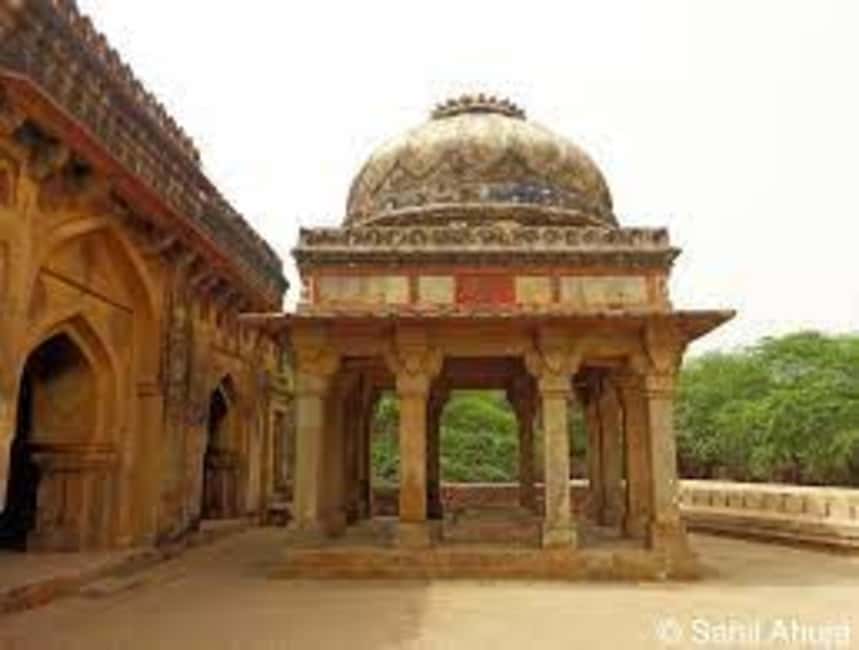
- Charles Metcalfe’s Hexagonal Canopy: a 19th-century British folly inside an older setting
- Rajon Kee Baoli stepwell function: a vertical water shaft plus heat-beating side passages
- Red sandstone at Jamali Kamali: mosque and tomb details tied to local devotion
How the tour begins outside Qutub Minar Metro Exit Gate
You meet your guide outside the Qutub Minar Metro Train Station Exit Gate. That matters because it sets a clear start point and keeps you from hunting through the wrong streets once you’re already in the Qutub Minar area.
From the start, the tone is practical: a brief history of what you’re about to see, plus quick orientation on the relics scattered through Mehrauli Archaeological Park. If you’re a first-time visitor to Delhi, this “connect-the-dots” approach helps everything you see later feel less random.
The tour also offers pickup and drop-off options in multiple neighborhoods, which is a big deal in Delhi. If you want quieter logistics, you can arrange private car travel for getting to and from the walk spot safely and comfortably.
You can also read our reviews of more tours and experiences in New Delhi.


Qutub Minar: the landmark that sets the timeline
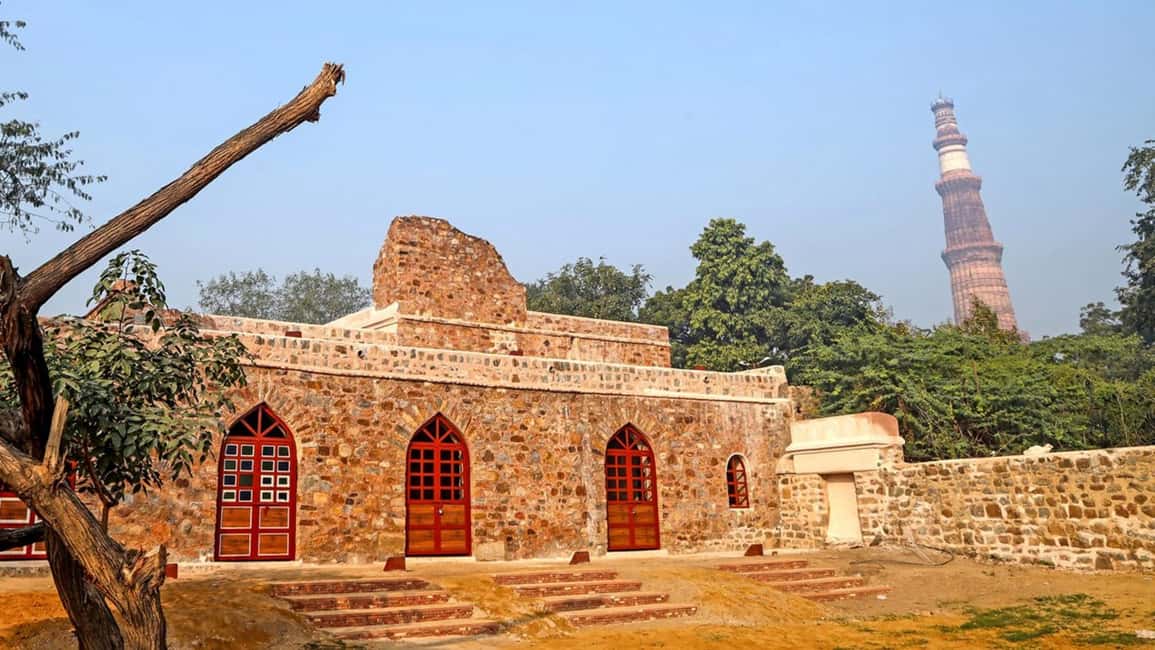
Qutub Minar is the anchor of this half-day. You get a guided visit with sightseeing time, so you’re not just seeing the tower from the outside and guessing what it meant.
Why this stop works: it gives you a baseline before you move into Mehrauli’s fragments. When your guide explains connections between the sites, you start noticing how later rulers and builders layered their designs onto older spaces.
You’ll also appreciate the “skip the line” approach using a separate entrance. It doesn’t remove crowds, but it can remove some of the waiting that makes sightseeing feel longer than it is.
Practical note: carry a valid photo ID for monument entrance. And follow the rules on photography, since flash photography is not allowed.
Mehrauli Archaeological Park: ruins, stories, and the forest hush
This is the heart of the experience. The tour leads you through historic monuments within Mehrauli Archaeological Park, with your guide narrating how Delhi’s past unfolded across different eras and empires.
What makes this park stop special is the feel of the place. The walking sections move under dense forest cover, so you get a calm, soothing change of pace compared to the open, crowded areas of central Delhi. Even if you’re not a hardcore ruins person, that shift helps you pay attention.
A good guide is what turns “stones in a park” into real understanding. Guides from past bookings have been praised for answering questions and explaining the buildings clearly, which is exactly what you want when the site details are scattered.
One small drawback: because you’re moving through ruins and paths, you’ll likely be doing more walking than you expect from a “4-hour” label. Wear shoes you trust on uneven ground.
Metcalfe Canopy: a hexagonal 1850s folly with a view
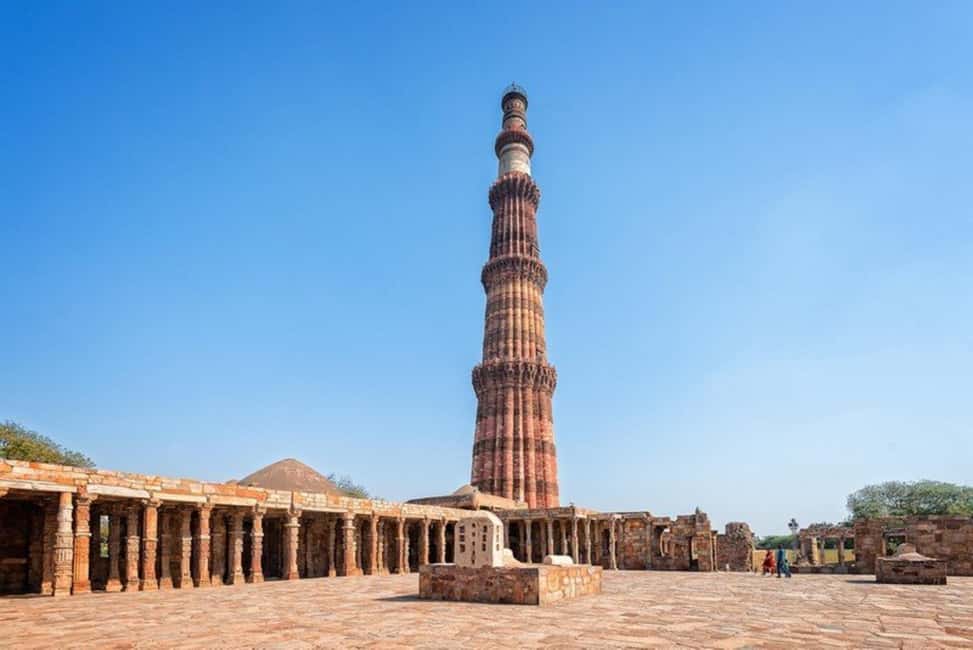
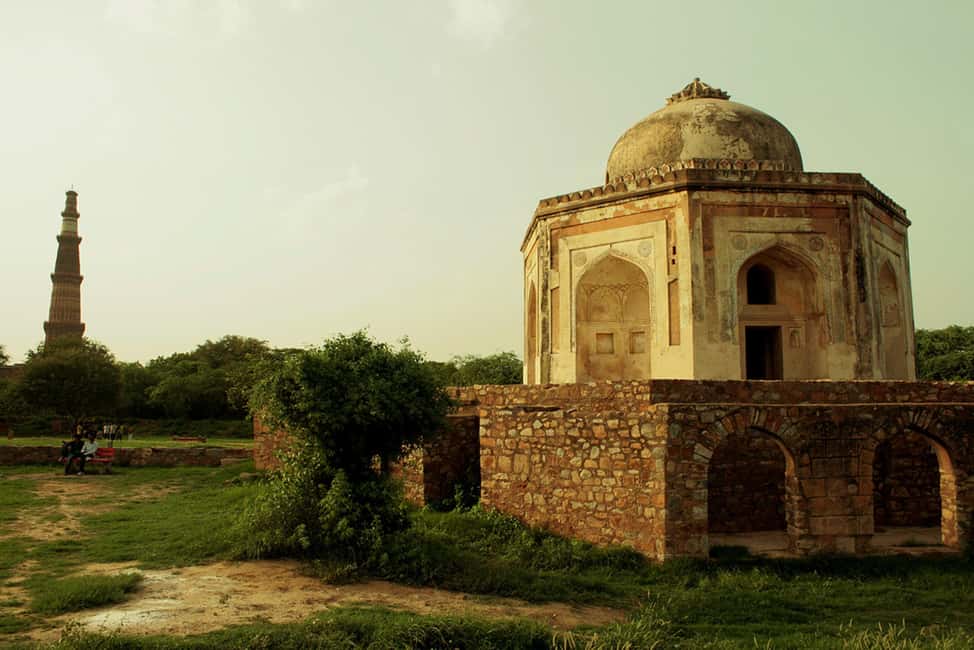
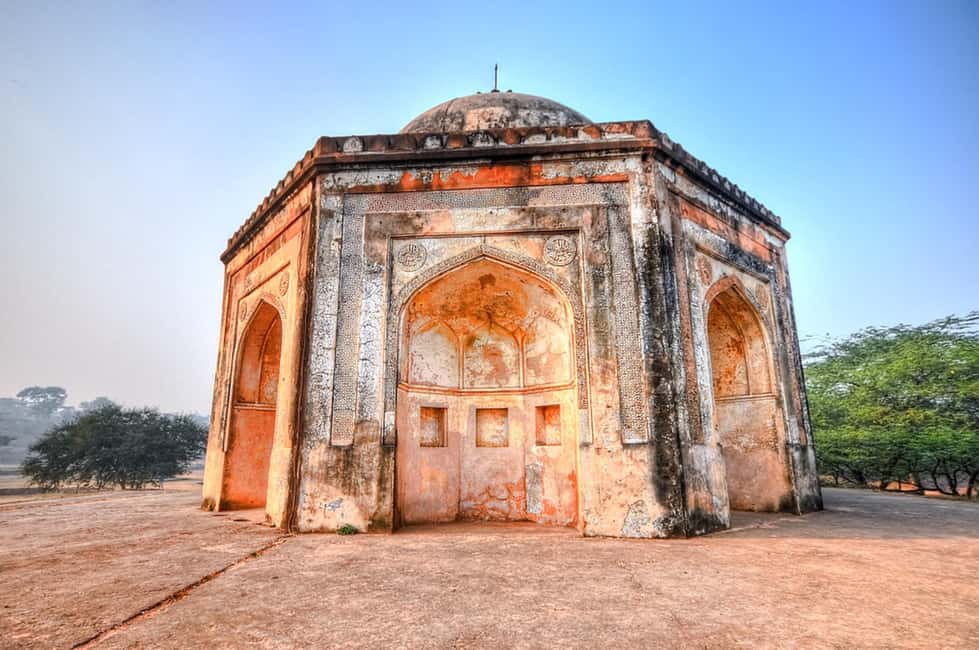
Next comes Metcalf Canopy, a structure perched on a hilly mound. It was built in the 1850s by the British scholar Charles Metcalfe, and it is described as a folly—meaning it was built to look old, almost like a staged antique.
What I like about this stop is the contrast. You’re in an ancient park setting, and then you find a distinctly 19th-century whimsy: a structurally hexagonal canopy with a charming silhouette against the open sky.
Why it’s worth your time: it gives you a story about how Europeans in the colonial period viewed and reshaped local heritage. You’re not just looking at architecture; you’re watching how meanings change with the people who build and display them.
Rajon Kee Baoli stepwell: water engineering and heat relief
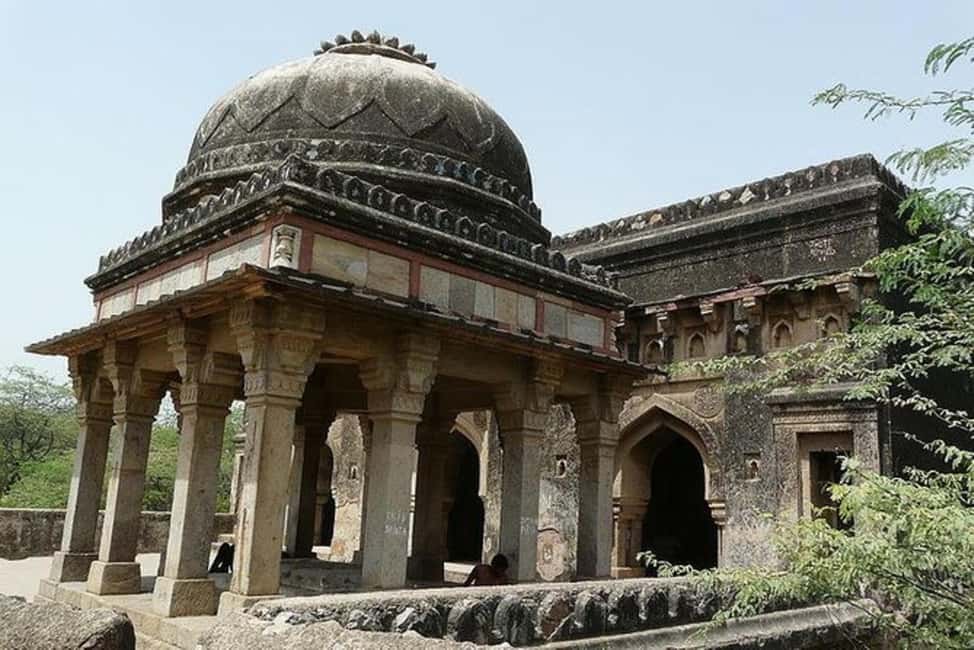
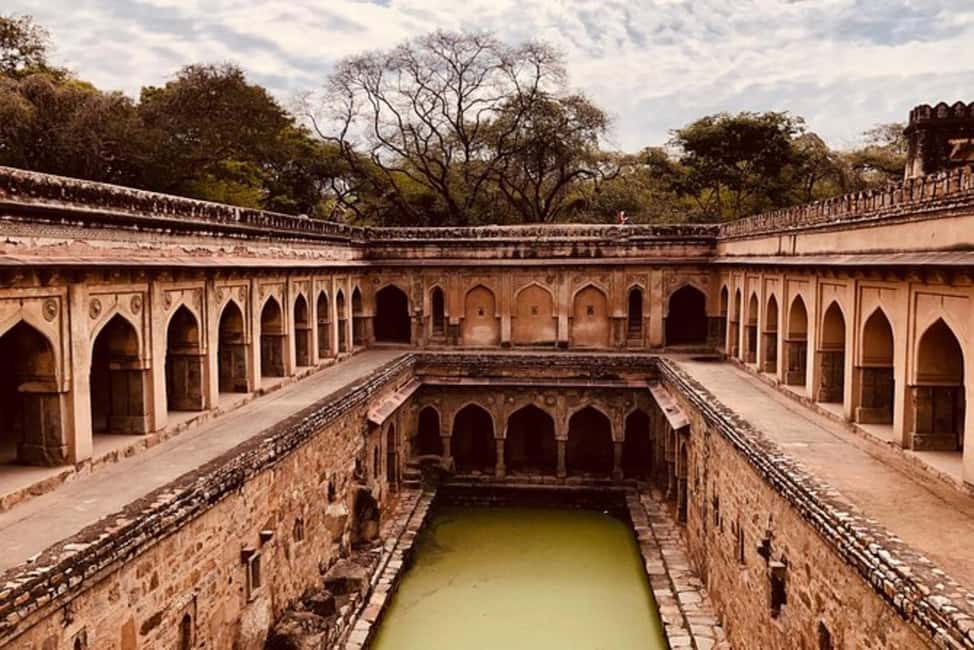
Then you reach Rajon Kee Baoli, a dramatic stepwell still holding waters. This place works on two levels: the design is functional, and the atmosphere comes with local spooky tales, especially during late-night hours.
Here’s what to watch for as you’re there:
- A vertical shaft used for drawing water
- Side-by-side hollow passageways and small chambers designed to beat the heat during Indian summers
That combination is the real wow factor. Stepwells are not just historic decorations; they are climate and water systems. A good guide helps you see those details instead of just snapping photos and moving on.
If you’re sensitive to eerie stories, you can treat the haunting legends as folklore. You’ll still get the real value: the architecture makes sense once someone points out how people used it.


Jamali Kamali Mosque: red sandstone, devotion, and local legend
Next is the Jamali Kamali Mosque and tomb complex. It is built of red sandstone and tied to a saint with a big local following.
This stop feels different from the stepwell. Instead of water engineering, you’re reading faith and community into stone—where followers gathered and where memory was set in place.
Just like the baoli, there’s a warning vibe tied to late evenings, with stories about it being haunted. In practice, you’ll likely visit during daylight hours as part of the normal tour flow, so the legends add color rather than danger.
What you should do while you’re there: slow down and look at materials and form. Red sandstone gives the structure a strong color presence, so it’s easy to spot details if you give your eyes time to adjust.
Tomb of Balban and the Dovecot Metcalfe Boathouse stops
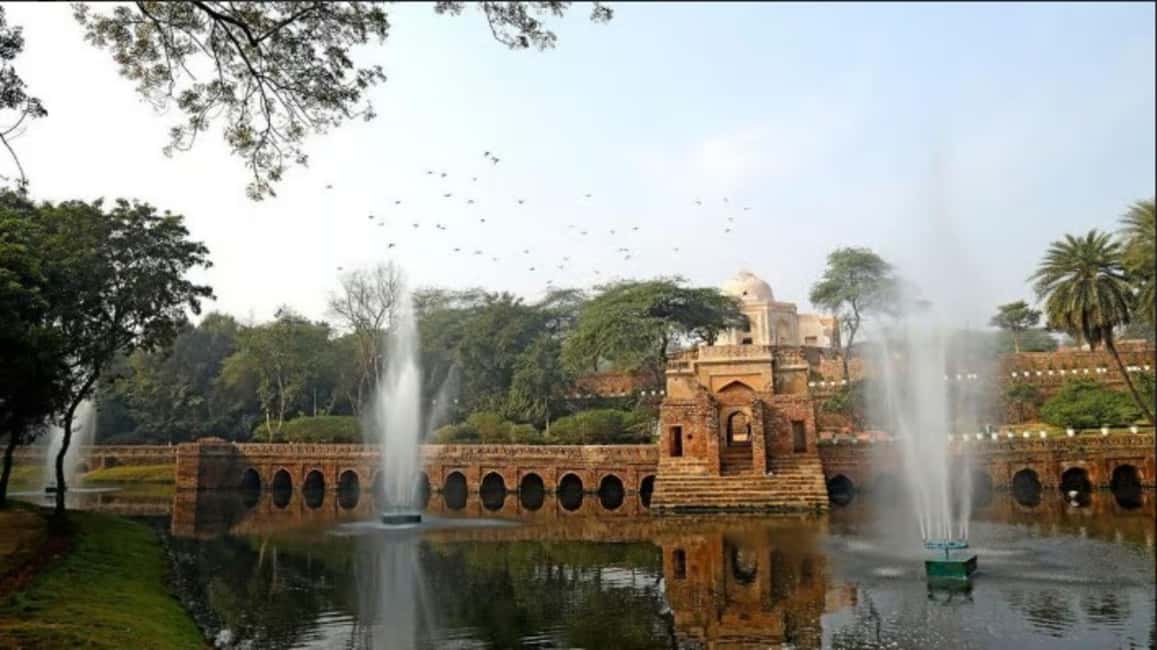
The tour also includes Tomb of Balban, with guided time set aside so you can understand what you’re looking at instead of treating it like another stop on a photo list.
After that, you’ll see Dovecot Metcalfe’s Boathouse for a short sightseeing window. At 25 minutes, it’s not meant to drag, but it adds another layer to the theme of Charles Metcalfe’s mark on this area—again mixing 19th-century touches into a much older setting.
A nice pattern here: you alternate between major monuments and smaller, more specific features. That helps keep attention from dropping, especially if you tend to lose focus in long sightseeing blocks.
Pace, comfort, and what to bring for a 4-hour loop
This is a walking tour with real moving time inside Mehrauli’s areas and between stops. It also isn’t listed as suitable for people with back problems or for wheelchair users, so if mobility is a concern, plan carefully.
Comfort tips that fit the route:
- Wear sturdy shoes with grip for uneven ground
- Bring sun protection if you run hot, because some areas can feel exposed
- Avoid flash photography and smoking, since those are not allowed
The tour includes bottled water, which is helpful. Still, I suggest bringing a small personal snack if you know you get hungry, because meals and snacks are not included.
The timing is also stop-based:
- Qutub Minar gets about 1 hour
- Jamali Kamali gets about 30 minutes
- Rajon Kee Baoli gets about 40 minutes
- Tomb of Balban gets about 40 minutes
- Dovecot Metcalfe’s Boathouse gets about 25 minutes
That adds up to a busy but doable half-day. Expect a steady rhythm, not a slow stroll where you can linger forever.
Price and value: what you get for $21 per person

At $21 per person for about 4 hours, the value is mostly about what’s bundled. You’re not only getting sightseeing. You’re getting a professional English-speaking guide, plus bottled water, plus pickup and drop-off in Delhi.
If you select the options that include entry to Mehrauli Archaeological Park and Qutub Minar, those entrances are handled as part of the experience. That matters because entrance costs and timed entry can be frustrating when you’re trying to plan on your own.
This pricing also tends to work well for short trips. If you only have a few hours in Delhi and you want a structured introduction to the area, this is the kind of tour that helps you make better use of limited time.
For language support, the guide can also be provided in multiple languages (English, Italian, German, Russian, Spanish, French, Japanese, Chinese). That’s a real quality-of-life point if English isn’t your strongest option.
Who this tour fits best (and who should skip it)
This is a great match if you want an organized introduction to Delhi beyond the usual quick photo stops. You get a guided timeline through Qutub Minar and the surrounding Mehrauli sites, plus the calm contrast of a forest-covered walking route.
It also suits people who like architecture with function. Rajon Kee Baoli is the clearest example, because the design shows how people coped with heat and water needs.
You might want to skip or choose a different plan if:
- You have back issues or mobility limitations, since it is not suitable for wheelchair users
- You want a mostly seated tour, because this involves walking through multiple sites
- You dislike stories and atmosphere tied to local legends, even though you can treat those as folklore
Should you book the Mehrauli and Qutub Minar tour?
If you’re doing Delhi on a tight schedule, this is an efficient way to understand the area. I’d book it for the combination of Qutub Minar context, the Mehrauli ruins, and the stepwell stop that makes you think about how people lived—not just what rulers built.
If you’re comfortable walking on uneven ground and you like guided explanations, you’ll likely feel like you got your money’s worth quickly. It is structured, not rushed, and it ends where most people want to be again: near Qutub Minar Metro so you can keep moving through the city.
FAQ
Where do I meet the guide?
You meet outside the Qutub Minar Metro Train Station Exit Gate.
How long is the tour?
The duration is 4 hours.
What is the price?
It is listed at $21 per person.
What sites are included in the itinerary?
The tour includes Qutub Minar, Jamali Kamali, Rajon Ki Baoli, Tomb of Balban, and Dovecot Metcalfe’s Boathouse, with guided sightseeing time at each stop.
Is entry to Mehrauli Archaeological Park included?
Entry to Mehrauli Archaeological Park is included if you select that option.
What is included in the price?
Included items are a professional English-speaking guide, private hotel pickup and drop-off in Delhi, bottled water, and entry to Mehrauli and walking tour/Qutub Minar if those options are selected.
Are meals or snacks included?
No, meals or snacks are not included.
Can I pay later and keep plans flexible?
Yes, there is a reserve now & pay later option.
What are the photography and smoking rules?
Smoking is not allowed, and flash photography is not allowed.
Is the tour suitable for wheelchair users or people with back problems?
No. It is not suitable for wheelchair users or people with back problems.