REVIEW · MADURAI
Madurai: Heritage & Cultural Trails Guided Walking Tour
Book on GetYourGuide →Operated by Binge Tours · Bookable on GetYourGuide
Madurai’s stories start at a cathedral. I love how the guide links St Mary’s Cathedral to the Meenakshi Temple finish with clear explanations, and I love the way you’re routed through markets and lanes that feel like real Madurai, not a staged stop list. One real caution: there have been cases where people had trouble finding the meeting spot, so confirm the exact location and arrive early.
This is a 2-hour private group walking tour with an English or Hindi guide, priced at about $13 per person. It’s built for orientation—history, architecture, and everyday street life—so you can keep exploring on your own after you get your bearings.
In This Review
- Key Highlights You’ll Actually Notice
- Why Madurai Makes Sense on Foot (and in 2 Hours)
- Starting at St Mary’s Cathedral: Your Orientation in Gothic Stone
- Thirumalai Palace From the Outside: Dravidian and Rajput in One Gaze
- Markets, Shops, and Street Noise: Learning Madurai’s Daily Rhythm
- Nandi Statue and the 360-Degree View: Temple Sight Lines Made Clear
- Meenakshi Temple at the End: Sacred Tank and Gate Towers
- The Guide Factor: When Storytelling Clicks (and When It Doesn’t)
- Price and Value at $13: What You Pay For (and What’s Not Included)
- Practical Tips for a Smooth Walk (Without Wasting Time)
- Who This Tour Fits Best (and Who Might Want Something Else)
- Should You Book This Madurai Walking Tour?
- FAQ
- Where does the tour start?
- How long is the walking tour?
- How much does it cost?
- What languages are the guides?
- Is hotel pickup included?
- Is food or water included?
- What are the main stops on the route?
- What’s included in the ticket price?
- What’s the cancellation policy?
- Is the tour a group or private experience?
Key Highlights You’ll Actually Notice
- St Mary’s Cathedral start: you begin with a quick “map in your head,” not a random landmark drop
- Thirumalai Palace (outside view): you’ll see the palace scale and style without needing museum time
- Market route with craft and apparel shops: useful for understanding what people buy and why
- Nandi Statue viewpoint: you get a 360-degree look and sight lines toward the temple zone
- Meenakshi Temple finale: sacred water tank plus colorful gate towers, explained in plain language
Why Madurai Makes Sense on Foot (and in 2 Hours)
Madurai can feel like a puzzle at first. Streets tighten, temples appear, and shops spill into the same narrow lanes. This tour is smart because it’s timed for getting oriented fast, with just enough walking to connect the major landmarks and the surrounding street world.
In two hours, you won’t “cover everything.” But you will come away understanding how Madurai’s religious life and daily commerce sit side by side—and how to navigate the area without guessing.
You can also read our reviews of more tours and experiences in Madurai.

Starting at St Mary’s Cathedral: Your Orientation in Gothic Stone
You begin at St Mary’s Cathedral, a gothic-styled church. Even if you’re not a church architecture buff, the start matters: it sets the tone and helps you learn which directions to look as the city shifts from colonial-era stonework to older, temple-centered neighborhoods.
From here, the guide doesn’t just point. They pace you through the city’s logic—where key buildings sit, how the lanes feed into busier pockets, and how the main temple area connects to the rest of town.
If your goal is to understand Madurai quickly, starting with a prominent landmark is a practical move. It gives you a reference point before the crowd and color take over.
Thirumalai Palace From the Outside: Dravidian and Rajput in One Gaze
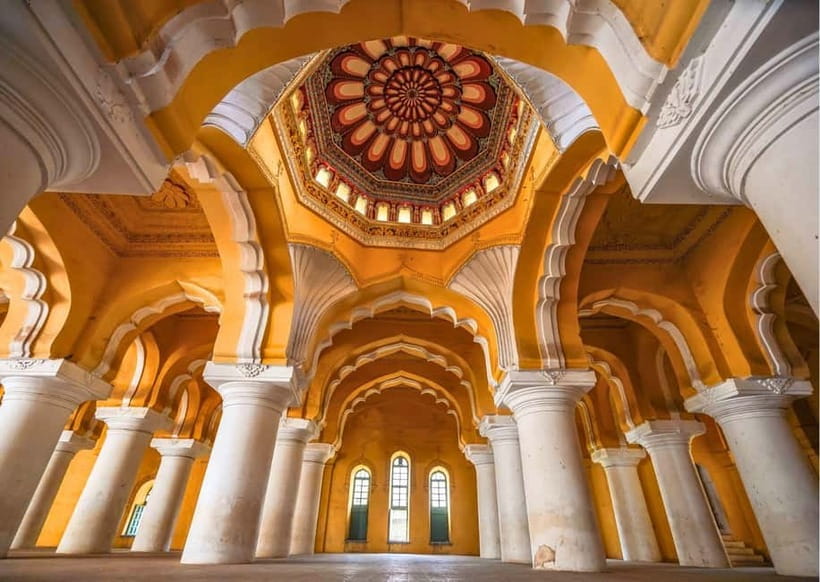
Next comes Thirumalai Palace, viewed from outside. This is a 17th-century palace erected by King Tirumala Nayaka, and the key is what the tour frames for you: it’s not a single-style building. It’s described as a fusion of Dravidian and Rajput styles, so you’re learning to “read” architecture instead of just seeing stone.
What I like about this stop is that it respects your time. You’re not pushed into long indoor segments. You get the palace’s presence, the scale, and enough context to appreciate what you’ll notice later when you look up at towers and facades around town.
Drawback to keep in mind: since it’s an outside view, your enjoyment depends on how well your guide explains what you’re seeing. If you want heavy architectural detail, ask your guide what they’ll focus on at the palace right at the start.
Markets, Shops, and Street Noise: Learning Madurai’s Daily Rhythm
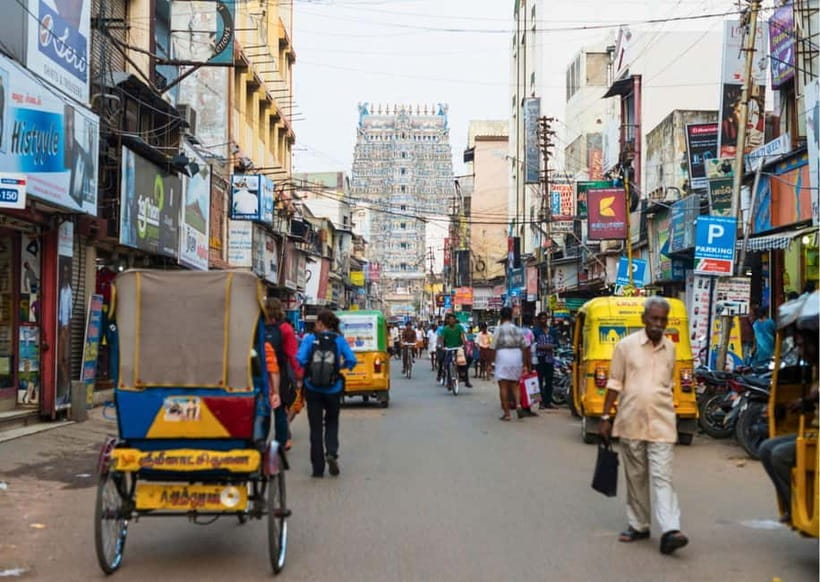
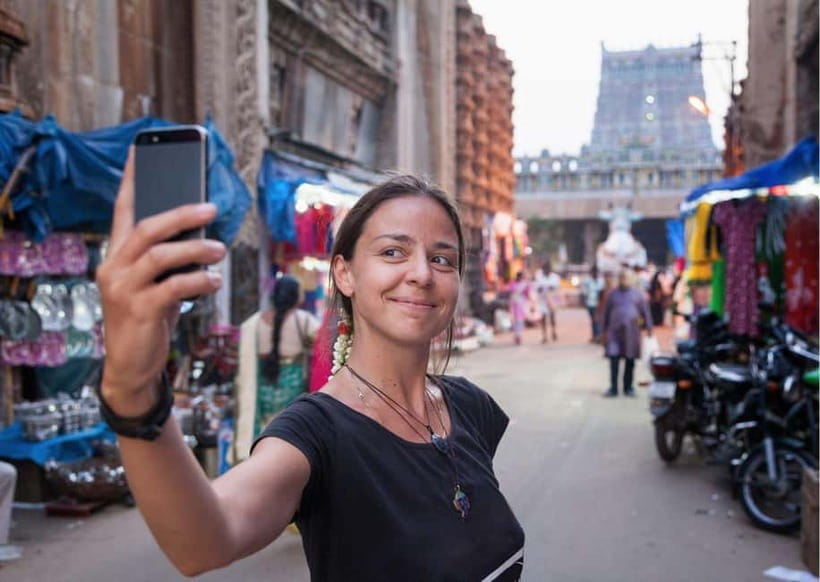
After the palace view, you shift into the city’s markets. This part is where the tour earns its “walking” label. You move through areas with eateries, craft vendors, and apparel shops, plus an iconic building the guide uses as a visual anchor while you pass.
This isn’t a shopping spree tour. It’s a “how to recognize a place” tour. Market streets teach you three things quickly:
- what kinds of goods dominate the lanes
- where people naturally gather to eat or browse
- how temple areas and commerce areas overlap in everyday life
One practical consideration: markets mean crowds. If you’re sensitive to noise or close contact, plan to keep your pace steady and accept that you’re walking through real commerce, not a quiet sightseeing corridor.
Nandi Statue and the 360-Degree View: Temple Sight Lines Made Clear

Then you hit one of the most useful visual moments: a stop near the Nandi Statue, where you get a 360-degree view and glimpses of the Meenakashi Amma Temple.
This is exactly the kind of stop that helps after the tour. When you can see sight lines—how the temple area sits relative to surrounding streets—you stop feeling lost. Even if you later return for a longer visit, you’ll already know where you are.
If you’re the type who likes photos, this is your “look around” moment. If you’re more interested in orientation, it’s still valuable because it turns geography into something you can remember.
Meenakshi Temple at the End: Sacred Tank and Gate Towers
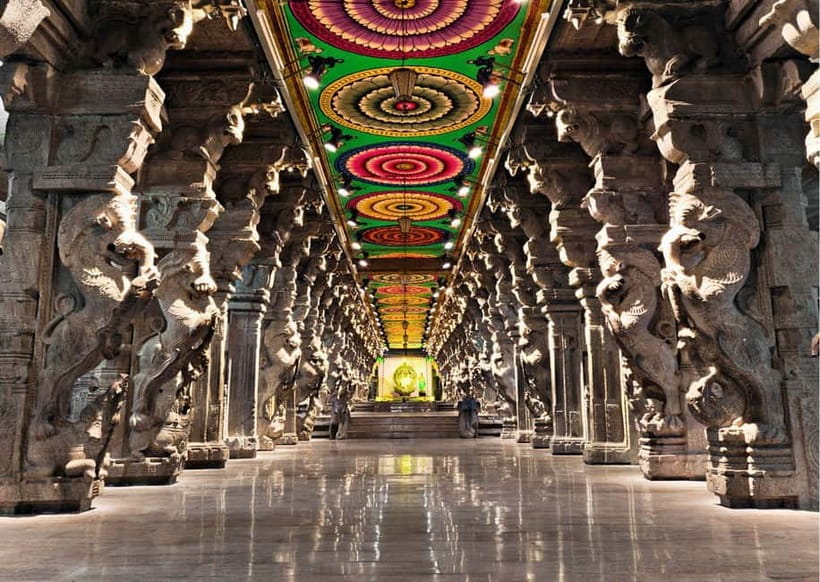
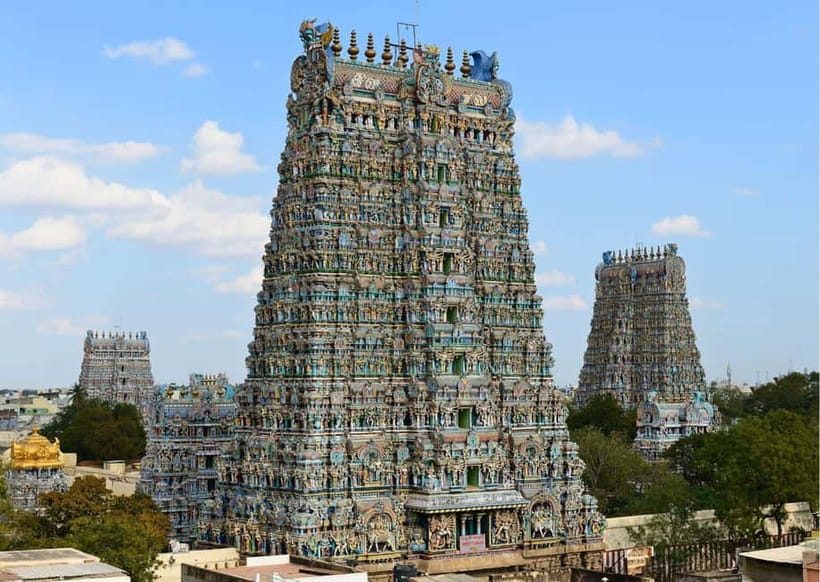
The tour ends at Meenakshi Temple, walking you through different aspects of the ancient, walled Hindu place of worship. The guide focuses on the temple’s main features you’d otherwise miss: sacred water tank and the colorful, sculpted gate towers.
This is where the payoff tends to be biggest. The architecture isn’t just decoration—it’s a language of entrances, sacred space, and movement toward the core. With the guide’s storytelling, you’re not just standing in front of impressive carvings. You’re understanding why the layout matters.
Two things to watch for:
- If your guide is more focused on general storytelling than specific architectural significance, you might feel the temple explanations are less detailed.
- If you love architecture, consider asking early which gate tower features they’ll explain so you know you’ll get what you came for.
The Guide Factor: When Storytelling Clicks (and When It Doesn’t)
This tour lives or dies on the guide’s delivery. When the guide is dialed in, the whole route clicks—Cathedral to palace, markets to temple, and all the “why this matters” tied into the walking.
One guide named Prakash has been described as having strong command of the route, from the Cathedral to the Royal Palace area and through crowded streets, ending with clear insight at the temple. Another guide named Balasubramanian has been mentioned by a smaller group as less prepared for specific architectural and historical significance.
Here’s how you protect yourself from the “guide mismatch” problem without being awkward:
- At the start, ask what they’ll cover at Meenakshi Temple (gate towers, tank, or layout).
- If you care about finer architectural details, say so early. Good guides adjust fast.
- If the guide keeps checking a phone during key moments, you’ll lose context. If that starts happening, nudge the focus back with direct questions.
Also, there are cases where guides seemed unwilling to add an extra site even when requested. If you might want extra stops beyond the planned route, clarify what’s possible at the beginning.
Price and Value at $13: What You Pay For (and What’s Not Included)
At around $13 per person, this tour is positioned as an affordable orientation walk. For that price, you’re getting:
- a guide who tells the stories in English or Hindi
- a structured route that connects landmarks to city life
- insider tips so you can continue exploring after the two hours
What you’re not getting is also important. No hotel pickup or drop and no food or water bottle are included. That means you should plan to carry water and snack, especially if you’re walking in warmer conditions.
Value check: if you book expecting a high-detail architecture masterclass, you may feel the need to pay extra elsewhere. But if you want a coherent path through Madurai’s big highlights without getting lost, the price can make a lot of sense.
Practical Tips for a Smooth Walk (Without Wasting Time)
A walking tour can go great or feel frustrating for one simple reason: where you start matters. There have been cases of missed meeting points, including situations where no one showed up or calls weren’t answered. You can reduce your risk by doing two things:
- confirm the meeting point in advance and save the exact address/photo
- arrive early, not “on the minute”
Wear shoes you can handle on uneven pavement and crowded lanes. You’ll be walking enough that sandals-only days can turn into sore feet days.
Also, since water and food aren’t included, bring a bottle and consider a small snack for later. The tour focuses on sights, not refueling.
Who This Tour Fits Best (and Who Might Want Something Else)
This tour is best for you if:
- you want a fast introduction to Madurai
- you like learning through stories while walking
- you plan to return to Meenakshi Temple and want a better sense of where things sit
It may not be the best fit if:
- you’re expecting long temple time on the inside (this ends at the temple, but it’s still a 2-hour walk)
- you require super-specific architectural lectures at every stop
- you strongly dislike crowds and tight market streets
Because it’s a private group, it can also work well for couples or small groups who want a calmer pace and more chances to ask questions.
Should You Book This Madurai Walking Tour?
I’d book it if your priority is orientation and story-led sightseeing in a short window. The route—Cathedral, palace outside view, markets, Nandi viewpoint with a 360-degree sense of place, then Meenakshi Temple—creates a clear Madurai picture you can carry into the rest of your days.
I’d be cautious only about two things: the meeting point reliability and the “guide variability” factor. If you arrive early, confirm the exact start location, and ask what you want covered at Meenakshi Temple, you’ll stack the odds heavily in your favor.
If those boxes are checked, this is a solid, low-cost way to get oriented fast in one of Tamil Nadu’s most fascinating city-centers.
FAQ
Where does the tour start?
The tour starts at St Mary’s Cathedral, a gothic-styled church.
How long is the walking tour?
It lasts 2 hours.
How much does it cost?
The price is listed as $13 per person.
What languages are the guides?
The guide can speak English and Hindi.
Is hotel pickup included?
No, hotel pickup and drop are not included.
Is food or water included?
No, food and water bottle are not included.
What are the main stops on the route?
You’ll start at St Mary’s Cathedral, cover Thirumalai Palace from the outside, visit markets, reach a viewpoint near the Nandi Statue with glimpses of Meenakshi Temple, and end at Meenakshi Temple.
What’s included in the ticket price?
Included are a guided walking tour with expert storytellers, plus insider tips and recommendations.
What’s the cancellation policy?
You can cancel up to 24 hours in advance for a full refund.
Is the tour a group or private experience?
It’s a private group walking tour.