REVIEW · AGRA
Agra: Tajmahal and Agra fort Entry tickets with Tour Guide
Book on GetYourGuide →Operated by India saying namaste Trips · Bookable on GetYourGuide
Taj Mahal plus Agra Fort is a smart double-plan. This experience is built around skip-the-line entry to both monuments, and it lets you choose how much story you want from an English-speaking guide. That combo matters in Agra, where mornings can be efficient or chaos depending on how you booked.
I especially like the flexibility: you can explore at your own pace, yet still get clear context about the Mughal imperial city while you’re there. The only real consideration is that skip-the-line tickets still don’t bypass the security check, and timing matters because Taj Mahal is open 6:00 AM to 5:00 PM and closes on Fridays.
In This Review
- Key highlights worth planning for
- Why This Taj Mahal + Agra Fort Combo Works
- Meeting at Taj Mahal Entry Gate East: Simple, direct logistics
- Taj Mahal entry: what skip-the-line changes (and what it doesn’t)
- Exploring Taj Mahal at your pace, with story cues
- Agra Fort after Taj: Mughal power, scale, and military use
- What “private group” means for your day
- Price and value: is $38 fair for two monuments?
- Timing tips that actually help
- Guide quality: what the best moments depend on
- Who this Taj Mahal + Agra Fort tour suits best
- Should you book this tour?
- FAQ
- Where do I meet the tour guide?
- Does the skip-the-line ticket mean I won’t wait at all?
- How long does the experience take?
- Are both Taj Mahal and Agra Fort included?
- What are the opening hours, and when is Taj Mahal closed?
- Is pickup and drop-off included?
- What should I bring for the tour?
Key highlights worth planning for
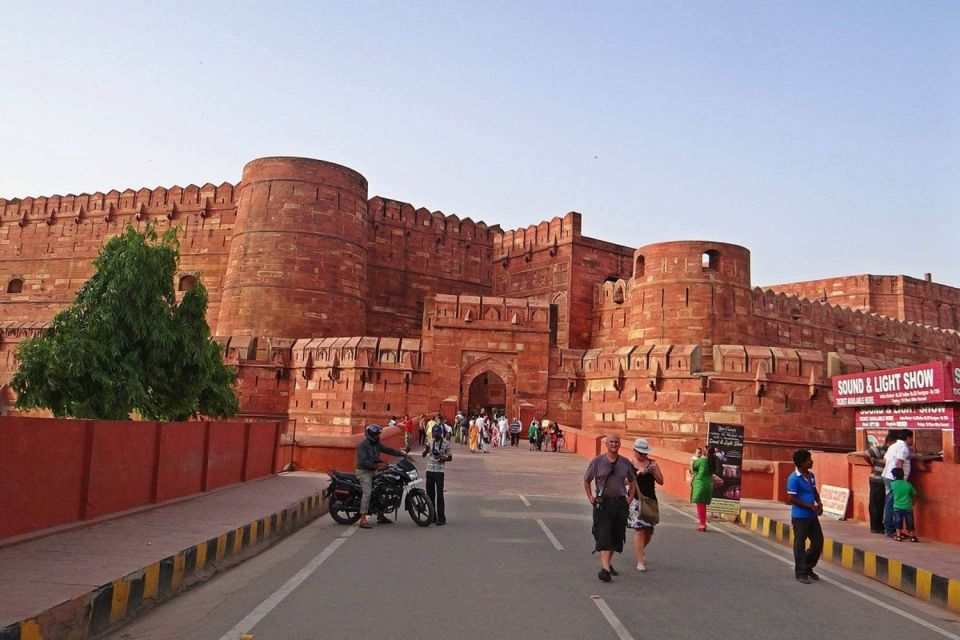
- Two monuments, one efficient visit: Taj Mahal and Agra Fort in one 4–5 hour window
- Skip-the-ticket-line access: you avoid the most time-wasting queue moment
- Guide options and languages: English, Hindi, and Spanish, with an option for a live guide
- East Gate meeting point: meet at Taj Mahal Entry Gate East gate with a name card
- Early timing payoff: going earlier helps you dodge crowd pressure and the afternoon heat
Why This Taj Mahal + Agra Fort Combo Works
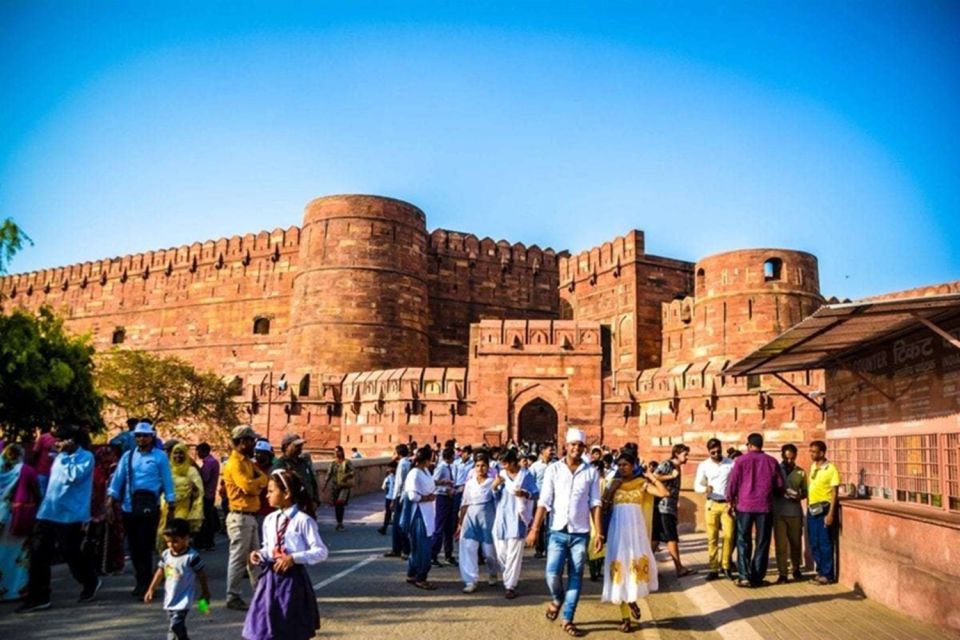
Agra is famous for one building, but it’s really a whole story about power, design, and the people who ran an empire. Visiting only Taj Mahal is common. Visiting Taj Mahal and then seeing how the Mughal rulers lived and defended their city is what makes the day feel complete.
This tour is practical because it treats your time like money. You get skip-the-ticket-line access for both Taj Mahal and Agra Fort, which cuts out a big chunk of uncertainty. You’re also not locked into one rigid walkthrough. The setup is designed so you can either go guided (with history explained) or explore more freely while still having someone available to translate what you’re seeing.
The other thing I like: it’s a private group. That means your guide can adjust the pace. If you want a few quiet minutes to study the marble details, you’re not waiting for a large group to move through.
You can also read our reviews of more tours and experiences in Agra



Meeting at Taj Mahal Entry Gate East: Simple, direct logistics
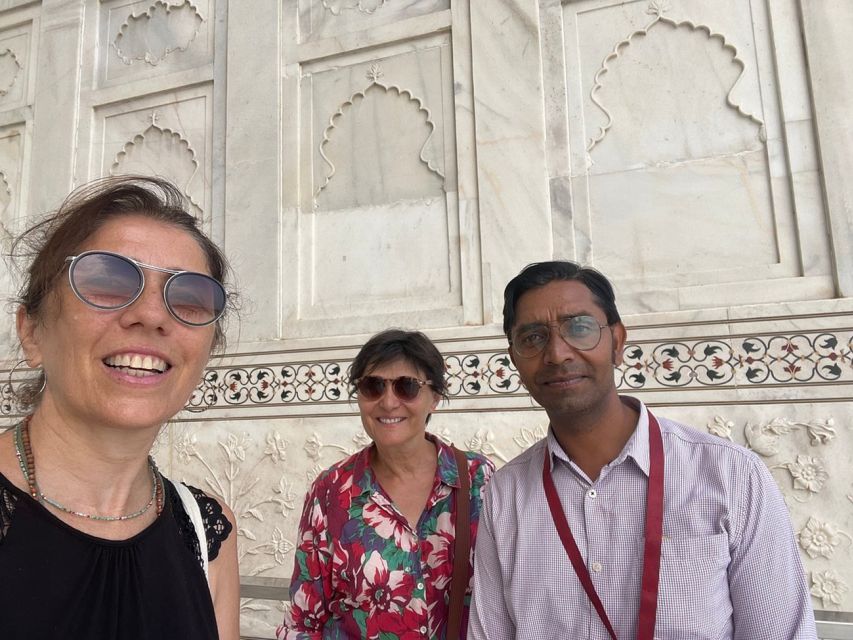
Meet at Taj Mahal Entry Gate East gate. Your guide waits with a name card, so you’re not playing the guessing game with crowds. The wording here is also helpful: you meet there “as you wish,” which means you can plan around the day’s heat and your comfort with early starts.
If you add the optional private transfers, you’ll be picked up and dropped off at your accommodation in Agra. For many people, that’s the difference between a smooth day and a stressful scramble with rickshaws and traffic.
One more detail that matters: the tour duration is listed as 4–5 hours. That’s enough time to do both monuments without turning your afternoon into “stand in line all day” territory, but it also means you should arrive with your energy intact.
Taj Mahal entry: what skip-the-line changes (and what it doesn’t)

Taj Mahal hours are 6:00 AM to 5:00 PM daily, and it closes on Friday. So the biggest scheduling mistake you can make is thinking every day works. Pick a day that’s open and choose your time slot carefully.
About the skip-the-line part: it skips the long ticket line, but you still need to wait for the security check. In other words, you’re reducing the worst bottleneck, not removing every wait. That’s still a win. Security lines tend to move in a more predictable rhythm than ticket chaos.
Once you’re inside, the guide option is where the experience becomes more than photos. You can choose a guided tour so you learn what you’re looking at while you’re looking at it, instead of trying to piece it together later. English-speaking guidance (and the option for Hindi and Spanish) helps especially if you want the story explained clearly rather than relying on signs alone.
A smart timing tip from experience-style reviews: early morning tours help you avoid both crowds and the worst of the heat later on. Taj Mahal is most pleasant when you’re not sweating through your sightseeing plan.
Exploring Taj Mahal at your pace, with story cues

Here’s how to think about the Taj Mahal portion. The building is iconic, yes. But the real value of a guided option is that it gives you a set of cues so the place feels understandable, not just impressive.
With a live guide, you’ll get historical context around the Mughal imperial world and why this monument matters in the way it’s designed and built. You’re not just staring at a landmark. You’re connecting design details to the people and ambition behind it.
If you choose to explore more freely, you’ll still have a framework. You can pause for longer where you naturally feel curious and shorten time where you’re less interested. That’s one reason this works well as a combo tour: it’s flexible without being vague.
And yes, there’s still a practical reality: it’s a major site. Expect a busy atmosphere during open hours. The skip-the-ticket-line access helps you start moving faster, which makes your visit feel less rushed.
Agra Fort after Taj: Mughal power, scale, and military use
Agra Fort is where the day turns from “beauty” to “authority.” It’s big, and it feels like a working structure rather than a single monument designed for one moment. Even with the tour time kept tight, the fort gives you scale in a way that changes how you interpret Taj Mahal.
In practice, not everything is open in the same way. Some areas are closed off, and the fort is used by the Indian military. That can be a drawback if you’re hoping for total access everywhere, but it also adds realism. You’re seeing a living historic site, not a sealed museum set.
A strong guide makes a big difference here. The history you’ll hear ties directly into how Mughal royalty lived before the center of power shifted to Delhi. It helps you see the fort not just as walls, but as a system: defense, administration, residence, and status all in one place.
Even if you only catch part of the fort’s spaces due to closures, the overall impression still lands. The fort’s size is the point, and a good guide helps you choose what to prioritize.
You can also read our reviews of more guided tours in Agra






What “private group” means for your day

A private group isn’t just a marketing label. It affects how you experience the monuments.
With a private format, your guide can:
- keep you moving at a pace that matches your energy
- spend extra time on what you care about (architecture, layout, or history)
- help you interpret the differences between what’s open and what’s restricted
In real terms, it helps you avoid the two common trip problems in Agra: either feeling rushed through Taj Mahal, or spending too long at the first site and losing quality time at the second.
You’ll also appreciate the guide languages: English, Hindi, Spanish. If you don’t share the same language with the guide, a well-run language option makes the difference between reading a few signs and actually understanding what you’re seeing.
Price and value: is $38 fair for two monuments?

At $38 per person for a Taj Mahal and Agra Fort ticket package with optional guide and transfers, the value is pretty clear: you’re paying for two major sites, plus saved time.
Here’s how I’d weigh it:
- You get skip-the-ticket-line access to both monuments. That time savings can be significant, especially if your day starts later or the lines are heavy.
- The guide value is highest if you want context while you’re inside. A live guide turns the visit into something you can explain afterward, not just something you photographed.
- Private transfers (pickup and drop-off at your accommodation) are listed as optional. If you’re staying in Agra and don’t want to coordinate transport, that convenience can make the price feel more justified.
What’s not included is also worth noting: there are no meals and no accommodation. That’s normal for half-day tours, but it means you should plan your food separately so you’re not hungry and grumpy at the wrong moment.
Overall: the price makes sense when you’re using it for what it’s built for—two monuments, less time wasted, and a guide that helps you understand both.
Timing tips that actually help

The most useful planning lever here is your time slot. Both sites are open 6:00 AM to 5:00 PM daily, with Taj Mahal closed on Fridays. The tour is designed for a 4–5 hour block, so you’re not trying to cram everything into late afternoon.
Why earlier tends to be better:
- you get more comfortable conditions for standing around and looking closely
- you avoid some crowd pressure that builds later in the day
Comfort matters. The tour info specifically calls out warm clothing and comfortable shoes. That’s not a suggestion you should ignore in Agra, especially if you’re starting early.
Also, keep in mind that even with skip-the-line access, security still requires waiting. Your plan should allow for that, so you don’t feel rushed during the experience itself.
Guide quality: what the best moments depend on
This experience uses India saying namaste Trips as the provider. If you choose the guided option, you’ll get a live guide who can explain what you’re seeing in English, Hindi, or Spanish.
The standout detail from guide feedback is how the explanation is handled: clear, detailed, and not boring. One named guide you’ll hear about is Rashid Khan. People praised his ability to show great sights and his solid knowledge, plus reliable on-time pickup and drop-off when transfers are included.
That kind of guide quality is why this tour format works. Taj Mahal can overwhelm you with scale. Agra Fort can feel repetitive if you’re not sure what you’re looking for. A good guide keeps the day readable.
If you do go with a self-paced style, consider doing at least some guided time—enough to get the main facts and layout logic. That way you’re not wandering with empty context.
Who this Taj Mahal + Agra Fort tour suits best
This is a great match if you:
- want to see Taj Mahal and Agra Fort without turning the day into a logistics project
- like having a guide explain what you’re seeing, but still want time to wander
- appreciate skip-the-ticket-line access to reduce wasted hours
- prefer a private group over being blended into a large crowd tour
It’s also a solid choice for first-timers in Agra who want the day to feel coherent. Taj Mahal gives you the spectacle. Agra Fort gives you the structure behind that spectacle.
If you hate any waiting at all, you should temper expectations: you still wait for security. Also, if you visit on Friday, Taj Mahal won’t be open, so check your calendar first.
Should you book this tour?
If your priority is efficient sightseeing with context, then yes, this is a good booking. The mix of skip-the-ticket-line access for both monuments, a live guide option in multiple languages, and the ability to add private transfers creates a smoother day than trying to piece everything together on your own.
Book it if you want a planned 4–5 hour visit that still leaves breathing room for your own pace inside the sites. Skip it if you’re traveling with the expectation of zero lines, or if your schedule depends on visiting Taj Mahal on a Friday.
FAQ
Where do I meet the tour guide?
Meet at Taj Mahal Entry Gate East gate. Your guide will be there with a name card.
Does the skip-the-line ticket mean I won’t wait at all?
It includes skip-the-ticket-line access, but you still need to wait for the security check.
How long does the experience take?
The duration is listed as 4–5 hours.
Are both Taj Mahal and Agra Fort included?
Yes. The ticket includes entry for both Taj Mahal and Agra Fort.
What are the opening hours, and when is Taj Mahal closed?
Both monuments are listed as open daily from 6:00 AM to 5:00 PM. Taj Mahal is closed on Fridays.
Is pickup and drop-off included?
Pickup and drop-off from your accommodation in Agra are optional via private transfers, if you choose that option.
What should I bring for the tour?
Bring warm clothing and comfortable shoes.