REVIEW · NEW DELHI
Magical Mathura Vrindavan Tour: Krishna’s Homeland
Book on GetYourGuide →Operated by GRD HOLIDAYS · Bookable on GetYourGuide
If you love devotion with good timing, this route is for you. You’ll move from Krishna’s birthplace to temple stops that feel calm in the middle of a crowded region. I like the way the day is structured around key sacred sites, and I also like that you get a guide who explains what you’re seeing, not just where to stand. One thing to consider: it’s a full day with an early pickup, and temple access depends on temple hours and strict dress rules.
You’ll also appreciate the real-world help—courteous drivers and guides who keep the schedule moving. Names like Deepak and Mr. Jai came up in past experiences, and they’re the type who help you understand prayer routines and symbols you’ll notice on-site. The main drawback is practical: this is temple touring, so you should expect crowds at popular shrines and plan for some walking.
In This Review
- Quick hits before you go
- A 12-hour Mathura–Vrindavan day that’s all about devotion and momentum
- Morning pickup: the smartest way to beat traffic and crowds
- Krishna Janmabhoomi: where the day’s meaning starts
- Dwarkadhish Temple: calm air and detailed architecture
- The ride to Vrindavan: expect a change in atmosphere
- Banke Bihari Temple: the shrine that pulls people in
- Vrindavan streets and shops: a cultural pause that feels real
- ISKCON Temple: a calmer prayer space and well-kept grounds
- Lunch break: what you should expect and what you pay for
- Prem Mandir: the illuminated stop that gives the day a visual finale
- Price and logistics: does $46 feel fair for what you get?
- What your guide helps you notice (and why that changes the day)
- Practical tips that keep your day smooth
- Who should book this Mathura–Vrindavan tour
- Should you book? My honest take
- FAQ
- What time is pickup, and how long is the tour?
- What does the tour price include?
- Is lunch included?
- Which temples are included?
- What clothing rules do I need to follow?
- Can I bring alcohol or drugs?
- What’s the cancellation policy?
Quick hits before you go
- Krishna Janmabhoomi: the birthplace site that anchors the whole day.
- Dwarkadhish Temple: serene atmosphere plus impressive stonework you can’t rush.
- Banke Bihari Temple: one of Vrindavan’s biggest devotion magnets.
- ISKCON Temple: a quieter, garden-and-prayer feel compared with the street energy.
- Prem Mandir lights: an evening-style visual payoff focused on carved detail and glow.
- Early start matters: temple hours can tighten your schedule, so you’ll start early for a reason.
A 12-hour Mathura–Vrindavan day that’s all about devotion and momentum
This tour is built like a spiritual road trip: one day, two holy towns, and a sequence of temples tied to Krishna’s life. The payoff is that you’re not just checking sights—you’re seeing how worship changes from place to place across Mathura and Vrindavan.
You’ll start around 6:00 AM with pickup from Agra or Delhi (including hotel/railway station in Delhi), then ride in an air-conditioned car with a private chauffeur. The day is 12 hours, and the rhythm is simple: temple stop, short transition, next stop. It’s a good fit if you want big religious landmarks without spending weeks planning.
You can also read our reviews of more tours and experiences in New Delhi.
Morning pickup: the smartest way to beat traffic and crowds
Your tour begins with pickup and a drive toward Mathura. This is one of the reasons I like this day: starting early gives you more time in the temples and less stress on the roads.
In the past, drivers such as Vikash Nagar were described as courteous and comfortable through Delhi traffic. That kind of smooth navigation is not a small detail here. Delhi-area roads can be chaotic, so having an experienced chauffeur matters more than you might expect.
Krishna Janmabhoomi: where the day’s meaning starts
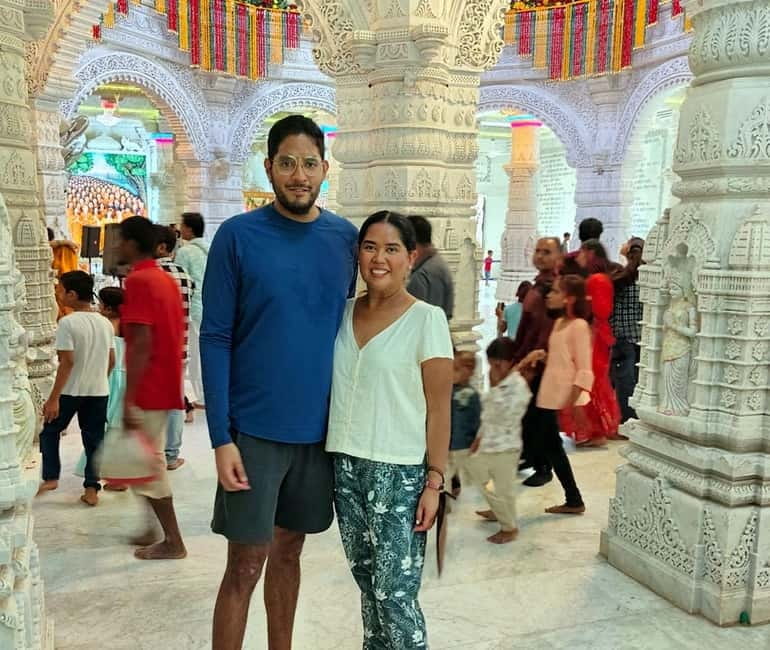
First major stop: Krishna Janmabhoomi Temple. This is the revered site believed to be the birthplace of Lord Krishna. Even if you’re not an expert in Hindu tradition, the place has a clear gravity. People come with intention, and you’ll feel that shift as soon as you enter the temple area.
What I like about this stop is that it sets the context for everything afterward. When you later see other temples dedicated to Krishna, you’ll understand why each one highlights a different aspect of devotion and storytelling.
Practical note: this is a busy religious site, so go at a calm pace. If you want time for photos, keep your camera ready but don’t block foot traffic. Your guide can also help you follow what’s appropriate when worship is underway.
Dwarkadhish Temple: calm air and detailed architecture
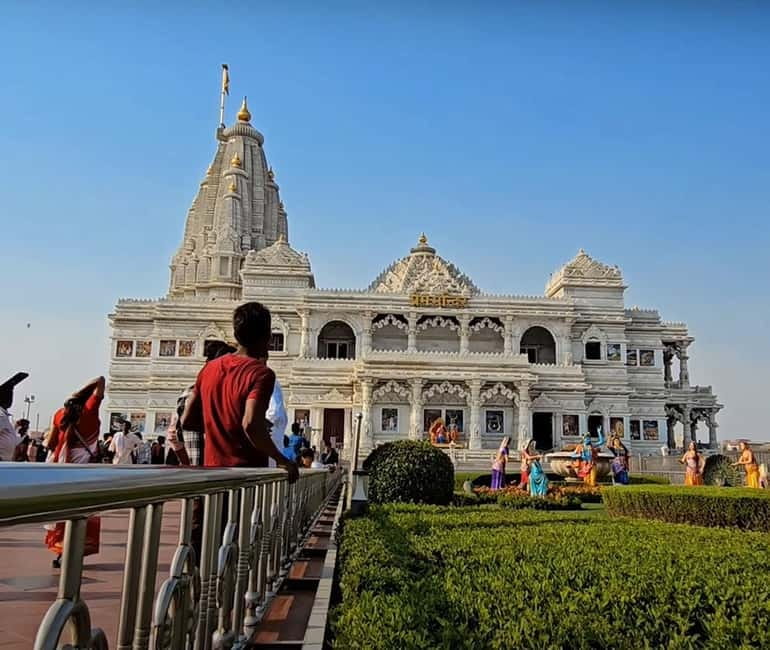
Next you’ll head to Dwarkadhish Temple. This stop is a little different in feel: it’s known for its architecture and a more serene atmosphere than the busier street sections.
Look closely. Temple design isn’t just decoration—it’s part of how the space directs attention. Carved work, stone surfaces, and the overall layout make it easier to slow down and look properly instead of rushing through.
This is a great “reset” stop in the middle of the day. If your feet are starting to feel heavy after the morning drive, Dwarkadhish gives you a calmer pace before Vrindavan’s major devotional energy kicks in.
The ride to Vrindavan: expect a change in atmosphere
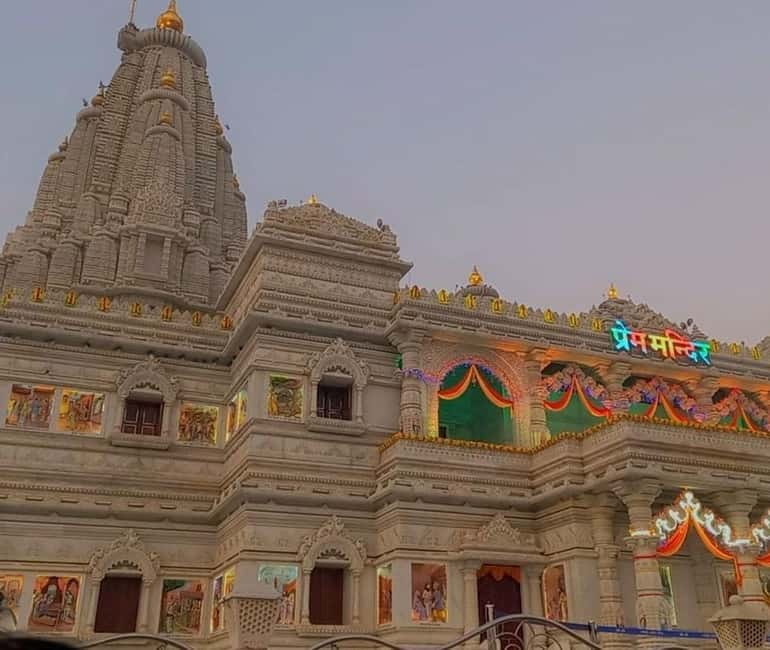
After Mathura, you’ll drive to Vrindavan, the nearby town tied closely to Krishna’s early life. The shift is usually noticeable: the streets and shops feel more intertwined with religion—less like a sightseeing zone and more like everyday life around devotion.
You get a block of time where you can stretch your legs too: a stroll through Vrindavan streets. This matters because Vrindavan isn’t only temples. The small vendors and the flow of pilgrims are part of the experience.


Banke Bihari Temple: the shrine that pulls people in
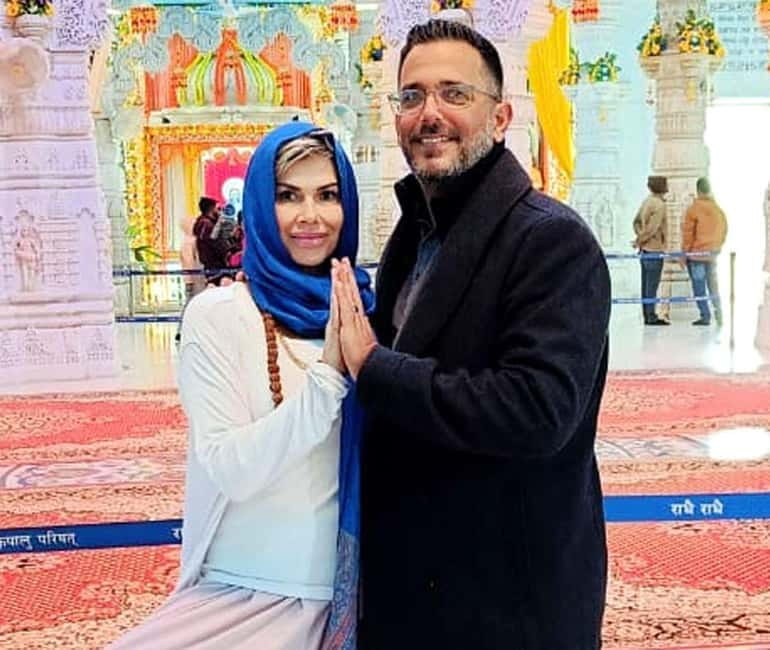
Your first big Vrindavan temple stop is Banke Bihari Temple. This is one of the region’s most popular devotion hubs, and you’ll see why quickly: people come with energy, and the atmosphere can feel intense in a good way.
Here’s my practical advice: don’t try to do everything at once. Let your guide orient you first, then decide what you need—time at the main area, a calmer moment on the edges, or a chance to watch worship without being in the tightest crowd flow.
If you’re traveling with family, this temple is also a good test of “patience skills.” It’s the kind of place where your group will either stay comfortable with the pace or get frustrated. If you’re the flexible, patient type, you’ll enjoy it more.
Vrindavan streets and shops: a cultural pause that feels real
Between temples you’ll have time to walk around. This is where you can pick up small souvenirs (assuming you want them) and just watch daily rhythms.
I like the street stroll component because it breaks the mental load. Temple days can start to blur together. A slow walk helps you remember what you’re in—Vrindavan isn’t only marble and ritual. It’s also people, daily transactions, and the constant presence of devotion in public life.
ISKCON Temple: a calmer prayer space and well-kept grounds
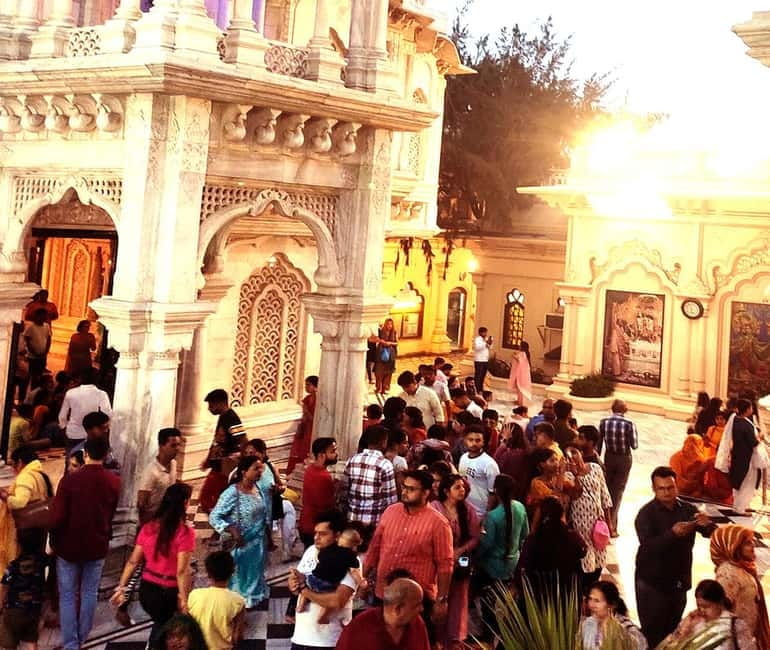
Next stop: the ISKCON Temple, also called Krishna Balaram Mandir. Compared to the most crowded shrines, ISKCON often feels more structured and calm, with gardens and a clear prayer-space layout.
This is a strong choice if you want a pause. Sometimes you need a temple that feels easier on the senses—less pressure from crowds, more room to breathe and reflect. The ISKCON environment is well maintained, and that helps the whole experience feel less chaotic.
If you prefer a guided explanation, this is also where your guide can make the symbols make sense—how prayer works, what people focus on, and why certain items show up around devotees.
Lunch break: what you should expect and what you pay for
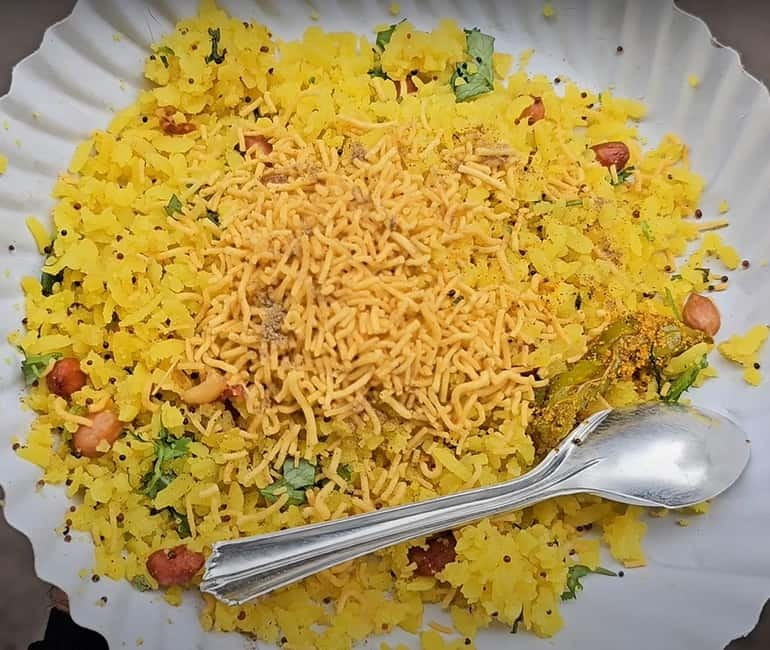
You’ll have a lunch break in Vrindavan. The plan includes a traditional vegetarian lunch at a local restaurant, but the key detail is this: meals are not included, so you’ll pay for lunch yourself.
That’s actually a benefit for some people. You can choose something straightforward, vegetarian, and not worry about guessing menu timing. Just remember that during temple days, lunch can be a trade-off: quick food keeps you on schedule, but a slower sit-down might cut into temple time.
If you’re sensitive to heat or crowded areas, build in water and a quick snack buffer. The schedule moves, so you don’t want to run out of energy mid-day.
Prem Mandir: the illuminated stop that gives the day a visual finale
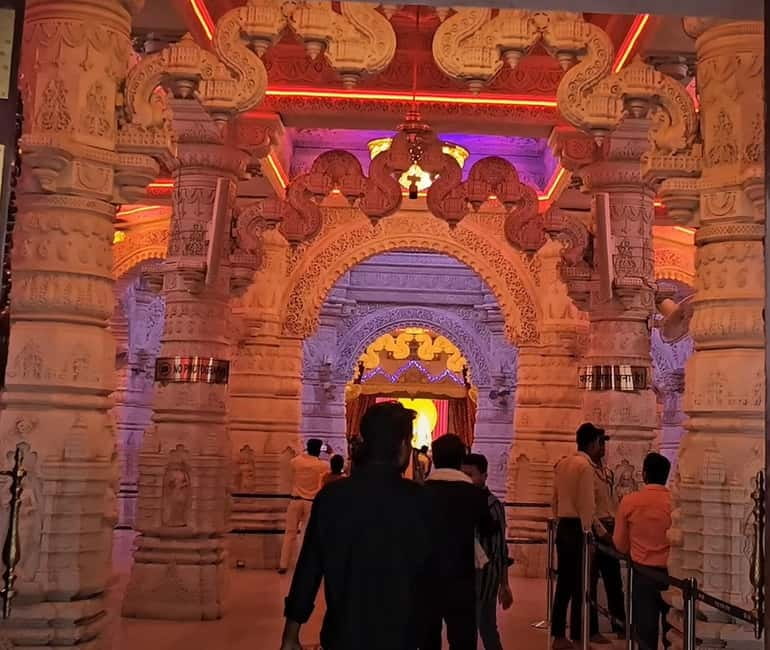
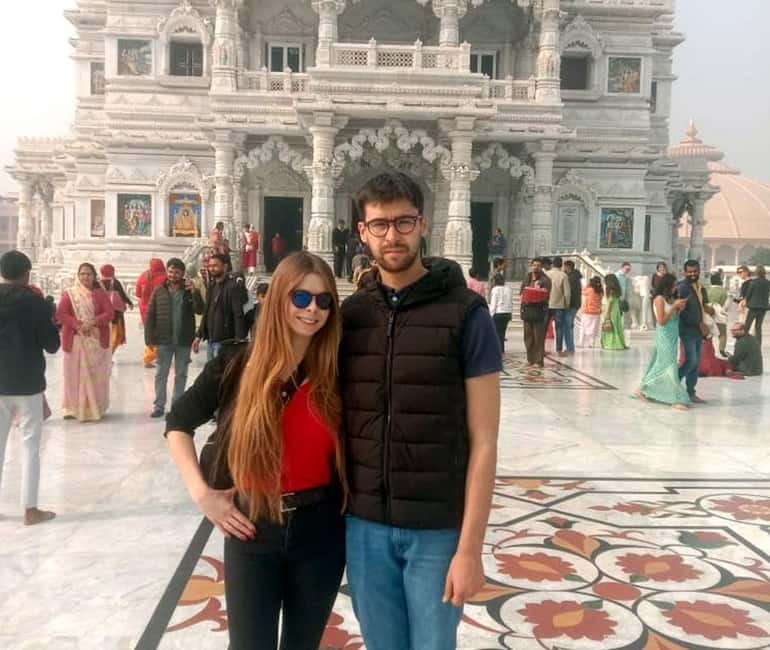
Your last major temple highlight is Prem Mandir, known for intricate carving and its illuminated beauty. This is the stop designed to end the day with a stronger visual impression than a typical daytime temple visit.
Because the general rule is that temples close at 12:30 PM and reopen after 4 hours, timing becomes a real factor for this final stop. In other words, if you’re hoping to see the full illuminated effect, you’ll want your timing to line up with reopening and evening operations.
My advice: show up with patience and treat the final stop as a reward, not a checklist item. If you’re wearing covered clothing and keeping expectations flexible, the illuminated carvings are the kind of memory that lasts.
Price and logistics: does $46 feel fair for what you get?
At $46 per person for a full 12-hour day, the value comes from what’s included. You’re getting:
- pickup and drop-off from your Agra/Delhi location,
- an air-conditioned car and private chauffeur,
- a live tour guide (English and Hindi),
- entry fees, parking fees, tolls, fuel, and taxes.
That package matters. Temple touring costs add up fast once you include vehicle time, guide time, entry tickets, and fees like parking. This tour bundles those essentials, so you’re not constantly pulling out your phone to calculate the next expense.
What’s not included is also clear:
- personal expenses like souvenirs,
- meals (even though there’s a lunch break),
- any extra camera/video fees where applicable.
If you want low-friction logistics—one driver, one guide, one plan—this price is the kind that makes sense.
What your guide helps you notice (and why that changes the day)
The biggest difference between a good temple day and a frustrating one is interpretation. When your guide knows what to point out, you stop feeling lost in crowds.
Past experiences highlighted guides like Deepak and Mr. Jai for explaining Hindu practices and the meaning behind what you see. One person specifically mentioned learning about things like Rudraksh (Rudraksha Mala) and Tilak, which are the sort of details you’d otherwise miss or misread.
If you care about understanding what you’re looking at, you’ll likely get more satisfaction from a guide-led format than a self-guided plan.
Practical tips that keep your day smooth
Temple rules are strict, and this tour is no exception.
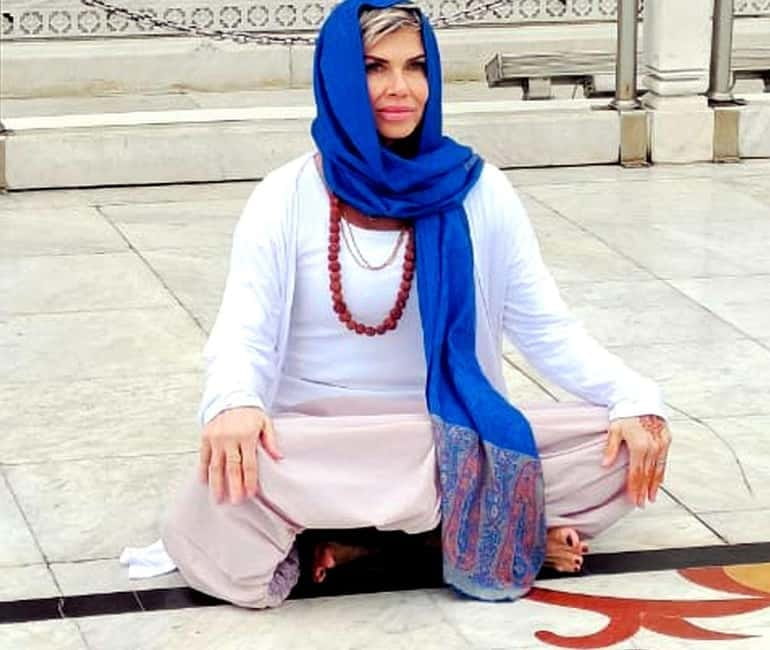
- Dress code: shoulders and arms must be covered for both men and women; shorts aren’t allowed. Bring something light but covering for the morning.
- Respect the rules inside: alcohol and drugs are not allowed, and alcohol is not allowed in the vehicle.
- Plan for timing pressure: with temple closures at 12:30 and reopening after 4, your schedule depends on starting early and moving efficiently between stops.
- Photo reality check: camera or video fees may apply at certain temples, so keep that in mind if you plan to shoot a lot.
Also, wear shoes you can walk in. A temple day involves entry lines, short transitions, and street walking—comfortable footing makes the day feel calmer.
Who should book this Mathura–Vrindavan tour
I think this works best for you if:
- you want a one-day overview of Mathura and Vrindavan’s top Krishna sites,
- you prefer a private car and guide instead of figuring transport on your own,
- you’re interested in spiritual context, not only photos,
- you can handle an early start and a long day.
It’s also a good match for families, as long as everyone can manage crowds and keep an eye on timing. If you need lots of downtime, you may find the packed temple sequence tiring—this is designed for momentum.
Should you book? My honest take
Yes, you should consider booking if you want an organized, guide-led Krishna day with transport handled and the major sacred stops included in one route. The best part is that the structure keeps you from wasting time, and the guide angle helps the day mean more than just seeing buildings.
Pass or rethink if you’re very sensitive to crowd intensity, you hate early starts, or you want a slow, flexible touring pace. Also, make sure you’re comfortable with dress rules and the fact that lunch is a break, not a fully included meal.
If that sounds like you, this is a solid value way to experience Mathura and Vrindavan in one go.
FAQ
What time is pickup, and how long is the tour?
Pickup starts around 6:00 AM, and the tour runs for about 12 hours. There’s also a note that starting around 5:00 AM is recommended due to temple hours.
What does the tour price include?
The price includes pickup and drop-off from your Agra/Delhi location, a private air-conditioned car with chauffeur, a live English/Hindi tour guide, entry fees, parking fees, tolls and fuel, and taxes.
Is lunch included?
No. There’s a scheduled lunch break, but meals are not included, so you’ll pay for lunch at a local vegetarian restaurant.
Which temples are included?
You visit Krishna Janmabhoomi Temple, Dwarkadhish Temple, Banke Bihari Temple, the ISKCON Temple (Krishna Balaram Mandir), and Prem Mandir.
What clothing rules do I need to follow?
Arms and shoulders must be covered for both men and women. Shorts are not allowed.
Can I bring alcohol or drugs?
No. Alcohol and drugs are not allowed, and alcoholic drinks are not allowed in the vehicle.
What’s the cancellation policy?
You can cancel up to 24 hours in advance for a full refund.