REVIEW · CHENNAI
Mahabalipuram and Kanchipuram Private Caves & Temples Tour
Book on GetYourGuide →Operated by INDIATOR · Bookable on GetYourGuide
Shore temples and silk shopping in one long day. This Mahabalipuram to Kanchipuram combo packs major South Indian temple eras into a tight, guided route. You’ll move from dramatic stone carving to the living bustle of the Golden City, with a guide to help you read what you’re seeing.
I love two things most. First, the Shore Temple area and the stonework around the Pancha Rathas make it easy to connect architecture with faith and power. Second, Kanchipuram gives you time at multiple big-name temples, plus a real chance to shop for Kanchipuram silk and cotton saris.
One drawback to plan around: temple schedules and access rules can affect what you actually get to enter and how many inner areas you see, especially around midday. In other words, you might not get the exact same count of halls as someone else, and your guide’s approach (including shopping pressure) can swing the experience.
In This Review
- Key highlights worth planning for
- Why Mahabalipuram and Kanchipuram fit together so well
- The Chennai pickup to Mahabalipuram drive: private comfort matters
- Shore Temple: the 7th-century start that sets the tone
- Pancha Rathas (Five Rathas): stone “practice models” you can actually understand
- How the day handles midday closures and changing temple access
- Kanchipuram’s temple lineup: why these specific shrines are worth the effort
- Temple sculptures and meaning: get the explanations, then look again
- Shopping for Kanchipuram silk and cotton saris without getting burned
- Lunch: plan on extra cost and choose based on your mood
- Price and value: is $115 per person worth it?
- Example guides and what to ask for on the ground
- Who this tour is best for (and who should pass)
- Final call: should you book this Mahabalipuram and Kanchipuram private caves and temples tour?
- FAQ
- How long is the tour?
- Where are the pickup and drop-off points in Chennai?
- Is the tour private and guided?
- What’s included in the price?
- What isn’t included?
- Is free cancellation available?
Key highlights worth planning for
- Shore Temple first: a strong start at the famous 7th-century seafront temple complex
- Pancha Rathas (Five Rathas): stone “models” that make early South Indian architecture easier to grasp
- A guided tour that explains iconography: you’ll get help reading sculptures and relief stories
- Kanchipuram’s major temples: Kailasanatha, Vaikunda Perumal, Kamakshi Amman, and Ekambareswara stops
- Time to shop for Kanchipuram silk and cotton: useful if you want the real thing in one day
- Midday closures can change the flow: plan for limited access around the hours when temples shut
Why Mahabalipuram and Kanchipuram fit together so well
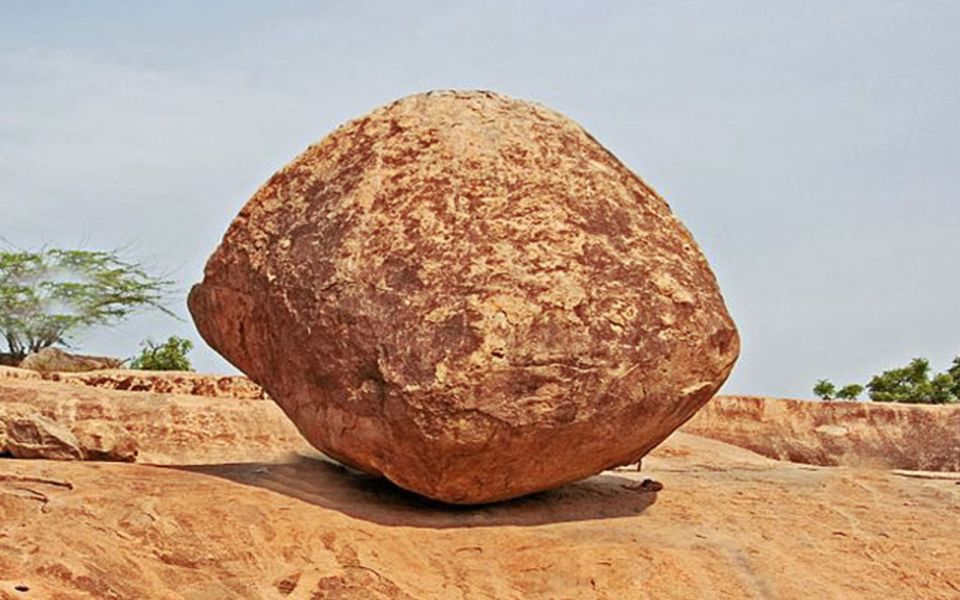
Mahabalipuram feels like a sculptor’s workshop frozen in time. You’re looking at 7th and 8th-century stone carving where devotion, royal ambition, and local craft all show up in the details. Then you shift gears and go to Kanchipuram, where temple life is not just preserved. It’s still part of daily culture.
This tour works because it groups two “interpretation heavy” destinations. In Mahabalipuram, you need context to understand what reliefs and carvings are trying to communicate. In Kanchipuram, you also benefit from explanations, since the temple complex is huge and the symbolism can get confusing fast.
And there’s a practical bonus. Doing both on one private day means you don’t spend half your trip figuring out transport and timing between cities. You get one plan, one vehicle, and one guide running the show.
You can also read our reviews of more private tours in Chennai


The Chennai pickup to Mahabalipuram drive: private comfort matters
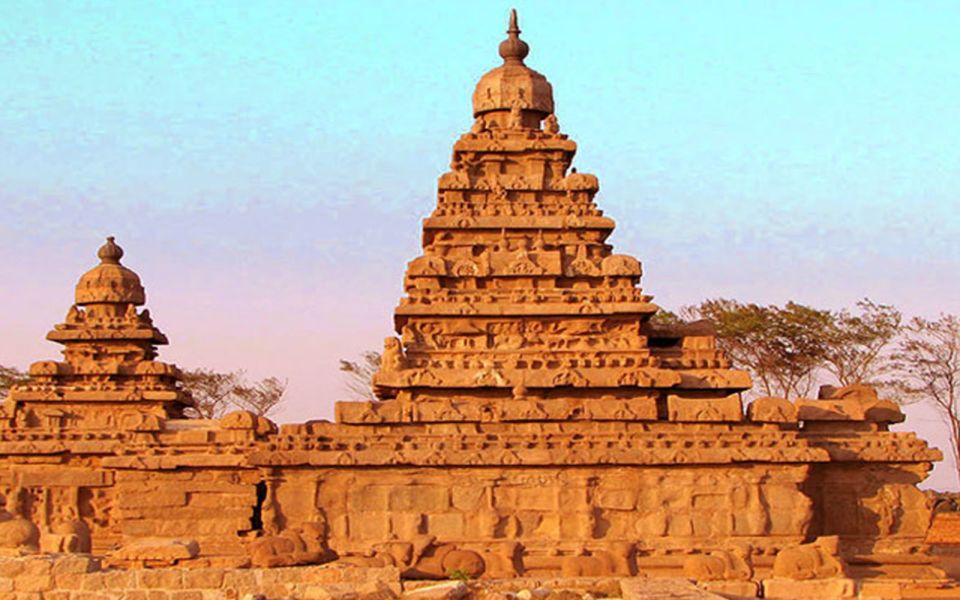
You start with pickup from your Chennai hotel within the city limits. A driver meets you in the lobby, and you head out by air-conditioned vehicle. This matters more than you’d think, especially if you’re traveling in warm weather or you’ve got limited daylight.
The tour is built around an 8-hour day. That’s long enough to see serious sights, but not so long that you’ll feel permanently exhausted. If you’re someone who hates split-second schedule changes, the private setup is a big plus.
Also, since it’s a private group, you can move at your guide’s pace. That’s useful in temples, where you might pause for explanations or step away to reset before the next stop.
Shore Temple: the 7th-century start that sets the tone
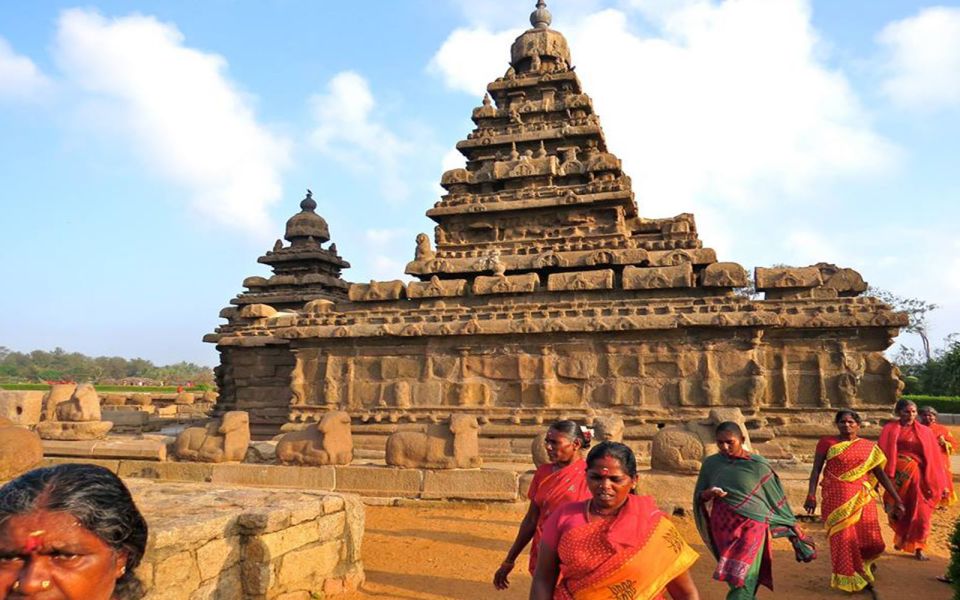
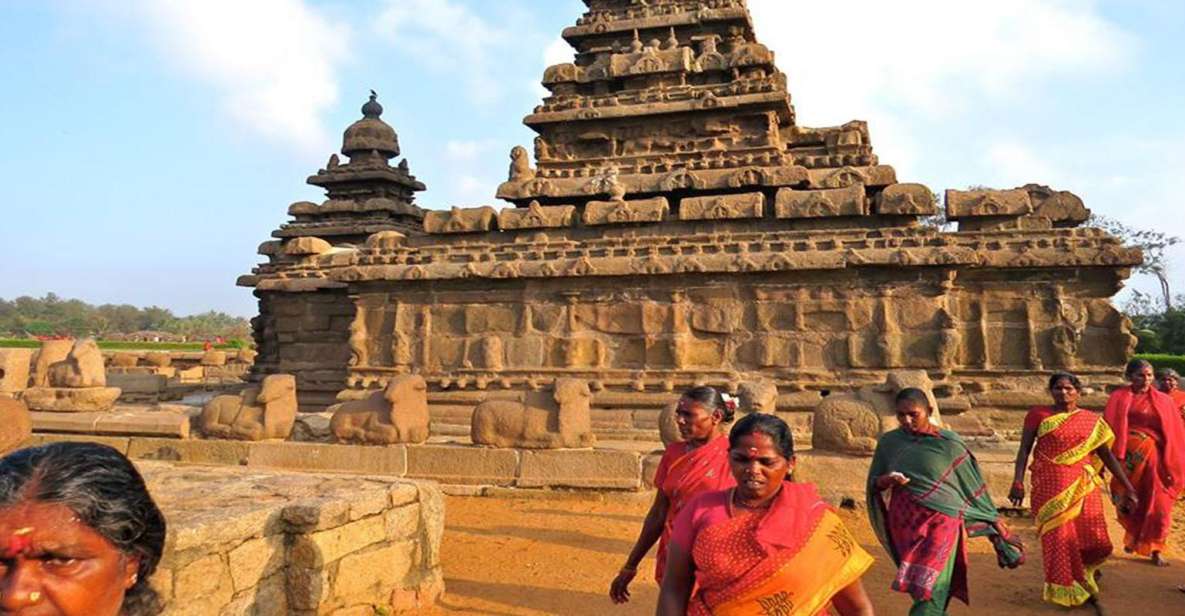
Your first major hit in Mahabalipuram is the 7th-century Shore Temple, set in gardens near the coast. It’s famous for a reason. The whole place feels like it was meant to be seen with time—light shifts, and stone surfaces look different when the sun moves.
What I like about starting here is that it anchors your day. Once you see the Shore Temple, you start noticing patterns. You’ll likely connect how dynasties expressed devotion through stone design, not just through statues.
As you tour the area, keep an eye on the relationship between architecture and storytelling. Even when you don’t catch every detail, a good guide can translate the main themes so it stops being random decoration. You’re not just walking around old buildings. You’re reading symbols.
Tip for your camera: entrance fees are included, but camera fees at monuments aren’t. If you rely on photos, ask ahead.
Pancha Rathas (Five Rathas): stone “practice models” you can actually understand
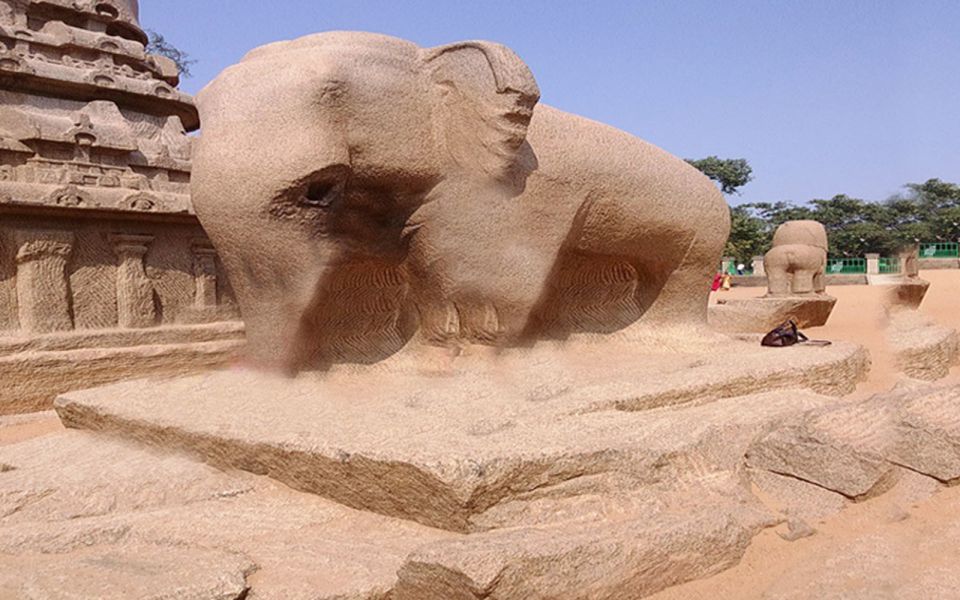
After Shore Temple, you move to the Five Rathas, also called Pancha Rathas. These are stone structures that make early architectural ideas feel tangible. They’re also a great mid-morning or late-morning stop because you can walk, compare shapes, and absorb them without needing to constantly sit and wait.
The key here is your guide’s explanations. You’ll get help understanding how different parts relate to Hindu thought and the way craft traditions evolved. When iconography gets explained clearly, the carvings start to feel less like puzzles and more like a visual language.
One detail to set expectations: an active “watch them carving” experience isn’t part of the plan. You’ll see the result and you’ll notice evidence in the stone of past carving work, which is still fascinating. But if you’re hoping to witness live stone cutting, you’ll be disappointed.
How the day handles midday closures and changing temple access
This route runs with real-world temple timing. One practical heads-up: temples in this region can close for hours in the middle of the day. You’ll want your plan to match reality, not just your arrival time.
There’s evidence that guides adapt to what’s open. That can mean your itinerary may feel like it changes on the ground, especially in Kanchipuram where multiple temples are listed. In some cases, you might be able to see parts of several shrines, but only enter a smaller subset.
Another access factor is entry rules. One guide-led experience described that foreigners and non-Hindus may not be allowed inside temples in certain cases. That’s not a tour-company fault, but it affects what you can personally experience. The upside is that having a guide can still help you understand what you’re seeing from permitted areas and avoid wasted time.




Kanchipuram’s temple lineup: why these specific shrines are worth the effort
Kanchipuram is known as the Golden City of a Thousand Temples. Even if you never get to see all of them, this tour targets the kind of major, historically important shrines that help you understand the city’s temple identity.
You’ll visit several standout temples:
- Kailasanatha Temple
- Vaikunda Perumal Temple
- Kamakshi Amman Temple
- Ekambareswara Temple
The value of doing these together is pattern recognition. Different dynasties and faith streams influenced temple architecture over centuries. Your guide can help connect what you see in carvings, layout, and style to that shifting history. That’s exactly where “having a guide” pays off, because the temples can feel overwhelming if you’re wandering without context.
Also, don’t ignore the cross-faith dimension in the story. The overall tour theme includes historical threads linked to Hindus, Jains, and Buddhists. You won’t necessarily get a lecture in a classroom format, but the city’s art and symbolism can hint at the broader religious environment that shaped what endures.
Temple sculptures and meaning: get the explanations, then look again
One of the strongest reasons this tour scores well is guide-led interpretation. A standout example from past experiences includes a guide named Shiva, described as both knowledgeable and funny, with real effort to keep the group engaged.
When a guide explains what carvings represent, you start seeing the same themes repeated across sites: devotion, royal patronage, and moral or spiritual storytelling. You also learn how artists used stone to create movement and emotion—especially on relief-style monuments.
This is where the day turns from sightseeing into something you can remember. You may still be tired by afternoon, but you’ll have mental bookmarks.
Shopping for Kanchipuram silk and cotton saris without getting burned
Kanchipuram is serious about textiles. The tour includes time to shop for Kanchipuram silk and cotton saris, and that’s a big draw if you want an authentic souvenir with local craft behind it.
Just be smart about shopping style. One account described a guide who pushed purchases through shops connected to people the guide knew, and the pressure made the experience less pleasant. That’s not guaranteed, but it’s a real risk worth noting.
Here’s how you handle it:
- If you don’t want a shop detour, say so early and calmly.
- If you do want to buy, treat it like a budget category, not an impulse.
- Ask to compare options rather than buying the first price you hear.
A private guide can still be helpful even if you shop less. You’ll still get temple explanations. But you’re the customer in the driver’s seat when it comes to shopping time.
Lunch: plan on extra cost and choose based on your mood
You’ll stop for lunch at a local restaurant after your Mahabalipuram sights. Lunch is not included in the tour price based on how this is structured, so budget for it.
What to expect? The biggest range is that lunch can be whatever suits the guide’s recommendation that day. One experience described being taken to seafood by the ocean, which sounds like a treat if you’re in the mood for fresh coastal food. Another described a restaurant meal where prices were higher but the seafood was good.
If you’re vegetarian, tell the guide in advance so the lunch stop matches what you want. Even if you don’t specify, it helps to have a plan, because time can get tight on an 8-hour schedule.
Price and value: is $115 per person worth it?
At $115 per person for an 8-hour private guided day, you’re paying for convenience and interpretation. Entrance fees are included, and you get a private English-speaking guide plus a private air-conditioned vehicle. That’s a real bundle.
However, value is personal. If you’re comfortable organizing your own transport and you can hire guides separately at each site, you might spend less. One account even argued the day felt overpriced compared with doing it in parts.
So how do you judge value correctly?
- Choose this if you want one organized day with minimal logistics stress.
- Choose this if your main goal is understanding what you see, not just ticking boxes.
- Skip or reconsider if you’re very budget-focused and you don’t care about guided explanations.
For many first-timers, the “one guide + one car + major sites” approach is the stress-reducer that makes the day enjoyable rather than exhausting.
Example guides and what to ask for on the ground
You can’t control everything, but you can steer the tone. The best experiences included a driver named Ram Kumar and a guide named Shiva. Both were praised for making the day feel smooth and informative.
If you want that kind of quality, ask your guide two things early:
1) Can you explain what you should look for at each temple, not just the names?
2) Where will we spend most time, and can we keep shopping stops optional?
Also, if entry restrictions apply, don’t force frustration. A good guide will help you get meaning from what’s accessible and keep you from feeling like you missed out completely.
Who this tour is best for (and who should pass)
This is best for you if:
- You want a private day with a single plan and a guide to interpret stone carvings and temple symbolism.
- You like major temple architecture and want to see Mahabalipuram and Kanchipuram back-to-back.
- You want time for textiles shopping without needing to figure out where to go.
It may be less ideal if:
- You hate shopping detours or you know you’ll feel pressured if someone tries to steer you.
- You need guaranteed temple entry everywhere, regardless of rules or midday closures.
- You’re looking for hands-on carving demonstrations, since this is about monuments and reliefs, not active stone-cutting work.
Final call: should you book this Mahabalipuram and Kanchipuram private caves and temples tour?
If you’re the kind of traveler who enjoys temple details and appreciates explanations, I’d lean toward booking. The combination of Shore Temple, Pancha Rathas, and Kanchipuram’s major shrines is a smart use of time, especially with hotel pickup in Chennai and private transport.
Just go in with realistic expectations. Temple timing can affect access, and the number of interiors you reach can vary. If you want to shop for silk saris, you’ll likely enjoy that part—just keep control of how much time you spend in shops.
If you want a smooth, guided cultural day with minimal logistics headache, this fits well.
FAQ
How long is the tour?
The tour duration is 8 hours.
Where are the pickup and drop-off points in Chennai?
Pickup and drop-off are offered to any hotel within Chennai city. The driver comes to your hotel lobby to pick you up and returns you after the tour.
Is the tour private and guided?
Yes. It’s a private group tour with a private English-speaking guide.
What’s included in the price?
Included are entrance fees as per the itinerary, the private English-speaking guide, private sightseeing and transfer by air-conditioned vehicle, and all taxes and service charges.
What isn’t included?
Personal expenses and camera fees at monuments are not included.
Is free cancellation available?
Yes. You can cancel up to 24 hours in advance for a full refund.