REVIEW · AGRA
Agra Local Sightseeing with Sunrise or Sunset Experience
Book on GetYourGuide →Operated by India Tour Solution - ITS · Bookable on GetYourGuide
Sunrise or sunset in Agra changes everything. This private tour is built around Taj Mahal timing, skip-the-line access, and a guide who helps you see details you’d otherwise miss.
You get an air-conditioned vehicle, smooth hotel-area pickup, and a full stretch of Mughal highlights—marble, fortifications, gardens, and a whole walled city.
I especially like two parts: a professional local guide who turns the monuments into stories you can actually follow, and the practical flow that keeps you moving without feeling rushed. Names like Israr, Azhar, Javed Khan, Faisla, Haji, and Ishan show up in the guide feedback, and the consistent theme is clear explanations and strong photo help.
One consideration: the headline price doesn’t include monument entrance fees, and you might also run into add-on transport charges on site (like an electric trolley/cart or short tuk tuk rides) even when the main entrance ticket is separate. Also note cameras aren’t allowed inside.
In This Review
- Key highlights worth your attention
- Sunrise vs sunset for the Taj Mahal: your timing decision
- Pickup, private vehicle, and door-to-door sanity
- Entering the Taj Mahal with skip-the-line access
- Agra Fort: the power behind the palace
- Baby Taj (Itimād-ud-Daulah): the small one that hits hard
- Mehtab Bagh across the Yamuna: the view for people who pay attention
- Fatehpur Sikri: a walled city that feels like time travel
- Price and logistics: where the $15 value actually comes from
- The guide makes the difference: names you can look for
- Getting social media-worthy photos with camera rules
- Who this tour fits best (and who should think twice)
- Should you book this Agra sunrise/sunset tour?
- FAQ
- How long is the Agra sunrise or sunset sightseeing experience?
- What does the tour include?
- Are monument entrance fees included?
- Is lunch included?
- Are cameras allowed?
- Where can you be picked up in Agra?
- Where can you be dropped off?
- Is the Taj Mahal open every day?
Key highlights worth your attention
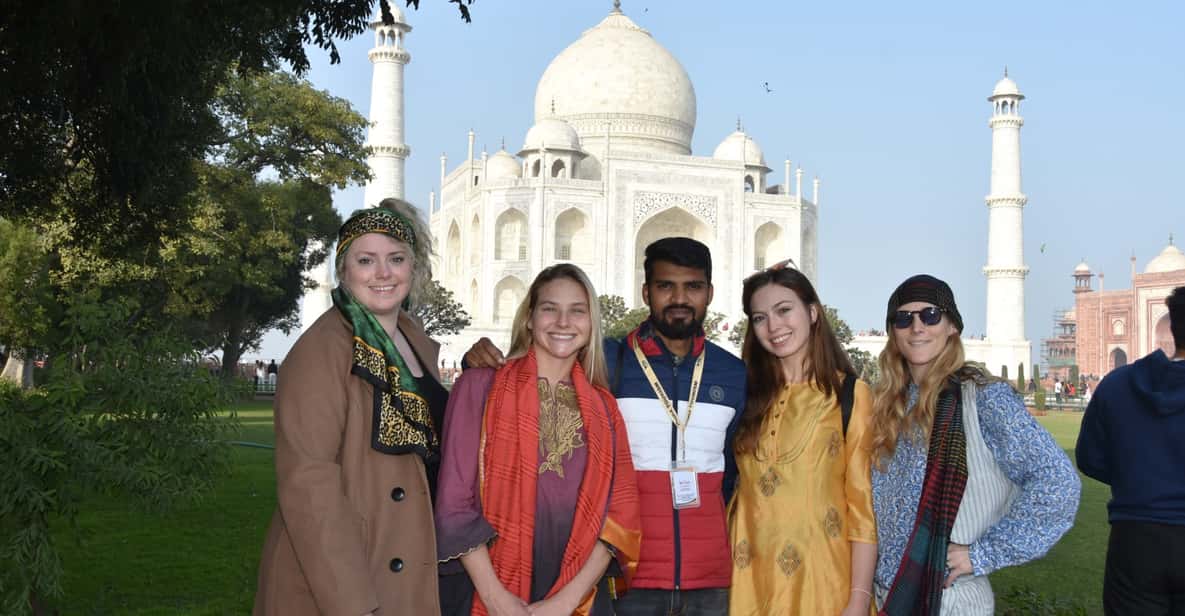
- Skip-the-line entry to the Taj Mahal so your morning (or late-day) doesn’t get swallowed by queues
- Inlay work show-and-tell that helps you spot what makes the marble look so detailed
- Battery bus return rides at Taj Mahal and Fatehpur Sikri, saving you from extra walking
- Professional private guide with multi-angle photo help, including positioning you for the best shots
- Air-conditioned door-to-door pickup and drop-off from Airport, Agra, or Agra Cantt
- A focused mix of Agra + Fatehpur Sikri without the frantic “see everything” feeling
Sunrise vs sunset for the Taj Mahal: your timing decision

This experience is designed around the magic light window. If you choose sunrise, you’ll usually get softer shadows and that fresh, early feel. If you choose sunset, the Taj takes on warmer tones and the sky can do a lot for your photos.
Either way, you’re not just showing up and wandering. Your pickup is scheduled to your chosen start time, and the day is paced around hitting the big sights when they’re most rewarding.
One practical heads-up: the Taj Mahal is closed on Friday. If your trip includes a Friday, plan your day around it or you’ll end up scrambling for alternatives.
You can also read our reviews of more evening experiences in Agra



Pickup, private vehicle, and door-to-door sanity

Agra can be chaotic if you’re trying to coordinate on your own. Here, you’re picked up from one of three areas: the Airport Area, Agra, or Agra Cantt. You also get drop-off in Agra Cantt, Agra, or the Airport Area.
That matters because time in India is usually about what you avoid, not what you add. Fewer stops for logistics means more actual viewing time at the monuments you came for.
You’ll ride in a private, air-conditioned vehicle. That’s a big deal in warmer months when walking between sites can get tiring fast. Even better, it’s a private group—so your guide can keep things aligned with your pace instead of trying to herd a larger crowd.
Entering the Taj Mahal with skip-the-line access

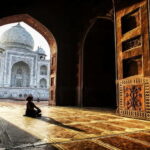
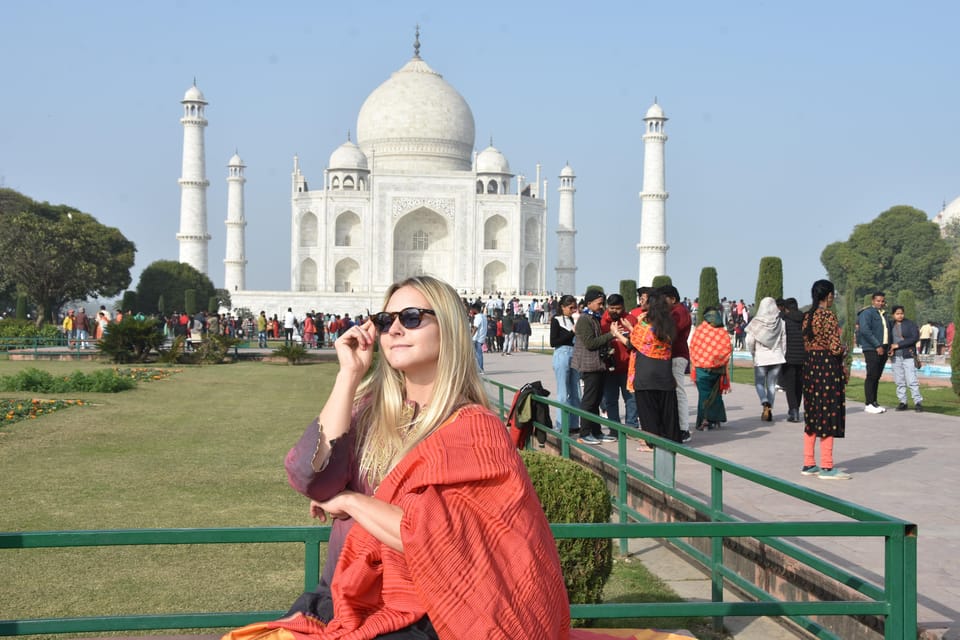
The Taj Mahal is the headline for a reason: commissioned in 1632 by Emperor Shah Jahan, it’s an ivory-white marble mausoleum tied to a love story that still lands hard today. But the real value of this tour is how you get in and how you understand what you’re looking at.
With skip-the-line access via a separate entrance, you’re not spending your best light time stuck near entry gates. Instead, you can use the first stretch to get your bearings, then let your guide point out what matters: proportions, craftsmanship, and the small details that make the whole monument feel impossibly refined.
There’s also an up-close demonstration tied to inlay work—exactly the kind of thing that turns a quick glance into a “wait, look at that” moment. This is where a guide’s hands-on explanations pay off. You’ll know what you’re seeing instead of guessing.
One rule to plan around: cameras aren’t allowed. If you’re counting on photographing inside, don’t. You’ll want to double-check what’s permitted for personal devices before you go, because the tour info is clear that cameras aren’t allowed.
Agra Fort: the power behind the palace

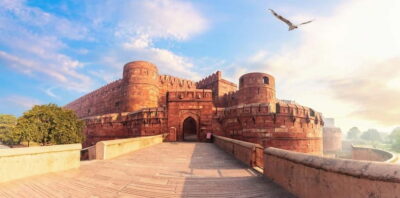
After the Taj, you shift from marble romance to Mughal muscle: Agra Fort, a UNESCO site and once the main residence of Mughal emperors. The fortress is built in red sandstone and marble, and walking its grounds gives you a different scale—fortifications instead of funerary elegance.
Your time here is about an hour, which is just enough to understand the layout and get that “this was political, not just pretty” feeling. The fort isn’t simply a background to the Taj. It helps explain how the empire that built the Taj actually lived and governed.
A good guide keeps the visit from feeling like a checklist. In the feedback, guides like Israr and Azhar stood out for connecting details to culture and history, and for directing you toward better ways to view the sites while keeping the pace comfortable.
Lunch isn’t included, so plan your hunger. This stop is long enough for a break if you can find something nearby, but it’s not part of the tour package.
Baby Taj (Itimād-ud-Daulah): the small one that hits hard
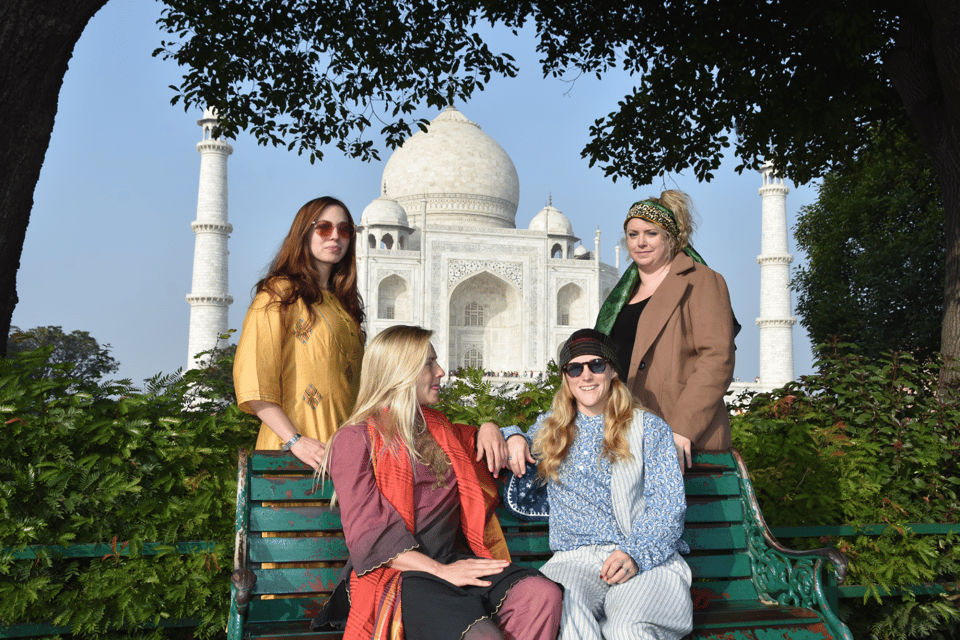
Next comes the “Baby Taj,” officially the Tomb of I’timād-ud-Daulah. It’s called that because it’s smaller than the Taj Mahal, but the impact can still be huge—especially if your guide helps you notice the craftsmanship.
You’ll spend around 35 minutes here. That timing works well because this monument rewards attention to detail. Too much rushing, and it becomes “another tomb.” Enough time, and it becomes a jewel-box moment of Mughal artistry.
The guide help can also matter for orientation. Baby Taj is easier to overlook if you think you already know what the Taj will look like. This stop reframes the day: not just the famous big statement, but the refinement that runs through smaller masterpieces too.
You can also read our reviews of more tours and experiences in Agra





Mehtab Bagh across the Yamuna: the view for people who pay attention
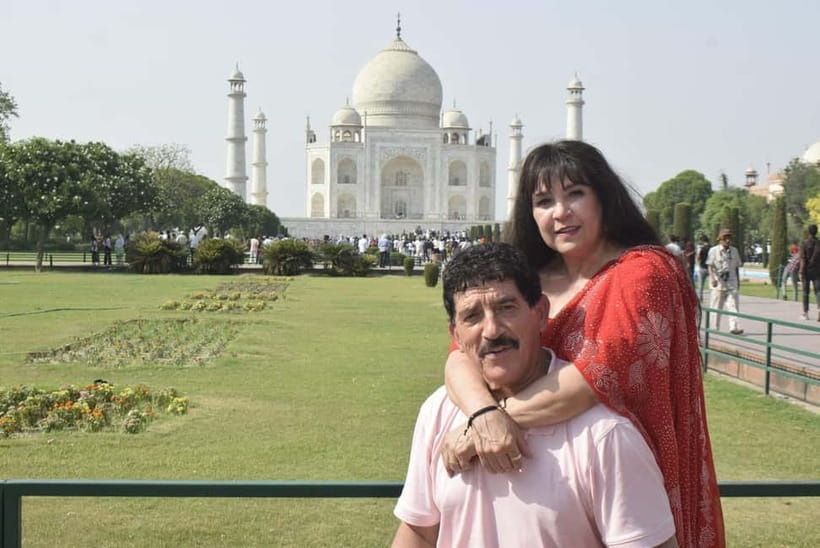
Then you head to Mehtab Bagh, a garden north of the Taj Mahal, across the Yamuna River. This is a shorter visit—about 35 minutes—but it’s timed for a reason.
The idea here is to see the Taj from a different angle and to understand it as part of a designed landscape. A garden stop might sound optional, but it changes how the Taj sits in the world. The monument feels less like a standalone object and more like something planned in relation to water, symmetry, and space.
Also, the tour includes a battery bus return ride at Taj Mahal and Fatehpur Sikri. That’s a practical convenience that keeps your energy for actual walking where it matters.
Fatehpur Sikri: a walled city that feels like time travel

Finally, you move on to Fatehpur Sikri, the 16th-century walled city. This is one of those places where the walls do a lot of the storytelling before you even read the details.
You’ll have about 70 minutes here. That’s enough to walk through key areas and get a sense of how well-preserved the site is, without feeling like you’re trapped in a lecture.
After sightseeing, there’s time for local shopping for handicrafts before you’re taken back to your hotel or the location you started from within Agra.
In the guide feedback, Faisla and Javed Khan got praise for making the visits meaningful, not just moving you from gate to gate. That matters most on Fatehpur Sikri, because it’s big. A clear explanation helps you understand what you’re seeing and why the place mattered.
Price and logistics: where the $15 value actually comes from
The starting price is listed at $15 per person, and that can feel almost too good—until you look at what’s included.
Here’s what you do get for that price:
- A private tour setup
- Pickup and drop-off from selected Agra locations
- An air-conditioned private vehicle
- A professional local guide (English plus several other language options)
- Battery bus return rides at Taj Mahal and Fatehpur Sikri
- Bottled water
Here’s what’s not included:
- Monument entrance fees
- Lunch
- Personal expenses
So the real value isn’t only “you pay $15.” The value is that you’re buying time savings + guided clarity + less hassle. Skip-the-line access is part of that. Private transport is part of that. Battery bus help is part of that.
One caution from real-world feedback: there was at least one complaint about being asked to pay for an electric trolley/cart and a short tuk tuk ride even though the expectation was that entrance tickets were the main extra cost. I can’t promise every day will work the same way, but you should treat this as a budget variable. If possible, ask your driver or guide what on-site transport charges might appear, so you’re not surprised.
And bring cash. Cash is specifically mentioned as something you should have.
The guide makes the difference: names you can look for

In Agra, a good guide turns the Taj from a photo spot into a place you understand. The feedback shows repeated praise for guides who explain the sites clearly and help with practical photo angles.
Examples from the guide feedback include:
- Israr (praised for Taj Mahal and Agra Fort knowledge and storytelling)
- Azhar (praised for making the Taj Mahal history meaningful)
- Javed Khan (praised for explanations at Taj, Agra Fort, and Baby Taj)
- Faisla (praised for exceptional knowledge across multiple stops)
- Haji (praised for a fun, smooth experience)
- Ishan (praised for being very good and knowledgeable)
- Smith (praised for friendliness and knowing good picture angles, though one experience felt it wasn’t worth the money)
That last point is important. The tour is private, but “private” still depends on how the guide works and how the day is paced. If you want a very personal, unhurried experience, you may want to communicate what matters most to you—photography time, slower explanations, or extra stops—so expectations match the reality.
Getting social media-worthy photos with camera rules
You’ll want photos, because Agra practically demands them. But cameras aren’t allowed per the tour information. That means you need a plan that respects the rules.
The tour highlight says you’ll take memorable social media photos of your experience. Practically, that points to two things:
- Your guide will help you position yourself and time shots outside the restricted areas.
- The guide may also handle photo-taking for you, if permitted.
Still, don’t assume. Check what devices are allowed for you when you arrive, because the camera restriction is specific. In the meantime, wear shoes that let you move comfortably—there’s walking at multiple sites, and you’ll want your feet to keep up with your ambition.
Who this tour fits best (and who should think twice)
This works well if you want:
- A private guide in English or another listed language
- A tight list of must-see Agra monuments plus Fatehpur Sikri
- Pickup and drop-off convenience without bargaining
- A day plan that doesn’t leave you exhausted by constant transfers
It’s also wheelchair accessible, so it’s built to accommodate that need.
It’s not suitable for babies under 1 year, based on the provided information. If you’re traveling with very young kids, consider whether the pace and walking will work for your family.
If you’re the type who likes history only when it’s connected to details you can see, this will likely feel worth it. If you just want a quick checklist with no explanation, you might end up feeling like you paid extra for guidance you didn’t need.
Should you book this Agra sunrise/sunset tour?
I’d book it if you value a smooth, guided day where the Taj Mahal isn’t just a stop—it’s the start of a bigger Mughal story. The combination of skip-the-line entry, professional guiding, and battery bus returns at key points makes the day feel more manageable than DIY.
Skip booking (or adjust expectations) if:
- You’re counting on making inside Taj photos with a camera device.
- You’re very price-sensitive and can’t handle small on-site transport add-ons.
- You travel on a Friday, since the Taj Mahal is closed that day.
If you do book, do two smart things: bring cash for anything that isn’t bundled, and ask ahead what on-site transport charges you might see so your budget stays calm. Then choose sunrise or sunset based on the light you want, put on comfortable shoes, and let the guide do the heavy lifting of turning Agra into a story you can actually follow.
FAQ
How long is the Agra sunrise or sunset sightseeing experience?
The duration ranges from 4.5 to 9 hours, depending on the starting time availability you choose.
What does the tour include?
It includes a private tour, pickup from your location in Agra (airport, hotel, or railway station), sightseeing in an air-conditioned private vehicle, a professional local guide, battery bus return rides at Taj Mahal and Fatehpur Sikri, and bottled water.
Are monument entrance fees included?
No. Monument entrance fees are not included.
Is lunch included?
No. Lunch is not included.
Are cameras allowed?
Cameras are not allowed.
Where can you be picked up in Agra?
Pickup is available from three options: the Airport Area, Agra, and Agra Cantt.
Where can you be dropped off?
Drop-off options are Agra Cantt, Agra, and the Airport Area.
Is the Taj Mahal open every day?
No. The Taj Mahal is closed on Friday.