REVIEW · NEW DELHI
Delhi: Private Half-Day or Full-Day Old and New Delhi Tour
Book on GetYourGuide →Operated by Best Golden Triangle Tour · Bookable on GetYourGuide
Two Delhis, one private day. I love the rickshaw glide through Chandni Chowk and the way the route links Mughal-era landmarks to modern New Delhi. You’ll also appreciate a private guide who can flex your pace. One thing to consider: Old Delhi lanes can be crowded and slow, so a full-day plan may feel tight if you hate waiting.
Pickups are available from many parts of the Delhi region and airports, and you travel in AC transport between stops, with water bottles and umbrellas on hand. Guides like Tabrej, Junaid, Imrul, Mohamed Aakil, and Aamir are known for clear explanations, and the tour uses a separate entrance to help you avoid long entry lines.
In This Review
- Key things to know before you go
- Choosing half-day or full-day: make the route fit your stamina
- Pickup and AC comfort: the practical part that saves your day
- Old Delhi’s centerpiece: Jama Masjid and the way the city smells
- Chandni Chowk by rickshaw: fast enough to feel it, slow enough to notice
- Red Fort from the outside: a short stop with big presence
- Gurudwara Bangla Sahib and Agrasen ki Baoli: the calm breaks
- New Delhi’s modern nation-symbols: India Gate, Parliament, and Raj Ghat
- Lotus Temple and Humayun’s Tomb: modern faith and Mughal mastery
- Rashtrapati Bhavan and Qutb Minar: scale, power, and a city on layers
- How the guide changes the whole day
- Tickets and what’s actually included in your cost
- Planning around closures and keeping the day comfortable
- Who this tour suits best (and who might not love it)
- Should you book this Old and New Delhi tour?
- FAQ
- How long is this Old and New Delhi tour?
- Is hotel or airport pickup included?
- Do I ride a rickshaw in Old Delhi?
- Are monument entry tickets included?
- What sites does the tour cover in New Delhi?
- What languages is the guide available in?
- Is food included?
- What happens on Mondays?
- What should I bring, and what’s not allowed?
- Is the tour wheelchair accessible?
Key things to know before you go
- Rickshaw through Chandni Chowk: A guided ride in the heart of Old Delhi, where you’ll smell spices and see everyday trade up close.
- Old Delhi anchors: Jama Masjid plus a quick look at Red Fort from the outside, with time for the surrounding bazaar energy.
- New Delhi’s “big symbols”: India Gate and Parliament viewpoints, then a quieter stop at Raj Ghat.
- Lotus Temple meets Mughal power: Modern Lotus Temple and Humayun’s Tomb, with generous on-site time for both.
- Smaller stops add texture: Gurudwara Bangla Sahib and Agrasen ki Baoli help break up the monument-heavy pace.
- Monday adjustments happen: Lotus Temple and Red Fort are closed on Mondays, and the route can swap in Raj Ghat and Jantar Mantar.
Choosing half-day or full-day: make the route fit your stamina
This tour works in two lengths, typically 4 to 8 hours depending on whether you choose a half-day or full-day approach. That matters in Delhi because the “distance” between sights is less important than the time spent navigating people, traffic, and walking.
If you’re in Delhi for a short stay, I like the half-day version because it focuses your day on the most famous contrast: Old Delhi’s spiritual-and-market core, then New Delhi’s landmark zones. If you have more time, the full-day option gives breathing room for the extra monuments and temple stops without feeling like you’re constantly sprinting between cameras.
A big plus here is flexibility. Your guide can modify the order to fit your flight timing, so you’re not forced into a rigid script when your day has its own schedule.
You can also read our reviews of more private tours in New Delhi



Pickup and AC comfort: the practical part that saves your day
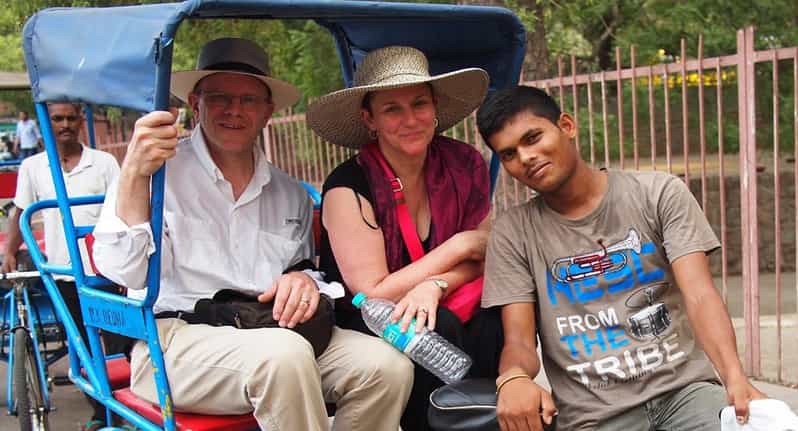
The tour includes hotel/airport pickup and drop-off, with pickup available across Delhi (and nearby cities like Gurugram, Ghaziabad, Noida, and Faridabad). That alone reduces the biggest stress for first-timers: figuring out how to get across town when you’re already tired.
Between sights, you ride in air-conditioned transportation. You also get water bottles and umbrellas, which is useful because weather in Delhi can shift quickly and you’ll be out walking.
One more detail I appreciate: parking fees and taxes are covered. That removes the small “surprise” costs that can pop up when you do this type of route on your own.
And yes, the transport side has been rated perfectly by everyone who provided feedback, so you’re not gambling on an uncomfortable vehicle or messy timing.
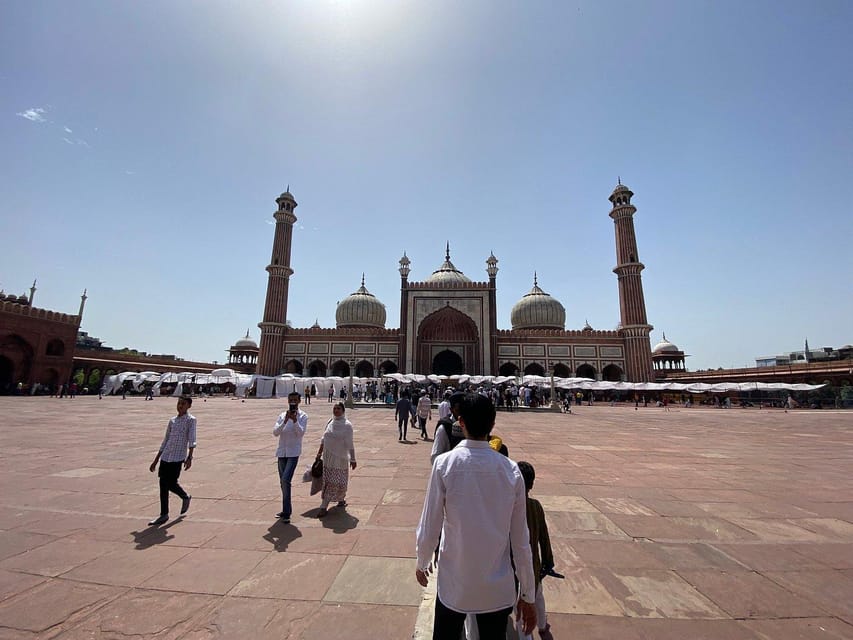
Old Delhi’s centerpiece: Jama Masjid and the way the city smells
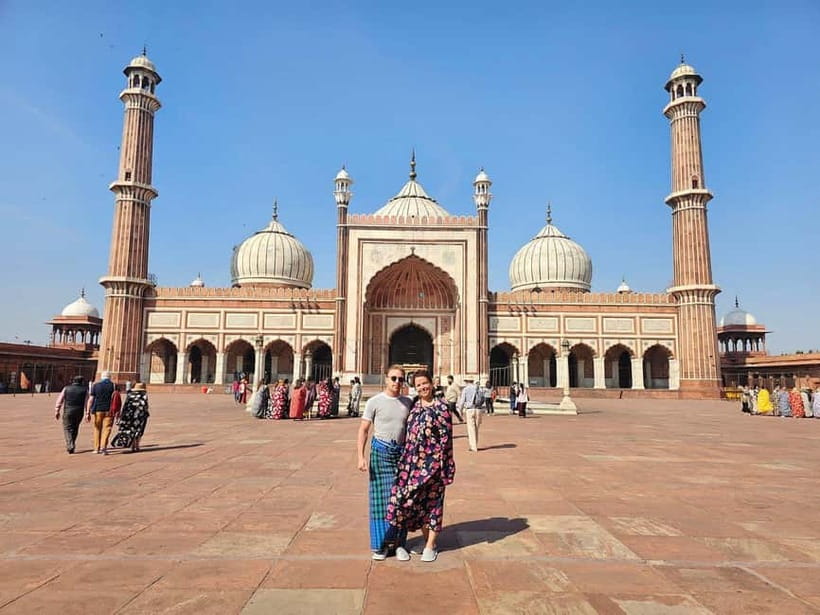
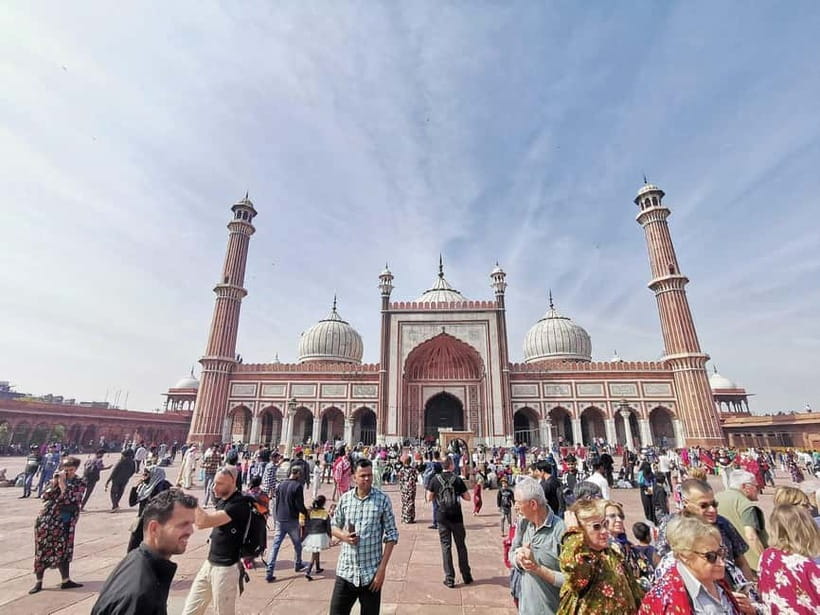
Old Delhi starts with Jama Masjid, one of the most visually dramatic landmarks in the area. You get a guided visit (about an hour), which is the difference between “seeing a big mosque” and understanding what you’re looking at.
Why a guided start helps: in Old Delhi, people and buildings are layered with meaning. The guide’s job is to point out what to notice—architecture details, how the mosque functions, and how this part of the city developed as a hub.
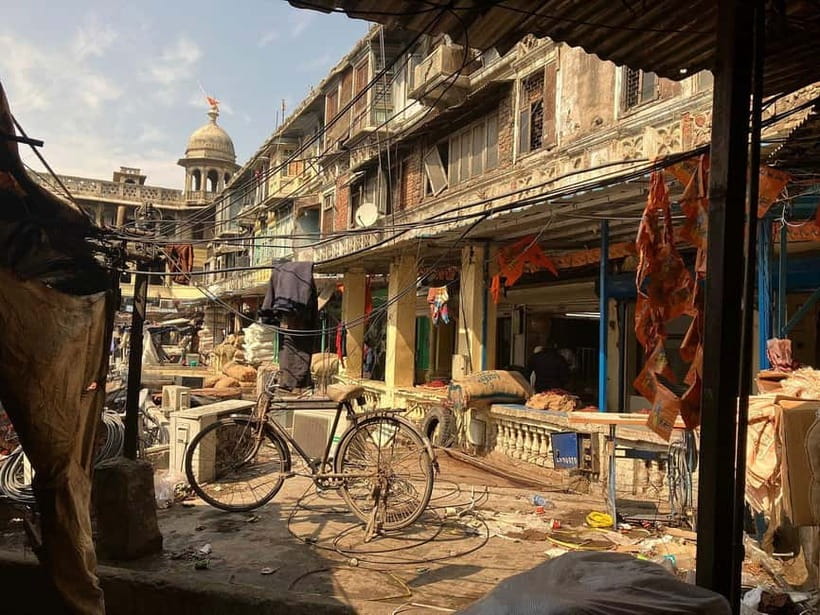
After the mosque, you move into the wider Old Delhi zone where the senses hit at once: spice aromas, cooking smoke, the sound of bargaining and calling, and the constant movement of shoppers and vendors. It’s not just sightseeing; it’s the daily rhythm of the city.
Chandni Chowk by rickshaw: fast enough to feel it, slow enough to notice
Next comes the Chandni Chowk section, with a rickshaw ride in Old Delhi (when that option is selected). This is the kind of activity that instantly changes your perspective.
Walking in Chandni Chowk is slow because crowds are thick. Driving through it in a car doesn’t feel like the neighborhood. The rickshaw sits in the middle. It’s slow enough for you to see what’s going on—signs, storefronts, and the little storefront-to-street details—while still keeping you moving.
The guided portion also helps you avoid turning your day into a blur. Instead of just being swept along, you learn what you’re seeing while you ride. You’ll likely want your phone/camera ready, but don’t forget: the best moments can be the ones you don’t rush to photograph.
Red Fort from the outside: a short stop with big presence
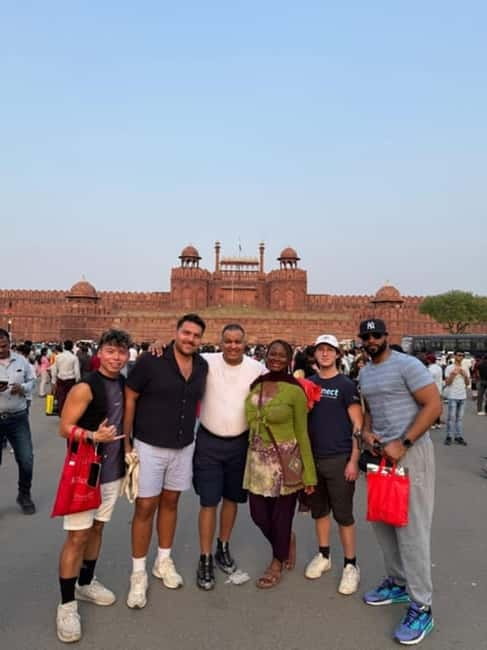
After the bazaar area, the day includes an exterior look at the Red Fort (about 20 minutes, guided with a pass-by). You’re not going deep inside here, so you won’t get the full museum-style experience.
Still, it works well in a half-day or even full-day flow because it gives you that “wow” frame. The fort’s size and color are unforgettable, even from the viewpoint you’ll have. Think of it as a story marker: Old Delhi’s power and planning made visible.
One practical note: the fort stays closed on Mondays. If your schedule includes a Monday, the route adjusts, and that may affect how much time you spend in this exact area.
You can also read our reviews of more tours and experiences in New Delhi



Gurudwara Bangla Sahib and Agrasen ki Baoli: the calm breaks
Between mega-landmarks, you get two stops that help balance the day.
- Gurudwara Bangla Sahib (about 45 minutes): a chance to slow down, observe, and understand a different spiritual side of Delhi.
- Agrasen ki Baoli (about 30 minutes): this stepwell area is a quieter kind of sight—less “major monument photo,” more “small-world drama” where you notice structure and history through a smaller lens.
These stops matter because a pure monument marathon can start to feel the same after a while. The guide’s job is to keep the explanation connected, so the day feels like a single story rather than separate checkboxes.
New Delhi’s modern nation-symbols: India Gate, Parliament, and Raj Ghat
Once you shift to New Delhi, the vibe changes quickly: wider roads, planned districts, and architecture that feels more “designed.” You’ll see key national landmarks.
India Gate is a quick stop (about a short guided visit or pass-by time), then Parliament building is also covered as a pass-by. These are best appreciated as context points. They show you how the city frames national identity in stone, lines, and open space.
Then comes Raj Ghat (about 20 minutes), which tends to land differently than the big government visuals. It’s calmer, and it helps you understand the country’s independence story without needing a long lecture. With a good guide, you’ll leave this part with a clearer sense of what you just walked through.
Lotus Temple and Humayun’s Tomb: modern faith and Mughal mastery
This is where many people feel the “wow” moments most strongly.
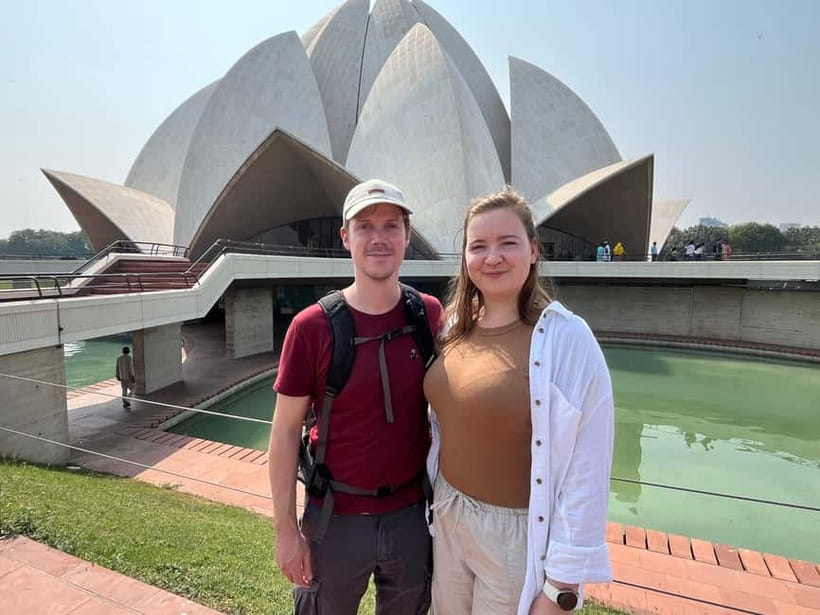
Lotus Temple gets about an hour. It’s known for its striking form and the way it draws people in for quiet time. The guided visit is helpful because it turns your attention from just the shape to the meaning behind the design and how it fits into Delhi’s religious map.
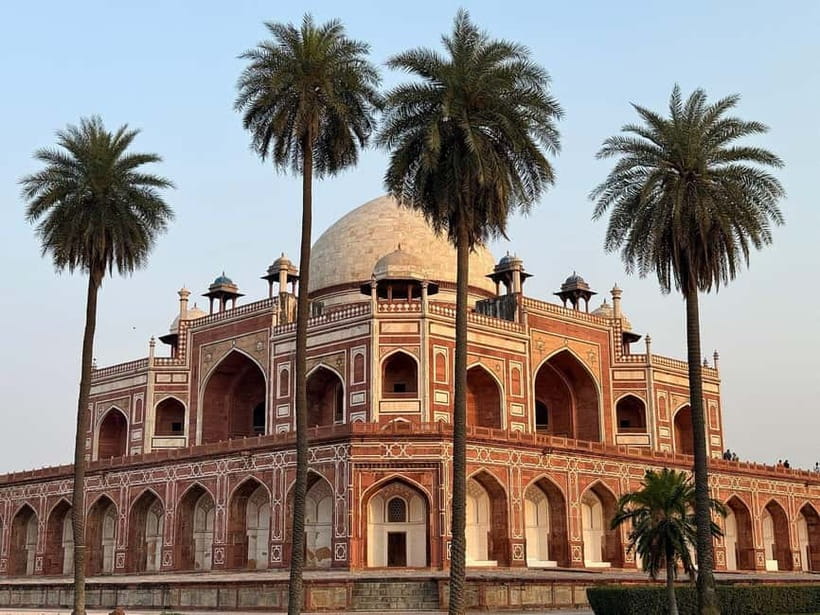
Then you go to Humayun’s Tomb (about 75 minutes). This is a longer stop, which is exactly right: this site rewards slower looking. You’ll get time for guided explanation and photos, plus the chance to absorb the scale and planning of the tomb complex.
Big Monday note again: Lotus Temple stays closed on Mondays, so your schedule may shift.
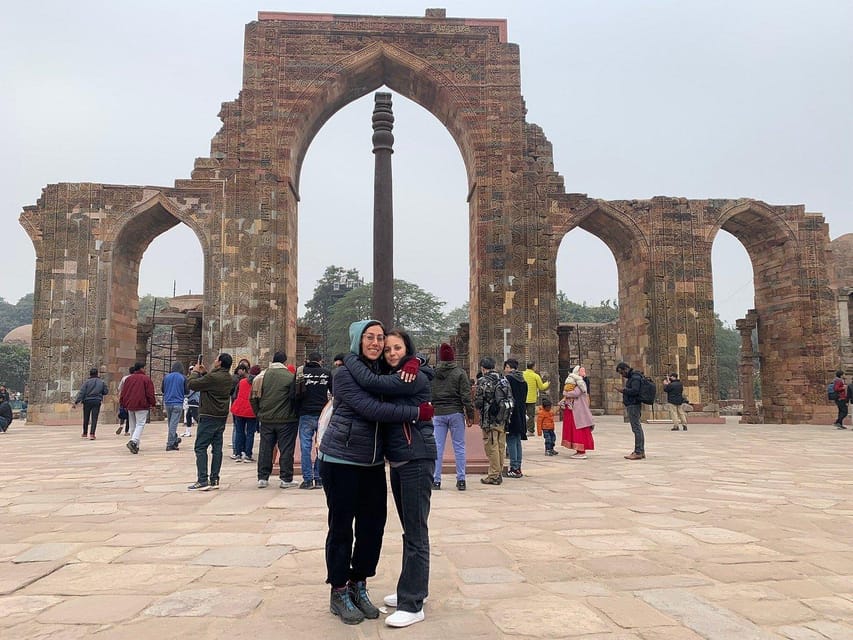
Rashtrapati Bhavan and Qutb Minar: scale, power, and a city on layers
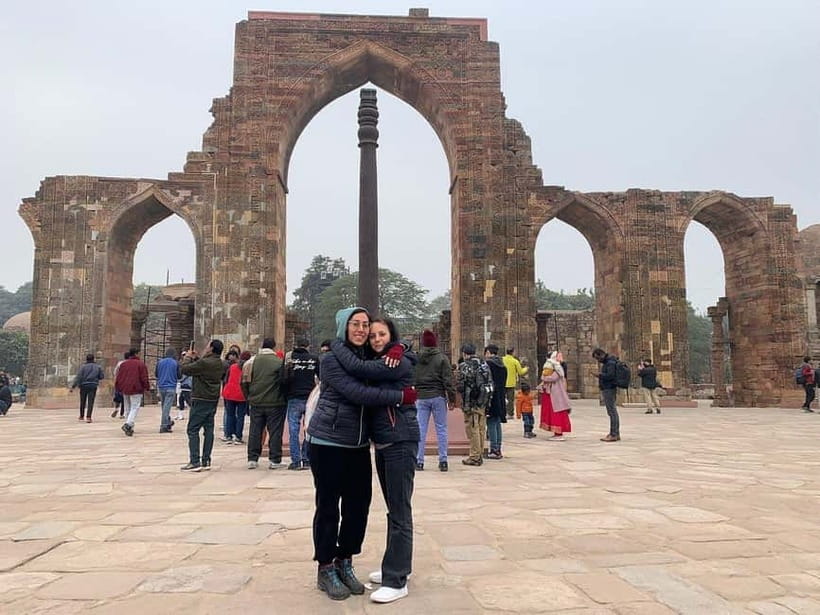
Two more highlights round out the New Delhi sweep.
Rashtrapati Bhavan is typically a short guided visit (about 20 minutes). You mainly appreciate it from the outside viewpoints you get, but the guide helps make sense of its role in how Delhi represents governance and national identity.
Qutb Minar gets around an hour guided time. This stop is a great counterpoint to the modern feeling of some New Delhi streets. It’s older, heavier, and visually commanding. Even if you’ve seen photos already, standing near it changes your sense of scale.
Together, these sites make the city feel like layers of time instead of one era.
How the guide changes the whole day
This tour is a private group experience with a live guide, and that changes everything in Delhi. A driver can take you to places. A guide helps you understand what those places mean and how they connect.
The guide language coverage is broad (English, Spanish, French, German, Russian, Hindi, Japanese, Chinese, Portuguese), so you’re not stuck with a vague explanation.
From the style of guides reported with this route, you can expect clear storytelling:
- Tabrej is noted for making history feel lively and adding small breaks like chai and bites when the timing allows.
- Junaid and Imrul are described as serious about cultural and historical context, with time spent explaining why things matter, not just what they are.
- Mohamed Aakil is praised for clarity and helping with practical needs during the day.
- Aamir is mentioned for adapting the tour so it matches what people actually want to see.
That “adaptation” point is key. If you care more about architecture, you’ll likely get more focus there. If you prefer a smoother pace, your guide can dial it back.
Tickets and what’s actually included in your cost
The price listed is $1.21 per person, and the best way to judge value is what you get around that number.
Included basics:
- Hotel/airport pickup and drop-off
- Air-conditioned transportation
- Live tour guide
- Parking fees and taxes
- Water bottle and umbrellas
Also included only if you choose the options:
- Monument entry tickets
- Rickshaw ride in Old Delhi
Food and drinks are not included. That means you’ll want to plan for snacks or a meal on your own, especially if you’re doing a full day and walking a lot.
My takeaway: the tour is strongest for people who want guidance plus transport without the headache of arranging everything. If you’re the type who likes to wander independently with no schedule at all, you might not feel the same value.
Planning around closures and keeping the day comfortable
One “know before you go” detail matters for Mondays: Lotus Temple and the Red Fort remain closed on Mondays. The route can swap in Raj Ghat and Jantar Mantar instead.
Also, be ready for the reality of Old Delhi movement. Even with a plan, you’ll deal with foot traffic and lane congestion. The tour’s private transport helps between areas, but your feet still do the work once you’re in the Old Delhi zone.
If you want to make the day smoother:
- Wear comfortable shoes (you’ll be walking around multiple monuments).
- Bring your passport or ID card as requested.
- Carry a light layer if you’re sensitive to air-conditioned vehicles plus outdoor heat swings.
Who this tour suits best (and who might not love it)
This is a great fit if you want:
- a structured introduction to both Old and New Delhi
- a chance to see major sights without timing stress
- private guiding that can adjust to your day and interests
- practical support like pickup, AC transport, and umbrellas
It might be less ideal if you’re very sensitive to crowding and slow movement, especially during Old Delhi portions, because you can’t fully escape that neighborhood rhythm.
If you’re traveling solo or with a small group, the private format gives you the most value. If you’re a history-leaning traveler, Humayun’s Tomb plus the mosque and the other cultural stops feel like the best use of time.
Should you book this Old and New Delhi tour?
If you’re trying to pack Delhi into a day without losing your mind to directions and logistics, I’d book it. The mix is strong: Old Delhi’s landmark mosque and market center, then New Delhi’s major national and architectural sites. Add private guiding, AC transfers, and rickshaw time when you choose it, and you get a day that’s intense but manageable.
I’d only hesitate if you hate crowded lanes so much that you want a quieter Old Delhi route, or if you’d rather spend your day eating and wandering with no structured stops. Otherwise, this is the kind of tour that helps you understand Delhi fast, while still giving you real texture—not just postcard photos.
FAQ
How long is this Old and New Delhi tour?
It runs for about 4 to 8 hours, depending on whether you choose a half-day or full-day experience. Start times vary based on availability.
Is hotel or airport pickup included?
Yes. Pickup and drop-off are included, and pickup is available in Delhi and nearby areas like Gurugram, Ghaziabad, Noida, and Faridabad, plus airport and railway stations.
Do I ride a rickshaw in Old Delhi?
You ride a rickshaw through Old Delhi’s lanes if you select the rickshaw option. It’s paired with the Old Delhi segment around Chandni Chowk.
Are monument entry tickets included?
Entry tickets are included only if you select the option for monument tickets. The tour also offers skip-the-line entry through a separate entrance.
What sites does the tour cover in New Delhi?
You can expect New Delhi highlights including India Gate, Raj Ghat, Gurudwara Bangla Sahib, Lotus Temple, Humayun’s Tomb, Rashtrapati Bhavan, and Qutb Minar. Some stops are guided visits and others are pass-by time.
What languages is the guide available in?
The live guide is available in English, Spanish, French, German, Russian, Hindi, Japanese, Chinese, and Portuguese.
Is food included?
No. Food and drinks are not included, so plan to buy or arrange meals on your own.
What happens on Mondays?
Lotus Temple and the Red Fort are closed on Mondays. The tour can shift to visits such as Raj Ghat and Jantar Mantar on Mondays instead.
What should I bring, and what’s not allowed?
Bring a passport or ID card. Pets, weapons or sharp objects, and drones are not allowed.
Is the tour wheelchair accessible?
Yes, the tour is listed as wheelchair accessible.