REVIEW · KOCHI
Fort Kochi Local Sightseeing Tuk-Tuk Tour
Book on GetYourGuide →Operated by Paradise Cochin Tuk-Tuk Tour · Bookable on GetYourGuide
Fort Kochi is small, but it packs layers. A private tuk-tuk tour like this is a smart way to cover key landmarks fast without losing time to traffic or wrong turns, and I love how the Jew Town and Paradesi Synagogue stop turns a quick sightseeing spin into a real cultural lesson. I also like the moment your guide connects the Portuguese, Dutch, British, Hindu, and Jewish threads you’ll see on the streets. One possible drawback: it’s not designed for wheelchair users, so keep that in mind if accessibility is a concern.
In my book, the best part is the human factor. Guides like Najeeb and Salim focus on what you’re seeing right now, not just facts on a timeline, and they’ll help you time photo stops and small breaks so the day feels smoother. With English, Hindi, and Malayalam support, it’s easier to follow the stories even when you’re moving between areas.
The tour runs about 4 hours and is priced at roughly $14 per person, which is a big value for a guided route with bottled water and landmark stops—especially if you want a local driver who can respond to what you care about.
In This Review
- Key things that make this tour worth your time
- How the 4-hour tuk-tuk format works in Fort Kochi
- Fort Kochi begins at the Chinese Fishing Nets
- The shoreline and colonial corners: Fort Kochi Beach and nearby churches
- Santa Cruz and St. Francis: what to look for when time is tight
- Jew Town in Kochi: shops, heritage streets, and Paradesi Synagogue
- Mattancherry Palace murals: Hindu mythology you can actually see
- Dhobi Khana: watching traditional laundry in action
- Spice market and street-level Fort Kochi browsing
- Waterfront views: Marine Drive, backwaters, and island sightlines
- Guides make the difference: Najeeb and Salim as the example
- Price and value: why $14 can be a good deal
- Timing, walking, and comfort: what to plan for
- Should you book the Fort Kochi local tuk-tuk tour?
- FAQ
- Pickup is included. Where can the tour start?
- How long is the Fort Kochi local sightseeing tuk-tuk tour?
- What’s included in the price?
- Are entrance fees included?
- Which languages are supported by the host or greeter?
- Is this a private group tour?
- Does the tour include time at Chinese Fishing Nets and St. Francis Church?
- Is the tour suitable for wheelchair users?
- What is the cancellation policy?
- Can I reserve and pay later?
Key things that make this tour worth your time
- Private, guided tuk-tuk pacing: you move at street speed, with stops timed for photos and viewpoints
- Jew Town plus Paradesi Synagogue: history you can see in shopfronts and place details, not just read in a book
- Mattancherry Palace murals: Hindu mythology visuals tied to local royal storytelling
- Local daily life stop at Dhobi Khana: washerman laundry activity adds a real-world layer to the day
- Photo-friendly Fort Kochi streets: Chinese Fishing Nets, St. Francis area, and colonial-era corners make great reference points
- Flexibility with your interests: the route can adjust when you want more time on streets, markets, or waterfront views
How the 4-hour tuk-tuk format works in Fort Kochi
Kochi is made for short trips. The lanes near Fort Kochi and Mattancherry can feel chaotic on foot, and a full-day tour can burn time you’d rather spend staring at details: church facades, old wall colors, shop signs, and the little “wait, what is that?” moments.
This tour uses a tuk-tuk to keep the energy up. You’re not stuck waiting for long transfers; you’re hopping between clustered areas. You also get a guided driver who’s there for more than driving. The best guides will do two things well: explain what you’re looking at and help you move efficiently so you don’t waste minutes searching for the next stop.
Pickup is flexible with two start options: Mattancherry or Fort Kochi. That matters because it lets you choose based on where you’re staying, rather than forcing you to cross town first. You’ll also meet your driver outside your hotel or at your convenient location with a name placard.
The tour is listed as a private group, so you’re not sharing your plan with strangers who may want totally different things. It’s a good fit if you enjoy asking questions, taking your time at certain corners, or wanting the guide to recommend food or small side streets.
You can also read our reviews of more tours and experiences in Kochi.

Fort Kochi begins at the Chinese Fishing Nets
The route typically kicks off with a stop at the Chinese Fishing Nets area. Even if you’ve seen photos, I like seeing how the nets sit in relation to the coastline and how the local fishing rhythm shapes the whole scene.
Why it works on a short tour: the Nets are both an iconic postcard image and a landmark that helps you orient to Fort Kochi’s shoreline culture. Your guide’s job here is to connect what you see—nets, activity, nearby buildings—to the broader story of outside influence and local adaptation. You’ll also get a quick window to take pictures before the tour moves on.
Practical tip: plan to bring your camera settings for mixed light. Morning and late afternoon can change the look of the nets fast, especially when cloud cover comes and goes.
The shoreline and colonial corners: Fort Kochi Beach and nearby churches
Next comes Fort Kochi Beach. It’s not just a stretch of sand; it’s a view-station for the town’s coastal feel. You’ll get a short sightseeing window to absorb the area’s mood, then head toward church landmarks that help explain Kochi’s layered past.
From there, you’ll visit Santa Cruz Cathedral Basilica and then continue into the St. Francis Church zone, including the Dutch Cemetery stop. The church area is one of those Kochi places where you can look at the same few buildings for a long time. That’s because the details reward slow attention: stonework, arrangement of monuments, and the way the cemetery and church sit together.
A short heads-up on pacing: these stops are time-boxed, so if you want extra reading or extra time inside, you’ll likely need to ask your guide for a slightly longer window at the church/cemetery zone. The tour is flexible, so it’s worth saying what you care about most.
If you’re thinking about value, this set of church-related visits is one of the strongest ROI moments. Even with brief stops, you’re getting major “must-see” landmarks without paying for a separate ticketed tour piece-by-piece. Entrance fees are not included, so check on any specific paid sites if you plan to go inside.
Santa Cruz and St. Francis: what to look for when time is tight
When you’re short on hours, it helps to have a small checklist so you don’t just drift from one photo to the next:
- Look at the facade style differences between the basilica and the St. Francis area.
- Notice the cemetery layout and how monuments mark the landscape.
- If your guide points out outside influences (Portuguese, Dutch, British), try to match that story to visible clues on walls and structures.
Guides such as Najeeb are particularly good at doing this in a way that feels connected, not like a lecture. And if you have questions, this is a moment where asking pays off—because your questions will be answered while you’re actually standing in the location they describe.
Jew Town in Kochi: shops, heritage streets, and Paradesi Synagogue
One reason this tour scores well for me is the shift from churches and colonial-era scenes to Kochi’s Jewish heritage. The stop at Jew Town and Paradesi Synagogue isn’t just a checkpoint; it changes how you read the neighborhood.
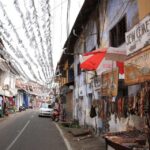
You’ll spend time in the area with antique shops and heritage streets, and you’ll end up at the synagogue for a closer look at a place that feels quietly important. This part of the tour works because it doesn’t treat heritage as a single monument. Instead, you see how culture shows up in everyday street life and local commerce.
Practical note: photo rules can vary by site, so I’d treat any signage and staff instructions as the authority. If you’re unsure, ask your guide before raising your camera.
If you want the day to feel more than “photo, move, repeat,” this Jewish heritage segment is where you slow down a bit—at least mentally—even if your tuk-tuk keeps the schedule.


Mattancherry Palace murals: Hindu mythology you can actually see
Then you shift to Mattancherry Palace, where the highlight is the murals depicting Hindu mythology. Murals are one of the best uses of guided time because they’re visual and story-based. Your guide can point out what characters and scenes represent, and suddenly you’re not just looking at paint—you’re following themes.
Even if you don’t know the myths already, this stop helps you connect local royal history to what’s painted on the walls. You also get the feeling that the area has always been about exchange: ideas moving through ports, patrons commissioning art, and cultures overlapping on the same streets.
What I like here: you can appreciate the art level even during a short visit window. If you want more time, this is the place to ask for it.
Dhobi Khana: watching traditional laundry in action
Next up is Dhobi Khana, the public laundry area. This is one of the tour moments that makes Kochi feel real. You’re not only seeing landmarks; you’re watching a community activity that shapes daily life.
The value of Dhobi Khana on a guided tuk-tuk tour is that your guide can explain what you’re observing and why it matters locally. Without that context, you might simply see people working and miss the cultural angle.
Practical tips:
- Wear comfortable shoes. Even with limited walking, you’ll likely stand and observe.
- Expect strong activity and a working environment. Keep your pace respectful.
- If you’re unsure about photography, ask first.
This stop is also a good reminder that not all “heritage” is about grand buildings. Sometimes it’s about routines.
Spice market and street-level Fort Kochi browsing
Later, you’ll get a shorter stop at the spice market and time in Fort Kochi street areas with antique shops and street art murals. You’re not going to spend hours here. Instead, you get quick sampling and browsing time that fits the overall 4-hour shape of the day.
I like spice-market stops on tuk-tuk tours because you can connect senses to the place. The smell hits first, then your guide helps you understand what you’re seeing. Even if you don’t buy anything, the stop gives you something tangible.
If shopping is your priority, tell your guide early. A few minutes shifted from another stop can make a big difference between looking at signs and actually having time to choose spices or small souvenirs.
Waterfront views: Marine Drive, backwaters, and island sightlines
You may also ride along Marine Drive or get views toward Kochi’s backwaters, with possible stops for waterfront scenery at Vypeen Island or Willingdon Island depending on timing. I treat this as a mood-break in the schedule.
Why this matters: after churches, synagogues, palace walls, and markets, the water views reset your brain. You get space to breathe, and you can take photos that don’t look like every other old-stone city shot.
If you’re sensitive to sun or heat, this is a good time to use that bottled water and plan your timing for photos when the light is kinder.
Guides make the difference: Najeeb and Salim as the example
The tour’s strongest asset is the guide-driver connection. Names from real experiences help here: Najeeb is praised for warming up the whole day with stories about Portuguese, Dutch, and British influences and for recommending photo spots and local eateries. Salim is highlighted for reassurance and for a strong restaurant recommendation at the end.
That’s not a small thing. In a place like Kochi, the difference between a good tour and a great one often comes down to whether the guide can read your energy. If you’re curious, they’ll point out more. If you’re tired, they’ll keep the pacing manageable and still hit the big highlights.
You also get English, Hindi, or Malayalam support from the host/greeter and the guide, which helps when you’re trying to understand stories quickly while moving through busy areas.
Price and value: why $14 can be a good deal
At about $14 per person for roughly 4 hours, you’re paying for transport + a guide + structured stops + bottled water. Entrance fees are not included, so your total spend will depend on what you choose to enter.
Here’s how I’d judge the value:
- If you’d otherwise hire a taxi and do a DIY route with unclear timing, the guided structure can save money and reduce frustration.
- If you care about context—especially Jewish heritage and the mural interpretation—this tour is a strong cost-to-learning ratio.
- If you’re the type who hates itineraries and wants total freedom, a private tuk-tuk without a fixed list might be better. But you’d still need guidance for cultural context.
Given the number of landmark areas covered, this feels like good value for a first visit to Kochi’s older quarters.
Timing, walking, and comfort: what to plan for
This is a moving day, but it’s not a long trek. You’ll do short sightseeing windows at each stop, plus some standing time for views and photos. Bring sunglasses and a hat if you’re visiting during brighter months, and expect that some street areas can be crowded around popular sights.
Also note the simple accessibility limitation: the tour is not suitable for wheelchair users. If you’re traveling with someone who needs wheelchair access, it’s better to check other formats.
Finally, the tour duration is generally described as 3–4 hours, so don’t plan a tight next booking with no buffer. A half-day plan means you can stay flexible if you want more time at a palace mural wall or at the synagogue area.
Should you book the Fort Kochi local tuk-tuk tour?
Book it if you want:
- A first-time-friendly loop that hits major Fort Kochi and Mattancherry landmarks in one go
- A guide who can connect the dots across Chinese Fishing Nets, St. Francis area, Jew Town, and Mattancherry murals
- A short, private format that gives you room to ask questions
Skip it (or swap it for something else) if:
- You need wheelchair accessibility
- You want long museum-style time inside paid attractions (entrance fees aren’t included, and stops are time-limited)
If you’re unsure, I’d treat this as your orientation day. Once you’ve seen the core sites and learned what matters, you’ll know where to return for slower walking and deeper attention.
FAQ
Pickup is included. Where can the tour start?
Pickup is available from either Mattancherry or Fort Kochi, and your tuk-tuk driver will meet you outside your hotel or at a convenient location with a name placard.
How long is the Fort Kochi local sightseeing tuk-tuk tour?
The experience is listed as 4 hours (and tours typically last 3–4 hours).
What’s included in the price?
The tour includes a guided driver, stops at key landmarks and other hidden gems, and bottled water.
Are entrance fees included?
No. Entrance fees to attractions are not included.
Which languages are supported by the host or greeter?
Support is available in English, Hindi, and Malayalam.
Is this a private group tour?
Yes. It’s a private group experience.
Does the tour include time at Chinese Fishing Nets and St. Francis Church?
Yes. The route includes stops at the Chinese Fishing Nets and the St. Francis Church area, with an additional cemetery stop included as part of that sightseeing segment.
Is the tour suitable for wheelchair users?
No. It is not suitable for wheelchair users.
What is the cancellation policy?
There’s free cancellation up to 24 hours in advance for a full refund.
Can I reserve and pay later?
Yes. You can reserve now & pay later, meaning you can book your spot without paying today.