REVIEW · KOCHI
Highlights of Cochin: Group Tour from Cochin Port
Book on GetYourGuide →Operated by Carnival Tours Kochi · Bookable on GetYourGuide
Port time in Cochin is short, so use it well. This 4-hour tour is built for first-timers who want Fort Kochi’s big icons and the Paradesi Synagogue area, without wasting daylight in transit. I love how the route mixes working life (Chinese Fishing Nets and Dhobi Khanna) with major faith landmarks. I also love the way Jew Town smells like a spice shop even before you start shopping.
One thing to plan for: you’ll do a bit of walking, plus worship sites can be strict—no shorts or sleeveless tops, and knees and shoulders must be covered. Also, the Jewish Synagogue/Dutch Palace can be closed on certain days, so your timing matters.
If you’re lucky, you get a guide like Sunil, Shehab, Jude, Tommy, or Sunit Mathew (names I’ve seen tied to excellent experiences). The common thread is clear: they keep the day moving, answer questions, and make the mix of Portuguese, Jewish, and Hindu influences feel logical instead of random.
In This Review
- Key highlights to look forward to
- Fort Kochi in Four Hours: How the Port-Day Flow Works
- Chinese Fishing Nets and Dhobi Khanna: Real-Life Cochin in Action
- Portuguese Churches: St. Francis Church and Santa Cruz Basilica
- Mattancherry Palace Murals: Hindu Epics With Portuguese Hands
- Paradesi Synagogue and Jew Town: The Spice Trade Comes Alive
- Guides, Walking, and Dress Code: What Actually Affects Your Day
- Price and Value for a $27 Port Stop
- Should You Book This Cochin Port Group Tour?
- FAQ
- How long is the Cochin port group tour?
- Where does pickup happen, and where do we meet the guide?
- Is there walking during the tour?
- What should I wear to enter churches and synagogues?
- Are Paradesi Synagogue or the Jewish Synagogue always open?
- Is this tour suitable for people with mobility impairments?
Key highlights to look forward to
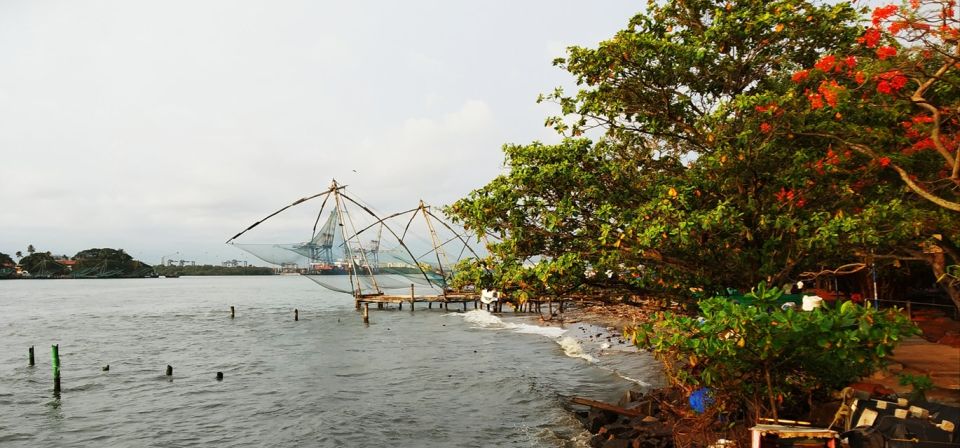
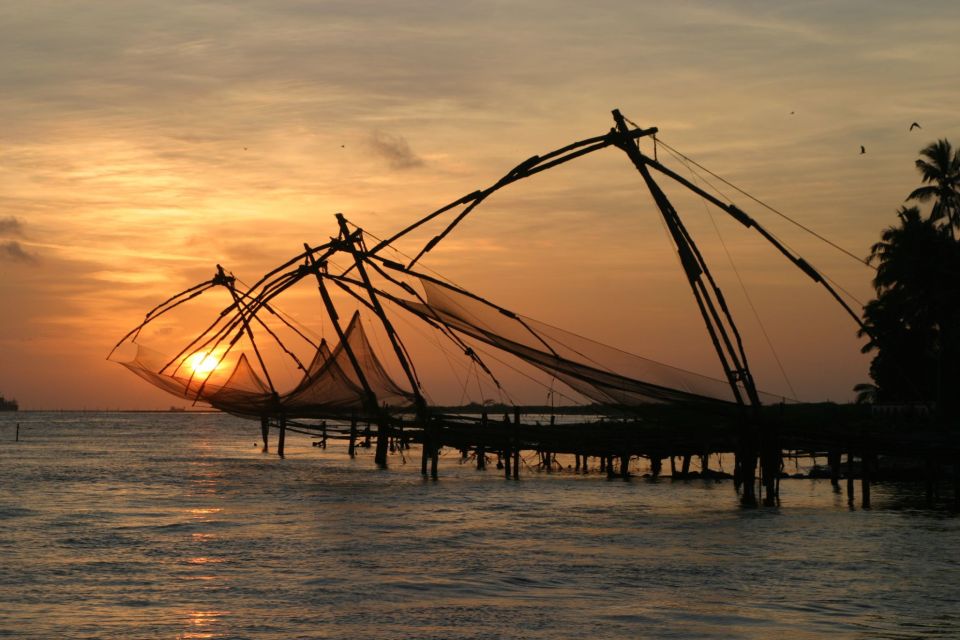
- Chinese Fishing Nets still used by local fishermen, with a 14th-century backstory tied to traders from Kublai Khan’s court
- St. Francis Church (1503 Portuguese friars) and the tomb link to Vasco da Gama
- Santa Cruz Basilica with its white exterior and interior art—frescoes, murals, and major paintings
- Dhobi Khanna for a live glimpse of local laundry routines
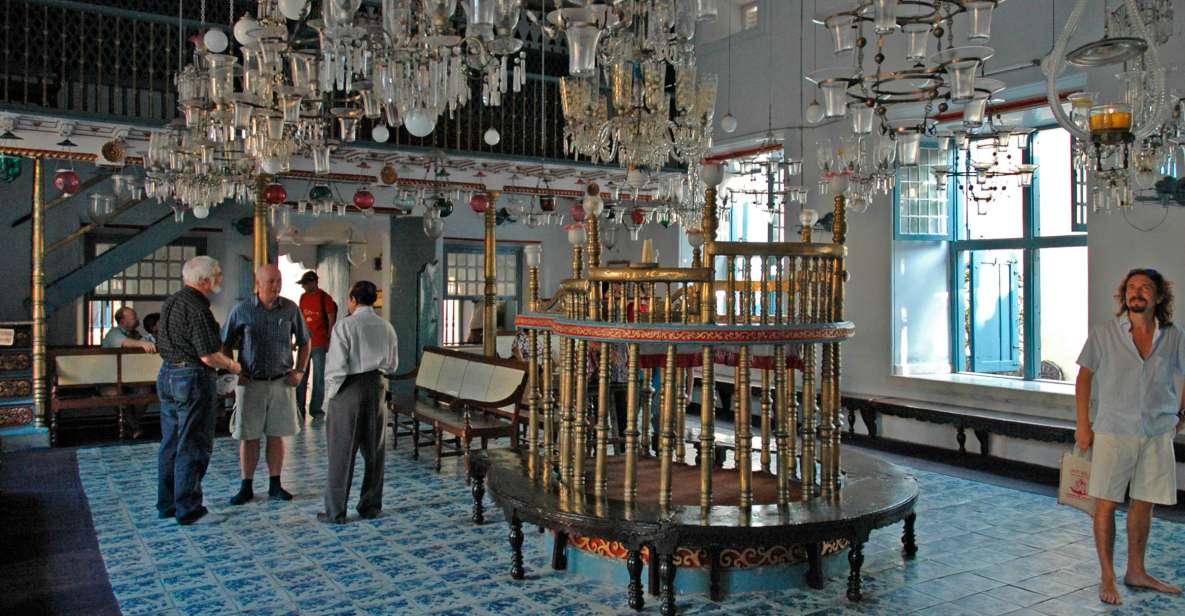
- Paradesi Synagogue details like the brass pulpit, Belgian glass chandelier, and Chinese porcelain floor tiles
- Jew Town spice atmosphere around ginger, cardamom, turmeric, and cloves, plus time for shopping if your schedule allows
Fort Kochi in Four Hours: How the Port-Day Flow Works
This is a classic cruise-port style outing: you start at Kochi Port Ships Berth, get picked up, then transfer to Fort Kochi for a tight loop of sights. The whole thing is designed around getting you back to the port on time, so you’re not left racing the clock while you’re trying to look respectful at churches and synagogues.
The pace is steady rather than frantic. You’ll have short walking segments between stops, and your guide keeps you from getting stuck in the wrong lane of traffic or waiting around while someone catches up. Expect a bit of uneven local scenery on the way to the nets area—nothing extreme, but comfortable shoes matter.
Group size is usually small enough to feel personal. I’ve seen examples of groups around a dozen, and that’s a sweet spot: you get the social buzz without the herd effect. You also get an English-speaking guide, plus an air-conditioned vehicle, which is a real comfort in Kerala heat.
One practical tip: be at the meeting point about 10 minutes before your departure time. Your guide waits at the ship’s berth holding a sign with the local partner’s name, and being early prevents the scramble that can happen when your ship is late docking and everyone’s trying to be polite but fast.
This tour fits best if you want an overview with stops that actually matter. It’s less ideal if you’re hoping for long, slow time inside every building or you want minimal walking.
You can also read our reviews of more tours and experiences in Kochi.
Chinese Fishing Nets and Dhobi Khanna: Real-Life Cochin in Action
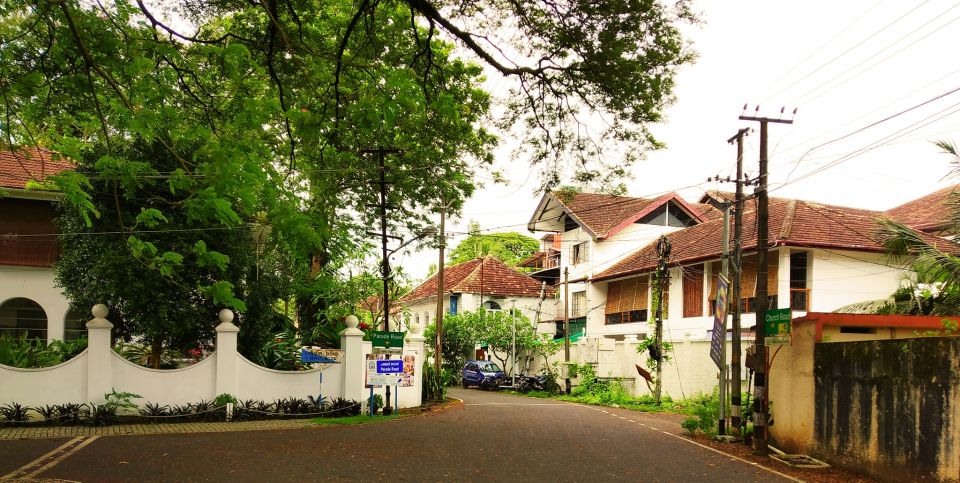
The day opens with the Chinese Fishing Nets, and that’s a smart move. You’re not starting with a museum and then wondering what the town smells like. You start with work—fishermen, boats, the rhythm of the harbor, and nets that are still doing their job today.
The nets were introduced by traders linked to Kublai Khan’s court in the 14th century, and that historical thread gives you something to watch beyond the scenery. When you see fishermen using the nets in the same general way, it clicks: this place isn’t a stage built for tourists. It’s livelihoods first.
From there, you continue walking through Fort Kochi toward St. Francis Church. The route includes parts of town that won’t look like postcards, and that’s part of the value. You get a sense of how everyday life operates around the old-world landmarks.
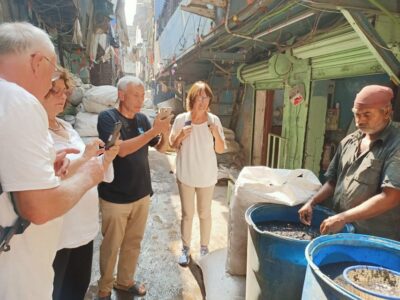
Then there’s Dhobi Khanna (local laundry), a stop that many short tours skip. I like it because it’s not a formal attraction—it’s a window into daily habits. If you pay attention, you’ll notice the practical logic: what people wear, how work is set up, and how laundry culture fits into the city.
Photography-wise, it’s one of those places where you’ll want to be respectful. Don’t block lanes, don’t hover too close to workers, and ask yourself if your shot harms the flow. It’s worth it, though, because it adds texture to the day. After churches and synagogues, you’ll feel the balance between devotion and daily chores—the human side of the city.
Portuguese Churches: St. Francis Church and Santa Cruz Basilica
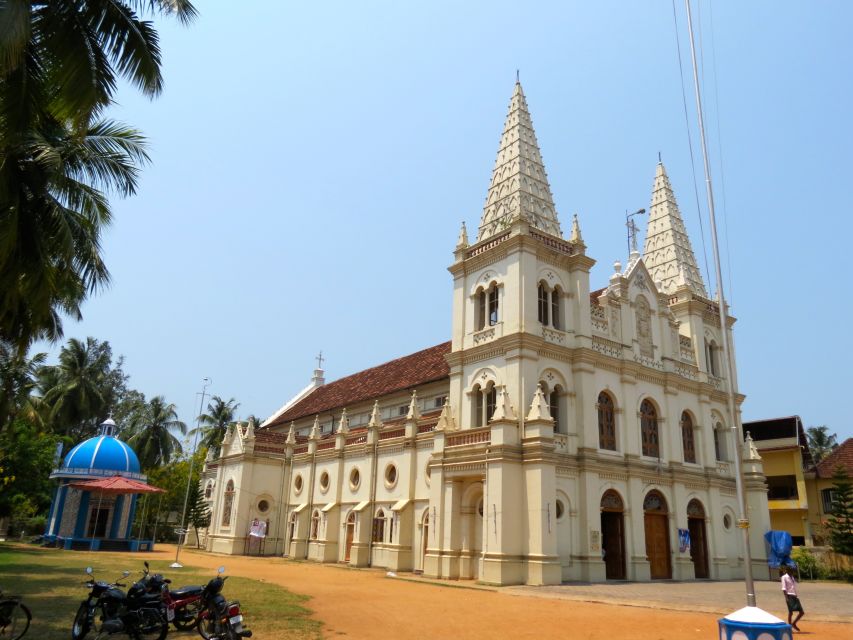
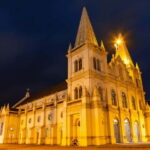
Kochi’s Portuguese-era influence shows up fast, and St. Francis Church is the first big punch. This is the oldest European church in India, built in 1503 by Portuguese friars. What makes it memorable is what you’ll notice immediately: the sense of age, the quiet weight of the place, and the connection to global history.
The church is also known as the burial place of Vasco da Gama, the Portuguese explorer who led ships sailing directly from Europe to India. Even if you’re not a history fan, this detail anchors the visit. You start seeing Cochin as a junction—where routes, trade, and cultures met on the same shoreline.
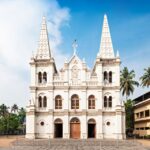
Next up is Santa Cruz Basilica, one of the largest and most impressive churches in India. You’ll see two soaring spires and a bright, white-washed exterior that feels almost crisp against the sky. Inside, the church leans heavily on visual storytelling: frescoes, murals, and large paintings depicting scenes from the life of Jesus Christ.
Here’s the benefit of having a guide: they help you interpret what you’re seeing instead of just scanning for the most photogenic angles. And if you’re traveling with kids or friends who get bored in long worship spaces, a good guide keeps it moving with short, clear context.
Drawback to keep in mind: dress code. For churches (and selected museums), plan on covered knees and shoulders. That means no shorts and no sleeveless tops. If you show up too casual, you can be refused entry, and then the whole schedule feels frustrating.
Mattancherry Palace Murals: Hindu Epics With Portuguese Hands
After the churches, you shift from big faith architecture to art you can almost read. Mattancherry Palace was built by the Portuguese and presented to the Raja of Kochi in 1555, and it’s famous for its murals.
What I like about this stop is the contrast. You might expect European influence to dominate the feel of the palace, but the murals lean into Hindu epic storytelling—scenes from the Ramayana and Mahabharata. That mix is exactly what makes Kochi interesting: cultures didn’t just sit next to each other here. They borrowed, adapted, and visually expressed shared spaces.
Look closely at the walls. Even in a short visit, you can usually spot the story structure—figures arranged to show actions and outcomes, not just decorative patterns. The murals work well when a guide pauses and tells you what you’re about to see, so you don’t miss the meaning while trying to keep your own pace.
This is also a good break in the day. After walking in the open air, you get an indoor, slower-feeling stop. Still, don’t expect a long linger. The tour time is tight, so you’ll get a “see it properly” amount of time rather than an hour-plus.
If you’re the type who likes to buy art prints or learning kits back home, you’ll likely enjoy the palace more than average, because it makes the local style understandable.
Paradesi Synagogue and Jew Town: The Spice Trade Comes Alive
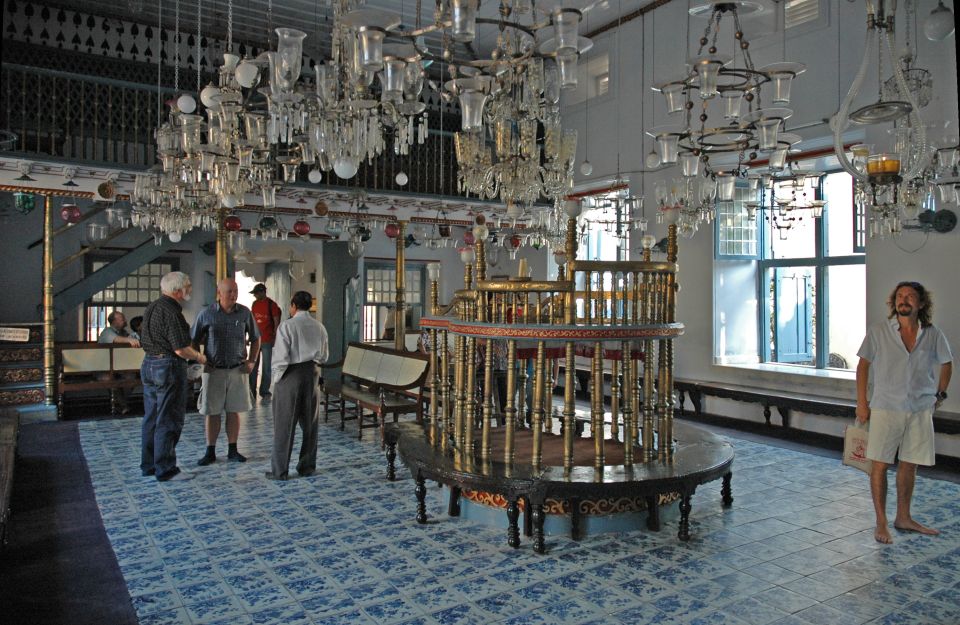
If Santa Cruz is your Portuguese chapter, Paradesi Synagogue is where Jewish Kochi becomes undeniable.
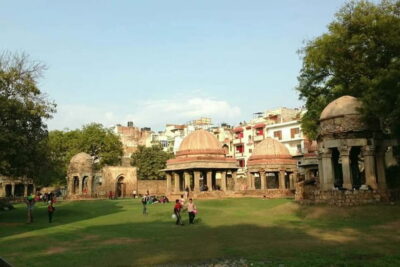
Paradesi Synagogue is described as the oldest active synagogue in South India. The standout details are the kind you’ll remember long after your photos fade: an ornate brass pulpit, a Belgian glass chandelier, and hand-painted Chinese porcelain floor tiles. These aren’t subtle touches. They’re statement-level craftsmanship.
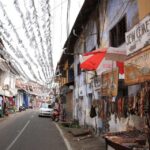
It’s also a meaningful stop because you’re not just looking at a building. You’re entering a trade-shaped world. The surrounding area is Jew Town, historically central to the spice trade. This isn’t a fake “spice market” setup. Even when you’re just walking nearby, you can pick up real aromas—ginger, cardamom, turmeric, cloves—layered into the street air.
The tour typically gives you time to wander around Jew Town. If your schedule allows, that’s when you can do light shopping for spices, handicrafts, and antiques. I like keeping this part flexible. If you’re shopping-focused, you’ll use the time well. If you’re not, you can simply slow down and enjoy the sensory side of the neighborhood.
One important timing note: the Jewish Synagogue/Dutch Palace can be closed on Fridays, Saturdays, Jewish holidays, and Jewish Passover days. If your visit lands on one of those, don’t assume every interior space will be accessible. The good side is that your guide can often help you make the most of what’s open—though the experience won’t be identical.
Dress code applies here too. And because this is a faith space, move quietly, keep your shoulders covered, and follow any instructions from staff.

Guides, Walking, and Dress Code: What Actually Affects Your Day
A lot of “good tours” fail on the boring stuff: timing, clarity, and whether the guide helps you understand what you’re seeing. This one tends to do well on those fronts.
Across past groups, I’ve seen consistent praise for guides such as Sunil, Shehab, Jude, Tommy, and Sunit Mathew, plus drivers like Tharun and David. The pattern isn’t just friendliness—it’s organization. When you’re doing multiple stops in a half-day, a guide who explains the connection between sites makes the day feel coherent.
Language support matters too. This tour runs with an English-speaking local guide. That means you can ask questions without guessing, and you’ll get answers tied to what you’re looking at right then.
Now for the practical constraints:
- Walking: there’s a small amount, but it’s not a “sit the whole time” outing. Comfortable shoes help.
- Dress code: no shorts or sleeveless tops at places of worship and selected museums. Knees and shoulders must be covered.
- Closure days: Jewish Synagogue/Dutch Palace can shut on specific religious dates.
- Mobility: it’s not suitable for people with mobility impairments.
If you want an easy packing checklist, it’s simple: bring a light layer that covers shoulders, wear pants or long skirts, and keep comfortable footwear ready for uneven paths.
And yes, the day can feel warm. Air-conditioned transport helps you reset between stops, but you’ll still want water—bottled water is included.
Price and Value for a $27 Port Stop
At $27 per person for a 4-hour tour, the value comes from what’s included—not just the ticket price. You get port pickup and drop-off, a driver and English-speaking guide, air-conditioned vehicle transport, and bottled water.
For a cruise stop, that’s the key equation: you’re paying to avoid the two biggest headaches—finding local transport quickly and coordinating timing so you don’t miss your ship. The included pickup/drop service is the difference between seeing four sights calmly and scrambling across town with your own plans.
The tour also concentrates on high-impact landmarks. Chinese Fishing Nets, Portuguese churches, Portuguese-influenced palace murals, Paradesi Synagogue, and Jew Town spice culture are a lot to fit into one half-day. Even if you only care about one or two of those categories, you still benefit from the combined route.
What’s not included matters for budgeting: snacks and drinks are not included, and lunch isn’t included. If you’re stopping during a busy time of day, I’d plan on either a snack you bring or budget for something casual if your schedule allows.
The standout value point I’d emphasize: you’re getting a structured overview with enough time for real atmosphere—especially around Jew Town—without needing to plan independently under port-day pressure.
Should You Book This Cochin Port Group Tour?
Book it if you have a short day in Kochi and want a smart hit list: Chinese Fishing Nets, Portuguese church landmarks, Mattancherry Palace murals, and the Jew Town area including Paradesi Synagogue. It’s also a good choice if you like guides who connect the dots between Portuguese, Jewish, and Hindu influences.
Skip it or switch to a different option if you can’t follow the dress code comfortably, if you have mobility limitations, or if your visit falls on a day when the Jewish Synagogue/Dutch Palace is likely closed. In those cases, you might still enjoy the tour, but the most detailed synagogue piece may be limited.
If your goal is to get your bearings fast and leave with a clear sense of how Kochi’s trade and faith history overlap, this is a strong value pick.
FAQ
How long is the Cochin port group tour?
The duration is 4 hours.
Where does pickup happen, and where do we meet the guide?
You’re picked up from Kochi Port Ships Berth. You should be at the meeting point 10 minutes before departure, and the guide will wait holding a sign with the local partner’s name.
Is there walking during the tour?
Yes, there is a small amount of walking, so comfortable walking shoes are recommended.
What should I wear to enter churches and synagogues?
For places of worship and selected museums, no shorts or sleeveless tops are allowed. Knees and shoulders must be covered, and you risk being refused entry if you don’t meet the dress code.
Are Paradesi Synagogue or the Jewish Synagogue always open?
No. The Jewish Synagogue/Dutch Palace can be closed on Fridays, Saturdays, Jewish holidays, and Jewish Passover days.
Is this tour suitable for people with mobility impairments?
No, it is not suitable for people with mobility impairments.