REVIEW · CHENNAI
From Chennai: Private Kanchipuram and Mahabalipuram Day Tour
Book on GetYourGuide →Operated by Chuttibaaz · Bookable on GetYourGuide
Temple stones tell stories fast. This private 12-hour trip strings together Kanchipuram temples and Mahabalipuram UNESCO sites so you can see how Tamil faith and artistry travel from inland shrines to the sea.
Two things I really like: the way Kanchipuram’s major Shiva-and-Vishnu sites feel different from each other, and Mahabalipuram’s stonework where legends look carved straight out of mythology. One consideration: it’s a full day with temple rules (you’ll remove shoes), and since meals aren’t listed as included, you’ll want to plan your energy and food stops.
In This Review
- Key highlights to look for
- Chennai to Kanchipuram: a day that starts early and moves with purpose
- Kailasanathar and Ekambareswarar: Dravidian carvings tied to Shiva
- Varadharaja Perumal: Vishnu worship and temple-scale architecture
- Silk weaving in Kanchipuram: why the town’s craft matters
- Mahabalipuram drive: trading lanes of temples for the coastline
- Shore Temple at sea level: early stone architecture with a view
- Five Rathas: rock-cut temples carved like one big puzzle
- Arjuna’s Penance: myth scenes and sculptural storytelling in one slab
- The guide and driver make or break a private day like this
- Timing, temple rules, and what to pack for a 12-hour day
- Price and value: what you’re really paying for at $104 per person
- Should you book this Chennai to Kanchipuram and Mahabalipuram day tour?
- FAQ
- How long is the tour?
- What area does the tour cover?
- Is this a private tour?
- What’s included in the price?
- Are meals included?
- Do I need to remove shoes?
- Is the tour suitable for wheelchair users?
- Do they offer cancellation or refunds?
Key highlights to look for
- Kanchipuram’s Kailasanathar and Ekambareswarar for big Dravidian-style temple carvings tied to Shiva
- Varadharaja Perumal Temple for Vishnu worship and impressive architectural details
- A traditional silk-weaving stop in the legendary temple-town fabric tradition
- Mahabalipuram Shore Temple with sea views and early stone architecture
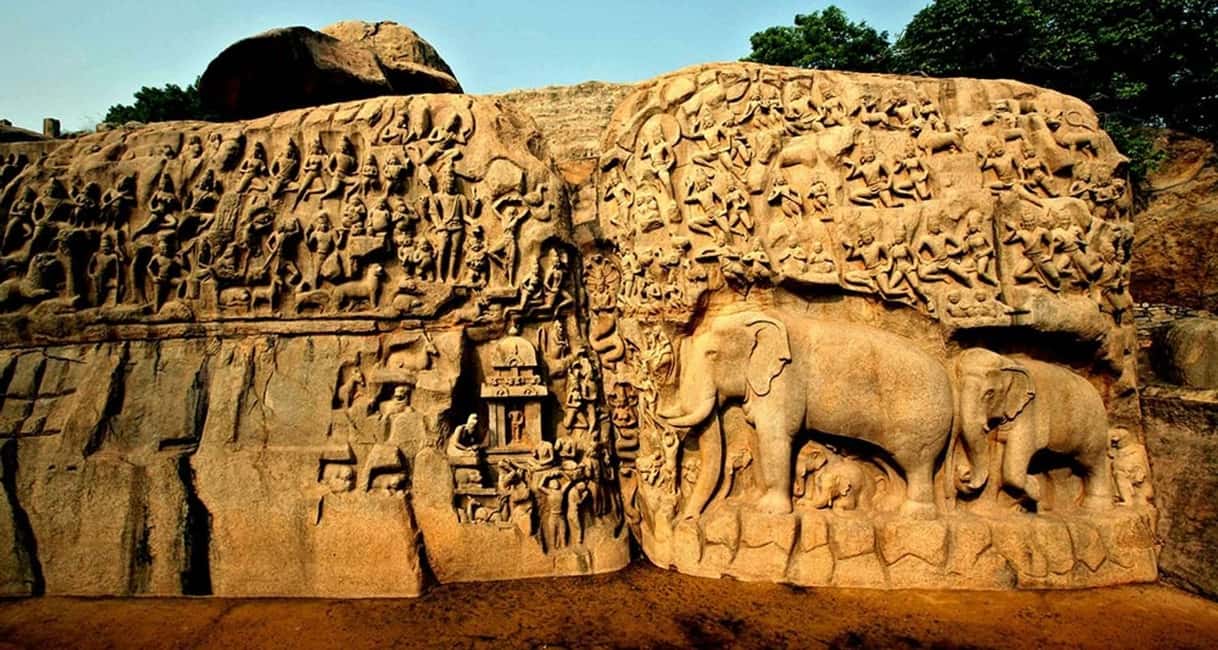
- Five Rathas and Arjuna’s Penance where myth scenes and rock-cut design steal the show
Chennai to Kanchipuram: a day that starts early and moves with purpose
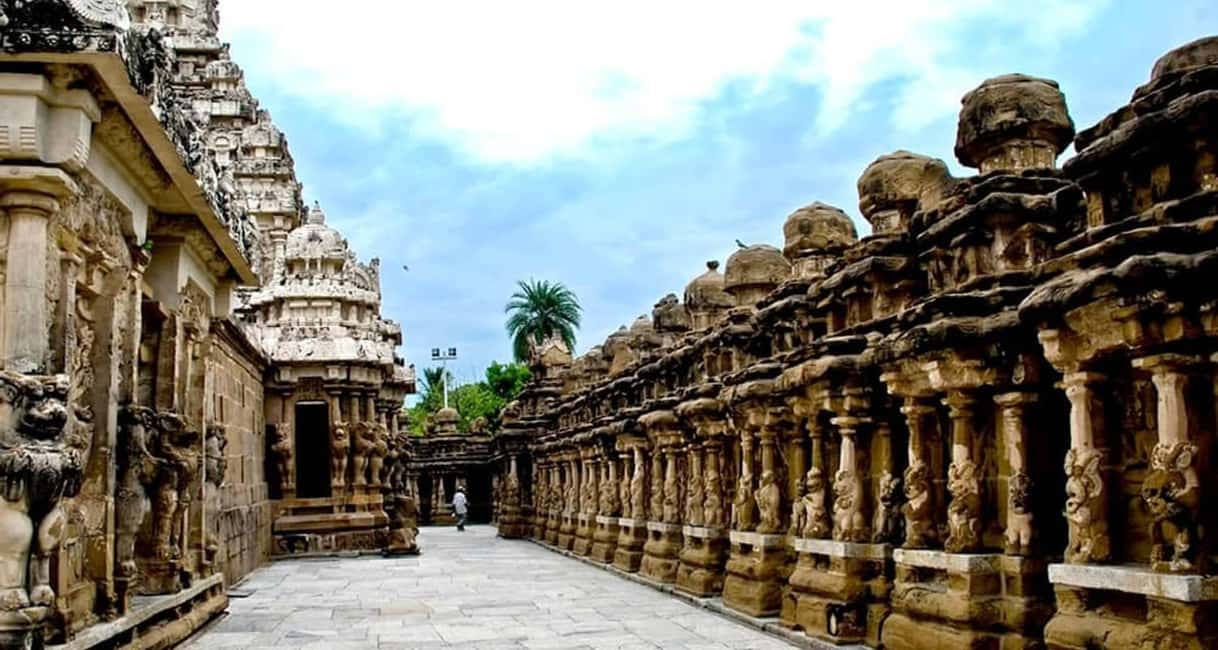
You’ll begin in Chennai with a private pick-up from your chosen location, then head about 75 km to Kanchipuram, known as the temple city with a serious silk-making reputation. The drive is a simple way to get out of the city and into a place where stonework and devotion share the same space.
What makes this day work is the pacing: you’re not just passing by monuments—you get guided time at the key sites, plus photo stops. In a single day, you’ll go from inland temple lanes to a coastline packed with Pallava-era artistry.
You can also read our reviews of more private tours in Chennai


Kailasanathar and Ekambareswarar: Dravidian carvings tied to Shiva
Kanchipuram’s draw is that multiple major temples feel like different chapters of the same spiritual book. You start at Kailasanathar Temple, where Dravidian-style architecture and detailed carvings help you understand why this region is so famous for sculptural storytelling. Even if you don’t know the theology yet, the guide can point out what you’re looking at—where the focus is, what the carvings represent, and how the temple layout connects the visual themes.
Next is Ekambareswarar Temple, tied to the Earth element among the sacred Shiva temples in South India. This isn’t the kind of stop where everything is just “pretty to look at.” The value here is interpretation: you get context that makes the carvings and symbolism feel less random and more intentional.
One practical note: temples are working religious spaces. You’ll need to remove your shoes and dress modestly. It’s a quick adjustment, but it helps you enter the sites the right way.
Varadharaja Perumal: Vishnu worship and temple-scale architecture
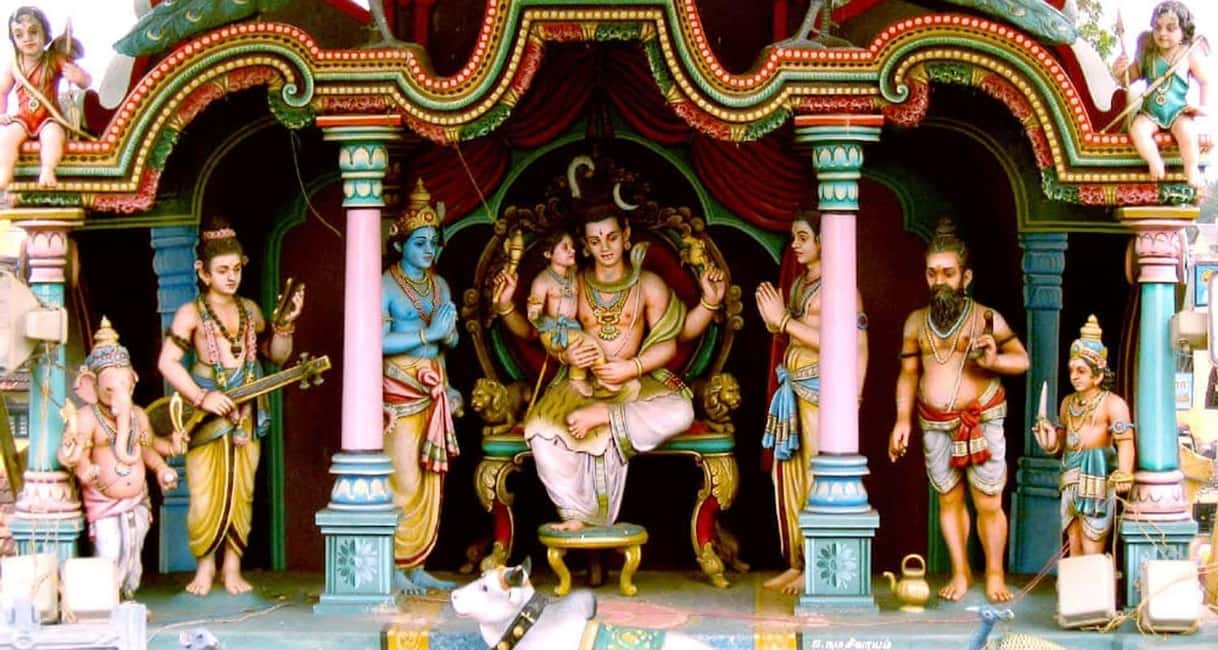
After Shiva-focused stops, you shift to Varadharaja Perumal Temple, dedicated to Lord Vishnu. This is where the day balances out: the earlier sites help you read stonework through Shiva associations, and this temple gives you a contrasting lens through Vishnu worship.
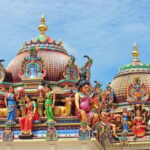
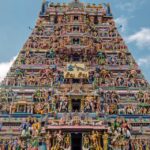
What stands out is the temple’s scale and its intricate sculptural feel, including a tall gateway tower (a signature feature of South Indian temple design). If you’ve ever wondered why some temples seem “more architectural” than “decorative,” this is a good place to see it. The stone isn’t just decoration—it’s part of how the place communicates sacred meaning.
Silk weaving in Kanchipuram: why the town’s craft matters
Between the big temples, you’ll see a silk-making stop in Kanchipuram. This isn’t just a shopping detour. Kanchipuram’s reputation for silk is part of the town’s identity, and the connection to temple culture is real: silk has long been used in religious life and household tradition, and you’ll get a taste of that craft-world rhythm.
Here’s how to make this stop pay off: watch the process, not just the final fabric. Ask your guide what to look for—different textures, weaving patterns, and what makes silk work differently than everyday cloth. It’s also a good moment to slow down in the day, since the temple portions can be time-heavy.
Keep your expectations flexible on purchases. If you decide to buy, budget time for it. People often haggle in this setting, and getting a fair price takes a little patience.
Mahabalipuram drive: trading lanes of temples for the coastline
Once your Kanchipuram temple time wraps, you’ll drive about 65 km to Mahabalipuram, a UNESCO World Heritage area on the coast. The change of scenery is part of the experience: the air feels different, and your eyes start expecting wide sea views instead of close temple walls.
You’ll have about 3 hours of guided sightseeing here, with photo stops along the way. That’s the right amount of time to see the main monuments without feeling like you’re sprinting.



Shore Temple at sea level: early stone architecture with a view
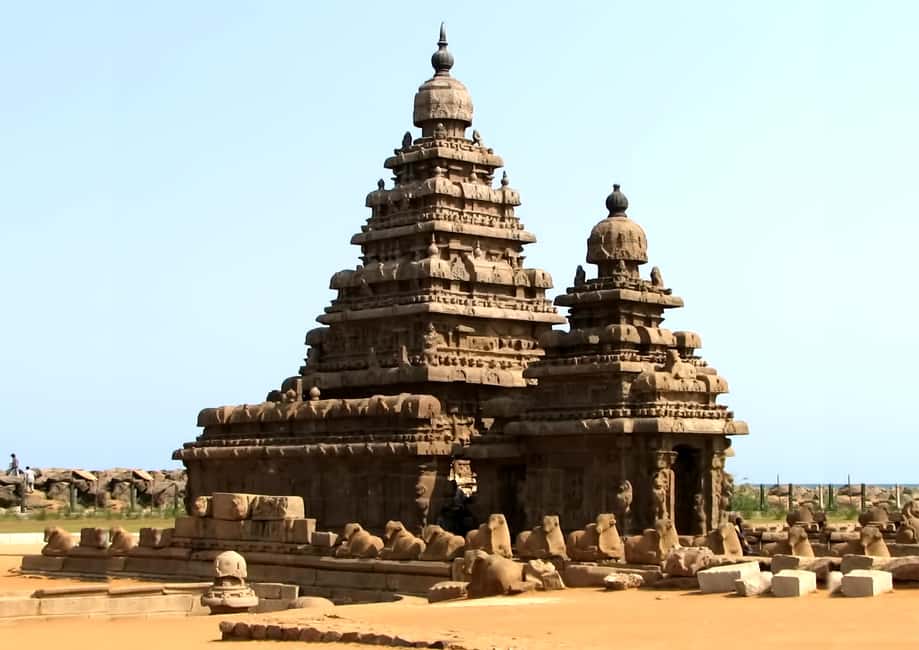
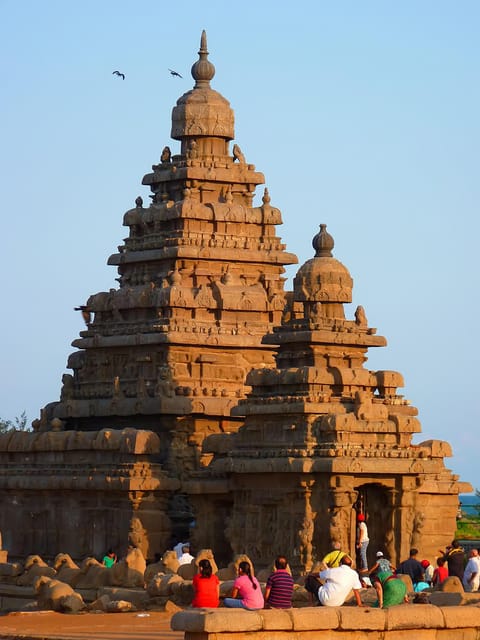
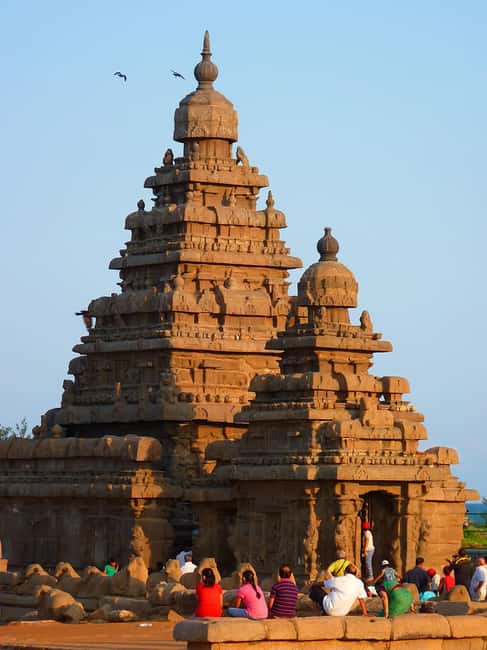
You’ll start Mahabalipuram at the Shore Temple, one of the best-known sites in the area. The payoff is twofold: the temple’s early stone architecture, and the setting with the sea close enough to shape how the monument feels.
This stop is a great place to pause and look slowly. From one angle, it reads like a historic structure carved into the coast; from another, it becomes a view platform. Your guide’s job here is to help you connect the temple’s visual cues—how it’s built, why it’s positioned there, and what makes it significant.
Five Rathas: rock-cut temples carved like one big puzzle
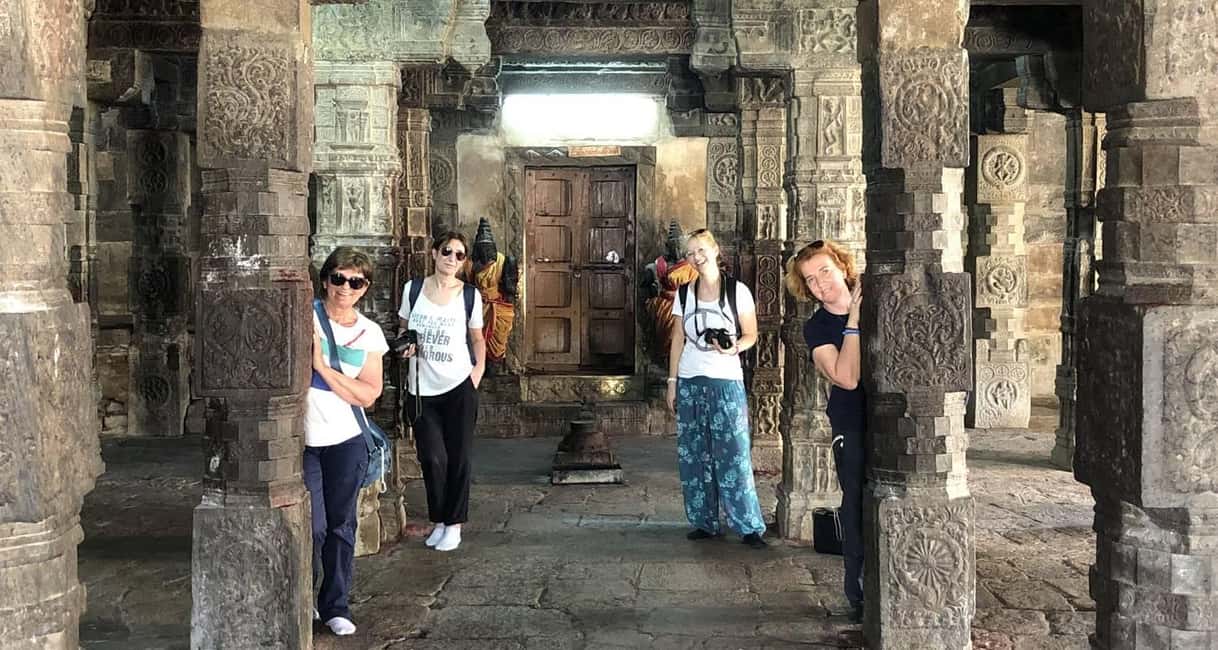
Next up are the Five Rathas, a set of rock-cut temples carved from single stones, each with its own style. Even if you’re not a “stonework expert,” you’ll feel the ingenuity. The design choices are different across the group, and seeing them next to each other makes the variations easier to spot.
This is the section where a good guide really boosts your experience. Without explanation, rock-cut sites can start to blur into one big rock. With guidance, you begin noticing how each ratha signals different form and intention—like you’re comparing mini-architectural portraits.
Take time for photos, but don’t treat photos as a substitute for looking up and around. When the light shifts, the carvings can look deeper and more dimensional.
Arjuna’s Penance: myth scenes and sculptural storytelling in one slab
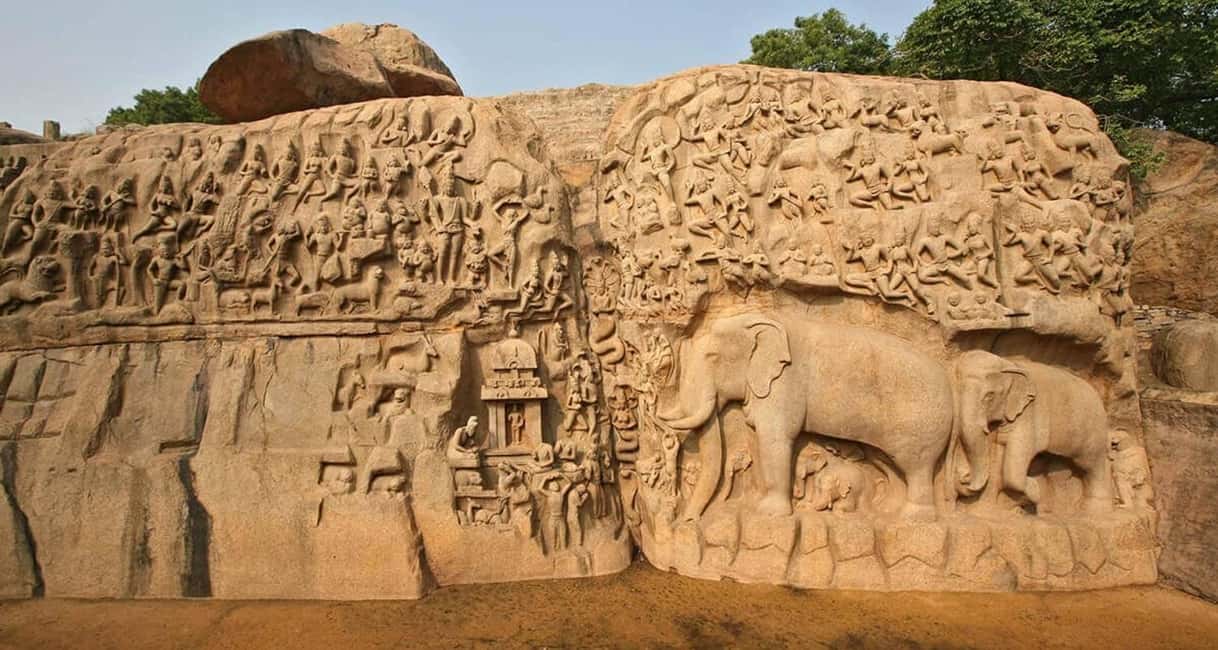
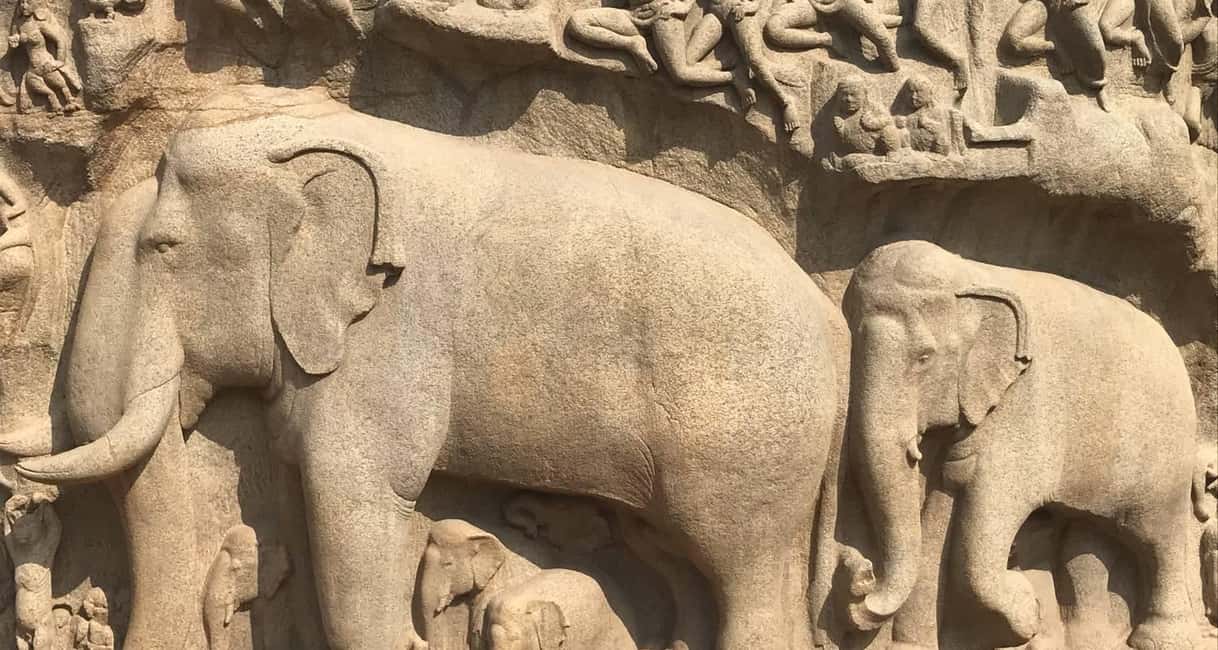
To finish the core monument run, you’ll see Arjuna’s Penance, a large rock carving packed with scenes from Hindu mythology. This is the kind of site where your brain wants a single headline story, but the real magic is in the crowd of details.
The guide’s storytelling matters here because the carving is complex. You’ll get help translating the scene into something you can actually follow—characters, action, and how the different episodes are arranged into one massive composition.
If you like religious art that feels like “visual theater,” this is a top moment of the day.
The guide and driver make or break a private day like this
This tour is private, and that’s not a small detail. It means you’re not stuck in a loud queue with people rushing ahead. You can ask questions, slow down when something catches your eye, and move on when you’re ready.
English-speaking guides are part of the package, and people have praised guides for making Hindu faith and architectural symbolism feel clear. Names that have come up include Nandhakumar (praised for turning temples into stories), Thirumalai (praised for explaining the faith with clarity), Shiva (praised for care and detailed explanations), Mirunali (praised for finding a good place to eat and sharing South Indian food context), and Rebecca (praised for mixing history, religion, and everyday life in strong English). You won’t know which guide you’ll get until the day, but the general goal is consistent: you should leave understanding what you saw, not just collecting photos.
Drivers also matter because you’re handling two temple towns in one long day. People have specifically mentioned Vijayakumar, Venkadesh/Venkatesan, Jayakumar, and Kartick as safe, careful, and good at navigating busy routes. The private car setup helps you feel less stress while you’re moving between sites.
Timing, temple rules, and what to pack for a 12-hour day
You’re looking at roughly a 12-hour day, including travel time. That’s long enough that you should plan like it’s a hiking day: wear comfortable shoes you can take off quickly, bring water (bottled water is included), and keep your stamina steady.
Temple etiquette is clearly part of the experience:
- You’ll need to remove shoes when entering temples.
- Dress moderately and respect local customs.
Also, meals and drinks aren’t listed as included, so treat food as part of your schedule, not an afterthought. If you’re sensitive to hunger timing, plan to use the day’s breaks strategically.
One more practical tip: this day includes multiple stops with carvings and architectural viewing angles. Bring a light layer if you get cool at any point, and keep your phone/camera charged. The best photos here come when you’re close enough to see details but far enough to capture context.
Price and value: what you’re really paying for at $104 per person
At $104 per person for a private day, you’re paying for four main things: private transport, a guide, monument entry fees, and the time itself. That’s a different value equation than hiring a taxi and wandering on your own.
If you’re going as a couple or small group, the private car can start to feel very reasonable compared to piecing together separate drivers and ticket lines. And the entry fees being included matters in India, where costs can add up when you’re hitting multiple major monuments in one day.
The big value question is whether you’ll benefit from guidance. If you enjoy learning what you’re seeing—especially in temple architecture—this tour format is a strong fit. If you only want quick sightseeing and don’t care about context, you might find it pricier than doing a self-guided day. For most people visiting Tamil Nadu for the first time, having an English-speaking guide for the major carvings and temple symbolism is exactly what turns “sights” into “understanding.”
Should you book this Chennai to Kanchipuram and Mahabalipuram day tour?
Book it if you want a tight, meaningful heritage day: Shiva and Vishnu temples in Kanchipuram, a silk-making glimpse, then Mahabalipuram’s UNESCO coast with Shore Temple, Five Rathas, and Arjuna’s Penance. This is especially worth it if you like explanations that make temple art feel legible.
Think twice if you hate long days, need step-free access, or you’re very tired by the idea of early starts and multiple major stops. Also remember the practical part: shoes come off in temples, and meals aren’t listed as included.
If you’re flexible, curious, and okay with a full-day pace, this is a great way to see two of Tamil Nadu’s most important historical landscapes without the stress of planning every turn.
FAQ
How long is the tour?
The tour duration is 12 hours.
What area does the tour cover?
It covers Kanchipuram and Mahabalipuram in Tamil Nadu, starting and ending in Chennai.
Is this a private tour?
Yes, it’s a private group with a private car.
What’s included in the price?
The tour includes private car with hotel pick-up and drop-off, bottled water, an English-speaking guide, sightseeing as per the program, entry fees to monuments, and all taxes and service charges.
Are meals included?
Meals and drinks are not mentioned as included.
Do I need to remove shoes?
Yes. You will need to remove shoes when entering the temple, church, or mosque.
Is the tour suitable for wheelchair users?
No, it’s not suitable for wheelchair users.
Do they offer cancellation or refunds?
Free cancellation is available up to 24 hours in advance for a full refund.