REVIEW · CHENNAI
Chennai: George Town Origins Guided Walking Tour
Book on GetYourGuide →Operated by 5 Senses Tours · Bookable on GetYourGuide
George Town starts with power, then turns into street life fast. I love how this walk stitches the East India Company roots to independence-era context, and I love the Armenian trading legacy that still shapes the area today. One watch-out: you’ll cover colonial buildings and markets on foot, and the tour has a clothing rule that keeps things covered.
You also get a strong sense of place without feeling rushed. The small group (up to 10) helps you actually ask questions as you go, whether you’re curious about Queen Victoria’s 1862 decree or how trade pulled in communities. If you’re short on time, 3 to 3.5 hours can feel tight, especially if you stop often for photos or snacks on the way.
In This Review
- Quick hits
- Fort St George to St Mary’s Church: where Chennai’s British story begins
- The Madras High Court walk: Gothic detail with real civic purpose
- Dare House and Parrys Corner: art deco commerce with names you can trace
- China Bazaar Road: utensils, cosmetics, clothes, and the rhythm of trade
- Armenian refugees and the Armenian Church: a trade route you can still walk
- Food street reality: what you can taste without losing the plot
- What the guides do well: clear storytelling and real time for questions
- Price and value: is $49 worth 3 to 3.5 hours?
- Clothing rules and comfort: the small details that affect your day
- Should you book the George Town Origins walking tour?
- FAQ
- What is the duration of the Chennai: George Town Origins Guided Walking Tour?
- Where does the tour start, and where should I meet the guide?
- What’s included in the price?
- Is food included on the tour?
- Is the museum open every day?
- What group size is it?
- Are there any clothing restrictions?
- Can I cancel for a full refund?
Quick hits
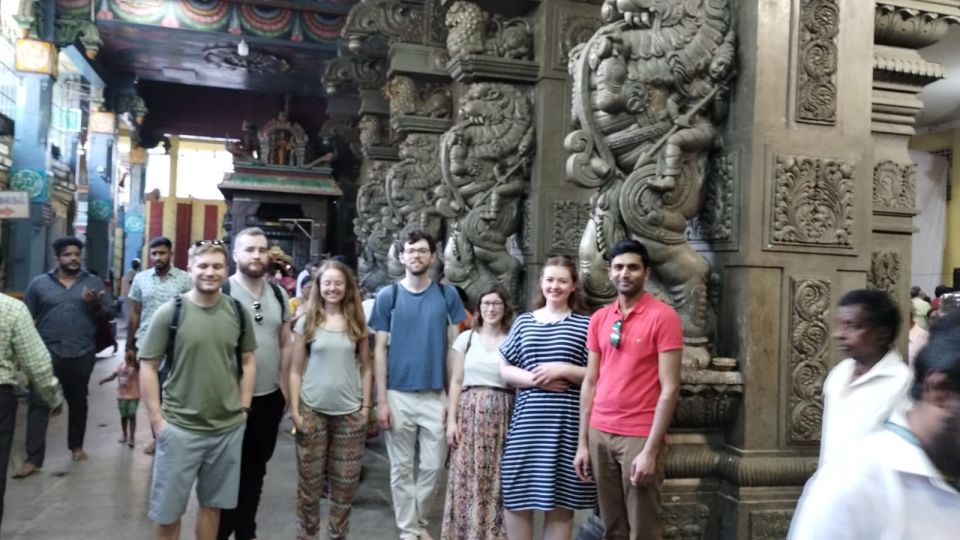
- Fort St George kickoff: Meet at the entrance of the first English fortress in Chennai, built in 1644 by the East India Company.
- St Mary’s Church plus museum timing: You’ll see the oldest Anglican church in India, and the museum is closed on Fridays.
- Madras High Court built under Queen Victoria: Set up in 1862 and still in use today, with striking Gothic architecture.
- Dare House and Parrys Corner: Art deco meets commerce—headquarters history tied to Thomas Parry (a Welsh free merchant) and John Dare.
- China Bazaar Road market street: A classic stretch for utensils, cosmetics, and clothes.
- Armenian church and trade story: A unique lens on 300 years of silk, spices, and gems trading.
Fort St George to St Mary’s Church: where Chennai’s British story begins
The tour meets at the entrance of Fort St George, the first English fortress built in 1644 by the East India Company. Starting here matters because it stops you from treating colonial Chennai as just architecture. You get the timeline behind why Europeans planted a foothold and how that power shifted over time.
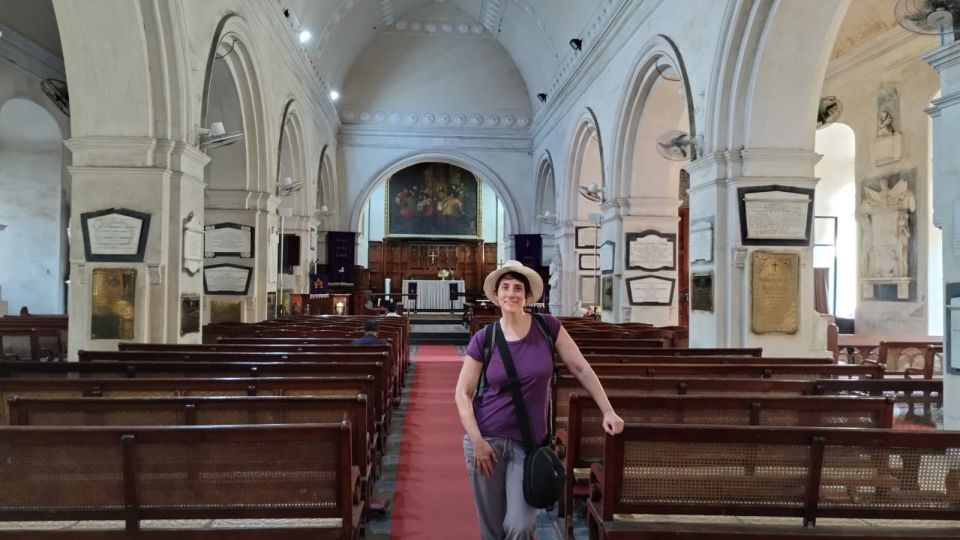
From there, you move into two anchors that set the tone: the museum (except Fridays) and St Mary’s Church. St Mary’s is the oldest Anglican church in India, and it helps you see religion and empire on the same street. The museum visit (when open) adds context so you’re not just looking at old walls—you’re connecting the dots between trade, governance, and daily life.
On Fridays, the museum is closed, so your pacing will be a bit different. If you’re visiting on a Friday, I’d treat the church and surrounding fort area as the main museum replacement, and use the rest of the walk for the markets and street scenes that come next.
You can also read our reviews of more walking tours in Chennai



The Madras High Court walk: Gothic detail with real civic purpose
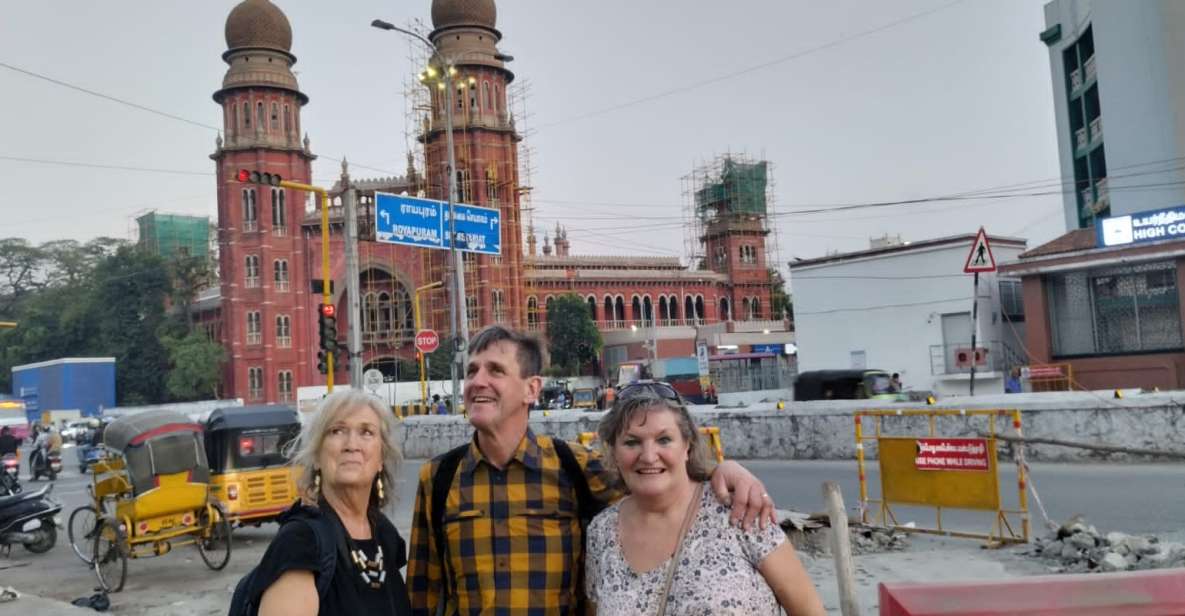
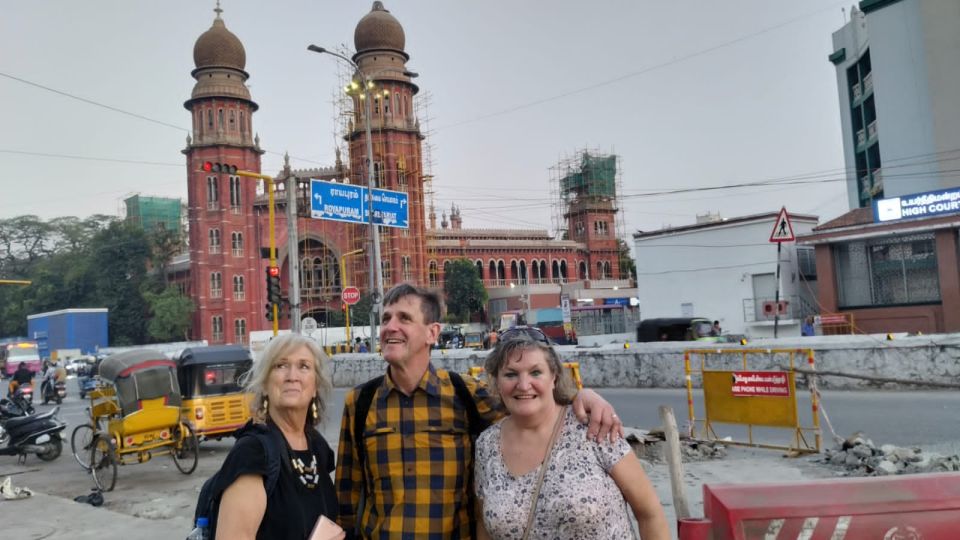
After Fort St George, you’ll head toward the Madras High Court, set up in 1862 by a decree from Queen Victoria. The tour frames it as more than a postcard building: it’s still serving the state of Tamil Nadu today, so you get a live link between design and function.
You’ll also hear why the High Court is such a strong stop. The architecture is Gothic, and that style shift from fortress to courthouse gives you a clear feel for how British rule matured from trading control into legal and administrative systems. Even if Gothic isn’t your usual obsession, it’s the kind of place where details make sense once you know what the building was meant to do.
A practical note: walking here keeps you close to the city’s movement. That’s a plus for atmosphere, but it also means you’ll be in active traffic zones at times. Go in ready to slow down, not zip through.
Dare House and Parrys Corner: art deco commerce with names you can trace
Next comes Dare House, an iconic art deco building that’s strongly tied to the Parrys company. The tour gives you the human thread: the company was named after Thomas Parry, a Welsh free merchant, and the building name links to John Dare, his business partner.
Why this works on a walking tour: it turns a pretty facade into a story of who profited, who financed, and how businesses shaped neighborhoods. Art deco can feel like a style category, but here it’s tied to trading networks and corporate power in Chennai.
Also, Dare House sits in a part of George Town where you’ll keep seeing evidence of old commerce. That makes it easier to imagine the streets when these companies were operating at full speed. If you like history that still shows up in the skyline and street plan, this stop does the job.
China Bazaar Road: utensils, cosmetics, clothes, and the rhythm of trade
Then you’ll walk to Netaji Subhash Chandra Bose Road, also known as China Bazaar road. This is one of those street markets where the names alone don’t help—you need to see how the blocks work as a system.
This section is famous for shops selling utensils, cosmetics, and clothes. The tour uses the walk itself to explain how a trading post can grow into a major city in just over two centuries. When you’re standing in the middle of commerce, it makes that growth feel less abstract. You can almost hear the shift from small-scale exchange to a dense market economy.
You’ll also get bazaar time that’s not just shopping. The tour is set up to show you the market’s colors and sounds as part of Chennai’s identity. It’s the point where George Town stops being a history lesson and turns into everyday life in motion.
Armenian refugees and the Armenian Church: a trade route you can still walk
One of the most distinctive parts of George Town is the Armenian trading story. The tour takes you past a street where Armenian refugees set up trade about 300 years ago, working with silk, spices, and gems. That detail matters because it shows the area wasn’t shaped only by European powers or by British institutions. It was also shaped by people who arrived, adapted, and built local networks.
After that street walk, you’ll visit a unique Armenian church. This stop is quieter by comparison, and that contrast is part of the value. You go from a loud market street to a place that feels more reflective, which helps the broader story land in your head.
It’s also a helpful reminder of how migration becomes architecture, commerce, and community. If your idea of Chennai history is only colonial-era buildings, this is the moment the neighborhood corrects that.
You can also read our reviews of more guided tours in Chennai

Food street reality: what you can taste without losing the plot
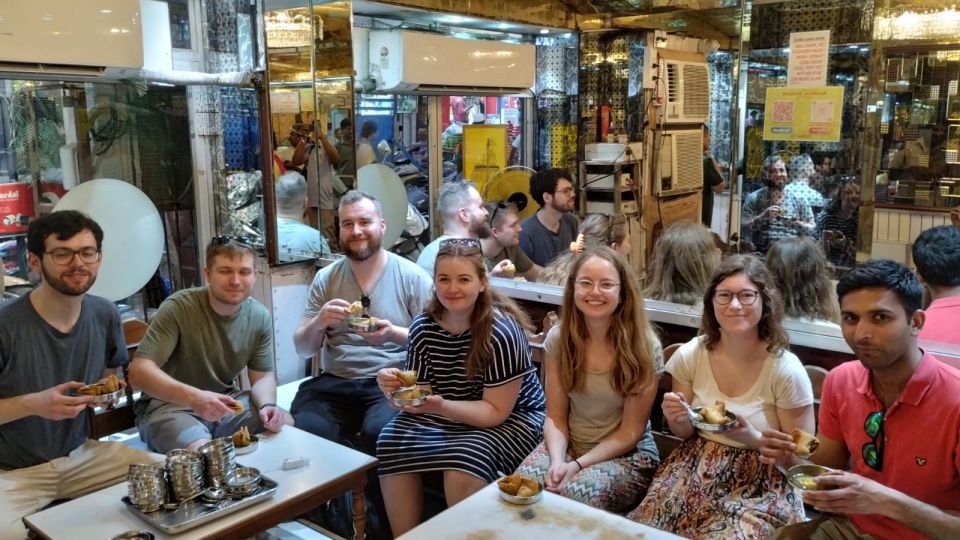
Food isn’t included on this tour, so you’ll want to plan to buy your own snacks. The good news is the route is designed to pass a food street, and you’ll also be in bazaar territory where stopping for something small feels natural.
This is a practical benefit: you can keep the walk moving while still sampling the neighborhood at your own pace. If you’re sensitive to heat or you prefer a lighter schedule, you can skip long snack breaks and just grab one item. If you’re curious, you can treat this as your chance to taste something local while the tour is still explaining the market side of George Town.
Because food isn’t included, keep a little extra budget handy. Even a single drink or snack can turn a good walk into a great one, and you’ll be doing it in the exact part of the city the tour is describing.
What the guides do well: clear storytelling and real time for questions
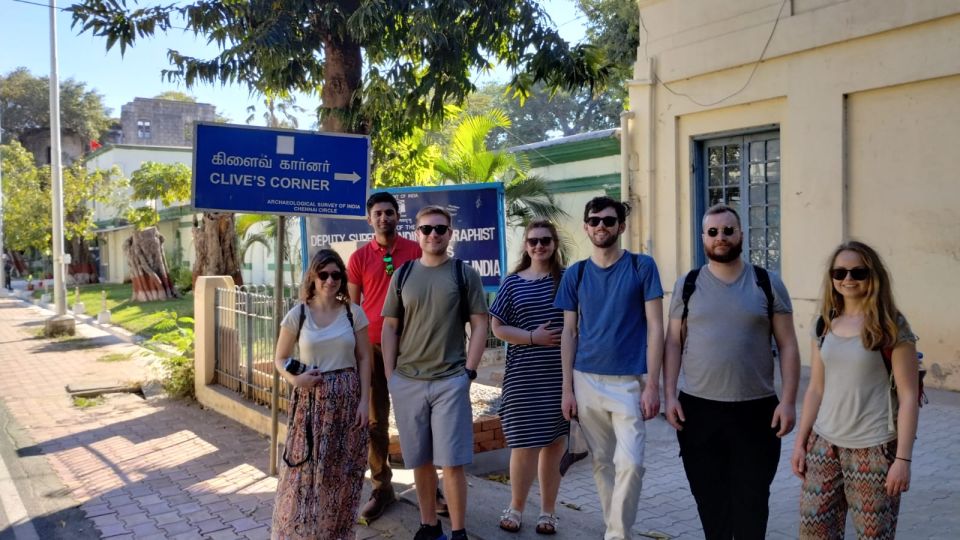
This walk depends heavily on the guide, and that’s where the experience really pays off. In particular, people like Hareesh and Satish show up in the tour’s reputation as guides who explain the East India Company era in a way that’s easy to follow—and who still leave space for questions.
That question time isn’t a minor perk. It’s what turns a set of stops into a coherent story. You start connecting Fort St George to courts, to corporate trade, to market streets, and to community trade along the Armenian corridor. When the guide can answer questions clearly, the walk becomes more memorable because it’s not just facts—it’s interpretation.
Also, the tour style is designed so you’re not sprinting. That makes it easier to enjoy deteriorated buildings and street scenes without feeling like you’re losing something by moving slowly.
Price and value: is $49 worth 3 to 3.5 hours?
At $49 per person for 3 to 3.5 hours, this tour sits in a reasonable mid-range for a guided neighborhood walk that includes more than just conversation. The big value drivers are:
- a small group limit of 10 participants, which supports good pacing and interaction
- a guided format plus entrance included for the sites covered
- a route that links multiple major landmarks—Fort St George, St Mary’s Church, the High Court area, Dare House, the China Bazaar road stretch, and the Armenian Church
Food isn’t included, so you may spend extra if you plan to snack. But that’s also a flexibility win: you can choose what you want from the market without being locked into a set menu.
If your goal is to understand George Town as a changing commercial hub—how power, law, corporate trade, and refugee community networks all show up in the streets—then $49 makes sense. If you mainly want a relaxed photos-only stroll, you might find yourself wishing you had less structure. This tour is built for people who like a guided story with stops that have names, dates, and purpose.
Clothing rules and comfort: the small details that affect your day
There’s a straightforward dress rule: no shorts, short skirts, or sleeveless shirts. That’s not just bureaucracy. It’s also a signal that you’ll be entering religious and historic spaces where modesty is expected.
Plan for walking in public areas for most of the tour duration. Since it’s a neighborhood walk that includes several landmark stops, wear footwear you can rely on for uneven sidewalks and market-adjacent streets.
Finally, if you want the most out of the museum portion, show up with enough time to settle in before the tour begins. One smart tip: the museum visit is at the start of the tour flow, so being early helps you get through more than just the highlights.
Should you book the George Town Origins walking tour?
Book it if you want Chennai with context. This is the right choice when you like your history grounded in street corners—Fort St George and Queen Victoria’s decree aren’t just names, they connect directly to what you see as you walk.
Skip it if you’re only in town for a short window and you want maximum freedom with minimal structure. The best version of this tour is when you’re open to a guided route and you’re willing to spend a few hours moving through markets and landmark areas in one coherent story.
If you match that style, this one is an easy yes: you’ll finish with a clearer map of George Town—colonial control, court power, corporate headquarters, and refugee-era trade—layered onto the same streets.
FAQ
What is the duration of the Chennai: George Town Origins Guided Walking Tour?
The tour lasts 3 to 3.5 hours.
Where does the tour start, and where should I meet the guide?
Meet the guide at the entrance of Fort St George.
What’s included in the price?
The tour includes a guide and entrance. Food is not included.
Is food included on the tour?
No. Food is not included. You can still find snacks along the route, but you’ll pay for them yourself.
Is the museum open every day?
The museum is closed on Fridays.
What group size is it?
It’s a small group, limited to 10 participants.
Are there any clothing restrictions?
Yes. Shorts, short skirts, and sleeveless shirts are not allowed.
Can I cancel for a full refund?
You can cancel up to 24 hours in advance for a full refund.