REVIEW · NEW DELHI
From Delhi: 3-Day Private Golden Triangle Tour with Hotels
Book on GetYourGuide →Operated by India Impression · Bookable on GetYourGuide
Three days, three icons, one tight route. I like the private car plus a live guide, so you get smooth transfers and clear explanations instead of guessing your way between stops. I also like the sunrise Taj Mahal visit, timed for the calm light when the experience feels most magical. One possible drawback: this is a fast schedule, so you will trade spare time for big-name sights.
Expect Mughal and Rajputana architecture back-to-back, with Delhi’s landmarks in the morning and the focus shifting to Agra and Jaipur each day. You’ll also hit UNESCO-listed highlights like Qutub Minar, Taj Mahal, Amer Fort, and Fatehpur Sikri—plus key historical stops around Gandhi’s memorial. If you want structure and first-class sightseeing momentum, this route is built for you.
In This Review
- Key takeaways before you go
- Why this Golden Triangle works (even if you have only 3 days)
- Day 1 in Delhi: Red Fort, Jama Masjid, Raj Ghat, and New Delhi landmarks
- Red Fort (Lal Qila) and the Mughal frame
- Jama Masjid: a calm pause inside Old Delhi
- Raj Ghat: a respectful stop with meaning
- New Delhi sights: India Gate and Rashtrapati Bhawan
- Qutub Minar: the UNESCO anchor in the Delhi mix
- Practical note for your day
- Day 2: Taj Mahal in early light, Agra Fort, then Fatehpur Sikri on the way to Jaipur
- The Taj Mahal at sunrise: why early light is worth it
- Agra Fort: Akbar’s influence and the Yamuna setting
- Drive to Jaipur with Fatehpur Sikri as the bridge
- End of day: hotel check-in in Jaipur
- Day 3 in Jaipur: Amer Fort, City Palace, Hawa Mahal, and Jantar Mantar
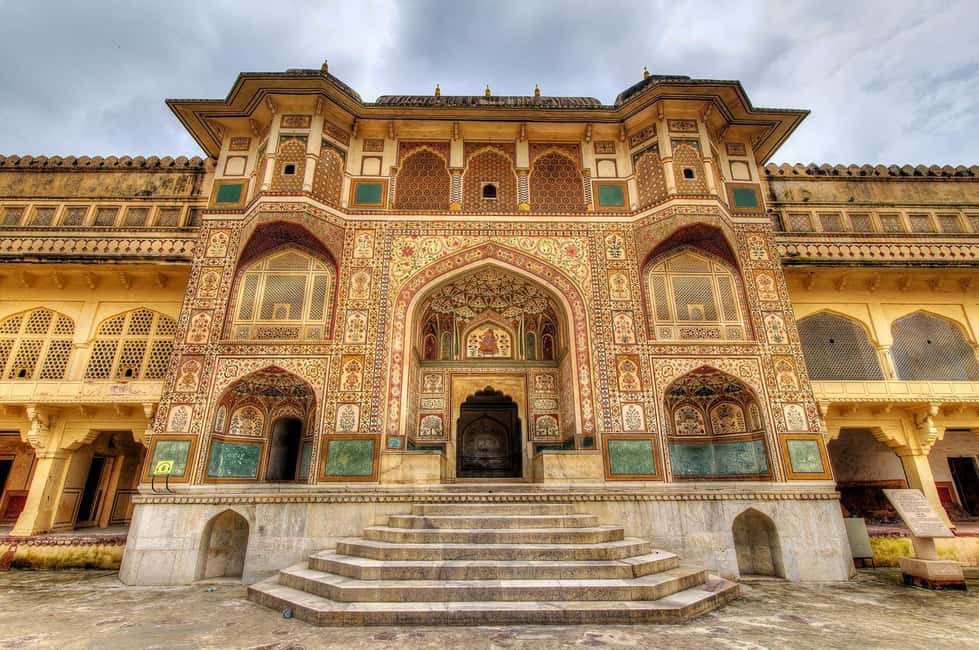
- Amer Fort (UNESCO): the Rajasthan big ticket
- City Palace: courtyards and palace-life scale
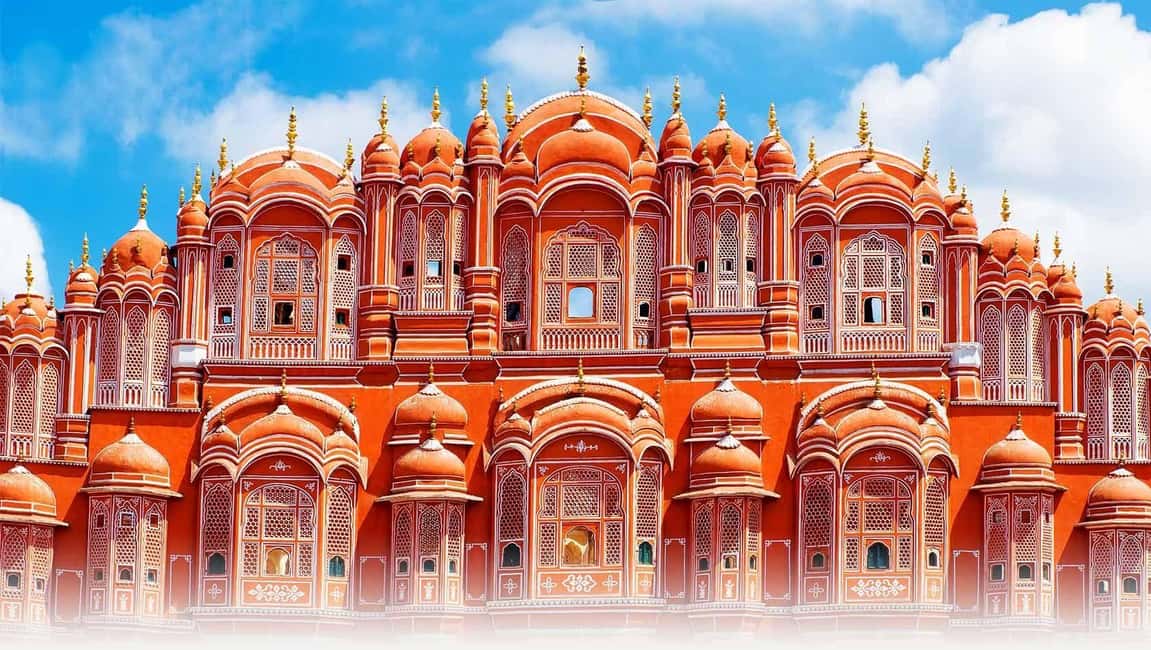
- Hawa Mahal (Palace of the Wind): why it’s famous
- Jantar Mantar: the 1700s astronomical observatory
- Head back to Delhi
- The private car and guide setup: comfort, pacing, and control
- UNESCO sites you’ll actually have time to see
- Cost and value: what $84 covers and what can add up
- Who this tour suits best (and who should think twice)
- Final call: should you book this Golden Triangle tour?
- FAQ
- How long is the tour?
- What pickup locations are included?
- Are hotels included, and how many nights?
- Is breakfast included?
- Are entry fees included?
- What languages are guides available in?
Key takeaways before you go
- Private car transfers keep your days efficient across Delhi–Agra–Jaipur
- Sunrise Taj Mahal adds a standout photo window and a quieter mood
- Live guides work with you in multiple languages, not just a generic audio script
- UNESCO stops are grouped for maximum impact in 3 days
- Food and entry fees are extra, so plan your budget beyond the tour price
Why this Golden Triangle works (even if you have only 3 days)
The Golden Triangle is famous for a reason, but the real trick is time. In just 3 days, this itinerary gives you a clear sequence: Delhi first (Old and New), Agra second (Taj Mahal), Jaipur third (Amer Fort and the core palaces/observatory). That order matters because it keeps travel day friction low. You’re not zig-zagging through India; you’re moving in one direction with planned sightseeing blocks.
What you’re really paying for here is structure plus access. You get an air-conditioned private car for all transfers and sightseeing, hotel nights for 2 days if you choose that option, and a personal live tour guide in Delhi/Agra/Jaipur. Add water bottles, and the day-to-day basics feel handled.
One more smart touch: the experience includes skip-the-ticket-line for the major sights. Entry lines can eat up your energy fast in popular places, so cutting that wait helps you keep your day from slipping.
You can also read our reviews of more private tours in New Delhi

Day 1 in Delhi: Red Fort, Jama Masjid, Raj Ghat, and New Delhi landmarks
Your day starts with pickup from Delhi airport or your hotel in Delhi or Gurugram. That reduces the usual first-day stress of finding the tour in an unfamiliar city. From there, the plan leans hard into Delhi’s layered identity.
Red Fort (Lal Qila) and the Mughal frame
You meet your guide and start at Red Fort (Lal Qila), the 17th-century fortress complex of Mughal emperor Shah Jahan. The fort is not just a pretty wall—being here helps you understand why Delhi’s power center mattered so much. It sets the Mughal tone that you’ll see again later in Agra and Jaipur-adjacent styles.
Jama Masjid: a calm pause inside Old Delhi
Next is Jama Masjid, a key landmark in Old Delhi. After the fortress context, the mosque gives you a different kind of perspective on how monumental architecture can still feel personal at ground level. Expect contrast: wide scale structures, then the human motion around them.
Raj Ghat: a respectful stop with meaning
Then comes Raj Ghat, the site associated with Mahatma Gandhi’s cremation. This stop can feel surprisingly grounding inside a tour packed with big buildings. If you like history that has a direct human thread, this one lands well.
You can also read our reviews of more tours and experiences in New Delhi






New Delhi sights: India Gate and Rashtrapati Bhawan
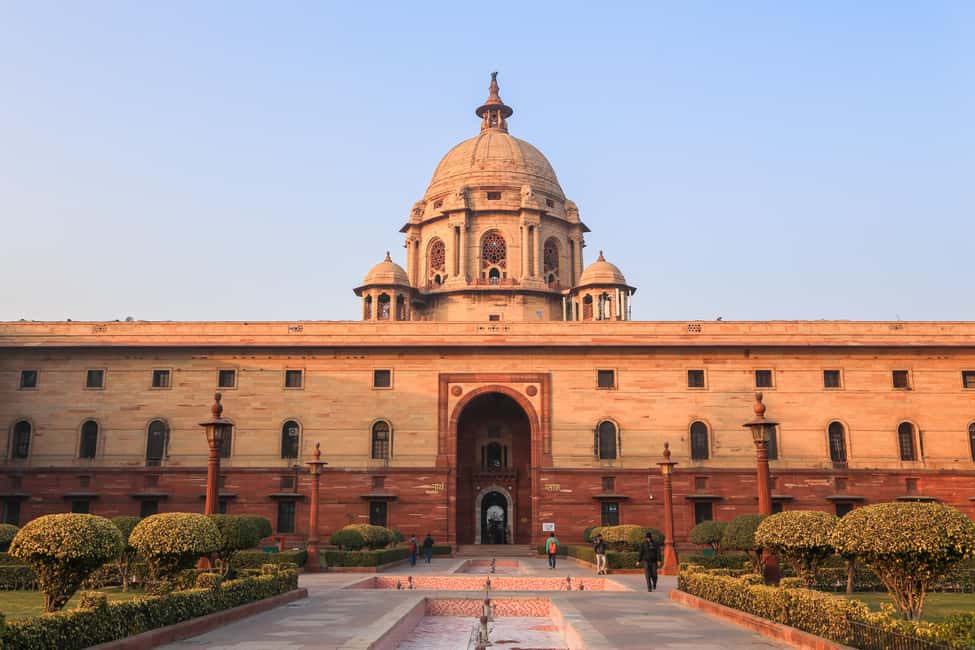
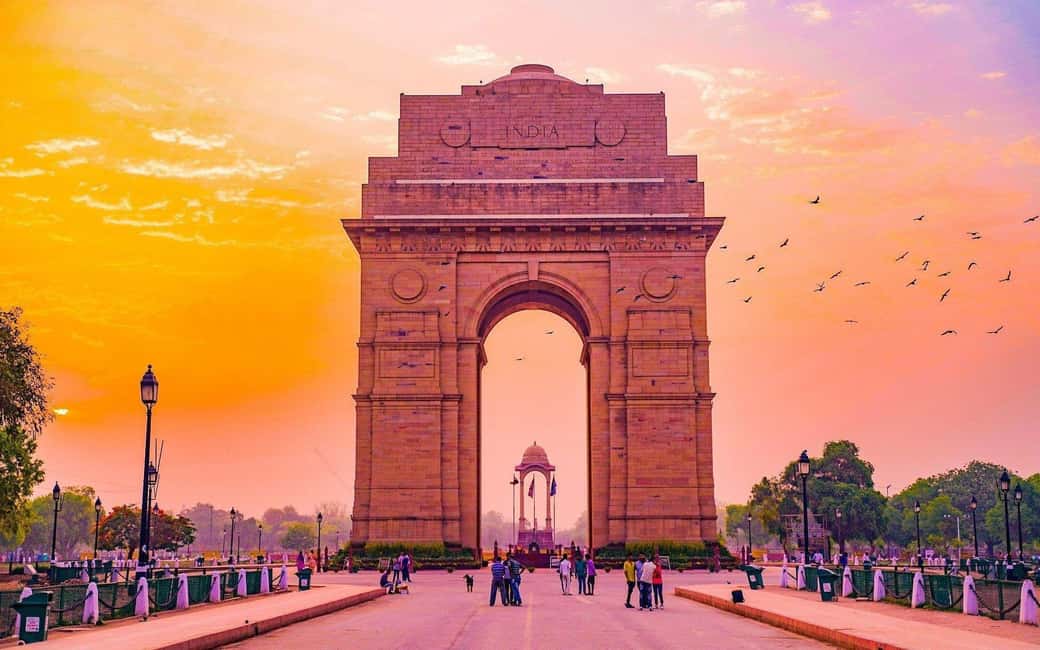
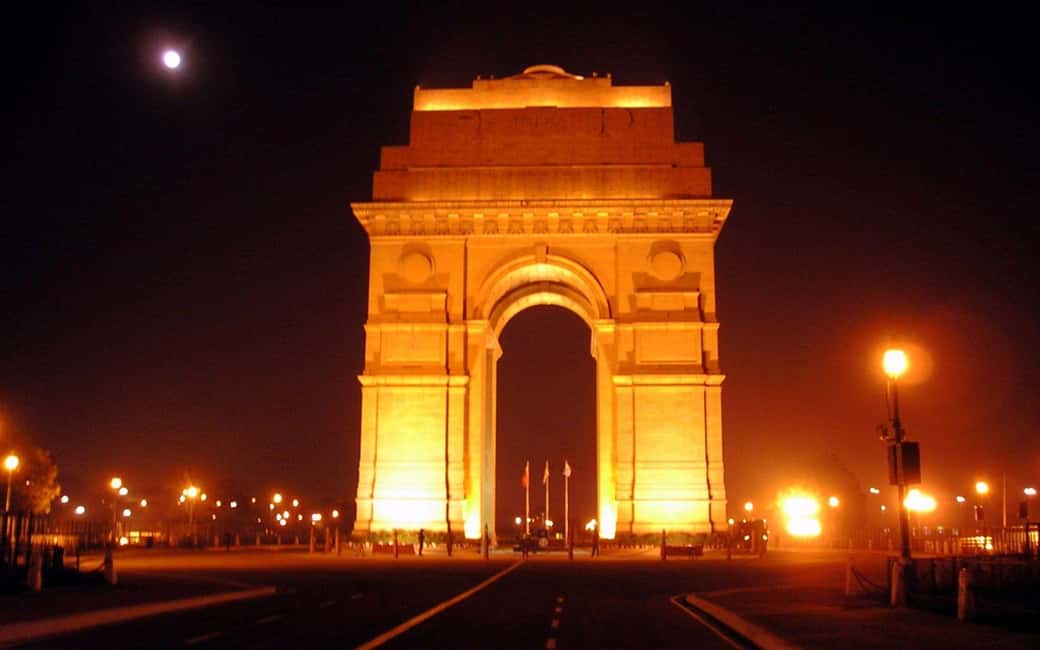
After Old Delhi, you head toward New Delhi for India Gate and Rashtrapati Bhawan. India Gate is described as a 1931 monument honoring Indian soldiers. It helps you shift from imperial history to modern national memory—same city, different emotional register.
Qutub Minar: the UNESCO anchor in the Delhi mix
You also include Qutub Minar, a UNESCO World Heritage Site highlighted as part of the Delhi sightseeing. This is a great way to round out the day because it adds an older vertical landmark to balance the Mughal heavyweights. Even if you’re short on time, it’s the kind of site that gives you a quick “wow” before you move on to the next stage of the trip.
Practical note for your day
Day 1 ends with the drive to Agra and hotel check-in, plus overnight in Agra. That means you can push sightseeing earlier without worrying about late-night logistics.
Day 2: Taj Mahal in early light, Agra Fort, then Fatehpur Sikri on the way to Jaipur
Day 2 is where the Golden Triangle usually earns its reputation. You get the first real centerpiece early, and then you keep building momentum.
The Taj Mahal at sunrise: why early light is worth it
You’ll be taken to the Taj Mahal in time for a sunrise visit. The description is straightforward: you go in early light, when the sky can feel endless and the mood tends to be more serene. Even if you care more about photos than poetry, sunrise timing is a smart choice. Light quality is better, and the experience often feels less like a rush-through checklist.
The Taj Mahal is also specifically described as a UNESCO World Heritage Site, so you’re not just seeing a famous building—you’re seeing something international recognition has protected.
Agra Fort: Akbar’s influence and the Yamuna setting
After Taj Mahal, you visit Fort Agra (Agra Fort). The tour notes that Emperor Akbar ordered it be erected along the Yamuna River banks. That detail matters because fort architecture isn’t random. Location and water access played a big role in defense, movement, and control—so it helps the fort make sense in your head, not just look impressive.
Drive to Jaipur with Fatehpur Sikri as the bridge
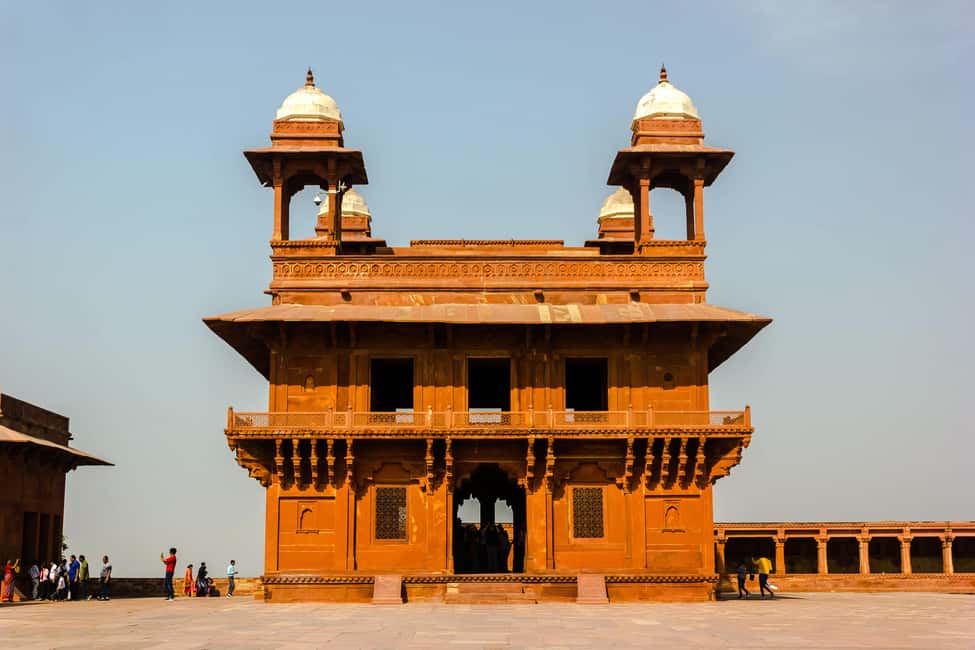
Once Agra sightseeing finishes, you travel to Jaipur. On the way, you stop at Fatehpur Sikri, another UNESCO World Heritage Site mentioned as part of the route. This stop is valuable because it breaks up the long drive with a different architectural flavor than the Taj/fort combo. It also gives you a “bridge moment” between Mughal power centers, before you arrive in Jaipur’s Rajput-style world.
End of day: hotel check-in in Jaipur
When you reach Jaipur, you check into your hotel and get overnight in Jaipur. That keeps you rested enough for the final day’s stronger concentration of palaces.
Day 3 in Jaipur: Amer Fort, City Palace, Hawa Mahal, and Jantar Mantar
Day 3 is about Jaipur’s standout symbols of royalty and clever engineering. The itinerary clusters big-name sites so you’re not constantly changing directions.
Amer Fort (UNESCO): the Rajasthan big ticket
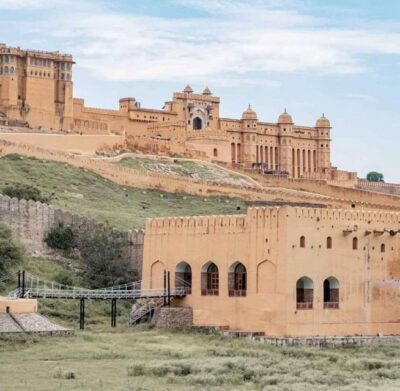
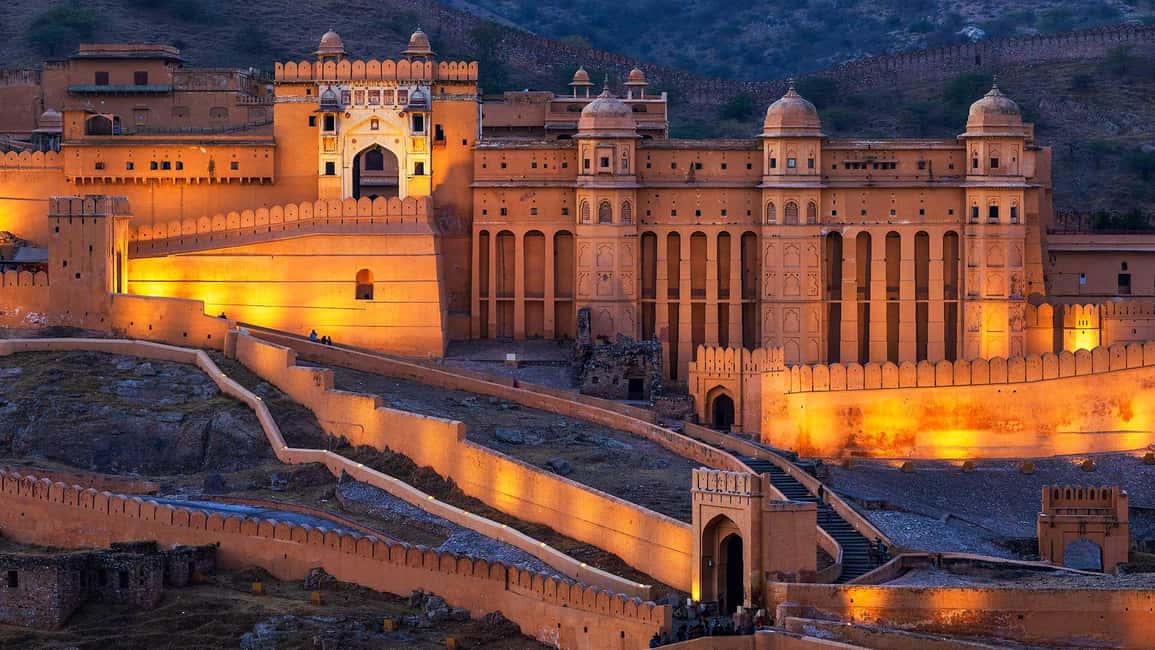
The day begins with Amer Fort, listed as a UNESCO World Heritage Site. Amer Fort is not just a palace stop—it’s the kind of place that helps you understand how power worked in Rajasthan, with architecture designed to impress and defend. If you like seeing how buildings can do multiple jobs, Amer is a strong choice.
City Palace: courtyards and palace-life scale
Next is City Palace. The tour description notes it’s in an apartment-complex style layout with courtyards, gardens, and buildings. That phrasing gives you a good expectation: you’re not looking at one hallway museum. You’re walking through a functioning-style complex where open spaces and layered rooms change your sense of scale.
Hawa Mahal (Palace of the Wind): why it’s famous
Then you go to Hawa Mahal, often called the Palace of the Wind and described as one of Jaipur’s cherished landmarks. The value here isn’t only the facade. It’s the way Jaipur’s architectural identity shows up instantly when you see it. Even in short time, it communicates the city’s personality.
Jantar Mantar: the 1700s astronomical observatory
Finally, you visit Jantar Mantar, described as an astronomical observatory from the 1700s built by Jai Singh. This is an underrated stop because it shifts you from palace glamour to science-in-stone. If you have any interest in how past societies measured the sky, you’ll appreciate the practical engineering angle.
Head back to Delhi
After Jaipur sightseeing, the tour takes you to Delhi airport, your Delhi or Gurugram hotel, or another desired place in Delhi. That means you don’t have to solve last-mile transportation on your own.
The private car and guide setup: comfort, pacing, and control
Even though this is sold as a Golden Triangle tour with a “private” feel, it also states a small group limited to 15 participants. What that usually means in practice: you get a guided experience and efficient logistics without feeling like you’re packed into a huge bus scenario.
Here’s what stands out in the way it’s set up:
- You have an air-conditioned private car for all transfers and sightseeing, which matters when you’re covering long distances.
- You get a personal live tour guide in Delhi, Agra, and Jaipur, with English plus several other language options.
- You get an endless supply of water bottles, which is a small thing that can save you stress during a tight schedule.
The flexibility point in the description is also worth noticing: on a private tour, your guide can typically adjust pacing to your interests. That can be helpful when you’re deciding whether to spend extra minutes at a viewpoint or keep moving toward the next timed stop.
UNESCO sites you’ll actually have time to see
This tour is built around UNESCO-listed highlights, but the key is grouping them so you can focus on quality time rather than constant transit chaos.
You’ll be scheduled for:
- Qutub Minar in Delhi
- Taj Mahal in Agra
- Fatehpur Sikri on the route to Jaipur
- Amer Fort in Jaipur
When UNESCO stops are spaced out across a single regional loop like this, you don’t lose your ability to compare styles. You feel the shift—from Delhi’s older monument identity, to Agra’s Mughal grandeur, to Jaipur’s Rajput expression—without turning every day into a travel marathon.
Cost and value: what $84 covers and what can add up
The price listed is $84 per person for a 3-day tour. On paper, that is a low number for a 3-day plan that includes hotel nights (if you choose that option), private car transfers, a live guide, and multiple major-sight entries with skip-the-ticket-line.
But here’s the part you should plan for: food, entry fees, and parking costs are not included. That means your real total depends on your meal choices and what you decide to pay at each site. Since entry fees are not bundled, you might want to keep a buffer amount for the days you’re most sight-heavy (Agra and Jaipur).
Also note what is included vs not:
- Included: airport/hotel pickup and drop-off, air-conditioned private car, water bottles, live tour guide, 2 hotel nights if chosen, breakfast in the hotel if chosen, and skip-the-ticket line
- Not included: food, entry fees, parking costs
If you’re someone who prefers paying a single all-in package, this one might feel like a base fare. If you’re okay managing meals and site fees directly, the overall value can still be strong because the big parts—transport, guides, and the timed highlights—are taken care of.
Who this tour suits best (and who should think twice)
This itinerary is ideal if you:
- Want a structured, efficient Delhi–Agra–Jaipur loop in 3 days
- Prefer guided context at major sites like Taj Mahal, Amer Fort, and Jantar Mantar
- Like the idea of a sunrise Taj Mahal visit
- Appreciate having a live guide and a private car rather than figuring things out alone
It may not be the best fit if you:
- Are averse to early starts (sunrise Taj Mahal is built in)
- Need a slower pace than a packed day-by-day schedule
- Fall into the stated exclusions: pregnant women, people with pre-existing medical conditions, or people with high blood pressure
Final call: should you book this Golden Triangle tour?
I’d book this if you want the classic Golden Triangle highlights with a guide and a private car, and you’re okay with the trade-off of a packed schedule. The value looks strongest when you factor in hotel nights (2 if chosen), skip-the-line convenience, and the early-morning Taj Mahal experience.
I’d pause if you hate extra add-on costs, because entry fees and food are not included, or if your health needs call for a calmer itinerary. For most people who want to see the headline sights without wasting time, this is a practical way to do it.
FAQ
How long is the tour?
It’s a 3-day tour.
What pickup locations are included?
Your tour includes hotel or airport pickup and drop-off in Delhi or Gurugram (including Delhi airport pickup).
Are hotels included, and how many nights?
Hotel lodging for 2 nights is included if you choose the hotel option.
Is breakfast included?
Breakfast in the hotel is included if you choose the breakfast option.
Are entry fees included?
No. Entry fees are not included, and parking costs are also not included.
What languages are guides available in?
Live tour guides are available in English, German, Italian, Russian, French, and Spanish.