REVIEW · JAIPUR
Full day Jaipur sightseeing tour by tuk tuk.
Book on GetYourGuide →Operated by Jaipur tour taxi cab · Bookable on GetYourGuide
Jaipur by tuk-tuk feels like a city in fast-forward. This full-day private loop ties together the big landmarks—Amber Fort, Hawa Mahal, and more—while you glide through lanes at a pace that’s easy on your feet and eyes. The English-speaking driver and optional guide mean you’re not just looking, you’re getting meaning with the photos.
What I really like is how the day stays comfortable and controllable. You get hotel-area pickup and drop, bottled water, and a safe, patient ride where stops aren’t a blur. Second, you can tailor the route to your comfort level, which is huge when Jaipur’s crowds and heat can swing your energy fast.
One thing to plan for: site timing can shift. For example, museum closures can change what you see that day, and the schedule may adjust to keep you moving (like swapping to other key photo stops when a building isn’t available).
In This Review
- Key things to know before you go
- Why a tuk-tuk day makes sense in Jaipur
- Price and what your $7 actually buys
- Hotel pickup to the 8-hour rhythm: how to plan your day
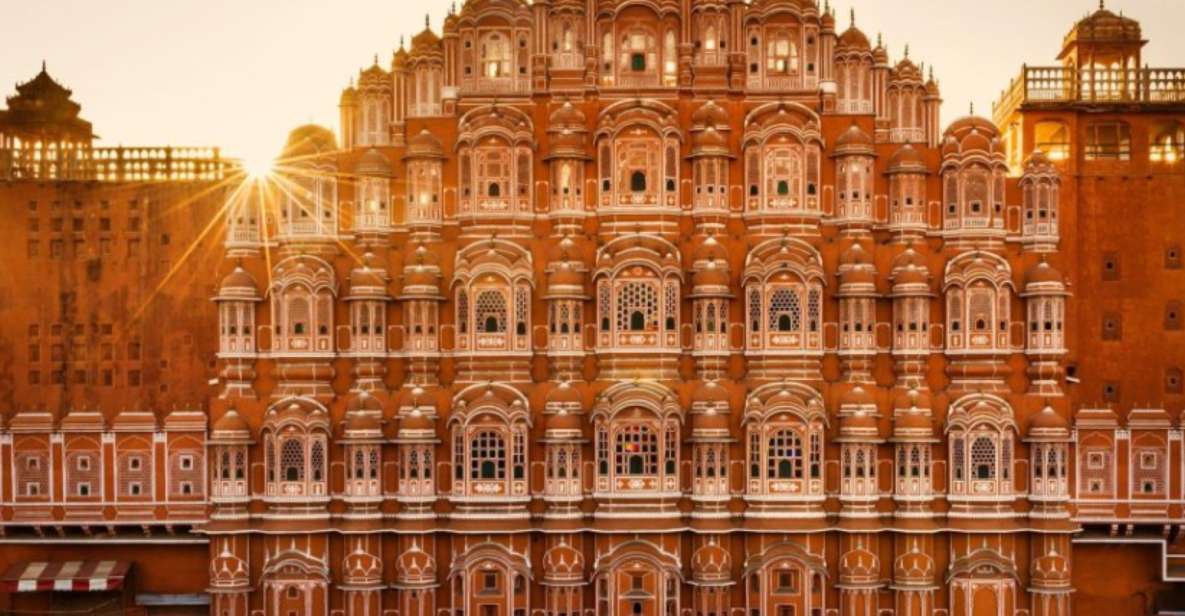
- Hawa Mahal photo stop: the Palace of Winds, seen right
- Amber Fort: UNESCO walls and the views that change everything
- Panna Meena ka Kund: the stepped-well moment
- Jal Mahal: the palace on water, mostly from viewpoints
- Markets, crafts, and lunch: where the day becomes yours
- Gaitor Ki Chhatriyan: chhatris, calm corners, and photo time
- City Palace: courtyards and museums in one palace complex
- Jantar Mantar: when you see science built in stone
- Albert Hall Museum note: possible extra if timing allows
- Which guides/drivers make this day feel effortless
- Should you book this Jaipur full-day tuk-tuk tour?
- FAQ
- FAQ
- How long is the Jaipur sightseeing tour by tuk-tuk?
- Is this a private tour?
- Do I get hotel pickup and drop-off?
- Is the driver English-speaking?
- What sights are included on the day?
- Are entrance fees included?
- What about meals?
- Is bottled water provided?
- Is cancellation flexible?
Key things to know before you go
- Private tuk-tuk + chauffeur: you’re not sharing your day with a random tour pile.
- English driver (and guide if selected): explanations make the landmarks click.
- Hotel pickup and drop: you start and end in one simple place.
- Big-name UNESCO stops: Amber Fort and Jantar Mantar are the anchors.
- Time built in: markets, lunch, and free time are part of the plan, not an afterthought.
- Flexible pacing: you can slow down, speed up, or swap stops when needed.
Why a tuk-tuk day makes sense in Jaipur
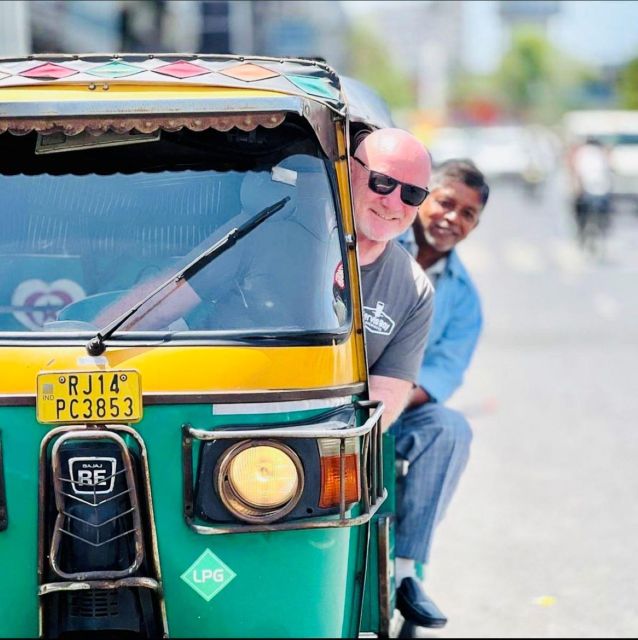
Jaipur is gorgeous, but it’s also a city where traffic, detours, and long walks can drain you. A private tuk-tuk-style tour solves the hardest part: getting between sights without turning your day into constant transit stress. The route is built around clusters—old-city views, then fort-area sights, then palace-and-observatory landmarks—so you spend more time where the best photos are, and less time stuck.
I also like that this isn’t a “herd you from door to door” setup. With a private vehicle and driver, you can keep a rhythm that matches your energy. Several guides/drivers in practice are known for being patient with photo requests and for waiting as you explore at your own pace—one of the best forms of value on a short schedule.
You can also read our reviews of more tours and experiences in Jaipur



Price and what your $7 actually buys
At about $7 per person for an 8-hour full-day tour, the value comes from what’s included—not just the vehicle. Your package covers pickup and drop-off, a chauffeur for sightseeing, fuel/parking/tolls, and government taxes (GST), plus bottled water.
Two money notes to keep you from surprises:
- Meals aren’t included, so plan for lunch on your own during the built-in break.
- Entrance fees are included only if you choose the option that lists them. If you don’t select it, you may pay tickets yourself at the gates.
For me, the “buy” is the day’s structure: you get transport, a route through the highlights, and the option to add interpretation via a guide. That’s hard to match if you try to DIY everything with taxis plus individual ticket lines plus constant route planning.
Hotel pickup to the 8-hour rhythm: how to plan your day
This is designed to be simple from the start. You can get picked up from your hotel, airport, or railway station, and if you arrive by train or plane, the driver can wait at the arrival gate with a name sign paper.
Once you’re rolling, the day is paced in blocks:
- Quick photo stops (often around 30 minutes each)
- Two main “sink your time into it” areas (the hill fort and the palace/observatory segment)
- A mid-day shopping hour plus a lunch + free time hour
You’ll want a few practical things ready:
- Comfortable shoes with grip (Jaipur has uneven stone and lots of walking around forts and monuments)
- A hat and sunscreen (many key stops are outdoors)
- Some cash for markets and snacks (meals aren’t included)
Hawa Mahal photo stop: the Palace of Winds, seen right
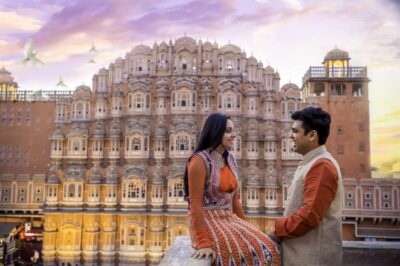
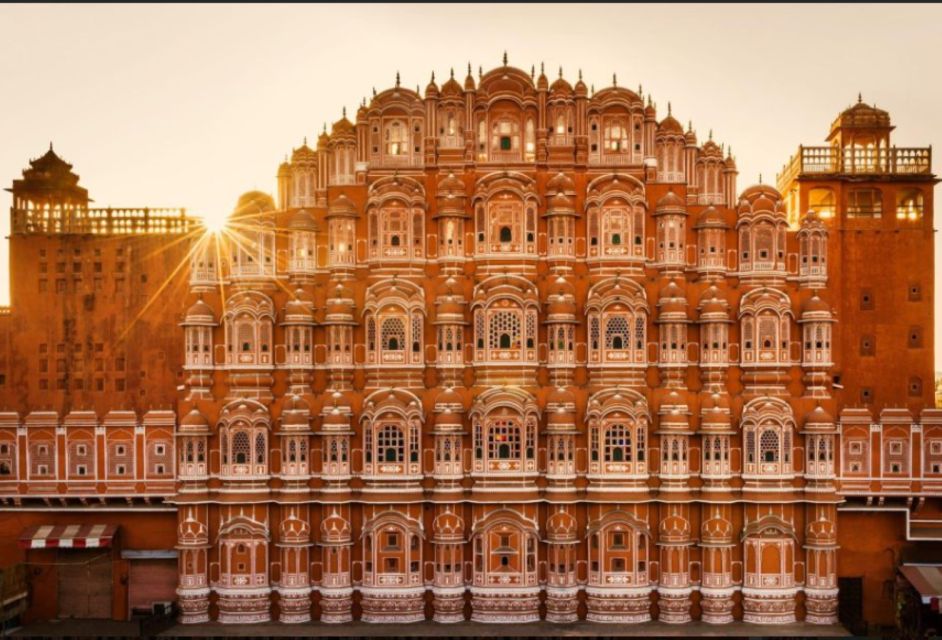
You’ll make a stop at Hawa Mahal (Palace of Winds) with time for outside viewing and photos. The big win here is efficiency: 30 minutes is enough to frame the façade’s latticework and get the classic angles without turning it into an all-afternoon detour.
What to expect in real life is a lot of people also trying to photograph the same faces. So treat this as a “get your best shot fast” stop:
- Arrive, choose a couple angles, then walk a short distance to find slightly different sightlines.
- If you want photos without stress, ask your driver/guide where they like to stand for cleaner shots.
The photos you take here are more than postcards—this façade is part of how Jaipur’s architecture expresses public life and privacy at once.
Amber Fort: UNESCO walls and the views that change everything
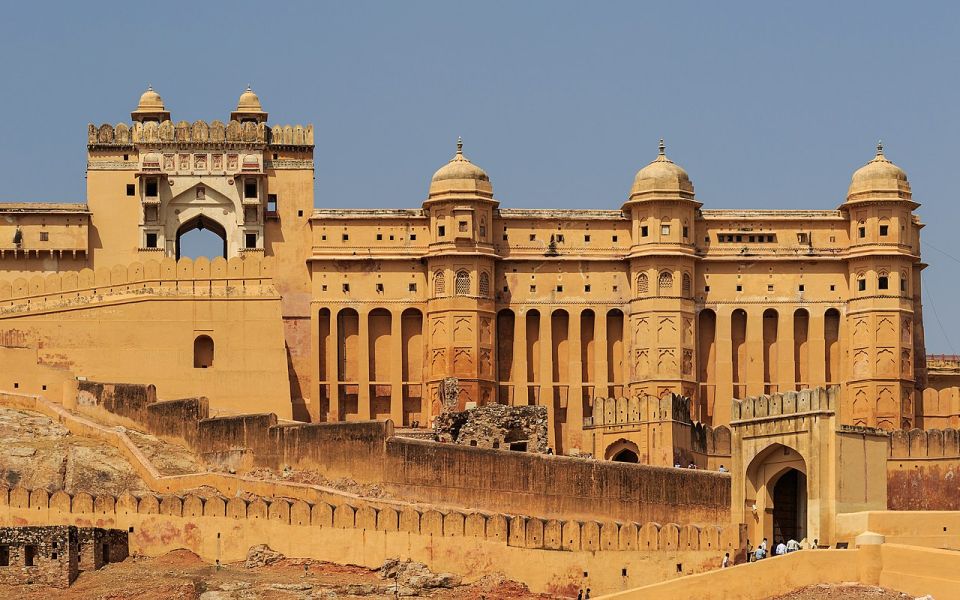
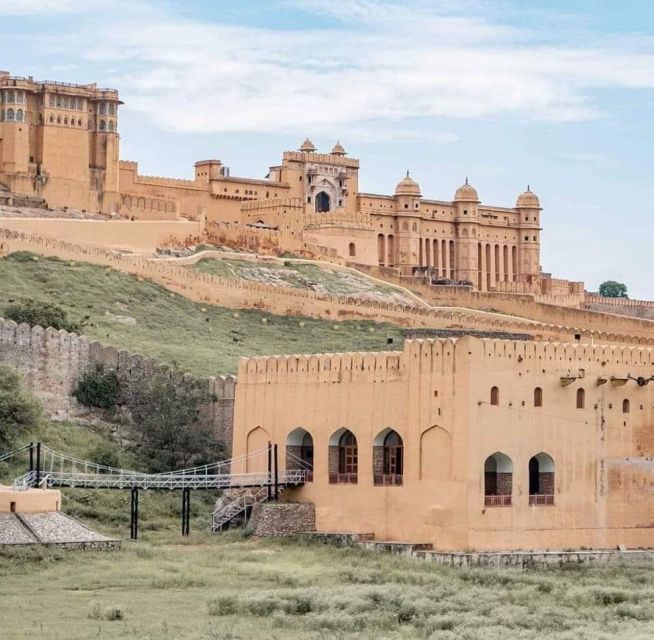
Next comes Amber Fort, the day’s heavyweight. You’ll get time for photo stops on the way, then around 1.5 hours to explore once you arrive. Amber Fort is a UNESCO fort and palace complex on a hill overlooking Maota Lake, and the architecture is the headline: intricate carvings, decorative details, and a dramatic setting.
Why this stop matters for your experience: when you see Jaipur’s ruler-era power made physical, it clicks. Amber isn’t just “pretty,” it’s engineered for how people lived, moved, and watched from height.
A few practical tips:
- Expect uphill walking and some stairs around viewpoints and courtyard areas.
- If you’re sensitive to heat, prioritize shade breaks and pace yourself—this is the place where slowing down pays off.
- Bring your camera, but also take a moment to just look across the fort’s open spaces. The view is part of the story.


Panna Meena ka Kund: the stepped-well moment
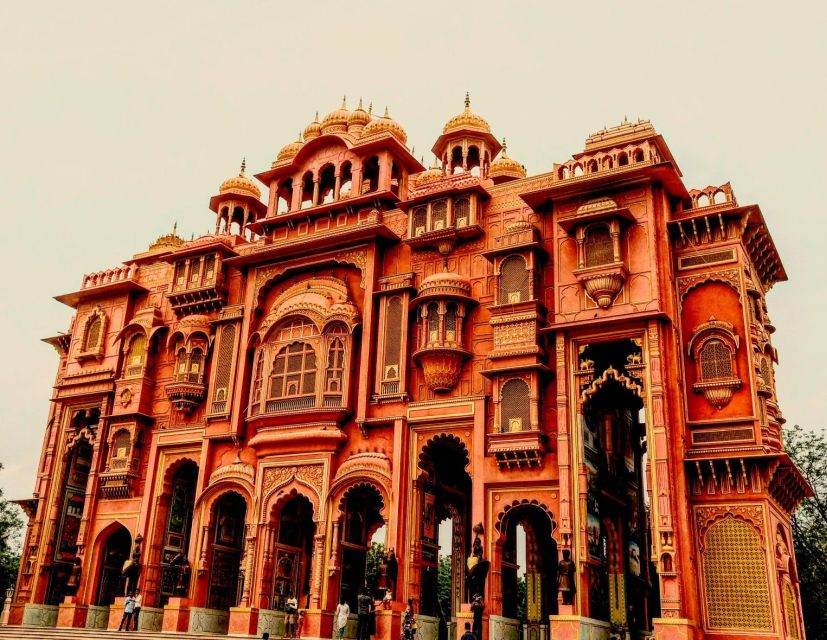
You’ll stop at Panna Meena ka Kund, again with time for photos and sightseeing (around 30 minutes). This is a different kind of Jaipur sight: less royal-palace spectacle and more geometric, human-scale design. The stepped-well shape gives you great visual lines, and it’s one of those places where photos look good quickly because the structure holds attention.
The consideration here is simple: it’s outdoors and can be busy. If you want photos with fewer interruptions, keep your timing flexible when your driver/guide offers options.
Jal Mahal: the palace on water, mostly from viewpoints
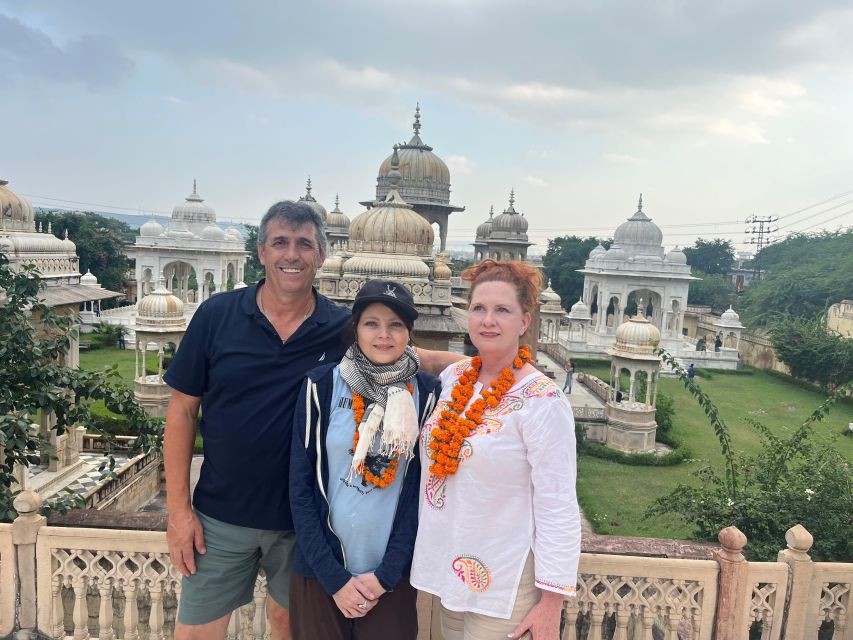
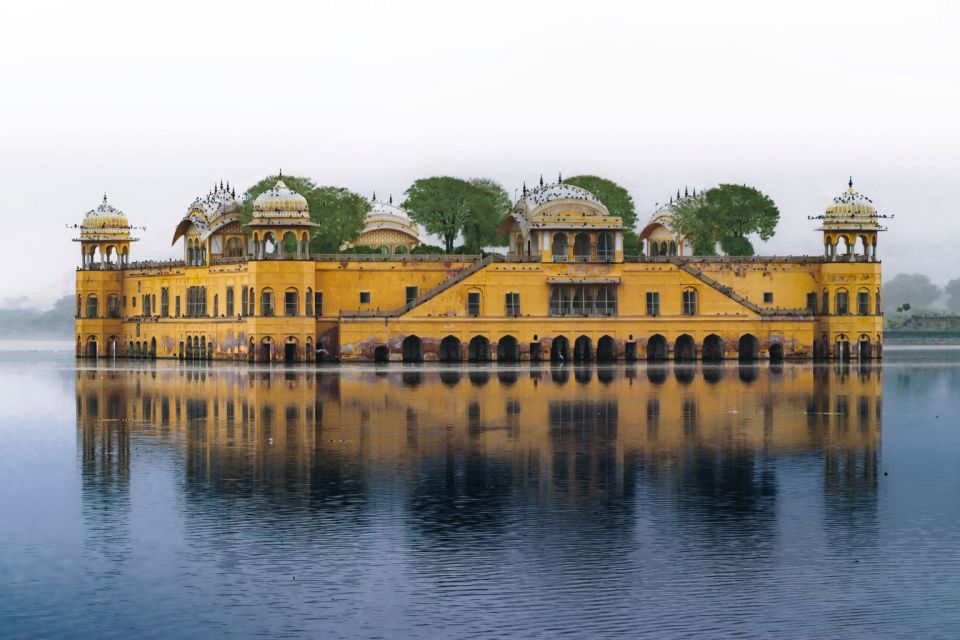
Jal Mahal is listed as a UNESCO site and described as a palace on water. During this stop, you’ll have a short window for photo opportunities, visiting, and a bit of walking (about 30 minutes).
Here’s the realistic expectation: water-level views can affect how dramatic it looks. Your goal should be admiration from the best viewpoints you can access in the allotted time, not expecting a long interior-style visit.
This is also a good mental reset stop. After Amber’s hill intensity, Jal Mahal gives you softer views and calmer pacing—perfect for cooling down and getting photos that look different from the fort shots.
Markets, crafts, and lunch: where the day becomes yours
You’ll spend about 1 hour on shopping at arts-and-crafts-style markets, followed by lunch and free time for around 1 hour.
I like this structure because Jaipur’s best purchases and snacks often aren’t on the monuments—they’re in the streets between them. The market hour is where you can:
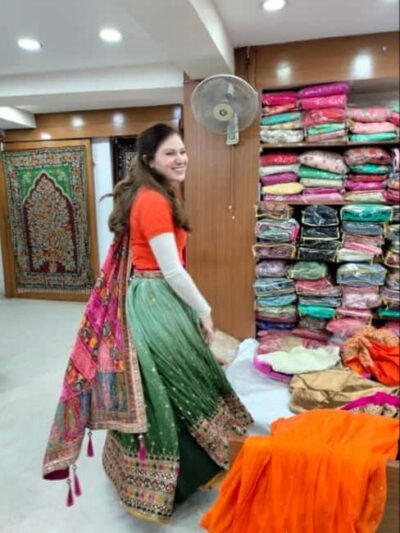
- Look for textile items, small craft pieces, and souvenirs that don’t feel like copy-paste tourist goods
- Ask for recommendations or show curiosity about what people are making
- Compare prices without feeling rushed by a bus schedule
Lunch is your flexibility zone. Since meals aren’t included, you can choose what fits your appetite and spice comfort. Use the driver/guide as a second opinion—they often suggest places that are convenient and easy to reach during the day.
Gaitor Ki Chhatriyan: chhatris, calm corners, and photo time
After lunch, you’ll head to Gaitor Ki Chhatriyan for about 1 hour. This stop includes photo time, sightseeing, and shopping.
This is the kind of place that rewards a slower walk. The chhatris create repeating shapes and textures that are great for photography, but the real benefit is atmosphere. It’s a quieter counterpoint to the busiest monumental stops, and it gives you a chance to enjoy Jaipur’s craft and stonework in a more relaxed setting.
City Palace: courtyards and museums in one palace complex
You’ll visit City Palace with around 1 hour for photo stops and sightseeing. The palace complex was built by Maharaja Sawai Jai Singh II in the 18th century and includes museums and galleries, including the Maharaja Sawai Man Singh II Museum.
This is a “walk and absorb” stop. City Palace isn’t only a big building; it’s courtyards, gardens, and spaces that help you understand how royal life organized power, art, and everyday movement.
If you like seeing historical objects explained in context, City Palace is a strong choice. If you don’t, you can still enjoy it for architecture and atmosphere without turning it into a museum marathon.
Jantar Mantar: when you see science built in stone
Next is Jantar Mantar, an astronomical observatory built in the 18th century by Maharaja Sawai Jai Singh II. It’s UNESCO listed, and you’ll have about 1 hour to explore and learn about the instruments used for astronomical observations.
This stop hits differently from typical “stand in front of a monument” sights. The instruments are designed so people can measure time and sky-related information in a very visible way. It turns the experience from sightseeing into a mini lesson you can feel.
Practical tip: bring your curiosity. Ask your driver/guide a basic question—how it works, how measurements were taken, why these tools mattered. Even short explanations make the stone structures much more memorable.
Albert Hall Museum note: possible extra if timing allows
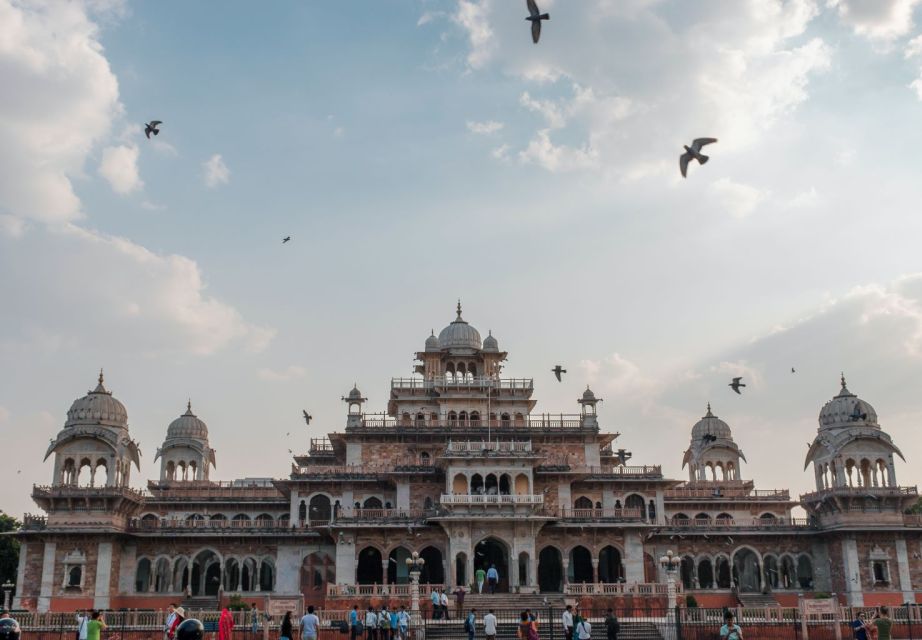
Albert Hall Museum is part of the tour highlights, though your exact experience can depend on timing and closures. One real-life example: when a museum didn’t open as expected, the driver adjusted and the day shifted toward other key photo opportunities.
So if Albert Hall Museum is important to you, keep your expectations flexible. If it’s open, it’s a bonus. If not, don’t panic—your driver’s job is to keep the day flowing with alternatives that still hit the core Jaipur landmarks.
Which guides/drivers make this day feel effortless
This tour lives or dies by the people steering it. In practice, the best days tend to have drivers who are:
- Punctual and careful in traffic
- Patient about photo requests and short exploring
- Willing to tweak your day for how you feel, not how a template says you should feel
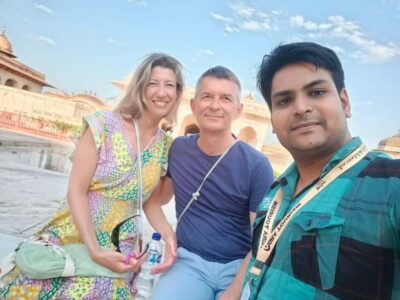
I’ve seen strong examples of this kind of service tied to drivers and guides like Avinash, Abdul, Hitesh, Ravi, Mohsin Khan, Khalid, Adil, Mosin, and Shoaib. The pattern is consistent: safe, friendly driving plus explanations that make the landmarks easier to understand.
One more value bonus: some drivers will suggest food stops or local street experiences. If you love lassi, you might hear about places like Lassiwalla as a favorite stop. The key is that these suggestions often fit your schedule, not disrupt it.
Should you book this Jaipur full-day tuk-tuk tour?
Book it if you want a high-sight coverage day without sacrificing comfort. This works especially well when:
- You want a private setup (not a crowded group pace)
- You like structure but still want flexibility to slow down
- You’re aiming to see UNESCO anchor sights like Amber Fort and Jantar Mantar in one go
- You care about having an English-speaking driver/guide to connect the dots
Skip it (or be selective) if you want a slow, deep museum-only day, or if you prefer public transport and don’t need a car-door-to-monument plan. Also, if a specific museum stop like Albert Hall is a non-negotiable for you, plan to stay flexible if timing changes.
FAQ
FAQ
How long is the Jaipur sightseeing tour by tuk-tuk?
It runs for 8 hours.
Is this a private tour?
Yes, it’s a private group with a private vehicle and chauffeur.
Do I get hotel pickup and drop-off?
Yes. Pickup and drop-off at your hotel, airport, or railway station are included.
Is the driver English-speaking?
The driver is listed as English-speaking.
What sights are included on the day?
The tour includes stops such as Hawa Mahal, Amber Fort, Panna Meena ka Kund, Jal Mahal, Gaitor Ki Chhatriyan, City Palace, and Jantar Mantar. Albert Hall Museum is included in the highlights, depending on timing.
Are entrance fees included?
Entrance fees are included only if you select the option that lists them as included.
What about meals?
Meal expenses are not included. Lunch time and free time are built into the schedule, but you pay for food yourself.
Is bottled water provided?
Yes, bottled water is included.
Is cancellation flexible?
There’s free cancellation up to 24 hours in advance for a full refund.