REVIEW · NEW DELHI
From Delhi: 3-Days Golden Triangle with Fatehpur Sikri
Book on GetYourGuide →Operated by Sameday Taj Mahal · Bookable on GetYourGuide
Sunrise at the Taj feels like a switch flips. This 3-day Golden Triangle style trip strings together Delhi, Agra, Fatehpur Sikri, and Jaipur with a private car and live guides, so you spend less time figuring things out and more time seeing real icons. I especially love the Taj Mahal sunrise setup, and I also really enjoy the guided stop in Fatehpur Sikri, where the story behind the Mughal capital makes the stone feel alive.
The main drawback to plan for is the pace: you will be up early and riding in the car most days. In the service side, most guides are praised for being friendly and answering questions well (I saw names like Satyam, Azhar, Ali, and GG come up), but one experience also noted a late guide day, so it helps to keep a little flexibility in your timing.
In This Review
- Key highlights you should care about
- Why this Golden Triangle works better than a rushed checklist
- Day 1 in Delhi: Qutub Minar, Humayun’s Tomb, and the city’s big contrasts
- The Agra drive day: when timing matters more than speed
- Day 2: Taj Mahal sunrise, Agra Fort, then Fatehpur Sikri’s strange silence
- Taj Mahal sunrise
- Agra Fort
- Fatehpur Sikri: the Mughal ghost city feeling
- Chand Baori in Abhaneri: stepwells you will actually remember
- Day 3 in Jaipur: Amber Fort, Jal Mahal photos, and two stepwells
- Amber Fort
- Panna Meena ka Kund
- Jal Mahal photo stop
- Jaipur’s royal core: City Palace, Jantar Mantar, and Hawa Mahal
- City Palace
- Jantar Mantar
- Hawa Mahal
- How guides make or break the experience
- Price and value: is $65 per person a good deal?
- What to pack and how to survive the early mornings
- Should you book this tour?
- FAQ
- How long is the tour?
- Which cities and major areas are included?
- Is hotel pickup and drop-off included?
- Do I get a live tour guide?
- Is there an option to skip the line at monuments?
- Are monument entrance fees included?
- Is accommodation included?
- Which sites do you visit in Fatehpur Sikri and nearby?
- What are the key sights in Jaipur?
- What is the cancellation and payment flexibility?
Key highlights you should care about
- Taj Mahal at sunrise for that early-light magic and a smoother start to the day
- Private guide + skip-the-line style entry so you are not stuck waiting as long as you might expect
- Fatehpur Sikri’s Mughal sites like Buland Darwaza, Diwan-i-Khas, and the Tomb of Salim Chishti
- Stepwell stops at Chand Baori and Panna Meena ka Kund, both great for photos and scale
- Jaipur’s royal route: Amber Fort, City Palace, Jantar Mantar, and Hawa Mahal
- One-car convenience across four major stops, which usually costs less effort than piecing it together yourself
Why this Golden Triangle works better than a rushed checklist
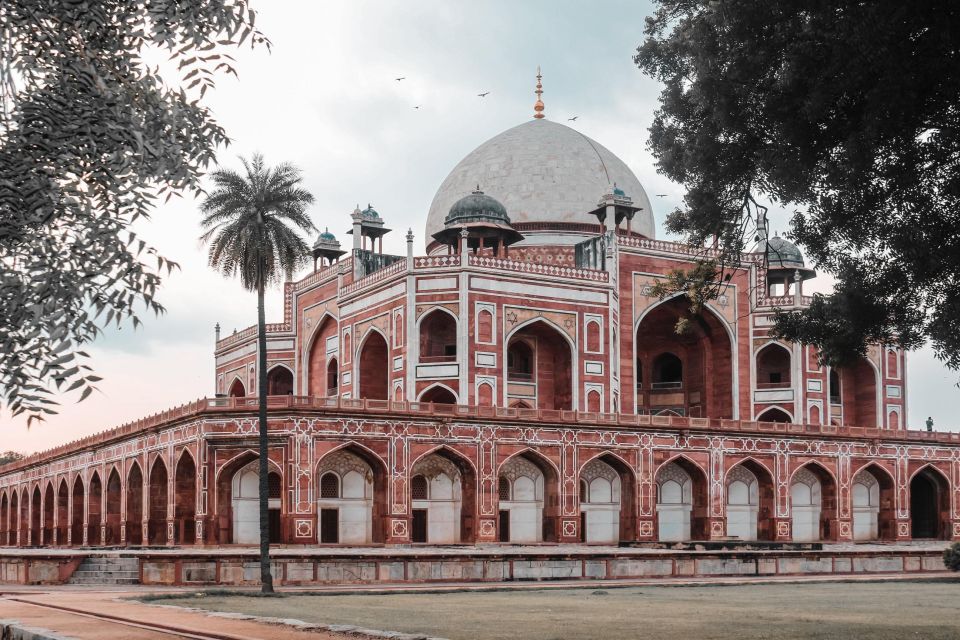
A Golden Triangle tour can go two ways: either it feels like a photo sprint, or it gives you enough context to actually understand what you are looking at. This one leans toward the second option because you move city to city by private, air-conditioned car and you get live local guides at the key monuments.
I like that it does not treat Delhi, Agra, Fatehpur Sikri, and Jaipur like isolated stops. It connects them through the Mughal thread—then shifts into Jaipur’s royal architecture and astronomy. That makes the trip feel more logical, and it helps you see patterns: how rulers wanted buildings to project power, belief, and order.
And yes, you still get the headline moments. The big one is Taj Mahal sunrise, which is one of those rare travel experiences where lighting, quiet, and layout all work together. Your alarm clock will not be thrilled, but your camera and your memory will be.
You can also read our reviews of more tours and experiences in New Delhi.


Day 1 in Delhi: Qutub Minar, Humayun’s Tomb, and the city’s big contrasts
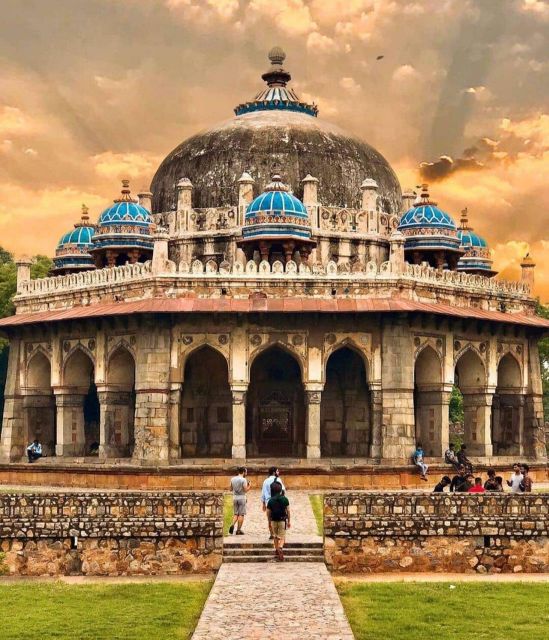
Day 1 starts in Delhi with a classic mix of monument types. You do the high-value stops that people tend to remember long after they forget the bus schedule.
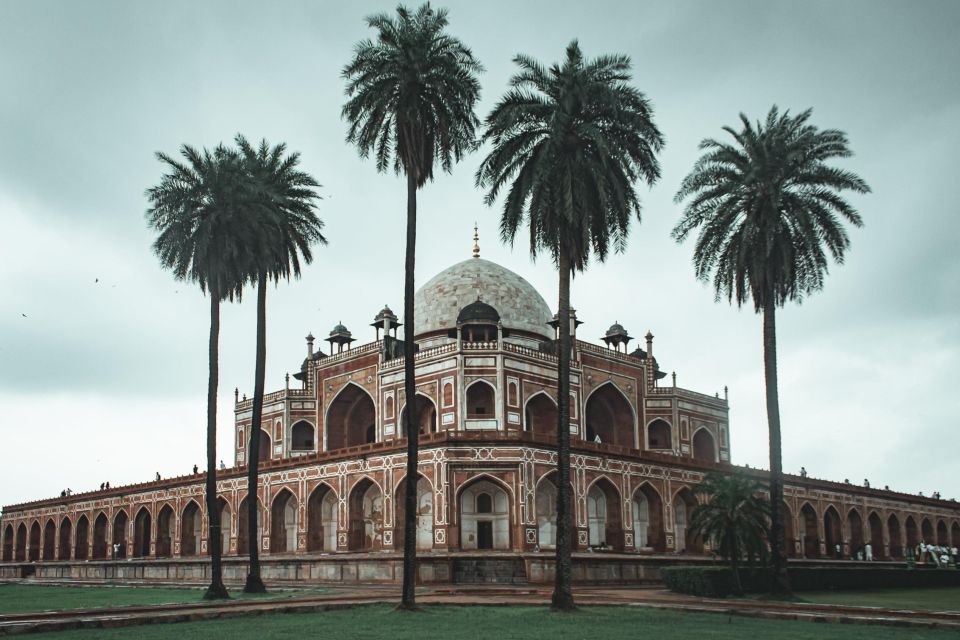
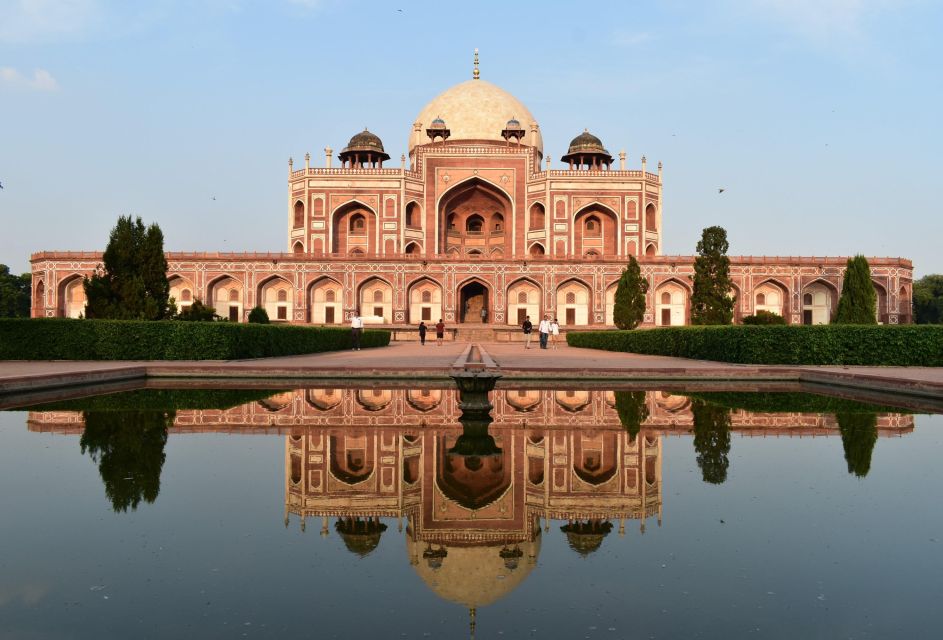
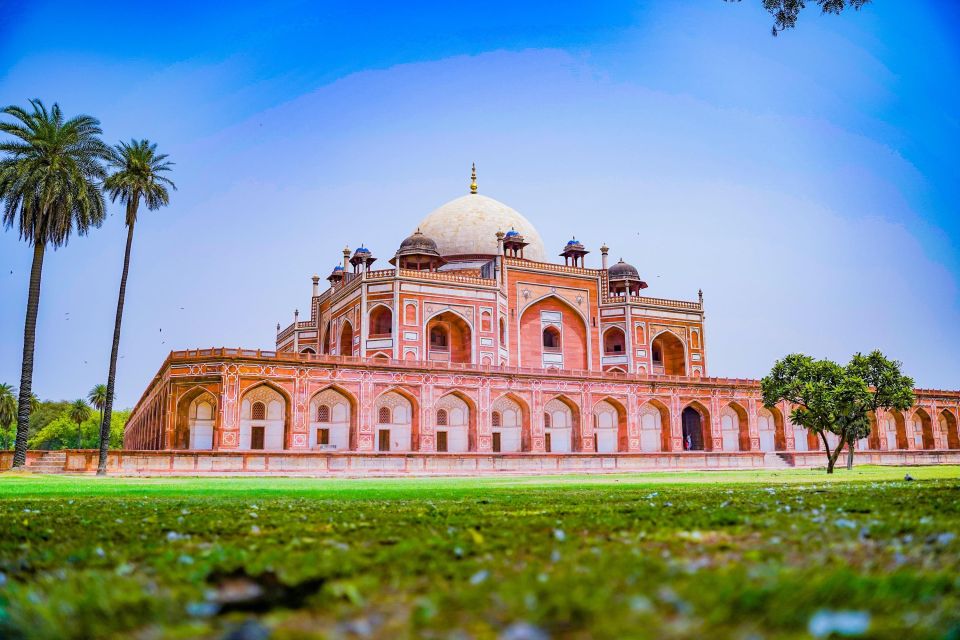
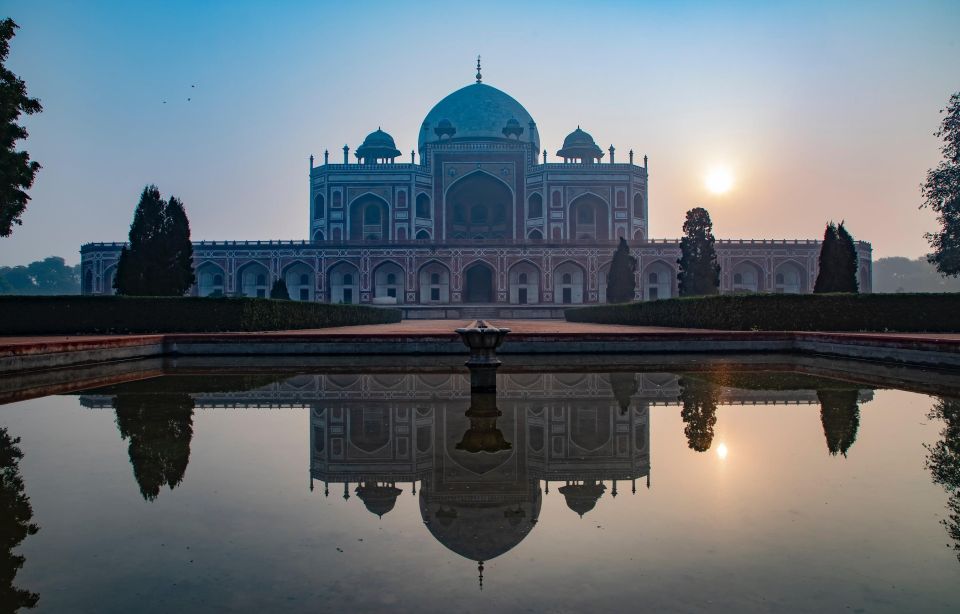
You will see Qutub Minar and Humayun’s Tomb, two landmark sites that show how Indian architecture evolved over time. Qutub Minar is not just a pretty tower; it is a statement of vertical scale and stone craftsmanship. Humayun’s Tomb gives you the Mughal flavor, with gardens and symmetry that feel intentionally designed for calm.
The itinerary also includes Lotus Temple, India Gate, Raj Ghat, and Jama Masjid. That is a wide spread for one day, but the trick is that each stop hits a different mood:
- Lotus Temple brings clean modern lines and a quiet interior vibe.
- India Gate is built for perspective—especially if you slow down and look at alignment and crowds.
- Raj Ghat sets a reflective tone.
- Jama Masjid is all about grandeur and mass, and it is the kind of place where you feel history in your legs as much as your eyes.
You also get a drive-past of Rashtrapati Bhavan and a photo stop at the Red Fort exterior. You are not trying to conquer every gate and lane on day one. Instead, you get the key visuals that help you understand Delhi at street level.
If you have time and choose to add it, Akshardham Temple is an option. It is the kind of place that can work as a palate cleanser after the older monuments.
Finally, you overnight in Agra, which is practical. You are not waking up in one city, fighting traffic across another, and losing the night.
The Agra drive day: when timing matters more than speed
The drive from Delhi to Agra is where most of the real value of this tour shows up. A private car does not just save your legs. It saves your brain.
You get scheduled time to see Delhi’s major sights, and then you transition to Agra without wasting your evening figuring out routes. That matters because the next morning is a sunrise day, and sunrise days forgive almost nothing.
The other practical win: the tour includes pick-up and drop-off at your hotel or airport, plus bottled mineral water. That sounds small, but it reduces decision fatigue. You stop thinking about logistics and start thinking about what you want to see.
Day 2: Taj Mahal sunrise, Agra Fort, then Fatehpur Sikri’s strange silence
Day 2 is the centerpiece.
Taj Mahal sunrise
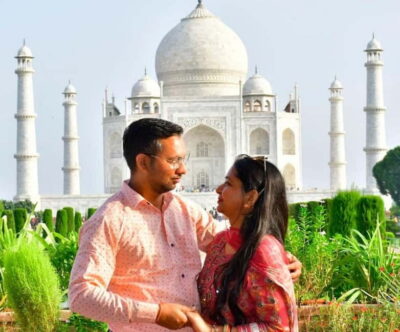
You start early for the Taj Mahal at sunrise. The Taj is famous at any hour, but sunrise changes the mood. Early light softens the marble tones and makes the complex geometry feel less like a sculpture and more like a living design.
There is also an operational advantage: your guide helps you handle entry so you can skip the line through a separate entrance style approach. That means more minutes inside the experience and fewer minutes standing around.


Agra Fort
After the Taj, you move to Agra Fort, a UNESCO World Heritage Site. If the Taj Mahal is love and beauty, Agra Fort is strategy and control. Fort walls and palace structures tell you how power was protected—and how rulers organized life inside defensive walls.
Agra Fort also gives you a chance to compare eras. You start to see how Mughal monumental style works across different building types, not just one iconic mausoleum.
Fatehpur Sikri: the Mughal ghost city feeling
Then the tour shifts to the day’s big change of pace: Fatehpur Sikri, described as an abandoned Mughal capital. That is a good way to think about it. The stones feel calm, and the emptiness makes the architecture more noticeable.
You visit key stops tied to Mughal rule and religion, including:
- Buland Darwaza
- Diwan-i-Khas
- Tomb of Salim Chishti
This is one of the places where a good guide matters. In the past, guides such as Ali and GG have been praised for explaining the history and patiently answering questions. When someone can connect the dots between a doorway, a courtyard, and a named shrine, your visit turns from sightseeing into understanding.
It is also a relief that you are not doing this alone with a map. Fatehpur Sikri can feel confusing if you are trying to read it like a puzzle. With guidance, it becomes a story you can follow.
Chand Baori in Abhaneri: stepwells you will actually remember
On the way to Jaipur, you stop in Abhaneri for Chand Baori, one of the deepest and most intricate stepwells in the region.
Stepwells are not just photo spots. They are engineering. They show how communities managed water and built long-term solutions into daily life. At Chand Baori, the repeated steps create a visual rhythm that can be hard to grasp until you stand near the edge and look down.
This is one of my favorite kinds of detours because it breaks up the grand-monument routine. After tombs, forts, and gateways, a stepwell gives you a different kind of awe: not political power, but practical design and scale.
Day 3 in Jaipur: Amber Fort, Jal Mahal photos, and two stepwells
Jaipur day is where the tour turns from Mughal centers into royal Rajasthan style—then adds practical time for photos and shopping.
Amber Fort
You start with Amber Fort, one of Jaipur’s most important sights. Amber is the kind of place where you want time to move slowly, not rush through. The experience is layered: courtyards, palace structures, and panoramic views all play a role.
If you like architecture with drama, Amber delivers.
Panna Meena ka Kund
Next you stop at Panna Meena ka Kund, a stepwell. Seeing both Chand Baori and Panna Meena ka Kund on the same trip is smart. You get comparison: how different stepwells solve water needs with very different shapes.
It also helps you spot the design logic instead of treating these places as interchangeable. The steps can look simple from a distance, then you realize they are carefully shaped for use and atmosphere.
Jal Mahal photo stop
You also get a stop at Jal Mahal for photos. Even if you do not spend a long time there, it is worth using the moment for a view. Jal Mahal gives you a mirror-like feeling with water and a palace silhouette.
This stop is best treated as a breather. Use it to reset before the royal core.
Jaipur’s royal core: City Palace, Jantar Mantar, and Hawa Mahal
After Amber and stepwells, you move into Jaipur’s center.
City Palace
City Palace is a big anchor. It helps you connect Jaipur’s royal story to the architecture around it. The buildings are not just decorative; they feel like a designed space for ruling, ceremony, and daily movement.
Jantar Mantar
Then there is Jantar Mantar, the astronomical site. This is the part of Jaipur that surprises people. You can look at instruments and feel tempted to think of them as ornaments, but they connect to how the city measured time and planned knowledge.
A good guide helps you avoid the common mistake of staring at it like a random collection. Your job is not to become an astronomer by the end; your job is to understand the purpose behind the shapes.
Hawa Mahal
Finally, you see the iconic Hawa Mahal—the honeycomb facade that looks delicate and decorative but is also functional in how it controls light and airflow.
And because Jaipur is also a shopping city, the itinerary includes time for colorful bazaars. This is where the day becomes personal. Buy small crafts, snacks, or whatever you can carry without turning it into a luggage disaster.
How guides make or break the experience
For this tour, the guide quality seems consistently high, and that is a real part of the value.
I noticed repeated praise for guides who are:
- friendly and kind
- willing to answer questions
- strong in English
- able to explain history in a way that actually sticks
Names that came up include Satyam, Azhar, Ali, and GG. One review also highlighted a Spanish-speaking guide who helped support a non-English speaker in the group, which can be a big deal for families or mixed-language trips.
That said, one experience did flag a late guide and a lack of apology, and another mentioned uncomfortable personal habits like coughing or burping without covering the mouth. That is not something you can fully predict. Still, if you want a smoother day, keep your expectations realistic and use the private nature of the tour to communicate if something feels off.
Price and value: is $65 per person a good deal?
The price shown is $65 per person for a 3-day tour. Value depends on what is included for your booking option, because this trip can include different add-ons.
What you get in the base package:
- pick-up and drop-off at your hotel or airport
- private air-conditioned car with sightseeing
- private tour with local guides
- bottled mineral water
- all taxes, parking, and service charges
Then you may have choices:
- monument entrance is included only if you select that option
- accommodation is included only if you select that option
So how do you judge value? Do this quick math:
1) If entrances and lodging are included in your chosen setup, the $65 can be a strong deal for the number of major sites.
2) If they are not included, your real cost will depend on what you choose to add for tickets and where you stay.
Either way, the value play here is time saved. You cover a lot—Delhi, Agra, Fatehpur Sikri, Jaipur—without coordinating your own transport between cities. That coordination is where many independent trips get expensive, stressful, or both.
What to pack and how to survive the early mornings
This tour hits a sunrise and stays busy. Plan for a long rhythm.
Bring:
- light layers (mornings can feel cooler than afternoons)
- comfy shoes (you will walk through palace and fort areas)
- a hat and sunscreen for exposed sections
- a small water bottle backup even though you get mineral water
For the sunrise: set your expectations for an early start. Sunrise days reward you if you accept the early wake-up as part of the experience, not a punishment.
Also, keep your phone charged. The Taj and the stepwells are the kind of places where you will keep finding new angles as you walk.
Should you book this tour?
You should book if you want a structured Golden Triangle that also includes the quieter, less-copied Mughal and stepwell stops—plus Jaipur’s forts and astronomical site. The Taj Mahal sunrise plus Fatehpur Sikri with a real guide is the combo that makes this route feel worth the effort.
Skip it or ask questions first if:
- you cannot handle early mornings
- you are strict about punctuality and want to manage it day by day
- you know you will need extra assistance beyond what is already arranged (you can request help, but it should be confirmed)
If you want an efficient route with strong guidance and you like seeing monuments in a connected way, this is a solid pick.
FAQ
How long is the tour?
It lasts 3 days.
Which cities and major areas are included?
You cover Delhi, Agra, Fatehpur Sikri (including Abhaneri), and Jaipur.
Is hotel pickup and drop-off included?
Yes. Pick-up and drop-off are included from your hotel or airport.
Do I get a live tour guide?
Yes. The live tour guide is available in English and Spanish.
Is there an option to skip the line at monuments?
Yes. There is a skip-the-line approach using a separate entrance.
Are monument entrance fees included?
Monument entrance fees are included only if you select the option for monument entrance.
Is accommodation included?
Accommodation is included only if you select the accommodation option.
Which sites do you visit in Fatehpur Sikri and nearby?
You visit Fatehpur Sikri sites including Buland Darwaza, Diwan-i-Khas, and the Tomb of Salim Chishti. You also visit Chand Baori in Abhaneri.
What are the key sights in Jaipur?
You visit Amber Fort, Panna Meena ka Kund, Jal Mahal (photo stop), City Palace, Jantar Mantar, and Hawa Mahal, plus time for shopping in Jaipur’s bazaars.
What is the cancellation and payment flexibility?
You can cancel up to 24 hours in advance for a full refund, and you can reserve now and pay later.