REVIEW · NEW DELHI
From Delhi: Taj Mahal & Agra Fort Shared Group Tour
Book on GetYourGuide →Operated by joyful marks · Bookable on GetYourGuide
Agra’s marble stops you mid-sentence. This shared trip turns a long Delhi day into a focused visit, with a Taj Mahal guide telling the stories and an AC van getting you there comfortably; I also like the fast entry setup that cuts down on standing around. One thing to weigh: it’s a full 12-hour push, and the Taj Mahal is closed on Fridays.
This is the kind of tour that feels good for solo travelers too, because you’re not left to figure out timing or crowd tactics alone. Depending on where you pick up, you may meet the group near Akshardham Temple, then head to Agra together; guides you could be paired with range from folks like Mehfooz and Anshu to Ankur Sharma and Nekram, all praised for keeping the day organized and photo-friendly.
In This Review
- Key highlights at a glance
- A 12-hour plan that respects your time
- Getting to Agra: pickup options and meeting up near Akshardham
- Entering the Taj Mahal: fast entry and what to expect inside
- Taj Mahal guide style: stories, photos, and crowd control
- The Agra Fort add-on: a second viewpoint on the city
- Lunch in Agra: a local break that keeps the schedule intact
- Transport quality: AC comfort plus a licensed driver
- Solo travel feel: why this format works well
- Price and value: what $22 actually covers
- Wheelchair access and who should reconsider
- What to bring (and what not to)
- What the day feels like in practice
- Should you book this Taj Mahal & Agra Fort shared tour?
- FAQ
- What are the main pickup areas for this Delhi to Agra trip?
- Where do I meet the group if I don’t get hotel pickup?
- How long is the Taj Mahal visit?
- Is lunch included, and how much time do we have?
- Is Agra Fort included?
- Is the Taj Mahal ticket included?
- Can I visit on Fridays?
- Is the tour accessible for wheelchair users?
- Who can’t take this tour?
Key highlights at a glance
- Guided Taj Mahal visit that’s built around stories, not just facts
- Skip-the-ticket-line flow so you spend more time looking, less time queuing
- Agra Fort included when the day’s schedule allows
- Lunch stop at a local place when you need food (and a reset)
- Solo-friendly pacing with safe-feeling guidance and a licensed driver
A 12-hour plan that respects your time
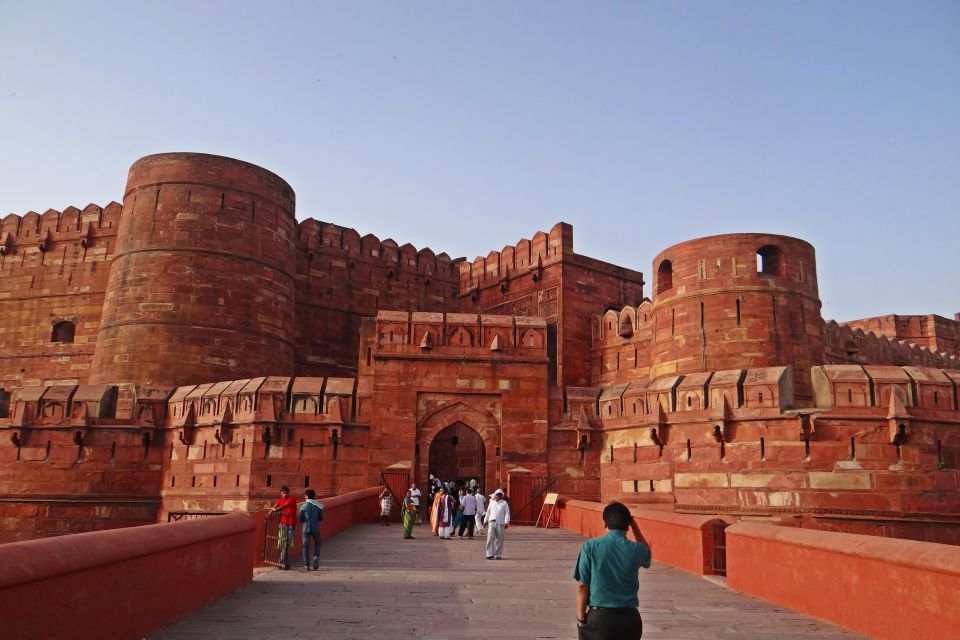
A day trip to Agra can either feel efficient or exhausting. This one leans efficient: early start from Delhi, a direct ride in a clean shared vehicle with AC, then a concentrated sightseeing block where the guide handles the order of things.
You’ll be in a group, but it’s meant to stay relaxed. Group size can vary, so your vehicle could feel like a small crew one day and closer to a fuller van another day. Either way, the goal is simple: get you to the gates, get you inside, and keep the day moving without turning it into a race.
For value, the big deal is that you’re not just paying for transportation. You’re also paying for guide time at the Taj Mahal, plus the Taj Mahal ticket for foreign visitors, with parking and other on-the-road costs handled.
You can also read our reviews of more tours and experiences in New Delhi.



Getting to Agra: pickup options and meeting up near Akshardham

Your experience starts before you even hit the highway. You can choose from multiple pickup areas around Delhi/NCR, including Aerocity, Saket, Gurugram, Old Delhi, New Delhi, Paharganj, Noida, Faridabad, and Ghaziabad. If you select hotel pickup, that’s available within the New Delhi, Gurgaon, Faridabad, Noida, Aerocity, Paharganj, and Old Delhi areas.
If you aren’t in a listed pickup zone, you might meet the group at a central meeting point near Akshardham Temple. Either way, plan to be ready at your confirmed time because the day is built around an early departure.
One practical tip: comfortable shoes matter here. Not just for walking inside the sites, but for the wait times you can’t fully eliminate, plus the usual uneven surfaces around major monuments.
Entering the Taj Mahal: fast entry and what to expect inside

The Taj Mahal visit is where the whole day earns its keep. You’ll spend about three hours there with an English-speaking guide, and the tour is set up so you can skip the ticket line rather than wasting your morning in paperwork bottlenecks.
Important timing reality: the Taj Mahal is closed to visitors on Fridays. If your dates land on Friday, this isn’t the day to try to force it.
Inside, you’re not just wandering. The guide is there to explain what you’re seeing and why it looks the way it does, including the kind of stories that help you connect the monument to the people and power that commissioned it. Based on the day-to-day feedback from this tour format, some guides are especially strong at turning details into something you can picture—like linking the marble surfaces to the broader Mughal-era context.
You’ll also get practical guidance on where to stand for photos and when to go for better crowd flow. If you’re traveling solo, this matters: it’s easier when someone else helps manage the crowd pressure instead of you trying to negotiate space on your own.
Taj Mahal guide style: stories, photos, and crowd control

The guide makes or breaks a Taj Mahal experience, and this tour is built around that idea. English guides are included (and the tour can run in English, French, German, Russian, or Spanish depending on the guide), so you shouldn’t have to translate the day in your head.
What I like about the style many guides use here is that they keep you moving at a human pace. Guides like Mehfooz and Mahfouz have been praised for being friendly and patient, sharing engaging stories, and answering questions without making you feel rushed. Others, like Ankur Sharma or Nekram, are noted for being punctual and organized, and for guiding guests to photo spots that work.
Crowd control sounds dramatic, but it’s mostly practical: you’ll want clear moments to look closely without getting bumped constantly. Having a guide who knows the best angles and times to avoid peak congestion helps you see more of the monument’s details, not just the shape from across a sea of phones.
Photo tip that fits this tour: if you want photos without fighting for a spot, prioritize the guide’s timing. It’s not about taking more pictures. It’s about taking better ones.
The Agra Fort add-on: a second viewpoint on the city

Agra Fort gives you the counterweight to the Taj Mahal. The Taj is all about the monument, the symmetry, the marble glow. The fort is about the place and the power behind it, with different views and a different kind of atmosphere.
On this tour, Agra Fort is typically included as a guided stop (about one hour). That’s enough time to understand the layout and significance, but not enough time to treat it like a museum marathon. Think of it as a guided orientation you can later build on if you return to Agra.
If you’re short on time and want more than one iconic stop, this is the reason this tour beats the bare-bones option. Even if you only have a day, you walk away with two sides of Agra: the romantic masterpiece and the fortress that frames how the city was controlled.
One note: wear the same comfortable shoes you wore at the Taj. Fort walking can add up quickly, and you’ll be happier if your feet aren’t complaining by hour two.



Lunch in Agra: a local break that keeps the schedule intact

Lunch is built into the day, with about 45 minutes allocated. Food and beverages aren’t included, so you’ll be choosing what to eat on-site.
This is exactly the kind of setup that helps on a day trip. If you don’t plan a lunch stop yourself, you risk missing the timing buffer that keeps you from arriving late to the Taj or getting stuck in random, overpriced options.
What I’d do: go in hungry, keep your meal efficient, and drink water when you can. You don’t need to turn lunch into a full quest, because the real payoff is still the monuments.
Transport quality: AC comfort plus a licensed driver
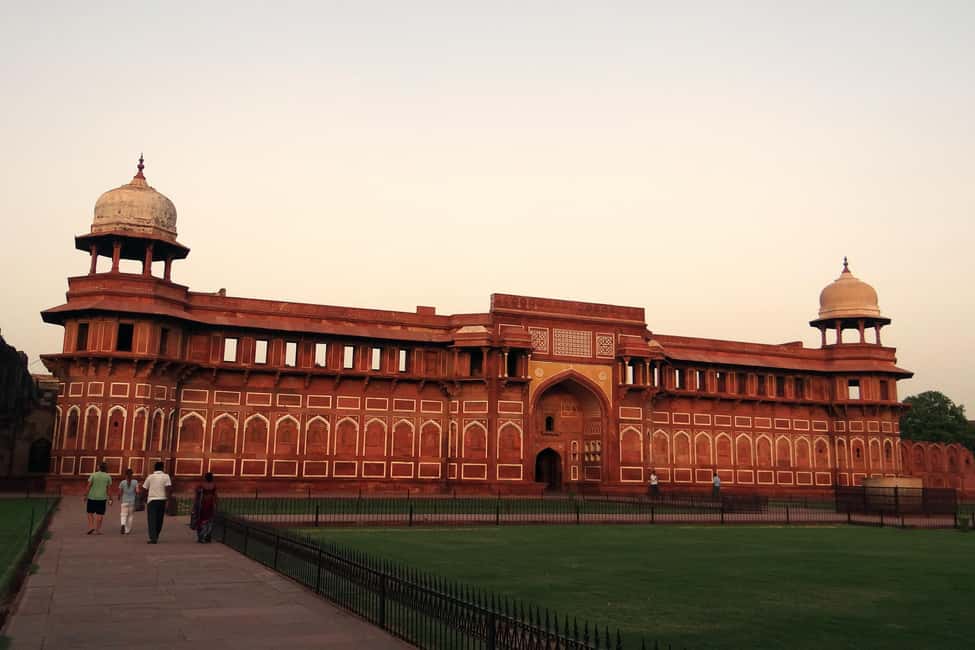
A lot of day trips succeed or fail on the road, not the sights. Here, the vehicle is air-conditioned and the driver is licensed, which makes a big difference for a long outbound-and-return schedule.
Clean transport matters more than you might think in India road travel, especially when you’re doing a 12-hour loop. The advantage of a shared setup is that it’s still affordable, but you’re not going so bare-bones that you feel bounced around or overheated.
Also, there’s a practical handoff at the Agra meeting point: a corporate representative helps you connect with your guide once you arrive. That reduces the chaos factor when you’re unfamiliar with the city.
Solo travel feel: why this format works well
If you’re traveling alone, the Taj Mahal and Agra Fort can be intimidating for a simple reason: everything is busy and people want attention. This tour format helps because you’re not navigating the experience step-by-step.
Multiple guides on this route have been described as patient and respectful, and some have specifically helped solo travelers feel safe while managing crowd interactions. That doesn’t mean you won’t still have to watch your own belongings and keep your wits about you. It means you can spend your energy on seeing the sights instead of constantly scanning for the next step.
The driver also plays a role in the solo feel. If you’re taken care of from pickup to drop-off on time, your day stops feeling like a stressful puzzle.
Price and value: what $22 actually covers

At around $22 per person, this is one of those deals where the value comes from what’s included, not just the low number. The tour covers parking costs, tolls, taxes, allowances, and fuel. It also covers the interstate sightseeing fees connected with using an air-conditioned car or minivan with a licensed driver.
On top of that, you get:
- a Taj Mahal English guide
- Taj Mahal entrance fee for visitors from abroad
- pickup/drop-off at hotels if you choose a pickup zone
Food and beverages are not included, and tipping isn’t included either. So yes, you’ll still spend extra, but you’re not double-paying for basic logistics and you’re not paying separately for the Taj ticket if you qualify as a foreign visitor.
The best way to think about value: you’re buying a structured day with transport, a guide during the key site, and major costs already handled. That’s exactly what a first-time visitor usually wants.
Wheelchair access and who should reconsider

This tour is listed as wheelchair accessible, which is a plus if you need easier movement planning. Still, major monuments have unavoidable walking and site-level constraints, so it’s smart to wear supportive shoes or use the most stable footwear you have.
It’s also not suitable for pregnant women. If that applies to you, you’ll want a different format with more flexible timing and less intense walking.
Kids under 15 can be admitted free of charge, though transportation costs still apply. If you’re traveling with a family, it’s worth planning around the vehicle size and the time blocks so everyone stays comfortable.
What to bring (and what not to)
For a smooth day, keep it simple:
- Bring your passport or an ID card
- Wear comfortable shoes
And don’t bring the items the tour says are not allowed: drones, alcohol and drugs, and smoking. It’s one of those rules that keeps things moving safely and avoids last-minute conflicts at the sites.
Also, keep your phone charged for photos, because this is the kind of trip where you’ll want more than a few quick snapshots once you’re inside.
What the day feels like in practice
A common rhythm here looks like: meet, load into the van, make the road trip, focus hard at the Taj Mahal for about three hours, take a lunch reset for about 45 minutes, then switch to Agra Fort for around an hour, and finally head back to Delhi.
That pacing is great if you’re time-limited and want to check both icons off your list. It’s less ideal if you hate time pressure and prefer to linger for long stretches without guide cues.
The good news: because the tour is structured around a guide-led flow and a fast entry setup, the time pressure is usually more manageable than it would be if you organized everything solo.
Should you book this Taj Mahal & Agra Fort shared tour?
Book it if you want:
- a clear, guided day with AC transport
- Taj Mahal guide time and faster entry
- Agra Fort as an extra stop without planning stress
- a setup that feels safer and easier for solo travelers
Skip it or rethink it if:
- you’re visiting on a Friday (Taj Mahal is closed)
- you want a slow, flexible pace with lots of unstructured wandering
- you’re pregnant and this walking/structure doesn’t fit your needs
- you’re hoping for a fully private vehicle every time, since group size can vary
If you’re doing your first Agra trip from Delhi and you want the biggest sights handled cleanly, this is a practical, good-value way to get there.
FAQ
What are the main pickup areas for this Delhi to Agra trip?
Pickup options include Saket, Aerocity, Gurugram, Old Delhi, New Delhi, Noida, Paharganj, Faridabad, and Ghaziabad. Pickup and drop-off at hotels is available if selected for areas within New Delhi, Gurgaon and Faridabad, Noida, Aerocity, Paharganj, and Old Delhi.
Where do I meet the group if I don’t get hotel pickup?
The day starts near Akshardham Temple, and you may need to get there on your own to meet the group. Your exact pickup details depend on your selected pickup option.
How long is the Taj Mahal visit?
You’ll have a guided Taj Mahal visit for about three hours.
Is lunch included, and how much time do we have?
Lunch is not included. You’ll have about 45 minutes for lunch during the tour.
Is Agra Fort included?
Yes. Agra Fort is included with a guided visit of about one hour.
Is the Taj Mahal ticket included?
Yes for visitors from abroad. The Taj Mahal entrance fee is included for foreign visitors.
Can I visit on Fridays?
No. The Taj Mahal is closed to visitors on Fridays.
Is the tour accessible for wheelchair users?
Yes. The tour is listed as wheelchair accessible.
Who can’t take this tour?
The tour is not suitable for pregnant women.