REVIEW · NEW DELHI
From Delhi: 4-Day Private Golden Triangle Tour India
Book on GetYourGuide →Operated by Travel Creators Of India · Bookable on GetYourGuide
Three cities, one perfect Mughal storyline. This private Golden Triangle run is built for seeing Delhi, Agra, and Jaipur with an expert guide at each stop, plus smart add-ons like the rickshaw ride and the Taj Mahal battery bus so your time stays sightseeing, not shuffling. I especially like the way the itinerary mixes showstoppers with quieter, off-the-main-map places like Fatehpur Sikri and Chand Baori. One catch: entrance fees are not included, and some ticket counters may need cash.
What really lifts the trip is the people factor. In the firsthand stories I’m basing my expectations on, guides like Saif and drivers like Hari were praised for clear explanations and being genuinely helpful in the moment, whether that was pacing you through crowds or making sure you had what you needed when you needed it. For me, that’s the difference between seeing monuments and understanding them.
In This Review
- Quick hits before you commit
- Why this Golden Triangle feels easier than DIY
- Day 1 in Agra: Taj Mahal daylight, Agra Fort, Baby Taj
- Day 2 from Agra toward Jaipur: Fatehpur Sikri and Chand Baori
- Day 3 Jaipur royal sights: Amber Fort, City Palace, Hawa Mahal, Jantar Mantar
- Day 4 Delhi: Jama Masjid, Chandni Chowk rickshaw, and New Delhi icons
- Taj logistics done right: skip-the-line and battery bus
- Price and value: why $58 can work (if you plan tickets)
- Timing quirks: Friday Taj closure and Monday site swaps
- Money, cash, and tickets: a small thing that prevents big headaches
- Guide quality matters more than people expect
- Who this tour is for (and who might want a different plan)
- Should you book this Delhi–Agra–Jaipur private tour?
- FAQ
- What cities are included in the 4-day Golden Triangle tour?
- Is this tour private or shared?
- What’s included besides transportation?
- Are entrance fees and meals included?
- Do I need to pay for tickets in advance?
- Will the Taj Mahal visit happen on Fridays?
- What happens if I travel on a Monday?
- Do you skip the ticket line?
- What languages are the guides available in?
Quick hits before you commit

- Taj Mahal in daylight with a battery bus to cut down walking time
- Private guide at every site, available in multiple languages
- Old Delhi flavor including Jama Masjid and a rickshaw ride through Chandni Chowk
- Major stops plus pause-worthy detours like Fatehpur Sikri and Chand Baori
- Bottled water plus private car to keep logistics simple across three cities
Why this Golden Triangle feels easier than DIY
The big win here is the private driver and the fact that you’re not trying to coordinate timing across three cities with multiple ticket lines and “which entrance is which?” moments. You get picked up from Delhi Airport or your hotel area in Delhi/Gurugram/Noida/Ghaziabad/Faridabad, then you’re in a car with a plan and a guide who knows how to move you efficiently.
The itinerary also respects how people actually experience North India. It’s not just a checklist. Each day groups related sights, so you can mentally connect the dots: Mughal power in Agra, desert Mughals and stepwell engineering on Day 2, then royal Jaipur planning on Day 3, and finally the Old/New Delhi contrast on Day 4.
One more value point: it’s a private group. Even if you’re traveling with friends or family, you won’t be stuck waiting for strangers’ photo stops or dealing with clashing pacing.
You can also read our reviews of more private tours in New Delhi



Day 1 in Agra: Taj Mahal daylight, Agra Fort, Baby Taj

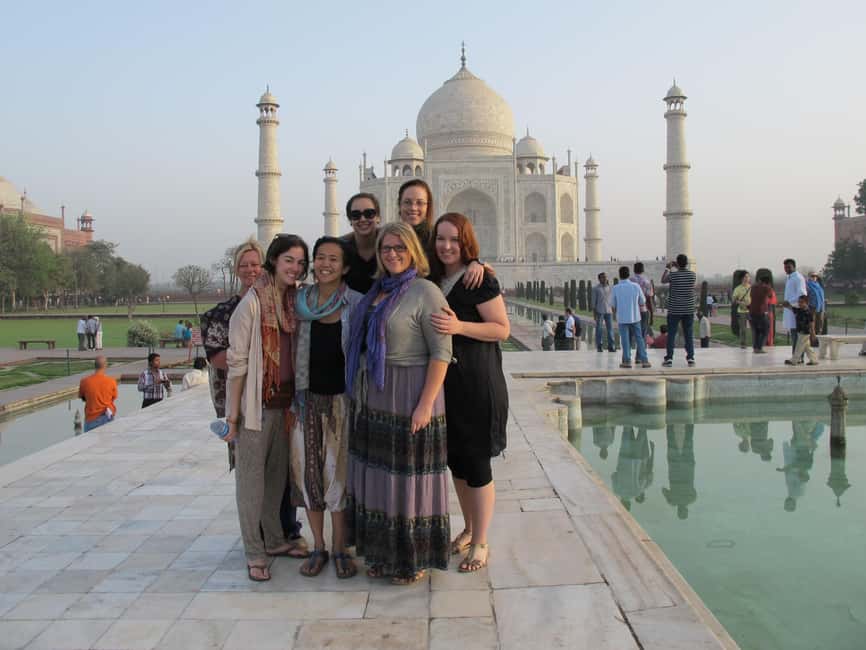
Agra is where this whole route starts to feel cinematic. The plan sends you straight to the Taj Mahal for a daylight visit, not a rushed late evening slot. That matters because the marble shifts in tone as the sun changes, and daytime also tends to make it easier to appreciate details like the carvings and inlay work.
You’ll also get a practical assist: a battery bus ride to the Taj Mahal and back. That’s not just convenience. In real life, it can mean less fatigue before you even reach the main sights, so you spend your energy looking instead of walking.
After the Taj, your day keeps momentum with Agra Fort, a UNESCO site tied to Mughal rule. This is one of the places where a guide can turn stone into context fast: the fort isn’t just walls, it’s the power layout of an empire. Finally, you end Day 1 with the Baby Taj (Itimad-ud-Daulah), described as a marble jewel box with fine inlay work. It’s a clever choice because it balances the grand emotion of the Taj Mahal with a smaller-scale, detail-focused experience.
A small consideration: entrance fees are separate, so budget for tickets on top of the tour price. And bring comfortable shoes—you’ll likely want them for fort steps and uneven surfaces.
Day 2 from Agra toward Jaipur: Fatehpur Sikri and Chand Baori
The middle day is the one that often surprises people—in a good way. Instead of only racing to Jaipur, you get two major stops that feel like a story break.
First is Fatehpur Sikri, the abandoned Mughal capital that still feels strangely present. You’ll walk through its silent courtyards and see the scale of what was built, then imagine what it meant when it was no longer active. This is the kind of site where a guide helps you notice the meaning behind the architecture, since many parts are not labeled in a way that tells the whole story on their own.
Then comes Abhaneri’s Chand Baori Stepwell. This isn’t a palace or tomb. It’s geometry. The stepwell’s precision and depth create a built pattern you can actually understand with your eyes. If you’re the sort who likes odd-but-fascinating engineering, this is a highlight.
By evening, you reach Jaipur and sleep in the Pink City atmosphere. Even if you arrive tired, it helps to have that day-ending transition, because it makes Day 3’s forts and palaces feel less like a shock and more like a planned ascent into Jaipur royalty.
Day 3 Jaipur royal sights: Amber Fort, City Palace, Hawa Mahal, Jantar Mantar

Jaipur is often summarized as forts and palaces, but this tour gives you multiple “styles” of Jaipur, not just one.
You start at Amber Fort. It’s the kind of place where the views across the hills matter as much as the walls. From the fort areas, the scene opens up, and the experience becomes about both setting and power. A guide is especially useful here so you’re not just moving through rooms—you’re understanding why different spaces were used.
Next is City Palace, a former royal center that helps you connect Jaipur’s royal identity with the everyday workings of a court. You also visit Hawa Mahal, the famous honeycomb façade often photographed from the street. On-site, it’s easier to appreciate why it looks the way it does and what it was designed to do.
Then you get Jantar Mantar Observatory, which is a nice counterpoint to the ornate buildings. Here, the focus shifts toward science and measurement, and it can feel like Jaipur isn’t only about decoration.
One practical thing to plan for: Jaipur sightseeing packs in a lot of walking across different surfaces and elevations. Wear shoes that can handle that, and keep water close. Bottled water is provided, which helps, but you’ll still want to pace yourself.
Day 4 Delhi: Jama Masjid, Chandni Chowk rickshaw, and New Delhi icons
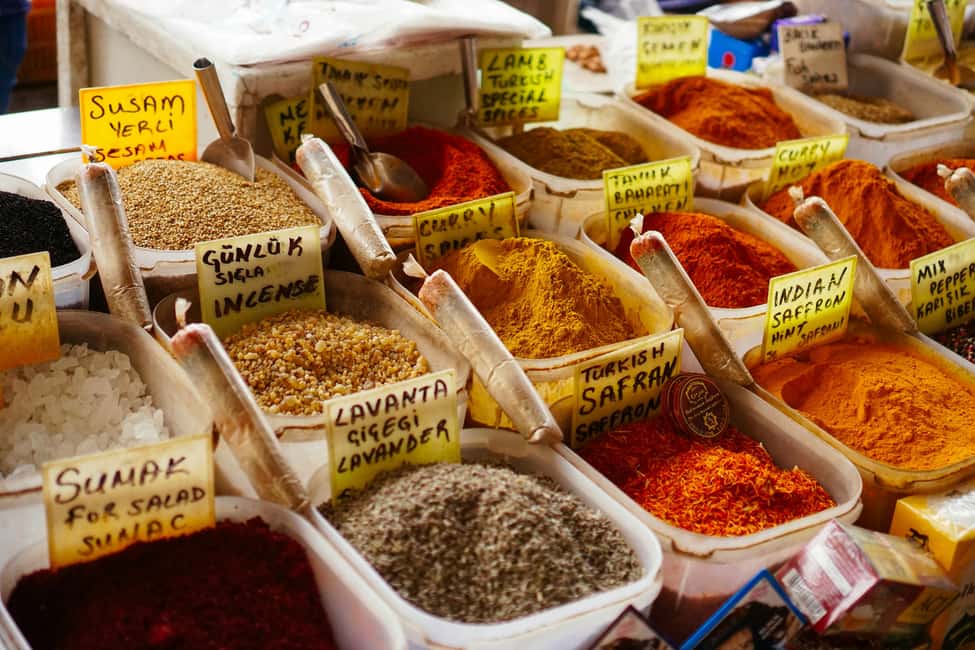
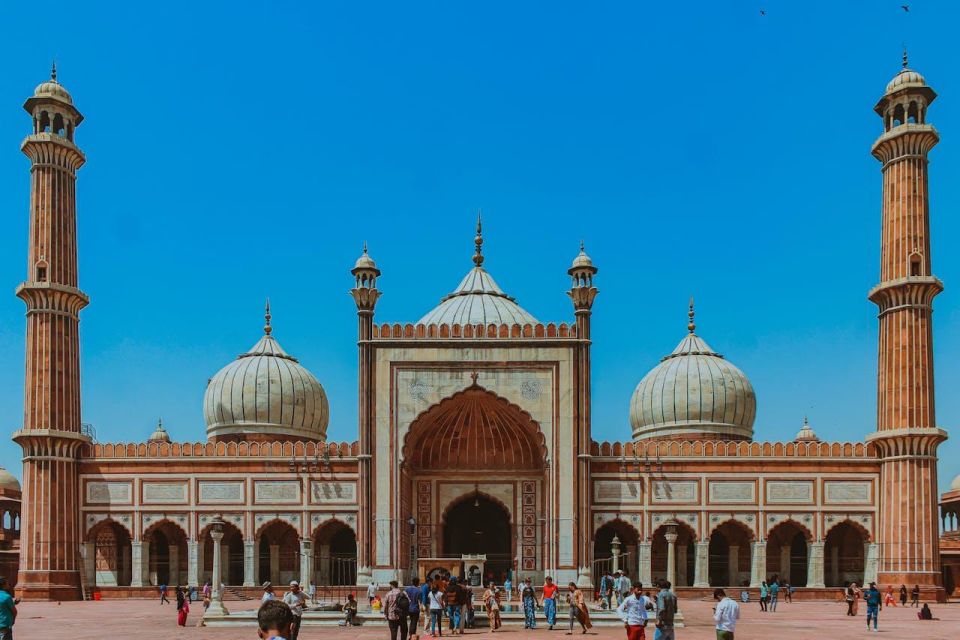
Day 4 is built around contrast. You start in Old Delhi, where you’ll visit Jama Masjid and ride a rickshaw through the lanes of Chandni Chowk. That rickshaw portion is one of those details that turns a monument day into a lived city moment. You’re moving through a neighborhood texture rather than only looking at it from the curb.
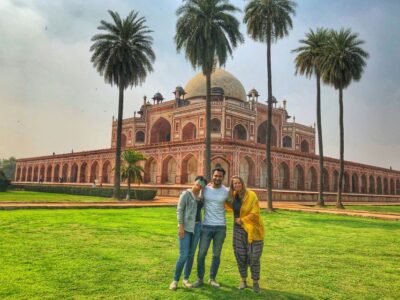
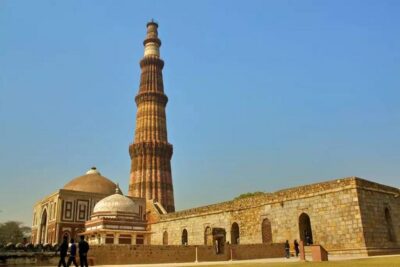
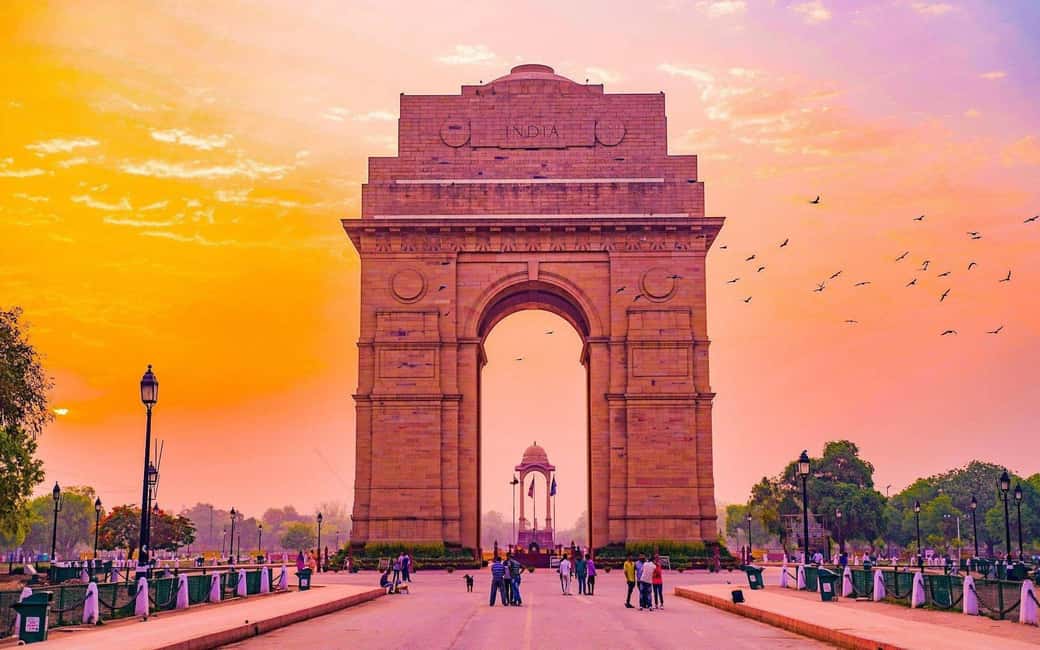
You also get views of Red Fort, then shift to New Delhi for iconic landmarks. This portion includes India Gate, Rashtrapati Bhavan, and the Lotus Temple. You’ll finish either with Qutub Minar or Humayun’s Tomb, depending on the route timing.
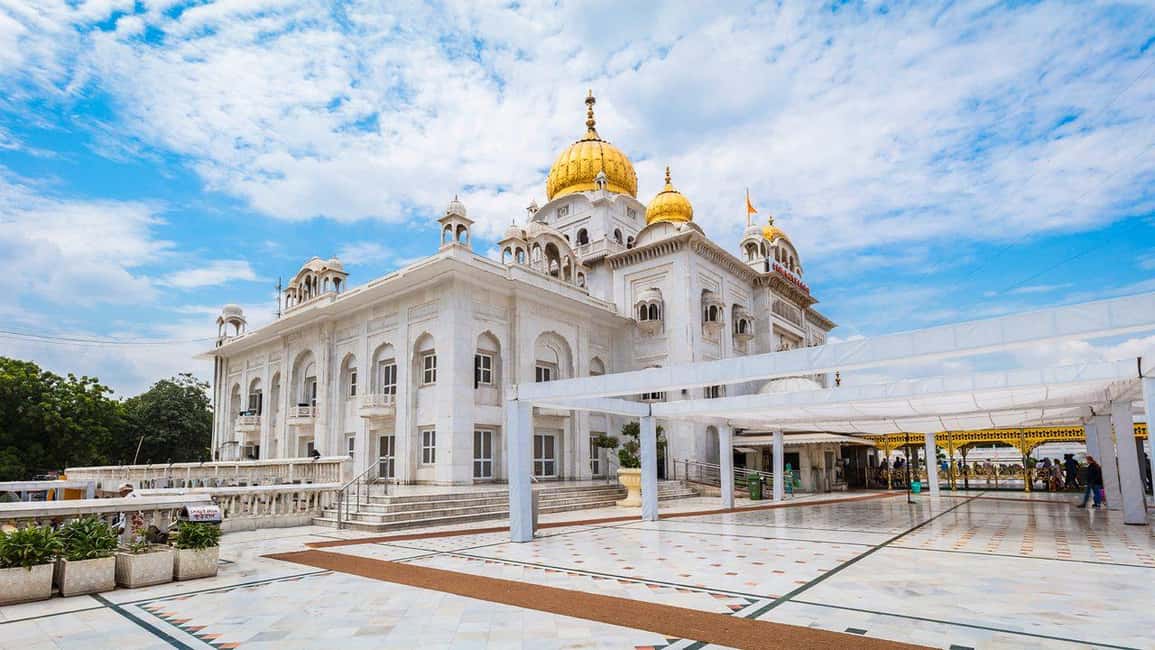
A note worth remembering: Delhi closures can affect the exact Day 4 mix. On Mondays, Red Fort and Lotus Temple are closed, and the visit switches to Gurudwara Bangla Sahib instead. The goal stays the same—Old/New Delhi variety—but the specific stops adjust.
You can also read our reviews of more tours and experiences in New Delhi





Taj logistics done right: skip-the-line and battery bus
Two things in the plan reduce the daily friction that usually drains Golden Triangle energy.
First is the skip-the-ticket-line approach. You still need to handle entrance fees separately, but having the flow managed matters, especially at popular sites where lines can eat hours.
Second is the battery bus to and from the Taj Mahal. That’s a small line item until you’re in the heat or after a long drive day. It keeps your day from turning into one long queue and a long walk.
If you’re traveling with older parents, someone who’s tired of stairs, or anyone prone to overheating, these details are not “nice to have.” They protect the experience.
Price and value: why $58 can work (if you plan tickets)
The listed price is low for a four-day private, guide-led route that includes transport, bottled water, and a rickshaw + Taj battery bus component. The key to value is understanding what’s included and what’s not.
Included:
- Private air-conditioned car with driver across all three cities
- Private guide at all sites
- Hotel/airport pickup and drop-off
- Rickshaw in Old Delhi
- Battery bus rides for the Taj Mahal
- Bottled water
- All tolls, taxes, and driver charges
- Hotel nights and breakfast only if you pick that option
Not included:
- Meals and beverages
- Entrance fees
So the real budgeting equation is: tour price + entrance tickets + your meal choices. Also keep in mind that some monuments do not accept cards for ticket purchases, so you’ll want to carry cash in INR.
When I think about value for this kind of route, I compare it to the cost of hiring separate guides, paying for rides between sites, and losing time to ticket-lines and miscommunication. Here, the plan is bundled with guiding and transport, and that usually saves both money and stress.
Timing quirks: Friday Taj closure and Monday site swaps

Two calendar rules affect this itinerary.
- The Taj Mahal is closed on Fridays. If your tour falls on a Friday, the route adjusts to Delhi → Jaipur → Agra → Delhi.
- On Mondays, Red Fort and Lotus Temple are closed. The itinerary swaps to Gurudwara Bangla Sahib instead.
You don’t need to panic about these. They’re normal site-operating constraints, and the tour provides a swap plan so you still get the core Golden Triangle experience.
If your dates are flexible, you’ll often enjoy a smoother flow by avoiding Monday and Friday pressure days—yet even with those days, the route is designed to keep moving.
Money, cash, and tickets: a small thing that prevents big headaches
Some monuments won’t accept cards for ticket purchases. That means you should plan to carry enough cash in INR for entrance fees on the days you visit.
If you’re unsure about how much to bring, ask your guide for help locating ATMs when needed. Guides can assist with ATM guidance, based on what’s been shared in the tour guidance approach.
Also, since meals aren’t included, you’ll want to budget for lunch and dinner your way. This is an area where personal preference matters: you might want simple local food, or you might prefer a safer sit-down meal. The itinerary won’t trap you.
Guide quality matters more than people expect
This tour makes a big deal out of having a private guide at all sites. In the stories tied to this experience, guides like Saif and MS were specifically praised for clear explanations, helpful pacing, and even making photo moments easier. Drivers like Hari also earned good mentions for being hospitable and attentive.
In practical terms, that means you’re more likely to:
- Understand what you’re looking at, not just where it is
- Take the right photos from the right angles
- Avoid feeling lost inside huge complexes
That’s why this doesn’t feel like a photo tour that happens to stop at famous monuments. It’s closer to a guided learning day, with breaks.
Who this tour is for (and who might want a different plan)
This fits best if you want:
- A private, car-based route with minimal logistics work
- Day-by-day structure across Delhi, Agra, Jaipur
- Expert guidance at each major sight
- Classic highlights plus at least two meaningful detours (Fatehpur Sikri and Chand Baori)
You might consider another option if you hate driving days or you prefer total flexibility to linger at sites without a schedule. Also, because entrance fees and meals aren’t included, this is best if you’re comfortable budgeting separately.
If you travel as a small group, vehicle size scales by group number:
- 1–2 guests: 3-seater sedan
- 3–5 guests: 6-seater wagon
- 6–10 guests: 10-seater van
That matters for comfort on long transfers.
Should you book this Delhi–Agra–Jaipur private tour?
I’d book it if you want a Golden Triangle that feels guided, efficient, and not overly stressful. The combination of a private car, private guides, and the two “time-saving” adds—the Taj battery bus and the rickshaw through Old Delhi—makes it easier to actually enjoy the monuments instead of managing logistics all day.
Book it with eyes open: entrance fees and meals are extra, and some ticket purchases may require cash. If you’re willing to handle that part, you’ll get a very complete four days across Delhi, Agra, and Jaipur without having to build the plan yourself.
FAQ
What cities are included in the 4-day Golden Triangle tour?
You’ll visit Delhi, Agra, and Jaipur, with sightseeing on each day and hotel pickup/drop-off included in the route.
Is this tour private or shared?
It’s a private group tour, with a private car and a private guide at the sites.
What’s included besides transportation?
You get private air-conditioned car service with driver, a rickshaw ride in Old Delhi, battery bus rides to and from the Taj Mahal, bottled water, and a private guide at all sites. Hotel nights and breakfast are included only if you select that option.
Are entrance fees and meals included?
No. Entrance fees and meals and beverages are not included.
Do I need to pay for tickets in advance?
Ticket fees are handled on-site, and some monuments may not accept cards, so it helps to carry cash in INR.
Will the Taj Mahal visit happen on Fridays?
No. The Taj Mahal remains closed on Fridays, and the route adjusts to Delhi → Jaipur → Agra → Delhi if your tour date falls on a Friday.
What happens if I travel on a Monday?
On Mondays, Red Fort and Lotus Temple are closed. The itinerary switches to Gurudwara Bangla Sahib instead.
Do you skip the ticket line?
Yes, the tour includes skip-the-ticket line at the sites.
What languages are the guides available in?
Guides are available in English, French, Russian, Spanish, Japanese, and German.