REVIEW · UDAIPUR
Heritage & Cultural Walk of Udaipur -Guided Walking Tour
Book on GetYourGuide →Operated by Yo Tours · Bookable on GetYourGuide
Udaipur’s stories fit in your walking pace. This 2-hour Heritage & Cultural Walk threads together major sights and quiet lanes so you can actually understand how the old city hangs together—starting with the Clock Tower tied to the royal family of Mewar. I especially like the way the guide blends history with lively street-level anecdotes, and I love that the route reaches the waterfront at Gangori Ghat and Lal Ghat on shimmering Lake Pichola.
You’ll also get the kind of detail you usually miss on your own: ornate carvings at Bagore Ki Haveli and Jagdish Temple, then the bigger-than-life skyline of Udaipur’s City Palace. One possible drawback: the old market streets are narrow, crooked, and timed for feet, not comfort—so plan for a steady walk and bring comfortable clothes.
In This Review
- Key Takeaways Before You Go
- Why This 2-Hour Walk Works So Well
- Clock Tower to Old Market: Start With the First Public Timepiece
- Bagore Ki Haveli and Jagdish Temple: Where Ornate Detail Actually Gets Explained
- Gangori Ghat and Lal Ghat on Lake Pichola: Waterfronts With Real Character
- City Palace and Tripolia Gate: The Royal Skyline Up Close
- What the Guide Adds: Stories, Gossip, and Local Tips That Keep It Moving
- Price and Value: What $14 Gets You in Real Terms
- Who This Tour Fits Best (and When to Skip It)
- Should You Book This Heritage & Cultural Walk of Udaipur?
- FAQ
- How long is the Heritage & Cultural Walk of Udaipur?
- How much does the tour cost?
- Is this a private tour?
- What languages are the guides?
- Do I get hotel pickup and drop-off?
- Is a water bottle included?
- What should I wear or bring?
- Is there free cancellation?
Key Takeaways Before You Go
- Clock Tower origin matters: the first public clock of the city was built as a souvenir to the royal family of Mewar
- Old market streets: narrow, crooked lanes with heritage buildings show you Udaipur’s lived-in rhythm
- Bagore Ki Haveli + Jagdish Temple: a perfect match of palace grandeur and ornate religious carvings
- Lake Pichola ghats: you’ll see Gangori Ghat and Lal Ghat as waterfront spaces, not just photo spots
- Royal gates and marble detail: Tripolia Gate (built in 1711) plus Jagat Shiromani Temple’s carved marble torana
Why This 2-Hour Walk Works So Well
Two hours is the sweet spot for Udaipur’s older areas. You get a focused hit of the city—plus enough time for your guide to point out the stuff that’s easy to overlook when you’re wandering without context.
This is a guided walking tour with a live storyteller who can speak English and Hindi. The vibe is “infotainment,” meaning you’ll get explanations you can remember, with anecdotes that keep the route from feeling like a textbook march.
Because it’s a private group, you can usually move at the pace of your questions. If you’re the kind of traveler who likes to ask why something was built, or who wants local recommendations as you go, this format tends to fit.
You can also read our reviews of more walking tours in Udaipur


Clock Tower to Old Market: Start With the First Public Timepiece
The walk kicks off at the Clock Tower, described as the first public clock of the city. The key detail here is its purpose: it was built as a souvenir to the royal family of Mewar. That single fact turns a quick landmark into a whole story about how power, pride, and public life mixed together.
From there, you move into the old market area—narrow, crooked streets lined with heritage buildings. This part matters because it’s where Udaipur stops being a list of monuments and starts feeling like a functioning old town. You’ll notice how the street pattern funnels movement and how buildings face the lane life, not just the main roads.
One practical note: these streets are built for walking. If you’re sensitive to tight lanes or uneven ground, wear shoes you’re comfortable in for a sustained stroll.
Bagore Ki Haveli and Jagdish Temple: Where Ornate Detail Actually Gets Explained
Next up is Bagore Ki Haveli, an 18th-century structure connected to a Mewar prime minister. Haveli architecture can look like decoration until you know what to look for. On this tour, you’ll get the guide’s pointers so you can recognize the significance of the design instead of just admiring it from the street.
The tour also brings you to Jagdish Temple, where the emphasis is on ornate carvings. This is a great stop if you like religious art that’s more than “pretty”—the guide’s job is to help you see the patterns and tell you what they’re doing there.
A small benefit of visiting these two back-to-back is contrast. You’re moving from a grand residence tied to political life to a temple space marked by carved detail and spiritual purpose. Even without stepping deep into any one structure, you’ll understand the overall relationship between power, faith, and everyday city life.
Gangori Ghat and Lal Ghat on Lake Pichola: Waterfronts With Real Character
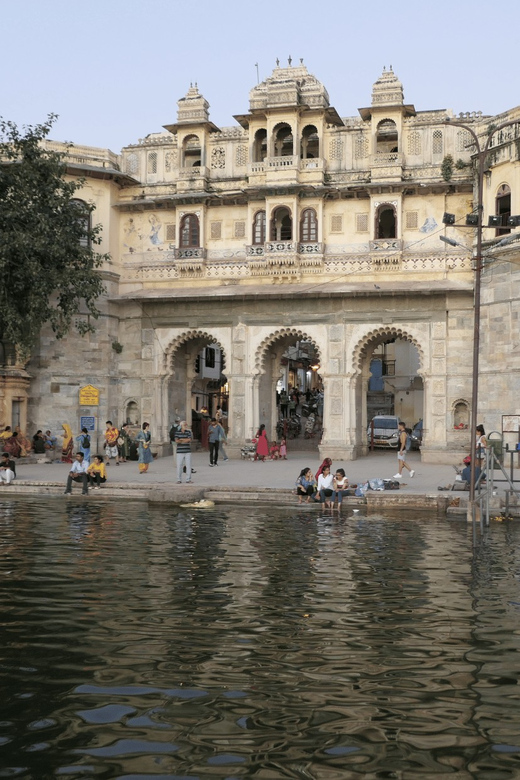
Udaipur’s lake edges are famous, but walking to them with a guide changes the experience. You’re heading to Gangori Ghat and Lal Ghat, two well-known waterfronts on Lake Pichola, and the tour frames them as places people actually used and still use.
At Lake Pichola, the water gives you a different kind of view than the palace courtyards and temple carvings. Instead of vertical detail, you’ll catch horizontal lines: steps down to the water, the angle of buildings, and that calm-but-busy feeling that waterfronts tend to have.
If you like photographs, you’ll appreciate this segment—but don’t treat it like a photo-only stop. The best use of this time is to slow down and take in how these ghats connect the city to its water, day and evening.
City Palace and Tripolia Gate: The Royal Skyline Up Close
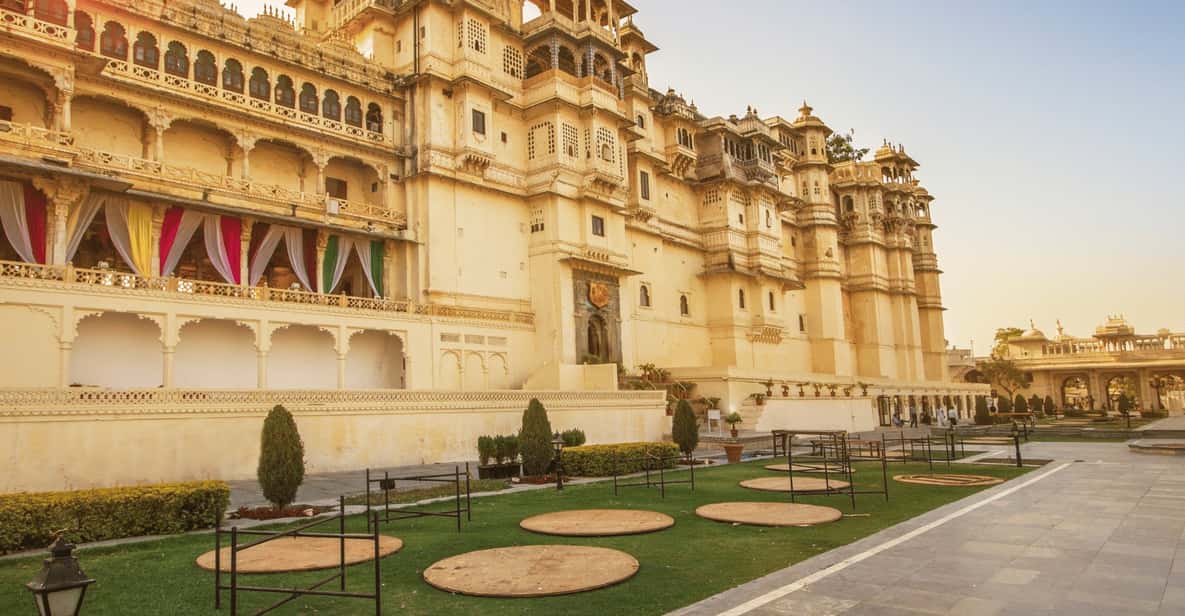
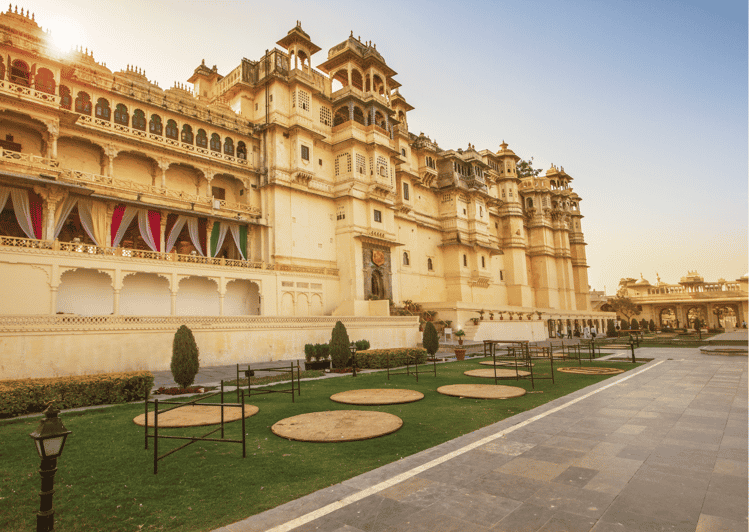
Soon you reach the big statement: Udaipur’s City Palace. It’s described as majestic and overwhelming in the best way—balconies, towers, and cupolas rising over the lake. Even from viewpoints along the walk, you’ll get that sense of the palace being designed for presence.
Then the tour moves to Tripolia Gate, a three-arched gate built in 1711. The date matters because it anchors what you’re seeing in time. You’re not just looking at an old gate; you’re looking at a specific moment when the city’s rulers chose to build something meant to last.
Right around Tripolia Gate, you’ll also see the Jagat Shiromani Temple with its exquisitely carved marble torana, plus a Garuda chhatri and mandapa. Marble toranas are all about precision and repetition, so this is where your guide’s commentary can really help you appreciate the workmanship instead of only noticing the shine.
If you tend to feel overwhelmed by palace sightseeing, this tour approach helps. You get the main skyline (City Palace), then a focused stop that zooms in on a gate’s architecture and nearby temple elements.
You can also read our reviews of more guided tours in Udaipur

What the Guide Adds: Stories, Gossip, and Local Tips That Keep It Moving
The best part of this tour is how it’s taught. The format is historical explanation plus curious anecdote—often laced with mildly scurrilous talk about past and present celebrities and defunct royals. It’s not just facts; it’s attitude.
Guides in this program—one name that comes through clearly is Yash—are described as enthusiastic and funny while still explaining what you’re seeing. In one set of experiences, Yash was praised for tailoring the walk to what people wanted and for keeping things relaxed instead of stiff.
One of the most practical pieces you’ll likely hear: local tips and recommendations, including food specialties and chai spots. That’s valuable because it helps you turn the “I saw it” part of sightseeing into “I ate and noticed more” for the rest of your trip.
Timing matters too. One piece of feedback strongly suggested doing the tour in the morning, and that makes sense for Udaipur’s walkable old-town areas. You start fresh, the light can be friendly for stone and carved details, and you still have the day left to explore independently.
Price and Value: What $14 Gets You in Real Terms
At $14 per person for a 2-hour walk, the value is in the combination: a live guide, access to less obvious lanes, and a route that connects landmarks that are usually scattered. You’re paying less for logistics and more for interpretation.
If you tried to do this on your own, you’d still cover big sights like City Palace and Tripolia Gate, but you’d likely miss the “why” behind the Clock Tower’s souvenir purpose and the specific way the route emphasizes the Mewar connection. The added context is often what makes a short tour feel longer and more satisfying.
Also, you get access to hidden lanes and places. That doesn’t mean magical doors or secret rooms. It means your guide routes you through the old city in a way that reveals texture—small streets, forgotten nooks, and the kind of sightlines that you don’t stumble on by accident.
Small note: a water bottle isn’t included, so bring your own or plan to buy water along the way.
Who This Tour Fits Best (and When to Skip It)
This walk suits you if you enjoy:
- learning how a city developed through key places (instead of only collecting photos)
- ornate architecture with explanation—like haveli details and temple carvings
- short guided experiences that help you get oriented fast
It may not fit if you want long museum-style time at each stop. With only 2 hours, the goal is movement and storytelling, not slow, deep study.
It also fits particularly well for first-timers who feel unsure where to start. The route provides a logical spine: timekeeping landmark → old market streets → haveli and temple → lake ghats → palace and royal gate.
If you’re traveling with limited stamina, treat this as a brisk walking tour through the old city. The information you get will be worth it, but the streets demand a basic willingness to keep walking.
Should You Book This Heritage & Cultural Walk of Udaipur?
Yes—if you want the kind of Udaipur experience that mixes major monuments with the feel of everyday old-town streets. The standout reason to book is the guide style: lively, story-driven, and practical, with local tips that can genuinely improve how you spend the rest of your day.
Before you book, be honest about one thing: you’ll walk through narrow, crooked old market streets. If that sounds fun, you’ll likely enjoy this tour a lot. If you’re expecting wide promenades and slow strolling, choose a different format.
FAQ
How long is the Heritage & Cultural Walk of Udaipur?
It lasts 2 hours.
How much does the tour cost?
The price is $14 per person.
Is this a private tour?
Yes, it’s listed as a private group.
What languages are the guides?
The live guide speaks English and Hindi.
Do I get hotel pickup and drop-off?
No, hotel pickup and drop-off are not included.
Is a water bottle included?
No, a water bottle is not included.
What should I wear or bring?
Bring comfortable clothes. Since a water bottle isn’t included, you may want to bring one.
Is there free cancellation?
Yes, there is free cancellation up to 24 hours in advance for a full refund.