REVIEW · JAIPUR
Jaipur : Cultural & History Tour With Private Guide
Book on GetYourGuide →Operated by Rajasthan Cultural Tours · Bookable on GetYourGuide
Jaipur can feel big and overwhelming fast. This private day tour makes it practical: you hit the top sights, plus the places that add context, with a guide and air-conditioned car. I like the focus on iconic architecture (Hawa Mahal, City Palace) and the fact you get private guidance that keeps the day moving without guesswork. One consideration: with only 7 hours, you’ll have to treat some stops as photo-and-walk moments rather than long museum-style visits.
A big plus is that you’re not just collecting landmarks. You’re learning how Jaipur’s rulers used design, water, and science to run a city—then you get time for a real local lunch and shopping in the Pink City.
In This Review
- Key highlights to look for
- A one-day Jaipur plan that fits: private car, smart pacing, real stops
- Hawa Mahal and its 953 jharokhas: the morning photo win
- Panna Meena ka Kund: a symmetrical stepwell break that changes the mood
- Amber Fort on the hill: UNESCO views and the Hindu–Mughal mix
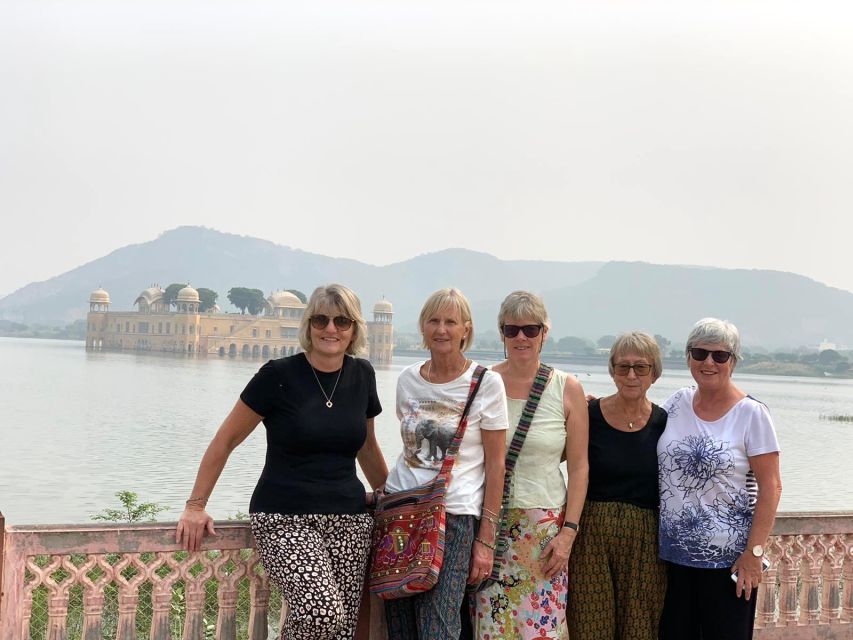
- Jal Mahal on Man Sagar Lake: quick beauty, no interior entry
- Gaitore cenotaphs and a well-timed lunch break
- Jantar Mantar: ancient astronomy that you can actually stand inside
- City Palace: the royal residence meets museum-style storytelling
- Pink City markets: shopping time that doesn’t swallow your day
- Is $24 good value? What you get, plus the likely extras
- Who should book this private Jaipur day tour?
- Should you book it? My practical take
- FAQ
- What is the duration of the Jaipur Cultural & History Tour?
- Is this a private tour?
- What languages are the live guides available in?
- Does the tour include pickup in Jaipur?
- Are ticket lines skipped at the attractions?
- What is included in the price?
- What should I bring or know before going?
Key highlights to look for
- Private local guide who explains what you’re seeing while you move site to site
- Skip-the-ticket-line so you lose less time standing still
- Iconic stops packed into 7 hours with realistic pacing and built-in photo time
- Amber Fort and UNESCO-level architecture with panoramic viewpoints
- Jantar Mantar and City Palace for both science and power history
- Pink City markets time that doesn’t eat your whole day
A one-day Jaipur plan that fits: private car, smart pacing, real stops
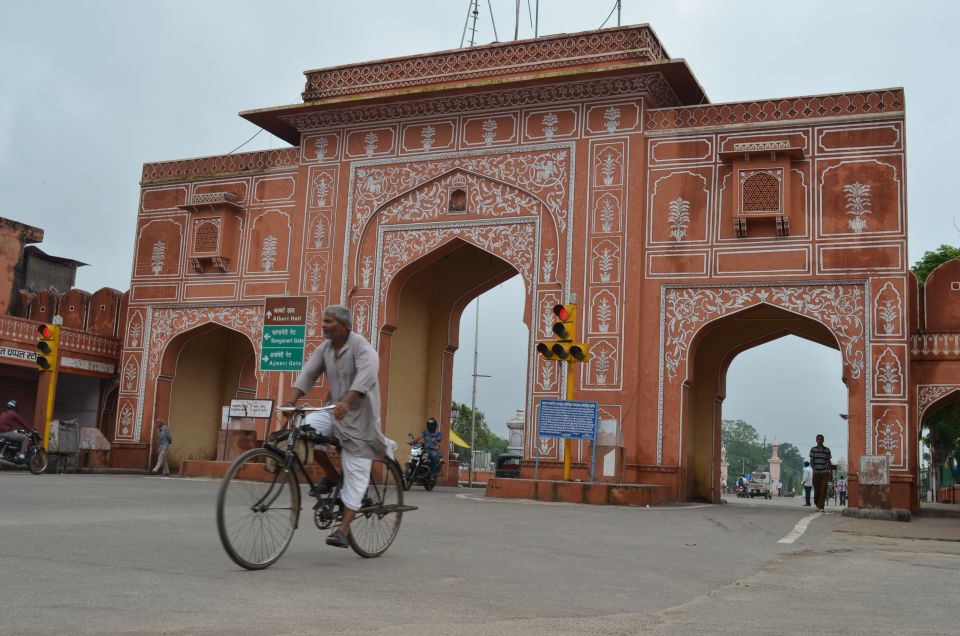
If you only have one day in Jaipur, the hardest part is not the sights—it’s the logistics. Traffic, walking distances, and ticket lines can turn a “great itinerary” into a stressful scavenger hunt.
This tour solves that with a private air-conditioned vehicle and a driver, plus hotel or airport-area pickup across Jaipur. The group is private, not a mixed crowd, so your pace stays yours. And since the day is structured around the major sites, you don’t waste time figuring out what’s worth combining.
You’ll also get bottled mineral water during the tour, which matters in Jaipur’s heat—especially once the day warms up. Footwear helps too: you’ll be on walkways and in and around courtyards, so bring comfortable shoes.
The overall vibe is friendly and organized. Some of the guiding names you may run into (like Vivek, Raj, or Sandeep) are known for two things: strong history storytelling and making photos come out better. If that’s your travel style, you’ll feel at home.
You can also read our reviews of more guided tours in Jaipur



Hawa Mahal and its 953 jharokhas: the morning photo win

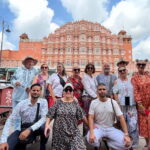
Hawa Mahal is the kind of building that looks famous even if you’ve never been to Jaipur. The point isn’t just the façade. It’s what those windows—953 jharokhas—were designed to do.
Your visit includes both a short photo stop and guided time, so you can understand the architecture while you’re standing in front of it. The five-story palace is famous for its intricate latticework, and the idea is simple: those windows were meant to let cool air move through the structure. That’s why it’s called the Palace of Winds.
Why this stop feels extra worth it on a tight schedule:
- You get a quick orientation for Jaipur’s streets below, especially from upper levels.
- You’ll understand the city’s design logic before you move on to forts and royal compounds.
Tip: if you’re into photos, spend a moment just looking—don’t rush straight to the “obvious” angle. The guide’s pacing helps you catch the right viewpoints without sprinting.
Panna Meena ka Kund: a symmetrical stepwell break that changes the mood
After Hawa Mahal, Jaipur can keep roaring. Panna Meena ka Kund is a reset.
This stepwell (with its famous symmetry) isn’t just a pretty stop. It’s a reminder that in Rajasthan, water architecture shaped daily life. Historically, it functioned as a gathering place for locals, so it wasn’t only utilitarian—it was social and central.
You’ll get photo time and guided viewing here. The geometric patterns are the main draw, but the real value is learning how a city planned around water. It’s the kind of detail that makes Jaipur feel more human, not just royal and monumental.
One practical note: stepwells and historic stonework can be uneven. Wear shoes you trust on hard surfaces.
Amber Fort on the hill: UNESCO views and the Hindu–Mughal mix
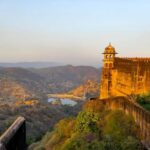
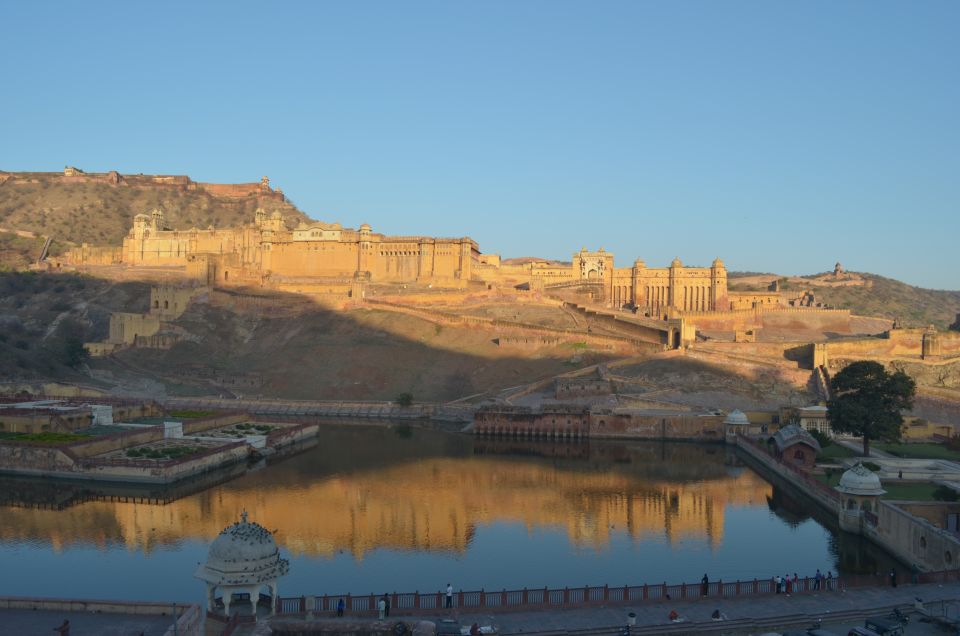
Next comes the big one: Amber Fort, a UNESCO World Heritage site on a hilltop. It’s about 11 kilometers from the city center, so the drive time matters—it’s part of why the day flows smoothly with a private vehicle.
Amber Fort is built with red sandstone and marble, and what makes it more than a fortress photo backdrop is the architectural blend. You’ll see influences of Hindu and Mughal styles in how spaces are arranged and decorated.
Your guided visit includes time to explore courtyards and palaces and to enjoy the panoramic views from the elevated setting. In a 7-hour day, this is where you’ll want to slow down just enough to look up and around. The fort is all angles—inside courtyards, along walkways, and from lookout points.
If you’re the type who loves “why does this look like that?” questions, Amber Fort is a strong match. A good guide helps you connect design choices to the era and the rulers who commissioned them.
Jal Mahal on Man Sagar Lake: quick beauty, no interior entry
Then you shift to something more reflective: Jal Mahal, the Water Palace in the middle of Man Sagar Lake.
You’ll get a photo stop and free time, but you should plan for one limitation: you can’t enter the palace itself. That means your experience here is all about the setting—Jal Mahal’s silhouette against the Aravalli hills and the stillness of the lake.
This stop is surprisingly useful. It gives you a visual break after the density of fort walls and courtyards. It also helps you reset your energy before the science-and-palace portion of the day.
Quick advice: bring a camera with decent zoom if you can. Even without entry, you can frame Jal Mahal well from shore viewpoints.
You can also read our reviews of more private tours in Jaipur




Gaitore cenotaphs and a well-timed lunch break
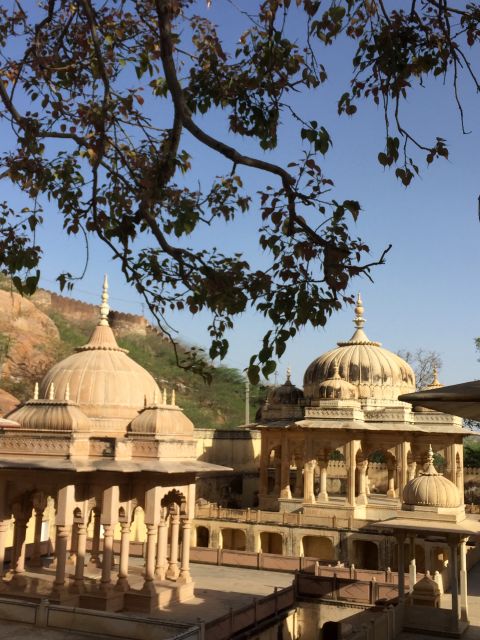
Between the lake stop and the afternoon heavy-hitters, the tour builds in a visit to Gatore (Gaitor), a cenotaph area where carved monuments reflect the architectural styles of different rulers’ eras.
Each cenotaph is dedicated to a different Maharaja or royal family member cremated there, so the site is more than one “main building.” The standout is the cenotaph of Maharaja Jai Singh II, the founder of Jaipur. If you want a single anchor to look for, start there—then let the guide connect the craftsmanship style to the period it represents.
After the monuments, you’ll have time for tea, lunch, and local snacks. Lunch itself is at a well-regarded local restaurant, focused on traditional Rajasthani flavors. Since lunch isn’t included in the base price, you should treat this as part of your on-the-ground budgeting, not a surprise add-on.
For me, this is a smart inclusion: Jaipur tours often skip food or keep it generic. Here, lunch time is built into the day so you don’t end up eating in a hurry between ticket lines. And the snack breaks help you keep energy for Jantar Mantar and City Palace.
Jantar Mantar: ancient astronomy that you can actually stand inside

When people say Jaipur has history, they often mean palaces. Jantar Mantar adds a different angle: science.
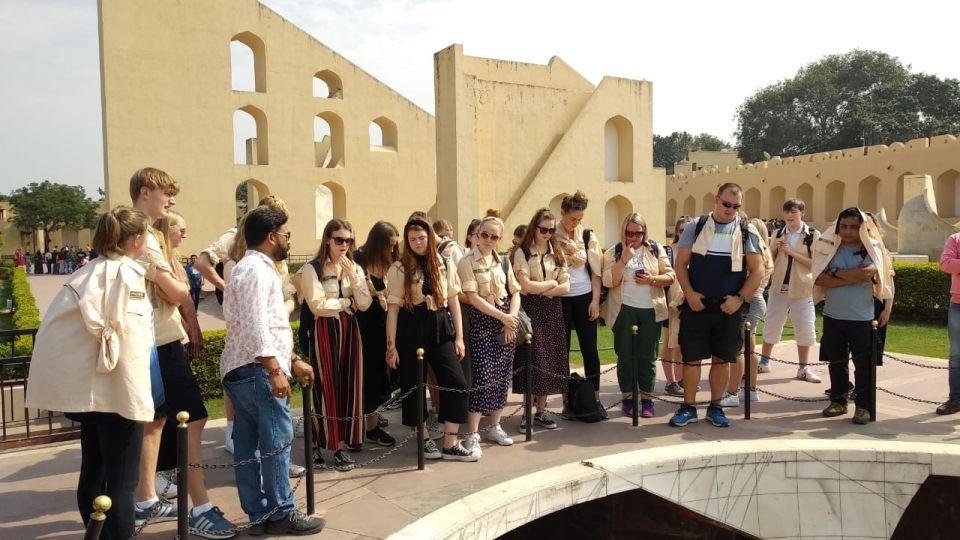
This observatory was built by Maharaja Jai Singh II, and it’s a collection of instruments used for astronomical calculations. The best way to experience Jantar Mantar is not to treat it like a “look-and-leave” museum. You’ll get guided time with opportunities to understand how each instrument is intended to observe the sky.
The instruments are big, concrete, and still functional-looking in how they’re arranged. That makes the explanations click faster. If you’ve ever been curious about how people measured time and celestial movement long before modern equipment, this stop delivers real satisfaction.
You’ll have both photo time and guided exploration here, plus some free time to walk around on your own. Use that freedom to look for patterns: how the instruments align, how measurement surfaces are oriented, and how the complex work ties together.
City Palace: the royal residence meets museum-style storytelling
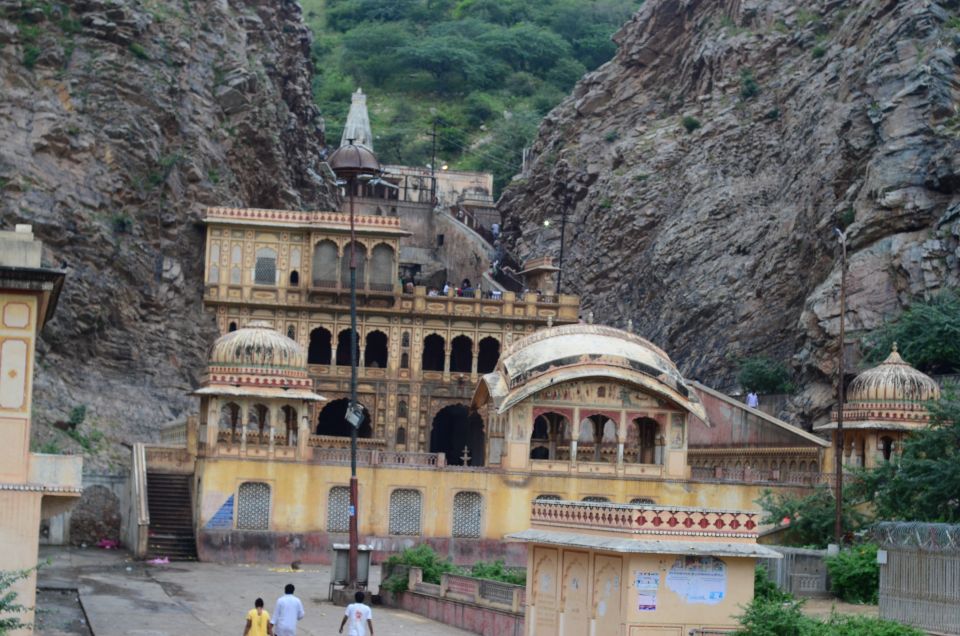
Finally, you get the royal heart: City Palace, the former residence of the Maharaja of Jaipur. This palace complex is a mix of Rajasthani and Mughal architecture, and it works well as a finish because it ties the day together—politics, design, and daily court life.
Your visit includes guided time plus time for sightseeing through courtyards, palaces, and museum areas. Don’t miss the highlights your guide will point out, including:
- Mubarak Mahal
- Chandra Mahal
- Diwan-i-Khas
Why City Palace matters after Jantar Mantar and Gaitore:
- You move from astronomy and royal commemoration to the space where rulers lived and received people.
- The guide’s context helps you connect artistic style to authority and function, not just beauty.
If you like photography, City Palace also rewards patience. Courtyard angles and doorways can look more dramatic after you’ve learned what you’re looking at.
Pink City markets: shopping time that doesn’t swallow your day
Last stop is the Pink City markets, with time specifically set aside for shopping and browsing handicrafts, textiles, and jewelry.
Shopping time is only worthwhile if it’s planned. Here, you’re given a defined window—enough to browse and pick up souvenirs without turning the last hours into fatigue. This is a good place to buy practical items you’ll actually use: small crafts, decorative textiles, or keepsakes that feel connected to Jaipur’s craft traditions.
Tip: if you’re price-sensitive, keep your expectations realistic. Jaipur goods are often tied to skilled labor. Still, it’s smart to compare within the market window rather than buying the first thing you like.
Is $24 good value? What you get, plus the likely extras
At $24 per person for 7 hours, this tour pricing can feel like a deal—especially because it’s built around a private setup. You’re paying for more than a driver; you’re getting:
- Hotel pickup and drop-off
- Private air-conditioned transport with a driver
- Private local guides for all sightseeing
- Bottled water
- Skip-the-ticket-line
- Entrance fees to monuments if you choose that option (otherwise, entrance fees can be extra)
- Live guidance in English and Hindi
What’s not included:
- Lunch and dinner (lunch is included as a scheduled stop, but you’ll pay for it)
- Entrance fees if not selected as part of your package
So the value equation is simple: if you want a one-day structure, private attention, and a guide who can interpret what you’re seeing, this price makes sense. If you already plan to pay for all entrances and you’re happy wandering independently, then it’s more of a convenience purchase than a money-saver.
Either way, you should think of the guide as the “value lever.” The stops are impressive, but the guide’s job is what makes the day feel coherent and less repetitive.
Who should book this private Jaipur day tour?
This is a great fit if:
- You have one day and want a high-return itinerary without stress
- You care about meaning, not just photos—architecture, water history, and science
- You want a private guide who can keep pacing realistic
- You enjoy photography and want help getting better angles and context
It may be less ideal if:
- You love long, slow museum-style visits at every stop
- You’d rather spend the whole day in one area (like only Amber/Fort region or only old city markets)
Should you book it? My practical take
If your goal is to see a lot of Jaipur in a way that feels guided and organized, I’d book this. The reason is not the checklist. It’s the structure: private pickup, air-conditioned transport, skip-the-ticket-line, and guided time at every major site—then a lunch and shopping window that keeps you from ending the day hungry and rushed.
Just go in knowing you’re buying a 7-hour highlight circuit. With that mindset, you’ll leave with a clear picture of Jaipur’s design and royal priorities, not just a pile of landmark photos.
FAQ
What is the duration of the Jaipur Cultural & History Tour?
The tour lasts 7 hours.
Is this a private tour?
Yes, it’s a private group experience.
What languages are the live guides available in?
The live guide is available in English and Hindi.
Does the tour include pickup in Jaipur?
Yes, pickup is offered from the airport, railway station, hotel, or any pickup location in Jaipur.
Are ticket lines skipped at the attractions?
Yes, the tour includes skip-the-ticket line.
What is included in the price?
Included are hotel pickup and drop-off, private air-conditioned vehicle transport with a driver, private local guides for sightseeing, taxes and service charges, bottled mineral water during the tour, fuel surcharge, and entrance fees to monuments if you choose that option.
What should I bring or know before going?
Bring comfortable shoes and your passport or ID card. Personal medication is recommended too. Pets are not allowed. Lunch and dinner are not included.