REVIEW · JAIPUR
Local Jaipur city sightseeing with options
Book on GetYourGuide →Operated by Steps To India · Bookable on GetYourGuide
Jaipur moves fast, so this tour keeps you focused. I love the comfort of a private air-conditioned SUV for long hops and the time-saving skip-the-line entry for major palaces and monuments. The only drawback: it’s a full 8-hour day, so you’ll want to pace yourself in the heat and wear shoes that won’t hate you later.
You get a local guide who can turn each stop from photos into understanding. In a standout experience, guides like Rajesh Singh or Monis can also help with photos, so you spend less time juggling your camera and more time actually looking.
If you want an efficient first taste of Pink City without the hassle of planning the order or waiting at ticket lines, this is strong value at about $29 per person. You may also catch the color of Jaipur’s spice market from the car or with a short walk, depending on timing.
In This Review
- Key things I’d bet on from this tour
- Price and logistics: what you’re really paying for
- Pickup and the private AC ride: comfort you’ll notice
- Hawa Mahal: why the Wind Palace works as a first stop
- Amber Fort: Rajput power, UNESCO views, and real wow-factor
- Jal Mahal: a postcard view that also teaches context
- Jantar Mantar: measuring the sky in Jaipur’s heart
- How the spice market and street scenes fit in
- Other major sights you can ask your guide about
- Guide matters: what the best experiences have in common
- Timing, comfort, and what to pack for an 8-hour day
- Who this tour is best for (and who should rethink it)
- Should you book this Jaipur private sightseeing day?
- FAQ
- How long is the Jaipur city sightseeing tour?
- What sights are included in the day route?
- Is transportation included, and is it air-conditioned?
- Does the tour include tickets and skip-the-line entry?
- Where can I be picked up?
- What languages are available for the live guide?
- Is there free cancellation, and can I pay later?
Key things I’d bet on from this tour
- Private AC SUV all day so the day stays comfortable, not just scenic
- Skip-the-line entry at palaces and monuments to protect your time
- A local guide with real context, not just dates and directions
- Icon stops in smart order: Hawa Mahal → Amber Fort → Jal Mahal → Jantar Mantar
- Bottled water included, which is not glamorous but it helps a lot
Price and logistics: what you’re really paying for
At $29 per person, this tour isn’t about luxury. It’s about removing friction. You’re paying for three practical upgrades: a private car, a private guide, and entry tickets handled as part of the day. That combo matters in Jaipur, because the famous sights can eat time if you’re working out timing, transport, and tickets on your own.
The other thing you’re buying is momentum. An 8-hour sightseeing block means you can hit multiple icons in one go. Your guide can keep the day moving while still giving you reasons to care about what you’re seeing—like how Jaipur’s monuments connect to the rulers who shaped the city.
One trade-off: because it’s a private car and a guided route, it’s less flexible than a do-it-yourself day where you can linger forever in one place. If your travel style is slow and meandering, you’ll still enjoy the stops, but you may feel a small pull to keep up with the schedule.
You can also read our reviews of more city tours in Jaipur



Pickup and the private AC ride: comfort you’ll notice
Pickup is available from any hotel in Jaipur, plus the airport or train station. That’s a big deal if you’re arriving the day of sightseeing, because you don’t have to figure out taxis and meeting points while you’re still half in travel mode.
Once you’re in the air-conditioned SUV, the day gets easier. Jaipur is a city where the distances between major sights add up quickly, and the heat can make the simplest plan feel exhausting. This tour takes that problem out of your hands. You get bottled water, too, which sounds like a minor included item until you’re standing in sun and waiting for your next stop.
Two practical tips for you:
- Plan for a quick rhythm switch. Forts and viewpoints can involve short walks and uneven ground; keep your footwear sturdy.
- Bring something small for sun (sunglasses or a cap). It’ll make the Hawa Mahal and Amber Fort segments more pleasant.
Hawa Mahal: why the Wind Palace works as a first stop
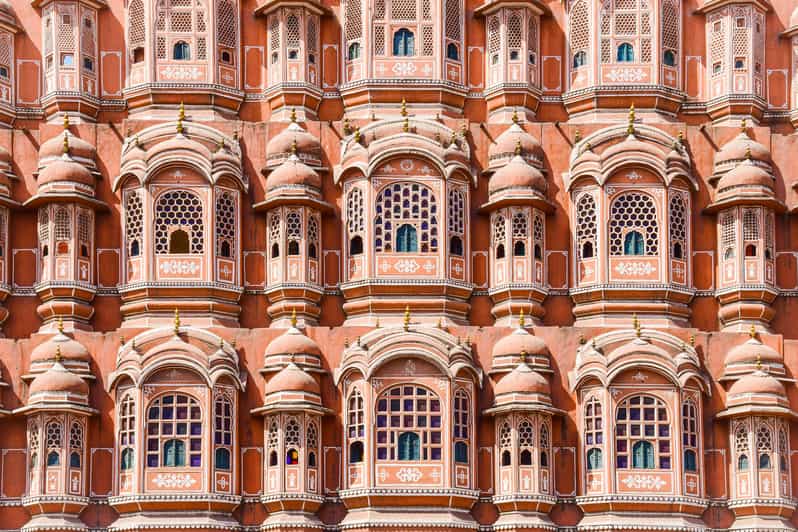
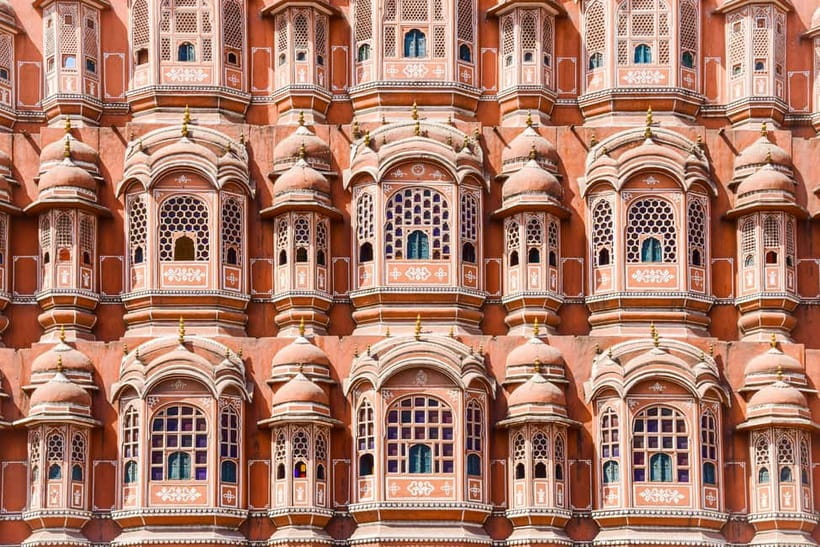
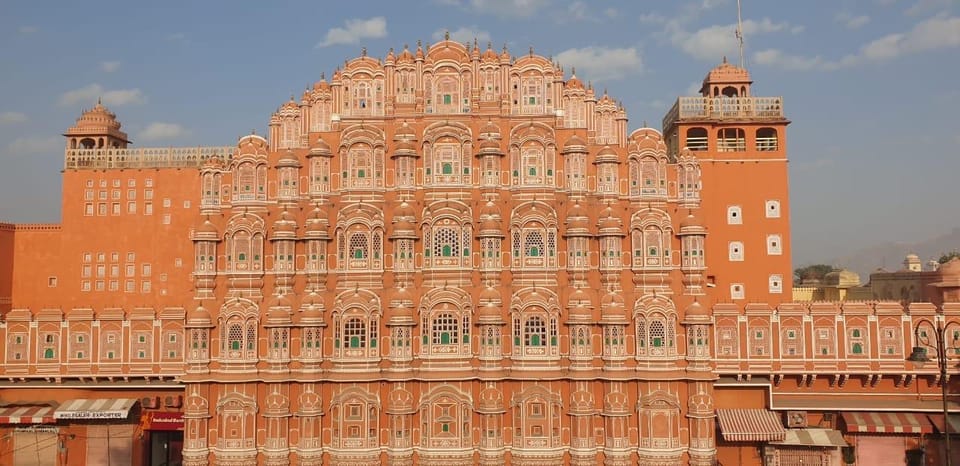
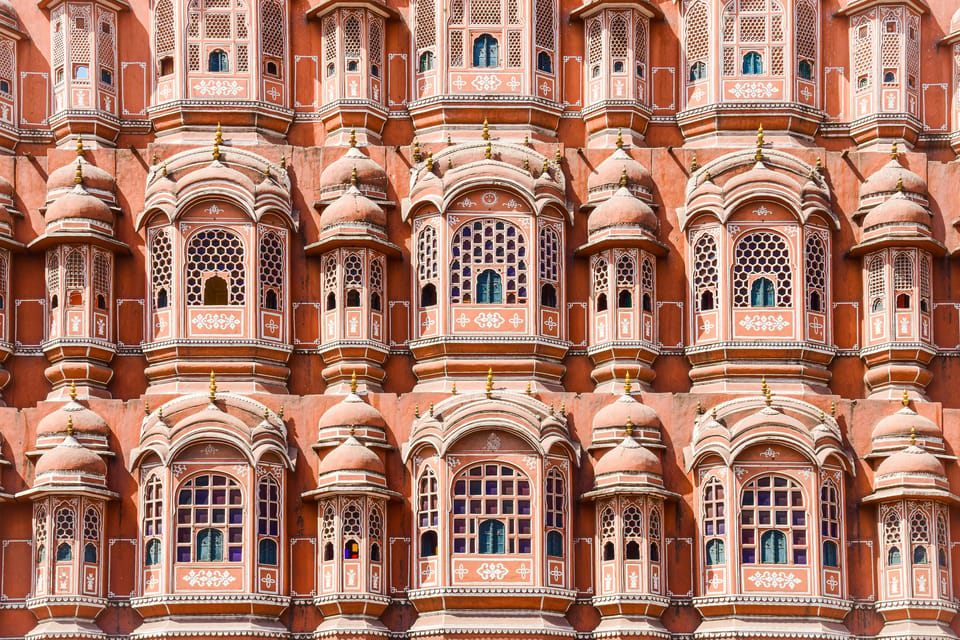
You start with Hawa Mahal, and I think that’s a smart move. It’s iconic, it’s central, and it sets the visual tone for the rest of the day. The monument is a five-storey palace famous for its honeycomb-like design and its 953 lattice windows. Even if you only catch it from the street at first, you’ll quickly understand why it became the symbol people photograph as soon as they arrive in Jaipur.
The design also tells a story. Hawa Mahal was built in 1799 by Maharaja Sawai Pratap Singh as a summer palace, with Indo-Islamic architectural influences. Those lattice windows weren’t just decoration—they were part of how the palace functioned, letting airflow move while still giving privacy.
What I like here is that your guide can help you read the building instead of treating it like a single photo moment. You’ll get the kind of context that makes the rest of the day feel connected: this is not random architecture, it’s Jaipur thinking in stone.
Possible drawback? Hawa Mahal is busy as an area, and photo angles can be competitive. If you’re sensitive to crowds, keep your expectations realistic and let your guide steer you toward the best viewing points without burning time.
Amber Fort: Rajput power, UNESCO views, and real wow-factor
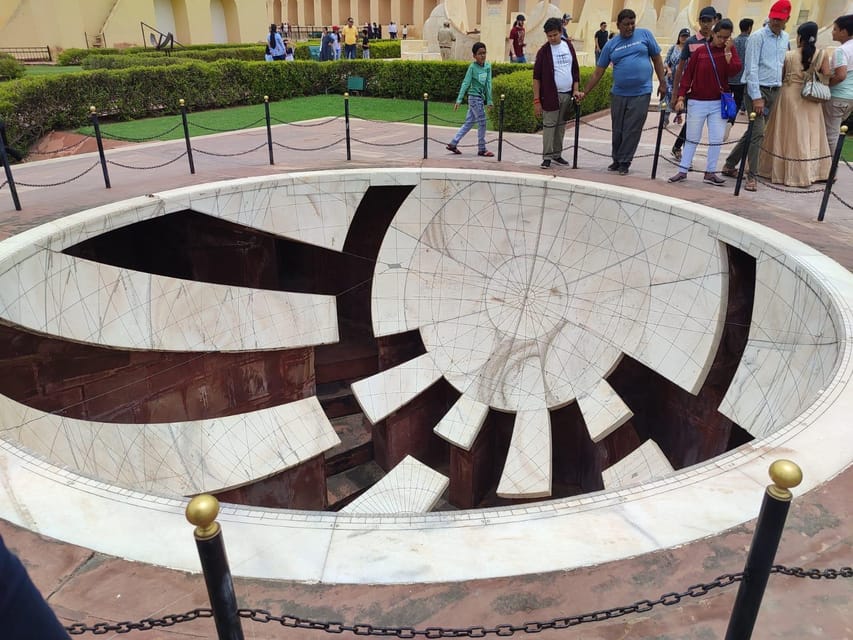
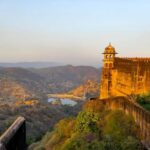
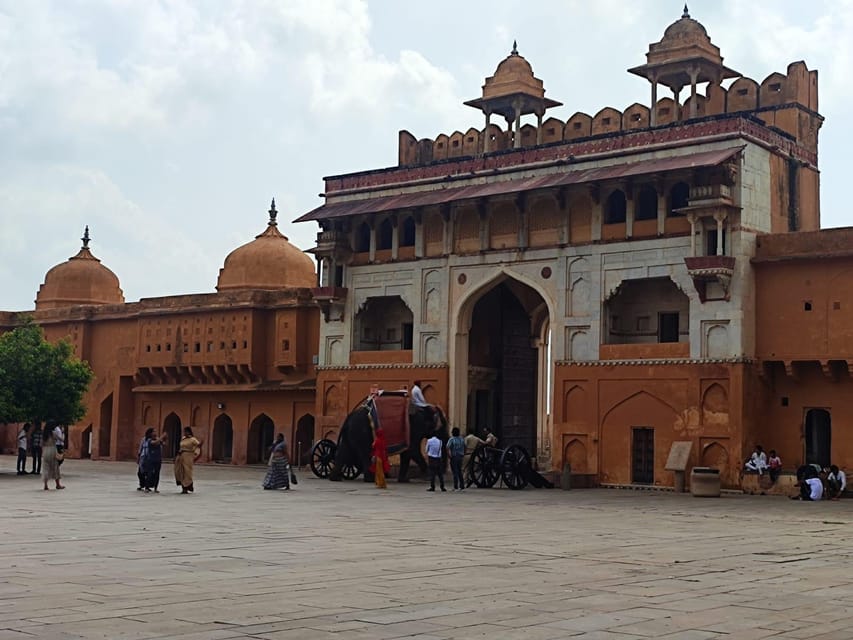
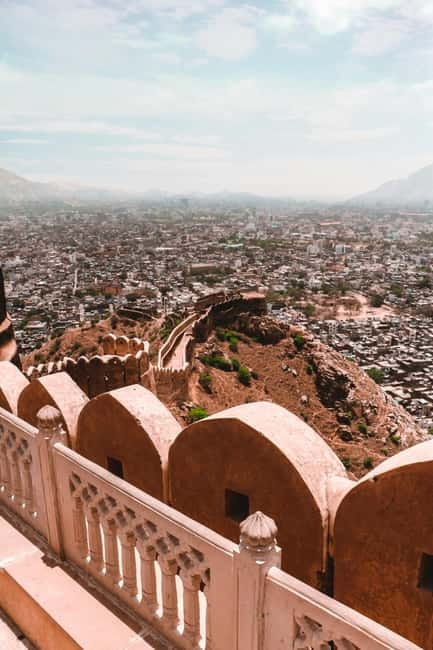
Next is Amber Fort (Amer Fort), and it’s hard to overstate how striking it is. It’s a seven-centuries-old Rajputana palace, recognized as a UNESCO World Heritage Site, and it sits about 11 km from Jaipur on the Aravalli hills. When you arrive, the scale hits you fast—this isn’t a small stop, it’s a whole complex built to impress.
Your guide can connect the dots in a useful way. Amber Fort was constructed by Raja Man Singh I in 1592 and completed by Mirja Raja Jai Singh. You’ll see the blend of red and yellow sandstone with white marble details, and you’ll learn how the fort’s design sits on the hills with a big view over Maota Lake. That lake-side setting matters; it makes the fort feel less like a monument and more like a seat of power.
This is also where a good guide pays off. In one of the best versions of this tour, Monis was especially strong at explaining what you’re looking at, and that’s the difference between snapping pictures and actually understanding the place. If you want the fort to feel like a story you can follow, this is your moment.
Practical consideration: Amber Fort is a major highlight, and it’s one of the stops where time and walking add up. Since the tour includes skip-the-line entry, you avoid one headache, but you’ll still want to keep your energy up and move at a sensible pace.
Jal Mahal: a postcard view that also teaches context
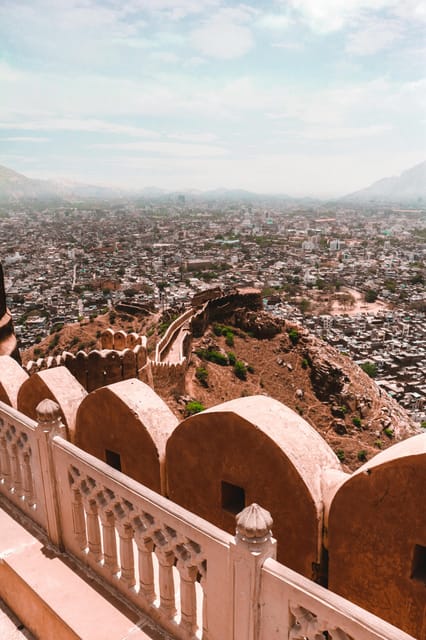
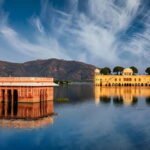
Jal Mahal is next, and it’s one of those Jaipur landmarks that looks almost unreal at first glance. It sits about 4 km from the city, and the key detail is that the palace is built into an artificial lake—Man Sagar Lake. The structure is symmetrical and five-story, built in 1750 by Maharaja Madho Singh as a lodge and hunting retreat.
The fun part is how Jal Mahal changes depending on your angle. Even if you’re not stepping inside during this portion, you’ll still get the visual logic: a royal retreat placed within water, in line with the idea that rulers shaped the landscape around them.
Because this is a guided day in a car, you’ll typically see Jal Mahal in a way that doesn’t turn into a long detour. It’s a good breather between Amber Fort (which demands your legs and attention) and Jantar Mantar (which demands your brain a bit).
One thing to keep in mind: your experience here depends on timing and how the day flows. If you’re expecting a full deep-dive visit like Amber Fort, set your expectations for a more scenic, guided stop rather than a time-intensive one.


Jantar Mantar: measuring the sky in Jaipur’s heart
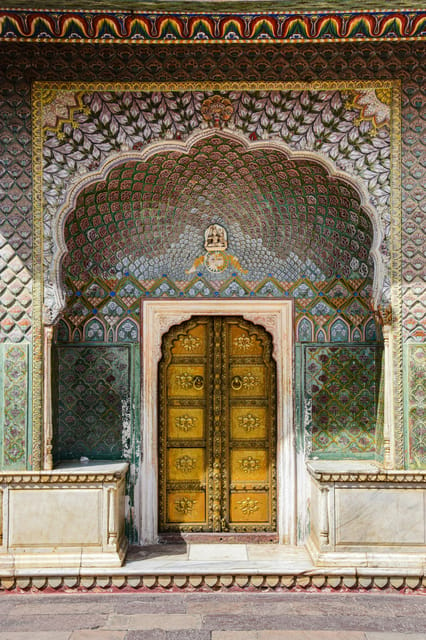
Then you head to Jantar Mantar, located in the heart of Jaipur. This part is the surprise for a lot of people because it doesn’t look like a palace, yet it’s deeply tied to royal power and planning.
Jantar Mantar is an astronomical observatory built by Maharaja Sawai Jai Singh II between 1728 and 1734. Your guide can explain why it mattered: it was described as a meeting point for scientific cultures, and it connected political, social, and religious practices to cosmology. Translation: this wasn’t just science for science’s sake. It was how rulers understood the world.
If you like seeing the logic behind a monument, this stop is a treat. The instruments are physical, and your guide can show you what you’re looking at and why it’s shaped the way it is. It’s also a great contrast after architecture-heavy sights. By the time you reach Jantar Mantar, you’ll likely feel like you’ve seen Jaipur from multiple angles—literal views, royal design, and scientific thinking.
How the spice market and street scenes fit in
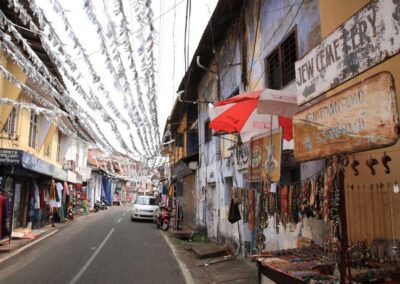
One of the highlights is the chance to watch the colorful spice market from your car or walk through it with your guide. That’s a practical way to get street-life texture without turning the day into an all-day market negotiation session.
If you do a quick walk portion, keep it simple:
- Go with the goal of looking and asking questions, not buying everything.
- Expect smells, colors, and strong contrasts. Bring patience and a light hand.
Even if you only view from the car, you’ll get that Jaipur flavor—the sensory evidence that this city is still trading in everyday life while palaces and forts show you what rulers once built.
Other major sights you can ask your guide about
The tour description points to additional big-name Jaipur stops beyond the main route. You might hear about these depending on your exact option and timing, such as:
- City Palace, with its courtyards, gardens, cenotaphs, and royal buildings in the old city
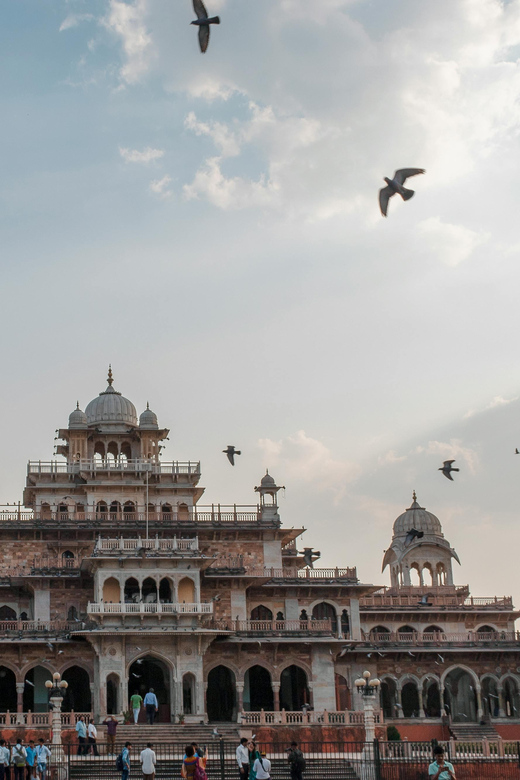
- Albert Hall Museum, built in 1876 as a concert hall and later converted into a museum, with Indo-Saracenic architecture
- Elefun, an elephant sanctuary dedicated to preserving elephants, started in 2013 and run by a family of mahouts
Because your scheduled route in this specific day focuses on the four biggest icons, I suggest you ask your guide early whether any extra time can be added. A good guide will tell you what fits without forcing you into a rushed version of everything.
Guide matters: what the best experiences have in common
This tour rises or falls on the guide. The reviews point to two names—Rajesh Singh and Monis—and they share a useful trait: they listen. One excellent experience highlights that the guide worked around your wishes and delivered lots of interesting information, without making you feel like you’re being dragged through a checklist.
Another key point from the reviews: at least some guides act as a private photographer. That matters more than you’d think. If someone else handles angles and timing, you’re freer to take in the view yourself, and you’re more likely to leave with photos that actually show you at the sights, not just random selfies while you’re leaning awkwardly against a wall.
Here’s my advice for you: if there’s a must-see photo or a moment you’re nervous about (like Amber Fort views), say it early. With a private guide, you have a better chance of shaping the day than you would in a group tour.
Timing, comfort, and what to pack for an 8-hour day
An 8-hour city tour in Jaipur is manageable, but it’s not the time to show up lightly packed. You’ll be moving between famous sites that each ask for attention in a different way.
Pack for comfort:
- Water is included, but bring a small refill plan if you tend to drink a lot
- Sun protection (cap or sunglasses)
- Comfortable, grippy footwear for fort areas
- A light layer in case evenings feel cooler than expected
Also, plan your expectations around heat. Hawa Mahal and Jantar Mantar can involve standing and looking for periods. Amber Fort adds movement. If you start the day energized and don’t try to rush every photo, the flow feels easier.
Who this tour is best for (and who should rethink it)
This tour is a great fit if you:
- Want a first serious taste of Jaipur’s major monuments without doing research and logistics
- Like guided explanations and want context for what you see
- Prefer the comfort of an air-conditioned private car
- Appreciate skip-the-line entry so your day doesn’t vanish into queues
It might be less ideal if you:
- Want to linger for hours at one sight and refuse the rest of the itinerary rhythm
- Are trying to do Jaipur at a ultra-slow pace (this is structured)
- Need lots of downtime that isn’t built into an 8-hour block
Should you book this Jaipur private sightseeing day?
Yes, if your goal is a focused overview of Jaipur with minimal stress. For about $29 per person, you’re getting a private guide, private AC transport, entry tickets, bottled water, and skip-the-line access—those are the pieces that usually cost time and energy when you DIY.
Before you book, one smart move: confirm what option you’re taking (half day vs full day) and ask whether any add-on sights like City Palace or Albert Hall Museum can fit. If you want the clearest big-picture Jaipur day, this route through Hawa Mahal, Amber Fort, Jal Mahal, and Jantar Mantar is a strong way to do it.
And if photo quality matters to you, ask your guide how they handle photography during stops. Based on past experiences with guides such as Rajesh Singh and Monis, that’s often where this tour quietly gets better than expected.
FAQ
How long is the Jaipur city sightseeing tour?
The tour duration is 8 hours.
What sights are included in the day route?
The day route includes Hawa Mahal, Amber Fort, Jal Mahal, and Jantar Mantar, then you return to Jaipur.
Is transportation included, and is it air-conditioned?
Yes. You get transportation in an air-conditioned SUV for a private tour.
Does the tour include tickets and skip-the-line entry?
Yes. Entry tickets are included, and you get skip-the-line entry to palaces and monuments.
Where can I be picked up?
Pickup is available from any hotel in Jaipur, as well as from the airport in Jaipur and the train station.
What languages are available for the live guide?
The live guide is available in English, Spanish, and French.
Is there free cancellation, and can I pay later?
Free cancellation is available up to 24 hours in advance for a full refund. You can also reserve now and pay later, meaning you pay nothing today.