REVIEW · JAIPUR
Jaipur: Private Full-Day City Tour by Tuk-Tuk or Car
Book on GetYourGuide →Operated by Rajasthan India Tour Driver · Bookable on GetYourGuide
Jaipur is better with a local at your side. This private full-day tour strings together the classics and a few meaningful stops, with a driver who’s comfortable in tight city streets and guides who explain what you’re actually looking at. You’ll ride in a private tuk-tuk or car and start at the Jaipur Wholesale Flower Market for a morning taste of daily life.
I especially like the way the route mixes big-photo moments with context. Amber Fort and Hawa Mahal aren’t just quick stops; your guide ties them to architecture, royal history, and UNESCO-related background as you go. In the same spirit, guides such as Vinod and Mr. Adil are repeatedly praised for being friendly, speaking clear English, and adjusting the day when you ask.
One consideration: monument entry fees and lunch are not included, and there’s moderate walking at several sites. If you show up in thin shoes (or skip sunscreen/water), you’ll feel it by mid-afternoon.
In This Review
- Key highlights to know before you go
- How the 10-hour Jaipur loop stays comfortable
- Morning at the Jaipur Wholesale Flower Market
- Amber Fort: the viewpoint that explains why Jaipur matters
- Panna Meena ka Kund: a stepwell break that feels quieter
- Jal Mahal: a lakefront photo pause on Man Sagar Lake
- City Palace: royal power turned into a museum visit
- Jantar Mantar: seeing astronomy instruments with explanations
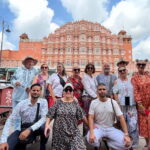
- Hawa Mahal: the story behind the honeycomb façade
- Albert Hall Museum: a slower cultural chapter
- Hand-block printing factory: watching traditional craft get made
- Transport, guides, and the small details that make the day work
- Price and value: what $10 per group up to 3 really buys
- Who this private Jaipur tour suits best
- Things to watch for before you go
- Should you book this Jaipur private tuk-tuk tour?
- FAQ
- How long is the Jaipur private city tour?
- Is this a private tour?
- Does the tour include monument entrance fees?
- Is lunch included in the price?
- Does this tour help with tickets or ticket lines?
- Where are the pickup and drop-off locations?
- What should I bring on the day of the tour?
- Are there any dress code rules?
- What languages are spoken by the driver or guide?
- Is free cancellation available?
Key highlights to know before you go
- Morning flower market access in the walled city area, starting from 7:00 AM onwards
- Private tuk-tuk or private car with an English/Hindi-speaking driver
- Amber Fort + Panna Meena ka Kund for viewpoints and a unique stepwell experience
- Jal Mahal photo stop at Man Sagar Lake to break up the day with a scenic pause
- City Palace, Jantar Mantar, and Hawa Mahal in one logical loop of royal Jaipur
- Albert Hall Museum and a hand-block printing factory to round out the story with culture and craft
How the 10-hour Jaipur loop stays comfortable
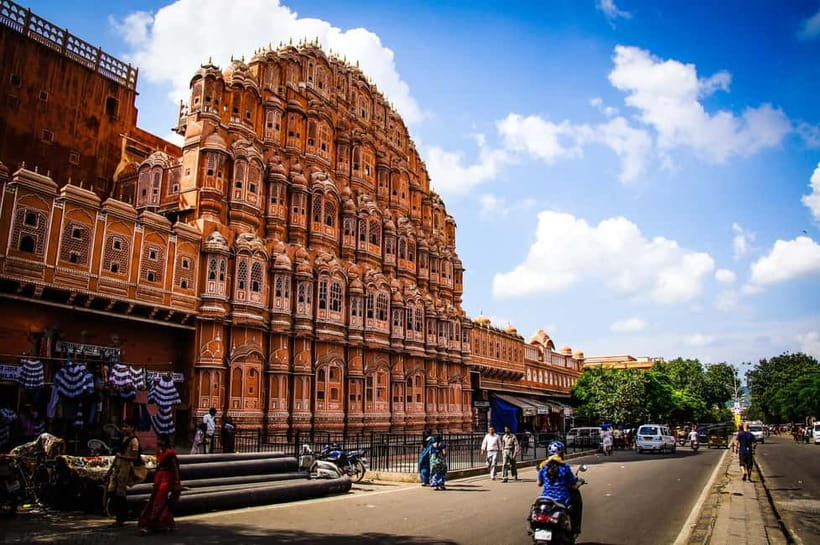
This is a 10-hour private city tour, built around one simple idea: reduce backtracking. You’ll move between major sights by private transport, which matters in Jaipur because distances add up fast when traffic and waiting times kick in.
The pacing also gives you photo stops, guided time, and short breaks. That means you’re not stuck sprinting between gates, and you can ask your guide questions without the day turning into a blur.
For value, I like that the day includes hotel or airport pick-up and drop-off, plus a mineral water bottle. Those small bits add up when you’re traveling with luggage-free, full-day plans.
You can also read our reviews of more city tours in Jaipur


Morning at the Jaipur Wholesale Flower Market
Your day starts at the Jaipur Wholesale Flower Market, in the walled city area. The market is one of the best early experiences in Jaipur because you see how people actually start the day—arranging, transporting, sorting, and selling—before the day’s heat and crowds take over.
Even if you just plan to stand back and watch, you’ll learn quickly. Flowers aren’t just decoration here; they’re tied to rituals, ceremonies, and everyday commerce. If you enjoy photography, this is also where you’ll get the most color with relatively low effort.
Practical tip: keep your hands free. You’ll want to hold your phone/camera and still move easily through tight lanes.
Amber Fort: the viewpoint that explains why Jaipur matters
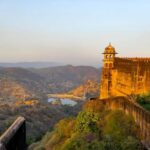
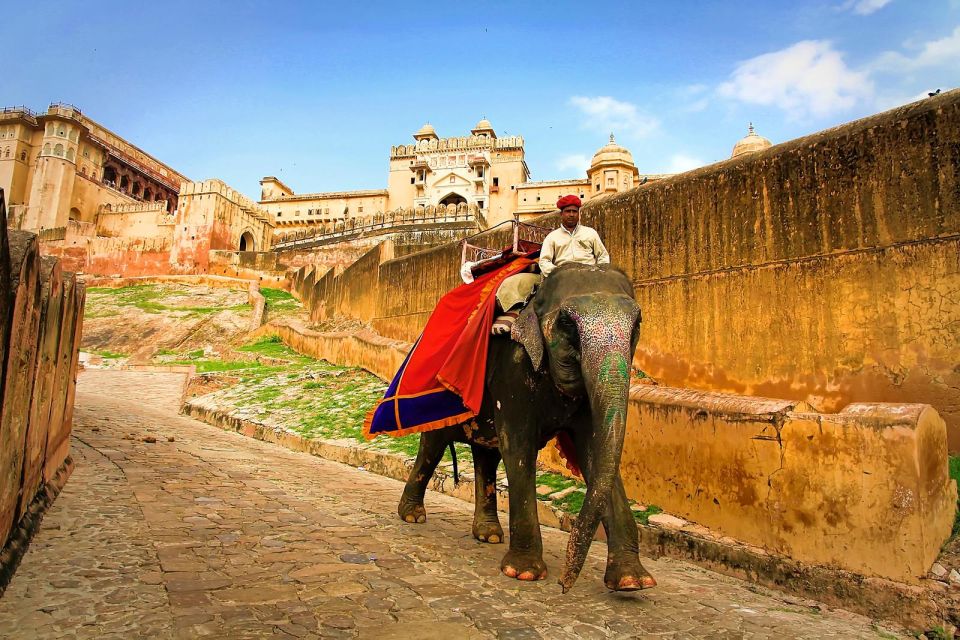
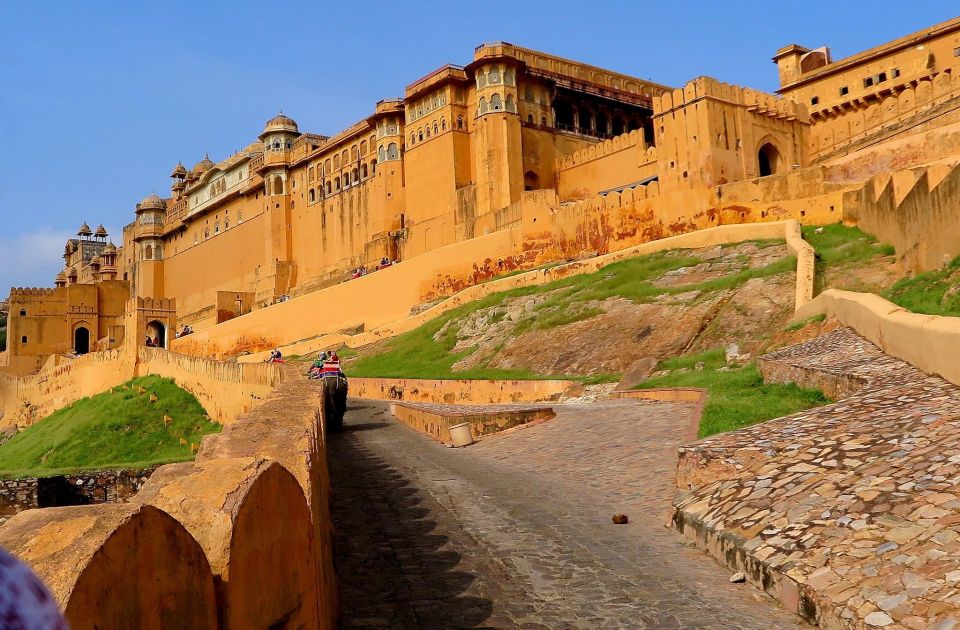
Next comes Amber Fort, up on a hill with sweeping views over Jaipur. The most useful part isn’t the postcard scenery (though yes, it’s great). It’s the guided tour that turns the fort from a backdrop into a story—how the complex is laid out, and why it became such a powerful symbol.
You’ll get time for photos, then a guided visit. Some people go fast here and miss details. I prefer to slow down a little at the viewpoints, because this is where Jaipur’s scale starts to make sense.
If you’re sensitive to walking, wear the comfiest shoes you own. The fort complex can be uneven, and you’ll want stable footing for both moving around and taking pictures.
Panna Meena ka Kund: a stepwell break that feels quieter
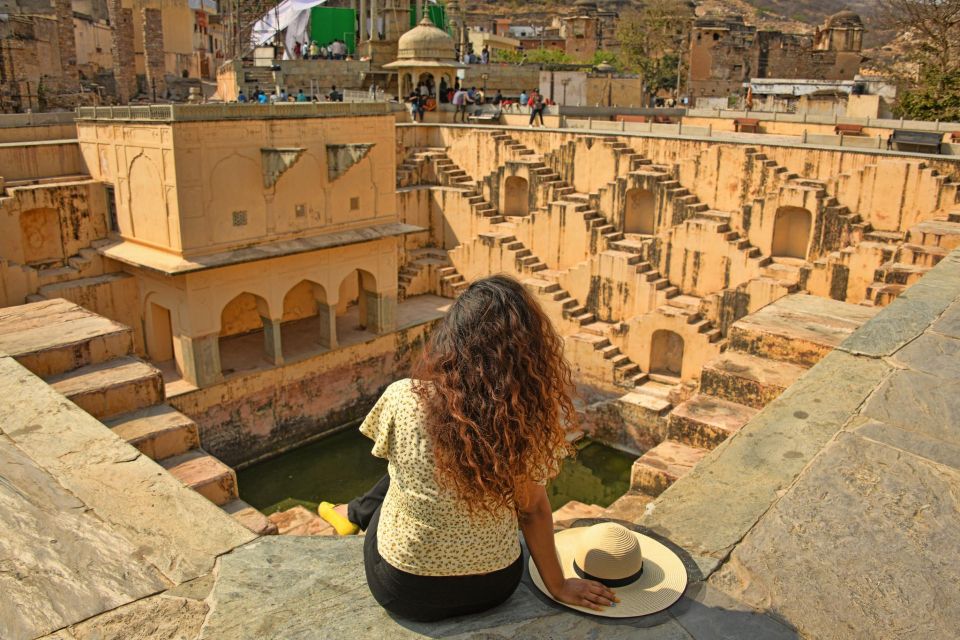
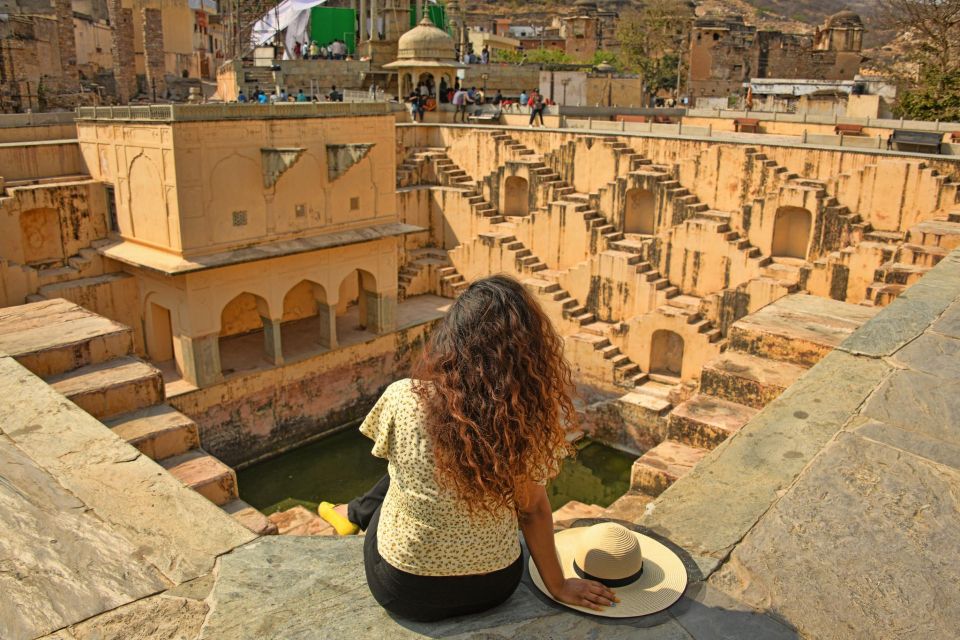
After the grand fort, the route shifts to something calmer: Panna Meena ka Kund, also known as a stepwell. The stop is shorter than Amber Fort, but that’s a good thing. Stepwells can be visually intense—steps, geometry, and light patterns—so giving it a focused visit keeps it special instead of rushed.
Expect a photo stop and then a guided tour. The best part is how peaceful it can feel compared with the surrounding city movement. Even if you only spend 30 minutes, it acts like a reset before you head toward the palace-and-museum stretch.
Practical tip: this is another stop where comfortable shoes matter more than stylish ones.
Jal Mahal: a lakefront photo pause on Man Sagar Lake
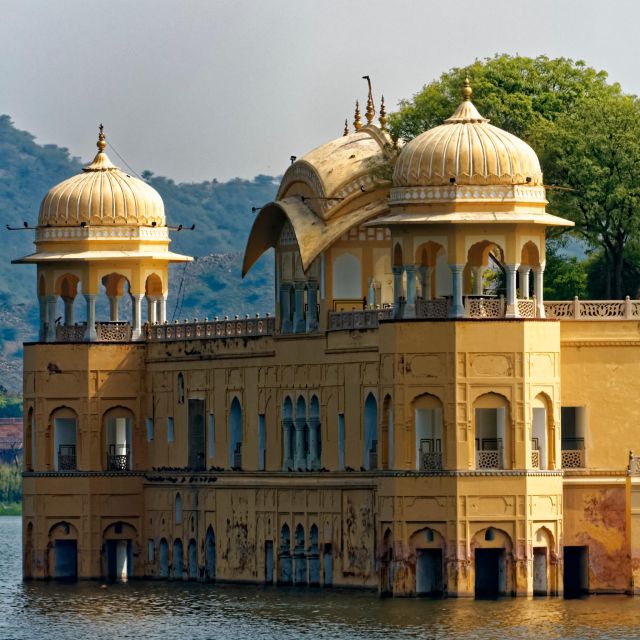
Then you’ll stop at Jal Mahal, the palace sitting in Man Sagar Lake. Even if you don’t get long here, it’s a helpful visual break. You go from hilltop fort energy to open water views, which changes your perspective on the city.
This is primarily a photo stop with guided context. So if you’re hoping for a deep walk-through, manage expectations. But if your goal is to capture the iconic look and hear the background, this works well.
Quick photo tip: bring your patience for angles. The best views depend on where you’re positioned near the roadside and viewpoints.
You can also read our reviews of more private tours in Jaipur




City Palace: royal power turned into a museum visit
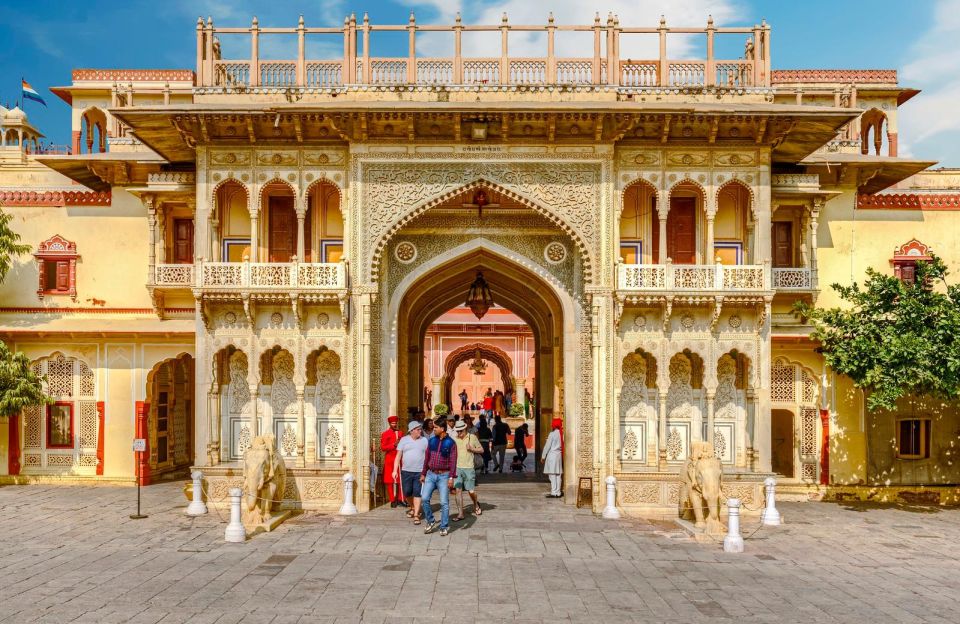
Midday brings City Palace, located in central Jaipur. It’s described as the former home of the Maharaja of Jaipur and head of the Kachwaha Rajput clan, and today it functions as a museum while still feeling royal in spirit.
You’ll have a photo stop plus a guided visit. This is where your guide’s storytelling helps most, because palace architecture can feel like “big buildings” unless someone explains what you’re seeing and why it was designed that way.
Lunch note: lunch isn’t included, but you’ll get a break to find a local restaurant that fits your budget. If you like eating where locals eat, ask your guide for options that are convenient for your schedule.
Jantar Mantar: seeing astronomy instruments with explanations
Next up is Jantar Mantar, Jaipur’s famous astronomical site. This is one of those places where people either walk in and out fast, or they actually learn what the instruments were built to measure.
You’ll get a photo stop and about an hour for the guided sightseeing. The key value here is that you’re not just looking at stone structures—you’re learning how the instruments worked and their cultural significance. It’s also part of why this tour feels more than “drive-by sightseeing.”
Practical tip: if you’re photographing, keep an eye on where you stand so you don’t block other visitors.
Hawa Mahal: the story behind the honeycomb façade
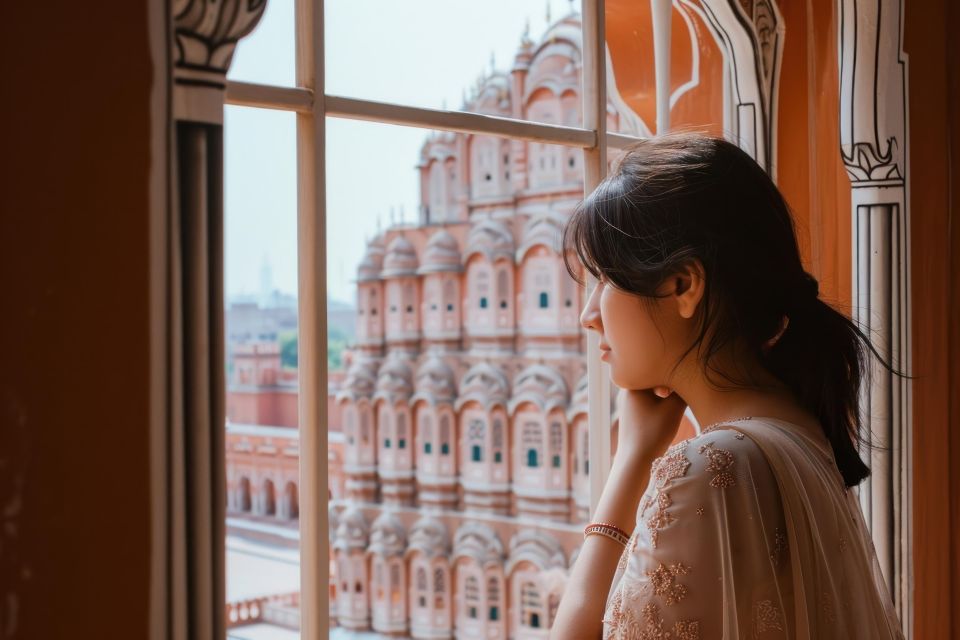
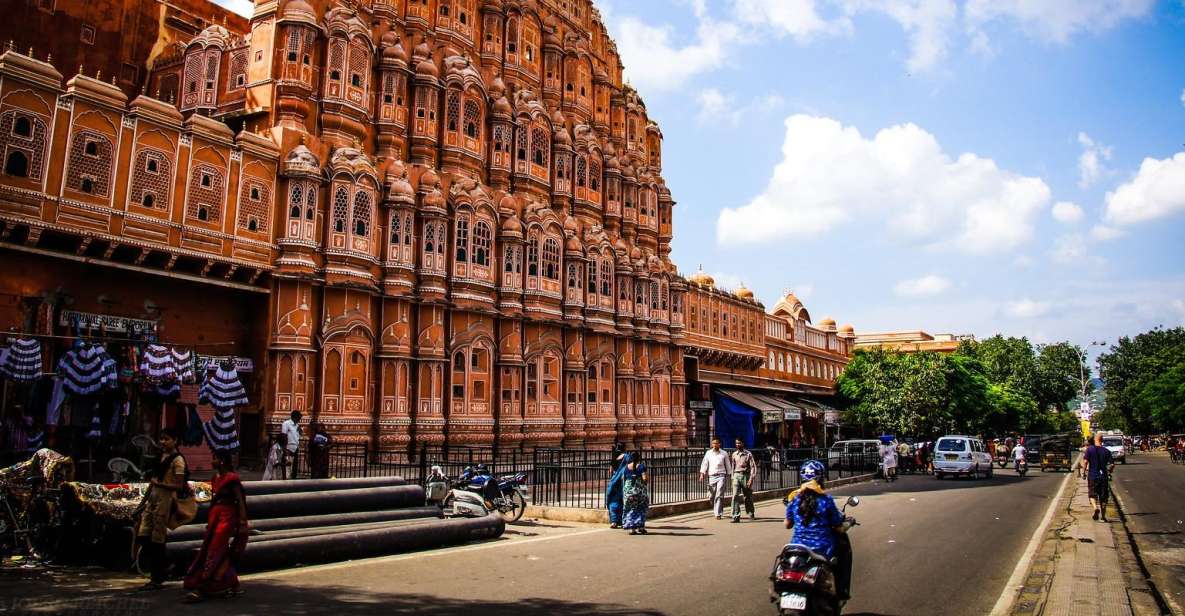
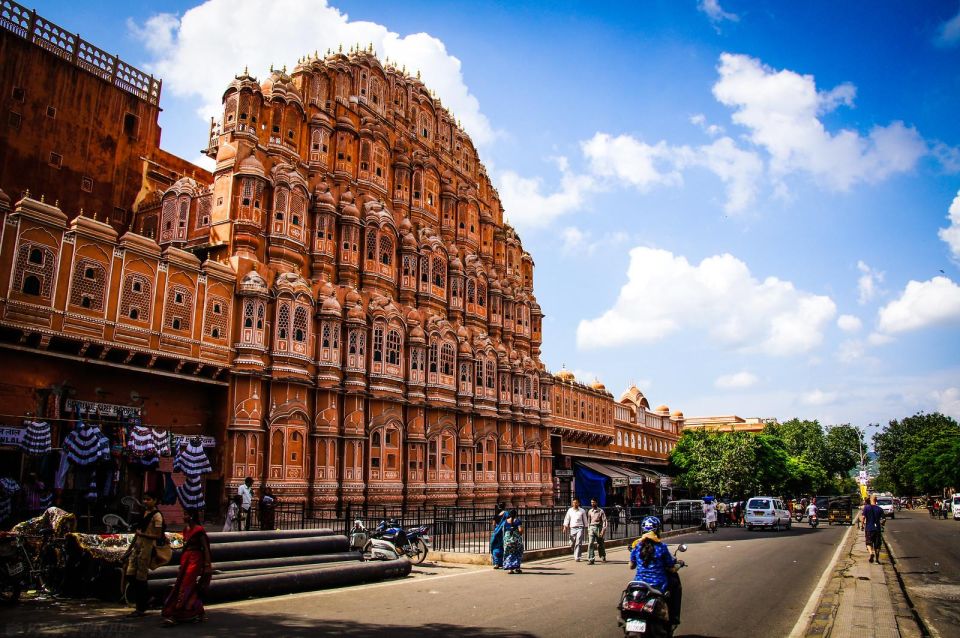
Hawa Mahal is next, and yes, it’s instantly recognizable. But the best part of visiting with a guide is understanding what all those windows were meant to do and how the design relates to the life around it.
You’ll stop for photos and then get a guided visit. Many people think of this as the place for pictures only. It’s more interesting than that when someone explains the architecture and historical purpose behind it.
If you’re traveling in hot months, plan for time inside only as needed and keep water handy.
Albert Hall Museum: a slower cultural chapter
After the royal-and-science stretch, this tour includes Albert Hall Museum. It’s another photo stop plus a guided tour and about an hour of sightseeing.
Why it’s a good choice: it changes the tempo. Even if you’re not a museum person, Albert Hall adds a “modern history and collections” layer that balances the older fort-and-palace feel.
It can be a good moment to slow your pace before you move on to craft.
Hand-block printing factory: watching traditional craft get made
To close out the day, the tour includes a stop at a hand-block printing factory. This is not just a store stop. You’ll get to see traditional arts and crafts being made, and you’ll learn about the process behind the pieces.
This kind of visit is worth it because Jaipur’s craft traditions don’t stay theoretical. You see how materials and methods turn into finished textiles, and you understand why certain patterns have meaning beyond decoration.
If you’re shopping later, this is also the stop that helps you ask smarter questions—what’s printed, how it’s done, and what quality signals to look for.
Transport, guides, and the small details that make the day work
A lot of Jaipur tours are “private” in name only. This one is organized around real private logistics: you get hotel or airport pick-up and drop-off, then private tuk-tuk transport with a friendly driver.
Your driver can communicate in English and Hindi, and that matters if you want to ask clarifying questions like where to stand for photos or when to take shelter from heat.
One repeated strength across guide experiences is flexibility. People have described guides adjusting stops based on what they wanted to see, including swapping in local food areas and adding extra practical touches. Some mentions include help with phone SIM setup, plus local snack stops such as kachori, samosa, lassi, fruit, and sweets like gajjak.
If you’re thinking, I want street food but I don’t want to waste time searching, this is the angle that makes the tour feel like your day instead of a fixed checklist.
Price and value: what $10 per group up to 3 really buys
The stated price is $10 per group up to 3 for a 10-hour private experience. That’s low for a full-day private tour with pick-up/drop-off and dedicated transport.
What makes the value clearer: your day includes fuel, taxes, and a mineral water bottle, plus the option for private guiding at the sights. Also, the tour includes help to skip the ticket line, which can save time at busy monuments.
What you should budget separately:
- Entrance fees to monuments (not included)
- Lunch (not included)
So I’d frame this as a cost-effective way to get private logistics and local guidance, then pay site entry fees on top. If you’re splitting the group price with up to two companions, the per-person cost can be especially sensible.
Who this private Jaipur tour suits best
This tour is a strong match if you want:
- Major Jaipur sights in one day without coordinating multiple rides
- A private setup, not a crowded bus day
- Real-time guidance that helps you understand UNESCO-related context and architectural choices
- The chance to swap in small local experiences, especially food
It also makes sense for families, since some guide experiences mention being child-friendly and attentive.
If you prefer a very slow, independent pace (lingering 2–3 hours at fewer places), you might find one-day density a bit much. In that case, you could pair this tour with a lighter next-day plan—or ask your guide to shorten some stops.
Things to watch for before you go
You’ll do moderate walking across multiple stops, so bring comfortable shoes. Dress is smart casual, but for temples, short shorts and sleeveless tops aren’t recommended. Also note that pets aren’t allowed and large luggage isn’t permitted, so travel light if you can.
One more practical note: a current valid passport is required on the day of travel, and booking requires passport details (name, number, expiry, country). Make sure those details are correct before you set off.
Should you book this Jaipur private tuk-tuk tour?
Book it if you want a smart, day-long way to see Jaipur with a private driver, a guide who can explain the buildings, and enough flexibility to add local food stops. The value is strongest when you’re splitting the group price up to three people and you’re comfortable paying monument entrance fees separately.
Skip it (or choose a different style) if you hate structured routing, or if you’re looking for an all-inclusive day with no extra costs and no walking. This is a “see a lot, understand more” kind of tour—built for momentum with comfort.
If your top priorities are Amber Fort, City Palace, Jantar Mantar, and Hawa Mahal—plus an early flower market and a craft stop—this is the kind of day plan that makes Jaipur feel organized, not overwhelming.
FAQ
How long is the Jaipur private city tour?
The tour duration is 10 hours.
Is this a private tour?
Yes, it’s a private group experience with private tuk-tuk or car transport.
Does the tour include monument entrance fees?
No. Entrance fees to the monuments are not included.
Is lunch included in the price?
No. Any meal or lunch is not included.
Does this tour help with tickets or ticket lines?
Yes. It includes skip the ticket line.
Where are the pickup and drop-off locations?
Pick-up is included from options such as the airport, railway station, hotel, or any other desired location. The itinerary lists Kukas, Jaipur as a pickup/drop-off option.
What should I bring on the day of the tour?
Bring a passport or ID card, plus comfortable shoes and comfortable clothes.
Are there any dress code rules?
Yes. Smart casual is recommended, and short shorts or sleeveless tops are not recommended for temple visits.
What languages are spoken by the driver or guide?
English and Hindi.
Is free cancellation available?
Yes. You can cancel up to 24 hours in advance for a full refund.