REVIEW · NEW DELHI
From Delhi: 2-day Golden Triangle trip to Agra and Jaipur
Book on GetYourGuide →Operated by Chaman Duggal Private Tours · Bookable on GetYourGuide
Two days, three India icons. This private Golden Triangle trip strings together Agra and Jaipur with English-speaking guides who explain what you’re looking at, not just what you’re seeing. I especially like the smooth car transfer and the way the guides connect the sites to the stories behind them.
One thing to plan for: monument entrance fees and meals aren’t included, so you’ll want to budget cash/card for tickets (and decide what you’ll eat on the go).
In This Review
- Key highlights worth knowing
- Golden Triangle, but without the stress: private car and timing
- Agra Day 1: Taj Mahal and Agra Fort with an English guide
- Taj Mahal: more than a photo
- Agra Fort: the palace-fort contrast
- Getting to Jaipur after Agra
- The hotel night in Jaipur: choosing your comfort level for Day 2
- Jaipur Day 2: Amer Fort, Water Palace, Hawa Mahal, and Jal Mahal
- Amer Fort: the big start at 8 am
- Water Palace and Jal Mahal: royal scenery beyond the fort
- Hawa Mahal: the famous façade
- City Palace: where history becomes physical
- Jantar Mantar and the royal science behind Jaipur
- Price and logistics: what $16 really buys (and what it doesn’t)
- Included
- Not included (budget this)
- Small practical items
- Who this 2-day trip suits best (and who might feel rushed)
- Should you book this 2-day Delhi–Agra–Jaipur trip?
- FAQ
- What’s included in the 2-day tour price?
- Do I need to pay for monument entrances separately?
- What are the main stops on Day 1?
- What are the main stops on Day 2?
- What hotel options are available in Jaipur?
- What should I bring, and are there any restrictions?
Key highlights worth knowing
- English guide in Agra and Jaipur so the stops make sense fast
- Taj Mahal time in Agra plus Agra Fort as a second must-see
- Amer Fort, Hawa Mahal, City Palace, and Jantar Mantar packed into Day 2
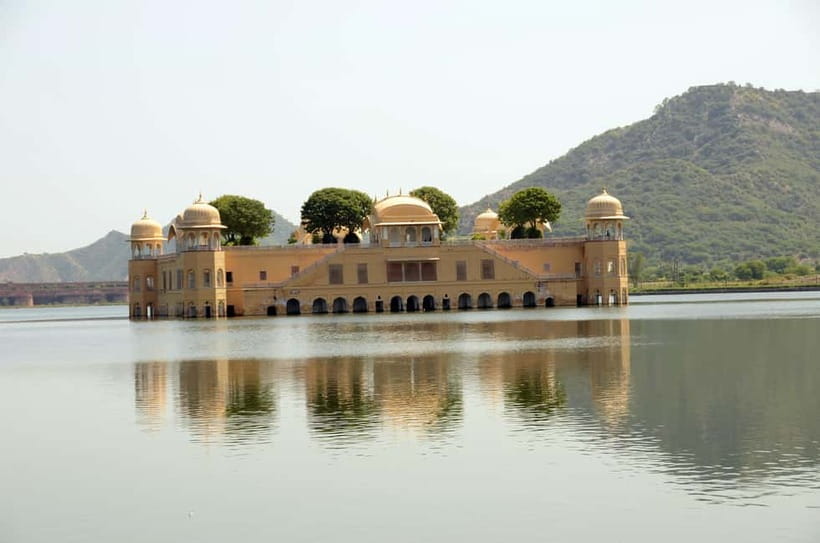
- Jal Mahal and Water Palace add variety beyond the main fort views
- Skip-the-ticket-line setup helps you lose less time at entry points
Golden Triangle, but without the stress: private car and timing
If you’re doing the Golden Triangle in just 2 days, your biggest enemy is wasted time. The best part here is that you’re not bouncing between random pickups. You get an air-conditioned car with a driver and hotel-to-sightseeing-to-hotel movement that’s built for a tight schedule.
Your day starts with early pickup from anywhere in Delhi—hotel, airport, or wherever you’re staying. That matters because Taj Mahal and the fort complexes reward early arrival. On a short trip, you want the morning pace, not the midday scramble.
This trip is also set up as a private group, which means you can move at a human speed instead of matching a large group’s rhythm. In the real world, that’s where comfort shows up: you can pause for photos without the whole plan collapsing, and your guide can steer the story based on what you’re actually interested in.
A practical note: the itinerary includes plenty of walking around palaces and fort areas. You’ll be outdoors for stretches, and the day can be long. If you’re traveling with sore knees or you hate uneven stone steps, you’ll want to plan for slower routes and more frequent breaks.
You can also read our reviews of more tours and experiences in New Delhi


Agra Day 1: Taj Mahal and Agra Fort with an English guide
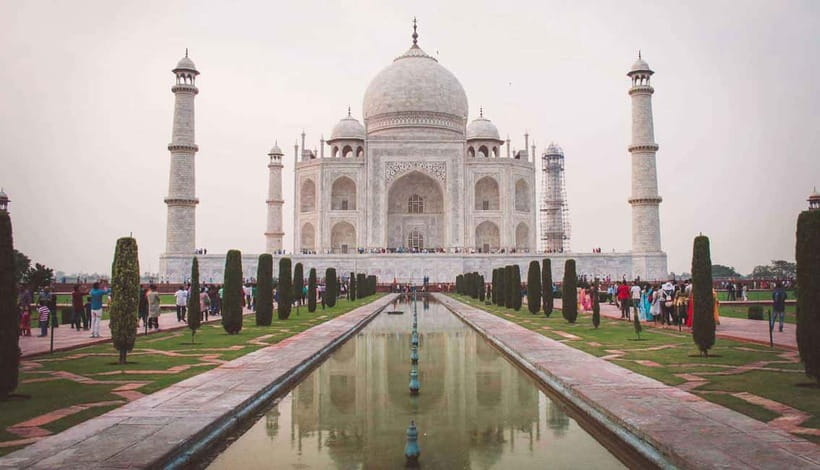
Agra is the headline act, and the schedule treats it that way. After pickup, you go straight into sightseeing with a live English guide for the main sites.
Taj Mahal: more than a photo
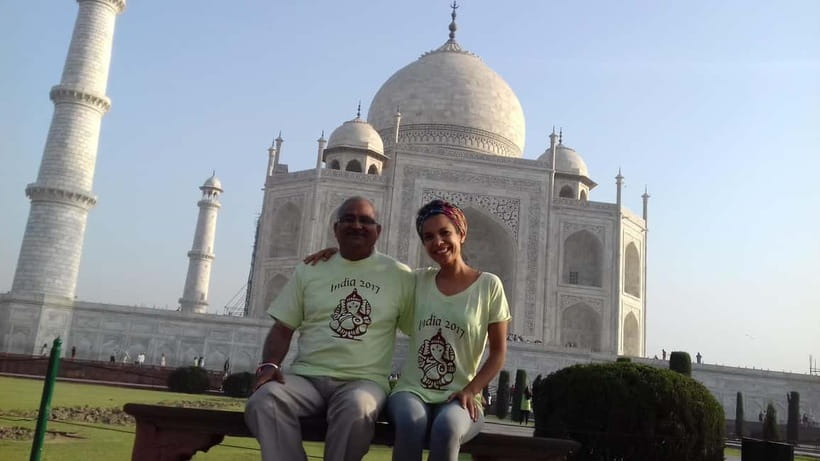
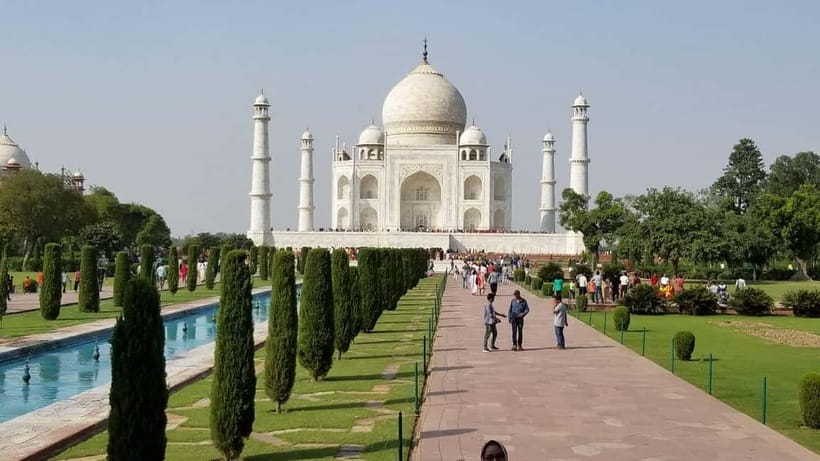
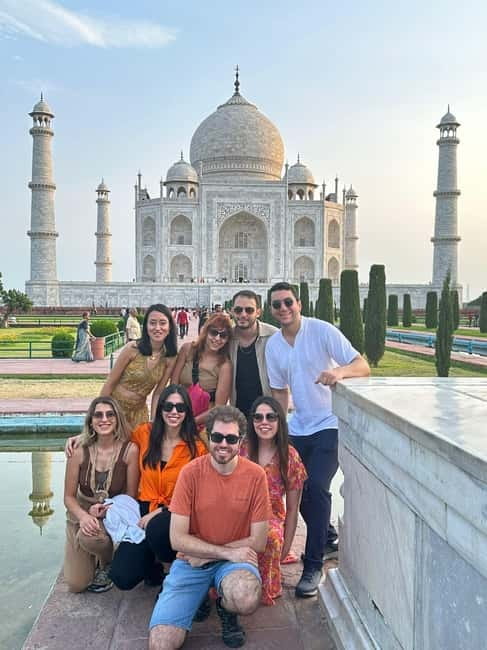
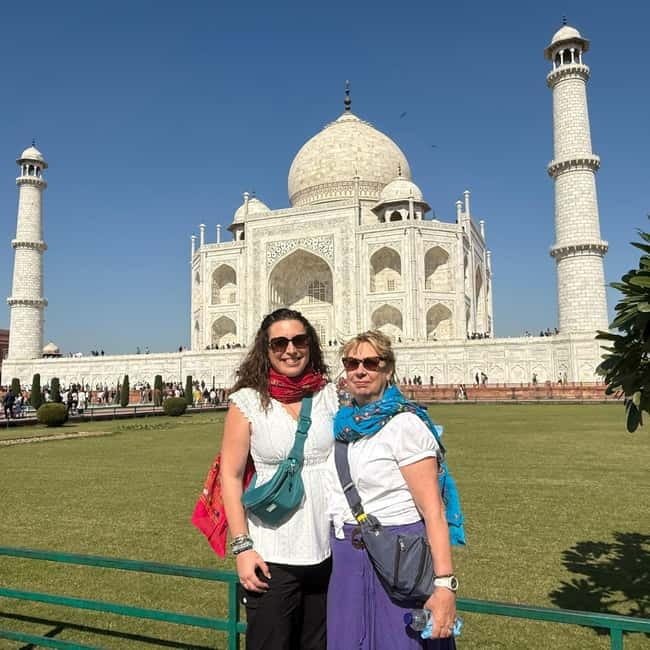
The Taj Mahal needs no introduction, but a guide helps you see it properly—how it’s laid out, what details mean, and why it became the symbol it is today. In a 2-day format, this is exactly what you want. You’re not just checking a box; you’re learning what you’re looking at as you look at it.
Also, the tour is described with a skip-the-ticket-line approach. Even if you still need to purchase your own monument tickets (entrance fees are not included), the guidance can reduce the annoying wait and keep the day moving.
Agra Fort: the palace-fort contrast
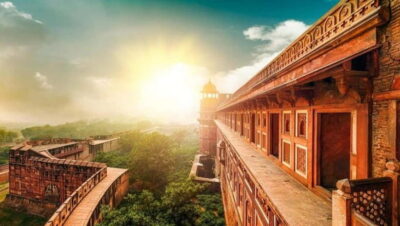
Next up is Agra Fort, a UNESCO heritage site. Compared with the Taj’s clean symmetry, Agra Fort feels more complex and layered—built to be defensive and royal at the same time. A good guide is the difference between seeing walls and understanding why this place mattered.
You’ll also notice how the fort atmosphere changes the mood. It’s not a single view—it’s a sequence. In a short itinerary, that’s why having an English guide is so valuable: they can point out what you’d otherwise miss.
Getting to Jaipur after Agra
After Agra Fort, the plan is to continue onward and stay the night in Jaipur. You don’t get extra free time in Agra to wander at your own pace, so if you love shopping markets or want a longer photography session around sunset, you’ll need to be strategic and ask your guide about the best short add-ons that still keep the schedule intact.




The hotel night in Jaipur: choosing your comfort level for Day 2
Day 1 ends with the practical piece: a real hotel night in Jaipur. The tour offers different categories, so you can match comfort to budget.
Your Jaipur hotel option can be something like:
- 3-star: areas around 3-King Palace / Nahargarh area (or similar)
- 4-star: Ramada / Golden Tulip (or similar)
- 5-star: Radisson Blu City Center / Hilton / Trident (or similar)
That hotel choice matters because Day 2 is packed. You’re up early for forts and palaces. When your accommodation is comfortable and close enough to keep transfers reasonable, you avoid the tired, cranky feeling that can ruin a tight sightseeing plan.
One small but real value: the itinerary includes mineral water during the day, which helps when you’re walking and waiting in lines. Just remember meals are not included, so plan for lunch breaks and snacks you can handle while moving quickly between stops.
Jaipur Day 2: Amer Fort, Water Palace, Hawa Mahal, and Jal Mahal

Jaipur is famous for its monuments, but the reason it works as Day 2 is variety. You’re not stuck on one hill or one palace style. You get a fort, a viewpoint-focused stop, then iconic city landmarks.
Amer Fort: the big start at 8 am
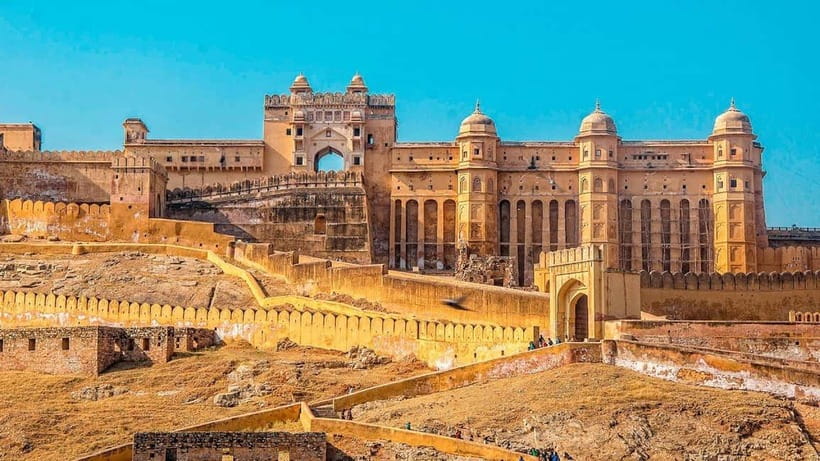
The day starts with pickup from your Jaipur hotel at 8:00 am, then straight to Amer Fort. This is one of Jaipur’s defining sights, and starting early helps you avoid the worst heat and crowds.
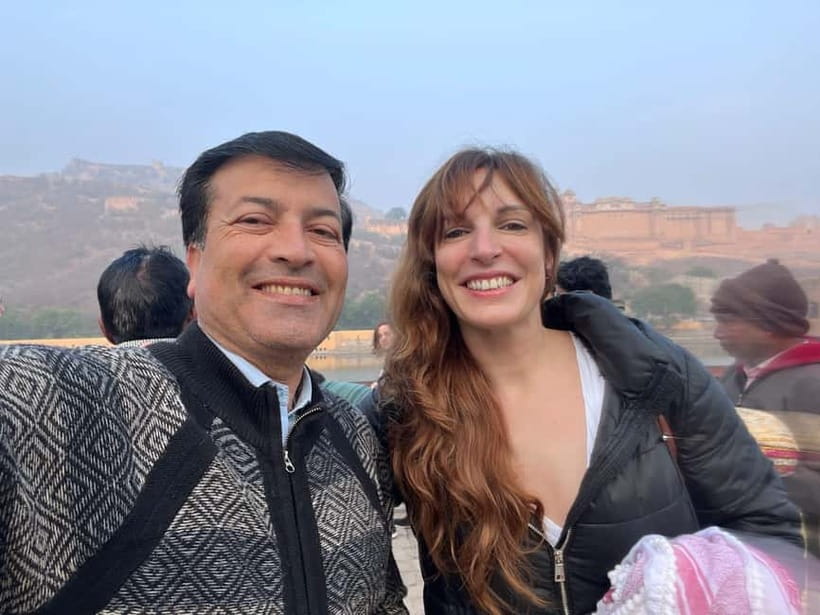
Amer Fort is also a great place for a guide because you’ll get more than “this is old.” You’ll learn how the royal world was organized, why the architecture looks the way it does, and what visitors often miss when they just look from the main areas.
Water Palace and Jal Mahal: royal scenery beyond the fort
You’ll also visit Water Palace, and you’ll see Jal Mahal (the palace in the water). These stops are important because they break up the day. After Amer Fort’s strong fort-and-palace feeling, Water Palace / Jal Mahal gives you a different perspective—more visual, more atmospheric.
Even if you don’t understand every architectural term on the spot, your guide will translate the meaning behind placement and design, so it doesn’t feel like a quick photo stop.
Hawa Mahal: the famous façade
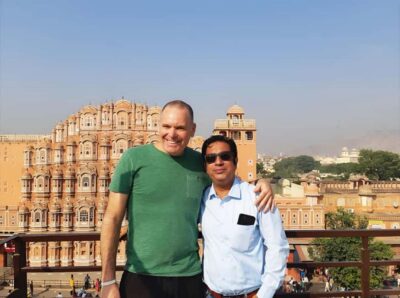
Then comes Hawa Mahal—the iconic pink façade that people associate with Jaipur instantly. Here’s what a guide adds: context. You’ll understand why those windows exist and how the structure relates to daily life and royal visibility.
It’s one of the few stops where the outside image is the whole reason people come, but with a guide you’ll still leave with a better grasp of what you’re seeing beyond the silhouette.
City Palace: where history becomes physical
Next is City Palace. This is where Jaipur stops feeling like a set of attractions and starts feeling like a living explanation. The guide’s role is huge here, because the palace is meant to be read. It’s part architecture, part royal timeline, and part civic power.
In a 2-day trip, City Palace is also a good pacing choice: you’re not rushing nonstop to the next location; you’re building understanding.
Jantar Mantar and the royal science behind Jaipur
After palaces and façades, the tour includes the Observatory of Jaipur, known as Jantar Mantar. It was built in the first half of the 18th century, and that date alone tells you something: this wasn’t just decoration. This was science and measurement wrapped in stone.
If you’ve ever wondered why these structures look like oversized instruments, this is your answer. A guide helps you connect the purpose to the design, so you’re not standing there thinking it’s just a strange collection of platforms.
Jantar Mantar is also a good reminder that Jaipur’s identity is broader than forts and pink streets. The city’s royal projects include astronomy, timekeeping, and practical observation—things you can appreciate much more with explanations in English.
Price and logistics: what $16 really buys (and what it doesn’t)
The listed price is $16 per person for this 2-day format, which is the biggest “value shock” on paper. The trick is understanding what you’re paying for versus what you still need to handle yourself.
Included
You get a package-style setup:
- 1 night accommodation in Jaipur (if you choose the option)
- Pick up and drop-off at airport or railway station (and hotel pickup in Delhi)
- Air-conditioned car + driver
- Mineral water
- Fuel, tolls, parking, state tax
- Live English guide in Agra and Jaipur
- Skip the ticket line setup
That’s a lot of operational work bundled into one price: driver time, guide time, and transport across cities.
Not included (budget this)
- Monument entrance fees
- Camera charges
- Meals
- Anything not listed in the itinerary
So the “real cost” depends on your ticket choices and how you handle lunch. It’s still likely to be a strong deal if you want guides and transport, not just a self-drive plan.
Small practical items
Bring passport or ID card. Also note the tour states shorts aren’t allowed. If you usually travel in shorts, plan to wear long trousers or more travel-friendly clothing. This matters at several historic sites where rules get enforced.
Who this 2-day trip suits best (and who might feel rushed)
This tour is ideal if you:
- Want the Golden Triangle highlights without building a route yourself
- Prefer an English-speaking guide to explain history and meanings
- Like the structure of a fixed plan when time is limited
It’s especially good for first-timers. A guided setup removes the uncertainty of where to go first, how to prioritize, and what to spend your energy on.
You might feel a little rushed if you:
- Want lots of free roaming in Agra or Jaipur markets
- Don’t like early starts (8:00 am is early when you’re on a short itinerary)
- Need frequent stops for mobility reasons
The good news is that the guides and drivers on this kind of trip often work around your pace. In past experiences, drivers like Ajay and others have been described as friendly and flexible, and guides like Rajesh in Jaipur have used stories to keep the sites engaging. You also may meet Agra-area guides such as Arif, and Jaipur guides like Krishna, depending on your dates.
Just remember: flexibility is helpful, but the itinerary still has to run. If you ask for a major detour, something else will usually give.
Should you book this 2-day Delhi–Agra–Jaipur trip?
Book it if you want maximum classic sights in minimum time, with English guides and a private driver doing the logistics. The value is strongest when you appreciate guidance—especially for Taj Mahal, Agra Fort, and Jaipur’s mix of forts, palaces, and Jantar Mantar.
Skip it or adjust expectations if you’d rather slow travel, spend long hours in one city, or you don’t want to pay additional entrance fees and plan your meals.
If your goal is to tick the big names—Taj Mahal, Agra Fort, Amer Fort, Hawa Mahal, City Palace, and Jantar Mantar—in a way that feels organized and informative, this is a solid choice.
FAQ

What’s included in the 2-day tour price?
The tour includes an air-conditioned car with a driver, live English guide in Agra and Jaipur, mineral water, fuel, tolls, parking, and state tax. If you select the accommodation option, it also includes one night in a Jaipur hotel. Monument entrance fees and meals are not included.
Do I need to pay for monument entrances separately?
Yes. Monument entrance fees are not included, so you’ll need to budget for tickets at each paid site. Camera charges also aren’t included.
What are the main stops on Day 1?
Day 1 focuses on Agra. You’re picked up early in Delhi, then visit the Taj Mahal and Agra Fort, and afterward you continue to Jaipur for an overnight stay.
What are the main stops on Day 2?
Day 2 starts with pickup at 8:00 am from your Jaipur hotel. You’ll visit Amer Fort and Water Palace, then Hawa Mahal and City Palace, followed by the Observatory of Jaipur (Jantar Mantar). You then return to Delhi for drop-off.
What hotel options are available in Jaipur?
You can choose a hotel level. Options can include 3-star hotels such as areas around 3-King Palace/Nahargarh, 4-star hotels like Ramada or Golden Tulip, or 5-star hotels such as Radisson Blu City Center, Hilton, or Trident (or similar properties).
What should I bring, and are there any restrictions?
Bring a passport or ID card. Pets are not allowed, and shorts are listed as not allowed.