REVIEW · MUMBAI
“Mumbai Dharavi Slum Tour”
Book on GetYourGuide →Operated by Navigate Mumbai Tours · Bookable on GetYourGuide
Dharavi changes what you think you know. This tour is built around a guided walk through industrial and residential areas, with time to talk with locals and read the place with fresh eyes.
I love how it’s practical, not pity-driven: you see recycling, clothing and leather work, plus neighborhood routines like markets and schools. I also like the way guides such as Javed, Ruqaiyya, Ravi (known online on YouTube), and Kavita bring personal context that makes the streets feel navigable.
One consideration: you’ll be walking through tight alleys in a working area, so it’s not the kind of sightseeing that feels easy or comfy for everyone.
In This Review
- Key things to know before you go
- Meeting near Mahim: starting the day with the right headspace
- Crossing into Dharavi over a railway bridge
- Industrial Dharavi: recycling, production, and migrant stories
- Recycling activities you can actually observe
- Manufacturing sites for everyday goods
- Learning about migrants and living conditions
- From factories to streets: entering the residential area
- Market mornings, schools, and the daily rhythm you notice
- Local market with fresh produce
- Schools and educational practices
- Leather manufacturing and Kumbharwada pottery lanes
- Leather manufacturing process
- Kumbharwada pottery and traditional pot-making skills
- Speaking with locals: how the guide helps you connect
- The walk itself: pace, nerves, and staying respectful
- Price and value: what $4.39 buys you here
- Who should book this Dharavi tour, and who should skip it
- Should you book the Mumbai Dharavi Slum Tour?
- FAQ
- FAQ
- Where is the meeting point?
- How long is the Dharavi tour?
- What does the tour cost?
- What’s included in the tour?
- Are meals included?
- What language is the live guide?
- What do you see in the industrial area?
- What do you see in the residential area?
- Is there a private group option?
- What should I wear?
- Can I cancel or pay later?
Key things to know before you go
- Start at a coffee shop by Mahim station and finish there too, so your day stays simple.
- Cross a railway bridge to enter Dharavi, which helps you understand the area’s layout fast.
- Two big zones on purpose: an industrial pass first, then a residential pass.
- You’ll see real work like recycling plastics/wood/cardboard, clothing/backpack/luggage making, leather work, and pottery.
- You’ll spot major infrastructure like the largest sewer in Mumbai as you move into the residential streets.
- Dress for weather and modesty; ladies should avoid overly short outfits.
Meeting near Mahim: starting the day with the right headspace
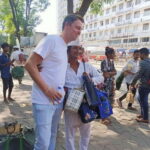
Your tour starts at a coffee shop near the Mahim train station, on the West side. That’s a smart choice: you get a calm meet-up point, then you’re quickly moving from the commuter flow into a very different world.
Before you go, I’d treat this as a street-and-people experience, not a checklist. Wear weather-appropriate clothes and keep things practical for walking. And if you’re a woman, stick to the local guidance: avoid overly short outfits.
If you’re hoping for a guide who can handle questions and guide your pace, you’ll likely feel that from the start. Past guide names like Javed and Ruqaiyya show up often, and that usually signals a tone that’s both friendly and grounded.
You can also read our reviews of more tours and experiences in Mumbai.


Crossing into Dharavi over a railway bridge
Right away, you’ll cross a railway bridge that leads you into Dharavi. That single detail matters more than it sounds. Mumbai’s rail network cuts and shapes neighborhoods, and this crossing gives you a quick sense of how the area connects to the rest of the city.
From there, your guide talks about slums around the world and then zooms in on Dharavi. I like this approach because it stops the conversation from becoming just shock value. You get a frame for what you’re about to see: work, migration, housing conditions, and how people build daily life under tight constraints.
Then you enter the industrial area, where the tour becomes very hands-on.
Industrial Dharavi: recycling, production, and migrant stories
The first stop is the industrial side, and it’s structured so you don’t just walk past things—you understand what you’re seeing.
Recycling activities you can actually observe
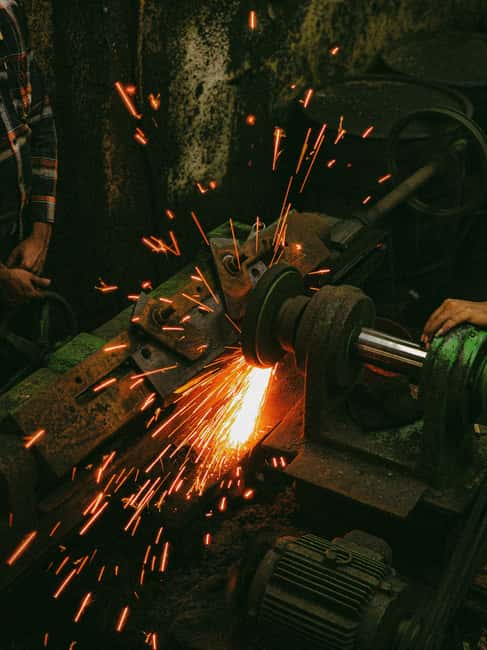
You’ll observe recycling work involving plastics, wood, cardboard, and more. This is one of those moments where you realize the place runs on resourcefulness. It also explains why the industrial area feels busy even when you’re not seeing a single “factory” gate.
For you, the value here is clarity. Instead of thinking of Dharavi only as housing, you see that it’s also a workshop economy. That changes how you interpret everything that follows.
Manufacturing sites for everyday goods
Next, you’ll visit manufacturing areas producing items like clothing, backpacks, and luggage. Again, the tour isn’t vague. You’re shown how these goods move through real hands and real space.
It’s easy to assume everything is informal or chaotic. Watching production directly helps you see the “systems” people build—even when the setting is crowded and improvised.



Learning about migrants and living conditions
Your guide also covers migrants in Dharavi and their living conditions. This part is important because it connects the industrial activity to the human reality behind it.
I find this section useful because it helps you ask better questions. You’ll stop treating the streets as scenery and start treating them like neighborhoods where people have histories, not just problems.
From factories to streets: entering the residential area
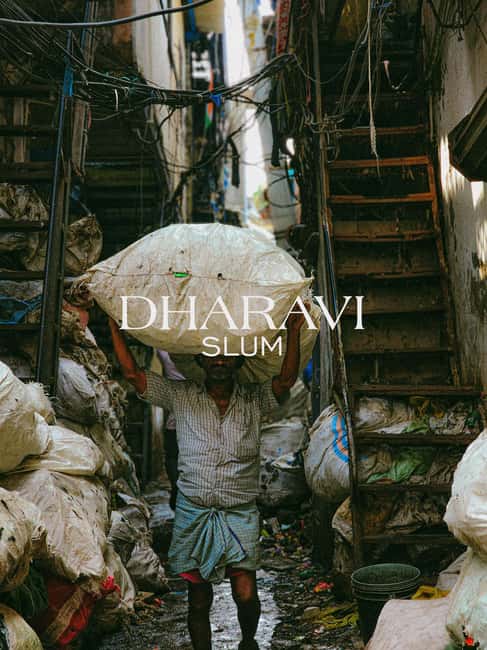
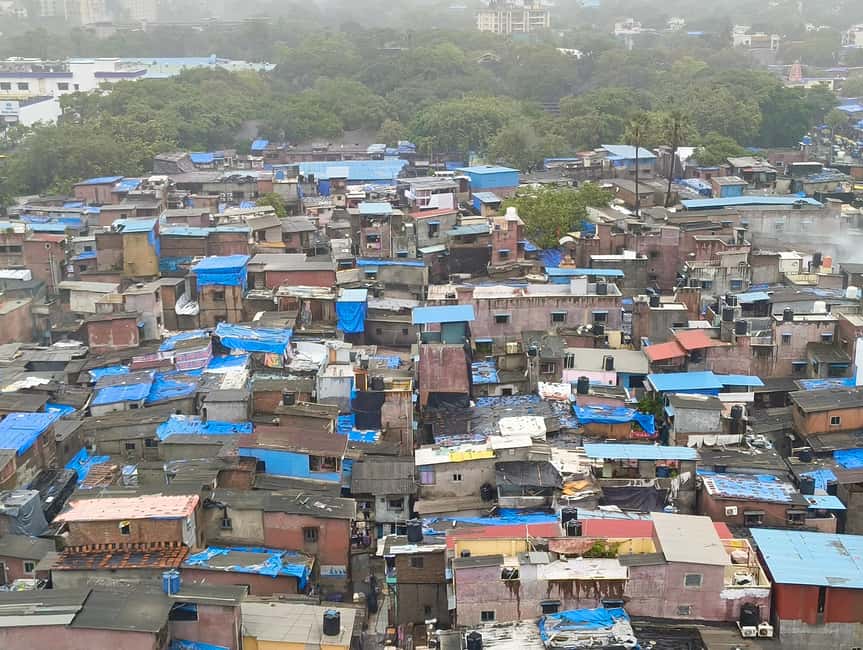
After the industrial area, you cross a street into the residential part. This transition is where the tour starts to feel different—less about production and more about everyday life compressed into narrow space.
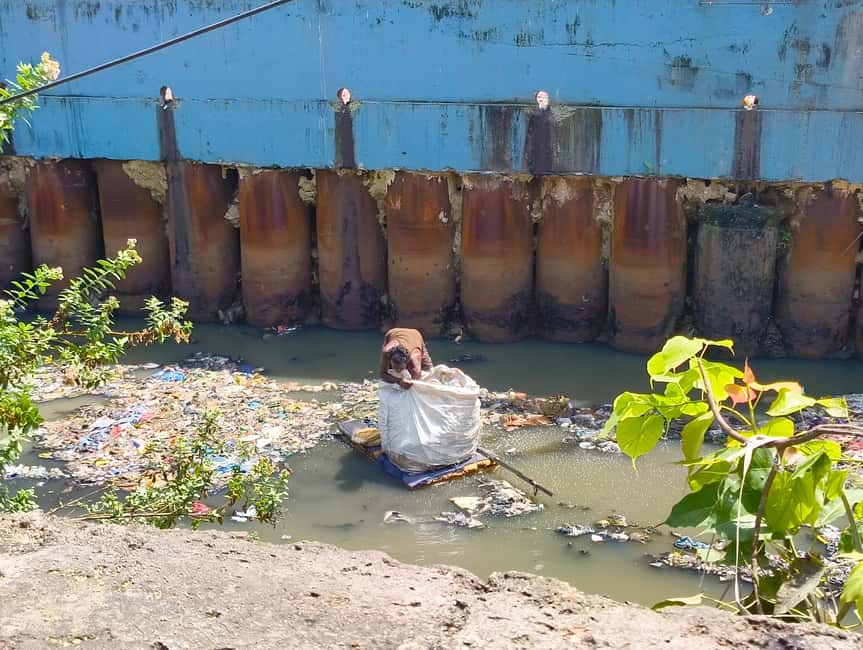
One of the headline sights here is the largest sewer in Mumbai. Seeing it up close gives you a reality check about infrastructure and urban planning, and it also shows how sanitation systems shape daily routes and living conditions.
This is also where the walk becomes more “alley-like,” and that’s exactly the point. Dharavi’s lanes can feel confusing, even in small stretches, so having a guide is what keeps you oriented while you explore.
Market mornings, schools, and the daily rhythm you notice
In the residential area, the tour shifts to neighborhood routines you might otherwise miss.
Local market with fresh produce
You’ll explore a local market with fresh produce. Even if you don’t buy anything, this stop is a fast way to understand food access and daily needs. Markets here aren’t just places to shop—they’re social hubs where the day’s energy takes shape.
For your planning brain, this is a reminder: schedules in dense areas work differently. The tour helps you see that without turning it into a performance.
Schools and educational practices
You’ll also visit various schools and learn about educational practices. The important part isn’t only what school looks like, but how education fits into the community.
If you care about youth and opportunity, this is one of the most meaningful sections. It gives you a counterpoint to the usual media focus and helps you understand how people plan for the future inside limited space.
Leather manufacturing and Kumbharwada pottery lanes
Two more stops round out the residential stretch with a focus on craft and work.
Leather manufacturing process
You’ll discover the leather manufacturing process. Because this is part of a working neighborhood, you’re not just seeing “a shop.” You’re seeing labor that’s integrated into where people live and move.
I suggest you keep your expectations grounded. You’re not there for a polished demo. You’re walking through a process that supports livelihoods.
Kumbharwada pottery and traditional pot-making skills
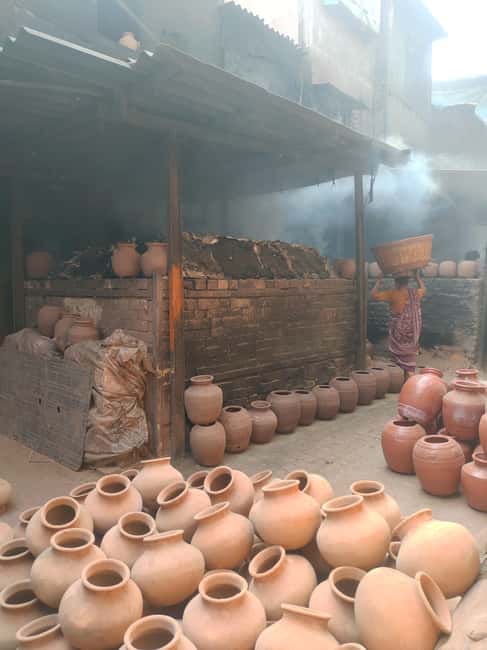
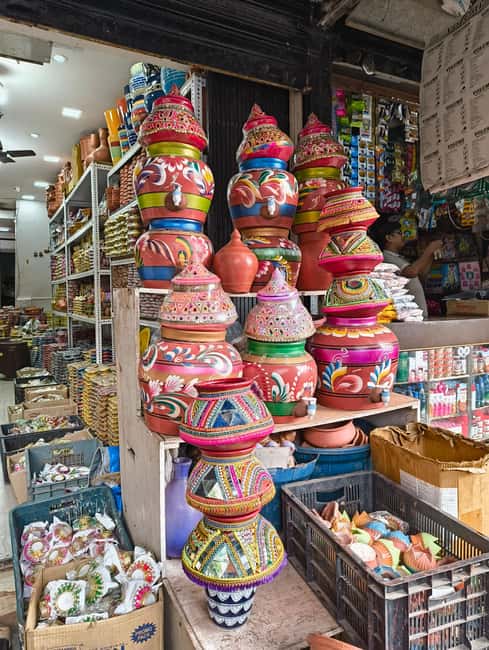
Then you head to Kumbharwada, known for pottery, where you can see traditional pot-making skills. Pottery here is a good reminder that Dharavi isn’t only about industry and survival. It’s also about skill.
Seeing craft side-by-side with recycling and manufacturing helps you understand how the area sustains variety. That variety is part of the value of the tour’s route design: it keeps the story from flattening into one label.
Speaking with locals: how the guide helps you connect
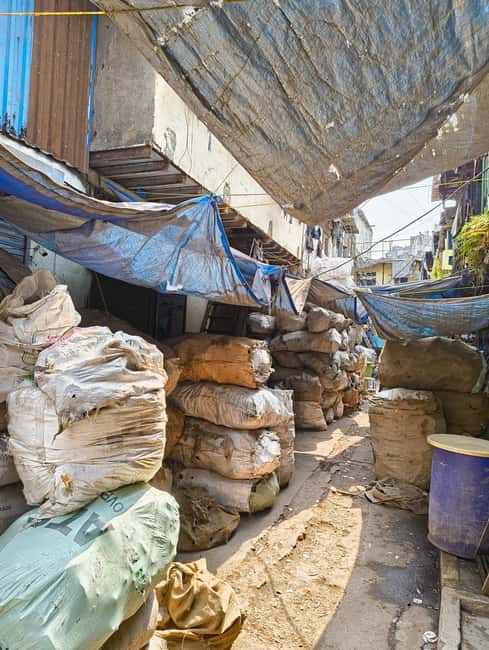
A highlight on this tour is that you can speak with locals with your guide’s help. That small phrase changes the whole feel of the day.
Without guidance, it’s easy to freeze up, walk quickly past people, or ask questions that land wrong. With help, you’re more likely to hear clear explanations and get context for what you’re seeing—why a place is arranged the way it is, how people handle daily routines, and what matters most locally.
This is also where guide quality shows up. People like Ravi and Kavita are noted for strong communication and personal connection to the area, and that usually matters when you’re in a place where everyone is busy and privacy matters.
The walk itself: pace, nerves, and staying respectful
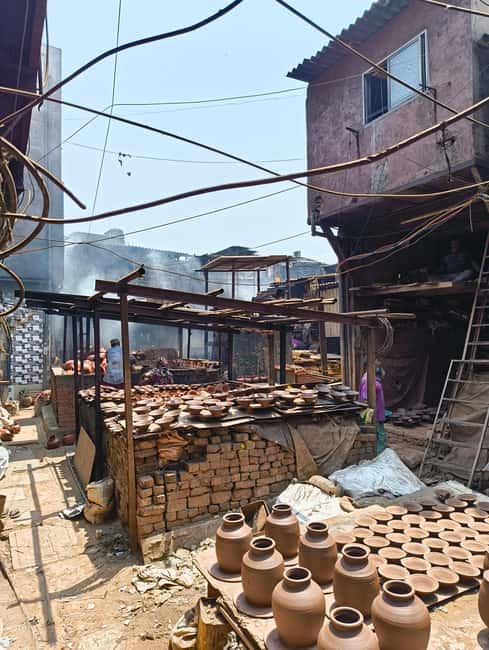
This tour includes guided walking through industrial and residential streets, plus time at multiple stops. It’s not described as a quick drive-by, and you should plan for real walking.
I’d also think about your tone. You’re entering homes-adjacent streets and working zones. Keep your focus on learning, not filming everything. Even if you’re just walking, your behavior affects how comfortable people feel around you.
Also, remember the practical side: you’ll want shoes that handle uneven footing and crowded lanes. If you don’t usually walk a lot, this is one of the days to prepare.
Good news: bottled water is included, so you can stay hydrated without hunting for a shop midway.
Price and value: what $4.39 buys you here
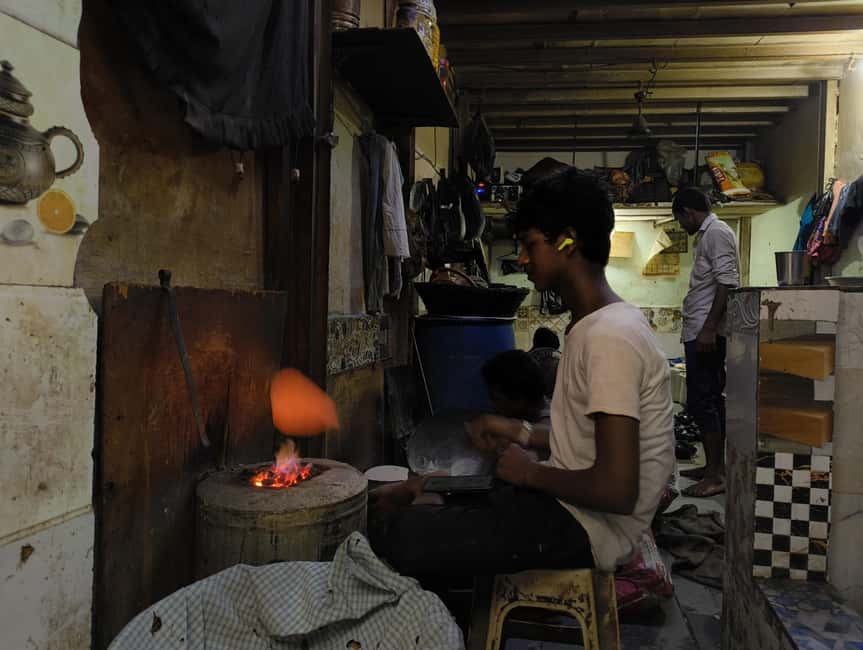
The price is listed at $4.39 per person, for a duration of 2 to 3.5 hours, and you get an English-speaking guide plus bottled water. That’s extremely budget-friendly for a guided, structured walking experience in a complex part of a major city.
Now, value isn’t only about price. Value here also means:
- You’re getting a route that covers both industrial and residential life.
- You’re getting explanations that connect work, migration, education, and infrastructure.
- You’re getting help talking with locals, which is often the hard part on your own.
The one trade-off is that you’re not getting a meal, and you’ll likely be out and walking rather than stopping for comfort breaks. If you go in expecting a “light activity,” you’ll feel pleasantly surprised. If you go in expecting a fully catered tour day, you’ll be disappointed.
Who should book this Dharavi tour, and who should skip it
This is a strong fit if you want:
- a guided walk that helps you interpret a working neighborhood,
- chances to see recycling, manufacturing, leather work, and pottery,
- time to understand daily life elements like markets and schools,
- and a guide who can translate the place into something you can actually grasp.
You might want to skip or choose another style of tour if you:
- need a low-walking, low-stress outing,
- don’t feel comfortable around active work areas,
- or prefer experiences that don’t involve tight alley navigation.
If you’re traveling with curiosity and respect, you’ll get a lot out of this.
Should you book the Mumbai Dharavi Slum Tour?
I’d book it if you’re the kind of traveler who likes context over stereotypes. The tour’s structure—industrial first, residential second—helps you understand Dharavi as both a place to live and a place to work. And with guide support, you’re not just watching; you’re connecting.
I’d pass if you want a relaxing, polished, sit-down experience. This is hands-on city reality, with real streets and real routines. If that sounds like your kind of day, you’ll probably feel satisfied with how much you learn for the price.
FAQ
FAQ
Where is the meeting point?
You meet at a coffee shop near the Mahim train station (West).
How long is the Dharavi tour?
The duration is 2 to 3.5 hours.
What does the tour cost?
The price is $4.39 per person.
What’s included in the tour?
An English-speaking guide and packaged bottled water are included.
Are meals included?
No, meals are not included.
What language is the live guide?
The live tour guide is available in English and Hindi.
What do you see in the industrial area?
You’ll observe recycling activities and visit manufacturing areas for items like clothing, backpacks, and luggage. You’ll also learn about migrants in Dharavi and living conditions.
What do you see in the residential area?
You’ll visit a local market with fresh produce, see schools and learn about educational practices, discover the leather manufacturing process, visit Kumbharwada pottery, and explore narrow alleys and living conditions.
Is there a private group option?
Yes, private group available is listed.
What should I wear?
Wear suitable outfits for the weather. Ladies should not wear overly short outfits.
Can I cancel or pay later?
Free cancellation is available up to 24 hours in advance for a full refund, and a reserve now & pay later option is offered.