REVIEW · JAIPUR
Jaipur: 2-Day City Sightseeing Tour with Cab & Guide
Book on GetYourGuide →Operated by Rajasthan India Tour Driver · Bookable on GetYourGuide
Jaipur is the kind of place that rewards a plan. This 2-day private city tour strings together major icons like Amber Fort and Jantar Mantar so you’re not bouncing around the city on your own.
I like how the day-to-day flow is handled for you: a private, air-conditioned cab, a guide who keeps the sights moving, and a team that can help with things like monument entry tickets and timing. I’ve seen this tour run with guides such as Kk and drivers like Suresh, and the common theme is practical, on-the-ground assistance without feeling rushed.
One thing to keep in mind: the itinerary is packed with walking and stairs, and the operator notes it is not suitable for pregnant women. You’ll be hopping from fort viewpoints to temple steps—especially if you want to actually go down into the stepwell.
In This Review
- Key highlights worth caring about
- Why This Private Jaipur Plan Feels Easier Than Going Solo
- Day 1 in Jaipur: Hawa Mahal, City Palace, and Jantar Mantar in One Old City Loop
- Hawa Mahal photo stop and guided visit
- City Palace: the royal base inside the Old City
- Jantar Mantar UNESCO stop with 19 instruments
- Lunch break where you choose the pause
- Albert Hall Museum for crafts, arms, stones, and more
- Birla Mandir: quiet calm after the busier sights
- Patrika Gate and Jawahar Circle
- Day 2 in Jaipur: Gaitor Crematory, Jal Mahal Views, and Amer Fort Up Close
- Gaitor Ki Chhatriyan: royal crematory monuments
- Jal Mahal: the water palace that looks like it floats
- Amber Fort: hilltop fort life with ramparts, gates, and real views
- Panna Meena ka Kund: the stepwell with 1800 steps
- Jagat Shiromani Temple (Meera Bai Temple): devotion near Amer
- Galta Ji Monkey Temple and the run-up to sunset
- Sun Temple sunset: the end of the day in golden light
- Guide Quality and Driver Reliability: What Makes This Tour Worth It
- Price and Value: What $25 Buys for Two Full Days
- Practical Tips That Save You Time (and Sore Feet)
- Who Should Book This Jaipur 2-Day Tour?
- Should You Book This Jaipur 2-Day City Sightseeing Tour?
- FAQ
- How long is the Jaipur 2-day city sightseeing tour?
- Where is pickup available?
- What is included in the tour price?
- Are meals included?
- Which major attractions are covered?
- Does the tour include skip-the-ticket-line?
- What languages can the driver speak?
- Do I need cash for monument tickets?
- What should I bring with me?
- Is the tour suitable for everyone?
Key highlights worth caring about
UNESCO hits in one sweep: Amber Fort and Jantar Mantar both make the cut, with guided context.
Old City icons in the right order: Hawa Mahal, City Palace, and then Jantar Mantar before the lunch break resets the day.
Museum stop that’s more than statues: Albert Hall Museum includes metal objects, wood crafts, carpets, sculptures, arms and weapons, plus natural stones.
Amer area engineering sights: Jal Mahal (Man Sagar Lake), Panna Meena ka Kund (eight-story stepwell, 1800 steps), and nearby temples.
A scenic finish instead of another shopping stop: Galta Ji Temple, then sunset at the Sun Temple.
Smooth logistics with a private driver: Hotel/airport pickup and drop-off, bottled water, parking/gas/state tax handled, and the guide helps you with tickets.
Why This Private Jaipur Plan Feels Easier Than Going Solo
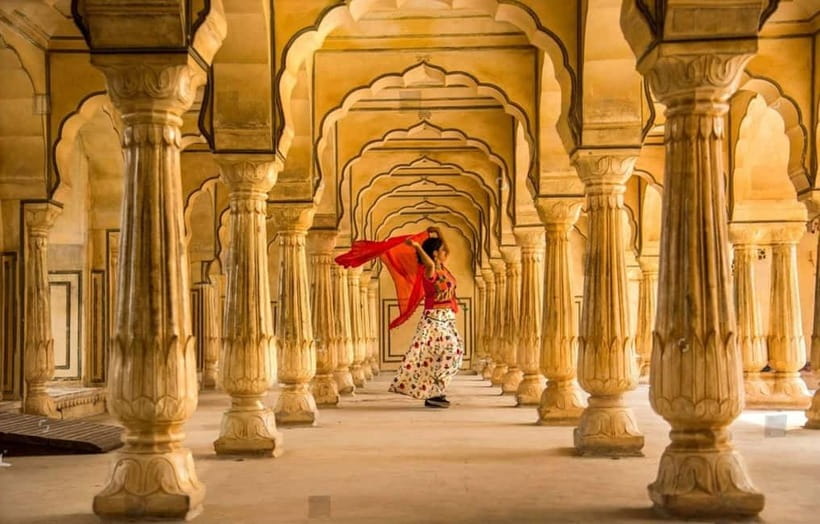
Jaipur can be a lot—big distances, busy roads, and monuments that all seem like they’re “right there” until you start moving. What I like about a private cab-and-guide format is that it turns those distances into something you manage comfortably, not something you fight.
You get hotel or airport pickup and drop-off, plus a private air-conditioned vehicle and a guide. That matters most on a short trip. Two days is enough time to see the highlights, but only if you don’t spend half of it figuring out transport, entry lines, and timing.
Also, this isn’t just a checklist tour. The stops are chosen so the story of Jaipur actually makes sense: royal power (forts and palaces), science and worldview (Jantar Mantar), faith and daily life (temples), and local identity (memorials, gates, and public spaces).
You can also read our reviews of more guided tours in Jaipur



Day 1 in Jaipur: Hawa Mahal, City Palace, and Jantar Mantar in One Old City Loop

Your first day starts with pickup from your hotel—or from Jaipur Airport/Railway Station, depending on where you’re staying. From there, the tour runs the classic Old City circuit in a way that keeps things readable: you start with the exterior icon photos, then move into the deeper structures.
Hawa Mahal photo stop and guided visit
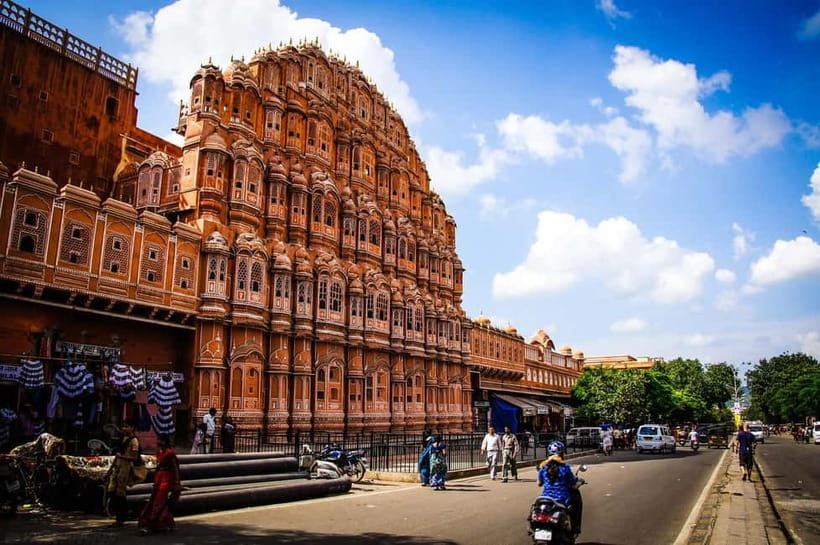
Hawa Mahal is the postcard magnet: the famous facade with its distinctive architectural look. You’ll get time for photos, and you’re not just standing there snapping pictures. With a guide, you’ll understand what you’re looking at before you move on.
Practical tip: wear comfortable shoes even on Day 1. Some parts are straightforward, but you’ll still do enough walking that your feet will notice if you wore the wrong pair.
City Palace: the royal base inside the Old City
Next up is the City Palace, right in the heart of the Old City. This is where you shift from seeing Jaipur’s fame to understanding its rules—how a palace complex actually works, with grand halls and intricate architecture.
The best part of having a guide here is context. You’ll be able to connect the palace’s design and layout to the larger theme of the trip: Jaipur as a place where power, display, and daily governance all lived close together.
Jantar Mantar UNESCO stop with 19 instruments
Then comes Jantar Mantar, a UNESCO World Heritage site famous for its astronomical instruments. This one is specific: it has 19 unique instruments used for centuries to study and track celestial movement.
If you think of it as “just old science,” you’ll miss the fun. I like to think of Jantar Mantar as a giant, outdoor set of tools—built so observation could be done in the open, with structures that make measurements part of the experience.
You can also read our reviews of more city tours in Jaipur




Lunch break where you choose the pause
After the big sightseeing hits, there’s a lunch break (about 30 minutes). Food isn’t included, so you’ll make choices based on what you want: something quick, something sit-down, or something close to where the day needs to go next.
Albert Hall Museum for crafts, arms, stones, and more
Albert Hall Museum is a strong mid-afternoon anchor. The collections listed for this stop are wide-ranging: metal objects, wood crafts, carpets, stone and metal sculptures, arms and weapons, natural stones, and ivory goods.
Even if museums aren’t your thing, I’d still rate this stop as worthwhile because it gives you variety. One hour here can help you notice what Jaipur valued beyond architecture.
Birla Mandir: quiet calm after the busier sights
Birla Mandir (Birla Mandir Jaipur) is a different energy. It’s dedicated to Lord Vishnu and Goddess Laxmi, and you’ll see intricate carvings and sculptures that feel designed for peace and slower breathing.
It’s a nice contrast to the forts and palace grandeur. Day 1 ends up feeling more balanced when you include a place that slows you down.
Patrika Gate and Jawahar Circle
Finally on Day 1, you reach Patrika Gate, the grand entrance to Jawahar Circle, described as one of the largest circular parks in Asia. This stop is all about visual storytelling—intricate designs, vibrant frescoes, and bright Rajasthan color.
It’s the kind of place where your photos will look good even if you’re not trying hard. And if you’re someone who likes night lighting or evening atmosphere, the timing can matter, so having a guide and a fixed schedule helps.
Day 2 in Jaipur: Gaitor Crematory, Jal Mahal Views, and Amer Fort Up Close

Day 2 starts again with pickup by chauffeur. Expect more driving, more walking, and even more “wow” moments—especially in the Amer area.
Gaitor Ki Chhatriyan: royal crematory monuments
You begin at the Royal Gaitor Tumbas (Gaitor Ki Chhatriyan). This royal crematory is known for intricately carved stone monuments.
If you usually skip memorial places, don’t. These structures tell you something about Jaipur that forts and palaces don’t. They show how royal life and royal legacy were remembered through stonework and carving.
Jal Mahal: the water palace that looks like it floats
Next is Jal Mahal, the water palace that appears to float on Man Sagar Lake. The idea is simple and memorable: you see a palace-like silhouette at the waterline, and it feels more surreal than it sounds.
If you’re into photography, this is a moment you’ll want to time well. The tour gives you a guided visit and photo time, so you can get your shots without rushing.
Amber Fort: hilltop fort life with ramparts, gates, and real views
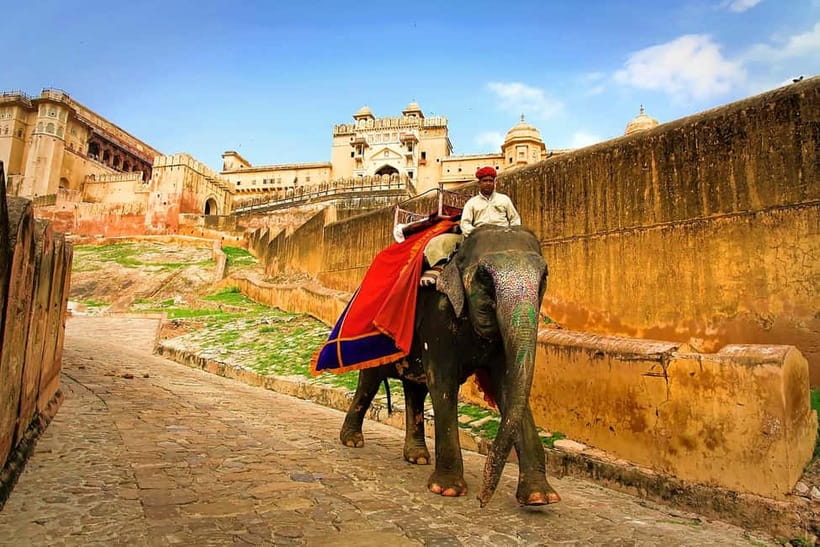
Then comes Amer Fort (Amber Fort), perched on a hill and described as the top tourist destination in Jaipur. You’ll get guided tour time here, plus time to explore winding cobbled paths and see ramparts and multiple gates.
One detail that makes Amer Fort more than a pretty building: Maota Lake is mentioned as a vital water source connected to the fort’s setting. That helps you read the fort as part of its environment, not just an isolated landmark.
Panna Meena ka Kund: the stepwell with 1800 steps
Panna Meena ka Kund is next, and it’s one of those places you talk about later because it’s so unusual. It’s an eight-story stepwell with 1800 symmetrical steps going down about 200 feet.
This is not a “stand at the edge and move on” stop. You’ll want to see the structure properly, and that means planning for stairs and uneven changes in elevation.
Bring what you were told to bring—comfortable shoes and, yes, goggles. Even if you don’t think you’ll need them, you’ll thank yourself once you’re down in a stair-heavy, shaded area.
Jagat Shiromani Temple (Meera Bai Temple): devotion near Amer
You also visit the Jagat Shiromani Temple, also known as the Meera Bai Temple, near Amer Fort. It’s dedicated to Meera Bai, Krishna, and Vishnu. The tour notes construction between 1599 and 1608 AD by Queen Kanakwati, built in memory of her son, Jagat Singh.
This stop adds a human layer to the fort-heavy Day 2. It’s a reminder that the area wasn’t only built for royalty and rulers—it also grew a spiritual life that people continued to value long after the original stories.
Galta Ji Monkey Temple and the run-up to sunset
Then you head to Galta Ji Monkey Temple. It’s known for natural springs and peaceful tanks.
Because it’s literally called Monkey Temple, you’ll want to keep your attention on your belongings and surroundings. The bigger point for your planning is that this stop fits perfectly as a transition: you go from structured monuments and fort geometry into something that feels more natural and slow.
Sun Temple sunset: the end of the day in golden light
Finally, the tour includes sunset at the Sun Temple. This is the kind of finish that makes a two-day tour feel like more than a series of stops. You’re not stuck with the last activity being a quick photo and then straight back to the car.
The tour gives it to you as a planned finale for a reason: lighting changes, and that’s when Jaipur’s tones become its own attraction.
Guide Quality and Driver Reliability: What Makes This Tour Worth It
A big part of why this tour earns high marks is the people behind it. You’ll have a private tour guide and an English-speaking driver (and the driver language options listed include Spanish, Italian, French, and German).
Names that show up in the tour experience include guides such as Kalhed, Davinder, Manoj (as an operator point of contact), Raghuvir, Narendra, Vinod, and Kk, with drivers including Suresh, Abdullah, and Manish. What you can count on from this setup is basic but crucial: being on time, answering questions, and keeping the day moving without feeling pushy.
One of my favorite patterns from this kind of private arrangement is the ability to adjust small things without breaking the whole day. For example, some runs have included flexible lunch timing and even tailoring visits, which can matter if you’re shopping for Rajasthan-style clothing.
Price and Value: What $25 Buys for Two Full Days

At about $25 per person for a two-day city sightseeing experience, the value comes from the bundle, not from a single monument.
What’s included:
- Hotel/airport pickup and drop-off
- Private air-conditioned vehicle
- Private guide
- Bottled water
- Parking, gasoline, and state tax
- Monument entry fees if you choose the option that includes them
- Skip-the-ticket-line support (not just waiting around)
What’s not included:
- Accommodation
- Food and drinks
Here’s the practical way to judge value: if you were hiring a driver for two days plus paying entry fees plus a guide, you’d likely spend more. This tour is designed for people who want the highlights handled with less hassle.
Just note the small catch: if entry fees aren’t included in your selected option, you’ll pay for tickets separately, and you may need cash since some monuments don’t take credit cards.
Practical Tips That Save You Time (and Sore Feet)
This tour gives a straightforward list of what to bring. I’d treat it as a checklist, not a suggestion.
Bring:
- Passport or ID card
- Comfortable shoes
- Camera
- Comfortable clothes
- Goggles
Not allowed:
- Pets
- Luggage or large bags
- Alcohol and drugs
And two logistics notes that matter on a tight schedule:
1) Some monuments may not accept credit cards, so carry cash or ask the driver/guide to find an ATM.
2) The guide can help you buy entrance tickets, which cuts time and reduces frustration when you’re dealing with multiple sites.
Also, keep in mind the walking profile. Day 2 includes fort paths and the stepwell, so plan for real movement, not museum-chair browsing.
Who Should Book This Jaipur 2-Day Tour?
This fits best if you:
- Want to see major Jaipur landmarks in two days without building a route yourself
- Prefer a private cab and guide over public transport stress
- Like UNESCO sites, forts, and temples (with science stops mixed in, via Jantar Mantar)
- Want a sunset finish instead of a tired early end
It may be less ideal if you:
- Can’t handle lots of walking and stairs (the tour notes it’s not suitable for pregnant women)
- Want fully independent pacing where you decide everything moment to moment
If you’re unsure, think about the stepwell and the fort paths. Those two features are the physical “tell” for whether this kind of sightseeing pace will feel good for you.
Should You Book This Jaipur 2-Day City Sightseeing Tour?
I’d book it if you want a strong sampler of Jaipur with the driving and ticket work handled. Amber Fort and Jantar Mantar alone justify a guide-based approach on a short timeline, and the itinerary smartly balances palaces, science, temples, and a real sunset finale.
I’d hesitate if your travel style is slow and low-steps, or if you’re sensitive to stairs and uneven surfaces—Day 2 in particular is not gentle.
If you do book, do one thing for yourself: pack comfortable shoes and cash. Those two moves remove the most common sources of friction, and suddenly the whole trip feels like it’s running on rails.
FAQ
How long is the Jaipur 2-day city sightseeing tour?
The tour lasts 2 days.
Where is pickup available?
Pickup is available from your hotel or from Jaipur Airport/Railway Station. There are also two pickup location options mentioned: Jaipur and Kukas.
What is included in the tour price?
Included are hotel/airport pickup and drop-off, a private air-conditioned vehicle with an English-speaking driver, a private tour guide, parking/gas/state tax, bottled water, and monument entry fees if that option is selected.
Are meals included?
No. Food and drinks are not included.
Which major attractions are covered?
The tour includes Hawa Mahal, City Palace, Jantar Mantar, Albert Hall Museum, Birla Mandir, Patrika Gate, Royal Gaitor Tumbas, Jal Mahal, Amber Fort, Panna Meena ka Kund, Jagat Shiromani Temple, Galta Ji Temple, and sunset at the Sun Temple.
Does the tour include skip-the-ticket-line?
Yes, skip-the-ticket-line is listed as part of the experience.
What languages can the driver speak?
The driver may speak English, Spanish, Italian, French, or German.
Do I need cash for monument tickets?
Some monuments may not accept credit cards, so carrying cash is advised. The guide can help you buy entrance tickets and can help find an ATM.
What should I bring with me?
Bring an ID/passport, comfortable shoes, a camera, comfortable clothes, and goggles.
Is the tour suitable for everyone?
It is noted as not suitable for pregnant women. Pets and large luggage are also not allowed.