REVIEW · KOLKATA
Kolkata: Bishnupur Terracotta Temples Day Trip with Weavers
Book on GetYourGuide →Operated by 5 Senses Tours · Bookable on GetYourGuide
Clay temples meet silk at daybreak. You’ll travel from Kolkata to Bishnupur for 17th-century terracotta temple stories tied to the Malla Kingdom, then head to Baluchari silk weavers to see the weaving process up close. It’s the kind of day trip that feels like two eras colliding—stone-and-clay devotion in the morning, then living textile craft by late afternoon.
I especially loved Rasmancha’s stepped pyramids and how the guide connects temple design to the royal shift toward Gaudiya Vaishnavism. I also loved watching Baluchari silk weaving on draw looms, including the way Ramayana scenes show up along the border. With an English guide (Anirban Dey is a star example), the stops don’t feel random—you get a thread to follow.
One thing to consider: this is a full day with a long drive from Kolkata, so it’s not ideal if you want minimal transit and quick sightseeing.
In This Review
- Key highlights worth the long drive
- Kolkata to Bishnupur: why the drive feels worth it
- Step back into the Malla Kingdom with Krishna and terracotta
- Rasmancha: the stepped pyramidal temple that clicks immediately
- The Queen’s curse and local geological anomalies
- Baluchari weavers: watching draw looms turn myth into silk
- How the 12-hour schedule actually plays out
- Price and value: what $207 per person buys you
- Who this trip suits best (and who should skip)
- Should you book this Bishnupur terracotta and Baluchari day trip?
- FAQ
- What time does the tour depart from Kolkata?
- What time do I return to my Kolkata hotel?
- How long is the day trip?
- Is pickup included?
- Will the guide speak English?
- Is this tour a private group?
- Can I cancel and get a full refund?
Key highlights worth the long drive
- Rasmancha’s stage-like design: stepped masonry and a composite Chala roof you can actually notice up close
- Malla Kingdom temple stories: a tyrant’s conversion to Gaudiya Vaishnavism explained in plain terms
- Krishna-focused terracotta temples: a cluster of shrines tied to the patron god of the region
- Queen’s curse + geological anomalies: a local mystery wrapped into the walking route
- Baluchari draw-looms in action: see how the saree fabric gets made, not just sold
- Ramayana borders on silk: detailed scenes woven into the sari trim
Kolkata to Bishnupur: why the drive feels worth it
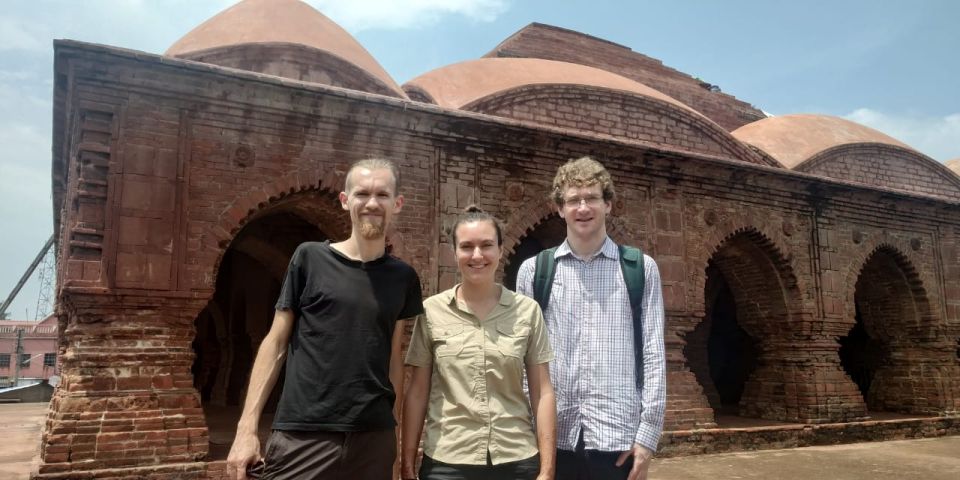
The day starts early—7:30 AM departure from Kolkata, with a return back to your hotel around 7:30 PM. You’re looking at roughly a 12-hour day, which means you should plan to be comfortable with transit before you plan to be “relaxed.”
Still, the timing works. You reach Bishnupur at about 10:15 AM, right when the temples are at their best for slow looking and photos that don’t feel rushed. Once you’re there, the focus stays tight: temples first, then weaving.
This is also set up as a private group with an English live guide and pickup included (you meet the driver in your hotel lobby). That matters more than it sounds. A private setup lets the guide pace the day around what you care about—temple details, craft process, or the stories that connect the two.
If you hate long road trips, put this one on the “only if you’re okay with effort” list. But if you like travel days that earn their keep, this one delivers.
You can also read our reviews of more tours and experiences in Kolkata.



Step back into the Malla Kingdom with Krishna and terracotta
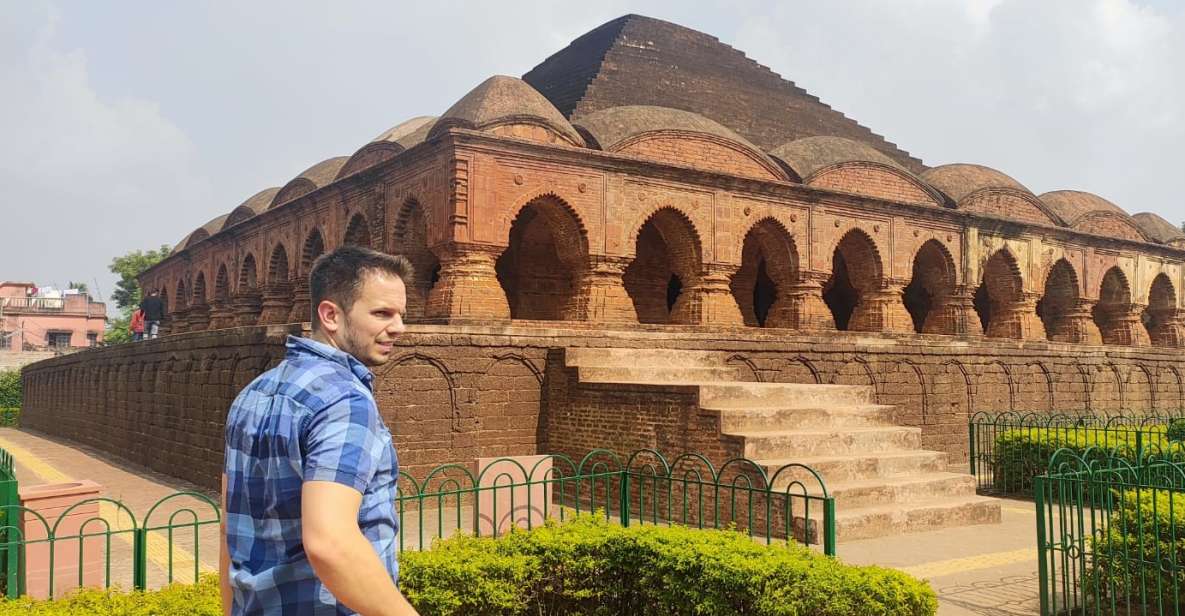
Once you’re in Bishnupur, the morning turns into a guided walk through the area’s 17th-century terracotta temples. The whole idea is to see the temples not just as pretty buildings, but as expressions of a royal worldview—especially devotion to Lord Krishna, the patron god of the Malla Kingdom.
A key part of the experience is how the guide frames the temples’ growth. You hear the story of a tyrannical Malla king who later converted to Gaudiya Vaishnavism. That change is presented as the spark for the flourishing terracotta art in the 16th and 17th centuries—so the clay isn’t random decoration. It’s tied to belief, power, and patronage.
I like this approach because it helps you look at details with a purpose. You don’t just spot figures; you understand why those figures and motifs mattered. That’s also why an English guide is a big deal here—you’re not left guessing what you’re seeing.
You’ll move through multiple Krishna-dedicated temples as the morning itinerary unfolds. Even if some shrines are less famous than others, the guide’s narration gives each stop a job to do: explain a style, show a pattern, or connect the site to the larger Malla story.
Rasmancha: the stepped pyramidal temple that clicks immediately
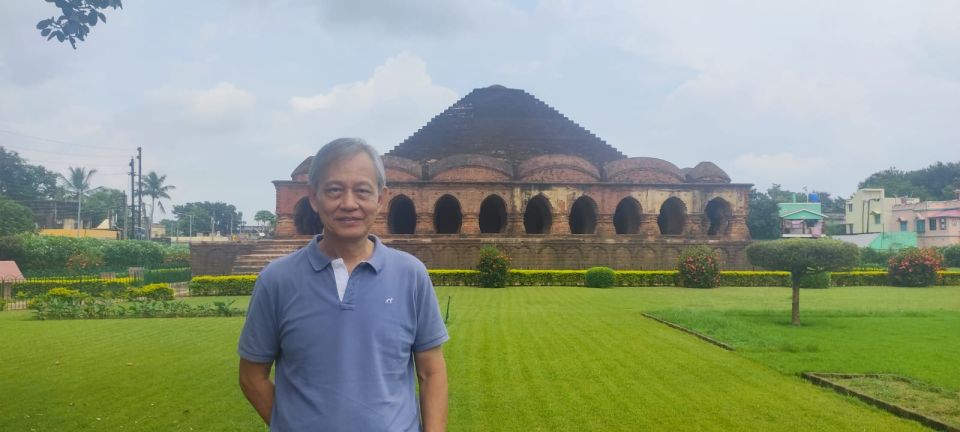
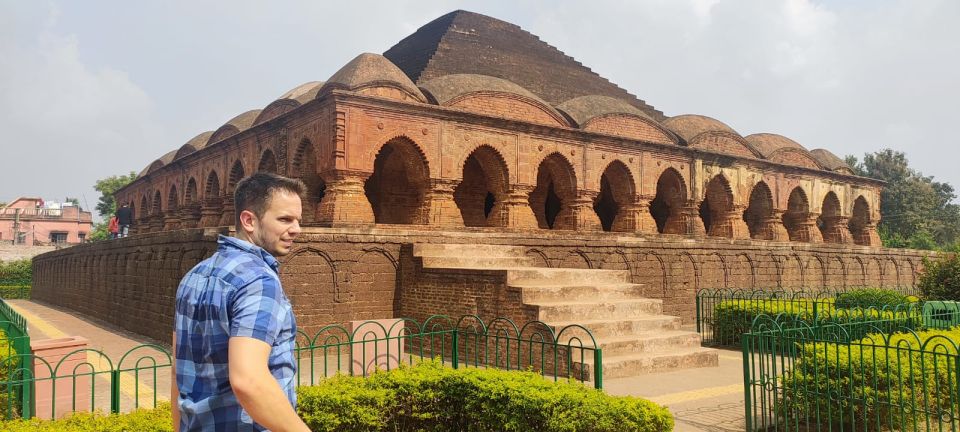
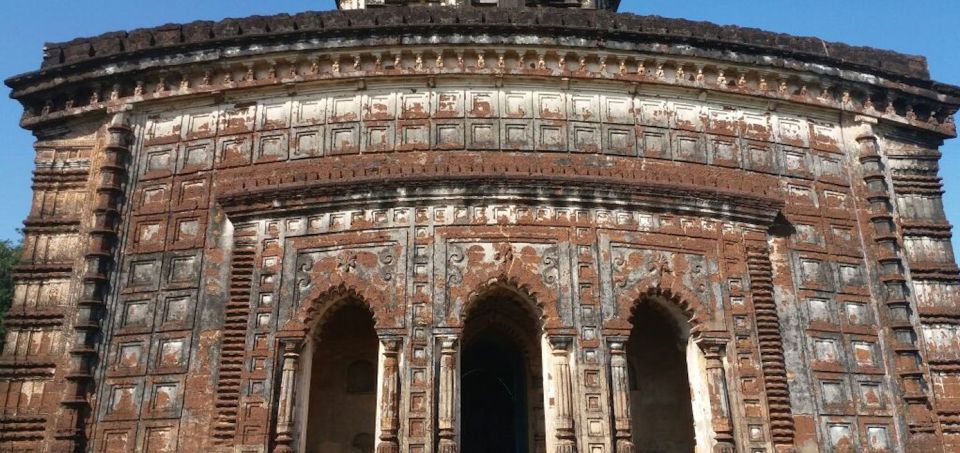
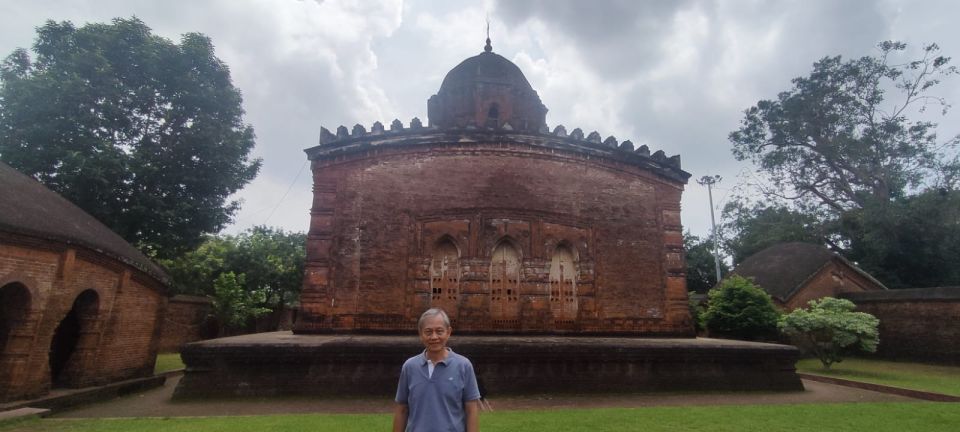
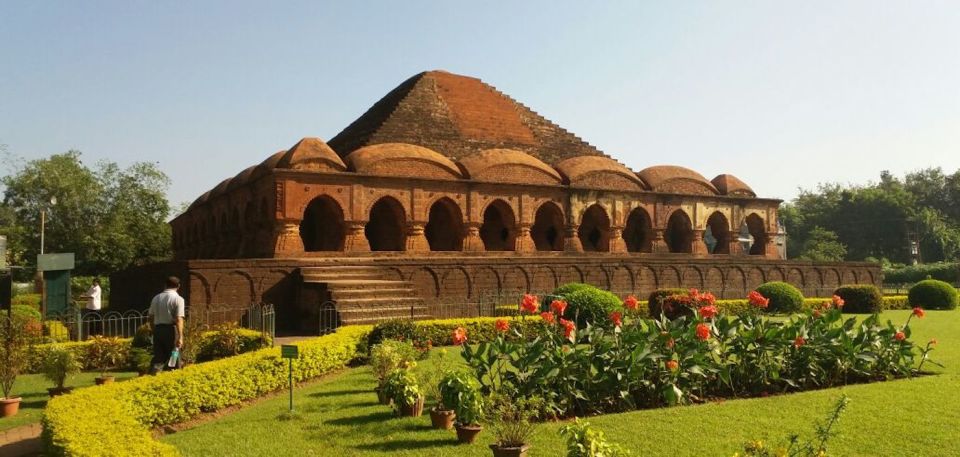
The itinerary’s architectural payoff is Rasmancha, described as the first temple built by King Bir Hambir. This is the stop where the temple design becomes easy to understand just by looking.
Rasmancha is a quaint pyramidal structure with huge, stepped masonry. Think of it as a temple that reads like a set of levels—your eyes naturally climb as the guide points out how the form is built. It’s also marked as being designed as a stage, which gives the building a sense of function, not only symbolism.
Another detail you’ll hear: Rasmancha has a composite Chala type roof. You don’t need to be an architecture expert to appreciate it. The guide’s job is to help you notice how the roof style and stepped structure work together to create the temple’s strong silhouette.
This is one of those places where a good guide turns “cool building” into “I get it.” And based on what I’ve seen in other similar temple days, Rasmancha is often the moment people stop rushing and start truly looking. You’ll likely feel that too once you’re standing close and your questions start forming on their own.
The Queen’s curse and local geological anomalies
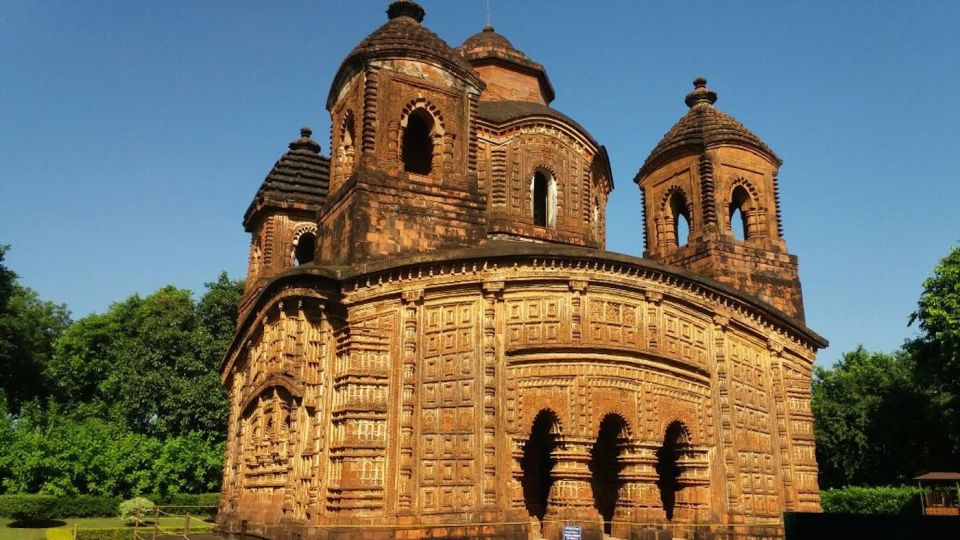
Not every part of Bishnupur is explained by stonework and dates. A major element built into the route is the mystery of the Queen’s curse, tied to associated geological anomalies.
Here’s what I’d pay attention to: don’t treat it like a spooky legend you either “believe” or don’t. Instead, use it as a storytelling tool. It’s the guide’s way of connecting what you see on the ground—or around temple areas—with local explanations and observations people kept over time.
Because the details aren’t laid out like a textbook, your best move is to listen actively and take mental notes on the anomalies the guide points out. If you tend to enjoy folklore that reflects real-world observations, this section will probably be a highlight rather than a detour.
If you only want strict facts with dates and names, the curse story may feel softer in comparison. But even then, it helps you understand why people in this region treat the landscape as meaningful.
Baluchari weavers: watching draw looms turn myth into silk
After the temple time, the day shifts gears to craft—Baluchari silk sari weaving. This isn’t just a shop stop. You get to experience the process of how the fabric is made on draw looms.
A draw loom changes how you see weaving. Instead of thinking of it as a single “thread pulling” action, you notice the system: tension, timing, and pattern planning all come together. If you’ve ever admired patterned textiles without knowing the mechanics, this is the moment where admiration turns into understanding.
The Baluchari style is known for storytelling woven into the cloth. You’ll learn about and see how Ramayana scenes get woven into the saree border. That border detail matters because it’s where many designs do their most complex work. It also means the patterns aren’t random—they’re part of a structured, repeated visual language.
This portion is also where I like having an English-speaking guide. Even if you’re watching the loom with your own eyes, explanations help you connect the technical steps to the final look of the sari.
One practical note: weaving demonstrations can take more time than you expect if you’re the type who asks questions. Luckily, in a private group day like this, you’re not stuck with a rigid crowd pace.


How the 12-hour schedule actually plays out
From 7:30 AM to 10:15 AM you’re in transit and arriving into Bishnupur ready to see temples. That early start is smart—it gets you temple time before fatigue sets in.
Then the morning is built around a slew of terracotta temples dedicated to Krishna, plus Rasmancha as the standout architectural stop. The guide’s storytelling—especially the conversion to Gaudiya Vaishnavism and the reasons terracotta art flourished—keeps those visits connected instead of scattered.
After that comes the weavers: seeing Baluchari silk sari creation on draw looms and learning about how Ramayana scenes appear in the border. Since the day is full, you’ll want to pace yourself through the questions. Ask when you’re most curious; save casual chatter for later.
You’ll then return to Kolkata, with the drop-off timed for around 7:30 PM. That means dinner planning in Kolkata is on your radar—don’t count on having a long meal between the end of the craft visit and your hotel return.
Price and value: what $207 per person buys you
At $207 per person, this is not a budget temple hopping day. The value comes from the way the experience is packaged into a full service, private format.
What you’re paying for includes:
- A private group setup (so you’re not sharing attention with a big herd)
- Hotel pickup via a driver and round-trip transportation from Kolkata
- An English live guide who connects temple architecture and local stories, rather than handing you a map and walking away
- A full-day structure: temples plus a hands-on weaving demonstration
Is it worth it? If your goal is “I want the stories and the context, and I want to see real craft up close,” then yes. If your goal is purely “I want photos quickly,” you might feel the day is slower than you expected because it’s designed for learning.
For me, the best justification is that Bishnupur’s appeal is mostly in interpretation—what you’re seeing is physical, but the meaning comes through a guide. The craft side is similar: seeing the draw loom makes the Baluchari technique tangible, which a photo-only stop usually can’t do.
Who this trip suits best (and who should skip)
This is a great fit if you:
- enjoy temples with explanations, especially when they’re tied to belief and royal patronage
- like combining “old world” and “living craft” in one day
- want to watch artisans work, not only buy textiles
It’s also a good choice if you appreciate guides who can make the architecture readable—Rasmancha is easier to love when someone points out what to notice.
Consider skipping if you:
- hate long drives and can’t handle a 12-hour day
- prefer completely self-paced sightseeing, because this is scheduled and guided
Based on the strong feedback tied to guides like Anirban Dey—friendly, clear, and good at linking what you see to how it was used—this tour works best when you’re ready to listen and look carefully.
Should you book this Bishnupur terracotta and Baluchari day trip?
I’d book this if you want a single day that brings you two kinds of “wow”: rare-looking terracotta temple design and the chance to see Baluchari silk weaving on draw looms with Ramayana border patterns. The private group format and English guide help you get beyond surface details.
If you’re deciding between this and a shorter, more relaxed day in Kolkata, be honest about your tolerance for road time. This is a long day with real value—but you need to be the kind of traveler who enjoys structured discovery.
If that’s you, then this Bishnupur trip is a strong yes.
FAQ
What time does the tour depart from Kolkata?
The tour departs Kolkata at 7:30 AM.
What time do I return to my Kolkata hotel?
You’ll be dropped back to your hotel in Kolkata at about 7:30 PM.
How long is the day trip?
The total duration is 12 hours.
Is pickup included?
Yes. You meet your driver in your hotel lobby.
Will the guide speak English?
Yes, the tour includes a live English guide.
Is this tour a private group?
Yes, it’s listed as a private group.
Can I cancel and get a full refund?
Yes. You can cancel up to 24 hours in advance for a full refund.