REVIEW · JAIPUR
2 Days Jaipur: Amber Fort, Hawa Mahal Tuk-Tuk Tour
Book on GetYourGuide →Operated by Nahargarh Travels · Bookable on GetYourGuide
A tuk-tuk day in Jaipur can feel like magic. You get a tight lineup of icons and viewpoints with a driver-guide who helps you move efficiently, plus the fun of weaving through everyday streets instead of being stuck on a big bus. I especially like the Amber Fort hill circuit and the way the day mixes famous sights with a couple of places you’re less likely to find on your own.
I also like that the route hits both “pretty from the outside” (Hawa Mahal, Jal Mahal) and “go inside and learn” stops (City Palace areas and Jantar Mantar).
Before you book, one consideration: vehicle condition can make or break your comfort. One verified booking described a tuk-tuk issue on day two, with waiting time and a later breakdown that pushed back the schedule. If you’re short on time in Jaipur, I’d treat this as a tour where you’ll want to be flexible with timing.
In This Review
- Key points worth your attention
- Tuk-tuk Touring in Jaipur: Why this format works
- The morning hill-fort run: Amber Fort, Jaigarh, Nahargarh, and views that land
- Amber Fort: where the day’s scale becomes real
- Jaigarh Fort: a photo stop that can still feel worth it
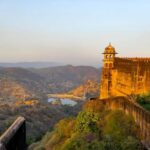
- Nahargarh Fort: views and a strong “Jaipur from above” feeling
- Gaitor Ki Chhatriyan: the calm contrast
- The mid/late-day royal block: City Palace, Hawa Mahal, and what they mean
- City Palace: more than one building
- Hawa Mahal: iconic from the outside, fun to spot from different angles
- Jantar Mantar and the “astronomy you can walk through” effect
- Panna Meena Ka Kund and Jal Mahal: photos are the hook, but stories keep you
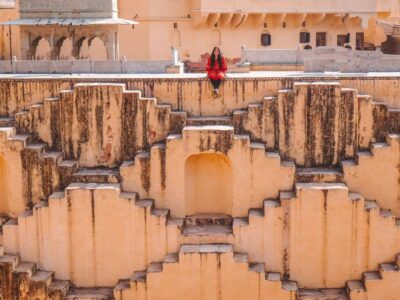
- Panna Meena Ka Kund: the stepwell that makes you pause
- Jal Mahal: floating-looking views with limited time
- Time for lunch, shopping, and a breather (because your feet deserve it)
- Late-day museum and temple variety: Albert Hall Museum and Birla Mandir
- Albert Hall Museum: a guided hour
- Birla Mandir: a final viewpoint-style stop
- Price and value: what $7 covers, what it doesn’t
- Practical comfort tips: what to bring and what to plan around
- The driver factor: when Raja from Rajasthan turns the day smooth
- Who this tour suits best (and who should think twice)
- Should you book this Jaipur tuk-tuk tour?
- FAQ
- How long is the Jaipur tour, and what time does it run?
- What’s included in the price?
- Are entry fees included for the monuments?
- Which major sights are part of the itinerary?
- What should I bring for the tour?
- Is it wheelchair accessible?
Key points worth your attention
- Tuk-tuk touring that feels local, not tour-bus rigid, especially on market streets
- Amber Fort plus nearby forts (Jaigarh and Nahargarh) for big views without extra transport
- UNESCO Jantar Mantar paired with royal-palace stops like City Palace
- Panna Meena Ka Kund for stepwell photos and a strong story moment
- A long sight-filled day with short photo stops and a couple of longer museum-style visits
- Entry fees aren’t included, so your final cost depends on what you choose to pay for inside
Tuk-tuk Touring in Jaipur: Why this format works
Jaipur is the kind of city where you can waste time just getting from one landmark to the next. A tuk-tuk tour solves that with a simple idea: short rides between stops, then enough time at each place to actually enjoy it. Even when you’re doing a lot, the pace still feels like you’re traveling through neighborhoods rather than just collecting tickets.
The tour also gives you what’s often missing from DIY sightseeing: a driver who acts like a guide and helps you interpret what you’re seeing. You’ll get stops that are spaced for a full day, plus the kind of little course-corrections that matter in a city with traffic and lots of one-off streets.
I like the practicality of the included items, too. You get bottled water, pickup and drop-off, and parking/fuel handled. That doesn’t sound exciting, but it’s the stuff that keeps you from spending energy on logistics when your only goal is to see Jaipur.
One more detail that matters: photography is allowed, but flash isn’t permitted inside monuments. If you’re the kind of person who relies on phone flash for dim interiors, plan to switch it off.
You can also read our reviews of more tours and experiences in Jaipur


The morning hill-fort run: Amber Fort, Jaigarh, Nahargarh, and views that land
Your day starts with a pickup around 8:30 AM (and yes, you’ll want to be ready on time). The itinerary begins at Amber Fort, scheduled for about 1.5 hours with guided time.
Amber Fort: where the day’s scale becomes real
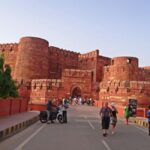
Amber Fort isn’t just a pretty fort. It’s a whole complex experience: courtyards, intricate designs, and those panoramic views over the surrounding area. The time window is long enough that you’re not just “passing through.” If you like architecture, you’ll have moments where the details pull your eyes in different directions.
A practical note: this stop includes walking. If your legs are fine but your patience for steps is short, wear shoes with real grip.
Jaigarh Fort: a photo stop that can still feel worth it
The plan includes Jaigarh Fort with both a photo stop and guided visit time (also listed around 1.5 hours). Even if you’re not the type who loves every fort you see, this stop is valuable because Jaipur’s forts are all about different angles of the landscape and different slices of defensive design.
Nahargarh Fort: views and a strong “Jaipur from above” feeling
Next comes Nahargarh Fort with photo stop and guided tour time (again about 1.5 hours). This part of the day is where you can feel how the city sits in relation to its hills. If you’re traveling for photos, you’ll likely find yourself pausing more than you planned—because the viewpoints naturally pull you into “just one more angle” mode.



Gaitor Ki Chhatriyan: the calm contrast
Later, the schedule includes Gaitor Ki Chhatriyan for about 25 minutes (photo stop and guided tour). This is the sort of place that can feel quieter than the big-ticket forts. It’s short, but it can add variety to a day that’s otherwise dominated by large complexes and major landmarks.
The mid/late-day royal block: City Palace, Hawa Mahal, and what they mean
After the hill-fort stops, you’re in the core of royal-era Jaipur. This is where the tour becomes a lesson in style and power—how the city’s rulers built places to watch, rule, display wealth, and perform ceremonies.
City Palace: more than one building
City Palace is planned for about 1.5 hours of photo stop plus guided tour time. You’ll see the palace complex with sections listed like Mubarak Mahal, Chandra Mahal, Diwan-I-Khas, and the Maharani Palace.
What I like about City Palace in this tour format is that it’s not just a quick look at a façade. You get enough time to understand it as a compound—rooms, courtyards, and different functions. It also breaks up the day if you’ve been in outdoor fort spaces for hours.
Hawa Mahal: iconic from the outside, fun to spot from different angles
Hawa Mahal, or the Palace of Winds, is scheduled for about 30 minutes (photo stop and guided tour). You’ll hear the key detail: it’s over 220 years old and designed with a honeycomb pattern of 953 carved windows.
That window count is the kind of fact that makes the place feel more specific and less generic. The tour gives you enough time to understand why it’s famous and to enjoy it without rushing.
Jantar Mantar and the “astronomy you can walk through” effect
Next up is Jantar Mantar (about 45 minutes). It’s listed as UNESCO, and the tour frames it as an ancient observatory with impressive astronomical instruments.
Even if you don’t consider yourself a museum person, this stop can be surprisingly satisfying because you’re looking at objects that connect to real calculations and real ways of measuring the sky. A guided explanation is especially helpful here because it turns the instruments from “cool shapes” into “oh, that’s how they did it.”
If you like experiences that feel both historical and slightly futuristic (in a good way), this is one of the strongest stops on the itinerary.
Panna Meena Ka Kund and Jal Mahal: photos are the hook, but stories keep you
Two of the most memorable stops are also among the shorter ones, which is a smart use of time.
Panna Meena Ka Kund: the stepwell that makes you pause
Panna Meena Ka Kund is on the plan with about 25 minutes of photo stop and guided visit time. It’s described as an ancient step-well and it comes with a fascinating story.
This kind of stop is valuable because it shows Jaipur beyond palaces and forts. Stepwells are practical infrastructure, but they also become social spaces and architecture with personality. Even if you don’t linger for long, you’ll usually come away with at least one “I didn’t know Jaipur had that” moment.
Jal Mahal: floating-looking views with limited time
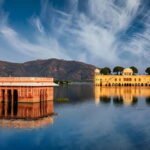
Jal Mahal is scheduled as about 25 minutes (photo stop and guided time). The palace is known for appearing to float on the water, and that’s exactly why it works as a planned photo moment: you don’t need an hour to appreciate it, but you do need to be there at the right time and from the right angles.
Because this is listed as a photo stop, treat it like that. Try to keep your phone/camera ready, but also take 30 seconds to look without framing it—trust me, the view can hit harder when you stop trying to capture it.
Time for lunch, shopping, and a breather (because your feet deserve it)
The itinerary includes a “break time” block: lunch and shopping for around 2 hours.
Meals and beverages aren’t included, so you’ll choose where and what to eat. That’s actually a plus if you like flexibility. You can go simple, or you can take the chance to try traditional Rajasthani food. The tour plan explicitly mentions tasting local cuisine, but you decide where.
For shopping, the itinerary notes local markets with traditional handicrafts, textiles, and jewelry. Again, you’re not locked into one store. Just keep your pace realistic. After a morning of hills and forts, 2 hours can disappear faster than you think—especially if you’re tempted by fabrics.
Late-day museum and temple variety: Albert Hall Museum and Birla Mandir
Your afternoon/late stops broaden things beyond royal monuments.
Albert Hall Museum: a guided hour
Albert Hall Museum is scheduled for about 1 hour (photo stop and guided tour). It’s a good counterbalance if your morning was all forts and palaces. A guided hour gives you a chance to connect the museum content to what you’ve already seen in the city.
Birla Mandir: a final viewpoint-style stop
Birla Mandir is planned for about 30 minutes (photo stop and guided tour). Temples like this are often easier to fit at the end of a long day because you get a clear visual impression quickly. If you still have energy, it’s a nice way to end on something calmer than the previous monument-heavy stops.
Price and value: what $7 covers, what it doesn’t
At $7 per person for a 2-day listing, the upfront cost looks like a steal. The catch is the “what you pay inside” reality.
Entry fees are not included for stops like Amber Fort, City Palace, Hawa Mahal, Jantar Mantar, Albert Hall Museum, and more. That means your total cost depends on ticket prices for each site and whether you opt into every included monument area.
Still, the value can be strong because you’re getting:
- Pickup and drop-off
- A full day of tuk-tuk transportation
- Driver-guide support
- Bottled water
- Parking and fuel
In other words, you’re paying mostly for access and local transport efficiency, not for museum tickets. If you know you’re willing to pay entry fees, this can be great value.
If you’re trying to keep costs ultra-low, you’ll want to budget for ticket totals in advance and decide what you’ll prioritize.
Practical comfort tips: what to bring and what to plan around
This tour is a full day, so think in terms of comfort first.
Bring:
- Comfortable shoes (you’ll walk)
- Hat and sunscreen for sun protection
- Camera (and keep it flash-free inside monuments)
- Water (you’ll get bottled water, but still)
Also remember the rules:
- No smoking
- No alcohol or drugs
And about health/access needs: the information includes wheelchair accessibility, but it also states it isn’t suitable for wheelchair users and mentions back problems as a limitation. If that applies to you, confirm directly before going. With forts and walking sections, the safest assumption is that mobility needs could be a challenge.
The driver factor: when Raja from Rajasthan turns the day smooth
The best part of a guided day in a tuk-tuk is the driver’s knowledge and how easily they handle the route.
One highly rated experience highlighted a driver named Raja from Rajasthan as experienced and focused on getting people safely to monuments and spots. That matters because Jaipur isn’t just about “where.” It’s also about how you get there, when you arrive, and how you manage traffic and short stops.
At the same time, one verified booking described a much less smooth day because the tuk-tuk wasn’t in good condition: the driver said the vehicle had a problem and they waited, then the tuk-tuk broke down during transit to sightseeing, leading to additional waiting. That’s the risk with any small-vehicle tour—when it works, it’s perfect; when it doesn’t, you feel the time loss.
If you want to reduce stress, do this: be mentally ready for short delays, and don’t pack extra private plans right after the tour ends.
Who this tour suits best (and who should think twice)
This is a strong pick if:
- You want a guided day with a lot of major sights
- You like smaller transport and street-level touring
- You want photo stops plus guided interpretation at key monuments
- You enjoy forts and royal architecture and don’t mind a long day
It might not be ideal if:
- You have back problems or need minimal walking
- You’re sensitive to vehicle breakdown delays (small vehicles can be less forgiving)
- You’re planning to avoid paying entry fees (most major sites charge)
Language options are listed broadly (English, Hindi, French, Spanish, Japanese, Dutch, German), so you should be able to match your comfort level if you communicate clearly.
Should you book this Jaipur tuk-tuk tour?
I’d book it if you’re the type who likes ticking off the famous sights but also wants a few turns off the standard path—especially the stepwell stop at Panna Meena Ka Kund and the planned photo moment at Jal Mahal. The combination of Amber Fort plus neighboring forts and then the city’s signature monuments like City Palace, Hawa Mahal, and Jantar Mantar is a practical way to see a lot without spending hours figuring out transit.
I’d think twice if you’re very time-tight or have mobility limits, since this is a walking-heavy, full-day format and the vehicle factor can affect punctuality. If that’s you, plan a buffer day in Jaipur.
Bottom line: for the money, it’s hard to beat. Just go in with eyes open, comfortable shoes on, and a flexible attitude about timing.
FAQ
How long is the Jaipur tour, and what time does it run?
It’s listed as a 2-day activity, with a sightseeing day that starts around 8:30 AM and ends around 5:30 PM.
What’s included in the price?
Included are hotel pickup and drop-off, a tuk-tuk ride, a driver as a guide, bottled water, fuel, parking charges, tolls/taxes, and GST.
Are entry fees included for the monuments?
No. Entry fees are not included for Amber Fort, City Palace, Hawa Mahal, Jantar Mantar, Albert Hall Museum, and more.
Which major sights are part of the itinerary?
You’ll visit Amber Fort, Jaigarh Fort, Nahargarh Fort, Panna Meena Ka Kund, Jal Mahal, City Palace, Hawa Mahal, Jantar Mantar, Gaitor Ki Chhatriyan, Albert Hall Museum, and Birla Mandir.
What should I bring for the tour?
Bring comfortable shoes, a hat, sunscreen, a camera, and water.
Is it wheelchair accessible?
Wheelchair accessibility is listed, but it also says the activity is not suitable for wheelchair users. If you need wheelchair access, confirm directly before booking.