REVIEW · AGRA
Agra Fort: Guided UNESCO Heritage Walking Tour
Book on GetYourGuide →Operated by Crystal India Holidays · Bookable on GetYourGuide
Agra Fort can feel like a maze, but this guided walk makes it make sense. I like how the route hits the big Mughal set pieces—Diwan-i-Am and Diwan-i-Khas—and also includes the emotional turning points like the Musamman Burj. I also love the practical help you get on where to stand for photos, since the fort is huge and uneven. The main drawback is simple: it’s still a lot of walking for just an hour, so comfortable shoes are non‑negotiable.
If you’re pairing Agra Fort with the Taj Mahal later, this tour is a smart way to see the power behind the palace builders. Expect a private group format and an English or Hindi guide, with a pace that aims to keep you moving without rushing the details. Do note that bag checks happen at the entrance, and tripods/drones are usually not allowed.
In This Review
- Key things that make this walk worth it
- Agra Fort in 1 hour: what you really get from a guided UNESCO walk
- Entering through Amar Singh Gate and the fort’s “two jobs”
- Diwan-i-Am: the emperor’s public-facing space
- Diwan-i-Khas: private court and the language of prestige
- Jahangiri Mahal: blending styles and showing Mughal creativity
- The spot tied to Shah Jahan’s imprisonment by Aurangzeb
- Musamman Burj: the bitter-sweet Taj view
- Mirrored palace and Anguri Bagh: beauty you can see working
- Mirrored palace (if accessible)
- Anguri Bagh gardens
- Guides make the difference: what I’d watch for (especially with Gagan and Shahid Khan)
- Price and logistics: why $6 makes sense (and what it doesn’t cover)
- Best way to fit Agra Fort with the Taj Mahal same day
- What to bring, and what to expect at the entrance
- Who should book this tour
- Should you book Agra Fort: Guided UNESCO Heritage Walking Tour?
- FAQ
- How long is the Agra Fort guided walking tour?
- What is the price per person?
- Is this a private group tour?
- What languages are available for the guide?
- What’s included in the tour price?
- How do I find the meeting point or contact the guide?
- What should I bring for the tour?
- Is there free cancellation?
- Are drones or tripods allowed?
Key things that make this walk worth it
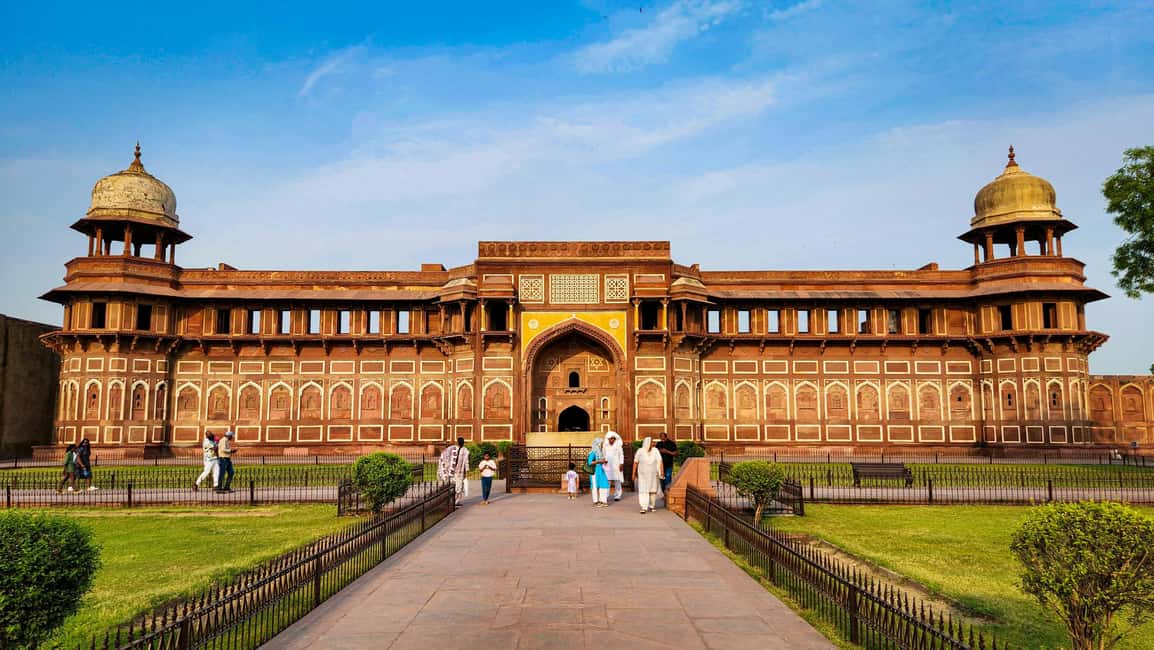
- Amar Singh Gate is your starting point: You enter through the main visitor access point and learn how the fort was designed for both defense and court life.
- You’ll see Mughal court spaces up close: The walk includes the Diwan-i-Am and Diwan-i-Khas, where rulers handled people and business.
- The Shah Jahan story is part of the route: You visit the place associated with his imprisonment by Aurangzeb and his later days near the Taj view.
- Musamman Burj adds a real emotional beat: It’s one of the fort’s most poignant stops, tied to Shah Jahan’s final period looking toward the Taj Mahal.
- Anguri Bagh brings geometry to Mughal life: The geometric gardens help you visualize how royal space was planned for beauty and use.
- Mirrored palace time depends on access: If it’s open, you’ll get the chance to see the mirrored palace reflections.
Agra Fort in 1 hour: what you really get from a guided UNESCO walk
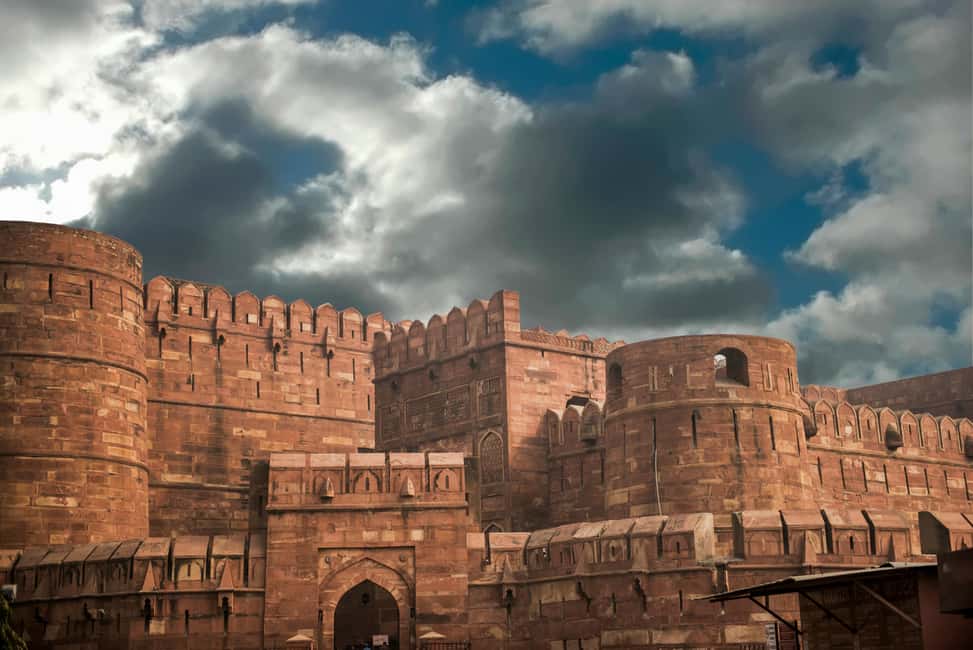
Agra Fort is UNESCO-listed and huge, but you don’t need a full day to understand the story. This tour compresses the most meaningful sections into about one hour so you can connect the dots between military power and royal display.
What makes this style of tour work is the “why” behind each stop. It’s not just photo stops; you’ll get guided context that explains what you’re seeing: grand gates, pillared halls, carved stonework, and the way Mughal architecture blends Persian, Islamic, and even Rajput influences. That context matters because left on your own, the fort’s scale can blur everything together.
The private group setup also helps. You’re not herded through like a checklist. A guide can pace you based on what you care about—court life, architecture, or the Shah Jahan/Aurangzeb storyline.
You can also read our reviews of more walking tours in Agra



Entering through Amar Singh Gate and the fort’s “two jobs”

Your walk starts at Amar Singh Gate, the main entry point for visitors. Even before you reach the interiors, you’ll get a sense that this place was built to do two things at once: defend the city and host the emperor’s world.
A good guide makes that concept visible. You’ll notice how the layout and movement through space feel deliberate—how ramparts and approaches reinforce strength, while interior areas reveal status and ceremony. The fort wasn’t only for war. It was also the stage where Mughal rulers addressed matters of state.
If you’re the type who loves architecture details, this is where you’ll start spotting patterns. Expect to hear about design choices, not just dates. And because the guide keeps you moving, you’re less likely to get lost in the “where do we go next?” problem.
Diwan-i-Am: the emperor’s public-facing space

The tour includes Diwan-i-Am, a major Mughal hall tied to public court proceedings. This is the kind of place where power becomes visual: pillars, scale, and the feel of space designed for seeing and being seen.
What I like about stopping here with a guide is that you stop treating the hall like a backdrop. You learn what court life looked like—how rulers handled petitions and official business in a setting meant to project authority.
You’ll also have better odds of understanding what you’re photographing. Instead of randomly snapping columns and arches, you’ll know why the view angles matter and what architectural features were meant to impress visitors.
Diwan-i-Khas: private court and the language of prestige
Next comes Diwan-i-Khas, a counterpart to Diwan-i-Am with a more exclusive court function. Where Diwan-i-Am communicates public authority, Diwan-i-Khas leans into controlled access and elite spaces.
A guided walk helps you read the building like a document. Mughal architecture often communicates rank through proportions, openings, and decorative choices. With a guide in English or Hindi, you’re not stuck guessing.
This stop is especially valuable if you’re interested in how Mughal rule worked in practice—because the shift from a public hall to a more private one shows how court life could change depending on who was in the room.
Jahangiri Mahal: blending styles and showing Mughal creativity
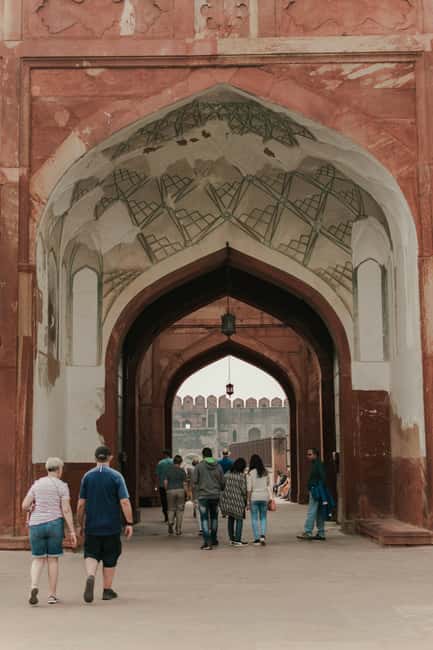
The route also includes Jahangiri Mahal. Even if you’re not chasing “every palace room,” this stop matters because it represents the Mughal habit of combining influences—Rajput, Persian, and Islamic—into one coherent imperial look.
When you can stand in the right place and hear the story, these style blends become easier to spot. You’re not just admiring decoration; you’re learning how cultural exchange shows up in stonework and form.
This is one of those stops where a guide can help you notice small details you might otherwise miss, like how arches and carved surfaces change from one space to another.
You can also read our reviews of more guided tours in Agra






The spot tied to Shah Jahan’s imprisonment by Aurangzeb
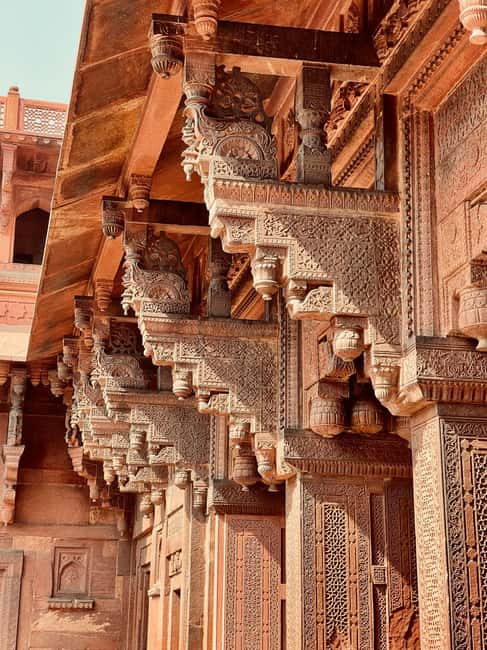
One of the most important parts of this walk is the stop associated with Shah Jahan’s imprisonment by his son Aurangzeb. This isn’t only a dramatic subplot; it shapes how you interpret the fort as a lived-in prison of sorts, not just a palace.
A guide can make the emotional logic click. You’re standing in structures that helped enforce control during a turbulent family power struggle. So when you look at gates, doors, and enclosed spaces, it feels less like a museum and more like a timeline of decisions.
This is also where pace matters. If you’re rushed, the story can get lost. With a private group, you’re more likely to get time to absorb what the guide is saying and what you’re seeing around you.
Musamman Burj: the bitter-sweet Taj view
The tour includes Musamman Burj, described as the poignant spot where Shah Jahan spent his final days gazing toward the Taj Mahal. That connection is what gives this stop weight.
Without context, Musamman Burj can look like another viewpoint. With a guide, it becomes something else: a place that ties the fort to the Taj’s looming presence. You’ll understand why this moment is remembered, and why it’s so often linked to the Taj story.
If you’re planning your schedule, this stop also helps you frame what you’ll see later at the Taj. Even if you’re a first-time visitor, the fort’s perspective makes the later monument feel less sudden and more inevitable.
Mirrored palace and Anguri Bagh: beauty you can see working
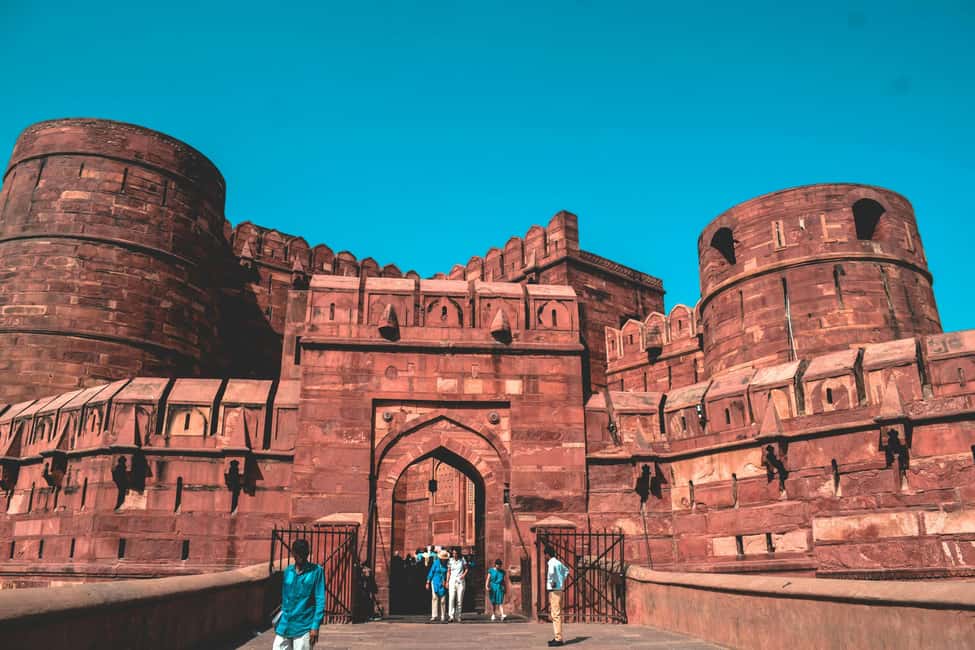
Two of the highlights are where Mughal design shows off: the mirrored palace and the gardens.
Mirrored palace (if accessible)
If access allows, you can step into the mirrored palace. The guide’s job here is mostly orientation: where to look, what angles matter, and how the space functions visually. A mirrored surface can be confusing without a point of reference, so having someone explain helps you actually enjoy the effect rather than just pass through quickly.
Anguri Bagh gardens
The tour also includes Anguri Bagh, the geometric gardens associated with Mughal queens. Gardens like this aren’t just pretty; they show how royal life used planned layouts for walking, cooling, and controlled views.
What I like about having this garden stop on the tour is the contrast. You go from halls and court power to ordered nature. And because the gardens are geometric, you get a strong “architecture in landscape form” lesson—even if the word “landscape” in a travel sense can be overused.
This is also a great photo moment, as long as you give yourself time to look down the garden lines instead of only shooting from one spot.
Guides make the difference: what I’d watch for (especially with Gagan and Shahid Khan)
The tour’s quality hinges on the guide, and the best part here is how proactive the guides seem to be. In the guide feedback, names like Gagan and Shahid Khan come up for clear communication, strong pacing, and photo help.
Here’s what that translates to for you:
- You’ll get help managing the “what do I do next” moments so the tour feels smooth, not chaotic.
- You may get extra guidance on where to stand for photos at good angles.
- Guides are attentive about safety around entrances and crowded areas, including helping avoid hassle from opportunistic vendors.
- Some guides help with navigation during peak times, including support that helps you avoid unnecessary queue pain when applicable.
That last point matters in Agra. You can lose a surprising amount of your day to lines and confusion. If your goal is to see the fort and still have time for the Taj Mahal, a guide who anticipates crowd flow is a real advantage.
Price and logistics: why $6 makes sense (and what it doesn’t cover)
At $6 per person for an hour-long guided walk, this is strong value—especially considering you’re getting a guide plus access to major sections you’d otherwise need time (and confidence) to navigate.
But you should plan around what’s not included:
- Transfers aren’t included, so you’ll need to handle getting there and back on your own.
- The tour doesn’t last long, so you should avoid stacking it too tightly with other “must see” stops that require long travel time.
Also, remember the fort is huge with uneven surfaces and a lot of walking. That means your real cost isn’t just money. It’s energy. If you’re already tired, consider saving your sightseeing stamina for after this walk rather than before.
Best way to fit Agra Fort with the Taj Mahal same day
The fort and the Taj Mahal are close—about 2.5 km apart—so many people try to do both in one day. This tour helps because it gives you the political and architectural context behind what you’ll see at the Taj.
My practical advice:
- Plan your day so you’re not sprinting between sites.
- Wear comfortable shoes because both places involve walking, and Agra Fort’s uneven paths can slow you down.
- Bring a camera, but keep in mind the rules: photography is allowed, while drones and tripods are usually prohibited without special permission.
If you want the day to feel calm instead of frantic, treat this fort walk as the “story first” stop, then enjoy the Taj Mahal as the “payoff” monument.
What to bring, and what to expect at the entrance
This is a practical stop, not a sit-down museum visit. Bring:
- Comfortable shoes for uneven surfaces and stairs-like steps
- A camera for the palace and garden angles
At the entrance, expect bag checks. Avoid large bags and prohibited items. If you’re traveling light, it makes everything smoother and faster.
Who should book this tour
Book it if you:
- Want a guided introduction to Agra Fort’s key buildings in a short window
- Like architecture and court stories, not only monuments
- Appreciate photo guidance—especially around viewpoints connected to the Taj Mahal
- Want a private group format with English or Hindi support
Skip it (or adjust your expectations) if you:
- Need very low-walking time—this fort is still a lot to cover in an hour
- Only care about random photography and don’t want context
- Are hoping for a full day of slow, exhaustive exploration
Should you book Agra Fort: Guided UNESCO Heritage Walking Tour?
I think you should book it if your goal is to understand Agra Fort without losing your whole day to navigation. For $6, you’re buying a guide who can connect the fort’s spaces—public court, private court, gardens, and the Shah Jahan/Aurangzeb storyline—into one clear walkthrough.
The decision comes down to your walking tolerance. If you can handle a busy, uneven site for an hour, this is an efficient, high-value way to get the meaning of Agra Fort before you head toward the Taj Mahal.
FAQ
How long is the Agra Fort guided walking tour?
The tour lasts 1 hour.
What is the price per person?
The price is listed as $6 per person.
Is this a private group tour?
Yes, it’s described as a private group.
What languages are available for the guide?
The live guide is available in English and Hindi.
What’s included in the tour price?
The tour includes a guided tour of Agra Fort.
How do I find the meeting point or contact the guide?
You’ll receive the guide’s contact details from the local service provider via WhatsApp (or by email if you don’t use WhatsApp) one day before your tour. The WhatsApp number is also listed on your booking voucher.
What should I bring for the tour?
Bring comfortable shoes and a camera.
Is there free cancellation?
Yes. Free cancellation is offered up to 24 hours in advance for a full refund.
Are drones or tripods allowed?
Photography is allowed, but drones and tripods are usually prohibited without special permission.