REVIEW · AMRITSAR
Amritsar: Wagah Border Flag-Lowering Ceremony Tour
Book on GetYourGuide →Operated by Go City Adventures · Bookable on GetYourGuide
The border show is loud and oddly beautiful. At the Wagah Border crossing near Amritsar, the daily flag-lowering ceremony turns military routine into a full-on public spectacle, with troops marching in unison and gates slamming with eye-level precision. The whole thing feels both choreographed and intense—exactly the kind of cultural contrast that makes Amritsar memorable.
What I like most is the discipline you can actually see up close: towering turbans, colorful uniforms, synchronized steps, and those crisp, practiced movements that make the ceremony feel real rather than staged-from-a-distance.
The other big plus is the practical side: you get hotel pickup and drop-off by an air-conditioned coach with a live English guide, so you spend less time figuring logistics and more time focusing on what’s happening. One drawback to plan around: this is not suitable for people with back problems or wheelchair users, since you’ll be on your feet for a good chunk of the experience.
In This Review
- Key Things That Make This Wagah Tour Worth Your Evening
- Wagah Border Flag-Lowering: What You’re Really Watching
- The 3:00 PM Pickup Rhythm and How Much Time You’ll Spend Out
- Watching the March and Gate-Slamming Up Close
- Beating Retreat: The Meaning Behind the Spectacle
- Indian and Pakistan Forces in Action: What to Notice (Beyond the Obvious)
- Transportation and the Value of a Guided, No-Stress Round Trip
- What to Bring for a Smooth Ceremony Visit
- Who This Tour Is Best For (and Who Should Skip It)
- Price and Value: Is $131 a Fair Deal?
- Tips to Get the Best Evening Experience
- Should You Book This Wagah Border Tour from Amritsar?
- FAQ
- What time does the tour pick me up from my hotel?
- How long is the tour?
- What’s included in the price?
- Are food and drinks included?
- What should I bring?
- Is smoking allowed during the tour?
Key Things That Make This Wagah Tour Worth Your Evening
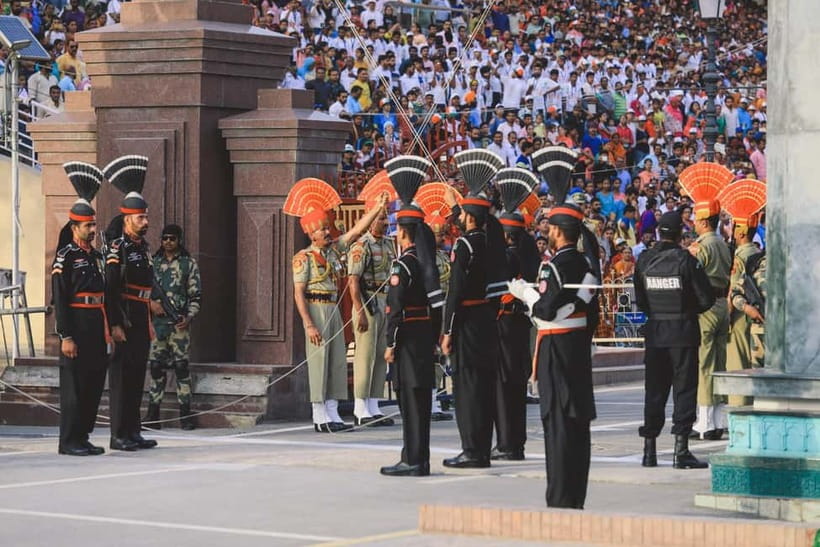
- Live flag-lowering at Wagah Border: a scheduled daily ritual between Indian and Pakistani forces
- Beating Retreat energy: a one-of-a-kind tradition where both sides bring a charged, show-like rhythm
- Synchronized marching in colorful turbans: the visual order is part of the point, not just background
- English live guidance: you’re not left guessing what you’re looking at
- Comfortable round-trip transport: air-conditioned coach plus door-to-door pickup and drop-off
Wagah Border Flag-Lowering: What You’re Really Watching
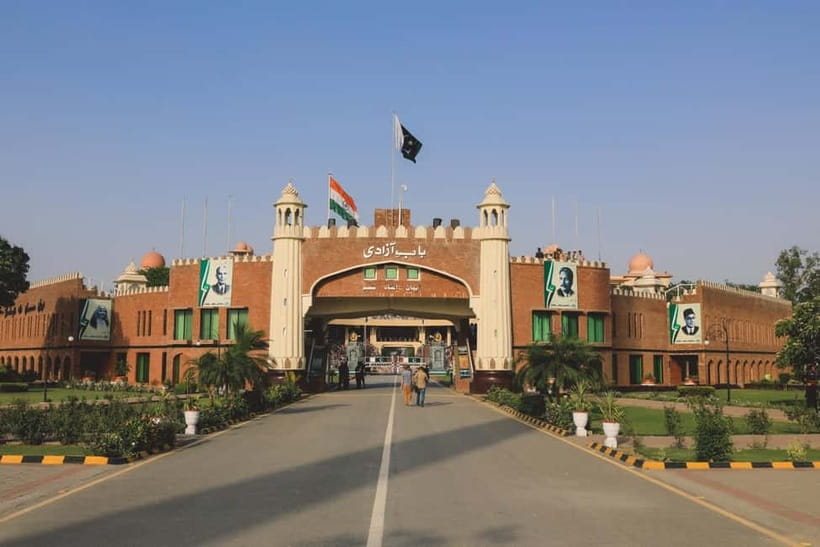
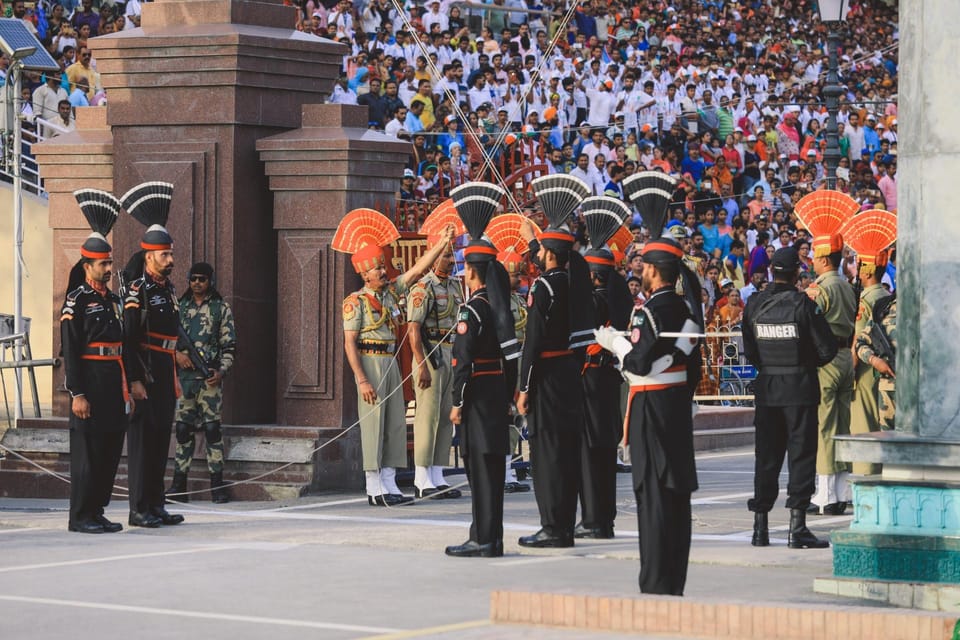
Wagah Border isn’t just a checkpoint. It’s a stage for a daily ceremony where Indian Border Security Force and Pakistan Rangers perform in front of the public. The centerpiece is the flag-lowering, but the main entertainment value comes from the bigger drill-style performance known as the Beating Retreat.
The vibe is strict and formal, yet it’s also public and theatrical. You’ll notice the way the troops move as a unit—steps land together, bodies turn together, and the pacing stays controlled. That’s why the ceremony lands even if you don’t know the details ahead of time: your eyes catch the pattern fast.
And those gate slams? They’re part of the show’s mechanical “wow” factor. Even without any explanation, the accuracy is visible, and you’ll probably find yourself rewatching the moment because it looks almost too exact to be casual.
You can also read our reviews of more tours and experiences in Amritsar.

The 3:00 PM Pickup Rhythm and How Much Time You’ll Spend Out
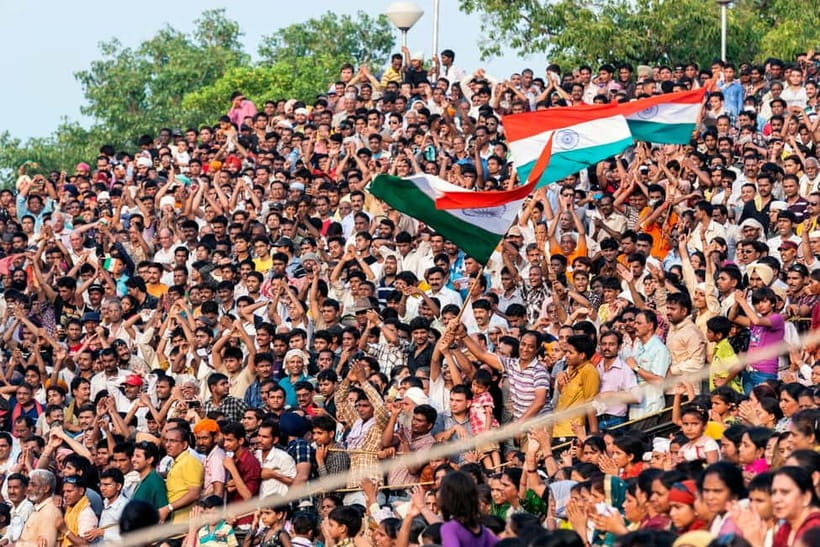
This tour is built around an afternoon start. You’ll be picked up at 3:00 PM from your accommodation, then transported to the India–Pakistan border area for the ceremony. Afterward, you return to your hotel and typically arrive back around 7:30 PM.
The posted duration is 3 hours, which likely refers mainly to the ceremony-focused window, while the rest of the time is drive time and waiting. Either way, plan for a half-day-style commitment. This isn’t a quick evening stop—you’re dedicating an afternoon plus early evening.
One tip that matters: you’re asked to arrive at the pickup point 10 minutes early. That small buffer helps you avoid delays and keeps the schedule tight, especially since the ceremony is time-specific.
Watching the March and Gate-Slamming Up Close
If you want your money’s worth from this kind of ceremony, focus on what you can actually see with your own eyes: spacing, timing, and uniform detail.
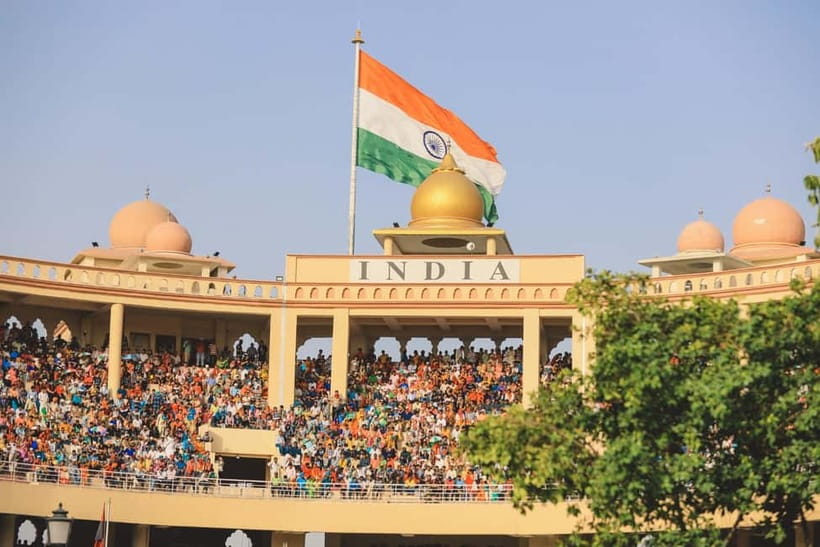
You’ll see troops in colorful uniforms and enormous turbans marching in unison. It’s not just the visuals that get you—it’s the “lockstep” effect. When people move like one large unit, the ceremony feels more intense and more coordinated than a standard parade.
Then comes the gate action. The slam moments are brief, but they’re a key part of the performance structure. To get the best experience, treat your camera like a tool, not a distraction: start filming or photographing when you’re confident the drill is approaching, then switch between recording and quick shots. That way you capture what matters without missing the flow.
Comfort matters here too. Wear comfortable shoes and clothing suited for the weather, because the ceremony is something you watch while staying positioned. If you’re sensitive to standing or walking, this is where the “not suitable” guidance becomes important.
Beating Retreat: The Meaning Behind the Spectacle
The Beating Retreat element is what separates Wagah from a simple flag moment. This tradition is designed to bring people from both sides of the border into the same public frame, creating an intense shared atmosphere—even while the forces involved are clearly distinct.
You’ll likely feel that in the energy around the ceremony. The movements are ceremonial and rhythmic, and the crowd atmosphere tends to mirror the performance’s rise and fall. There’s a spirit of patriotism in the presentation, and the drill-like structure makes it easy to understand without needing a textbook.
That said, it’s still a border ceremony. It can feel formal, intense, and a little emotional for some people watching nearby. My practical advice: keep your expectations grounded. You’re going to see a highly organized public event, not a relaxed cultural walk. Go with the mindset of watching a live performance with military precision.
Indian and Pakistan Forces in Action: What to Notice (Beyond the Obvious)
It’s easy to focus only on the flags and marching, but the ceremony rewards attention to smaller details. Look for how the formation changes—how troops align, how movements stay synchronized, and how the drill sequence stays consistent.
You’ll also appreciate the uniforms more than you expect. Those turbans and colors aren’t just costume dressing; they help you track which group is moving and when. When you can visually separate the forces and still see the unison timing, the entire performance becomes clearer.
If you’re the kind of person who likes context, lean on the live English tour guide. The tour is guided, so you’re not stuck with vague impressions. You’ll be able to ask questions about what you’re seeing and why the ceremony is structured the way it is.




Transportation and the Value of a Guided, No-Stress Round Trip
Let’s talk about the part that quietly makes this tour easier: transport. You get pickup and drop-off from your accommodation and travel in an air-conditioned coach. That matters in Amritsar, because you don’t want to spend your afternoon haggling with transport or figuring out meeting points at the border area.
With a live tour guide, you also get a built-in plan. The guide helps with knowing where to go and keeping you on schedule for a time-specific ceremony. Based on the kind of feedback this tour tends to get, the best experience comes when you show up early and let the guide handle the flow.
One practical downside: food and drinks are not included. That doesn’t mean you can’t eat, but it does mean you should plan ahead so you’re not scrambling when you’re hungry. If you need water breaks, bring what you need (and follow the rules on what’s allowed inside the ceremony area).
What to Bring for a Smooth Ceremony Visit
Bring the basics, and bring them on purpose. The tour asks you to come prepared with:
- Camera: this is the point where photos are worth it
- Water: stay hydrated, especially if the weather is warm
- Comfortable clothes and shoes: you’ll want flexibility and comfort
Also note the rule: smoking isn’t allowed. That’s common for tightly controlled public spaces, so plan to avoid any surprises.
My quick camera advice: don’t assume you’ll be able to move around freely. Start stable, use zoom carefully, and keep your battery charged. If you’re tempted to hold your phone for hours, pack a small strap or keep your grip relaxed so your shots don’t turn shaky.
Who This Tour Is Best For (and Who Should Skip It)
This is a strong fit if you want a structured, high-energy experience with real showmanship and clear visuals. It’s also a good choice if you like the idea of seeing both sides of the ceremony through a guided, explanatory format.
It’s not a great match if your mobility or comfort is limited. The tour is specifically listed as not suitable for people with back problems and wheelchair users. That’s mainly because the experience involves standing and being in a controlled crowd setting.
If you’re traveling with kids, it can still work, but only if everyone can handle standing and waiting. If you’re the type who needs frequent seating breaks, you might find the ceremony window harder than you expect.
Price and Value: Is $131 a Fair Deal?
At $131 per person, this isn’t the cheapest thing you’ll do in Amritsar. But value comes from what’s bundled: hotel pickup and drop-off, air-conditioned transport, and a live English guide for the ceremony window.
If you try to DIY it, the costs pile up fast in time and friction. You’d need the transport figured out, the timing managed, and someone to help you interpret what you’re seeing. Here, the tour is doing that job for you. For many people, that’s what makes the price feel fair.
The one cost you’ll need to handle yourself is food and drinks (not included). If you budget for water and a meal strategy, the overall trip becomes more predictable. Also remember that you’re getting a half-day experience anchored to a daily time-specific ceremony. That timing factor is part of the value.
Tips to Get the Best Evening Experience
A few small moves can turn this from “I saw it” into “I’m glad I went”:
- Arrive at the pickup point early, not at the last second. It keeps everything smooth.
- Wear comfortable shoes and dress for the weather. You’re going to be on your feet while you watch the ceremony.
- Bring water and pace your filming. The best shots come when you’re ready before the drill moment, not mid-chaos.
- Use the guide. Ask what matters to you: timing, meaning, or what specific parts of the drill represent.
And mentally, set your expectations for a show. This isn’t quiet sightseeing. It’s an organized, public performance where the choreography is the attraction.
Should You Book This Wagah Border Tour from Amritsar?
I’d book it if you want an iconic Amritsar experience that’s easy to organize. The combination of guided English commentary plus door-to-door transport makes it feel low-stress for a time-sensitive border event. And if you enjoy disciplined spectacle—marching, uniforms, and ceremonial drill—this is exactly your kind of evening.
I’d think twice if you need lots of comfort accommodations, because it isn’t suitable for wheelchair users and isn’t designed for people with back problems. I’d also plan your food and hydration on your own since meals and drinks aren’t included.
If your schedule is flexible, you may also like the option to cancel up to 24 hours in advance for a full refund. That lowers the risk of committing too early.
If you want one memorable, structured experience near Amritsar that doesn’t require you to wrestle with logistics, this is a solid choice.
FAQ
What time does the tour pick me up from my hotel?
Pickup is at 3:00 PM from your accommodation.
How long is the tour?
The experience is listed as 3 hours, with return transport that brings you back to your hotel around 7:30 PM.
What’s included in the price?
You get hotel pick-up and drop-off, air-conditioned coach transportation, and a live English tour guide.
Are food and drinks included?
No. Food and drinks are not included, so you’ll need to plan your own refreshments.
What should I bring?
Bring a camera, water, and wear comfortable clothes and shoes suitable for the weather.
Is smoking allowed during the tour?
No. Smoking isn’t allowed.