REVIEW · NEW DELHI
Delhi Agra Jaipur Golden Triangle Multiday Trip with Safari
Book on GetYourGuide →Operated by Sameday Taj Mahal · Bookable on GetYourGuide
Seeing tigers after the Taj is a real treat. This multiday route strings together Delhi, Agra, Jaipur and a Ranthambore tiger safari with private guiding and a car that gets you to the right place on the right schedule. I like that the trip is built around big moments, like sunrise at the Taj Mahal and a morning safari when animals are most active.
Two things I also really like: you get private local guides (so the monuments come with context, not just photos), and you’re moved by a dedicated AC car with bottled water during the drives. One thing to keep in mind: some guides take you past shops as part of the day, and the pressure to buy can show up—so decide your comfort level up front and stick to your “no” plan.
In This Review
- Key highlights you’ll actually feel
- Why this Delhi–Agra–Jaipur + safari route makes sense
- Day-by-day options: 3, 4, 5, or 7 days
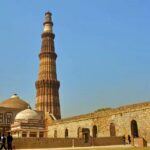
- Delhi in one day: Qutub Minar, Jama Masjid, Chandni Chowk rides
- Agra at sunrise: Taj Mahal, Agra Fort, Itmad-ud-Daula
- Fatehpur Sikri and Abhaneri’s stepwell: the road trip that earns its time
- Ranthambore morning safari: what to expect and how to prepare
- Jaipur’s big hits: Amber Fort, City Palace, Jantar Mantar, and the Pink City vibe
- Pushkar day (on the 7-day version): Brahma Temple and Pushkar Lake time
- Private guides and drivers: why this feels easier than DIY
- Price and value: what your $135 really buys
- Hotels, comfort, and the one place expectations can wobble
- Shop stops, tips, and how to keep control of your day
- Who this tour fits best (and who should think twice)
- Should you book this Golden Triangle with safari?
- FAQ
- How long is the Golden Triangle trip with safari?
- Which cities are included in the route?
- Is there a sunrise visit to the Taj Mahal?
- Do I get a private car and local guide?
- Are entrance tickets included?
- What about hotels—are accommodations included?
- Are meals included in the price?
- What pickup and drop-off options are available?
- Are there restrictions on what I can bring?
- What languages do the guides speak?
Key highlights you’ll actually feel

- Sunrise Taj Mahal with a dedicated early start and a separate entrance for quicker entry
- Doorstep-to-doorstep driving across long distances, with safety and timing built in
- Agra beyond the Taj including Agra Fort and Itmad-ud-Daula
- Ranthambore safari time set up for the morning run in one of India’s best-known tiger reserves
- Jaipur fort-palace classics with Amber Fort plus the City Palace and Jantar Mantar
Why this Delhi–Agra–Jaipur + safari route makes sense

The Golden Triangle usually works because it’s efficient. Add Ranthambore and suddenly you’re getting two different kinds of India in one sweep: Mughal architecture and desert-city palace drama, followed by wildlife time in forest country.
What makes this specific format attractive for practical travelers is the shape of the schedule. Instead of flying, stitching together buses, and negotiating day-by-day tickets, you’re on a private itinerary where each day has a purpose. Delhi is about monuments and old markets. Agra is about the Taj and its neighboring Mughal sites. Then you use the drive to make stops that most people skip—or do poorly—like Fatehpur Sikri and Abhaneri’s stepwell. Finally, Ranthambore gives you the wildlife payoff.
I also appreciate that the itinerary is offered in several lengths (3 to 7 days). If you’re short on time, you can still hit the core. If you want more breathing room, you get a Pushkar add-on and an extra day in Jaipur.
You can also read our reviews of more tours and experiences in New Delhi



Day-by-day options: 3, 4, 5, or 7 days

Here’s how the trip structure shifts based on your chosen length.
3 days (fast essentials)
- Day 1: Delhi sights plus an evening drive to Agra
- Day 2: Sunrise Taj Mahal, Agra Fort, and Itmad-ud-Daula
- Day 3: Jaipur highlights, then an evening drive back toward Delhi
4 days (adds safari morning)
- Day 1: Full Delhi day and evening to Agra
- Day 2: Agra sunrise Taj + forts
- Day 3: Morning safari, then drive to Jaipur
- Day 4: Full Jaipur day, then evening drive back to Delhi
5 days (adds Fatehpur Sikri + Abhaneri, more breathing room)
- Day 1: Full Delhi day and evening drive to Agra
- Day 2: Sunrise Taj + Agra Fort + Itmad-ud-Daula
- Day 3: Fatehpur Sikri + Abhaneri stepwell, then on to Ranthambore
- Day 4: Morning safari, then drive to Jaipur
- Day 5: Jaipur day, then evening drive back to Delhi
7 days (full version, with Pushkar)
- Days 1–2: Delhi, then Agra sunrise Taj + forts
- Day 3: Fatehpur Sikri + Abhaneri stepwell, then Ranthambore
- Day 4: Morning safari, then drive to Jaipur
- Day 5: Pushkar (Brahma Temple, Pushkar Lake, local market time)
- Day 6: Big Jaipur day (Amber Fort + the city sights)
- Day 7: Drive back to Delhi with airport drop
If you can choose, the 5- or 7-day versions feel more satisfying because the long road days get broken up with meaningful stops instead of just “driving from A to B.”
Delhi in one day: Qutub Minar, Jama Masjid, Chandni Chowk rides

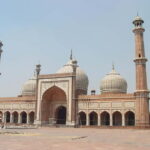
Delhi on this trip is packed, but it’s the right kind of packed if you want variety. You start with Qutub Minar, one of Delhi’s most famous historical monuments, then move through key landmarks like India Gate and Humayun’s Tomb. You’ll also have time for the Lotus Temple and Jama Masjid—two very different styles of worship that help you see Delhi’s multiple eras in a single day.
Then comes the part people either love or find overwhelming: Chandni Chowk. The itinerary includes a rickshaw ride through the lanes, which is a quick way to feel how old Delhi moves—dense, noisy, and full of daily life. After that, you can also fit in Akshardham, which is more modern in feel but still a major Delhi sight.
The practical value here is that your guide helps you avoid aimless wandering. Instead of trying to decide which monuments are “worth it,” you’re going site-to-site with a story attached. I’d just plan your energy accordingly. This is a “see a lot” day, not a slow museum day.
Agra at sunrise: Taj Mahal, Agra Fort, Itmad-ud-Daula
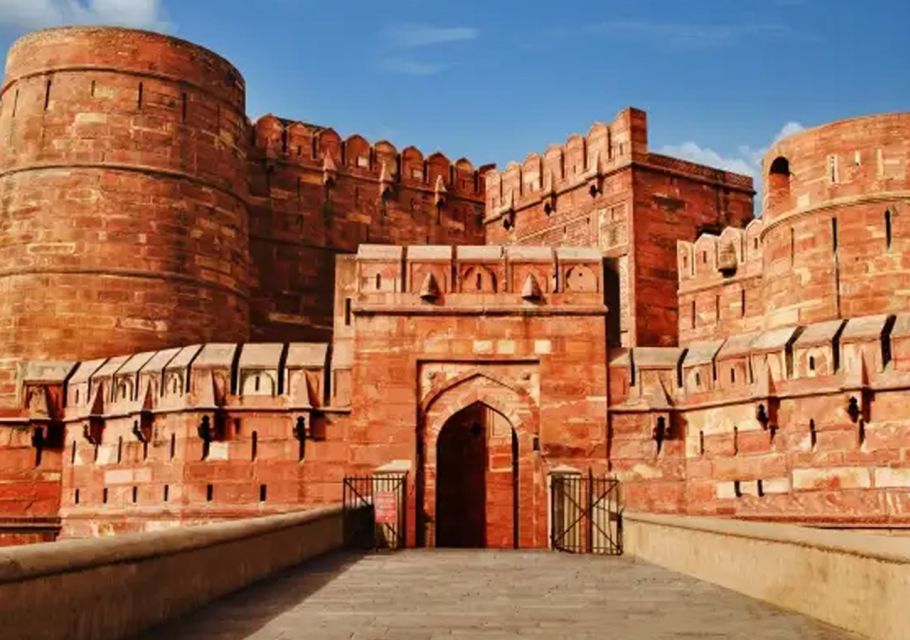
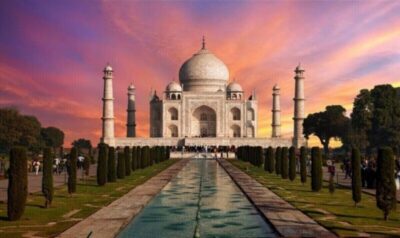
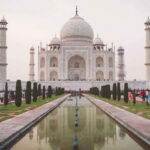
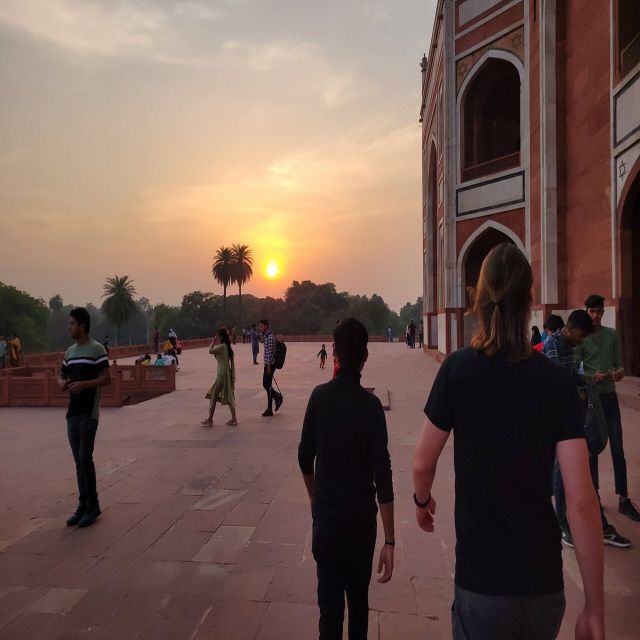
Agra is the emotional center of this route, and the sunrise plan is a big reason to choose it. The schedule sets you up for the Taj Mahal early, when the light is better and the mood is calmer.
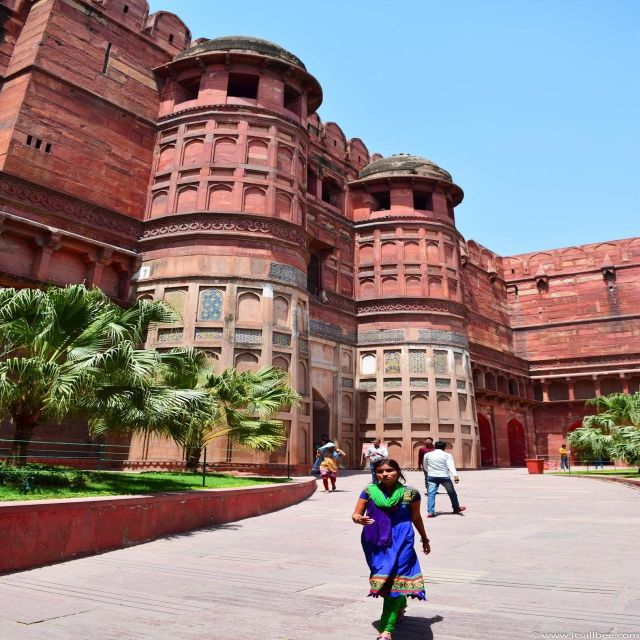
You’ll also visit Agra Fort, a huge Mughal complex that gives you context for the city and the power behind the Taj. Then there’s Itmad-ud-Daula—often overlooked if you only chase the postcard. This tomb complex is a strong complement to the Taj because it shows how Mughal architecture and craftsmanship evolved in smaller, more intimate scale.
One detail I like: the trip includes a separate entrance approach for quicker entry where selected. That matters because in places like these, time wasted at gates turns a great day into stress.
If you’re a photo person, sunrise is when you get those softer shadows on marble. If you’re not, sunrise still wins because it gives you time to slow down and actually read what you’re seeing, instead of rushing through everything.
Fatehpur Sikri and Abhaneri’s stepwell: the road trip that earns its time

A lot of Golden Triangle routes make the drive feel like just transit. This one turns transit into sightseeing with two stops: Fatehpur Sikri and Abhaneri.
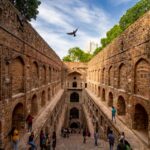
Fatehpur Sikri is historic in a big way—an ancient planned city with major Mughal-era significance. It’s the kind of place where a guide really helps, because the sites can feel scattered if you don’t know what you’re looking for. You’ll also get time at Abhaneri Stepwell, which is a visually dramatic stop. Stepwells are functional architecture, but the scale here makes them feel almost theatrical.
The benefit for you: you’re not just killing hours. You’re collecting “India facts” that make the main cities hit harder. Seeing stepwell architecture after tomb-and-palace days also gives you a broader sense of how people built for water, ritual, and survival.


Ranthambore morning safari: what to expect and how to prepare
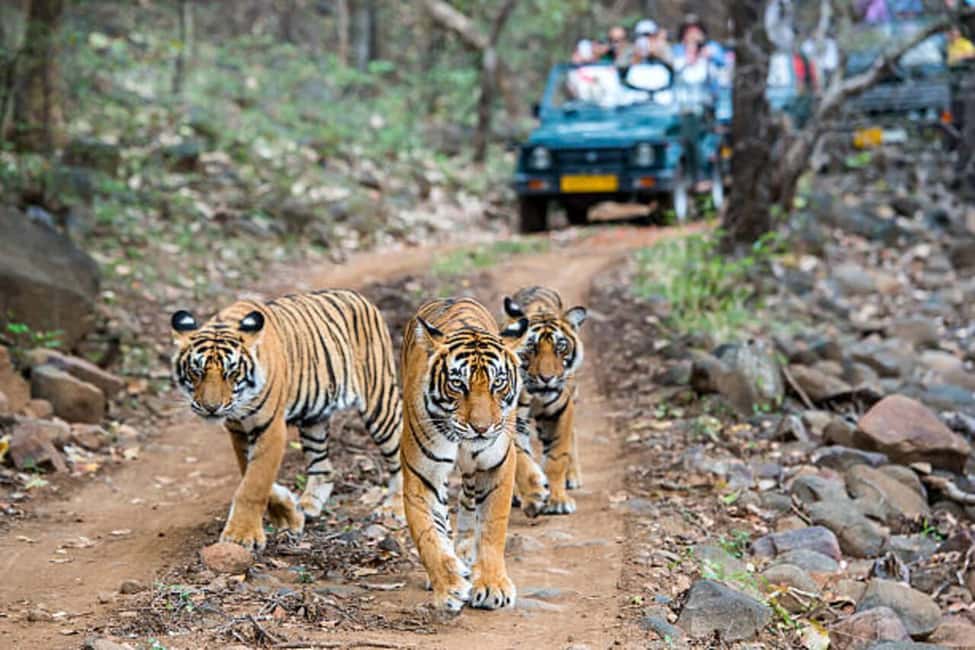
The trip includes tiger safari in Ranthambore, tied to the morning session in your schedule. That timing matters because wildlife activity is often highest earlier in the day.
Here’s the honest reality: you can’t control animal sightings. What you can control is your readiness. Wear comfortable clothes and closed shoes, keep your camera battery charged, and bring along your patience. The excitement is real, but safari days reward a calm attitude.
The itinerary also includes the drive from Agra side into Ranthambore, so you’re not starting the wildlife day with pure stress. In fact, the day planning is designed so you arrive, then do the safari in the morning (depending on your trip length), and then continue on to Jaipur afterward.
One more practical note from the details you’re given: your Ranthambore stay may be a four-star resort instead of five-star due to budget constraints. If hotel standards are important to you, that’s something to weigh when you choose your option.
Jaipur’s big hits: Amber Fort, City Palace, Jantar Mantar, and the Pink City vibe

Jaipur is where the trip goes from “monuments” to “palaces that look like they belong in a film.” On the main Jaipur days, you’ll see Amber Fort, the City Palace, and Jantar Mantar. You’ll also pass by or visit key landmarks like Hawa Mahal and Jal Mahal.
Amber Fort is the anchor. It’s massive, detailed, and best appreciated with a guide who can explain what you’re seeing beyond the obvious walls and towers. The City Palace adds another layer—Jaipur isn’t just one fortress; it’s a living historical seat.
Jantar Mantar is the surprise for many people. It’s astronomy made physical, and it feels smarter than it looks once you know what the shapes are for. Hawa Mahal and Jal Mahal add that theatrical contrast: the city’s “performance” architecture alongside water and palace views.
You’ll also get time for shopping in the Pink City markets. Just remember, shopping time can be flexible based on your pace, and shop pressure is something to manage with confidence. If you want souvenirs, shop with a plan and a budget. If you don’t, keep your “no” calm and consistent.
Pushkar day (on the 7-day version): Brahma Temple and Pushkar Lake time
The 7-day itinerary adds Pushkar, which is a nice contrast to Jaipur’s forts. You’ll visit the Brahma Temple, walk around Pushkar Lake, and get time in the local market.
This day works because it slows the pace just enough. It’s not abandoning history—it’s changing the flavor. Instead of palace corridors, you get a lake-town atmosphere with a different kind of energy and more space to wander.
If you’re the type who likes one “side day” that isn’t just another big-ticket monument, Pushkar is a good choice.
Private guides and drivers: why this feels easier than DIY
This trip runs on the power of two things: a private air-conditioned car and local guides who meet you on the ground. Pickup and drop-off are included at hotels or the airport, and you can also arrange pickup from other locations in New Delhi, Noida, or Gurugram.
Transportation depends on group size. You’ll typically get an AC Sedan for 1–2 people, and for larger groups you use vehicles like A/C Carens or Innova. For bigger parties, a Tempo Traveller or mini bus is used.
From the feedback, drivers tend to be a major part of what makes the trip feel smooth: people praised drivers for punctuality, safe driving, and going out of their way for practical stops. Some of the named drivers in recent experiences include Pankai Kumar, Ashok, Sahil, Faruk, Manoj, Shalin, Anil, and Shalin again in solo contexts. That’s a helpful signal: this isn’t just “transport.” It’s usually someone who knows how to thread through the cities without wasting time.
Also, guides are offered in multiple languages (English, French, Japanese, Spanish, Italian). And you’ll get bottled mineral water during the journeys—small comfort, but it matters on long drives.
Price and value: what your $135 really buys
The price listed is $135 per person for a trip length that can run from 3 to 7 days. That can be good value if you want the efficiency of a private car and local guides instead of piece-by-piece planning.
What you’re typically paying for:
- Private sightseeing with local guides
- Private AC transport between cities and monuments
- Bottled water during journeys
- Taxes, parking, and service charges
- Pickup/drop-off at your hotel or airport
But pay attention to what can change based on your chosen option:
- Monument entrances are included only if you select that option.
- Accommodation is included only if you select that option.
Meals are not included. So you’ll want a realistic daily budget for breakfast, lunch, and dinner. On the good side, the trip structure helps because your guide can usually point you toward workable meal timing and locations during the day.
If you’re thinking about value, my simple test is this: if you would pay for a private driver, you’d already spend a lot. Add guides, planned route logistics, and the early Taj plan, and the total starts to make sense—especially if you’re traveling as a pair.
Hotels, comfort, and the one place expectations can wobble
Accommodation is offered in the options, including 5-star hotels in the advertised concept. Still, there’s a clear warning signal: in one set of feedback, a “4-star” stay was described as feeling much less comfortable by European standards, and I’d treat that as a reason to confirm the hotel category you’re actually booking.
In Ranthambore, the details you’re given also explicitly say that a four-star resort may be provided instead of five-star due to budget constraints. So if you’re traveling for comfort as much as sightseeing, you’ll want to check what tier is confirmed for your exact dates.
What you can do to reduce surprises:
- Choose the hotel option that matches your comfort level
- If you’re picky, ask what you’re getting in Ranthambore specifically
- Keep your first-night expectations flexible, since city hotels can vary widely
Shop stops, tips, and how to keep control of your day
This is the one area that can sour the experience if you’re not prepared. Several accounts describe detours to shops and pressure to buy, including attempts to route you through places that lead into sales presentations (like rugs, jewels, or fabrics). There are also mentions of repeated requests for tips and, in a couple of cases, confusion around what was already included for entrances.
Here’s my practical advice: treat shopping stops as a negotiation, not a surprise. You can calmly decline and keep moving. A strong approach is to decide ahead of time:
- If you want zero shopping, say it early and clearly.
- If you’ll browse only, tell your guide you’ll do it on your terms.
- If you don’t understand why you’re being charged for something, ask immediately and stick to the plan.
Most people enjoy these trips because they feel safe and organized. Keeping your control over shopping and money helps you get the best of both worlds: great guides without the unwanted sales layer.
Who this tour fits best (and who should think twice)
This itinerary is a good match if you want:
- A private Golden Triangle experience with less stress than DIY
- The big highlights: sunrise Taj, Agra Fort, Jaipur forts and observatories
- A real safari stop in Ranthambore, not just a drive-by
It’s also a solid choice for solo travelers because pickup, private guiding, and drivers create a controlled environment where you don’t feel lost.
You might want to choose a different style of trip if:
- You hate any shopping stops or tip pressure and don’t want to manage it
- You’re extremely sensitive about hotel comfort levels and want a guarantee beyond “category”
- You prefer slow travel with lots of free time to roam without a schedule
Should you book this Golden Triangle with safari?
I’d book it if you want the efficient “India highlights” route with private guidance, a sunrise Taj plan, and a genuine Ranthambore safari morning. The value is strongest when you select options that include monument entrances and the accommodation category that matches your comfort level.
Before you confirm, do two quick checks:
1) Make sure you’re clear on whether your monument entrances and hotels are included in your selected option.
2) If you don’t want shop pressure, message your preference before you go and stick to it once you’re on the ground.
If you do that, this tour can deliver exactly what it promises: a full, well-paced Golden Triangle with the unforgettable bonus of tiger country.
FAQ
How long is the Golden Triangle trip with safari?
You can choose from 3 to 7 days, depending on the option you select.
Which cities are included in the route?
The trip covers Delhi, Agra, and Jaipur, with Ranthambore included for the tiger safari.
Is there a sunrise visit to the Taj Mahal?
Yes. The itinerary includes sunrise at the Taj Mahal in Agra.
Do I get a private car and local guide?
Yes. Sightseeing is done with a private air-conditioned car and private tour guides.
Are entrance tickets included?
Monument entrance fees are included only if you select the monument entrance option.
What about hotels—are accommodations included?
Accommodation is included only if you select the accommodation option.
Are meals included in the price?
No. Meals are not included.
What pickup and drop-off options are available?
Pickup and drop-off are included at your hotel or airport. Airport pickup is offered, and pickup is also available from other requested locations in New Delhi, Noida, or Gurugram.
Are there restrictions on what I can bring?
Alcohol and drugs are not allowed. You should also bring sunglasses.
What languages do the guides speak?
Guides are available in English, French, Japanese, Spanish, and Italian.