REVIEW · NEW DELHI
Delhi: Heritage Photography Tour
Book on GetYourGuide →Operated by Yo Tours · Bookable on GetYourGuide
Two hours is short, but Delhi packs a lot. This Heritage Photography Tour is built for your camera eye, with a guide steering you toward photo spots many people walk past. I love how it mixes tomb architecture, garden light, and street art in one tight loop, and I also love that the guide is there to help you plan your shots on the ground.
My other favorite part: you get access to the key sites and practical photography tips without feeling rushed through history lectures. One thing to plan for: it’s a walk tour with no hotel pickup, plus it’s not suitable for wheelchair users or pregnant women, so it’s best if you can comfortably cover the route on foot with a camera.
In This Review
- Key highlights you’ll feel on the walk
- Starting at Safdarjung Tomb: your photo route begins with a plan
- Safdarjung Tomb and Muhammad Shah Sayyid Tomb: architecture you can frame fast
- Lodhi-era stops: Shish Gumbad, Sikandar Lodi Tomb, and the feeling of lineage
- The garden switch: Lodhi Garden and Rose Garden for soft light and calm frames
- Bara Gumbad and the lake crossing: when the route gives you new angles
- Lodhi street art: modern walls, ancient context
- The guide factor: storytelling that helps your camera choices
- Photography tips you can use immediately on this route
- What’s included for $14: why this can be good value in Delhi
- What’s not included (and what you should plan for)
- Logistics that matter: shoes, bags, and who should sit this one out
- Best time to go: light and photo mood
- Should you book this Delhi Heritage Photography Tour?
- FAQ
- Where does the tour meet?
- How long is the Delhi Heritage Photography Tour?
- What’s included in the price?
- What should I bring?
- Are there restrictions on bags or luggage?
- Is there water provided?
- Is the tour refundable if my plans change?
Key highlights you’ll feel on the walk
- Safdarjung Tomb start at the ticket-counter entrance, so you begin ready to shoot
- Muhammad Shah Sayyid Tomb for relic-focused storytelling and photo-worthy details
- Lodhi-era structures like Shish Gumbad and Sikandar Lodi Tomb for strong silhouettes and symmetry
- Lodhi Garden + Rose Garden for nature-and-architecture compositions
- Athpula Bridge lake crossing for a change of perspective and calmer frame options
- Lodhi street art walls for modern color themes in a historical setting
Starting at Safdarjung Tomb: your photo route begins with a plan
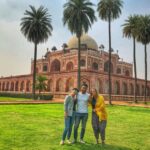
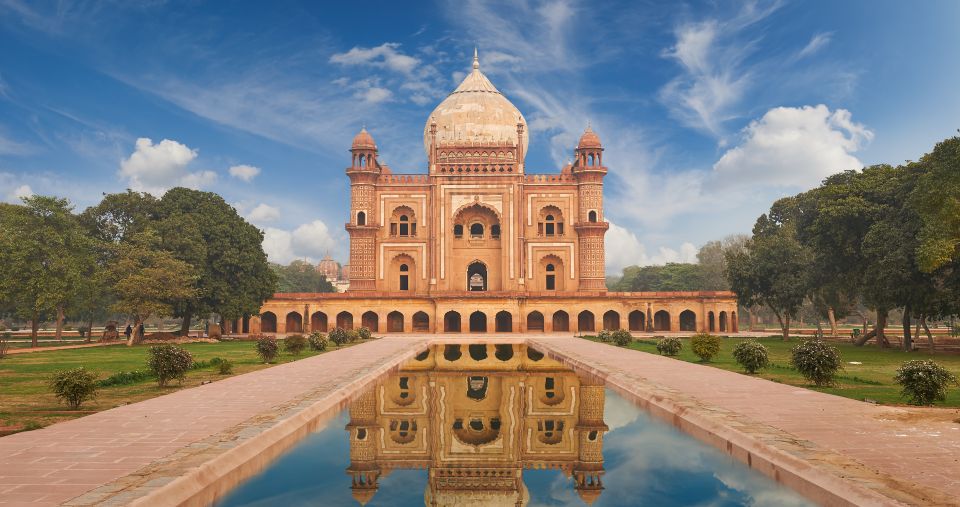
Your day starts at a very practical place: the entrance gate of Safdarjung Tomb, at the ticket counter. That matters because you don’t waste time hunting for the group—you’re already standing at the first real subject. If you’re serious about photography, that first five minutes set the tone: where you stand, how you frame the main buildings, and how you handle the crowd flow.
In a good setup like this, the guide doesn’t just point and say look here. They help you choose angles, spot repeating patterns in the stonework, and think about how to balance buildings with open sky. The tour is designed around locations that most people don’t bother with, so you get a more relaxed feel for photographing—less “only the postcard spot” syndrome.
And yes, you’re walking. Wear comfortable shoes, keep your camera ready, and treat this like a focused two-hour shoot with guidance—not a long sightseeing slog.
You can also read our reviews of more historical tours in New Delhi
Safdarjung Tomb and Muhammad Shah Sayyid Tomb: architecture you can frame fast
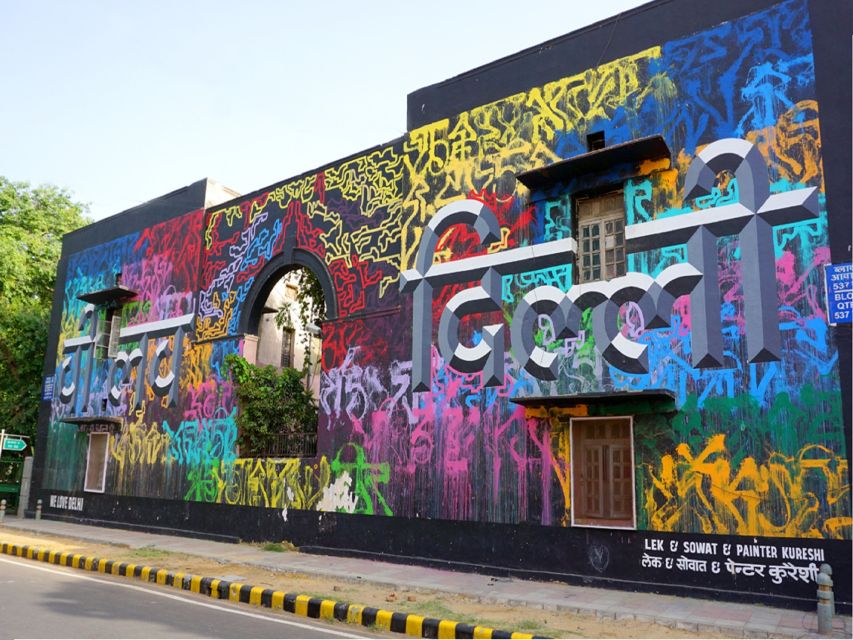
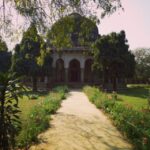
Safdarjung Tomb is a confident opening subject. You get the chance to practice quick composition decisions: straight-on views for monumentality, and slightly off-center angles when you want layers. Tombs like this reward steady positioning, because small shifts in where you stand can change the whole relationship between the building and the surrounding space.
Then the tour moves to the Muhammad Shah Sayyid Tomb, and the focus turns toward what the site is holding onto from Delhi’s past. The key point for photography is that “relics” can mean a lot of texture—surfaces, inscriptions, and meaningful objects. Even without being a deep museum visit, you’ll have enough here to do more than wide shots. Expect to slow down and pick detail frames.
If you’re the type who likes telling a visual story, this part helps. You start wide with monumental form, then you shift your attention to human-scale elements—exactly the kind of contrast that makes a photo set feel intentional.
Lodhi-era stops: Shish Gumbad, Sikandar Lodi Tomb, and the feeling of lineage
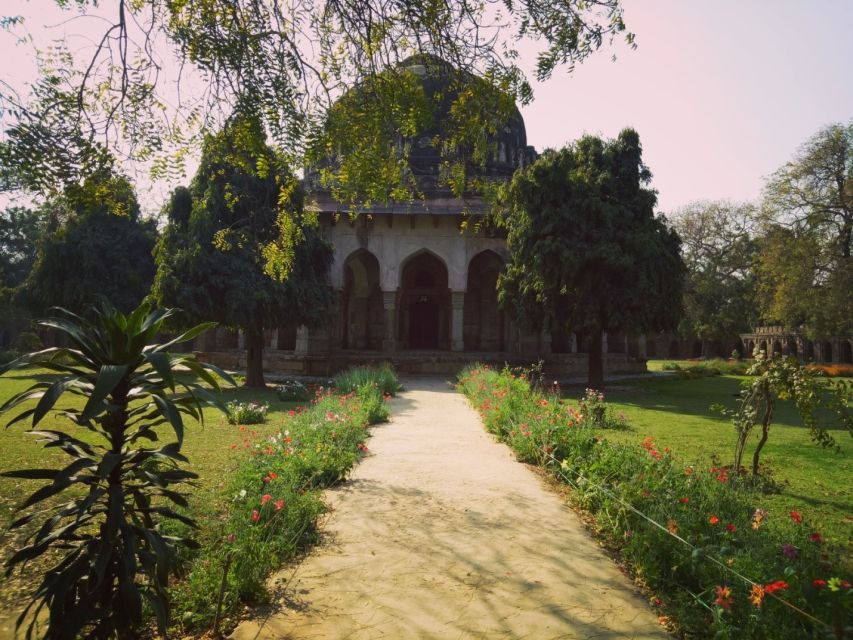
Late in the walk, you’ll reach the Shish Gumbad, described as the last lineage of the Lodhi Dynasty. For your camera, this is one of those moments where the best pictures aren’t always the biggest. Think about silhouette and shape: domes and arches give you strong outlines, even when light isn’t perfect.
You’ll also visit the Sikandar Lodi Tomb. Lodi-era architecture is all about geometry—arches, repeating structural rhythm, and views that reward standing in the right spot to let lines lead your eye. This is where I like having a guide, because you can end up at a place where the structure looks great even if you didn’t know what to look for.
In a short tour, these tomb stops act like anchors. They give you that sense of “Delhi is still talking” through stone and form, and your photos won’t all look like generic travel snaps. They’ll look like you tried.
The garden switch: Lodhi Garden and Rose Garden for soft light and calm frames
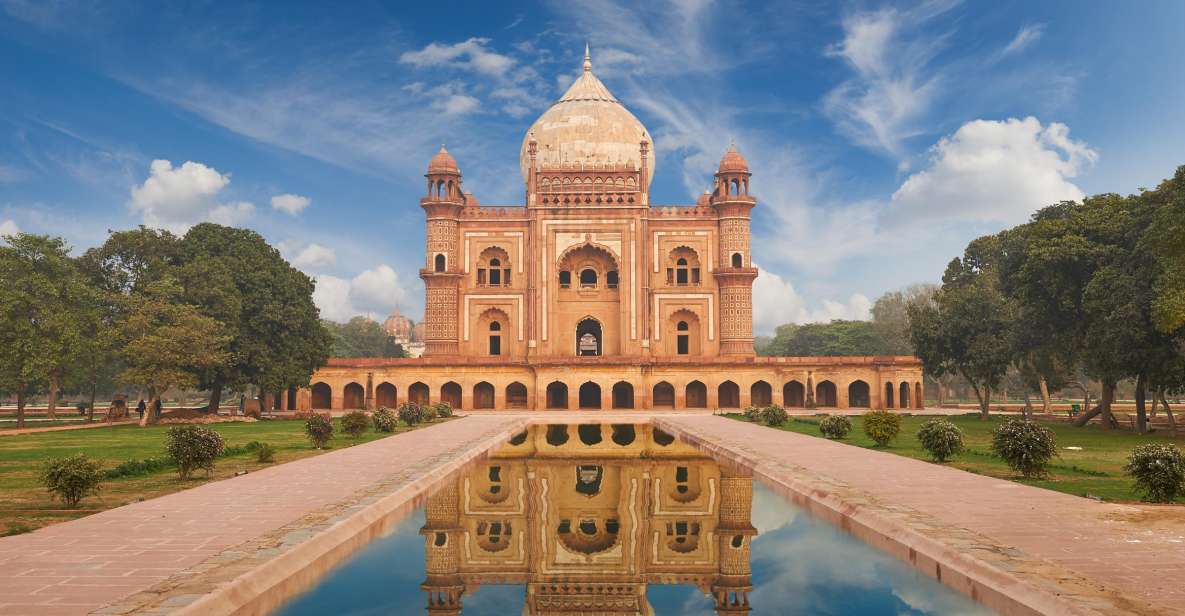
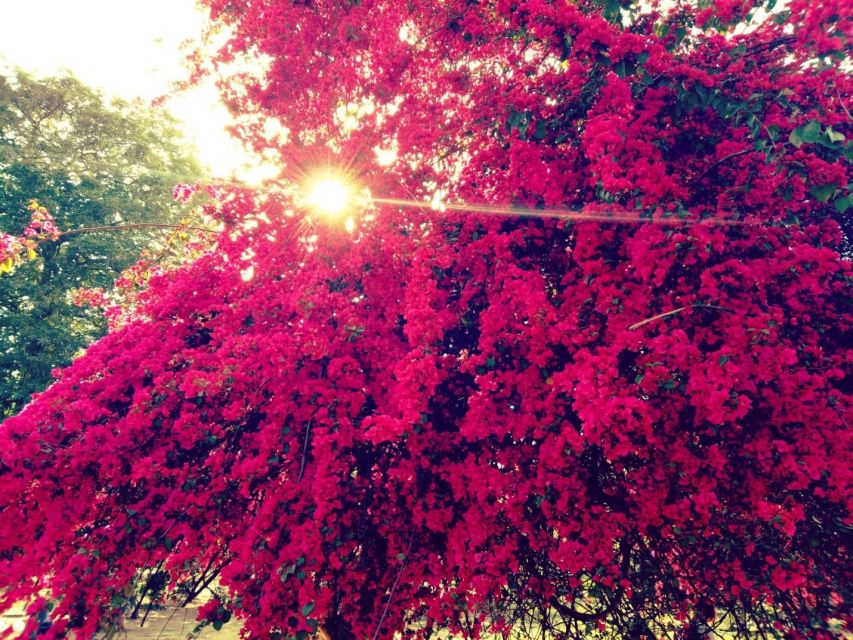
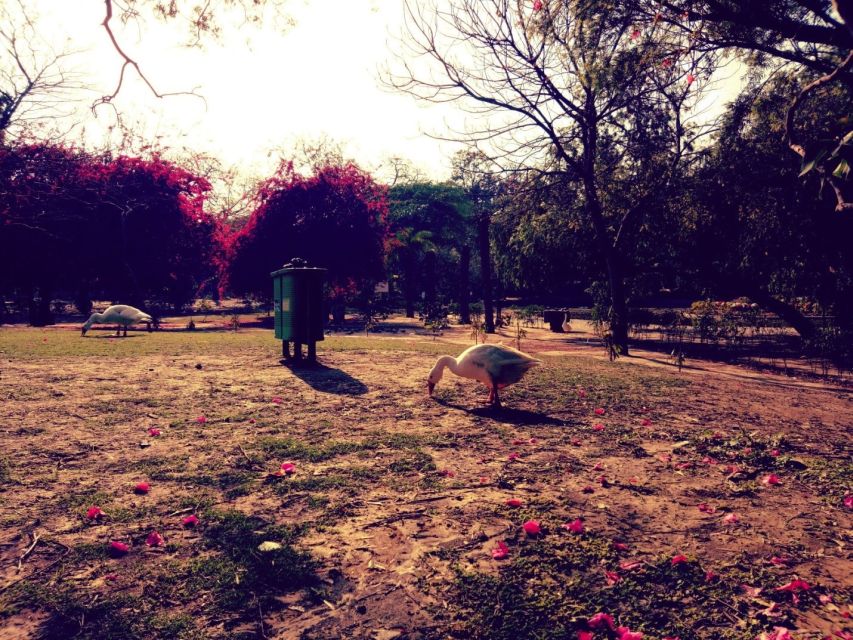
At some point you’ll step into the Lodhi Garden, and this is where the tour changes mood. The garden is described as the loveliest park in the city, and that fits the photographer’s need for breathing space. Instead of wrestling with only architecture, you can shoot leaves, flowers, tree canopies, and garden paths—subjects that help you vary your set.
Then you pass through the Rose Garden, which is a natural companion to the Lodhi Garden portion. If you like mixing greenery with built elements, this combo is practical: you can photograph nature up close, then turn your lens toward trees and structures together. Flowers also tend to create a sense of depth—foreground blooms, middle paths, background stone.
One smart move: use the gardens to reset your camera. Check your settings, clean your lens if you got dusty, and take a few portrait-style frames. Gardens are where you can relax your shooting pace a bit while still producing strong images.
Bara Gumbad and the lake crossing: when the route gives you new angles
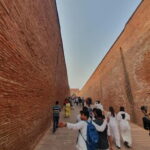
Between garden time and the later Lodhi stops, you’ll pass through areas that feel more lived-in and less curated. You’ll move along centuries-old buildings and wide lanes, plus you’ll see embassies of different countries. For photography, that means you get a blend of architectural styles and signage textures that break up the “only tomb” pattern.
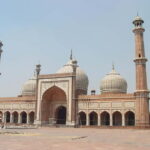
You’ll also visit the Bara Gumbad tomb and mosque, a 15th-century site. Domed buildings like this are great for mid-distance shots: they create strong shapes, and the shadows can help you see structure more clearly. If you like contrast—light sky versus dark architectural mass—this stop is a strong candidate.
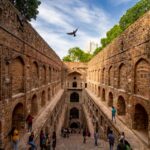
Then comes Athpula Bridge, where you cross a lake. This is a small but important shift. Bridges force you to think about perspective: framing lines, water reflections if conditions allow, and the way the far bank pulls your image together. It’s the kind of transition that makes a short photo walk feel like a full mini-adventure.
You can also read our reviews of more photography tours in New Delhi


Lodhi street art: modern walls, ancient context
Toward the end, you’ll explore Lodhi street art—painted walls with different graffiti themes like nature, the origin of the world, and life and death. This is a great pairing with tomb and garden stops because it adds a completely different layer of meaning.
Here’s what I’d focus on if you’re shooting street art in a heritage-heavy area:
- Look for borders where old stone meets painted surfaces
- Capture both close details and wider context shots
- Be ready for color-heavy frames, then switch back to black-and-stone compositions a few minutes later
Street art can be tricky because the best shots depend on angle and light. But the guide’s job (and the tour’s design) is to help you find photo points you might miss on your own.
This is also a moment where your photo set can start to feel more personal. You’re not only documenting monuments—you’re documenting what people create now, in the shadow of what’s still standing.
The guide factor: storytelling that helps your camera choices
A walking photography tour is only as good as the person behind the lens-logic. This one is run by Yo Tours, and you’ll get a friendly storyteller who speaks English and Hindi (and the tour also lists Spanish). What impressed me in the provided feedback is how guides can handle photographers without fuss—letting you work at your own pace.
Some names show up in the guidance experience. Rajeev is mentioned as a very good, informative guide, and Ameesha is praised for being patient, staying in touch to make sure people didn’t miss the start, and sharing stories that are actually connected to what you’re photographing. Even if you don’t know the guide ahead of time, the approach is clear: the tour balances explanation with freedom to shoot.
The practical result is you’re not guessing where to stand or what direction to look. Your guide helps you connect the scene to the camera—why that angle, why that detail, why that moment.
Photography tips you can use immediately on this route
The tour includes photography tips, and in a two-hour timeframe, you’ll want fast wins. Here are the kinds of tactics this tour naturally supports, based on the mix of tombs, domes, gardens, and street art:
Use the tomb stops for structure practice. Try shooting symmetrical compositions first, then move slightly to catch a stronger line of leading architecture.
Use gardens for variable depth. Flowers and trees are ideal for foreground/middle/background layering. Even basic shots improve when you add depth.
Use the bridge moment for perspective. Find a spot where both your near foreground line and far background shape are visible.
Switch themes on purpose. Don’t shoot every stop in the same style. A set that includes wide monuments, mid-distance domes, and close relic or street art details will feel more complete.
If you’re bringing an older camera or a smartphone, you’ll still benefit. The guide’s value is helping you choose the right spot and timing for the look you want—especially in places where small repositioning changes everything.
What’s included for $14: why this can be good value in Delhi
At $14 per person for two hours, the main value isn’t just the price tag. It’s what you get stacked together:
- A trained guide who explains and supports photography
- Entry to all the photographic destinations
- Photography tips
- One hot beverage
- A conversation-friendly approach, including religious and local importance
Two hours in Delhi can easily cost more than you expect once you factor in transport and the time cost of finding entrances. Here, you start at a specific meeting point, you’re guided between sites, and entry is included.
Also, the hot beverage sounds small, but it’s genuinely practical. After walking through tomb grounds and garden paths, you’ll appreciate a warm pause while you compare shots and get a better sense of what to focus on next.
What’s not included (and what you should plan for)
- No hotel pickup/drop-off
- No water bottle
So if you’re traveling for a day full of exploring, bring your own water bottle or plan to buy one near your next stop. And plan to arrive at Safdarjung Tomb on time because the meeting point is specific.
Logistics that matter: shoes, bags, and who should sit this one out
This tour is straightforward, but it has a few rules you should take seriously:
- Bring comfortable shoes for a walking pace
- Don’t bring luggage or large bags
- It’s not suitable for wheelchair users
- It’s also listed as not suitable for pregnant women
If you meet those requirements, you’ll likely enjoy it. If you don’t, it may feel too physically limiting.
One more practical note: no hotel pickup means you should confirm how you’ll get to the Safdarjung Tomb ticket counter. This is one of those tours where being late can disrupt the rhythm, because the best photo moments often happen when you arrive, not when you catch up.
Best time to go: light and photo mood
The tour notes an evening-light experience in feedback, so if your schedule allows it, consider a slot that gives you softer light. Golden-hour style illumination tends to flatter domes, tomb stone, and gardens. Even when lighting isn’t perfect, darker stone and domed geometry still photograph well because you’re working with shape and structure, not only color.
If you do go in brighter midday sun, you’ll just need to work smarter: seek shade at the tomb sites, use garden foliage as a natural frame, and let the bridge/lake area give you a change of scenery.
Should you book this Delhi Heritage Photography Tour?
Yes, if you want a focused, camera-first walk that covers more than the obvious highlights. It’s especially good for photographers who like variety: tomb architecture, garden greenery, a lake crossing perspective, and Lodhi street art all in one short session.
Skip it or reconsider if you need wheelchair access, if walking will be hard for you, or if you want hotel pickup convenience. Also, since entry and guidance are part of the value, try not to treat this like a casual stroll—show up ready to photograph and you’ll get the most out of the guide’s approach.
FAQ
Where does the tour meet?
Meet your storyteller at the entrance gate of Safdarjung Tomb, at the ticket counter.
How long is the Delhi Heritage Photography Tour?
The tour lasts 2 hours.
What’s included in the price?
It includes a guide (English and Hindi-speaking, with Spanish also listed), entry to all photographic destinations, photography tips, one hot beverage, and conversation about religious aspects and local importance.
What should I bring?
Wear comfortable shoes. The tour does not list bringing a camera, but it is a photography tour, so plan to bring what you need to shoot.
Are there restrictions on bags or luggage?
Yes. Luggage or large bags are not allowed.
Is there water provided?
No. A water bottle is not included.
Is the tour refundable if my plans change?
Cancellation is listed as free up to 24 hours in advance for a full refund.